


183 Results
Form:
books
books

Price:
$30.95
(available to order)
Summary:
Huit millions de personnes en France ne peuvent pas se nourrir comme elles le souhaiteraient, obligées pour certaines de recourir aux dons, contraintes pour d'autres de se rabattre sur des produits ''low cost''. A l'opposé de cette réalité, une offre alternative à celle de l'industrie agro-alimentaire, de meilleure qualité (bio, locale...), se développe depuis vingt ans,(...)
$30.95
(available to order)
Summary:
Huit millions de personnes en France ne peuvent pas se nourrir comme elles le souhaiteraient, obligées pour certaines de recourir aux dons, contraintes pour d'autres de se rabattre sur des produits ''low cost''. A l'opposé de cette réalité, une offre alternative à celle de l'industrie agro-alimentaire, de meilleure qualité (bio, locale...), se développe depuis vingt ans,(...)
Title:
Quand bien manger devient un luxe : en finir avec la précarité alimentaire
Actions:
Price:
$30.95
(available to order)
Summary:
Huit millions de personnes en France ne peuvent pas se nourrir comme elles le souhaiteraient, obligées pour certaines de recourir aux dons, contraintes pour d'autres de se rabattre sur des produits ''low cost''. A l'opposé de cette réalité, une offre alternative à celle de l'industrie agro-alimentaire, de meilleure qualité (bio, locale...), se développe depuis vingt ans, mais n'est accessible qu'aux ménages ayant un certain revenu. Bien manger est devenu un luxe. Cette enquête décrypte les rouages d'un système et explore de nouveaux modèles pour l'alimentation de demain. Lutter contre la précarité alimentaire, c'est agir tout au long de la chaîne, du champ à l'assiette. C'est repenser la place que nous faisons à l'alimentation, dans nos vies et dans notre société.
Quand bien manger devient un luxe : en finir avec la précarité alimentaire
Actions:
Price:
$30.95
(available to order)
Summary:
Huit millions de personnes en France ne peuvent pas se nourrir comme elles le souhaiteraient, obligées pour certaines de recourir aux dons, contraintes pour d'autres de se rabattre sur des produits ''low cost''. A l'opposé de cette réalité, une offre alternative à celle de l'industrie agro-alimentaire, de meilleure qualité (bio, locale...), se développe depuis vingt ans, mais n'est accessible qu'aux ménages ayant un certain revenu. Bien manger est devenu un luxe. Cette enquête décrypte les rouages d'un système et explore de nouveaux modèles pour l'alimentation de demain. Lutter contre la précarité alimentaire, c'est agir tout au long de la chaîne, du champ à l'assiette. C'est repenser la place que nous faisons à l'alimentation, dans nos vies et dans notre société.
Form:
books
books
Publication:
April 2023
April 2023
Subject:
Food
Food
Form:
books
books

Title:
This is not a food magazine
This is not a food magazine
Actions:
Price:
$29.95
(available to order)
Summary:
A collection of essays and articles about culture and identity in Singapore through the lens of food. This compilation contains contents ranging from Zi Char menus, Home Economics curriculums, unassuming kitchen/cooking tools critical for making signature dishes, to contemplations on specific local food or recipes. There is also interesting relationships between its(...)
$29.95
(available to order)
Summary:
A collection of essays and articles about culture and identity in Singapore through the lens of food. This compilation contains contents ranging from Zi Char menus, Home Economics curriculums, unassuming kitchen/cooking tools critical for making signature dishes, to contemplations on specific local food or recipes. There is also interesting relationships between its(...)
Title:
This is not a food magazine
Actions:
Price:
$29.95
(available to order)
Summary:
A collection of essays and articles about culture and identity in Singapore through the lens of food. This compilation contains contents ranging from Zi Char menus, Home Economics curriculums, unassuming kitchen/cooking tools critical for making signature dishes, to contemplations on specific local food or recipes. There is also interesting relationships between its contents and design with many insights that might remain unnoticed if not for the author’s versatile and broad range of interests and inquiry.
This is not a food magazine
Actions:
Price:
$29.95
(available to order)
Summary:
A collection of essays and articles about culture and identity in Singapore through the lens of food. This compilation contains contents ranging from Zi Char menus, Home Economics curriculums, unassuming kitchen/cooking tools critical for making signature dishes, to contemplations on specific local food or recipes. There is also interesting relationships between its contents and design with many insights that might remain unnoticed if not for the author’s versatile and broad range of interests and inquiry.
Form:
books
books
Publication:
July 2023
July 2023
Subject:
Food
Food
Form:
books
books
Price:
$67.95
(available in store)
Summary:
Des légumes en hiver est un manuel pratique destiné aux jardiniers amateurs comme aux professionnels du maraichage. En vingt chapitres illustrés, Eliot Coleman, cultivateur américain et pionnier de l'agriculture biologique, dévoile les méthodes qu'il développe au coeur de son exploitation de petite surface, selon trois principes primordiaux : diminuer l'impact(...)
$67.95
(available in store)
Summary:
Des légumes en hiver est un manuel pratique destiné aux jardiniers amateurs comme aux professionnels du maraichage. En vingt chapitres illustrés, Eliot Coleman, cultivateur américain et pionnier de l'agriculture biologique, dévoile les méthodes qu'il développe au coeur de son exploitation de petite surface, selon trois principes primordiaux : diminuer l'impact(...)
Title:
Des légumes en hiver : produire en abondance même sous la neige
Actions:
Price:
$67.95
(available in store)
Summary:
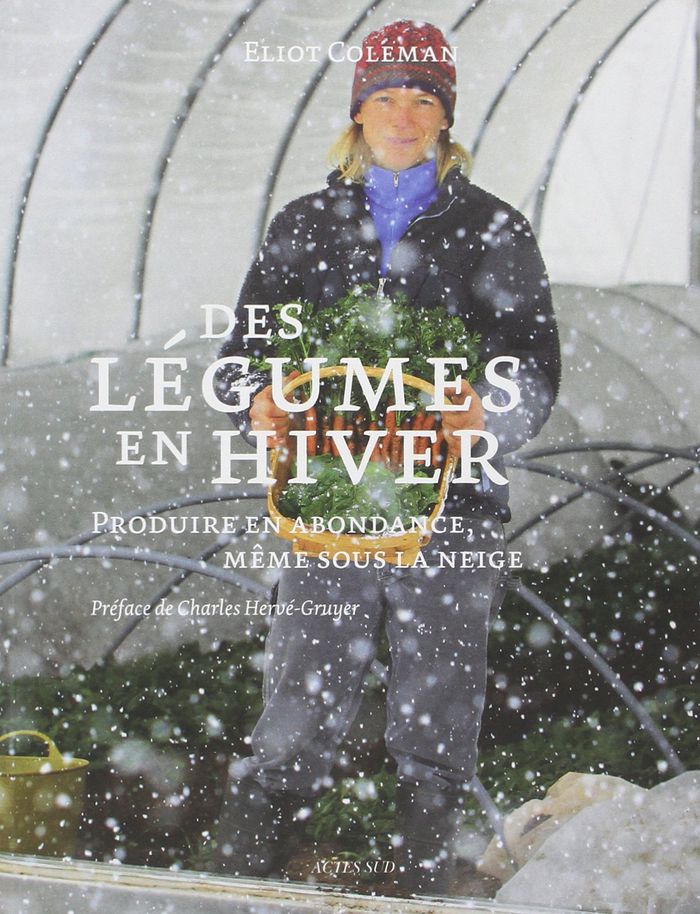
Des légumes en hiver est un manuel pratique destiné aux jardiniers amateurs comme aux professionnels du maraichage. En vingt chapitres illustrés, Eliot Coleman, cultivateur américain et pionnier de l'agriculture biologique, dévoile les méthodes qu'il développe au coeur de son exploitation de petite surface, selon trois principes primordiaux : diminuer l'impact environnemental, densifier les cultures et réduire le coût financier de son exploitation. Particulièrement connu pour ses techniques de culture hivernales et respectueuses de l'environnement, ce producteur explique comment parvenir à récolter des légumes variés et de qualité, quelle que soit la saison. Il défend l'utilité des serres mobiles et des tunnels, encore inexploités en France, l'une des clés du succès pour les récoltes de primeurs tout au long de l'année. Le lecteur apprend pas à pas à préparer un sol, puis à semer et à récolter à l'aide d'un équipement modeste et peu mécanisé évitant au maximum le recours aux énergies polluantes. Schémas et planning explicatifs jalonnent l'ouvrage afin d'aider chacun à cultiver des légumes, même lorsque les conditions climatiques ne s'y prêtent pas. Les conseils de l'auteur accompagnent les producteurs en herbe à chaque étape de leur apprentissage en leur permettant notamment de faire face aux questions et difficultés qu'ils peuvent rencontrer dans la mise en oeuvre de cultures saines ou encore en abordant la question des outils nécessaires à ce travail de la terre. Des légumes en hiver se présente comme un plaidoyer pour une relocalisation des productions agricoles.
Des légumes en hiver : produire en abondance même sous la neige
Actions:
Price:
$67.95
(available in store)
Summary:
Des légumes en hiver est un manuel pratique destiné aux jardiniers amateurs comme aux professionnels du maraichage. En vingt chapitres illustrés, Eliot Coleman, cultivateur américain et pionnier de l'agriculture biologique, dévoile les méthodes qu'il développe au coeur de son exploitation de petite surface, selon trois principes primordiaux : diminuer l'impact environnemental, densifier les cultures et réduire le coût financier de son exploitation. Particulièrement connu pour ses techniques de culture hivernales et respectueuses de l'environnement, ce producteur explique comment parvenir à récolter des légumes variés et de qualité, quelle que soit la saison. Il défend l'utilité des serres mobiles et des tunnels, encore inexploités en France, l'une des clés du succès pour les récoltes de primeurs tout au long de l'année. Le lecteur apprend pas à pas à préparer un sol, puis à semer et à récolter à l'aide d'un équipement modeste et peu mécanisé évitant au maximum le recours aux énergies polluantes. Schémas et planning explicatifs jalonnent l'ouvrage afin d'aider chacun à cultiver des légumes, même lorsque les conditions climatiques ne s'y prêtent pas. Les conseils de l'auteur accompagnent les producteurs en herbe à chaque étape de leur apprentissage en leur permettant notamment de faire face aux questions et difficultés qu'ils peuvent rencontrer dans la mise en oeuvre de cultures saines ou encore en abordant la question des outils nécessaires à ce travail de la terre. Des légumes en hiver se présente comme un plaidoyer pour une relocalisation des productions agricoles.
Form:
books
books
Publication:
November 2013
November 2013
Subject:
Food
Food
Form:
books
books

Actions:
Price:
$44.95
(available to order)
Summary:
The heem parks (parks that predominately feature native wild plants) De Braak, the K. Landwehrpark and, especially, the Jac.P. Thijsse Park in Amstelveen in the Netherlands, have been important sources of inspiration for landscape architects, gardeners, and nature lovers throughout the world since they were first laid out over fifty years ago. This new book looks at the(...)
$44.95
(available to order)
Summary:
The heem parks (parks that predominately feature native wild plants) De Braak, the K. Landwehrpark and, especially, the Jac.P. Thijsse Park in Amstelveen in the Netherlands, have been important sources of inspiration for landscape architects, gardeners, and nature lovers throughout the world since they were first laid out over fifty years ago. This new book looks at the(...)
Title:
Jac. P. Thijsse Park : designed Dutch landscape
Actions:
Price:
$44.95
(available to order)
Summary:
The heem parks (parks that predominately feature native wild plants) De Braak, the K. Landwehrpark and, especially, the Jac.P. Thijsse Park in Amstelveen in the Netherlands, have been important sources of inspiration for landscape architects, gardeners, and nature lovers throughout the world since they were first laid out over fifty years ago. This new book looks at the extraordinary history of these parks and the work of the landscape architect Christiaan Broerse and his colleague, the botanist Koos Landwehr. It also details Broerse and Landwehr’s creative and highly original use of a great variety of native plants in these parks. Bekkers analyses the parks as integral elements of Amsterdam’s urban expansion plans and demonstrates how successfully Broerse and Landwehr resolved the tension between the conservation movement and city planners. He shows too how interest in the Amstelveen heem parks have grown over time. These parks have played a key role, for instance, in the increasing emphasis on the use of native plants in the layout of green areas. The book is richly illustrated, with specially commissioned full-colour photographs by Jan Derwig and aerial photographs by Jan Schot. Also included are historical illustrations and sketches.
Jac. P. Thijsse Park : designed Dutch landscape
Actions:
Price:
$44.95
(available to order)
Summary:
The heem parks (parks that predominately feature native wild plants) De Braak, the K. Landwehrpark and, especially, the Jac.P. Thijsse Park in Amstelveen in the Netherlands, have been important sources of inspiration for landscape architects, gardeners, and nature lovers throughout the world since they were first laid out over fifty years ago. This new book looks at the extraordinary history of these parks and the work of the landscape architect Christiaan Broerse and his colleague, the botanist Koos Landwehr. It also details Broerse and Landwehr’s creative and highly original use of a great variety of native plants in these parks. Bekkers analyses the parks as integral elements of Amsterdam’s urban expansion plans and demonstrates how successfully Broerse and Landwehr resolved the tension between the conservation movement and city planners. He shows too how interest in the Amstelveen heem parks have grown over time. These parks have played a key role, for instance, in the increasing emphasis on the use of native plants in the layout of green areas. The book is richly illustrated, with specially commissioned full-colour photographs by Jan Derwig and aerial photographs by Jan Schot. Also included are historical illustrations and sketches.
Form:
books
books
Publication:
January 1900, Amsterdam
January 1900, Amsterdam
Form:
books
books
Actions:
Price:
$56.00
(available in store)
Summary:
This publication showcases transformative solutions for food insecurity in the UAE over the past 50 years. From innovations in the private sector to public policy initiatives, these strategies aim to eliminate hunger by providing year-round access to nutritious food in a country whose natural landscape is unconducive to farming. The book is published on the occasion of(...)
$56.00
(available in store)
Summary:
This publication showcases transformative solutions for food insecurity in the UAE over the past 50 years. From innovations in the private sector to public policy initiatives, these strategies aim to eliminate hunger by providing year-round access to nutritious food in a country whose natural landscape is unconducive to farming. The book is published on the occasion of(...)
Title:
On foraging: Food knowledge and environmental imaginaries in the UAE’s landscape
Actions:
Price:
$56.00
(available in store)
Summary:
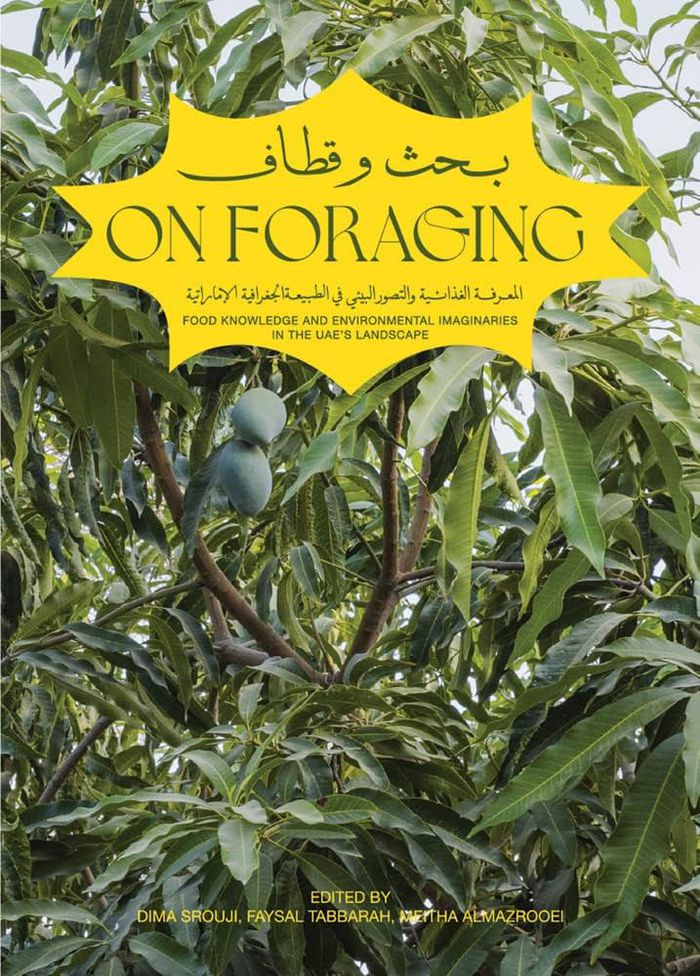
This publication showcases transformative solutions for food insecurity in the UAE over the past 50 years. From innovations in the private sector to public policy initiatives, these strategies aim to eliminate hunger by providing year-round access to nutritious food in a country whose natural landscape is unconducive to farming. The book is published on the occasion of 'On Foraging: Food Knowledge and Environmental Imaginaries' in the UAE’s Landscape, an exhibition commissioned by Warehouse421 for the UAE Pavilion at Expo 2020, Dubai, UAE.
On foraging: Food knowledge and environmental imaginaries in the UAE’s landscape
Actions:
Price:
$56.00
(available in store)
Summary:
This publication showcases transformative solutions for food insecurity in the UAE over the past 50 years. From innovations in the private sector to public policy initiatives, these strategies aim to eliminate hunger by providing year-round access to nutritious food in a country whose natural landscape is unconducive to farming. The book is published on the occasion of 'On Foraging: Food Knowledge and Environmental Imaginaries' in the UAE’s Landscape, an exhibition commissioned by Warehouse421 for the UAE Pavilion at Expo 2020, Dubai, UAE.
Form:
books
books
Publication:
June 2023
June 2023
Subject:
Food
Food
Form:
books
books
Actions:
Price:
$49.95
(available to order)
Summary:
For many chefs, their gardens are a direct extension of their kitchens. Whether a small rooftop in the city for growing herbs and spices, or a larger plot with fruit trees and vegetables, these fertile spots provide the ingredients and inspiration for countless seasonal dishes. Here, for the first time, "The Garden Chef" presents fascinating stories and signature recipes(...)
$49.95
(available to order)
Summary:
For many chefs, their gardens are a direct extension of their kitchens. Whether a small rooftop in the city for growing herbs and spices, or a larger plot with fruit trees and vegetables, these fertile spots provide the ingredients and inspiration for countless seasonal dishes. Here, for the first time, "The Garden Chef" presents fascinating stories and signature recipes(...)
Title:
The garden chef: recipes and stories from plant to plate
Actions:
Price:
$49.95
(available to order)
Summary:
For many chefs, their gardens are a direct extension of their kitchens. Whether a small rooftop in the city for growing herbs and spices, or a larger plot with fruit trees and vegetables, these fertile spots provide the ingredients and inspiration for countless seasonal dishes. Here, for the first time, "The Garden Chef" presents fascinating stories and signature recipes from the kitchen gardens of more than 35 of the world's best chefs, both established and emerging talents, with a wealth of beautiful images to provide visual inspiration.
The garden chef: recipes and stories from plant to plate
Actions:
Price:
$49.95
(available to order)
Summary:
For many chefs, their gardens are a direct extension of their kitchens. Whether a small rooftop in the city for growing herbs and spices, or a larger plot with fruit trees and vegetables, these fertile spots provide the ingredients and inspiration for countless seasonal dishes. Here, for the first time, "The Garden Chef" presents fascinating stories and signature recipes from the kitchen gardens of more than 35 of the world's best chefs, both established and emerging talents, with a wealth of beautiful images to provide visual inspiration.
Form:
books
books
Publication:
May 2019
May 2019
Subject:
Food
Food
Form:
books
books
Actions:
Price:
$14.95
(available to order)
Summary:
How did farmer's markets, nosetotail, locavorism, organic eating, CSAs, whole foods, and Whole Foods become synonymous with 'good food'? And are these practices really producing food that is morally, environmentally, or economically sustainable? Rebecca Tucker's compelling, reported argument shows that we must work to undo the moral coding that we use to interpret how(...)
$14.95
(available to order)
Summary:
How did farmer's markets, nosetotail, locavorism, organic eating, CSAs, whole foods, and Whole Foods become synonymous with 'good food'? And are these practices really producing food that is morally, environmentally, or economically sustainable? Rebecca Tucker's compelling, reported argument shows that we must work to undo the moral coding that we use to interpret how(...)
Title:
A matter of taste: a farmers market devotee's argument for inviting science to the table
Actions:
Price:
$14.95
(available to order)
Summary:
How did farmer's markets, nosetotail, locavorism, organic eating, CSAs, whole foods, and Whole Foods become synonymous with 'good food'? And are these practices really producing food that is morally, environmentally, or economically sustainable? Rebecca Tucker's compelling, reported argument shows that we must work to undo the moral coding that we use to interpret how we come by what we put on our plates.
A matter of taste: a farmers market devotee's argument for inviting science to the table
Actions:
Price:
$14.95
(available to order)
Summary:
How did farmer's markets, nosetotail, locavorism, organic eating, CSAs, whole foods, and Whole Foods become synonymous with 'good food'? And are these practices really producing food that is morally, environmentally, or economically sustainable? Rebecca Tucker's compelling, reported argument shows that we must work to undo the moral coding that we use to interpret how we come by what we put on our plates.
Form:
books
books
Publication:
November 2018
November 2018
Subject:
Food
Food
Form:
books
books
Actions:
Price:
$32.00
(available to order)
Summary:
People have used honey, dates, and fruits to sweeten their dishes since time immemorial, but with the introduction of sugar white gold into cooking and baking, a whole array of delightful flavors and culinary possibilities was unearthed. Sugar was the building block for edible sculptures and model palaces made for festivals and celebrations thousands of years ago, and the(...)
$32.00
(available to order)
Summary:
People have used honey, dates, and fruits to sweeten their dishes since time immemorial, but with the introduction of sugar white gold into cooking and baking, a whole array of delightful flavors and culinary possibilities was unearthed. Sugar was the building block for edible sculptures and model palaces made for festivals and celebrations thousands of years ago, and the(...)
Title:
Bon! bon! On the charms of sweet cuisine
Actions:
Price:
$32.00
(available to order)
Summary:
People have used honey, dates, and fruits to sweeten their dishes since time immemorial, but with the introduction of sugar white gold into cooking and baking, a whole array of delightful flavors and culinary possibilities was unearthed. Sugar was the building block for edible sculptures and model palaces made for festivals and celebrations thousands of years ago, and the main ingredient in lavish creations for Rococo and Baroque banquets. A life without cakes, pastries, tarts, soufflés, meringues, petits fours, or marzipan would be unimaginable! In ''Bon! Bon!'', Charlotte Birnbaum uncovers the wonderful world of all things sugary through surprising anecdotes and historical accounts, each accompanied by delectable recipes that are sure to satisfy any sweet tooth.
Bon! bon! On the charms of sweet cuisine
Actions:
Price:
$32.00
(available to order)
Summary:
People have used honey, dates, and fruits to sweeten their dishes since time immemorial, but with the introduction of sugar white gold into cooking and baking, a whole array of delightful flavors and culinary possibilities was unearthed. Sugar was the building block for edible sculptures and model palaces made for festivals and celebrations thousands of years ago, and the main ingredient in lavish creations for Rococo and Baroque banquets. A life without cakes, pastries, tarts, soufflés, meringues, petits fours, or marzipan would be unimaginable! In ''Bon! Bon!'', Charlotte Birnbaum uncovers the wonderful world of all things sugary through surprising anecdotes and historical accounts, each accompanied by delectable recipes that are sure to satisfy any sweet tooth.
Form:
books
books
Publication:
October 2017
October 2017
Subject:
Food
Food
Form:
books
books

Title:
Cooking with Scorsese, Vol.2
Cooking with Scorsese, Vol.2
Actions:
Price:
$29.00
(available to order)
Summary:
Cookbooks come in all shapes and sizes, but none have embraced a movie theme quite like this series. Across three volumes, ‘Cooking with Scorsese and Others’ offers an homage to food in film by showing memorable scenes in sequences of screenshots. From films where food is the central theme, such as ‘Julie & Julia’ (2009), ‘Tortilla Soup’, ‘Babette’s Feast’ (1987), and(...)
$29.00
(available to order)
Summary:
Cookbooks come in all shapes and sizes, but none have embraced a movie theme quite like this series. Across three volumes, ‘Cooking with Scorsese and Others’ offers an homage to food in film by showing memorable scenes in sequences of screenshots. From films where food is the central theme, such as ‘Julie & Julia’ (2009), ‘Tortilla Soup’, ‘Babette’s Feast’ (1987), and(...)
Title:
Cooking with Scorsese, Vol.2
Actions:
Price:
$29.00
(available to order)
Summary:
Cookbooks come in all shapes and sizes, but none have embraced a movie theme quite like this series. Across three volumes, ‘Cooking with Scorsese and Others’ offers an homage to food in film by showing memorable scenes in sequences of screenshots. From films where food is the central theme, such as ‘Julie & Julia’ (2009), ‘Tortilla Soup’, ‘Babette’s Feast’ (1987), and ‘Tampopo’ (1985), to ones in which it plays a supporting role, like ‘The Scent of Green Papaya’ (1993), ‘Eat Drink Man Woman’ (1994), and ‘Goodfellas’ (1990), dozens of classic, cult, and perhaps underappreciated or forgotten films can be experienced again in this gastronomic celebration of cinema.
Cooking with Scorsese, Vol.2
Actions:
Price:
$29.00
(available to order)
Summary:
Cookbooks come in all shapes and sizes, but none have embraced a movie theme quite like this series. Across three volumes, ‘Cooking with Scorsese and Others’ offers an homage to food in film by showing memorable scenes in sequences of screenshots. From films where food is the central theme, such as ‘Julie & Julia’ (2009), ‘Tortilla Soup’, ‘Babette’s Feast’ (1987), and ‘Tampopo’ (1985), to ones in which it plays a supporting role, like ‘The Scent of Green Papaya’ (1993), ‘Eat Drink Man Woman’ (1994), and ‘Goodfellas’ (1990), dozens of classic, cult, and perhaps underappreciated or forgotten films can be experienced again in this gastronomic celebration of cinema.
Form:
books
books
Publication:
January 2020
January 2020
Subject:
Food
Food
Form:
books
books
Actions:
Price:
$36.00
(available to order)
Summary:
Coffee, tea, and chocolate were all the rage in Enlightenment Europe. These fashionable beverages profoundly shaped modes of sociability and patterns of consumption, yet none of the plants required for their preparation was native to the continent: coffee was imported from the Levant, tea from Asia, and chocolate from Mesoamerica. Their introduction to 17th-century Europe(...)
$36.00
(available to order)
Summary:
Coffee, tea, and chocolate were all the rage in Enlightenment Europe. These fashionable beverages profoundly shaped modes of sociability and patterns of consumption, yet none of the plants required for their preparation was native to the continent: coffee was imported from the Levant, tea from Asia, and chocolate from Mesoamerica. Their introduction to 17th-century Europe(...)
Title:
Coffee, tea, and chocolate: consuming the world
Actions:
Price:
$36.00
(available to order)
Summary:
Coffee, tea, and chocolate were all the rage in Enlightenment Europe. These fashionable beverages profoundly shaped modes of sociability and patterns of consumption, yet none of the plants required for their preparation was native to the continent: coffee was imported from the Levant, tea from Asia, and chocolate from Mesoamerica. Their introduction to 17th-century Europe revolutionized drinking habits and social customs. It also spurred an insatiable demand for specialized vessels such as hot beverage services and tea canisters, coffee cups and chocolate pots. This beautiful book demonstrates how the paraphernalia associated with coffee, tea, and chocolate can eloquently evoke the culture of these new beverages and the material pleasures that surrounded them. Contributors address such topics as the politics of coffee consumption in 18th-century Germany; 18th-century visual satires on the European consumption of tea, coffee, and chocolate; and the design history of coffee pots in the United States between the colonial period and the present.
Coffee, tea, and chocolate: consuming the world
Actions:
Price:
$36.00
(available to order)
Summary:
Coffee, tea, and chocolate were all the rage in Enlightenment Europe. These fashionable beverages profoundly shaped modes of sociability and patterns of consumption, yet none of the plants required for their preparation was native to the continent: coffee was imported from the Levant, tea from Asia, and chocolate from Mesoamerica. Their introduction to 17th-century Europe revolutionized drinking habits and social customs. It also spurred an insatiable demand for specialized vessels such as hot beverage services and tea canisters, coffee cups and chocolate pots. This beautiful book demonstrates how the paraphernalia associated with coffee, tea, and chocolate can eloquently evoke the culture of these new beverages and the material pleasures that surrounded them. Contributors address such topics as the politics of coffee consumption in 18th-century Germany; 18th-century visual satires on the European consumption of tea, coffee, and chocolate; and the design history of coffee pots in the United States between the colonial period and the present.
Form:
books
books
Publication:
November 2016
November 2016
Subject:
Food
Food


