


Building Trust
Merve Bedir writes to Sony Devabhaktuni
Dear Sony, your thoughts give me much hope about “the role architecture plays in realizing political agendas.” In these bleak times, you propose to focus on architecture as practice, to think with this topic in terms of agenda, and to work with “the potentials at the table.” Your letter is an invitation to consider what politics architecture can actually propose, instead of a “negative latency” that legitimizes institutions in censoring it today.
I think of politics from within two cosmologies: Politics (siyasi1) historically derives from an economy of caretaking of animals, things, and land; Politics (politik) refers to a culture of performed representation and decision making through institutions. A third element, I’m not sure if it should be called a cosmology, is geopolitics, determined through governing the infrastructure of planetary exploitation and distribution mechanisms. My understanding of politics has been shaped by these, where the first is mainly practiced through the desires, infrastructures, and interdependencies of the local and the everyday, the second through formal education and voting systems, and the third through the infrastructures of time, money, and control. The technologies of these politics have mostly progressed along with each other, but with crucial thresholds: What happens to the politics that derive from the economy of caretaking, when institutional politics give way to a heavily populist and competitive authoritarianism, while also accelerating geopolitical agendas? What happens when political (siyasi) practices do not fit these latter two frameworks? Who is responsible then within the frameworks of representation of the latter two? Here, I would like to make my first proposition: the politics that architecture proposes could be part of or support the survival, resilience, and resistance of the political (siyasi) practices.
Sony, we met when I was working in Shenzhen and Hong Kong, and in both cities, the dualities of politics that I explained above had allowed different architectures to be practiced there. In other words, there were degrees of possibilities for performing political agendas through architecture. In the Baishizhou urban village of Shenzhen or in Lau Fau Shan fishing village and its nearby Pak Nai Indigenous village in Hong Kong, residents had direct agency over design (with or without the involvement of architects as professionals). In Shenzhen, urban villages are spaces where once rural residents were given decision making authority on their built environment. Significantly in the 1980s, most agricultural land was planned by the state into the now metropolis, while existing rural residents retained collective ownership over their villages. A predecessor to this is Hong Kong’s Indigenous villages, such as Pak Nai, where male descendants of residents prior to 1898 (before British colonial rule) retain land rights within their village. During my Hong Kong University studio in 2018–2023, together with my students, we documented these histories of practicing architecture through sustaining/supporting interdependencies within these administrations, and made proposals on how these village works can be accentuated based on the infrastructures by human and nonhuman, among the dualities of these politics.
-
“Siyasi” is the meaning of the political used in a geography that spans between East and Central Asia towards North and Central Africa, and locally elsewhere; linguistically amongst Pluricentric Persian and Turkic languages, Afroasiatic and Indo-European language families. “Political” in meaning origins to late Middle English, from Old French politique “political,” via Latin from Greek politikos, from politēs “citizen,” from polis “city.” ↩
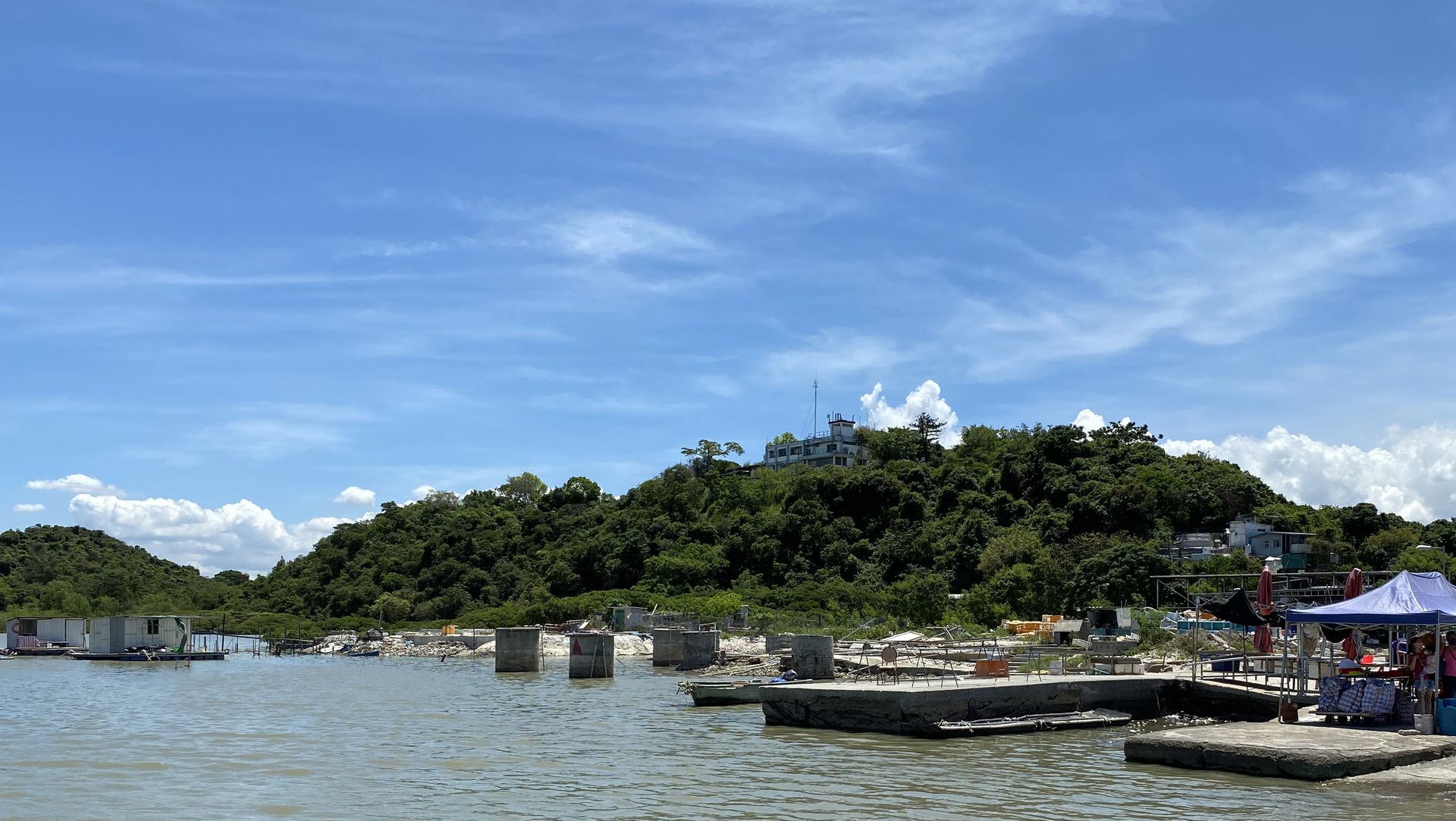
Documenting the water pipes network created by the community for oyster farming, and how this network could be improved based on the current structure, instead of designing from scratch. Drawings by Cheung Kai Yin, Chiu Ho Wan, Lo Wai Ching, Chen Qiao. Hong Kong University Department of Architecture. Entangled Futures: Designing Posthuman Landscapes. Studio Bedir. 2020.
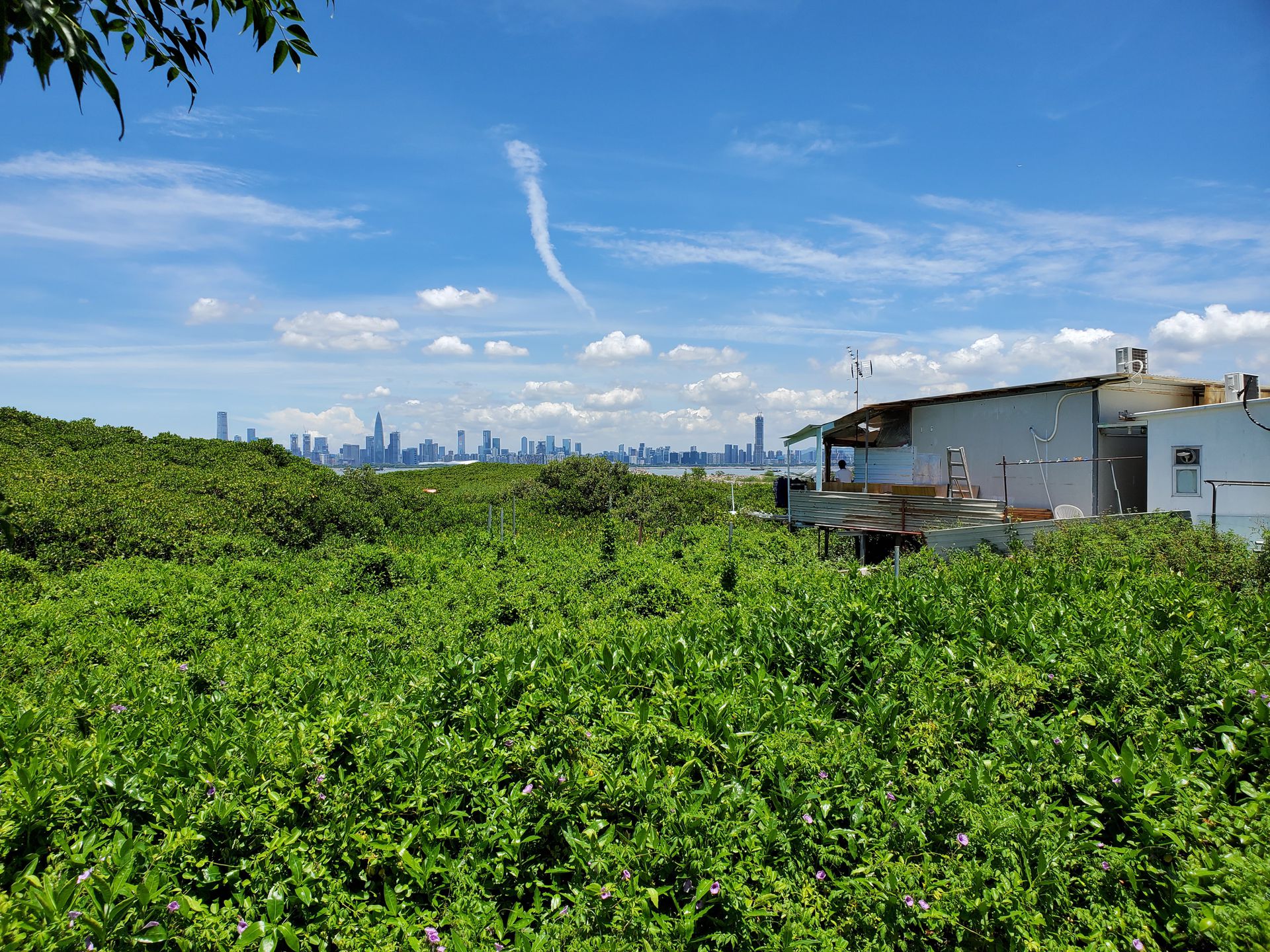
Documenting the water pipes network created by the community for oyster farming, and how this network could be improved based on the current structure, instead of designing from scratch. Drawings by Cheung Kai Yin, Chiu Ho Wan, Lo Wai Ching, Chen Qiao. Hong Kong University Department of Architecture. Entangled Futures: Designing Posthuman Landscapes. Studio Bedir. 2020.
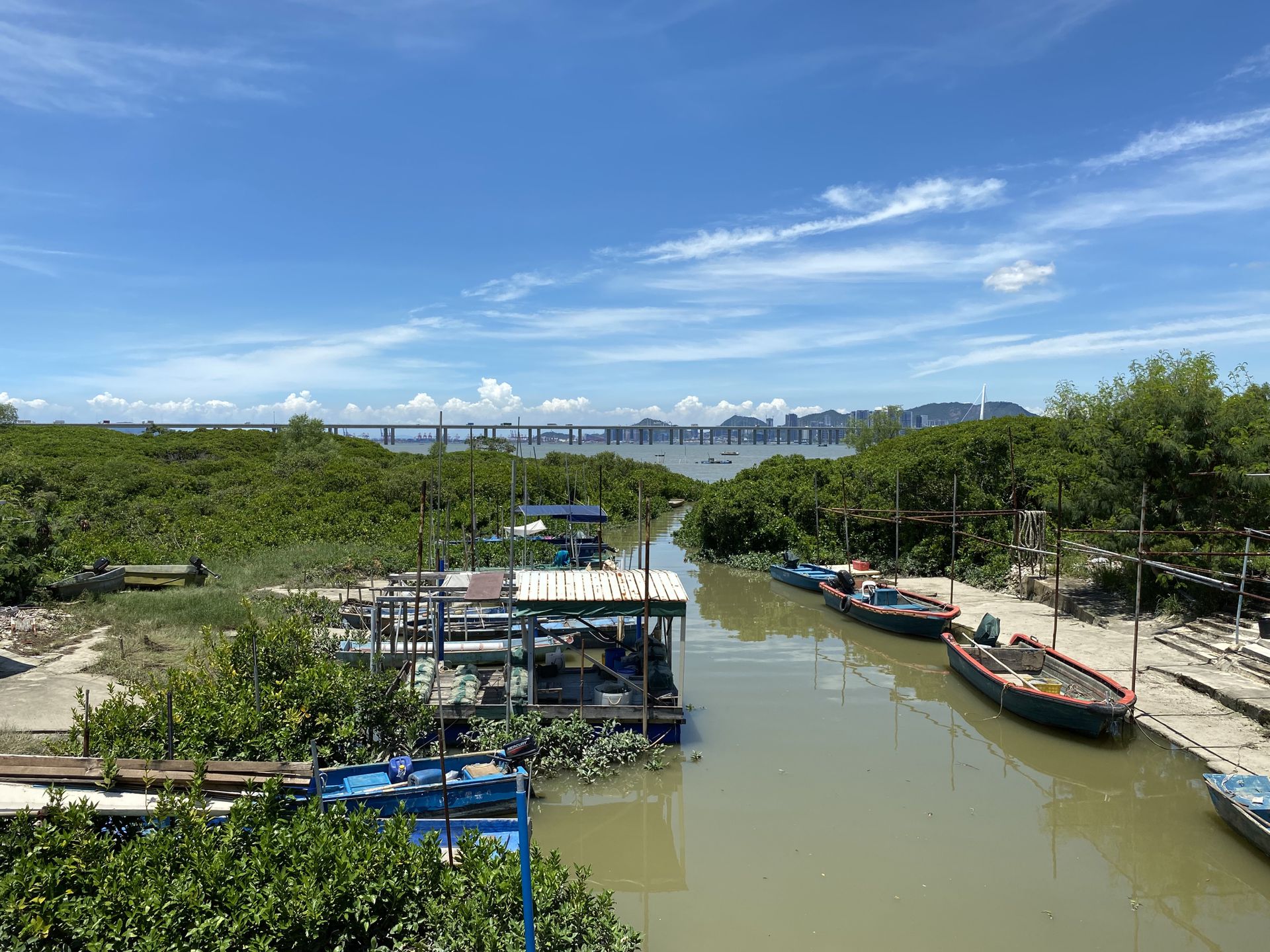
Documenting the water pipes network created by the community for oyster farming, and how this network could be improved based on the current structure, instead of designing from scratch. Drawings by Cheung Kai Yin, Chiu Ho Wan, Lo Wai Ching, Chen Qiao. Hong Kong University Department of Architecture. Entangled Futures: Designing Posthuman Landscapes. Studio Bedir. 2020.


This brings me to your engagement in Chester. I would very much wish to know more about the work around the cemetery and other sites in this township; performing how architecture can be practiced in relationality, thereby defining a political agenda of the local, and creating a materiality with a story. It makes me reflect that the institutional and geopolitical agenda, in places like Chester, have been about flattening the local/civil through technological abstraction implemented on labour and education, expropriating cultural and spiritual relations, while neglecting the residents and the community in general. What politics can architecture propose through its practice in this context? It’s a tough but vital question, and there seems to be inspirations from Chester.
I will return to the first cosmology of politics (siyasi) that I mentioned above, which historically derives from an economy of caretaking of animals, things, and Land. An essential element of such practice is trust (building): Trust of people to each other, reliance to resources and infrastructure (natural and cultural), and a spiritual trust that things will be fine (tevekkül). This trust (building) is a slow practice, starts from difference (and possibly conflict), builds on necessity and urgency (iltizam), taking responsibility (mesuliyet), caretaking and sustaining (idare), and gathering (ittihad) towards an act (emel, eylem, niyet). Trust shows through respect (itibar), a feeling of safety and security (emniyet), reliability (itimat), promise and hope. Trust is a fundamental value of this politics that sustains the order of animals, things, and Land.
In the last decade, part of my practice has developed in Turkey, in Istanbul and Gaziantep, where I got to know communities closely, and/or I have been part of them. These communities and networks have been established following several disasters—Civil war in Syria and the following displacement, COVID-19 pandemic, and the 19 August and 6 February earthquakes. Within slow trust building, I/we translate the needs and urgencies to architecture. In an initiative like the Kitchen Workshop (which began in 2014), architecture is defined through the context, infrastructures, and agenda, and the practice contains all of it: the story, the materiality, the space, “the infrastructures, resources, tools,” the recipes and ingredients, and so on. Architecture is practiced through unconditional hospitality, horizontal decision making, understanding of citizenship based on inhabitation and collective belonging.
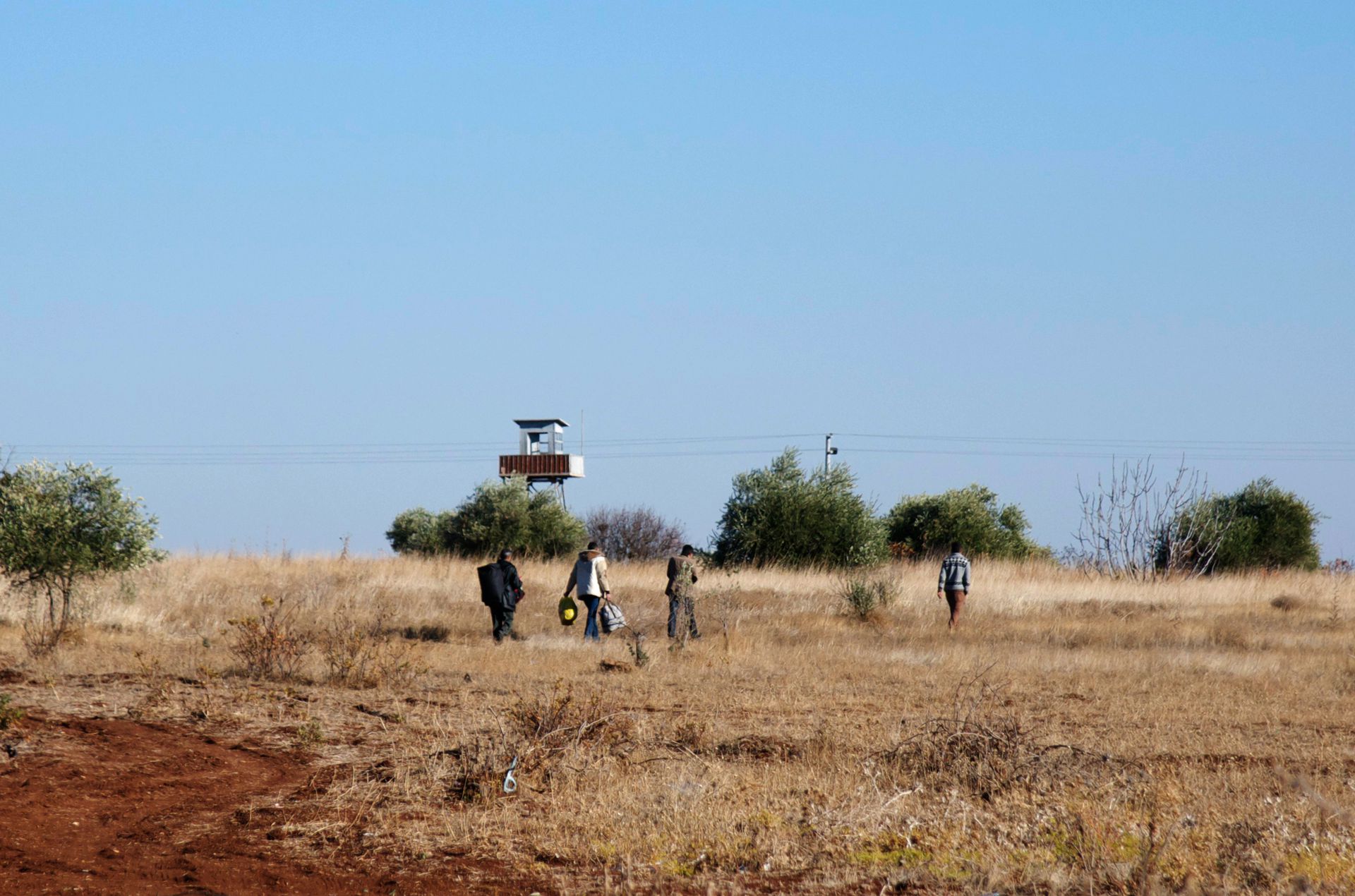
Kitchen Workshop along Turkey-Syria border. Images by Merve Bedir and Kemal Vural Tarlan. Images produced between 2015 and 2023.
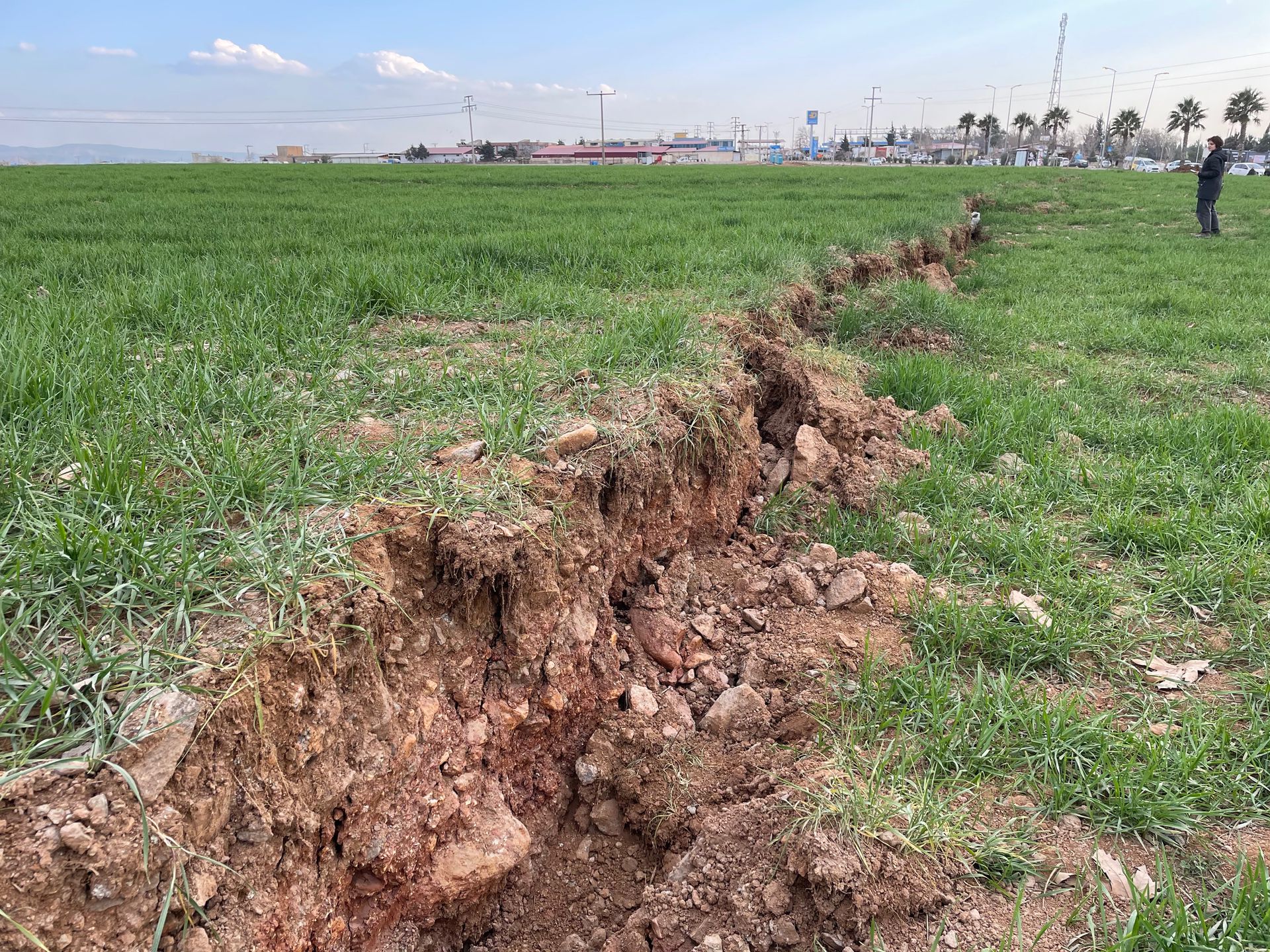
Kitchen Workshop along Turkey-Syria border. Images by Merve Bedir and Kemal Vural Tarlan. Images produced between 2015 and 2023.
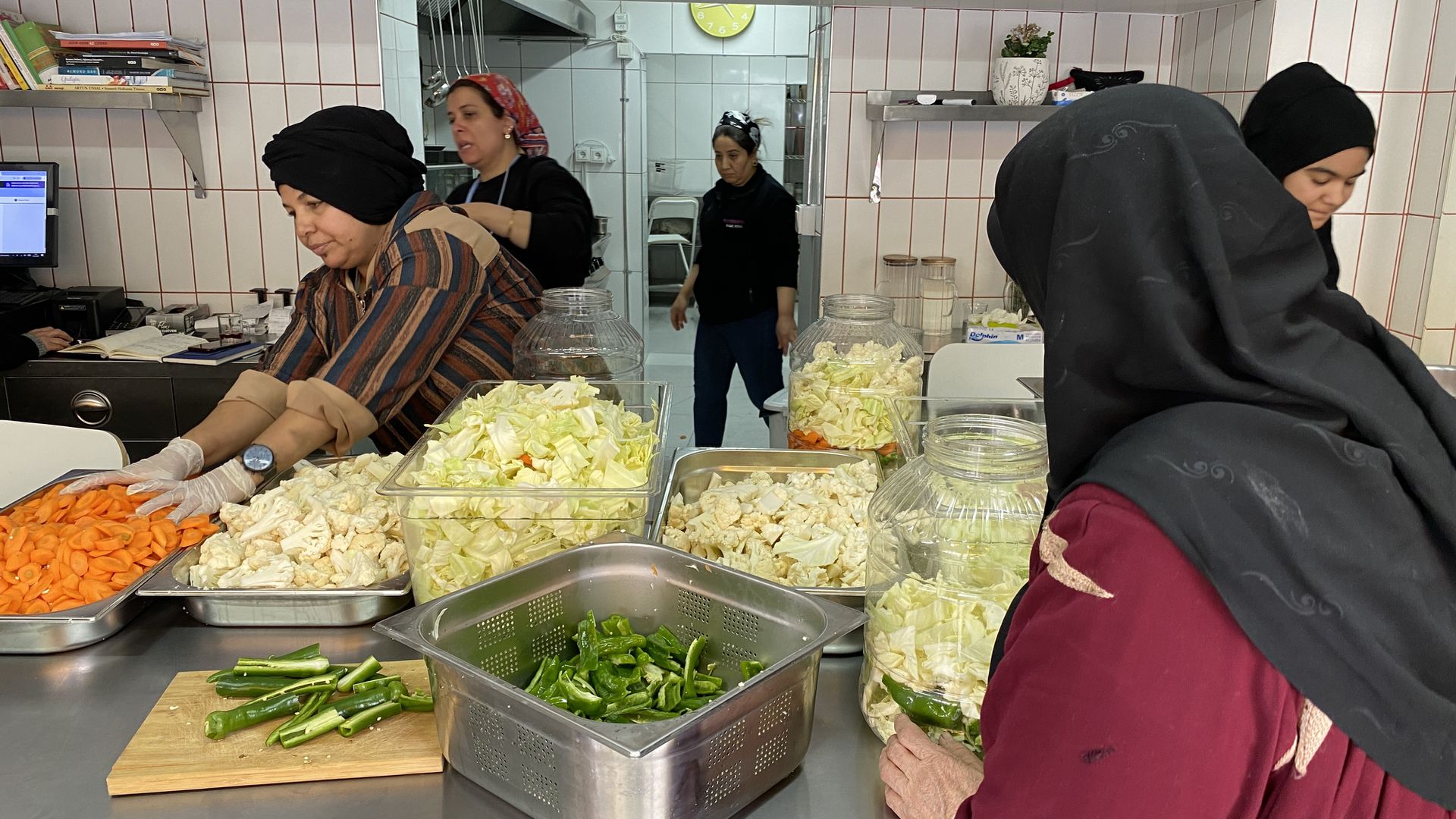
Kitchen Workshop along Turkey-Syria border. Images by Merve Bedir and Kemal Vural Tarlan. Images produced between 2015 and 2023.
I, also, would like to articulate the spiritual trust I mentioned above (tevekkül), a trust within the practice, performed towards the divine and the heaven, or towards the collective. Here, I find important to highlight responsibility, there can’t be trust without responsibility, until everyone has performed theirs, and scale, none of those above I mention related to trust are only individual values, they are also defined and performed as collective. In the cosmology of institutional politics, the spiritual trust (tevekkül) is replaced with the institution, and in geopolitics it is replaced with productivity, efficiency, and money.
In the Netherlands, where I am currently based, this spiritual trust (tevekkül) was redefined through the infrastructures of the welfare state, where the state and the institution expropriated the scale of the collective, especially in Randstad. Here, I would like to make my second proposition: the political agenda that architecture could propose needs the scales of the individual and collective together, and I claim it is easier to find it within the politics (siyasi) than the institutional politics. In Utrecht, I’m currently involved in the architecture of a new cultural infrastructure. This space is called Basecamp and has three infrastructural elements in its practice: common values, shared agenda, and key gatherings for decision making for actions and activities. My contribution is creating some of the spatial interventions, through refurbishing an existing building, designed based on the elements I mentioned before.
Sony, until now, I tried to focus on politics and agency as practice, but the haunting point of your essay is your reference to Max Liboiron’s anti-colonial science, where they assert the idea of day-to-day science in relation to technology and Land. You mention that “such a shift to day-to-day science requires a shift from matters of concern to matters of practice, and that speaks to what it would mean to do architecture politically.” This kind of thinking has the potential to undo the geopolitical in architecture, or resist it. I would further your thinking of “day-to-day science” in relation to architecture as practice through the possibility of a day-to-day pedagogy in architecture. From this position, learning and pedagogy require to be highly relational, attending to each individual’s needs, skills, and curiosities, attending to the practice and its urgencies as politics (siyasi) in the collective/context, and attending to learning based on reflection and awareness, not on standardization of knowledge, uncontextualized abstraction, and acceleration. There is no science nor education without a story. There is no materiality nor practice without a story.
Architecture’s agenda (siyasi) is pertinent to the collective and its infrastructures that take care for the interdependency of relationships of animals, things, and Land, that builds on trust, and has a degree of spiritual, “heavenly” trust with the collective. Hope is difficult to sustain in these bleak times, but I am stubborn to commit to this agenda and practice. Thinking from the political, architecture’s agenda also refers to educational and cultural institutions, and these need to change and transform to attend to the needs and urgencies of the collective agenda. How such politics of architecture (as practice) could transform these institutions would be relevant to pick up in another letter.
This letter is written in late December 2025, in response and as complementary to Sony Devabhaktuni’s piece “Things to be Done”. All quotations in this letter are from that piece.


