


407897 Results
Form:
research
research
Actions:
Date:
15 April 2019 to 18 April 2019
15 April 2019 to 18 April 2019
Form:
research
research
Date:
15 April 2019 to
18 April 2019
15 April 2019 to
18 April 2019
Form:
exhibitions
exhibitions
Actions:
Description:
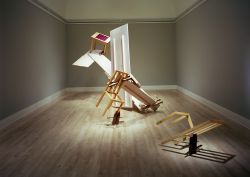
Parables and Other Allegories: The Work of Melvin Charney 1975–1990 comprises approximately 100 drawings, including many large-scale, sketches, photographs, and three large constructions. By assembling works from various public and private collections, including the CCA, the exhibition permits a comprehensive analysis of Charney’s artistic process to reveal the dialogue(...)
Parables and Other Allegories: The Work of Melvin Charney 1975–1990 comprises approximately 100 drawings, including many large-scale, sketches, photographs, and three large constructions. By assembling works from various public and private collections, including the CCA, the exhibition permits a comprehensive analysis of Charney’s artistic process to reveal the dialogue(...)
Location:
Main galleries
Main galleries
Date:
9 October 1991 to 12 January 1992
9 October 1991 to 12 January 1992
Title:
Parables and Other Allegories: The Work of Melvin Charney, 1975-1990
Actions:
Description:
Parables and Other Allegories: The Work of Melvin Charney 1975–1990 comprises approximately 100 drawings, including many large-scale, sketches, photographs, and three large constructions. By assembling works from various public and private collections, including the CCA, the exhibition permits a comprehensive analysis of Charney’s artistic process to reveal the dialogue(...)
Parables and Other Allegories: The Work of Melvin Charney, 1975-1990
Actions:
Description:
Parables and Other Allegories: The Work of Melvin Charney 1975–1990 comprises approximately 100 drawings, including many large-scale, sketches, photographs, and three large constructions. By assembling works from various public and private collections, including the CCA, the exhibition permits a comprehensive analysis of Charney’s artistic process to reveal the dialogue(...)
Form:
exhibitions
exhibitions
Date:
9 October 1991 to
12 January 1992
9 October 1991 to
12 January 1992
Location:
Main galleries
Main galleries
Form:
exhibitions
exhibitions

Title:
Starting From... The Suburbs
Starting From... The Suburbs
Actions:
Description:
We are more likely today to consider suburbs formless, vacant, or unsustainable compared to the dense social and economic activity of cities. Starting from… The Suburbs looks at the past fifty years of suburban culture through the lens of the CCA Collection’s photography holdings, produced by photographers’ longstanding attraction and aversion to this urban form. The(...)
We are more likely today to consider suburbs formless, vacant, or unsustainable compared to the dense social and economic activity of cities. Starting from… The Suburbs looks at the past fifty years of suburban culture through the lens of the CCA Collection’s photography holdings, produced by photographers’ longstanding attraction and aversion to this urban form. The(...)
Location:
Hall cases
Hall cases
Date:
16 February 2012 to 10 June 2012
16 February 2012 to 10 June 2012
Title:
Starting From... The Suburbs
Actions:
Description:
We are more likely today to consider suburbs formless, vacant, or unsustainable compared to the dense social and economic activity of cities. Starting from… The Suburbs looks at the past fifty years of suburban culture through the lens of the CCA Collection’s photography holdings, produced by photographers’ longstanding attraction and aversion to this urban form. The(...)
Starting From... The Suburbs
Actions:
Description:
We are more likely today to consider suburbs formless, vacant, or unsustainable compared to the dense social and economic activity of cities. Starting from… The Suburbs looks at the past fifty years of suburban culture through the lens of the CCA Collection’s photography holdings, produced by photographers’ longstanding attraction and aversion to this urban form. The(...)
Form:
exhibitions
exhibitions
Date:
16 February 2012 to
10 June 2012
16 February 2012 to
10 June 2012
Location:
Hall cases
Hall cases
Form:
exhibitions
exhibitions
Title:
Starting From... Windows
Starting From... Windows
Actions:
Description:
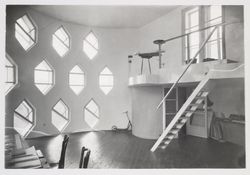
A window can be a void, an aperture, or a glass surface. Existing at the boundary between interior and exterior, windows admit light and air and frame views. The idea of the window, combined with advances in glass as a building material, became central to architectural experimentation during the modern period. This selection from the CCA collection presents a range of(...)
A window can be a void, an aperture, or a glass surface. Existing at the boundary between interior and exterior, windows admit light and air and frame views. The idea of the window, combined with advances in glass as a building material, became central to architectural experimentation during the modern period. This selection from the CCA collection presents a range of(...)
Location:
Hall cases
Hall cases
Date:
17 June 2010 to 27 September 2010
17 June 2010 to 27 September 2010
Title:
Starting From... Windows
Actions:
Description:
A window can be a void, an aperture, or a glass surface. Existing at the boundary between interior and exterior, windows admit light and air and frame views. The idea of the window, combined with advances in glass as a building material, became central to architectural experimentation during the modern period. This selection from the CCA collection presents a range of(...)
Starting From... Windows
Actions:
Description:
A window can be a void, an aperture, or a glass surface. Existing at the boundary between interior and exterior, windows admit light and air and frame views. The idea of the window, combined with advances in glass as a building material, became central to architectural experimentation during the modern period. This selection from the CCA collection presents a range of(...)
Form:
exhibitions
exhibitions
Date:
17 June 2010 to
27 September 2010
17 June 2010 to
27 September 2010
Location:
Hall cases
Hall cases
Form:
exhibitions
exhibitions
Title:
Starting From... The Bubble
Starting From... The Bubble
Actions:
Description:
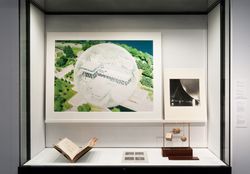
The bubble is a wonder of surface tension. In its architectural interpretation, the bubble can be understood as a feat of engineering or as a metaphor for an enclosed hermetic environment. As such, the bubble emerges, in the architect Cedric Price’s words, “in any shape or any size” as a powerful symbol of the future, or becomes synonymous with the condition of isolation(...)
The bubble is a wonder of surface tension. In its architectural interpretation, the bubble can be understood as a feat of engineering or as a metaphor for an enclosed hermetic environment. As such, the bubble emerges, in the architect Cedric Price’s words, “in any shape or any size” as a powerful symbol of the future, or becomes synonymous with the condition of isolation(...)
Location:
Hall cases
Hall cases
Date:
26 November 2009 to 17 January 2010
26 November 2009 to 17 January 2010
Title:
Starting From... The Bubble
Actions:
Description:
The bubble is a wonder of surface tension. In its architectural interpretation, the bubble can be understood as a feat of engineering or as a metaphor for an enclosed hermetic environment. As such, the bubble emerges, in the architect Cedric Price’s words, “in any shape or any size” as a powerful symbol of the future, or becomes synonymous with the condition of isolation(...)
Starting From... The Bubble
Actions:
Description:
The bubble is a wonder of surface tension. In its architectural interpretation, the bubble can be understood as a feat of engineering or as a metaphor for an enclosed hermetic environment. As such, the bubble emerges, in the architect Cedric Price’s words, “in any shape or any size” as a powerful symbol of the future, or becomes synonymous with the condition of isolation(...)
Form:
exhibitions
exhibitions
Date:
26 November 2009 to
17 January 2010
26 November 2009 to
17 January 2010
Location:
Hall cases
Hall cases
Form:
exhibitions
exhibitions
Title:
Starting From... Pink
Starting From... Pink
Actions:
Description:
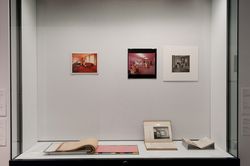
Architectural engagement with colour involves its physical materiality as well as its atmospheric and psychological aspects. This hall-case display features photographs, renderings, and colour tools from the CCA collection that represent, communicate, and imagine colour for architecture—with a particular emphasis on the hue of pink. Pink is a chromatic anomaly. As a(...)
Architectural engagement with colour involves its physical materiality as well as its atmospheric and psychological aspects. This hall-case display features photographs, renderings, and colour tools from the CCA collection that represent, communicate, and imagine colour for architecture—with a particular emphasis on the hue of pink. Pink is a chromatic anomaly. As a(...)
Location:
Hall cases
Hall cases
Date:
11 September 2009 to 17 January 2010
11 September 2009 to 17 January 2010
Title:
Starting From... Pink
Actions:
Description:
Architectural engagement with colour involves its physical materiality as well as its atmospheric and psychological aspects. This hall-case display features photographs, renderings, and colour tools from the CCA collection that represent, communicate, and imagine colour for architecture—with a particular emphasis on the hue of pink. Pink is a chromatic anomaly. As a(...)
Starting From... Pink
Actions:
Description:
Architectural engagement with colour involves its physical materiality as well as its atmospheric and psychological aspects. This hall-case display features photographs, renderings, and colour tools from the CCA collection that represent, communicate, and imagine colour for architecture—with a particular emphasis on the hue of pink. Pink is a chromatic anomaly. As a(...)
Form:
exhibitions
exhibitions
Date:
11 September 2009 to
17 January 2010
11 September 2009 to
17 January 2010
Location:
Hall cases
Hall cases
Form:
exhibitions
exhibitions
Title:
Starting From... Travel
Starting From... Travel
Actions:
Description:
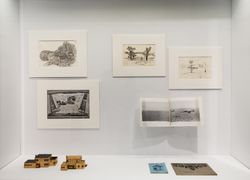
Interpreting the subject of travel to distant places, the exhibition charts an expanded notion of travel that spans imaginary journeys, strange sites, vanishing points, floating and portable houses, endless caves, swirling diamond domes, tombs, crypts and catacombs, tunnel adventures, formal studies, technical innovation, cultural imagination, and experimental(...)
Interpreting the subject of travel to distant places, the exhibition charts an expanded notion of travel that spans imaginary journeys, strange sites, vanishing points, floating and portable houses, endless caves, swirling diamond domes, tombs, crypts and catacombs, tunnel adventures, formal studies, technical innovation, cultural imagination, and experimental(...)
Location:
Hall cases
Hall cases
Date:
3 December 2008 to 1 May 2009
3 December 2008 to 1 May 2009
Title:
Starting From... Travel
Actions:
Description:
Interpreting the subject of travel to distant places, the exhibition charts an expanded notion of travel that spans imaginary journeys, strange sites, vanishing points, floating and portable houses, endless caves, swirling diamond domes, tombs, crypts and catacombs, tunnel adventures, formal studies, technical innovation, cultural imagination, and experimental(...)
Starting From... Travel
Actions:
Description:
Interpreting the subject of travel to distant places, the exhibition charts an expanded notion of travel that spans imaginary journeys, strange sites, vanishing points, floating and portable houses, endless caves, swirling diamond domes, tombs, crypts and catacombs, tunnel adventures, formal studies, technical innovation, cultural imagination, and experimental(...)
Form:
exhibitions
exhibitions
Date:
3 December 2008 to
1 May 2009
3 December 2008 to
1 May 2009
Location:
Hall cases
Hall cases
Form:
exhibitions
exhibitions
Description:
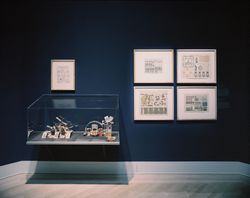
Architecture, though constrained by boundaries of function and structure, is always ultimately an act of the imagination. Potential Architecture: Construction Toys from the CCA Collection explores twenty-one construction toys, made in the hundred years from 1850 to 1950, that were designed to challenge a child’s creativity. The toys illustrate how children learn to invent(...)
Architecture, though constrained by boundaries of function and structure, is always ultimately an act of the imagination. Potential Architecture: Construction Toys from the CCA Collection explores twenty-one construction toys, made in the hundred years from 1850 to 1950, that were designed to challenge a child’s creativity. The toys illustrate how children learn to invent(...)
Location:
Octagonal gallery
Octagonal gallery
Date:
4 December 1991 to 8 March 1992
4 December 1991 to 8 March 1992
Title:
Potential Architecture: Construction Toys from the CCA Collection
Actions:
Description:
Architecture, though constrained by boundaries of function and structure, is always ultimately an act of the imagination. Potential Architecture: Construction Toys from the CCA Collection explores twenty-one construction toys, made in the hundred years from 1850 to 1950, that were designed to challenge a child’s creativity. The toys illustrate how children learn to invent(...)
Potential Architecture: Construction Toys from the CCA Collection
Actions:
Description:
Architecture, though constrained by boundaries of function and structure, is always ultimately an act of the imagination. Potential Architecture: Construction Toys from the CCA Collection explores twenty-one construction toys, made in the hundred years from 1850 to 1950, that were designed to challenge a child’s creativity. The toys illustrate how children learn to invent(...)
Form:
exhibitions
exhibitions
Date:
4 December 1991 to
8 March 1992
4 December 1991 to
8 March 1992
Location:
Octagonal gallery
Octagonal gallery
Form:
exhibitions
exhibitions
Title:
Toys that Teach
Toys that Teach
Actions:
Description:
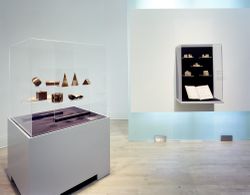
The architectural toy typically looks to the world of “real” buildings, reproducing columns, arches, and windows in miniature form. Toys That Teach, however, presents a range of construction toys based on the elementary forms of geometry found in nature: cubes and spheres, cones and cylinders, rods and prisms. The toys serve not only for building but also for mathematical(...)
The architectural toy typically looks to the world of “real” buildings, reproducing columns, arches, and windows in miniature form. Toys That Teach, however, presents a range of construction toys based on the elementary forms of geometry found in nature: cubes and spheres, cones and cylinders, rods and prisms. The toys serve not only for building but also for mathematical(...)
Location:
Octagonal gallery
Octagonal gallery
Date:
16 December 1992 to 25 April 1993
16 December 1992 to 25 April 1993
Title:
Toys that Teach
Actions:
Description:
The architectural toy typically looks to the world of “real” buildings, reproducing columns, arches, and windows in miniature form. Toys That Teach, however, presents a range of construction toys based on the elementary forms of geometry found in nature: cubes and spheres, cones and cylinders, rods and prisms. The toys serve not only for building but also for mathematical(...)
Toys that Teach
Actions:
Description:
The architectural toy typically looks to the world of “real” buildings, reproducing columns, arches, and windows in miniature form. Toys That Teach, however, presents a range of construction toys based on the elementary forms of geometry found in nature: cubes and spheres, cones and cylinders, rods and prisms. The toys serve not only for building but also for mathematical(...)
Form:
exhibitions
exhibitions
Date:
16 December 1992 to
25 April 1993
16 December 1992 to
25 April 1993
Location:
Octagonal gallery
Octagonal gallery
Form:
exhibitions
exhibitions
Actions:
Description:
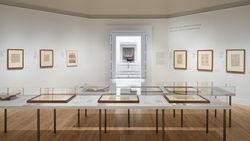
The drawings presented in this exhibition are annotated to show the Italian Renaissance master architect Andrea Palladio as a draughtsman considering a blank sheet of paper. Palladio at Work considers a life sustained by drawing, the process by which Palladio’s design was developed, argued, and communicated. Curated by Guido Beltramini and Charles Hind. Co-organized with(...)
The drawings presented in this exhibition are annotated to show the Italian Renaissance master architect Andrea Palladio as a draughtsman considering a blank sheet of paper. Palladio at Work considers a life sustained by drawing, the process by which Palladio’s design was developed, argued, and communicated. Curated by Guido Beltramini and Charles Hind. Co-organized with(...)
Location:
Octagonal gallery
Octagonal gallery
Date:
3 March 2011 to 22 May 2011
3 March 2011 to 22 May 2011
Title:
Palladio at Work: An annotated exhibition
Actions:
Description:
The drawings presented in this exhibition are annotated to show the Italian Renaissance master architect Andrea Palladio as a draughtsman considering a blank sheet of paper. Palladio at Work considers a life sustained by drawing, the process by which Palladio’s design was developed, argued, and communicated. Curated by Guido Beltramini and Charles Hind. Co-organized with(...)
Palladio at Work: An annotated exhibition
Actions:
Description:
The drawings presented in this exhibition are annotated to show the Italian Renaissance master architect Andrea Palladio as a draughtsman considering a blank sheet of paper. Palladio at Work considers a life sustained by drawing, the process by which Palladio’s design was developed, argued, and communicated. Curated by Guido Beltramini and Charles Hind. Co-organized with(...)
Form:
exhibitions
exhibitions
Date:
3 March 2011 to
22 May 2011
3 March 2011 to
22 May 2011
Location:
Octagonal gallery
Octagonal gallery


