


2 Results
Form:
books
books
Actions:
Price:
$56.95
(available to order)
Summary:
Change is an inherent feature of any city. As the wide-reaching and complex research conducted for this publication illustrates, this can challenge the rational distribution of functions in the urban space and provide temporary occupation for all sorts of purposes and activities. Here, ‘Occasional Urbanities’ refers to change brought about by the growing complexity of(...)
$56.95
(available to order)
Summary:
Change is an inherent feature of any city. As the wide-reaching and complex research conducted for this publication illustrates, this can challenge the rational distribution of functions in the urban space and provide temporary occupation for all sorts of purposes and activities. Here, ‘Occasional Urbanities’ refers to change brought about by the growing complexity of(...)
Title:
Post-it city : occasional urbanities
Actions:
Price:
$56.95
(available to order)
Summary:
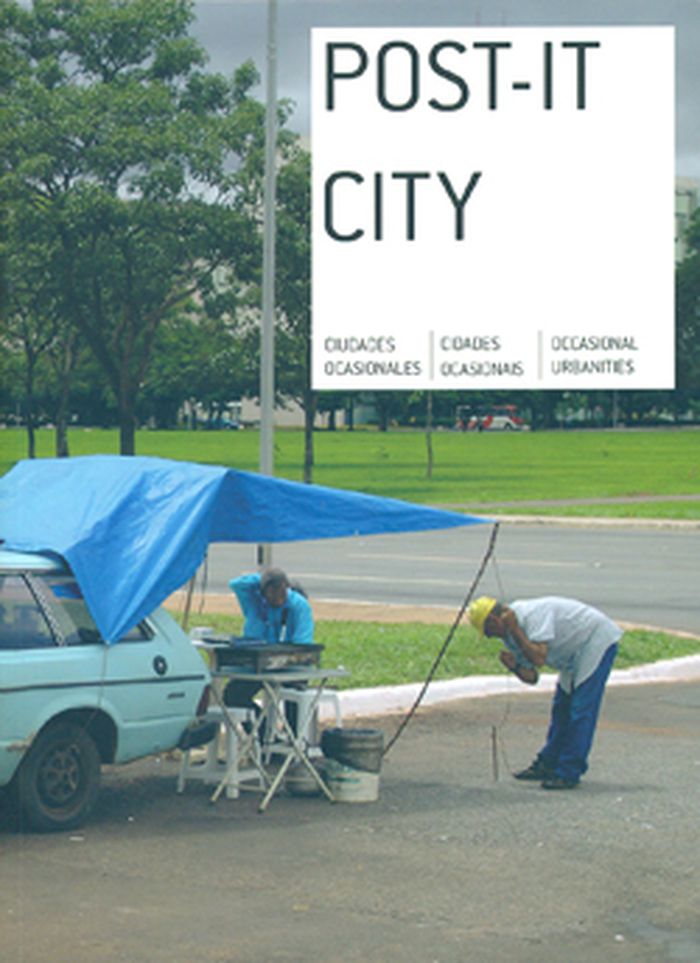
Change is an inherent feature of any city. As the wide-reaching and complex research conducted for this publication illustrates, this can challenge the rational distribution of functions in the urban space and provide temporary occupation for all sorts of purposes and activities. Here, ‘Occasional Urbanities’ refers to change brought about by the growing complexity of urban societies which sees new forms or urbanism and urban aesthetics arising that at the same time pose new problems for a city. While the term, ‘Post-it’ highlights the moveable aspects of the contemporary urban terrain that gives rise to these mutations – fleeting occupations, accumulation and re-location of objects and travelling micro-communities.
Post-it city : occasional urbanities
Actions:
Price:
$56.95
(available to order)
Summary:
Change is an inherent feature of any city. As the wide-reaching and complex research conducted for this publication illustrates, this can challenge the rational distribution of functions in the urban space and provide temporary occupation for all sorts of purposes and activities. Here, ‘Occasional Urbanities’ refers to change brought about by the growing complexity of urban societies which sees new forms or urbanism and urban aesthetics arising that at the same time pose new problems for a city. While the term, ‘Post-it’ highlights the moveable aspects of the contemporary urban terrain that gives rise to these mutations – fleeting occupations, accumulation and re-location of objects and travelling micro-communities.
Form:
books
books
Publication:
October 2009
October 2009
Subject:
Urban Theory
Urban Theory
Form:
books
books
Actions:
Price:
$25.00
(available in store)
Summary:
Following the 1968 earthquake in Sicily, plans were produced for the total reconstruction of the destroyed town of Gibellina, inspired by the models of the English New Towns. After an initial phase in which international architects and artists participated in the urban redesign, in the late 1970s a series of seminars and workshops was held at the University of Palermo to(...)
$25.00
(available in store)
Summary:
Following the 1968 earthquake in Sicily, plans were produced for the total reconstruction of the destroyed town of Gibellina, inspired by the models of the English New Towns. After an initial phase in which international architects and artists participated in the urban redesign, in the late 1970s a series of seminars and workshops was held at the University of Palermo to(...)
Title:
Ungers after all: Fragments of a project for Gibellina
Actions:
Price:
$25.00
(available in store)
Summary:
Following the 1968 earthquake in Sicily, plans were produced for the total reconstruction of the destroyed town of Gibellina, inspired by the models of the English New Towns. After an initial phase in which international architects and artists participated in the urban redesign, in the late 1970s a series of seminars and workshops was held at the University of Palermo to take stock of the reconstruction. Oswald Mathias Ungers (1926–2007) was then called to design the town’s central area, which was still undefined. His Civic Centre proposal reflected on the relationship between built and public space, and between city, monument, and history. Ultimately, however, little was realized.
Ungers after all: Fragments of a project for Gibellina
Actions:
Price:
$25.00
(available in store)
Summary:
Following the 1968 earthquake in Sicily, plans were produced for the total reconstruction of the destroyed town of Gibellina, inspired by the models of the English New Towns. After an initial phase in which international architects and artists participated in the urban redesign, in the late 1970s a series of seminars and workshops was held at the University of Palermo to take stock of the reconstruction. Oswald Mathias Ungers (1926–2007) was then called to design the town’s central area, which was still undefined. His Civic Centre proposal reflected on the relationship between built and public space, and between city, monument, and history. Ultimately, however, little was realized.
Form:
books
books
Publication:
September 2025
September 2025
Subject:
Architecture Monographs
Architecture Monographs


