


23 Results
Form:
books
books

Title:
L'univers Playboy
L'univers Playboy
Actions:
Price:
$41.00
(available in store)
Summary:
Né en 1926, Hugh Hefner est à l'origine du magazine Playboy et de sa compagne indissociable : la playmate. Pourtant, en dépit d'un tirage centuplé entre 1953 et 1973, il faut se défaire de ce storytelling de banal self-made-man. Car à mi-chemin de Walt Disney et d'Albert R. Broccoli (le principal producteur des films de James Bond), Hefner est d'abord un authentique(...)
$41.00
(available in store)
Summary:
Né en 1926, Hugh Hefner est à l'origine du magazine Playboy et de sa compagne indissociable : la playmate. Pourtant, en dépit d'un tirage centuplé entre 1953 et 1973, il faut se défaire de ce storytelling de banal self-made-man. Car à mi-chemin de Walt Disney et d'Albert R. Broccoli (le principal producteur des films de James Bond), Hefner est d'abord un authentique(...)
Title:
L'univers Playboy
Actions:
Price:
$41.00
(available in store)
Summary:
Né en 1926, Hugh Hefner est à l'origine du magazine Playboy et de sa compagne indissociable : la playmate. Pourtant, en dépit d'un tirage centuplé entre 1953 et 1973, il faut se défaire de ce storytelling de banal self-made-man. Car à mi-chemin de Walt Disney et d'Albert R. Broccoli (le principal producteur des films de James Bond), Hefner est d'abord un authentique créateur d'univers. Sexy pour les uns, sexiste pour les autres, l'excentricité érotique de ses penthouses cache en réalité une cosmétique bien plus vaste. Avec son jet privé Big Bunny, ses hôtesses, ses clubs, ses Manoirs Est et Ouest, sa Grotte, son zoo, son lit connecté et ses filiales multimédias, Hefner a finalement inventé un monde illusoire à l'image de l'Amérique : le sien.
L'univers Playboy
Actions:
Price:
$41.00
(available in store)
Summary:
Né en 1926, Hugh Hefner est à l'origine du magazine Playboy et de sa compagne indissociable : la playmate. Pourtant, en dépit d'un tirage centuplé entre 1953 et 1973, il faut se défaire de ce storytelling de banal self-made-man. Car à mi-chemin de Walt Disney et d'Albert R. Broccoli (le principal producteur des films de James Bond), Hefner est d'abord un authentique créateur d'univers. Sexy pour les uns, sexiste pour les autres, l'excentricité érotique de ses penthouses cache en réalité une cosmétique bien plus vaste. Avec son jet privé Big Bunny, ses hôtesses, ses clubs, ses Manoirs Est et Ouest, sa Grotte, son zoo, son lit connecté et ses filiales multimédias, Hefner a finalement inventé un monde illusoire à l'image de l'Amérique : le sien.
Form:
books
books
Publication:
November 2016
November 2016
Subject:
Architectural Theory
Architectural Theory
Form:
books
books
Actions:
Price:
$47.95
(available to order)
Summary:
À travers l'oeuvre de deux figures majeures du mouvement moderne, Adolf Loos et Le Corbusier, Béatriz Colomina analyse cette architecture qui ne devient moderne que dans sa confrontation avec les mass médias. Au lieu d'aborder l'architecture moderne comme une pratique artistique en opposition à la culture de masse, Colomina considère les systèmes émergents(...)
$47.95
(available to order)
Summary:
À travers l'oeuvre de deux figures majeures du mouvement moderne, Adolf Loos et Le Corbusier, Béatriz Colomina analyse cette architecture qui ne devient moderne que dans sa confrontation avec les mass médias. Au lieu d'aborder l'architecture moderne comme une pratique artistique en opposition à la culture de masse, Colomina considère les systèmes émergents(...)
Title:
La publicité du privé : de Loos à Le Corbusier
Actions:
Price:
$47.95
(available to order)
Summary:
À travers l'oeuvre de deux figures majeures du mouvement moderne, Adolf Loos et Le Corbusier, Béatriz Colomina analyse cette architecture qui ne devient moderne que dans sa confrontation avec les mass médias. Au lieu d'aborder l'architecture moderne comme une pratique artistique en opposition à la culture de masse, Colomina considère les systèmes émergents de communication, qui définiront la culture du XXe siècle, comme le lieu véritable de production de l'architecture moderne. Elle déplace ainsi le discours architectural vers l'intersection de nombreux systèmes de représention (dessin, maquette, photographie, livre, publicité). Avec la modernité, le lieu de la production architecturale s'est littéralement transféré de la rue vers les photographies, les films, les publications ou les expositions - déplacement qui présuppose un nouveau sens de l'espace, défini par des images plutôt que par des murs. Colomina nous retrace ces modifications radicales dans l'expérience de l'espace à travers les incarnations modernes de l'archive, de la ville, de la mode, du tourisme, de la guerre, de la sexualité.
La publicité du privé : de Loos à Le Corbusier
Actions:
Price:
$47.95
(available to order)
Summary:
À travers l'oeuvre de deux figures majeures du mouvement moderne, Adolf Loos et Le Corbusier, Béatriz Colomina analyse cette architecture qui ne devient moderne que dans sa confrontation avec les mass médias. Au lieu d'aborder l'architecture moderne comme une pratique artistique en opposition à la culture de masse, Colomina considère les systèmes émergents de communication, qui définiront la culture du XXe siècle, comme le lieu véritable de production de l'architecture moderne. Elle déplace ainsi le discours architectural vers l'intersection de nombreux systèmes de représention (dessin, maquette, photographie, livre, publicité). Avec la modernité, le lieu de la production architecturale s'est littéralement transféré de la rue vers les photographies, les films, les publications ou les expositions - déplacement qui présuppose un nouveau sens de l'espace, défini par des images plutôt que par des murs. Colomina nous retrace ces modifications radicales dans l'expérience de l'espace à travers les incarnations modernes de l'archive, de la ville, de la mode, du tourisme, de la guerre, de la sexualité.
Form:
books
books
Publication:
April 1998, Orléans
April 1998, Orléans
Subject:
Architectural Theory
Architectural Theory
Form:
books
books

Price:
$42.95
(available to order)
Summary:
The technological innovation and unprecedented physical growth of the cold war era permeated American life in every aspect and at every scale. From the creation of the military-industrial complex and the beginnings of suburban sprawl to the production of the ballpoint pen and the TV dinner, the artifacts of the period are as numerous and diverse as they are familiar. Over(...)
$42.95
(available to order)
Summary:
The technological innovation and unprecedented physical growth of the cold war era permeated American life in every aspect and at every scale. From the creation of the military-industrial complex and the beginnings of suburban sprawl to the production of the ballpoint pen and the TV dinner, the artifacts of the period are as numerous and diverse as they are familiar. Over(...)
Subject:
Architectural Theory
Architectural Theory
Publication:
April 2004, New York
April 2004, New York
Title:
Cold war hothouses : inventing postwar culture, from cockpit to Playboy
Actions:
Price:
$42.95
(available to order)
Summary:
The technological innovation and unprecedented physical growth of the cold war era permeated American life in every aspect and at every scale. From the creation of the military-industrial complex and the beginnings of suburban sprawl to the production of the ballpoint pen and the TV dinner, the artifacts of the period are as numerous and diverse as they are familiar. Over the past half-century, our awe at the advances of postwar society has softened to nostalgia, and our affection for its material culture has clouded our memories of the enormous spatial reorganizations and infrastructural transformations that changed American life forever. "Cold War Hot Houses" casts a clear, even playful, eye on this pivotal time in history, examining topics as diverse as the creation of the interstate highway system and the shopping centre, and the domestication of the national parks as well as the production of such seemingly mundane products as the drive-in theater, aluminum foil, and the king-size bed. The result is a vivid snapshot of American culture that still resonates today.
Cold war hothouses : inventing postwar culture, from cockpit to Playboy
Actions:
Price:
$42.95
(available to order)
Summary:
The technological innovation and unprecedented physical growth of the cold war era permeated American life in every aspect and at every scale. From the creation of the military-industrial complex and the beginnings of suburban sprawl to the production of the ballpoint pen and the TV dinner, the artifacts of the period are as numerous and diverse as they are familiar. Over the past half-century, our awe at the advances of postwar society has softened to nostalgia, and our affection for its material culture has clouded our memories of the enormous spatial reorganizations and infrastructural transformations that changed American life forever. "Cold War Hot Houses" casts a clear, even playful, eye on this pivotal time in history, examining topics as diverse as the creation of the interstate highway system and the shopping centre, and the domestication of the national parks as well as the production of such seemingly mundane products as the drive-in theater, aluminum foil, and the king-size bed. The result is a vivid snapshot of American culture that still resonates today.
Form:
books
books
Publication:
April 2004, New York
April 2004, New York
Subject:
Architectural Theory
Architectural Theory
Form:
books
books
Title:
Dan Graham
Dan Graham
Actions:
Price:
$59.95
(available to order)
Summary:
Dan Graham is among the most influential of the Conceptual artists who emerged in America during the mid 1960s. A pioneer in performance and video art in the 1970s, Graham later turned his attention to architectural projects designed for social interaction in public spaces, among them The Children’s Pavilion (1989) with Jeff Wall. Writing has always been a major aspect(...)
$59.95
(available to order)
Summary:
Dan Graham is among the most influential of the Conceptual artists who emerged in America during the mid 1960s. A pioneer in performance and video art in the 1970s, Graham later turned his attention to architectural projects designed for social interaction in public spaces, among them The Children’s Pavilion (1989) with Jeff Wall. Writing has always been a major aspect(...)
Subject:
Contemporary Art Monographs
Contemporary Art Monographs
Publication:
May 2001, London
May 2001, London
Title:
Dan Graham
Actions:
Price:
$59.95
(available to order)
Summary:
Dan Graham is among the most influential of the Conceptual artists who emerged in America during the mid 1960s. A pioneer in performance and video art in the 1970s, Graham later turned his attention to architectural projects designed for social interaction in public spaces, among them The Children’s Pavilion (1989) with Jeff Wall. Writing has always been a major aspect of Graham’s work. His texts range from early Conceptual art pieces inserted in mass-market magazines, to writing on his fellow artists, to analyses of popular culture, from Dean Martin to the post-Punk era. Well-known also among architects and urban theorists, during the 1990s Graham has been offered major public commissions throughout North America and Europe. London-based curator Mark Francis discusses with the artist how his public participation-based work has evolved. Brussels-based critic Birgit Pelzer draws on her extensive knowledge of Graham’s work and writings. New York-based architectural theorist Beatriz Colomina focuses on Graham’s Alteration to a Suburban House (1978). The artist has chosen an extract from the science fiction novel Ubik by Philip K Dick, whose writings were a formative influence. A substantial Artist’s Writings section, key to understanding Dan Graham, completes the book.
Dan Graham
Actions:
Price:
$59.95
(available to order)
Summary:
Dan Graham is among the most influential of the Conceptual artists who emerged in America during the mid 1960s. A pioneer in performance and video art in the 1970s, Graham later turned his attention to architectural projects designed for social interaction in public spaces, among them The Children’s Pavilion (1989) with Jeff Wall. Writing has always been a major aspect of Graham’s work. His texts range from early Conceptual art pieces inserted in mass-market magazines, to writing on his fellow artists, to analyses of popular culture, from Dean Martin to the post-Punk era. Well-known also among architects and urban theorists, during the 1990s Graham has been offered major public commissions throughout North America and Europe. London-based curator Mark Francis discusses with the artist how his public participation-based work has evolved. Brussels-based critic Birgit Pelzer draws on her extensive knowledge of Graham’s work and writings. New York-based architectural theorist Beatriz Colomina focuses on Graham’s Alteration to a Suburban House (1978). The artist has chosen an extract from the science fiction novel Ubik by Philip K Dick, whose writings were a formative influence. A substantial Artist’s Writings section, key to understanding Dan Graham, completes the book.
Form:
books
books
Publication:
May 2001, London
May 2001, London
Subject:
Contemporary Art Monographs
Contemporary Art Monographs
Form:
books
books
Title:
Sexuality and space
Sexuality and space
Actions:
Price:
$49.95
(available to order)
Summary:
This collection of interdisciplinary essays addresses gender in relation to architectural discourse and critical theory, focusing on finding the close relationships between sexuality and space hidden within(...)
$49.95
(available to order)
Summary:
This collection of interdisciplinary essays addresses gender in relation to architectural discourse and critical theory, focusing on finding the close relationships between sexuality and space hidden within(...)
Title:
Sexuality and space
Actions:
Price:
$49.95
(available to order)
Summary:
This collection of interdisciplinary essays addresses gender in relation to architectural discourse and critical theory, focusing on finding the close relationships between sexuality and space hidden within everyday practices. The contributors are Jennifer Bloomer, Victor Burgin, Beatriz Colomina, Elizabeth Grosz, Catherine Ingraham, Meaghan Morris, Laura Mulvey, Molly Nesbit, Alessandra Ponte, Lynn Spigel, Patricia White, and Mark Wigley.
Sexuality and space
Actions:
Price:
$49.95
(available to order)
Summary:
This collection of interdisciplinary essays addresses gender in relation to architectural discourse and critical theory, focusing on finding the close relationships between sexuality and space hidden within everyday practices. The contributors are Jennifer Bloomer, Victor Burgin, Beatriz Colomina, Elizabeth Grosz, Catherine Ingraham, Meaghan Morris, Laura Mulvey, Molly Nesbit, Alessandra Ponte, Lynn Spigel, Patricia White, and Mark Wigley.
Form:
books
books
Publication:
January 1992, New York
January 1992, New York
Subject:
Gender Theory in Architecture
Gender Theory in Architecture
Form:
books
books
Actions:
Price:
$62.00
(available to order)
Summary:
Through a series of close readings of two major figures of the modern movement, Adolf Loos and Le Corbusier, Beatriz Colomina argues that architecture only becomes modern in its engagement with the mass media, and that in so doing it radically displaces the(...)
$62.00
(available to order)
Summary:
Through a series of close readings of two major figures of the modern movement, Adolf Loos and Le Corbusier, Beatriz Colomina argues that architecture only becomes modern in its engagement with the mass media, and that in so doing it radically displaces the(...)
Title:
Privacy and publicity : modern architecture as mass media
Actions:
Price:
$62.00
(available to order)
Summary:
Through a series of close readings of two major figures of the modern movement, Adolf Loos and Le Corbusier, Beatriz Colomina argues that architecture only becomes modern in its engagement with the mass media, and that in so doing it radically displaces the traditional sense of space and subjectivity. "Privacy and Publicity" questions certain ideological assumptions underlying the received view of modern architecture and reconsiders the methodology of architectural criticism itself. Where conventional criticism portrays modern architecture as a high artistic practice in opposition to mass culture, Colomina sees the emerging systems of communication that have come to define twentieth-century culture -- the mass media -- as the true site within which modern architecture was produced. She considers architectural discourse as the intersection of a number of systems of representation such as drawings, models, photographs, books, films, and advertisements. This does not mean abandoning the architectural object, the building, but rather looking at it in a different way. The building is understood here in the same way as all the media that frame it, as a mechanism of representation in its own right.
Privacy and publicity : modern architecture as mass media
Actions:
Price:
$62.00
(available to order)
Summary:
Through a series of close readings of two major figures of the modern movement, Adolf Loos and Le Corbusier, Beatriz Colomina argues that architecture only becomes modern in its engagement with the mass media, and that in so doing it radically displaces the traditional sense of space and subjectivity. "Privacy and Publicity" questions certain ideological assumptions underlying the received view of modern architecture and reconsiders the methodology of architectural criticism itself. Where conventional criticism portrays modern architecture as a high artistic practice in opposition to mass culture, Colomina sees the emerging systems of communication that have come to define twentieth-century culture -- the mass media -- as the true site within which modern architecture was produced. She considers architectural discourse as the intersection of a number of systems of representation such as drawings, models, photographs, books, films, and advertisements. This does not mean abandoning the architectural object, the building, but rather looking at it in a different way. The building is understood here in the same way as all the media that frame it, as a mechanism of representation in its own right.
Form:
books
books
Publication:
April 1996, Cambridge
April 1996, Cambridge
Subject:
Architectural Theory
Architectural Theory
Form:
books
books

Actions:
Price:
$13.00
(available to order)
Summary:
Du gazon "américain"?! Une pelouse en guerre?! De Pearl Harbor à la Crise des missiles cubains?! Pour Beatriz Colomina, historienne de l'architecture à l'université de Princeton, le mythe patriotique du carré de pelouse (lawn) et le combat jardinier quotidien pour le maintien et l'embellissement de cette interface domestique de la famille et de la communauté reflètent une(...)
$13.00
(available to order)
Summary:
Du gazon "américain"?! Une pelouse en guerre?! De Pearl Harbor à la Crise des missiles cubains?! Pour Beatriz Colomina, historienne de l'architecture à l'université de Princeton, le mythe patriotique du carré de pelouse (lawn) et le combat jardinier quotidien pour le maintien et l'embellissement de cette interface domestique de la famille et de la communauté reflètent une(...)
Title:
La pelouse américaine en guerre de Pearl Harbour à la Crise des Missiles, 1941-1961
Actions:
Price:
$13.00
(available to order)
Summary:
Du gazon "américain"?! Une pelouse en guerre?! De Pearl Harbor à la Crise des missiles cubains?! Pour Beatriz Colomina, historienne de l'architecture à l'université de Princeton, le mythe patriotique du carré de pelouse (lawn) et le combat jardinier quotidien pour le maintien et l'embellissement de cette interface domestique de la famille et de la communauté reflètent une certaine conception du sol américain et de son paysage. Mais ils révèlent surtout une conception de la démocratie et de ses valeurs associées : libertés fondamentales, propriété privée et poursuite du bonheur, trilogie littéralement boostée durant la phase d'émergence de l'Americain Way of Life et de la Cold War. En menant une enquête visuelle et culturelle aussi serrée que passionnante, l'historienne répond à ces trois questions.
La pelouse américaine en guerre de Pearl Harbour à la Crise des Missiles, 1941-1961
Actions:
Price:
$13.00
(available to order)
Summary:
Du gazon "américain"?! Une pelouse en guerre?! De Pearl Harbor à la Crise des missiles cubains?! Pour Beatriz Colomina, historienne de l'architecture à l'université de Princeton, le mythe patriotique du carré de pelouse (lawn) et le combat jardinier quotidien pour le maintien et l'embellissement de cette interface domestique de la famille et de la communauté reflètent une certaine conception du sol américain et de son paysage. Mais ils révèlent surtout une conception de la démocratie et de ses valeurs associées : libertés fondamentales, propriété privée et poursuite du bonheur, trilogie littéralement boostée durant la phase d'émergence de l'Americain Way of Life et de la Cold War. En menant une enquête visuelle et culturelle aussi serrée que passionnante, l'historienne répond à ces trois questions.
Form:
books
books
Publication:
April 2012
April 2012
Subject:
Architectural Theory
Architectural Theory
Form:
books
books
Actions:
Price:
$39.95
(available to order)
Summary:
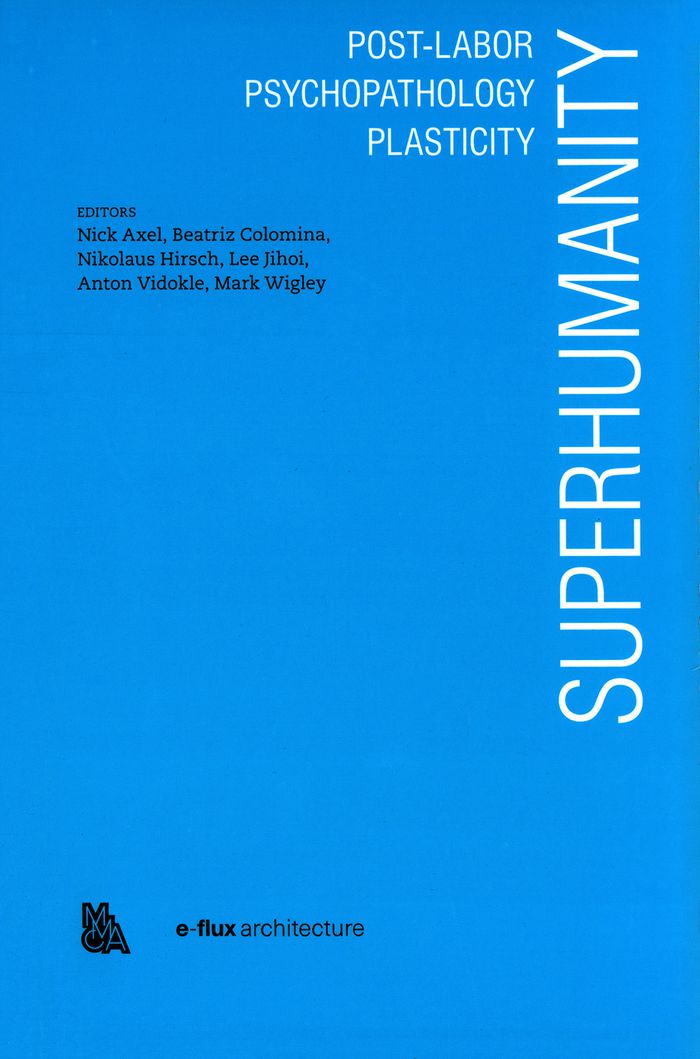
Focused on post-labor, psychopathology, and plasticity of human mind and body, this book introduces insight, critiques, and propositions in the area of “self-design,” ranging from design and architecture to science, media, history, philosophy, and contemporary art. The field of design has radically expanded. As a practice, design is no longer limited to the world of(...)
$39.95
(available to order)
Summary:
Focused on post-labor, psychopathology, and plasticity of human mind and body, this book introduces insight, critiques, and propositions in the area of “self-design,” ranging from design and architecture to science, media, history, philosophy, and contemporary art. The field of design has radically expanded. As a practice, design is no longer limited to the world of(...)
Title:
Superhumanity: Post-labor, psychopathology, plasticity
Actions:
Price:
$39.95
(available to order)
Summary:
Focused on post-labor, psychopathology, and plasticity of human mind and body, this book introduces insight, critiques, and propositions in the area of “self-design,” ranging from design and architecture to science, media, history, philosophy, and contemporary art. The field of design has radically expanded. As a practice, design is no longer limited to the world of material objects, but rather extends from carefully crafted individual looks and online identities, to the surrounding galaxies of personal devices, new materials, interfaces, networks, systems, infrastructures, data, chemicals, organisms, and genetic codes.
Superhumanity: Post-labor, psychopathology, plasticity
Actions:
Price:
$39.95
(available to order)
Summary:
Focused on post-labor, psychopathology, and plasticity of human mind and body, this book introduces insight, critiques, and propositions in the area of “self-design,” ranging from design and architecture to science, media, history, philosophy, and contemporary art. The field of design has radically expanded. As a practice, design is no longer limited to the world of material objects, but rather extends from carefully crafted individual looks and online identities, to the surrounding galaxies of personal devices, new materials, interfaces, networks, systems, infrastructures, data, chemicals, organisms, and genetic codes.
Form:
books
books
Publication:
July 2018
July 2018
Subject:
Architectural Theory
Architectural Theory
Form:
books
books
Actions:
Price:
$84.00
(available to order)
Summary:
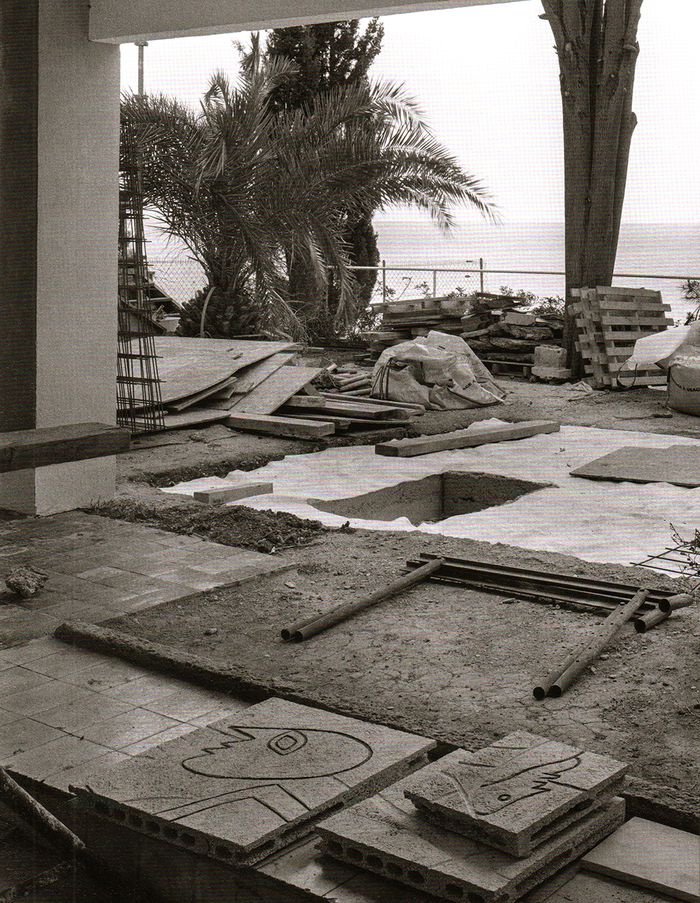
For this book, Danish artist and photographer Kasper Akhøj documented the ongoing restoration of E-1027, Eileen Gray's modernist villa in France. Based on photographs taken by Gray which were first published in 1929, Akhøj's photographs are a kind of remake, recreating the perspective and composition of the originals. During several visits to the villa between 2009 and(...)
$84.00
(available to order)
Summary:
For this book, Danish artist and photographer Kasper Akhøj documented the ongoing restoration of E-1027, Eileen Gray's modernist villa in France. Based on photographs taken by Gray which were first published in 1929, Akhøj's photographs are a kind of remake, recreating the perspective and composition of the originals. During several visits to the villa between 2009 and(...)
Subject:
Photography monographs
Photography monographs
Publication:
December 2017
December 2017
Title:
Kasper Akhøj: Welcome (to the Teknival) E-1027 Eileen Gray
Actions:
Price:
$84.00
(available to order)
Summary:
For this book, Danish artist and photographer Kasper Akhøj documented the ongoing restoration of E-1027, Eileen Gray's modernist villa in France. Based on photographs taken by Gray which were first published in 1929, Akhøj's photographs are a kind of remake, recreating the perspective and composition of the originals. During several visits to the villa between 2009 and 2017, he produced up to six versions of each of Gray's images, but only included one of them here. The overlap of chronologies emphasises the restoration process and references the fascinating influence of a succession of occupants. With essays by Beatriz Colomina and Amy Zion, plus an interview with Akhøj.
Kasper Akhøj: Welcome (to the Teknival) E-1027 Eileen Gray
Actions:
Price:
$84.00
(available to order)
Summary:
For this book, Danish artist and photographer Kasper Akhøj documented the ongoing restoration of E-1027, Eileen Gray's modernist villa in France. Based on photographs taken by Gray which were first published in 1929, Akhøj's photographs are a kind of remake, recreating the perspective and composition of the originals. During several visits to the villa between 2009 and 2017, he produced up to six versions of each of Gray's images, but only included one of them here. The overlap of chronologies emphasises the restoration process and references the fascinating influence of a succession of occupants. With essays by Beatriz Colomina and Amy Zion, plus an interview with Akhøj.
Form:
books
books
Publication:
December 2017
December 2017
Subject:
Photography monographs
Photography monographs
Form:
books
books

Title:
Global design
Global design
Actions:
Price:
$60.00
(available to order)
Summary:
This volume surveys the ways in which our globalized world has manifested itself in design since ca 1970, and the ways in which design has evolved to serve a globalized world. The point of departure is a conception of design which encompasses -architecture, graphics, the media, fashion, product and industrial design, as well as the shaping of the manmade environment and(...)
$60.00
(available to order)
Summary:
This volume surveys the ways in which our globalized world has manifested itself in design since ca 1970, and the ways in which design has evolved to serve a globalized world. The point of departure is a conception of design which encompasses -architecture, graphics, the media, fashion, product and industrial design, as well as the shaping of the manmade environment and(...)
Title:
Global design
Actions:
Price:
$60.00
(available to order)
Summary:
This volume surveys the ways in which our globalized world has manifested itself in design since ca 1970, and the ways in which design has evolved to serve a globalized world. The point of departure is a conception of design which encompasses -architecture, graphics, the media, fashion, product and industrial design, as well as the shaping of the manmade environment and of production processes. The focus is on the formation of global networks in the areas of communication, production, commerce, finance, and mobility. The diverse phenomena of globalization are visualized through film, products, clothing, images, and models by well-known artists such as Armin Linke, Fischli Weiss, Didier Faustino, and Thomas Demand. Alongside the shipping container, an indispensable element of globalization, the presentation provides insights into cultural transfer both in the present day and historically, and presents -globalization in relationship to regionalism as well as to worldwide trends.
Global design
Actions:
Price:
$60.00
(available to order)
Summary:
This volume surveys the ways in which our globalized world has manifested itself in design since ca 1970, and the ways in which design has evolved to serve a globalized world. The point of departure is a conception of design which encompasses -architecture, graphics, the media, fashion, product and industrial design, as well as the shaping of the manmade environment and of production processes. The focus is on the formation of global networks in the areas of communication, production, commerce, finance, and mobility. The diverse phenomena of globalization are visualized through film, products, clothing, images, and models by well-known artists such as Armin Linke, Fischli Weiss, Didier Faustino, and Thomas Demand. Alongside the shipping container, an indispensable element of globalization, the presentation provides insights into cultural transfer both in the present day and historically, and presents -globalization in relationship to regionalism as well as to worldwide trends.
Form:
books
books
Publication:
March 2010
March 2010
Subject:
Industrial Design
Industrial Design


