


2 Results
Form:
books
books

Title:
Compact city extended: Outline for future policy, research, and design, Design and politics #4
Compact city extended: Outline for future policy, research, and design, Design and politics #4
Actions:
Price:
$52.00
(available in store)
Summary:
There has been a Dutch policy on the compact city for almost a quarter of a century now. It has been driven by the four major cities in Randstad Holland which, following the economic crises of the 1970s and the policy of clustered dispersal, found themselves confronted with a massive decrease in middle and higher income groups. At the same time there were new insights(...)
$52.00
(available in store)
Summary:
There has been a Dutch policy on the compact city for almost a quarter of a century now. It has been driven by the four major cities in Randstad Holland which, following the economic crises of the 1970s and the policy of clustered dispersal, found themselves confronted with a massive decrease in middle and higher income groups. At the same time there were new insights(...)
Title:
Compact city extended: Outline for future policy, research, and design, Design and politics #4
Actions:
Price:
$52.00
(available in store)
Summary:
There has been a Dutch policy on the compact city for almost a quarter of a century now. It has been driven by the four major cities in Randstad Holland which, following the economic crises of the 1970s and the policy of clustered dispersal, found themselves confronted with a massive decrease in middle and higher income groups. At the same time there were new insights into the importance of strong cities in the emerging global network economy. This collection of writings takes stock of the situation and traces a number of contour lines that suggest ways a compact city policy can be meaningful and effective in today’s setting.
Compact city extended: Outline for future policy, research, and design, Design and politics #4
Actions:
Price:
$52.00
(available in store)
Summary:
There has been a Dutch policy on the compact city for almost a quarter of a century now. It has been driven by the four major cities in Randstad Holland which, following the economic crises of the 1970s and the policy of clustered dispersal, found themselves confronted with a massive decrease in middle and higher income groups. At the same time there were new insights into the importance of strong cities in the emerging global network economy. This collection of writings takes stock of the situation and traces a number of contour lines that suggest ways a compact city policy can be meaningful and effective in today’s setting.
Form:
books
books
Publication:
September 2010
September 2010
Subject:
Urban Theory
Urban Theory
Form:
books
books
Price:
$70.00
(available to order)
Summary:
The Urban Connection develops a promising actor-relational approach to urban planning. With respect to the usual governmental planning, it is focused outside in, instead of inside out. It derives its leitmotif from the actual debate about state controlled versus neo-liberal planning and reflects on innovative post structuralist scholars in the field of planning,(...)
$70.00
(available to order)
Summary:
The Urban Connection develops a promising actor-relational approach to urban planning. With respect to the usual governmental planning, it is focused outside in, instead of inside out. It derives its leitmotif from the actual debate about state controlled versus neo-liberal planning and reflects on innovative post structuralist scholars in the field of planning,(...)
Title:
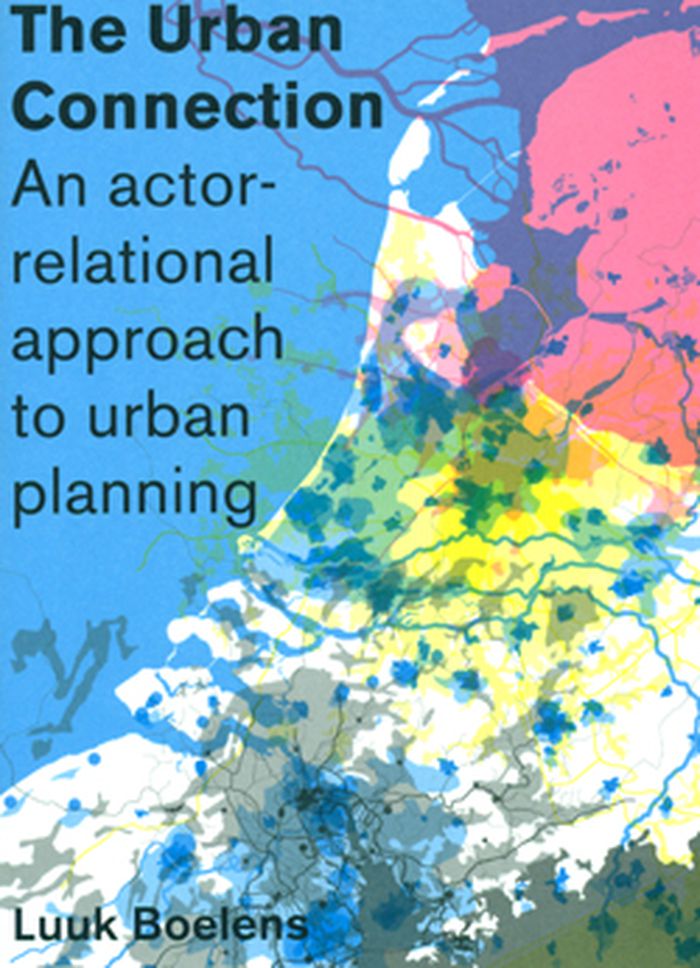
The urban connection, an actor-relational approch to urban planning
Actions:
Price:
$70.00
(available to order)
Summary:
The Urban Connection develops a promising actor-relational approach to urban planning. With respect to the usual governmental planning, it is focused outside in, instead of inside out. It derives its leitmotif from the actual debate about state controlled versus neo-liberal planning and reflects on innovative post structuralist scholars in the field of planning, economics, social geography and governance. It then takes its own position in that debate, reflecting on actor-oriented experiments in planning practices. These experiments deal with the daily planning practice with a pro-active and operational attitude, contrary to the usual retrospective case studies. Therefore it results in concrete suggestions on how to develop a more robust planning-approach in an ongoing globalising and fragmenting world.
The urban connection, an actor-relational approch to urban planning
Actions:
Price:
$70.00
(available to order)
Summary:
The Urban Connection develops a promising actor-relational approach to urban planning. With respect to the usual governmental planning, it is focused outside in, instead of inside out. It derives its leitmotif from the actual debate about state controlled versus neo-liberal planning and reflects on innovative post structuralist scholars in the field of planning, economics, social geography and governance. It then takes its own position in that debate, reflecting on actor-oriented experiments in planning practices. These experiments deal with the daily planning practice with a pro-active and operational attitude, contrary to the usual retrospective case studies. Therefore it results in concrete suggestions on how to develop a more robust planning-approach in an ongoing globalising and fragmenting world.
Form:
books
books
Publication:
November 2009
November 2009
Subject:
Urban Theory
Urban Theory


