


4 Results
Form:
books
books
Actions:
Price:
$48.00
(available in store)
Summary:
This issue of AD explores the resurgence of ecological strategies in architectural imagination. As a symptom of a new sociopolitical reality inundated with environmental catastrophes, sudden climatic changes, garbage-packed metropolises and para-economies of nonrecyclable e-waste, environmental consciousness and the image of the earth re-emerges, after the 1960s, as an(...)
$48.00
(available in store)
Summary:
This issue of AD explores the resurgence of ecological strategies in architectural imagination. As a symptom of a new sociopolitical reality inundated with environmental catastrophes, sudden climatic changes, garbage-packed metropolises and para-economies of nonrecyclable e-waste, environmental consciousness and the image of the earth re-emerges, after the 1960s, as an(...)
Title:
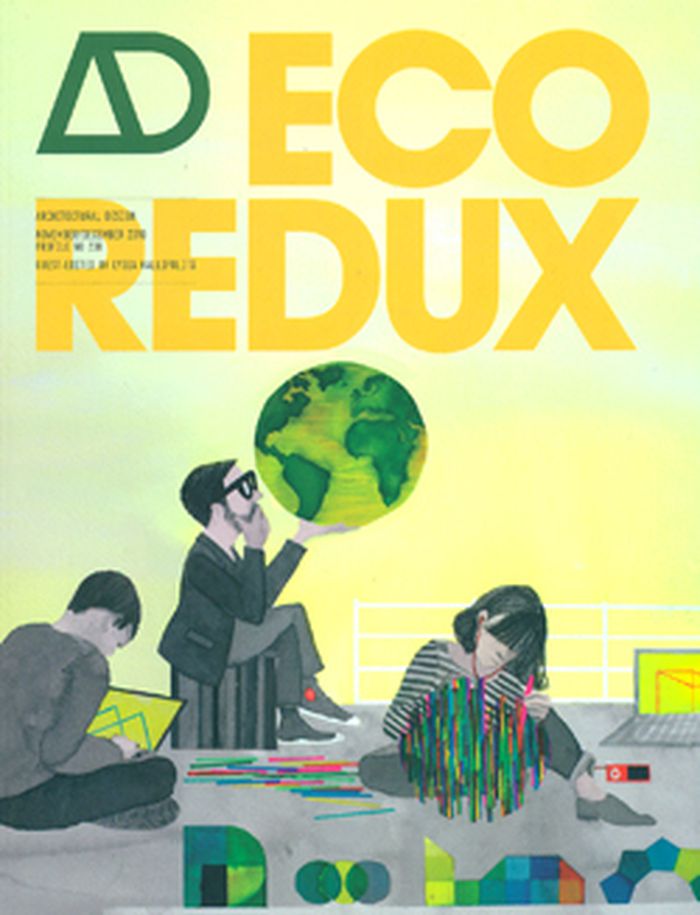
AD 80:06 Ecoredux, design remedies for an ailing planet
Actions:
Price:
$48.00
(available in store)
Summary:
This issue of AD explores the resurgence of ecological strategies in architectural imagination. As a symptom of a new sociopolitical reality inundated with environmental catastrophes, sudden climatic changes, garbage-packed metropolises and para-economies of nonrecyclable e-waste, environmental consciousness and the image of the earth re-emerges, after the 1960s, as an inevitable cultural armature for architects; now faced with the urgency to heal an ill-managed planet that is headed towards evolutionary bankruptcy.
AD 80:06 Ecoredux, design remedies for an ailing planet
Actions:
Price:
$48.00
(available in store)
Summary:
This issue of AD explores the resurgence of ecological strategies in architectural imagination. As a symptom of a new sociopolitical reality inundated with environmental catastrophes, sudden climatic changes, garbage-packed metropolises and para-economies of nonrecyclable e-waste, environmental consciousness and the image of the earth re-emerges, after the 1960s, as an inevitable cultural armature for architects; now faced with the urgency to heal an ill-managed planet that is headed towards evolutionary bankruptcy.
Form:
books
books
Publication:
November 2010
November 2010
Subject:
Magazines
Magazines
Form:
books
books
Price:
$54.00
(available to order)
Summary:
What do outer space capsules, submarines and office buildings have in common? Each was conceived as a closed system- a self-sustaining physical environment demarcated from its surroundings by a boundary prohibiting the transfer of matter or energy. As partial reconstructions of the world in time and space, closed systems identify and implement the basic materials(...)
$54.00
(available to order)
Summary:
What do outer space capsules, submarines and office buildings have in common? Each was conceived as a closed system- a self-sustaining physical environment demarcated from its surroundings by a boundary prohibiting the transfer of matter or energy. As partial reconstructions of the world in time and space, closed systems identify and implement the basic materials(...)
Title:
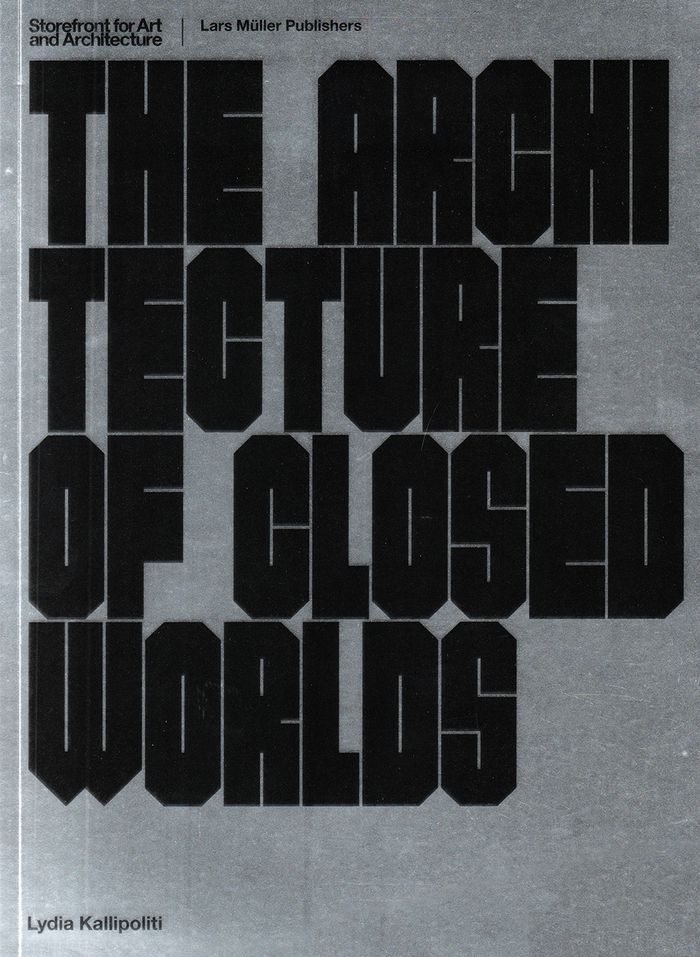
The architecture of closed worlds: Or, what is the power of shit?
Actions:
Price:
$54.00
(available to order)
Summary:
What do outer space capsules, submarines and office buildings have in common? Each was conceived as a closed system- a self-sustaining physical environment demarcated from its surroundings by a boundary prohibiting the transfer of matter or energy. As partial reconstructions of the world in time and space, closed systems identify and implement the basic materials necessary for the sustenance of life. From the space program to countercultural architectural groups experimenting with autonomous living, ''The Architecture of Closed Worlds'' documents a disciplinary transformation and the rise of a new environmental consciousness.
The architecture of closed worlds: Or, what is the power of shit?
Actions:
Price:
$54.00
(available to order)
Summary:
What do outer space capsules, submarines and office buildings have in common? Each was conceived as a closed system- a self-sustaining physical environment demarcated from its surroundings by a boundary prohibiting the transfer of matter or energy. As partial reconstructions of the world in time and space, closed systems identify and implement the basic materials necessary for the sustenance of life. From the space program to countercultural architectural groups experimenting with autonomous living, ''The Architecture of Closed Worlds'' documents a disciplinary transformation and the rise of a new environmental consciousness.
Form:
books
books
Publication:
November 2018
November 2018
Subject:
Architectural Theory
Architectural Theory
Form:
books
books
Actions:
Price:
$54.95
(available to order)
Summary:
This book presents conflicting definitions and concepts of architects and designers and the parallel histories of their intellectual positions toward environmental thought from the 19th century to today. It showcases that ecological design starts with the reconceptualization of the world as a complex system of flows rather than a discrete compilation of objects, which(...)
$54.95
(available to order)
Summary:
This book presents conflicting definitions and concepts of architects and designers and the parallel histories of their intellectual positions toward environmental thought from the 19th century to today. It showcases that ecological design starts with the reconceptualization of the world as a complex system of flows rather than a discrete compilation of objects, which(...)
Title:
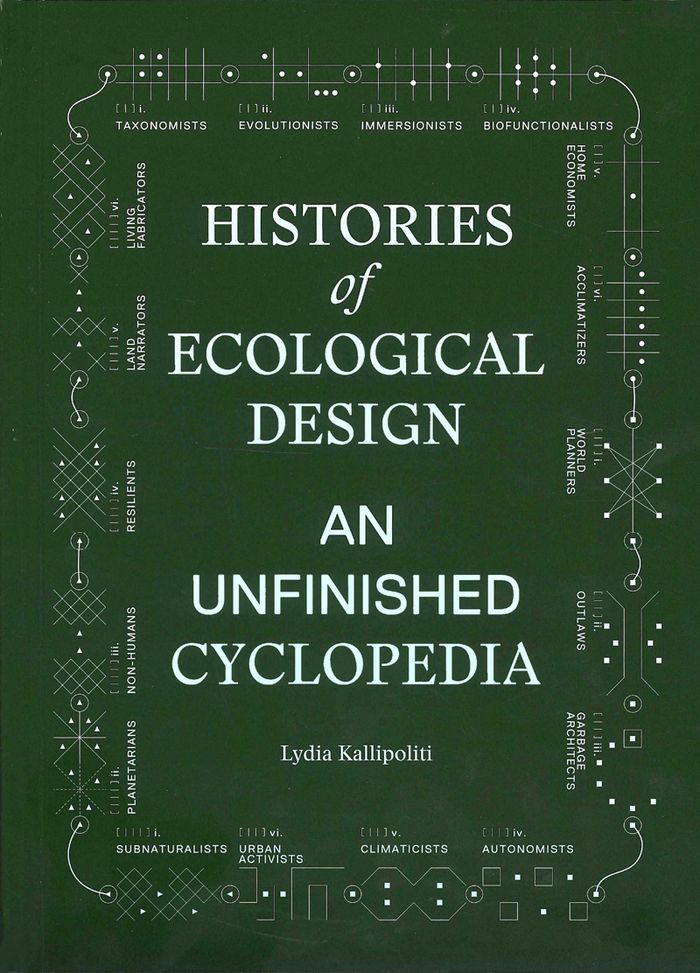
Histories of ecological design: an unfinished encyclopedia
Actions:
Price:
$54.95
(available to order)
Summary:
This book presents conflicting definitions and concepts of architects and designers and the parallel histories of their intellectual positions toward environmental thought from the 19th century to today. It showcases that ecological design starts with the reconceptualization of the world as a complex system of flows rather than a discrete compilation of objects, which visual artist and theorist György Kepes has described as one of the fundamental reorientations of the 20th century. To survey the formation of this field, the history of ecological design will not be exclusively examined chronologically, but also in connected worldviews, each rendering evolving perceptions of nature, its relation to culture, and the occupation of the natural world by human and non-human subjects.
Histories of ecological design: an unfinished encyclopedia
Actions:
Price:
$54.95
(available to order)
Summary:
This book presents conflicting definitions and concepts of architects and designers and the parallel histories of their intellectual positions toward environmental thought from the 19th century to today. It showcases that ecological design starts with the reconceptualization of the world as a complex system of flows rather than a discrete compilation of objects, which visual artist and theorist György Kepes has described as one of the fundamental reorientations of the 20th century. To survey the formation of this field, the history of ecological design will not be exclusively examined chronologically, but also in connected worldviews, each rendering evolving perceptions of nature, its relation to culture, and the occupation of the natural world by human and non-human subjects.
Form:
books
books
Publication:
March 2024
March 2024
Subject:
Architecture ecologies
Architecture ecologies
Form:
books
books
Actions:
Price:
$69.95
(available in store)
Summary:
How can we design the architecture of metabolism? How can architecture redefine resources, produce nutrients and contribute to regenerate land and protect communities at risk? "Building Metabolism" aims to reveal how architecture constructs, distributes, and leverages power via material recycling, interspecies alliances, biopolitics and excremental processes. This book,(...)
$69.95
(available in store)
Summary:
How can we design the architecture of metabolism? How can architecture redefine resources, produce nutrients and contribute to regenerate land and protect communities at risk? "Building Metabolism" aims to reveal how architecture constructs, distributes, and leverages power via material recycling, interspecies alliances, biopolitics and excremental processes. This book,(...)
Title:
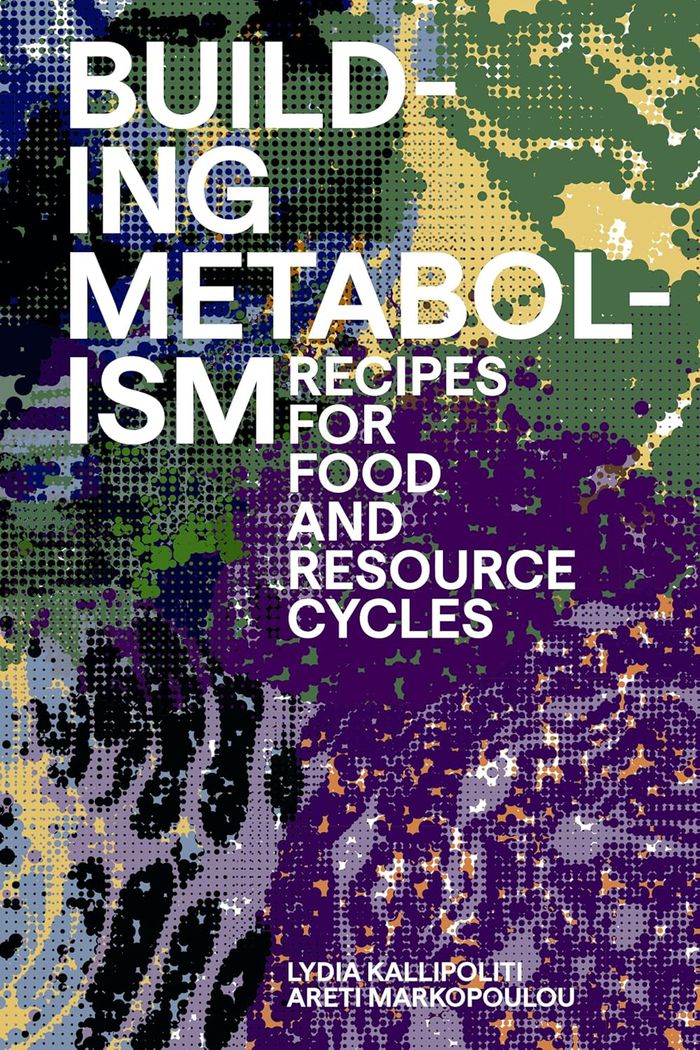
Building metabolism: Recipes for food and resource cycles
Actions:
Price:
$69.95
(available in store)
Summary:
How can we design the architecture of metabolism? How can architecture redefine resources, produce nutrients and contribute to regenerate land and protect communities at risk? "Building Metabolism" aims to reveal how architecture constructs, distributes, and leverages power via material recycling, interspecies alliances, biopolitics and excremental processes. This book, stemming from the expanded work produced for the 2022 Tallinn Architecture Biennale—themed EDIBLE and curated by the authors—reimagines the "home" on both domestic and planetary scales as a digestive system, processing human output in its various forms and converting it into actionable resources. This portrayal of the "home" urges readers to look at resources in a visceral way; via the raw ecologies of our bodies and the understanding that the social problems related to climate justice are not simply statistical, abstract, and disembodied. Instead, they are intertwined with our own production and living processes, and they are landed on bodies: on the food we eat, the water we drink, and the air we breathe.
Building metabolism: Recipes for food and resource cycles
Actions:
Price:
$69.95
(available in store)
Summary:
How can we design the architecture of metabolism? How can architecture redefine resources, produce nutrients and contribute to regenerate land and protect communities at risk? "Building Metabolism" aims to reveal how architecture constructs, distributes, and leverages power via material recycling, interspecies alliances, biopolitics and excremental processes. This book, stemming from the expanded work produced for the 2022 Tallinn Architecture Biennale—themed EDIBLE and curated by the authors—reimagines the "home" on both domestic and planetary scales as a digestive system, processing human output in its various forms and converting it into actionable resources. This portrayal of the "home" urges readers to look at resources in a visceral way; via the raw ecologies of our bodies and the understanding that the social problems related to climate justice are not simply statistical, abstract, and disembodied. Instead, they are intertwined with our own production and living processes, and they are landed on bodies: on the food we eat, the water we drink, and the air we breathe.
Form:
books
books
Publication:
January 2026
January 2026
Subject:
Green Architecture
Green Architecture


