


14 Results
Form:
books
books
Title:
Public space, NY
Public space, NY
Actions:
Price:
$75.00
(available in store)
Summary:
There are no perfect public spaces. Public space is constantly changing, shifting, never quite fixed. It is formed by laws, by regulations, by private ownership, and by city management. Public spaces are influenced both by the people who oversee them and by those who use them. And because of these facts, public spaces are never neutral. In "ublic Spaces, NY," Michael(...)
$75.00
(available in store)
Summary:
There are no perfect public spaces. Public space is constantly changing, shifting, never quite fixed. It is formed by laws, by regulations, by private ownership, and by city management. Public spaces are influenced both by the people who oversee them and by those who use them. And because of these facts, public spaces are never neutral. In "ublic Spaces, NY," Michael(...)
Title:
Public space, NY
Actions:
Price:
$75.00
(available in store)
Summary:
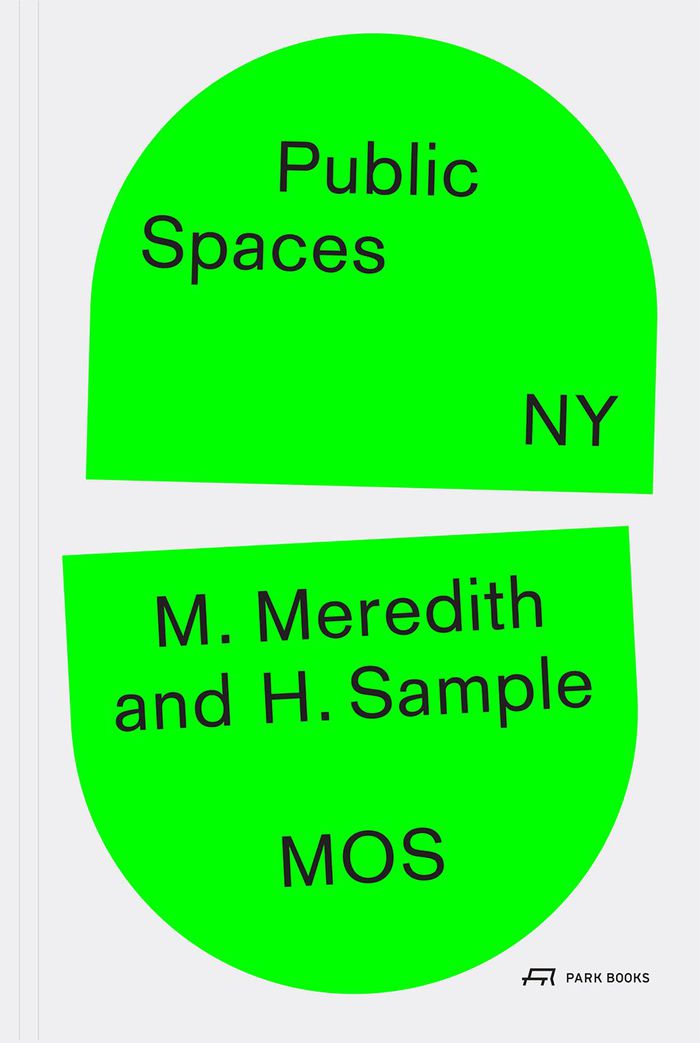
There are no perfect public spaces. Public space is constantly changing, shifting, never quite fixed. It is formed by laws, by regulations, by private ownership, and by city management. Public spaces are influenced both by the people who oversee them and by those who use them. And because of these facts, public spaces are never neutral. In "ublic Spaces, NY," Michael Meredith and Hilary Sample document and analyze Manhattan’s parks, streets, community gardens, privately owned public spaces, recreation areas, waterfronts, and cemeteries. Their book seeks to understand their design, construction and management, and provides detailed drawings of both the spaces themselves and speculative illustrations about how the public uses the spaces. By examining how public spaces facilitate or hinder inclusion, and by detailing the conflicts and negotiations they provoke, this book creates a discourse to reimagine the future of public life in the United States’ densest city.
Public space, NY
Actions:
Price:
$75.00
(available in store)
Summary:
There are no perfect public spaces. Public space is constantly changing, shifting, never quite fixed. It is formed by laws, by regulations, by private ownership, and by city management. Public spaces are influenced both by the people who oversee them and by those who use them. And because of these facts, public spaces are never neutral. In "ublic Spaces, NY," Michael Meredith and Hilary Sample document and analyze Manhattan’s parks, streets, community gardens, privately owned public spaces, recreation areas, waterfronts, and cemeteries. Their book seeks to understand their design, construction and management, and provides detailed drawings of both the spaces themselves and speculative illustrations about how the public uses the spaces. By examining how public spaces facilitate or hinder inclusion, and by detailing the conflicts and negotiations they provoke, this book creates a discourse to reimagine the future of public life in the United States’ densest city.
Form:
books
books
Publication:
December 2025
December 2025
Subject:
Public Space
Public Space
Form:
books
books
Title:
Smaller architecture
Smaller architecture
Actions:
Price:
$15.00
(available to order)
Summary:
In this book, Michael Meredith speculates on the possibilities of what Robin Evans once described as a "smaller architecture." "Smaller Architecture" rejects the Larger Architecture that has come to dominate in the last thirty years, with the globalization of architecture, with what Rem Koolhaas celebrated as "Bigness," and with the embrace of new forms of large-scale(...)
$15.00
(available to order)
Summary:
In this book, Michael Meredith speculates on the possibilities of what Robin Evans once described as a "smaller architecture." "Smaller Architecture" rejects the Larger Architecture that has come to dominate in the last thirty years, with the globalization of architecture, with what Rem Koolhaas celebrated as "Bigness," and with the embrace of new forms of large-scale(...)
Title:
Smaller architecture
Actions:
Price:
$15.00
(available to order)
Summary:
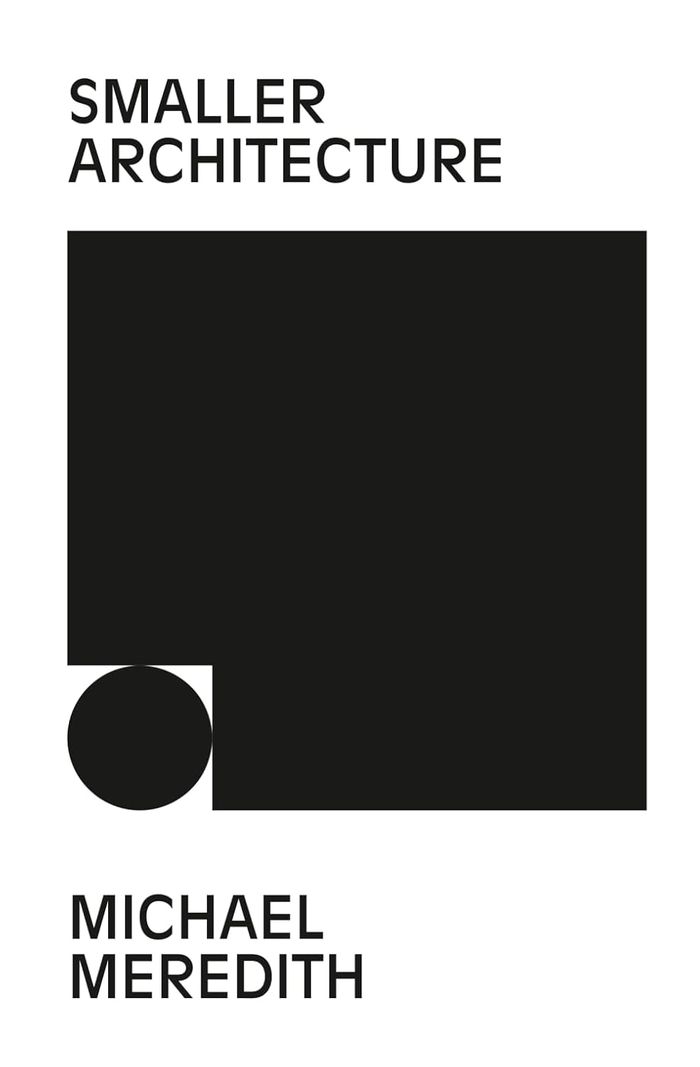
In this book, Michael Meredith speculates on the possibilities of what Robin Evans once described as a "smaller architecture." "Smaller Architecture" rejects the Larger Architecture that has come to dominate in the last thirty years, with the globalization of architecture, with what Rem Koolhaas celebrated as "Bigness," and with the embrace of new forms of large-scale finance and corporate management. Against the speculative financial models that define Larger Architecture and its rapacious mechanisms of real estate development, Meredith's vision for a "Smaller Architecture" proposes economic and social forms along the lines sketched out by the economist E. F. Schumacher and the urban theorist Jane Jacobs, and inspired by the philosophical writings of Emanuele Coccia, Edouard Glissant and Cornell West. Against the abstract and hierarchical business management models of large corporate firms, "Smaller Architecture" imagines local, radically inclusive, and anarchist forms of organization in smaller practices.
Smaller architecture
Actions:
Price:
$15.00
(available to order)
Summary:
In this book, Michael Meredith speculates on the possibilities of what Robin Evans once described as a "smaller architecture." "Smaller Architecture" rejects the Larger Architecture that has come to dominate in the last thirty years, with the globalization of architecture, with what Rem Koolhaas celebrated as "Bigness," and with the embrace of new forms of large-scale finance and corporate management. Against the speculative financial models that define Larger Architecture and its rapacious mechanisms of real estate development, Meredith's vision for a "Smaller Architecture" proposes economic and social forms along the lines sketched out by the economist E. F. Schumacher and the urban theorist Jane Jacobs, and inspired by the philosophical writings of Emanuele Coccia, Edouard Glissant and Cornell West. Against the abstract and hierarchical business management models of large corporate firms, "Smaller Architecture" imagines local, radically inclusive, and anarchist forms of organization in smaller practices.
Form:
books
books
Publication:
September 2025
September 2025
Subject:
Architectural Theory
Architectural Theory
Form:
books
books
Actions:
Price:
$33.75
(available to order)
Summary:
Young Architects 17: Authenticity features work by winners of the 2015 Architectural League Prize for Young Architects + Designers. The competition theme, “Authenticity,” asked how recent advances in computation, visualization, material intelligence, and fabrication technologies have begun to alter design principles and also architects’ roles and their approaches to(...)
$33.75
(available to order)
Summary:
Young Architects 17: Authenticity features work by winners of the 2015 Architectural League Prize for Young Architects + Designers. The competition theme, “Authenticity,” asked how recent advances in computation, visualization, material intelligence, and fabrication technologies have begun to alter design principles and also architects’ roles and their approaches to(...)
Title:
Young architects 17: Authenticity
Actions:
Price:
$33.75
(available to order)
Summary:
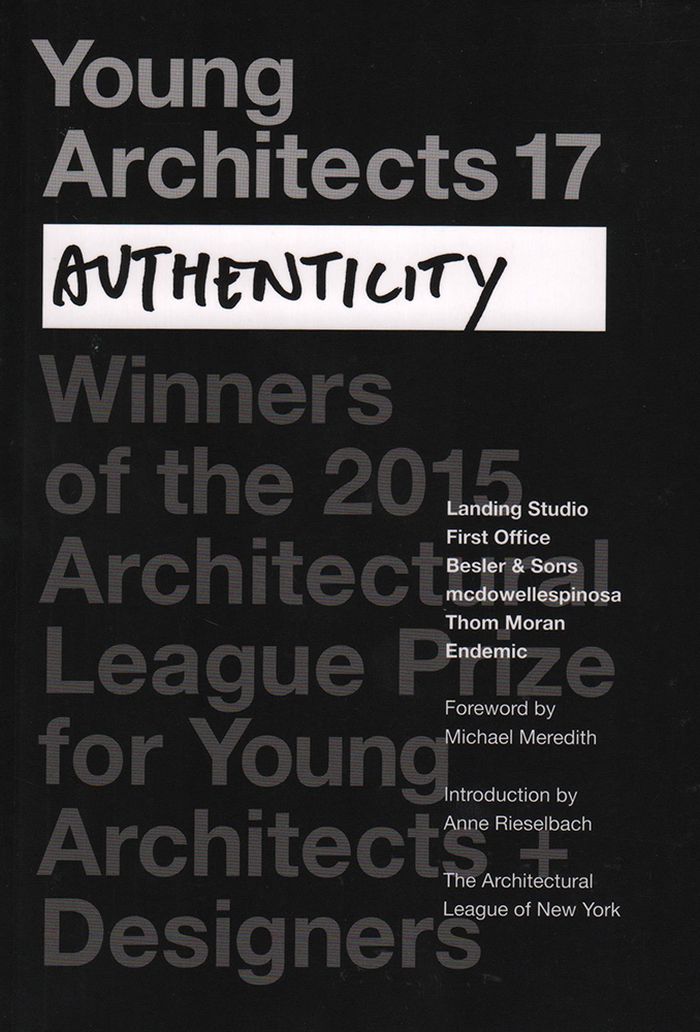
Young Architects 17: Authenticity features work by winners of the 2015 Architectural League Prize for Young Architects + Designers. The competition theme, “Authenticity,” asked how recent advances in computation, visualization, material intelligence, and fabrication technologies have begun to alter design principles and also architects’ roles and their approaches to architecture and research. The book includes projects by the six winners of the 2015 League Prize: Dan Adams and Marie Adams, Landing Studio. Anna Neimark and Andrew Atwood, First Office. Erin Besler, Besler & Sons. Seth McDowell and Rychiee Espinosa, mcdowellespinosa. Thom Moran. Clark Thenhaus, Endemic.
Young architects 17: Authenticity
Actions:
Price:
$33.75
(available to order)
Summary:
Young Architects 17: Authenticity features work by winners of the 2015 Architectural League Prize for Young Architects + Designers. The competition theme, “Authenticity,” asked how recent advances in computation, visualization, material intelligence, and fabrication technologies have begun to alter design principles and also architects’ roles and their approaches to architecture and research. The book includes projects by the six winners of the 2015 League Prize: Dan Adams and Marie Adams, Landing Studio. Anna Neimark and Andrew Atwood, First Office. Erin Besler, Besler & Sons. Seth McDowell and Rychiee Espinosa, mcdowellespinosa. Thom Moran. Clark Thenhaus, Endemic.
Form:
books
books
Publication:
April 2017
April 2017
Subject:
Contemporary Architecture
Contemporary Architecture
Form:
books
books
Title:
Vacant Spaces NY
Vacant Spaces NY
Actions:
Price:
$80.00
(available to order)
Summary:
This project began by walking around our neighborhood noticing empty storefronts. Once we saw them, they were everywhere. They followed us, appearing quietly throughout New York City. Many with no signage, no “for rent,” no “coming soon.” Usually empty, sometimes dusty, sometimes with brown paper covering the glass. Now, vacancy has only increased. In the densest city in(...)
$80.00
(available to order)
Summary:
This project began by walking around our neighborhood noticing empty storefronts. Once we saw them, they were everywhere. They followed us, appearing quietly throughout New York City. Many with no signage, no “for rent,” no “coming soon.” Usually empty, sometimes dusty, sometimes with brown paper covering the glass. Now, vacancy has only increased. In the densest city in(...)
Subject:
Architecture Monographs
Architecture Monographs
Publication:
October 2021
October 2021
Title:
Vacant Spaces NY
Actions:
Price:
$80.00
(available to order)
Summary:
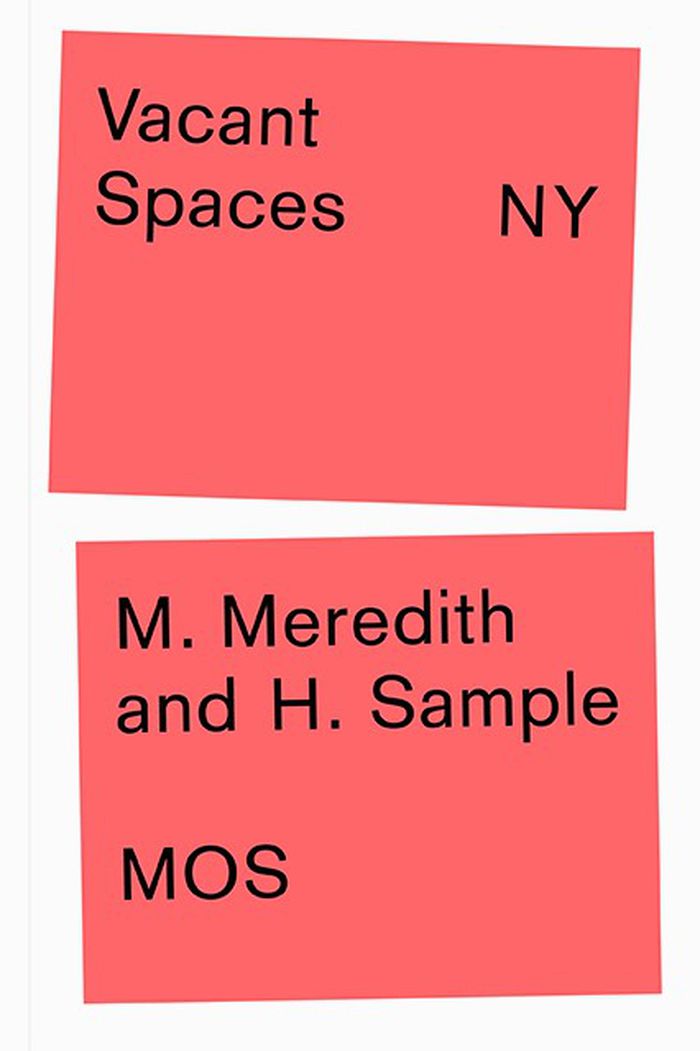
This project began by walking around our neighborhood noticing empty storefronts. Once we saw them, they were everywhere. They followed us, appearing quietly throughout New York City. Many with no signage, no “for rent,” no “coming soon.” Usually empty, sometimes dusty, sometimes with brown paper covering the glass. Now, vacancy has only increased. In the densest city in the United States. During a housing crisis. Throughout a pandemic. The quantity of vacant spaces is anyone’s best guess. It’s only partially documented. They hide in plain sight. This volume is organized from large to small, general to specific. It begins by looking at vacancy within the United States and continues down to each Manhattan neighborhood, where we zoom into specific vacant spaces, where we have provided as case studies that imagine some possibilities for transforming current vacant spaces into housing or social services. There is also a section on Covid 19, which infiltrated New York during our research. As a whole, this document is not meant to provide specific solutions. The data is incomplete. Case studies are limited. We are not policy experts or data analysts or urban planners. Instead, it is simply meant to show something we have taken for granted, vacant spaces, taking part in a collective process of imagining a better city.
Vacant Spaces NY
Actions:
Price:
$80.00
(available to order)
Summary:
This project began by walking around our neighborhood noticing empty storefronts. Once we saw them, they were everywhere. They followed us, appearing quietly throughout New York City. Many with no signage, no “for rent,” no “coming soon.” Usually empty, sometimes dusty, sometimes with brown paper covering the glass. Now, vacancy has only increased. In the densest city in the United States. During a housing crisis. Throughout a pandemic. The quantity of vacant spaces is anyone’s best guess. It’s only partially documented. They hide in plain sight. This volume is organized from large to small, general to specific. It begins by looking at vacancy within the United States and continues down to each Manhattan neighborhood, where we zoom into specific vacant spaces, where we have provided as case studies that imagine some possibilities for transforming current vacant spaces into housing or social services. There is also a section on Covid 19, which infiltrated New York during our research. As a whole, this document is not meant to provide specific solutions. The data is incomplete. Case studies are limited. We are not policy experts or data analysts or urban planners. Instead, it is simply meant to show something we have taken for granted, vacant spaces, taking part in a collective process of imagining a better city.
Form:
books
books
Publication:
October 2021
October 2021
Subject:
Architecture Monographs
Architecture Monographs


