


14 Results
Form:
books
books
Actions:
Price:
$56.95
(available in store)
Summary:
''Style Congo: Heritage & heresy'' examines the politics of cultural representation and appropriation through contemporary artistic and architectural interventions, as well as historical materials primarily sourced from the CIVA collection in Brussels. Starting with the Art Nouveau movement and stemming from the exhibition of the same name, this book traces the portrayal(...)
$56.95
(available in store)
Summary:
''Style Congo: Heritage & heresy'' examines the politics of cultural representation and appropriation through contemporary artistic and architectural interventions, as well as historical materials primarily sourced from the CIVA collection in Brussels. Starting with the Art Nouveau movement and stemming from the exhibition of the same name, this book traces the portrayal(...)
Publication:
September 2023
September 2023
Title:
Style Congo: Heritage and heresy
Actions:
Price:
$56.95
(available in store)
Summary:
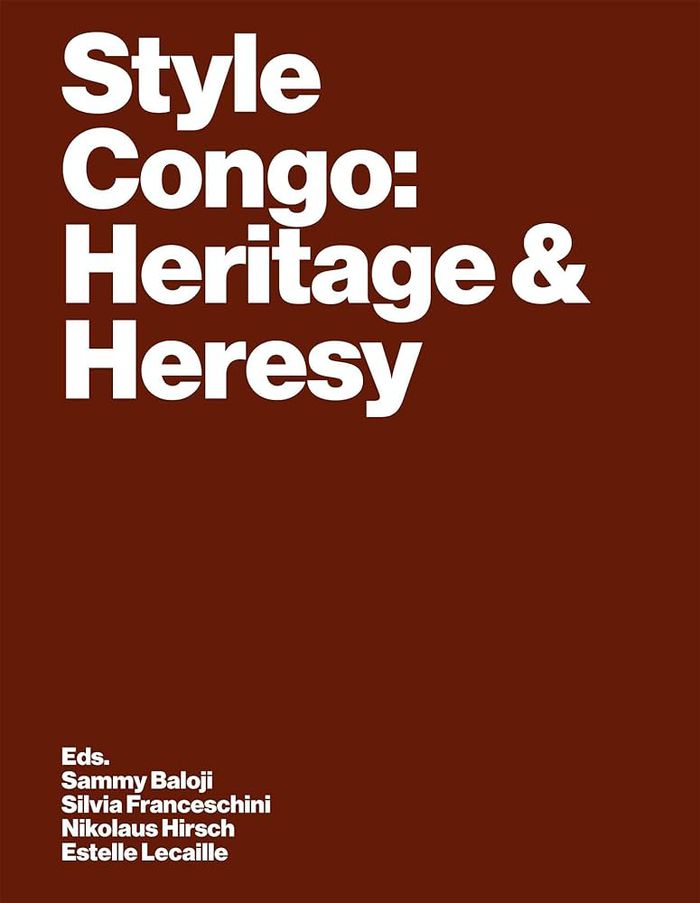
''Style Congo: Heritage & heresy'' examines the politics of cultural representation and appropriation through contemporary artistic and architectural interventions, as well as historical materials primarily sourced from the CIVA collection in Brussels. Starting with the Art Nouveau movement and stemming from the exhibition of the same name, this book traces the portrayal of the Congo in international and colonial exhibitions in Belgium, France, and the Congo between 1885 and 1958.
Style Congo: Heritage and heresy
Actions:
Price:
$56.95
(available in store)
Summary:
''Style Congo: Heritage & heresy'' examines the politics of cultural representation and appropriation through contemporary artistic and architectural interventions, as well as historical materials primarily sourced from the CIVA collection in Brussels. Starting with the Art Nouveau movement and stemming from the exhibition of the same name, this book traces the portrayal of the Congo in international and colonial exhibitions in Belgium, France, and the Congo between 1885 and 1958.
Form:
books
books
Publication:
September 2023
September 2023
Form:
books
books
Actions:
Price:
$49.95
(available to order)
Summary:
''Superhumanity'' seeks to explore and challenge our understanding of ''design'' by engaging with and departing from the concept of the ''self.'' This volume brings together more than fifty essays by leading scientists, artists, architects, designers, philosophers, historians, archaeologists, and anthropologists, originally disseminated online via e-flux Architecture(...)
$49.95
(available to order)
Summary:
''Superhumanity'' seeks to explore and challenge our understanding of ''design'' by engaging with and departing from the concept of the ''self.'' This volume brings together more than fifty essays by leading scientists, artists, architects, designers, philosophers, historians, archaeologists, and anthropologists, originally disseminated online via e-flux Architecture(...)
Subject:
Architectural Theory
Architectural Theory
Publication:
January 2018
January 2018
Title:
Superhumanity: design of the self. E-Flux Classics
Actions:
Price:
$49.95
(available to order)
Summary:
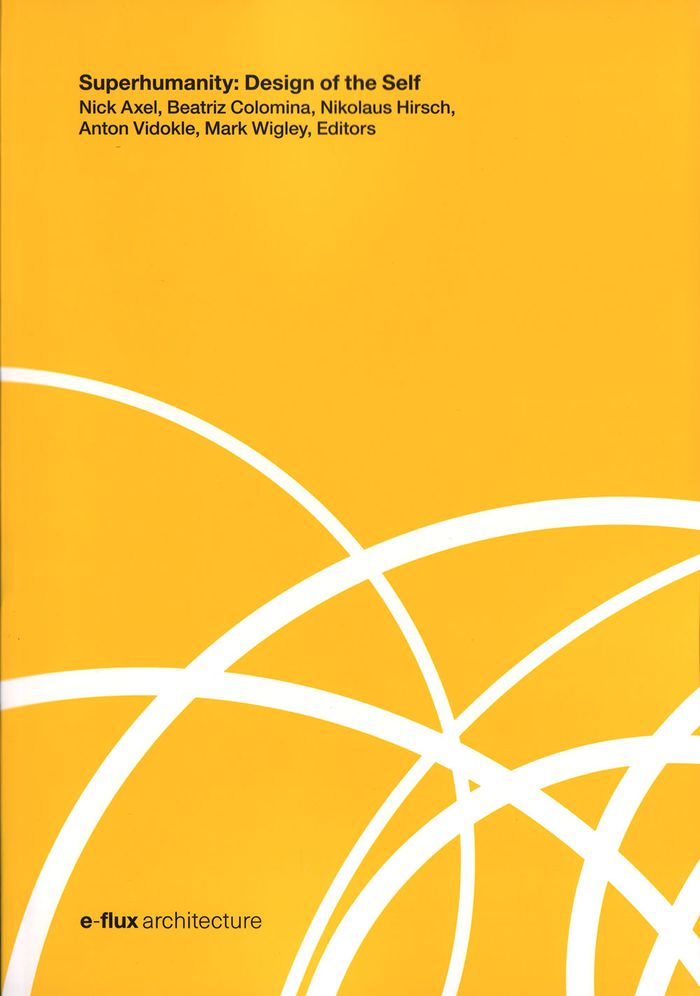
''Superhumanity'' seeks to explore and challenge our understanding of ''design'' by engaging with and departing from the concept of the ''self.'' This volume brings together more than fifty essays by leading scientists, artists, architects, designers, philosophers, historians, archaeologists, and anthropologists, originally disseminated online via e-flux Architecture between September 2016 and February 2017 on the invitation of the Third Istanbul Design Biennial. Probing the idea that we are and always have been continuously reshaped by the artifacts we shape, this book asks: Who designed the lives we live today? What are the forms of life we inhabit, and what new forms are currently being designed? Where are the sites, and what are the techniques, to design others?
Superhumanity: design of the self. E-Flux Classics
Actions:
Price:
$49.95
(available to order)
Summary:
''Superhumanity'' seeks to explore and challenge our understanding of ''design'' by engaging with and departing from the concept of the ''self.'' This volume brings together more than fifty essays by leading scientists, artists, architects, designers, philosophers, historians, archaeologists, and anthropologists, originally disseminated online via e-flux Architecture between September 2016 and February 2017 on the invitation of the Third Istanbul Design Biennial. Probing the idea that we are and always have been continuously reshaped by the artifacts we shape, this book asks: Who designed the lives we live today? What are the forms of life we inhabit, and what new forms are currently being designed? Where are the sites, and what are the techniques, to design others?
Form:
books
books
Publication:
January 2018
January 2018
Subject:
Architectural Theory
Architectural Theory
Form:
books
books
Actions:
Price:
$60.00
(available to order)
Summary:
In 1931, in response to the Great Depression and subsequent collapse of the building industry, Martin Wagner (1885–1957), then head of planning for Berlin, formulated plans for an adaptable micro-house called “the growing house.” Working with Egon Eiermann, Walter Gropius, Ludwig Hilberseimer, Erich Mendelssohn, Hans Poelzig and Hans Scharoun, the growing house was(...)
$60.00
(available to order)
Summary:
In 1931, in response to the Great Depression and subsequent collapse of the building industry, Martin Wagner (1885–1957), then head of planning for Berlin, formulated plans for an adaptable micro-house called “the growing house.” Working with Egon Eiermann, Walter Gropius, Ludwig Hilberseimer, Erich Mendelssohn, Hans Poelzig and Hans Scharoun, the growing house was(...)
Subject:
Collective Housing
Collective Housing
Publication:
June 2016
June 2016
Title:
Martin Wagner: the Growing House / Das wachsende Haus
Actions:
Price:
$60.00
(available to order)
Summary:
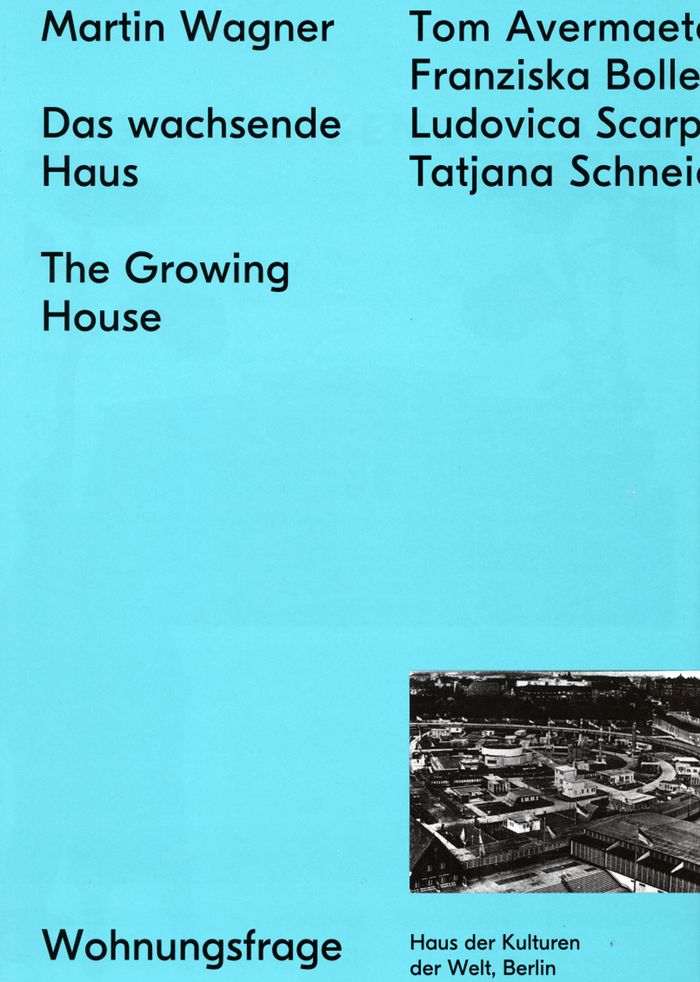
In 1931, in response to the Great Depression and subsequent collapse of the building industry, Martin Wagner (1885–1957), then head of planning for Berlin, formulated plans for an adaptable micro-house called “the growing house.” Working with Egon Eiermann, Walter Gropius, Ludwig Hilberseimer, Erich Mendelssohn, Hans Poelzig and Hans Scharoun, the growing house was designed to be modified with the changing socioeconomic circumstances of its inhabitants, providing only what was necessary and expedient. Wagner’s coruscating foreword outlining his proposals for a new social, technical and economic fabric shifting the dwelling to the center of the world is published here for the first time. Historical and contemporary black-and-white and color illustrations, drawings, plans and photographs of the prototype are accompanied by commentary from Franziska Bollerey, Ludovica Scarpa, Tom Avermaete and Tatjana Schneider, demonstrating that the growing house is as relevant today as it was 100 years ago.
Martin Wagner: the Growing House / Das wachsende Haus
Actions:
Price:
$60.00
(available to order)
Summary:
In 1931, in response to the Great Depression and subsequent collapse of the building industry, Martin Wagner (1885–1957), then head of planning for Berlin, formulated plans for an adaptable micro-house called “the growing house.” Working with Egon Eiermann, Walter Gropius, Ludwig Hilberseimer, Erich Mendelssohn, Hans Poelzig and Hans Scharoun, the growing house was designed to be modified with the changing socioeconomic circumstances of its inhabitants, providing only what was necessary and expedient. Wagner’s coruscating foreword outlining his proposals for a new social, technical and economic fabric shifting the dwelling to the center of the world is published here for the first time. Historical and contemporary black-and-white and color illustrations, drawings, plans and photographs of the prototype are accompanied by commentary from Franziska Bollerey, Ludovica Scarpa, Tom Avermaete and Tatjana Schneider, demonstrating that the growing house is as relevant today as it was 100 years ago.
Form:
books
books
Publication:
June 2016
June 2016
Subject:
Collective Housing
Collective Housing
Form:
books
books
Actions:
Price:
$44.00
(available in store)
Summary:
In an empty factory unit tucked away in Berlin’s Köpenicker Strasse, The Proletarian Building Exhibition was mounted with the humblest of resources in 1931. It marked the first action by a group of revolutionary architects, builders, and students forming the Kollektiv für sozialistisches Bauen under the architect Arthur Korn. Taking aim at modernist architects(...)
$44.00
(available in store)
Summary:
In an empty factory unit tucked away in Berlin’s Köpenicker Strasse, The Proletarian Building Exhibition was mounted with the humblest of resources in 1931. It marked the first action by a group of revolutionary architects, builders, and students forming the Kollektiv für sozialistisches Bauen under the architect Arthur Korn. Taking aim at modernist architects(...)
Publication:
May 2016
May 2016
Title:
Collective for a socialist architecture: proletarian building exhibition 1931
Actions:
Price:
$44.00
(available in store)
Summary:
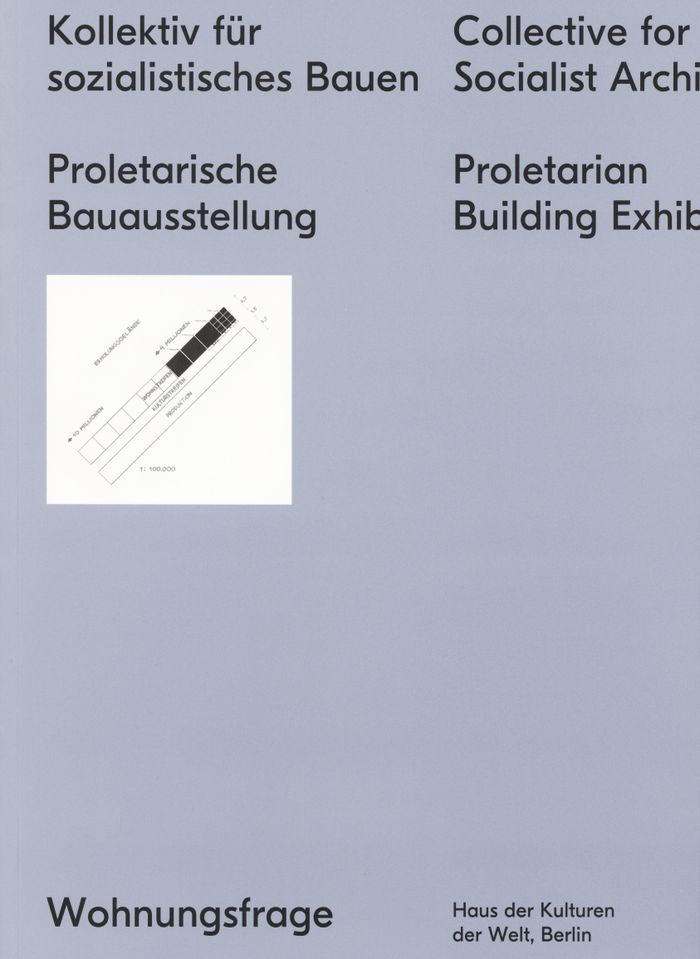
In an empty factory unit tucked away in Berlin’s Köpenicker Strasse, The Proletarian Building Exhibition was mounted with the humblest of resources in 1931. It marked the first action by a group of revolutionary architects, builders, and students forming the Kollektiv für sozialistisches Bauen under the architect Arthur Korn. Taking aim at modernist architects participating in the German Building Exhibition and CIAM, they cast architecture as an instrument of power, questioned capitalist solutions to the housing question, and unveiled planning approaches imported from the then-Soviet Union. A full facsimile of the exhibition manifesto/catalog and exhibition panels is featured in addition to contributing essays by contemporary architects, writers and educators, and the Collectives’ Annual Report including a proposed work program and statement of intent. Historical photos are interspersed throughout providing a full reconstruction of this significant architectural and sociopolitical event.
Collective for a socialist architecture: proletarian building exhibition 1931
Actions:
Price:
$44.00
(available in store)
Summary:
In an empty factory unit tucked away in Berlin’s Köpenicker Strasse, The Proletarian Building Exhibition was mounted with the humblest of resources in 1931. It marked the first action by a group of revolutionary architects, builders, and students forming the Kollektiv für sozialistisches Bauen under the architect Arthur Korn. Taking aim at modernist architects participating in the German Building Exhibition and CIAM, they cast architecture as an instrument of power, questioned capitalist solutions to the housing question, and unveiled planning approaches imported from the then-Soviet Union. A full facsimile of the exhibition manifesto/catalog and exhibition panels is featured in addition to contributing essays by contemporary architects, writers and educators, and the Collectives’ Annual Report including a proposed work program and statement of intent. Historical photos are interspersed throughout providing a full reconstruction of this significant architectural and sociopolitical event.
Form:
books
books
Publication:
May 2016
May 2016
Form:
books
books
Price:
$36.00
(available to order)
Summary:
Housing speaks directly to the challenges that define our times: social inequality, ecological crisis, displacement, asylum, migration and privatization. Framing the neo-liberal context as a defining condition of contemporary housing, International Case Studies consists of two parts: a series of essays by authors from architecture, anthropology, economy and literature,(...)
$36.00
(available to order)
Summary:
Housing speaks directly to the challenges that define our times: social inequality, ecological crisis, displacement, asylum, migration and privatization. Framing the neo-liberal context as a defining condition of contemporary housing, International Case Studies consists of two parts: a series of essays by authors from architecture, anthropology, economy and literature,(...)
Subject:
Collective Housing
Collective Housing
Publication:
July 2016
July 2016
Title:
Housing after the neoliberal turn: international case studies
Actions:
Price:
$36.00
(available to order)
Summary:
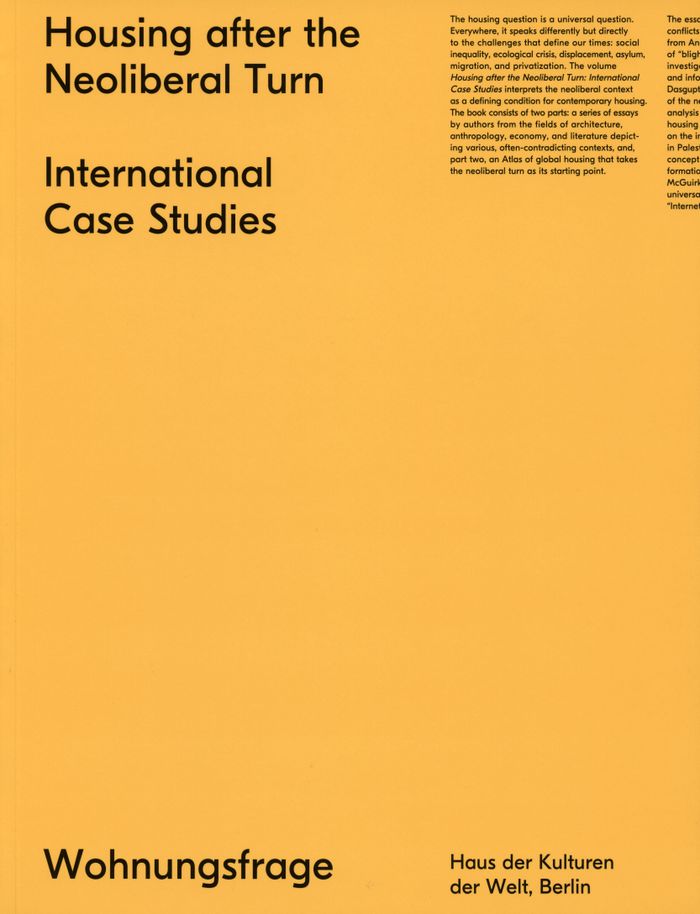
Housing speaks directly to the challenges that define our times: social inequality, ecological crisis, displacement, asylum, migration and privatization. Framing the neo-liberal context as a defining condition of contemporary housing, International Case Studies consists of two parts: a series of essays by authors from architecture, anthropology, economy and literature, and an “atlas” of global housing that takes neo-liberalism as its starting point. The essays shed light on the challenges and conflicts of contemporary housing production from Andrew Herscher’s research on the politics of “blight” in Detroit to Justin McGuirk’s text on domesticity as data and universal housing questions eclipse by the “Internet of Things.” Conceptualized and compiled by architectural critic-historian Anne Kockelkorn and Columbia professor Reinhold Martin, the illustrated “atlas” presents 33 housing examples rarely seen together and invites readers to think of housing as an unstable constellation evolving within the power relations of territorial processes.
Housing after the neoliberal turn: international case studies
Actions:
Price:
$36.00
(available to order)
Summary:
Housing speaks directly to the challenges that define our times: social inequality, ecological crisis, displacement, asylum, migration and privatization. Framing the neo-liberal context as a defining condition of contemporary housing, International Case Studies consists of two parts: a series of essays by authors from architecture, anthropology, economy and literature, and an “atlas” of global housing that takes neo-liberalism as its starting point. The essays shed light on the challenges and conflicts of contemporary housing production from Andrew Herscher’s research on the politics of “blight” in Detroit to Justin McGuirk’s text on domesticity as data and universal housing questions eclipse by the “Internet of Things.” Conceptualized and compiled by architectural critic-historian Anne Kockelkorn and Columbia professor Reinhold Martin, the illustrated “atlas” presents 33 housing examples rarely seen together and invites readers to think of housing as an unstable constellation evolving within the power relations of territorial processes.
Form:
books
books
Publication:
July 2016
July 2016
Subject:
Collective Housing
Collective Housing
Form:
books
books
Title:
Hannes Meyer: Co-op interior
Hannes Meyer: Co-op interior
Actions:
Price:
$45.00
(available to order)
Summary:
In his Co-op Interieur (1926)—a simple corner of a room known only in a photograph— Swiss architect Hannes Meyer (1889–1954) gave expression to a radical, antibourgeois style of interior. Comprised only of a bed, a lamp, two chairs and a gramophone on a table, he imagined this room for the nomadic urban worker. Through the absence of people, objects and spatial features(...)
$45.00
(available to order)
Summary:
In his Co-op Interieur (1926)—a simple corner of a room known only in a photograph— Swiss architect Hannes Meyer (1889–1954) gave expression to a radical, antibourgeois style of interior. Comprised only of a bed, a lamp, two chairs and a gramophone on a table, he imagined this room for the nomadic urban worker. Through the absence of people, objects and spatial features(...)
Subject:
Architectural Theory
Architectural Theory
Publication:
July 2016
July 2016
Title:
Hannes Meyer: Co-op interior
Actions:
Price:
$45.00
(available to order)
Summary:
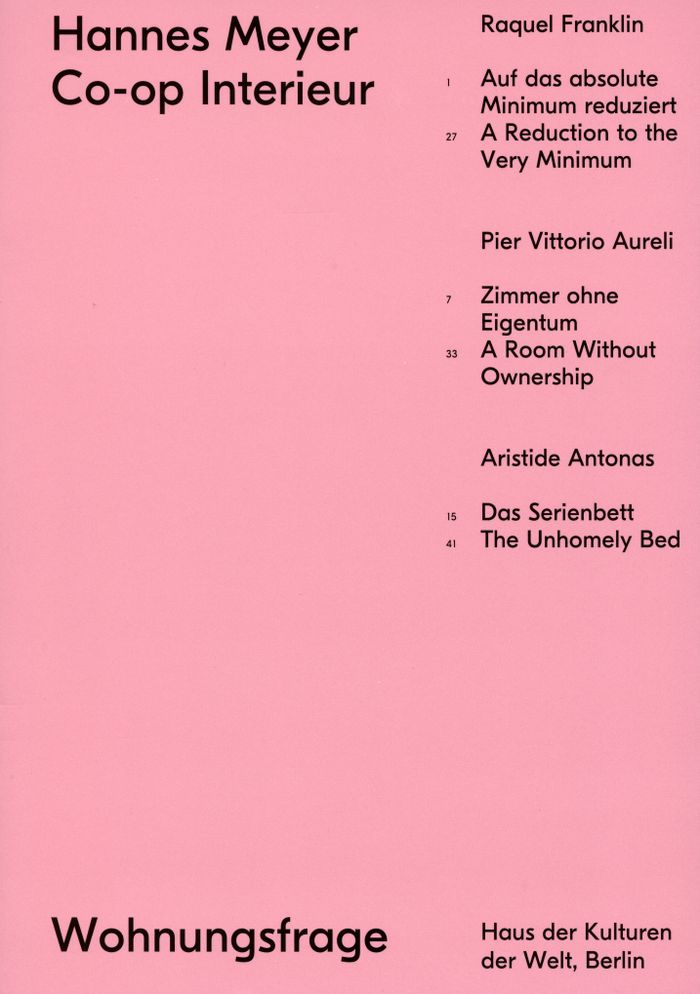
In his Co-op Interieur (1926)—a simple corner of a room known only in a photograph— Swiss architect Hannes Meyer (1889–1954) gave expression to a radical, antibourgeois style of interior. Comprised only of a bed, a lamp, two chairs and a gramophone on a table, he imagined this room for the nomadic urban worker. Through the absence of people, objects and spatial features as much as by the distinctiveness of its design, Meyer was proclaiming an alternative principle for housing, proposing that architecture and design were intended not to fulfill historically determined needs but to overcome their constraints. Historical photographs of the interior and three provocative essays on ownership, minimalism and the “unhomely,” by Brussels-based architecy Pier Vittrio, Mexican architect Raquel Franklin, and Gree architect Aristide Antonas, respectively, explore the layers of meaning within Meyer’s mise-en-scène manifesto on collectivity and utility as a counterpoint to ownership and private property.
Hannes Meyer: Co-op interior
Actions:
Price:
$45.00
(available to order)
Summary:
In his Co-op Interieur (1926)—a simple corner of a room known only in a photograph— Swiss architect Hannes Meyer (1889–1954) gave expression to a radical, antibourgeois style of interior. Comprised only of a bed, a lamp, two chairs and a gramophone on a table, he imagined this room for the nomadic urban worker. Through the absence of people, objects and spatial features as much as by the distinctiveness of its design, Meyer was proclaiming an alternative principle for housing, proposing that architecture and design were intended not to fulfill historically determined needs but to overcome their constraints. Historical photographs of the interior and three provocative essays on ownership, minimalism and the “unhomely,” by Brussels-based architecy Pier Vittrio, Mexican architect Raquel Franklin, and Gree architect Aristide Antonas, respectively, explore the layers of meaning within Meyer’s mise-en-scène manifesto on collectivity and utility as a counterpoint to ownership and private property.
Form:
books
books
Publication:
July 2016
July 2016
Subject:
Architectural Theory
Architectural Theory
Form:
books
books
Price:
$41.99
(available to order)
Summary:
The current epoch is one of accumulation: not only of capital but also of raw, often unruly material, from plastic in the ocean and carbon in the atmosphere to people, buildings, and cities. Alongside this material growth, image-making practices embedded within the fields of art and architecture have proven to be fertile, mobile, and capacious. Images of accumulation help(...)
$41.99
(available to order)
Summary:
The current epoch is one of accumulation: not only of capital but also of raw, often unruly material, from plastic in the ocean and carbon in the atmosphere to people, buildings, and cities. Alongside this material growth, image-making practices embedded within the fields of art and architecture have proven to be fertile, mobile, and capacious. Images of accumulation help(...)
Subject:
Architectural Theory
Architectural Theory
Publication:
April 2022
April 2022
Title:
Accumulation: the art, architecture and media of climate change
Actions:
Price:
$41.99
(available to order)
Summary:
The current epoch is one of accumulation: not only of capital but also of raw, often unruly material, from plastic in the ocean and carbon in the atmosphere to people, buildings, and cities. Alongside this material growth, image-making practices embedded within the fields of art and architecture have proven to be fertile, mobile, and capacious. Images of accumulation help open up the climate to cultural inquiry and political mobilization and have formed a cultural infrastructure focused on the relationships between humans, other species, and their environments. The essays in ''Accumulation'' address this cultural infrastructure and the methodological challenges of its analysis. They offer a response to the relative invisibility of the climate now seen as material manifestations of social behavior. Contributors outline opportunities and ambitions of visual scholarship as a means to encounter the challenges emergent in the current moment: how can climate become visible, culturally and politically? Knowledge of climatic instability can change collective behavior and offer other trajectories, counteraccumulations that draw the present into a different, more livable, future.
Accumulation: the art, architecture and media of climate change
Actions:
Price:
$41.99
(available to order)
Summary:
The current epoch is one of accumulation: not only of capital but also of raw, often unruly material, from plastic in the ocean and carbon in the atmosphere to people, buildings, and cities. Alongside this material growth, image-making practices embedded within the fields of art and architecture have proven to be fertile, mobile, and capacious. Images of accumulation help open up the climate to cultural inquiry and political mobilization and have formed a cultural infrastructure focused on the relationships between humans, other species, and their environments. The essays in ''Accumulation'' address this cultural infrastructure and the methodological challenges of its analysis. They offer a response to the relative invisibility of the climate now seen as material manifestations of social behavior. Contributors outline opportunities and ambitions of visual scholarship as a means to encounter the challenges emergent in the current moment: how can climate become visible, culturally and politically? Knowledge of climatic instability can change collective behavior and offer other trajectories, counteraccumulations that draw the present into a different, more livable, future.
Form:
books
books
Publication:
April 2022
April 2022
Subject:
Architectural Theory
Architectural Theory
Form:
books
books
Actions:
Price:
$34.50
(available to order)
Summary:
Globalization, technology and politics have altered the definition and expectations of citizenship and the right to place. "Dimensions of Citizenship" documents contributions from the seven firms selected to represent the United States in the 2018 Venice Architecture Biennale. This volume profiles and illustrates each of the US Pavilion contributions and contextualizes(...)
$34.50
(available to order)
Summary:
Globalization, technology and politics have altered the definition and expectations of citizenship and the right to place. "Dimensions of Citizenship" documents contributions from the seven firms selected to represent the United States in the 2018 Venice Architecture Biennale. This volume profiles and illustrates each of the US Pavilion contributions and contextualizes(...)
Title:
Dimensions of citizenship: architecture and belonging from the body to the cosmos
Actions:
Price:
$34.50
(available to order)
Summary:
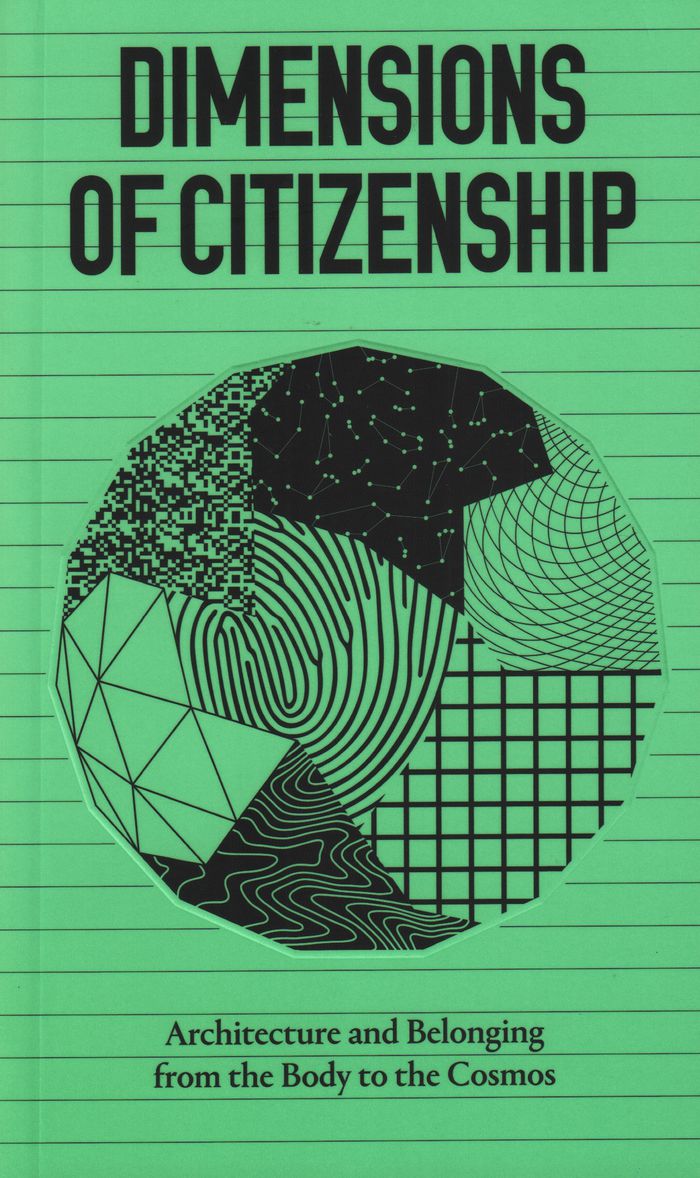
Globalization, technology and politics have altered the definition and expectations of citizenship and the right to place. "Dimensions of Citizenship" documents contributions from the seven firms selected to represent the United States in the 2018 Venice Architecture Biennale. This volume profiles and illustrates each of the US Pavilion contributions and contextualizes them in terms of scale. Drawing inspiration from the Eames' Power of Ten, "Dimensions of Citizenship" provides a view of belonging across seven stages starting with the individual (Citizen), then the collective (Civic, Region, Nation) and expanding to include all phases of contemporary society, real and projected (Globe, Network, Cosmos).
Dimensions of citizenship: architecture and belonging from the body to the cosmos
Actions:
Price:
$34.50
(available to order)
Summary:
Globalization, technology and politics have altered the definition and expectations of citizenship and the right to place. "Dimensions of Citizenship" documents contributions from the seven firms selected to represent the United States in the 2018 Venice Architecture Biennale. This volume profiles and illustrates each of the US Pavilion contributions and contextualizes them in terms of scale. Drawing inspiration from the Eames' Power of Ten, "Dimensions of Citizenship" provides a view of belonging across seven stages starting with the individual (Citizen), then the collective (Civic, Region, Nation) and expanding to include all phases of contemporary society, real and projected (Globe, Network, Cosmos).
Form:
books
books
Publication:
August 2018
August 2018
Subject:
Biennial
Biennial
Form:
books
books
Actions:
Price:
$41.50
(available to order)
Summary:
A.J. Lode Janssens is one of Belgium’s most idiosyncratic architects and a radical educator. He was cofounder of the experimental studio Atelier Alpha and the Sint-Lucas Werkgemeenschap, a workshop linking architectural education, practice and research, and operated in close collaboration with ILAUD, the International Laboratory of Architecture and Urban Design. This(...)
$41.50
(available to order)
Summary:
A.J. Lode Janssens is one of Belgium’s most idiosyncratic architects and a radical educator. He was cofounder of the experimental studio Atelier Alpha and the Sint-Lucas Werkgemeenschap, a workshop linking architectural education, practice and research, and operated in close collaboration with ILAUD, the International Laboratory of Architecture and Urban Design. This(...)
Title:
A. J. Lode Janssens: 1,47 mbar. Balloon Home
Actions:
Price:
$41.50
(available to order)
Summary:
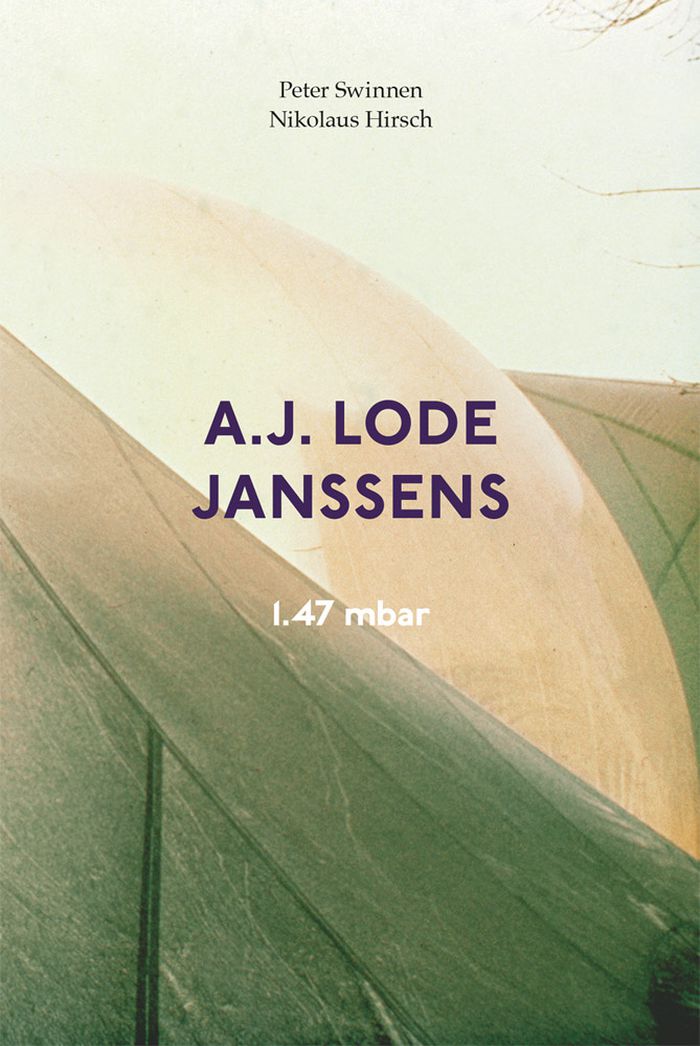
A.J. Lode Janssens is one of Belgium’s most idiosyncratic architects and a radical educator. He was cofounder of the experimental studio Atelier Alpha and the Sint-Lucas Werkgemeenschap, a workshop linking architectural education, practice and research, and operated in close collaboration with ILAUD, the International Laboratory of Architecture and Urban Design. This publication presents The Balloon, an all-but-unknown temporary pneumatic home experiment, built in 1973 in Humbeek, where he lived with his family until 1986. Lode Janssens considered it an uncompromising ephemeral attempt at de-architecturalization and living in harmony with nature: a cave-dwelling, a work-in-progress, an empirical residence. This publication accompanies the eponymous exhibition at CIVA in Brussels.
A. J. Lode Janssens: 1,47 mbar. Balloon Home
Actions:
Price:
$41.50
(available to order)
Summary:
A.J. Lode Janssens is one of Belgium’s most idiosyncratic architects and a radical educator. He was cofounder of the experimental studio Atelier Alpha and the Sint-Lucas Werkgemeenschap, a workshop linking architectural education, practice and research, and operated in close collaboration with ILAUD, the International Laboratory of Architecture and Urban Design. This publication presents The Balloon, an all-but-unknown temporary pneumatic home experiment, built in 1973 in Humbeek, where he lived with his family until 1986. Lode Janssens considered it an uncompromising ephemeral attempt at de-architecturalization and living in harmony with nature: a cave-dwelling, a work-in-progress, an empirical residence. This publication accompanies the eponymous exhibition at CIVA in Brussels.
Form:
books
books
Publication:
October 2022
October 2022
Subject:
Architecture Monographs
Architecture Monographs
Form:
books
books
Price:
$26.95
(available to order)
Summary:
Helming Los Angeles’s most misunderstood info-architecture practice is Henries Ickles, “the man without self-concept.” Time and again Ickles offers practical solutions to the most impenetrable theoretical entanglements of art, architecture, and science in the 2090s. In the fifth book in the Critical Spatial Practice series, Mark von Schlegell’s fusion of theory and(...)
$26.95
(available to order)
Summary:
Helming Los Angeles’s most misunderstood info-architecture practice is Henries Ickles, “the man without self-concept.” Time and again Ickles offers practical solutions to the most impenetrable theoretical entanglements of art, architecture, and science in the 2090s. In the fifth book in the Critical Spatial Practice series, Mark von Schlegell’s fusion of theory and(...)
Subject:
Critical Theory
Critical Theory
Publication:
October 2014
October 2014
Title:
Critical spatial practice 5: ickles, etc.: Mark von Schlegell
Actions:
Price:
$26.95
(available to order)
Summary:
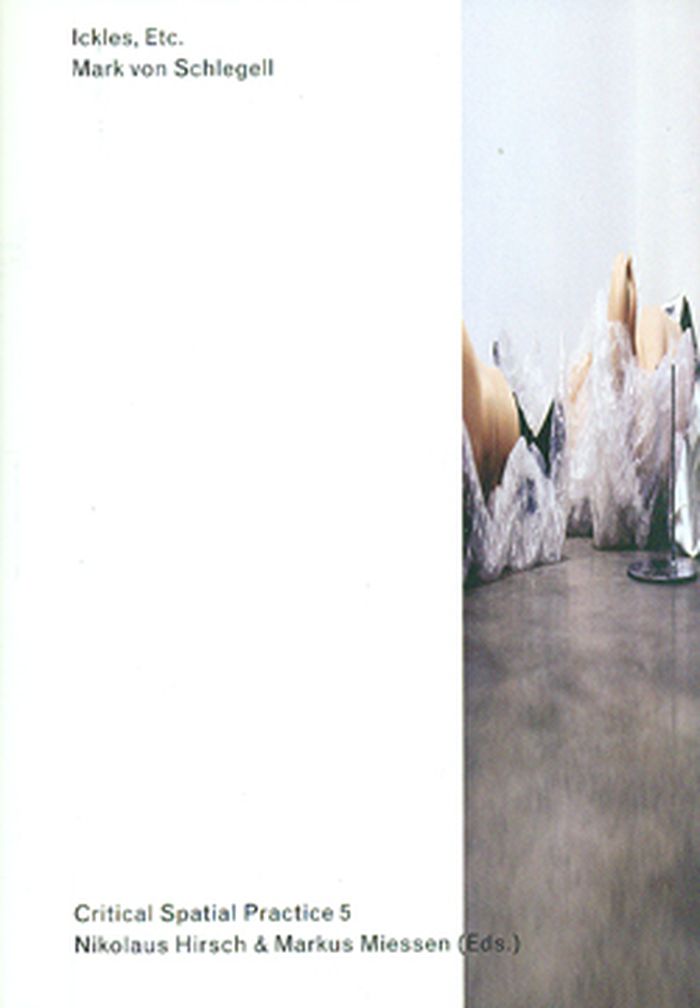
Helming Los Angeles’s most misunderstood info-architecture practice is Henries Ickles, “the man without self-concept.” Time and again Ickles offers practical solutions to the most impenetrable theoretical entanglements of art, architecture, and science in the 2090s. In the fifth book in the Critical Spatial Practice series, Mark von Schlegell’s fusion of theory and fiction puts the SF back in notions of 'speculative aesthetics'. A collection of interconnected comical sci-fi stories written for various exhibitions, Ickles, Etc. explores the future of architectural practice in light of developments in climatology, quasicrystalography, hyper-contemporary art, time travel, and the EGONET.
Critical spatial practice 5: ickles, etc.: Mark von Schlegell
Actions:
Price:
$26.95
(available to order)
Summary:
Helming Los Angeles’s most misunderstood info-architecture practice is Henries Ickles, “the man without self-concept.” Time and again Ickles offers practical solutions to the most impenetrable theoretical entanglements of art, architecture, and science in the 2090s. In the fifth book in the Critical Spatial Practice series, Mark von Schlegell’s fusion of theory and fiction puts the SF back in notions of 'speculative aesthetics'. A collection of interconnected comical sci-fi stories written for various exhibitions, Ickles, Etc. explores the future of architectural practice in light of developments in climatology, quasicrystalography, hyper-contemporary art, time travel, and the EGONET.
Form:
books
books
Publication:
October 2014
October 2014
Subject:
Critical Theory
Critical Theory


