


48 Results
Form:
books
books
Actions:
Price:
$28.00
(available to order)
Summary:
In a world increasingly dominated by the digital, the critical response to digital art generally ranges from hype to counterhype. Popular writing about specific artworks seldom goes beyond promoting a given piece and explaining how it operates, while scholars and critics remain unsure about how to interpret and evaluate them. This is where Roberto Simanowski intervenes,(...)
$28.00
(available to order)
Summary:
In a world increasingly dominated by the digital, the critical response to digital art generally ranges from hype to counterhype. Popular writing about specific artworks seldom goes beyond promoting a given piece and explaining how it operates, while scholars and critics remain unsure about how to interpret and evaluate them. This is where Roberto Simanowski intervenes,(...)
Title:
Digital art and meaning: reading kinetic poetry, text machines, mapping art, and interactive installations
Actions:
Price:
$28.00
(available to order)
Summary:
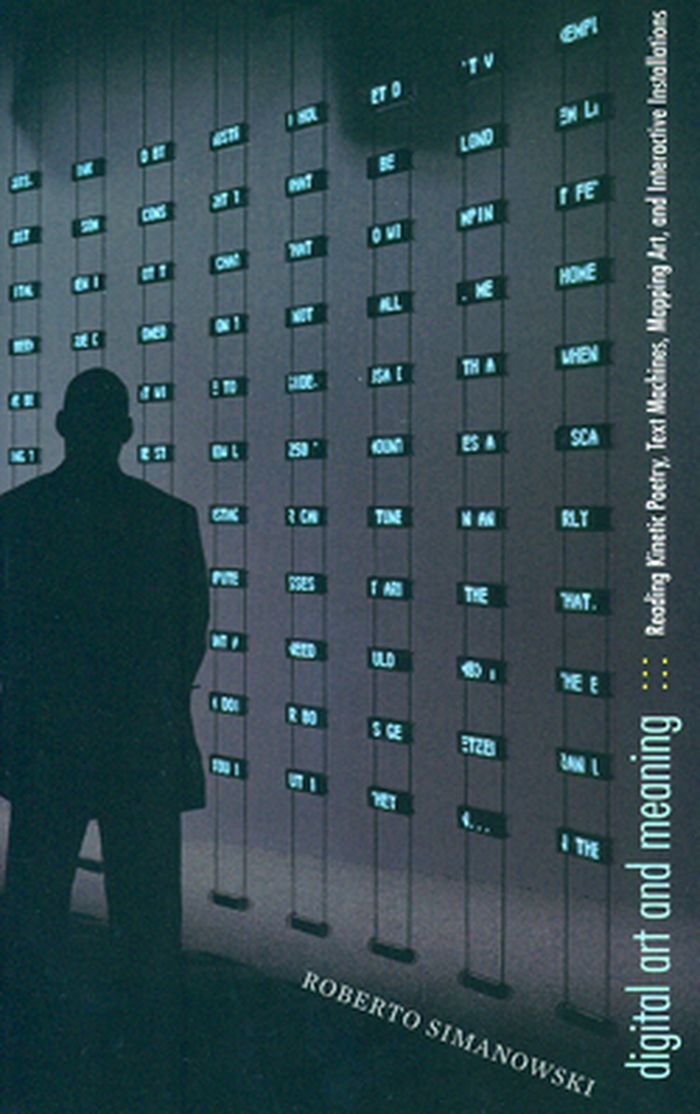
In a world increasingly dominated by the digital, the critical response to digital art generally ranges from hype to counterhype. Popular writing about specific artworks seldom goes beyond promoting a given piece and explaining how it operates, while scholars and critics remain unsure about how to interpret and evaluate them. This is where Roberto Simanowski intervenes, demonstrating how such critical work can be done. Digital Art and Meaning offers close readings of varied examples from genres of digital art such as kinetic concrete poetry, computer-generated text, interactive installation, mapping art, and information sculpture. For instance, Simanowski deciphers the complex meaning of words that not only form an image on a screen but also react to the viewer’s behavior; images that are progressively destroyed by the human gaze; text machines generating nonsense sentences out of a Kafka story; and a light show above Mexico City’s historic square, created by Internet users all over the world. Simanowski combines these illuminating explanations with a theoretical discussion that employs art philosophy and history to achieve a deeper understanding of each particular example of digital art and, ultimately, of the genre as a whole.
Digital art and meaning: reading kinetic poetry, text machines, mapping art, and interactive installations
Actions:
Price:
$28.00
(available to order)
Summary:
In a world increasingly dominated by the digital, the critical response to digital art generally ranges from hype to counterhype. Popular writing about specific artworks seldom goes beyond promoting a given piece and explaining how it operates, while scholars and critics remain unsure about how to interpret and evaluate them. This is where Roberto Simanowski intervenes, demonstrating how such critical work can be done. Digital Art and Meaning offers close readings of varied examples from genres of digital art such as kinetic concrete poetry, computer-generated text, interactive installation, mapping art, and information sculpture. For instance, Simanowski deciphers the complex meaning of words that not only form an image on a screen but also react to the viewer’s behavior; images that are progressively destroyed by the human gaze; text machines generating nonsense sentences out of a Kafka story; and a light show above Mexico City’s historic square, created by Internet users all over the world. Simanowski combines these illuminating explanations with a theoretical discussion that employs art philosophy and history to achieve a deeper understanding of each particular example of digital art and, ultimately, of the genre as a whole.
Form:
books
books
Publication:
July 2011
July 2011
Form:
books
books
Title:
Networked publics
Networked publics
Actions:
Price:
$42.00
(available to order)
Summary:
Digital media and network technologies are now part of everyday life. The Internet has become the backbone of communication, commerce, and media; the ubiquitous mobile phone connects us with others as it removes us from any stable sense of location. This publication examines the ways that the social and cultural shifts created by these technologies have transformed our(...)
$42.00
(available to order)
Summary:
Digital media and network technologies are now part of everyday life. The Internet has become the backbone of communication, commerce, and media; the ubiquitous mobile phone connects us with others as it removes us from any stable sense of location. This publication examines the ways that the social and cultural shifts created by these technologies have transformed our(...)
Title:
Networked publics
Actions:
Price:
$42.00
(available to order)
Summary:
Digital media and network technologies are now part of everyday life. The Internet has become the backbone of communication, commerce, and media; the ubiquitous mobile phone connects us with others as it removes us from any stable sense of location. This publication examines the ways that the social and cultural shifts created by these technologies have transformed our relationships to (and definitions of) place, culture, politics, and infrastructure.
Networked publics
Actions:
Price:
$42.00
(available to order)
Summary:
Digital media and network technologies are now part of everyday life. The Internet has become the backbone of communication, commerce, and media; the ubiquitous mobile phone connects us with others as it removes us from any stable sense of location. This publication examines the ways that the social and cultural shifts created by these technologies have transformed our relationships to (and definitions of) place, culture, politics, and infrastructure.
Form:
books
books
Publication:
December 2008
December 2008
Subject:
Epistemology
Epistemology
Form:
books
books
Actions:
Price:
$45.00
(available to order)
Summary:
As digital technology advances at breakneck speed, images are circulating quicker than ever before. But what is the status of the image in the digital era? In this publication, art historian Hubert Burda (born 1940) examines the "iconic turn" in ten themed chapters and conversations with leading cultural theorists. In the first chapter, "The View Through the Window,"(...)
$45.00
(available to order)
Summary:
As digital technology advances at breakneck speed, images are circulating quicker than ever before. But what is the status of the image in the digital era? In this publication, art historian Hubert Burda (born 1940) examines the "iconic turn" in ten themed chapters and conversations with leading cultural theorists. In the first chapter, "The View Through the Window,"(...)
Title:
The digital wunderkammer : 10 chapters on the iconic turn
Actions:
Price:
$45.00
(available to order)
Summary:
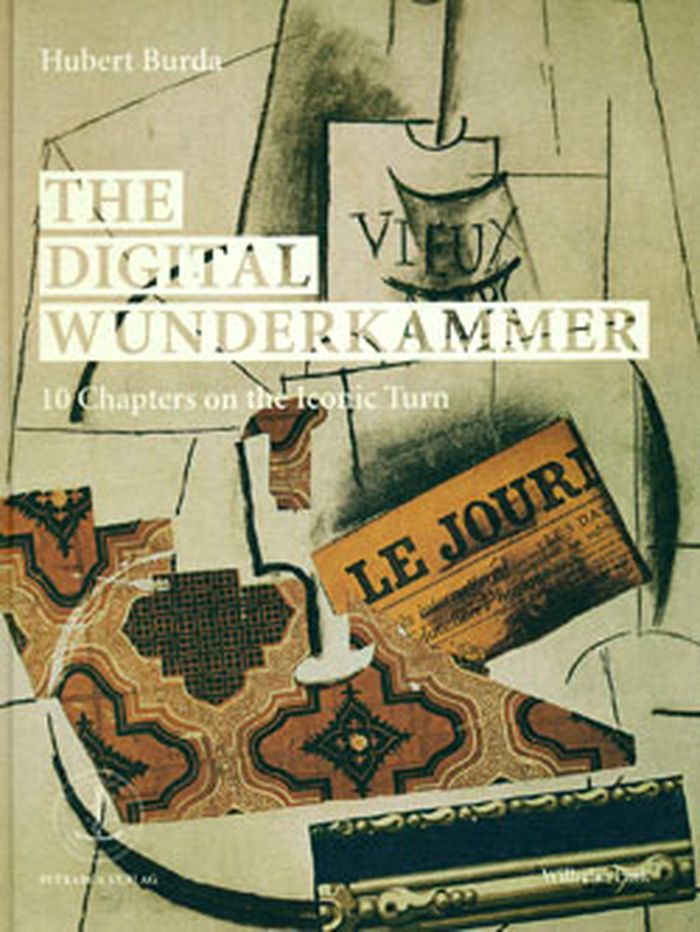
As digital technology advances at breakneck speed, images are circulating quicker than ever before. But what is the status of the image in the digital era? In this publication, art historian Hubert Burda (born 1940) examines the "iconic turn" in ten themed chapters and conversations with leading cultural theorists. In the first chapter, "The View Through the Window," Burda traces the connection between perspectival painting and the television, demonstrating in the second chapter how the image requires a frame, which in turn requires a material vehicle - the topic of the third chapter - that in our era has become a non-material vehicle with its own formal parameters. In the fourth chapter, "The Mobile Image," Burda shows how images have always been linked to portability, but now migrate to an unprecedented degree, so that anyone with a personal device can globally disseminate, say, footage from a concert via Youtube. A discussion of the capacity of individual images to placate or ennervate leads to a seventh chapter on the appetite for the Sublime and the rhetoric and representation of power throughout art history. Following a discussion of the democratization of celebrity culture, Burda proposes that the Google search box is perhaps the most interesting "interface" of our times, analogous to the seventeenth-century cabinet of curiosities (or wunderkammer). Conversations with Friedrich Kittler, Peter Sloterdijk, Bazon Brock, Horst Bredekamp and Hans Belting further extend this imaginative debate on the "iconic turn."
The digital wunderkammer : 10 chapters on the iconic turn
Actions:
Price:
$45.00
(available to order)
Summary:
As digital technology advances at breakneck speed, images are circulating quicker than ever before. But what is the status of the image in the digital era? In this publication, art historian Hubert Burda (born 1940) examines the "iconic turn" in ten themed chapters and conversations with leading cultural theorists. In the first chapter, "The View Through the Window," Burda traces the connection between perspectival painting and the television, demonstrating in the second chapter how the image requires a frame, which in turn requires a material vehicle - the topic of the third chapter - that in our era has become a non-material vehicle with its own formal parameters. In the fourth chapter, "The Mobile Image," Burda shows how images have always been linked to portability, but now migrate to an unprecedented degree, so that anyone with a personal device can globally disseminate, say, footage from a concert via Youtube. A discussion of the capacity of individual images to placate or ennervate leads to a seventh chapter on the appetite for the Sublime and the rhetoric and representation of power throughout art history. Following a discussion of the democratization of celebrity culture, Burda proposes that the Google search box is perhaps the most interesting "interface" of our times, analogous to the seventeenth-century cabinet of curiosities (or wunderkammer). Conversations with Friedrich Kittler, Peter Sloterdijk, Bazon Brock, Horst Bredekamp and Hans Belting further extend this imaginative debate on the "iconic turn."
Form:
books
books
Publication:
August 2011
August 2011
Subject:
Epistemology
Epistemology
Form:
books
books

Actions:
Price:
$24.95
(available to order)
Summary:
When Guy Debord identified the image consumerism of “the society of the spectacle” in the 1960s, he could not have forecast that language would threaten to eclipse the image in the medium of personal technology, creating a world of ubiquitous legibility. Today, we read anytime and anywhere, on screens of all sizes; we read not only newspaper articles, but also databases,(...)
$24.95
(available to order)
Summary:
When Guy Debord identified the image consumerism of “the society of the spectacle” in the 1960s, he could not have forecast that language would threaten to eclipse the image in the medium of personal technology, creating a world of ubiquitous legibility. Today, we read anytime and anywhere, on screens of all sizes; we read not only newspaper articles, but also databases,(...)
Title:
I read where I am : exploring new information cultures
Actions:
Price:
$24.95
(available to order)
Summary:
When Guy Debord identified the image consumerism of “the society of the spectacle” in the 1960s, he could not have forecast that language would threaten to eclipse the image in the medium of personal technology, creating a world of ubiquitous legibility. Today, we read anytime and anywhere, on screens of all sizes; we read not only newspaper articles, but also databases, online archives, search engine results and navigational structures. We read while out on the street, at home or in the office, with a complete library to hand - but less and less we read a book at home on the couch. In other words, we are, or are becoming, a different kind of reader. I Read Where I Am contains texts about the future of reading and the status of the word in the digital age from designers, philosophers, journalists and politicians, looking at both sides of the argument for printed and digital reading matter.
I read where I am : exploring new information cultures
Actions:
Price:
$24.95
(available to order)
Summary:
When Guy Debord identified the image consumerism of “the society of the spectacle” in the 1960s, he could not have forecast that language would threaten to eclipse the image in the medium of personal technology, creating a world of ubiquitous legibility. Today, we read anytime and anywhere, on screens of all sizes; we read not only newspaper articles, but also databases, online archives, search engine results and navigational structures. We read while out on the street, at home or in the office, with a complete library to hand - but less and less we read a book at home on the couch. In other words, we are, or are becoming, a different kind of reader. I Read Where I Am contains texts about the future of reading and the status of the word in the digital age from designers, philosophers, journalists and politicians, looking at both sides of the argument for printed and digital reading matter.
Form:
books
books
Publication:
September 2011
September 2011
Subject:
Epistemology
Epistemology
Form:
books
books

Actions:
Price:
$27.95
(available to order)
Summary:
In Anime’s Media Mix, Marc Steinberg convincingly shows that anime is far more than a style of Japanese animation. He traces the cultural genealogy that spawned Astro Boy to the transformations of Japanese media culture that followed—and forward to the even more profound developments in global capitalism supported by the circulation of characters like Doraemon, Hello(...)
$27.95
(available to order)
Summary:
In Anime’s Media Mix, Marc Steinberg convincingly shows that anime is far more than a style of Japanese animation. He traces the cultural genealogy that spawned Astro Boy to the transformations of Japanese media culture that followed—and forward to the even more profound developments in global capitalism supported by the circulation of characters like Doraemon, Hello(...)
Title:
Anime's media mix: franchising toys and characters in Japan
Actions:
Price:
$27.95
(available to order)
Summary:
In Anime’s Media Mix, Marc Steinberg convincingly shows that anime is far more than a style of Japanese animation. He traces the cultural genealogy that spawned Astro Boy to the transformations of Japanese media culture that followed—and forward to the even more profound developments in global capitalism supported by the circulation of characters like Doraemon, Hello Kitty, and Suzumiya Haruhi. He details how convergence was sparked by anime, with its astoundingly broad merchandising of images and its franchising across media and commodities. He also explains how the rise of anime cannot be understood properly—historically, economically, and culturally—without grasping the integral role that the media mix played from the start. Engaging with film, animation, and media studies, as well as analyses of consumer culture and theories of capitalism, Steinberg offers a sustained study of the Japanese mode of convergence that informs global media practices to this day.
Anime's media mix: franchising toys and characters in Japan
Actions:
Price:
$27.95
(available to order)
Summary:
In Anime’s Media Mix, Marc Steinberg convincingly shows that anime is far more than a style of Japanese animation. He traces the cultural genealogy that spawned Astro Boy to the transformations of Japanese media culture that followed—and forward to the even more profound developments in global capitalism supported by the circulation of characters like Doraemon, Hello Kitty, and Suzumiya Haruhi. He details how convergence was sparked by anime, with its astoundingly broad merchandising of images and its franchising across media and commodities. He also explains how the rise of anime cannot be understood properly—historically, economically, and culturally—without grasping the integral role that the media mix played from the start. Engaging with film, animation, and media studies, as well as analyses of consumer culture and theories of capitalism, Steinberg offers a sustained study of the Japanese mode of convergence that informs global media practices to this day.
Form:
books
books
Publication:
March 2012
March 2012
Subject:
Epistemology
Epistemology
Form:
books
books

Actions:
Price:
$27.95
(available to order)
Summary:
With the invention of telecommunications technologies in the late nineteenth century, the radio-electric spectrum became a tool for rethinking the world in which we live. The emission of radio waves did away with physical distances, crossing borders and cultures and acting as a powerful catalyst for trade. Moreover, the radio spectrum is the invisible infrastructure on(...)
$27.95
(available to order)
Summary:
With the invention of telecommunications technologies in the late nineteenth century, the radio-electric spectrum became a tool for rethinking the world in which we live. The emission of radio waves did away with physical distances, crossing borders and cultures and acting as a powerful catalyst for trade. Moreover, the radio spectrum is the invisible infrastructure on(...)
Title:
Invisible fields: geographies of radio waves
Actions:
Price:
$27.95
(available to order)
Summary:
With the invention of telecommunications technologies in the late nineteenth century, the radio-electric spectrum became a tool for rethinking the world in which we live. The emission of radio waves did away with physical distances, crossing borders and cultures and acting as a powerful catalyst for trade. Moreover, the radio spectrum is the invisible infrastructure on which our information and communication technologies have been built. The history of its scientific discovery and how it was gradually colonized by the media, the military complex, and activists and hackers is one of the most fascinating stories of the twentieth century. The future uses of the radio-electric spectrum in the twenty-first century and its new potential are being decided now, with the end of analogue TV broadcasting worldwide marking the most important transformation of uses in the radio-electric space in decades. This catalog sets out to examine these issues and shed a little light on intriguing stories about radio-electric spectrum.
Invisible fields: geographies of radio waves
Actions:
Price:
$27.95
(available to order)
Summary:
With the invention of telecommunications technologies in the late nineteenth century, the radio-electric spectrum became a tool for rethinking the world in which we live. The emission of radio waves did away with physical distances, crossing borders and cultures and acting as a powerful catalyst for trade. Moreover, the radio spectrum is the invisible infrastructure on which our information and communication technologies have been built. The history of its scientific discovery and how it was gradually colonized by the media, the military complex, and activists and hackers is one of the most fascinating stories of the twentieth century. The future uses of the radio-electric spectrum in the twenty-first century and its new potential are being decided now, with the end of analogue TV broadcasting worldwide marking the most important transformation of uses in the radio-electric space in decades. This catalog sets out to examine these issues and shed a little light on intriguing stories about radio-electric spectrum.
Form:
books
books
Publication:
May 2012
May 2012
Subject:
Epistemology
Epistemology
Form:
books
books
Actions:
Price:
$28.95
(available to order)
Summary:
How do we think?” N. Katherine Hayles poses this question at the beginning of this bracing exploration of the idea that we think through, with, and alongside media. As the age of print passes and new technologies appear every day, this proposition has become far more complicated, particularly for the traditionally print-based disciplines in the humanities and qualitative(...)
$28.95
(available to order)
Summary:
How do we think?” N. Katherine Hayles poses this question at the beginning of this bracing exploration of the idea that we think through, with, and alongside media. As the age of print passes and new technologies appear every day, this proposition has become far more complicated, particularly for the traditionally print-based disciplines in the humanities and qualitative(...)
Title:
How we think : digital media and contemporary technogenesis
Actions:
Price:
$28.95
(available to order)
Summary:
How do we think?” N. Katherine Hayles poses this question at the beginning of this bracing exploration of the idea that we think through, with, and alongside media. As the age of print passes and new technologies appear every day, this proposition has become far more complicated, particularly for the traditionally print-based disciplines in the humanities and qualitative social sciences. With a rift growing between digital scholarship and its print-based counterpart, Hayles argues for contemporary technogenesis — the belief that humans and technics are coevolving — and advocates for what she calls comparative media studies, a new approach to locating digital work within print traditions and vice versa.
How we think : digital media and contemporary technogenesis
Actions:
Price:
$28.95
(available to order)
Summary:
How do we think?” N. Katherine Hayles poses this question at the beginning of this bracing exploration of the idea that we think through, with, and alongside media. As the age of print passes and new technologies appear every day, this proposition has become far more complicated, particularly for the traditionally print-based disciplines in the humanities and qualitative social sciences. With a rift growing between digital scholarship and its print-based counterpart, Hayles argues for contemporary technogenesis — the belief that humans and technics are coevolving — and advocates for what she calls comparative media studies, a new approach to locating digital work within print traditions and vice versa.
Form:
books
books
Publication:
May 2012
May 2012
Subject:
Epistemology
Epistemology
Form:
books
books
Actions:
Price:
$39.95
(available to order)
Summary:
In the past fifteen years, file sharing of digital cultural works between individuals has been at the center of a number of debates on the future of culture itself. To some, sharing constitutes piracy, to be fought against and eradicated. Others see it as unavoidable, and table proposals to compensate for its harmful effects. Meanwhile, little progress has been made(...)
$39.95
(available to order)
Summary:
In the past fifteen years, file sharing of digital cultural works between individuals has been at the center of a number of debates on the future of culture itself. To some, sharing constitutes piracy, to be fought against and eradicated. Others see it as unavoidable, and table proposals to compensate for its harmful effects. Meanwhile, little progress has been made(...)
Title:
Sharing : culture and the economy in the internet age
Actions:
Price:
$39.95
(available to order)
Summary:
In the past fifteen years, file sharing of digital cultural works between individuals has been at the center of a number of debates on the future of culture itself. To some, sharing constitutes piracy, to be fought against and eradicated. Others see it as unavoidable, and table proposals to compensate for its harmful effects. Meanwhile, little progress has been made towards addressing the real challenges facing culture in a digital world. Sharing starts from a radically different viewpoint, namely that the non-market sharing of digital works is both legitimate and useful. Philippe Aigrain looks at the benefits of file sharing, which allows unknown writers and artists to be appreciated more easily. It supports this premise with empirical research, demonstrating that non-market sharing leads to more diversity in the attention given to various works.
Sharing : culture and the economy in the internet age
Actions:
Price:
$39.95
(available to order)
Summary:
In the past fifteen years, file sharing of digital cultural works between individuals has been at the center of a number of debates on the future of culture itself. To some, sharing constitutes piracy, to be fought against and eradicated. Others see it as unavoidable, and table proposals to compensate for its harmful effects. Meanwhile, little progress has been made towards addressing the real challenges facing culture in a digital world. Sharing starts from a radically different viewpoint, namely that the non-market sharing of digital works is both legitimate and useful. Philippe Aigrain looks at the benefits of file sharing, which allows unknown writers and artists to be appreciated more easily. It supports this premise with empirical research, demonstrating that non-market sharing leads to more diversity in the attention given to various works.
Form:
books
books
Publication:
April 2012
April 2012
Subject:
Epistemology
Epistemology
Form:
books
books
Actions:
Price:
$24.95
(available to order)
Summary:
Les technologies numériques sont des technologies d'écriture et, par conséquent, de lectures. Elles impliquent des compétences et des pratiques spécifiques de celles de la culture du livre sans pour autant les annuler. Alors qu'il participe à l'organisation des contenus, à leurs condition d'accès et d'appropriation, le design graphique et typographique agit non pas à la(...)
$24.95
(available to order)
Summary:
Les technologies numériques sont des technologies d'écriture et, par conséquent, de lectures. Elles impliquent des compétences et des pratiques spécifiques de celles de la culture du livre sans pour autant les annuler. Alors qu'il participe à l'organisation des contenus, à leurs condition d'accès et d'appropriation, le design graphique et typographique agit non pas à la(...)
Title:
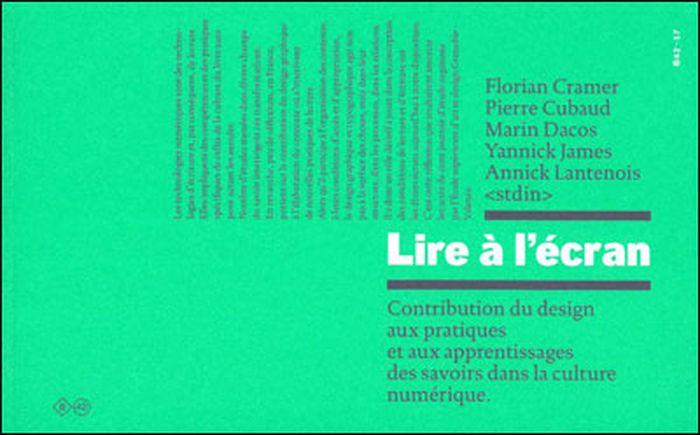
Lire à l'écran : contribution du design aux pratiques et aux apprentissages des savoirs dans la culture numérique
Actions:
Price:
$24.95
(available to order)
Summary:
Les technologies numériques sont des technologies d'écriture et, par conséquent, de lectures. Elles impliquent des compétences et des pratiques spécifiques de celles de la culture du livre sans pour autant les annuler. Alors qu'il participe à l'organisation des contenus, à leurs condition d'accès et d'appropriation, le design graphique et typographique agit non pas à la surface des choses, mais dans leur structure, dans le processus, dans les relations. Il y a donc un rôle décisif à jouer dans la conception des conditions de lecture et d'écriture sur les divers écrans aujourd'hui à notre disposition. C'est cette réflexion que souhaitent amorcer les actes de cette journée d'étude organisée par l'École supérieure d'art et design Grenoble-Valence.
Lire à l'écran : contribution du design aux pratiques et aux apprentissages des savoirs dans la culture numérique
Actions:
Price:
$24.95
(available to order)
Summary:
Les technologies numériques sont des technologies d'écriture et, par conséquent, de lectures. Elles impliquent des compétences et des pratiques spécifiques de celles de la culture du livre sans pour autant les annuler. Alors qu'il participe à l'organisation des contenus, à leurs condition d'accès et d'appropriation, le design graphique et typographique agit non pas à la surface des choses, mais dans leur structure, dans le processus, dans les relations. Il y a donc un rôle décisif à jouer dans la conception des conditions de lecture et d'écriture sur les divers écrans aujourd'hui à notre disposition. C'est cette réflexion que souhaitent amorcer les actes de cette journée d'étude organisée par l'École supérieure d'art et design Grenoble-Valence.
Form:
books
books
Publication:
June 2012
June 2012
Subject:
Epistemology
Epistemology
Form:
books
books

Actions:
Price:
$70.95
(available to order)
Summary:
This cutting-edge text offers an introduction to the emerging field of media archaeology and analyses the innovative theoretical and artistic methodology used to excavate current media through its past. Written with a steampunk attitude, What is Media Archaeology? examines the theoretical challenges of studying digital culture and memory and opens up the sedimented(...)
$70.95
(available to order)
Summary:
This cutting-edge text offers an introduction to the emerging field of media archaeology and analyses the innovative theoretical and artistic methodology used to excavate current media through its past. Written with a steampunk attitude, What is Media Archaeology? examines the theoretical challenges of studying digital culture and memory and opens up the sedimented(...)
Title:
Jussi Parikka : What is media archaeology?
Actions:
Price:
$70.95
(available to order)
Summary:
This cutting-edge text offers an introduction to the emerging field of media archaeology and analyses the innovative theoretical and artistic methodology used to excavate current media through its past. Written with a steampunk attitude, What is Media Archaeology? examines the theoretical challenges of studying digital culture and memory and opens up the sedimented layers of contemporary media culture. The author contextualizes media archaeology in relation to other key media studies debates including software studies, German media theory, imaginary media research, new materialism and digital humanities.
Jussi Parikka : What is media archaeology?
Actions:
Price:
$70.95
(available to order)
Summary:
This cutting-edge text offers an introduction to the emerging field of media archaeology and analyses the innovative theoretical and artistic methodology used to excavate current media through its past. Written with a steampunk attitude, What is Media Archaeology? examines the theoretical challenges of studying digital culture and memory and opens up the sedimented layers of contemporary media culture. The author contextualizes media archaeology in relation to other key media studies debates including software studies, German media theory, imaginary media research, new materialism and digital humanities.
Form:
books
books
Publication:
June 2012
June 2012
Subject:
Epistemology
Epistemology


