


2227 Results
Form:
books
books
Actions:
Price:
$50.00
(available to order)
Summary:
"The Eyes of the Skin" has become a classic of architectural theory and consists of two extended essays. The first surveys the historical development of the ocular-centric paradigm in western culture since the Greeks and its impact on the experience of the world and the nature of architecture. The second examines the role of the other senses in authentic architectural(...)
Title:
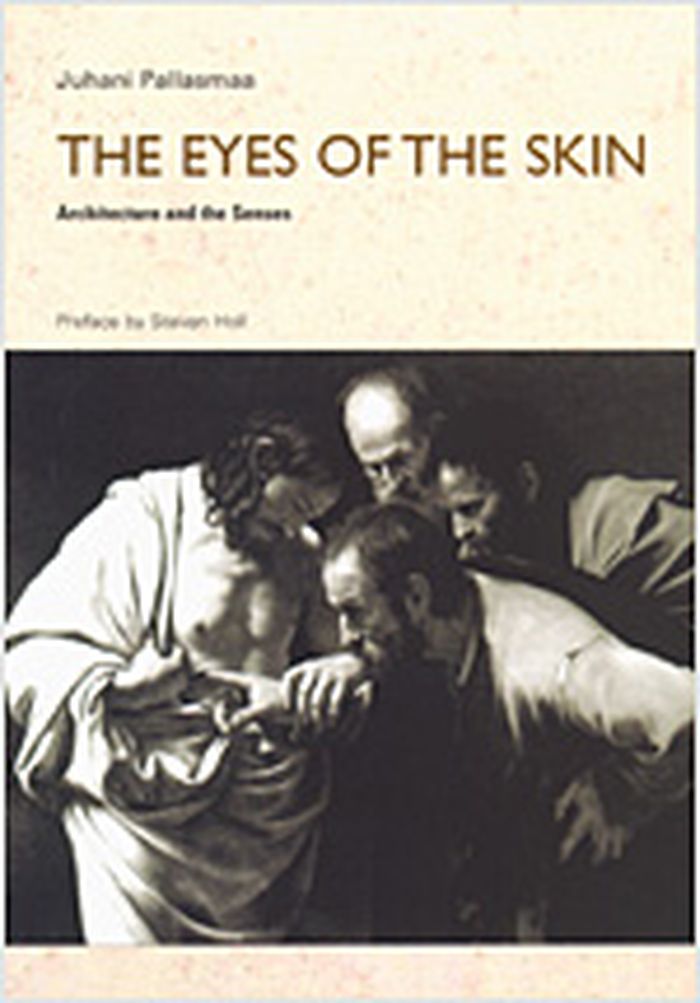
The eyes of the skin : architecture and the senses
Actions:
Price:
$50.00
(available to order)
Summary:
"The Eyes of the Skin" has become a classic of architectural theory and consists of two extended essays. The first surveys the historical development of the ocular-centric paradigm in western culture since the Greeks and its impact on the experience of the world and the nature of architecture. The second examines the role of the other senses in authentic architectural experiences, and points the way towards a multi-sensory architecture which facilitates a sense of belonging and integration. Since the book's first publication, interest in the role of the body and the senses has been emerging in both architectural philosophy and teaching. This new, revised and extended edition of this seminal work will not only inspire architects and students to design more holistic architecture, but will enrich the general reader's perception of the world around them. Preface by Steven Holl.
Form:
books
books
Publication:
April 2005, Chichester, England
April 2005, Chichester, England
Subject:
Architectural Theory
Architectural Theory
Form:
books
books
Actions:
Price:
$34.50
(available to order)
Summary:
In the late nineteenth century the conventions of Victorian domesticity came under scrutiny by British writers, designers, artists, and architects intent on bringing a modern spirit into the home. Seeking to redefine the spaces of middle-class private life, figures such as E. M. Forster, Roger Fry, Oscar Wilde, James McNeill Whistler, and Virginia Woolf attempted to(...)
Title:
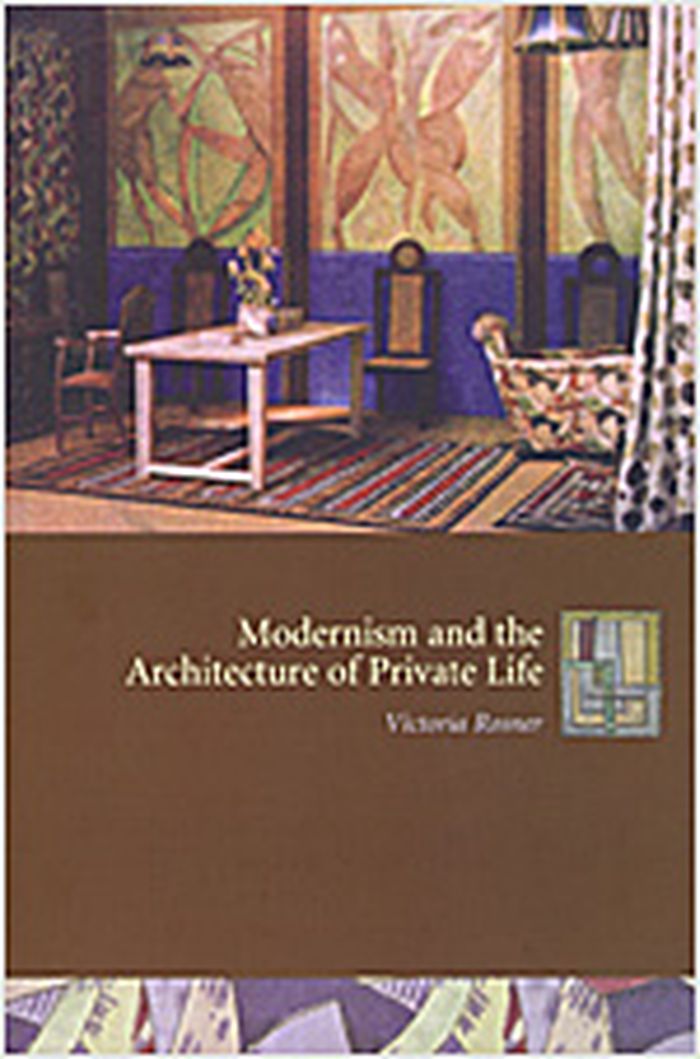
Modernism and the architecture of private life
Actions:
Price:
$34.50
(available to order)
Summary:
In the late nineteenth century the conventions of Victorian domesticity came under scrutiny by British writers, designers, artists, and architects intent on bringing a modern spirit into the home. Seeking to redefine the spaces of middle-class private life, figures such as E. M. Forster, Roger Fry, Oscar Wilde, James McNeill Whistler, and Virginia Woolf attempted to rethink Victorian design and reconstruct the form, function, and meaning of the home to meet the demands of modernity. In this study, Rosner draws on a host of previously unexamined archival sources and reveals the many personal and aesthetic connections among modern British writers, interior designers, and architects, elegantly synthesizing modernist literature with architectural plans, room designs, and decorative art.
Form:
books
books
Publication:
January 2005, New York
January 2005, New York
Subject:
Architectural Theory
Architectural Theory
Form:
books
books

Price:
$70.99
(available to order)
Summary:
Architectural theory : Vitruvius to 1870 is a landmark anthology that surveys the development of the field of architecture from its earliest days to the year 1870. This anthology brings together the classic essays in the field, the volume chronicles the major developments and trends in architecture from Vitruvius to Gottfried Semper. Volume 1 of overview of(...)
Title:
Architectural theory volume 1 : an anthology from Vitruvius to 1870
Actions:
Price:
$70.99
(available to order)
Summary:
Architectural theory : Vitruvius to 1870 is a landmark anthology that surveys the development of the field of architecture from its earliest days to the year 1870. This anthology brings together the classic essays in the field, the volume chronicles the major developments and trends in architecture from Vitruvius to Gottfried Semper. Volume 1 of overview of architectural thought from antiquity to the present day; this volume covers 25 B.C. to 1870 Collects over 200 classic essays in the field, organized thematically for the student and scholar, covering Classicism, Neoclassicism, the Enlightenment, Romanticism, and the Gothic Includes German, French, and Italian essays appearing in English. Features a general introduction and headnotes to each essay written by a renowned expert on architectural theory.
Form:
books
books
Publication:
September 2005, Oxford
September 2005, Oxford
Subject:
Architectural Theory
Architectural Theory
Form:
books
books

Actions:
Price:
$30.00
(available to order)
Summary:
Since Greek antiquity, the human body has been regarded as a microcosm of universal harmony. In this book, an international group of architects, architectural historians, and theorists examines the relation of the human body and architecture. The essays view well-known buildings, texts, paintings, ornaments, and landscapes from the perspective of the body's physical,(...)
Subject:
Architectural Theory
Architectural Theory
Publication:
April 2005, Cambridge, Massachusetts
April 2005, Cambridge, Massachusetts
Title:
Body and building : essays on the changing relation of body and architecture
Actions:
Price:
$30.00
(available to order)
Summary:
Since Greek antiquity, the human body has been regarded as a microcosm of universal harmony. In this book, an international group of architects, architectural historians, and theorists examines the relation of the human body and architecture. The essays view well-known buildings, texts, paintings, ornaments, and landscapes from the perspective of the body's physical, psychological, and spiritual needs and pleasures. Topics include Greek temples; the churches of Tadao Ando in Japan; Renaissance fortresses and paintings; the body, space, and dwelling in Wright's and Schindler's houses in North America; the corporeal dimension of Carlo Scarpa's landscapes and gardens; theory from Vitruvius to the Renaissance and Enlightenment; and Freudian psychoanalysis. The essays are framed by an appreciation of architectural historian and theorist Joseph Rykwert's influential work on the subject.
Form:
books
books
Publication:
April 2005, Cambridge, Massachusetts
April 2005, Cambridge, Massachusetts
Subject:
Architectural Theory
Architectural Theory
Form:
books
books

Title:
Esthétique de l'effacement
Esthétique de l'effacement
Actions:
Price:
$51.50
(available to order)
Summary:
Effacer, c'est écarter, éloigner, estomper, dissiper, exclure, annuler, bref, faire disparaître: mais pour faire apparaître du nouveau. Pour nous affirmer, nous procédons à des effacements. Telle est la démarche exemplaire de l'art qui, dans la cruauté nécessaire de son geste créateur, efface jusqu'à les détruire des apparences stériles, des figures hostiles et des mondes(...)
Title:
Esthétique de l'effacement
Actions:
Price:
$51.50
(available to order)
Summary:
Effacer, c'est écarter, éloigner, estomper, dissiper, exclure, annuler, bref, faire disparaître: mais pour faire apparaître du nouveau. Pour nous affirmer, nous procédons à des effacements. Telle est la démarche exemplaire de l'art qui, dans la cruauté nécessaire de son geste créateur, efface jusqu'à les détruire des apparences stériles, des figures hostiles et des mondes anciens: pour conquérir, pour signifier, pour transfigurer, bref, pour faire apparaître par delà ce qui est insignifiant, usé ou néfaste, des mondes neufs.
Form:
books
books
Publication:
March 2005, Paris
March 2005, Paris
Subject:
Architectural Theory
Architectural Theory
Form:
books
books

Actions:
Price:
$47.50
(available in store)
Summary:
Drawing upon a wide range of knowledge and disciplines, the author argues that, underlying technological changes in the process of architectural production are fundamental changes in the way we think about machines and the world we live in. Key topics include: new patterns of urbanism in the fast growing cities of asia pacific; metaphorical extensions of mind and body in(...)
Title:
Architecture, technology and process
Actions:
Price:
$47.50
(available in store)
Summary:
Drawing upon a wide range of knowledge and disciplines, the author argues that, underlying technological changes in the process of architectural production are fundamental changes in the way we think about machines and the world we live in. Key topics include: new patterns of urbanism in the fast growing cities of asia pacific; metaphorical extensions of mind and body in cyberspace; the divergent European and North American values shaping Sir Norman Foster's and Frank Gehry's work, and the collaborative work methods and technologies creating the adaptable design pratices of today.
Form:
books
books
Publication:
October 2007, Oxford, Burlington
October 2007, Oxford, Burlington
Subject:
Architectural Theory
Architectural Theory
Form:
books
books

Price:
$37.95
(available in store)
Summary:
Vito Acconci is well-known as a concept and performing artist who was far ahead of his time. In 2003, he realized one of his first architectural projects : for his artist-and-gallerist friend Kenny Schachter he designed the multifunctional gallery space conTEMPorary in New York. This experimental space became programmatic for their further collaboration, up to their(...)
Subject:
Architectural Theory
Architectural Theory
Publication:
June 2005, Wien / New York
June 2005, Wien / New York
Title:
Art becomes architecture becomes art : a conversation between
Actions:
Price:
$37.95
(available in store)
Summary:
Vito Acconci is well-known as a concept and performing artist who was far ahead of his time. In 2003, he realized one of his first architectural projects : for his artist-and-gallerist friend Kenny Schachter he designed the multifunctional gallery space conTEMPorary in New York. This experimental space became programmatic for their further collaboration, up to their latest project in King’s Cross, London. Over the past years, Vito Acconci has moved towards architecture. Today’s Acconci Studio covers planning for such diverse projects as the Skateboard Park in San Juan, the Inside-Out Bookstore for Documenta X, or an urban planning for Tel Aviv. Vito Acconci and Kenny Schachter met for two discussions in London and Basel in 2004 and 2005.
Form:
books
books
Publication:
June 2005, Wien / New York
June 2005, Wien / New York
Subject:
Architectural Theory
Architectural Theory
Form:
books
books
Title:
Claude Parent
Claude Parent
Actions:
Price:
$13.95
(available to order)
Summary:
L'hypothèse de la " Fonction oblique " préconisant la fixation de la vie des hommes sur les plans inclinés, fut énoncée en 1964 par Claude Parent et Paul Virilio. Les textes qui vont suivre en présentent l'explication, tendent à parvenir à une globalisation des solutions de concentration urbaine et illustrent par certains exemples concrets les possibilités illimitées de(...)
Title:
Claude Parent
Actions:
Price:
$13.95
(available to order)
Summary:
L'hypothèse de la " Fonction oblique " préconisant la fixation de la vie des hommes sur les plans inclinés, fut énoncée en 1964 par Claude Parent et Paul Virilio. Les textes qui vont suivre en présentent l'explication, tendent à parvenir à une globalisation des solutions de concentration urbaine et illustrent par certains exemples concrets les possibilités illimitées de cette nouvelle prise de possession de l'espace. Encore faut-il se prémunir contre une tendance naturelle à la nouveauté, car lorsque l'on connaît les principes essentiels de la fonction oblique, on s'aperçoit que cette proposition a préexisté dans le passé à des époques très éloignées dans le temps, très différentes dans l'option morale ou économique, et qu'elle a donné naissance à des formulations concrètes dont l'archéologie nous porte témoignage irrécusable. Depuis la Turquie du septième millénaire avant Jésus-Christ jusqu'aux villages actuels du Sud Algérien, un passé de la fonction oblique existe. Ce passé a eu ou conserve sa vérité, sa réalité sociologique. C'est à ce titre qu'il est permis de " découvrir " d'imaginer dans le passé, cette " archéologie du futur ", aussi bien qu'il est possible dans le présent de détecter les " germes " en pensée ou en acte d'une futurologie, c'est-à-dire d'une science de la découverte de l'avenir de l'humanité, dans la mesure où cet avenir n'est ni imposé, ni subi par les deux parties contractantes : la population, les créateurs-inventeurs mais intégré de par l'imagination des uns à l'usage de l'autre. On doit lire le passé comme un futur à découvrir.
Form:
books
books
Publication:
January 2005, Paris
January 2005, Paris
Subject:
Architectural Theory
Architectural Theory
Form:
books
books
Actions:
Price:
$33.50
(available to order)
Summary:
Les cabanes, contrairement à ce que pourrait laisser croire l’étymologie, ne sont pas de « petites maisons » : elles sont sans solutions de continuité avec les architectures dont elles sont supposées être l’origine. Fragiles et singulières, elles sont construites sans plan préconçu. Elles abritent des individus qui ne s’y installent pas, n’y habitent jamais véritablement.(...)
Title:
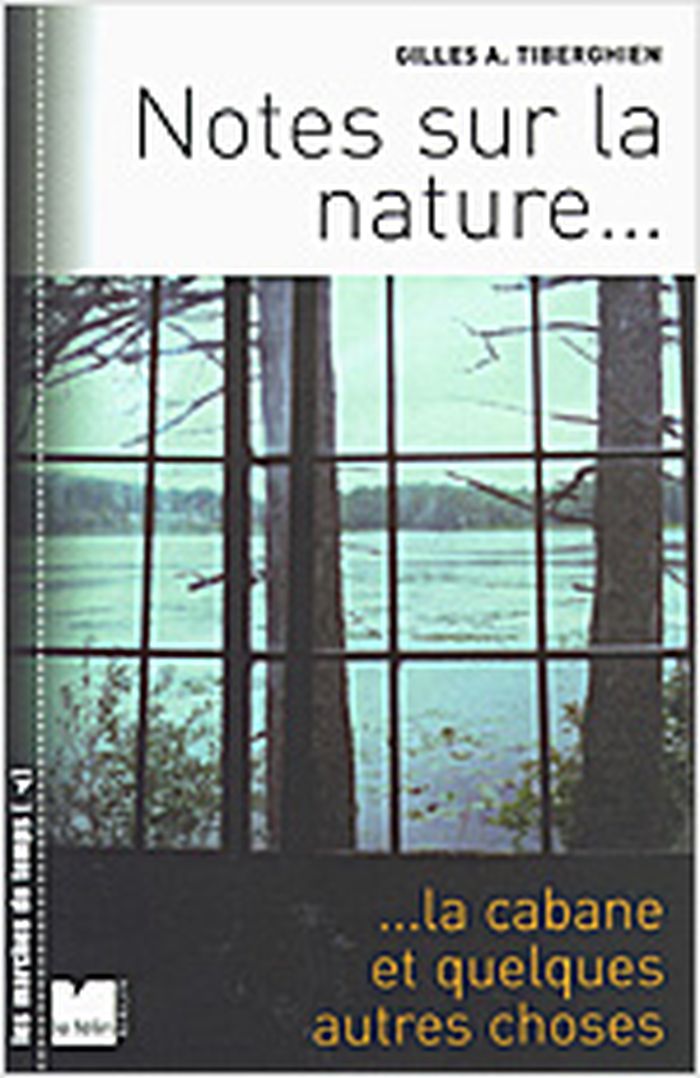
Notes sur la nature, la cabane et quelques autres choses
Actions:
Price:
$33.50
(available to order)
Summary:
Les cabanes, contrairement à ce que pourrait laisser croire l’étymologie, ne sont pas de « petites maisons » : elles sont sans solutions de continuité avec les architectures dont elles sont supposées être l’origine. Fragiles et singulières, elles sont construites sans plan préconçu. Elles abritent des individus qui ne s’y installent pas, n’y habitent jamais véritablement. Aux marges des villes et des sociétés, elles recomposent une certaine idée de la nature à laquelle nous désirons nous confronter tout en la craignant. Cette ambivalence fondamentale fait de la cabane un lieu de contradictions où coexistent le haut et le bas, l’ouvert et le fermé, le mobile et l’immobile, le jeu et le sérieux, la vie et la mort.
Form:
books
books
Publication:
March 2005, Paris
March 2005, Paris
Subject:
Architectural Theory
Architectural Theory
Form:
books
books
Title:
Untitled Space
Untitled Space
Actions:
Price:
$49.50
(available in store)
Summary:
Contributors : Maaike Bleeker, Jeroen Boomgaard, Joost Meuwissen, Jell Post, Vincent van Rossem, Michael Snitker, Paul Toornend, Wouter Vanstiphout.
$49.50
(available in store)
Summary:
Contributors : Maaike Bleeker, Jeroen Boomgaard, Joost Meuwissen, Jell Post, Vincent van Rossem, Michael Snitker, Paul Toornend, Wouter Vanstiphout.
Subject:
Architectural Theory
Architectural Theory
Publication:
January 2005, Amsterdam
January 2005, Amsterdam
Title:
Untitled Space
Actions:
Price:
$49.50
(available in store)
Summary:
Contributors : Maaike Bleeker, Jeroen Boomgaard, Joost Meuwissen, Jell Post, Vincent van Rossem, Michael Snitker, Paul Toornend, Wouter Vanstiphout.
Untitled Space
Actions:
Price:
$49.50
(available in store)
Summary:
Contributors : Maaike Bleeker, Jeroen Boomgaard, Joost Meuwissen, Jell Post, Vincent van Rossem, Michael Snitker, Paul Toornend, Wouter Vanstiphout.
Form:
books
books
Publication:
January 2005, Amsterdam
January 2005, Amsterdam
Subject:
Architectural Theory
Architectural Theory


