


2227 Results
Form:
books
books
Title:
The gray cloth
The gray cloth
Actions:
Price:
$24.95
(available to order)
Summary:
The German expressionist, architectural visionary, author, inventor, and artist Paul Scheerbart (1863-1915) wrote several fictional utopian narratives related to glass architecture. In "The Gray Cloth", the first of his novels to be translated into English, Scheerbart uses subtle irony and the structural simplicity of a fairy tale to present the theories of coloured glass(...)
$24.95
(available to order)
Summary:
The German expressionist, architectural visionary, author, inventor, and artist Paul Scheerbart (1863-1915) wrote several fictional utopian narratives related to glass architecture. In "The Gray Cloth", the first of his novels to be translated into English, Scheerbart uses subtle irony and the structural simplicity of a fairy tale to present the theories of coloured glass(...)
Title:
The gray cloth
Actions:
Price:
$24.95
(available to order)
Summary:
The German expressionist, architectural visionary, author, inventor, and artist Paul Scheerbart (1863-1915) wrote several fictional utopian narratives related to glass architecture. In "The Gray Cloth", the first of his novels to be translated into English, Scheerbart uses subtle irony and the structural simplicity of a fairy tale to present the theories of coloured glass outlined in his well-known treatise "Glass Architecture". The novel is set forward in time to the mid-twentieth century. The protagonist, a Swiss architect named Edgar Krug, circumnavigates the globe by airship with his wife, constructing wildly varied, colored-glass buildings. His projects include a high-rise and exhibition/concert hall in Chicago, a retirement complex for air pilots on the Fiji Islands, the structure for an elevated train across a zoological park in northern India, and a suspended residential villa on the Kuria Muria Islands off the coast of Oman in the Arabian Sea. Fearing that his architecture is challenged by the colourfulness of women’s clothing, Krug insists that his wife wear all gray clothing with the addition of ten percent white. This odd demand brings him notoriety and sensationalizes his international building campaign. For the reader, it underlines the confluence of architecture with fashion, gender, and global media. In his introduction John Stuart surveys Scheerbart’s career and role in German avant-garde circles, as well as his architectural and social ideas. He shows how Scheerbart strove to integrate his spiritual and romantic leanings with the modern world, often relying on glass architecture to do so. In addition to discussing the novel’s reception and its rediscovery by contemporary architects and critics, Stuart shows fiction to be a resource for the study of architecture and places "The Gray Cloth" in the context of German Expressionism.
The gray cloth
Actions:
Price:
$24.95
(available to order)
Summary:
The German expressionist, architectural visionary, author, inventor, and artist Paul Scheerbart (1863-1915) wrote several fictional utopian narratives related to glass architecture. In "The Gray Cloth", the first of his novels to be translated into English, Scheerbart uses subtle irony and the structural simplicity of a fairy tale to present the theories of coloured glass outlined in his well-known treatise "Glass Architecture". The novel is set forward in time to the mid-twentieth century. The protagonist, a Swiss architect named Edgar Krug, circumnavigates the globe by airship with his wife, constructing wildly varied, colored-glass buildings. His projects include a high-rise and exhibition/concert hall in Chicago, a retirement complex for air pilots on the Fiji Islands, the structure for an elevated train across a zoological park in northern India, and a suspended residential villa on the Kuria Muria Islands off the coast of Oman in the Arabian Sea. Fearing that his architecture is challenged by the colourfulness of women’s clothing, Krug insists that his wife wear all gray clothing with the addition of ten percent white. This odd demand brings him notoriety and sensationalizes his international building campaign. For the reader, it underlines the confluence of architecture with fashion, gender, and global media. In his introduction John Stuart surveys Scheerbart’s career and role in German avant-garde circles, as well as his architectural and social ideas. He shows how Scheerbart strove to integrate his spiritual and romantic leanings with the modern world, often relying on glass architecture to do so. In addition to discussing the novel’s reception and its rediscovery by contemporary architects and critics, Stuart shows fiction to be a resource for the study of architecture and places "The Gray Cloth" in the context of German Expressionism.
Form:
books
books
Publication:
October 2003, Cambridge / London
October 2003, Cambridge / London
Subject:
Architectural Theory
Architectural Theory
Form:
books
books
Title:
Ideas that shaped buildings
Ideas that shaped buildings
Actions:
Price:
$28.50
(available to order)
Summary:
In "Ideas That Shaped Buildings" Fil Hearn identifies and codifies into theoretical systems the operative tenets of architectural theory from ancient Rome to the present. With this original synthesis of architectural history and theory, he constructs an intellectual armature on which virtually any architectural concept, past or present, can be positioned. Dealing mainly(...)
$28.50
(available to order)
Summary:
In "Ideas That Shaped Buildings" Fil Hearn identifies and codifies into theoretical systems the operative tenets of architectural theory from ancient Rome to the present. With this original synthesis of architectural history and theory, he constructs an intellectual armature on which virtually any architectural concept, past or present, can be positioned. Dealing mainly(...)
Title:
Ideas that shaped buildings
Actions:
Price:
$28.50
(available to order)
Summary:
In "Ideas That Shaped Buildings" Fil Hearn identifies and codifies into theoretical systems the operative tenets of architectural theory from ancient Rome to the present. With this original synthesis of architectural history and theory, he constructs an intellectual armature on which virtually any architectural concept, past or present, can be positioned. Dealing mainly with the treatises that have been highly influential historically, he organizes their concepts thematically and analyzes their development through time.
Ideas that shaped buildings
Actions:
Price:
$28.50
(available to order)
Summary:
In "Ideas That Shaped Buildings" Fil Hearn identifies and codifies into theoretical systems the operative tenets of architectural theory from ancient Rome to the present. With this original synthesis of architectural history and theory, he constructs an intellectual armature on which virtually any architectural concept, past or present, can be positioned. Dealing mainly with the treatises that have been highly influential historically, he organizes their concepts thematically and analyzes their development through time.
Form:
books
books
Publication:
December 2003, Cambridge
December 2003, Cambridge
Subject:
Architectural Theory
Architectural Theory
Form:
books
books
Actions:
Price:
$41.95
(available to order)
Summary:
With "Me++" the author of "City of bits" and "e-topia" completes an informal trilogy examining the ramifications of information technology in everyday life. In "Me++" Mitchell examines the effects of wireless linkage, global interconnection, miniaturization, and portability on our bodies, our clothing, our architecture, our cities, and our uses of space and time.(...)
$41.95
(available to order)
Summary:
With "Me++" the author of "City of bits" and "e-topia" completes an informal trilogy examining the ramifications of information technology in everyday life. In "Me++" Mitchell examines the effects of wireless linkage, global interconnection, miniaturization, and portability on our bodies, our clothing, our architecture, our cities, and our uses of space and time.(...)
Subject:
Architectural Theory
Architectural Theory
Publication:
October 2003, Cambridge, Mass.
October 2003, Cambridge, Mass.
Title:
Me++ : the cyborg self and the networked city
Actions:
Price:
$41.95
(available to order)
Summary:
With "Me++" the author of "City of bits" and "e-topia" completes an informal trilogy examining the ramifications of information technology in everyday life. In "Me++" Mitchell examines the effects of wireless linkage, global interconnection, miniaturization, and portability on our bodies, our clothing, our architecture, our cities, and our uses of space and time. Computer viruses, cascading power outages, terrorist infiltration of transportation networks, and cellphone conversations in the streets are symptoms of a dramatic new urban condition--that of ubiquitous, inescapable network interconnectivity. He argues that a world governed less and less by boundaries and more and more by connections requires us to reimagine and reconstruct our environment and to reconsider the ethical foundations of design, engineering, and planning practice.
Me++ : the cyborg self and the networked city
Actions:
Price:
$41.95
(available to order)
Summary:
With "Me++" the author of "City of bits" and "e-topia" completes an informal trilogy examining the ramifications of information technology in everyday life. In "Me++" Mitchell examines the effects of wireless linkage, global interconnection, miniaturization, and portability on our bodies, our clothing, our architecture, our cities, and our uses of space and time. Computer viruses, cascading power outages, terrorist infiltration of transportation networks, and cellphone conversations in the streets are symptoms of a dramatic new urban condition--that of ubiquitous, inescapable network interconnectivity. He argues that a world governed less and less by boundaries and more and more by connections requires us to reimagine and reconstruct our environment and to reconsider the ethical foundations of design, engineering, and planning practice.
Form:
books
books
Publication:
October 2003, Cambridge, Mass.
October 2003, Cambridge, Mass.
Subject:
Architectural Theory
Architectural Theory
Form:
books
books
Actions:
Price:
$44.95
(available to order)
Summary:
"Art Theory: An Historical Introduction" is a unique survey of Western thought about art from ancient times to the present. It provides a lucid and lively narrative geared to the needs of the general reader and beginning student, Covering the major periods of Western art history: Antiquity and the Middle Ages, the early modern period (Renaissance and Baroque), the(...)
$44.95
(available to order)
Summary:
"Art Theory: An Historical Introduction" is a unique survey of Western thought about art from ancient times to the present. It provides a lucid and lively narrative geared to the needs of the general reader and beginning student, Covering the major periods of Western art history: Antiquity and the Middle Ages, the early modern period (Renaissance and Baroque), the(...)
Title:
Art theory : an historical introduction
Actions:
Price:
$44.95
(available to order)
Summary:
"Art Theory: An Historical Introduction" is a unique survey of Western thought about art from ancient times to the present. It provides a lucid and lively narrative geared to the needs of the general reader and beginning student, Covering the major periods of Western art history: Antiquity and the Middle Ages, the early modern period (Renaissance and Baroque), the Enlightenment, the nineteenth century, early twentieth-century modernism, and postmodernism. It relates theory to the practice as well as to the intellectual- and cultural-historical currents of each period, thus demonstrating the value of an historical approach to theoretical issues, and includes an extensive bibliography that provides a useful and up-to-date guide to the primary sources and secondary literature.
Art theory : an historical introduction
Actions:
Price:
$44.95
(available to order)
Summary:
"Art Theory: An Historical Introduction" is a unique survey of Western thought about art from ancient times to the present. It provides a lucid and lively narrative geared to the needs of the general reader and beginning student, Covering the major periods of Western art history: Antiquity and the Middle Ages, the early modern period (Renaissance and Baroque), the Enlightenment, the nineteenth century, early twentieth-century modernism, and postmodernism. It relates theory to the practice as well as to the intellectual- and cultural-historical currents of each period, thus demonstrating the value of an historical approach to theoretical issues, and includes an extensive bibliography that provides a useful and up-to-date guide to the primary sources and secondary literature.
Form:
books
books
Publication:
December 2003, Oxford
December 2003, Oxford
Subject:
Architectural Theory
Architectural Theory
Form:
books
books
Actions:
Price:
$33.95
(available to order)
Summary:
Since its publication in 1936, Walter Benjamin's "Artwork" essay has become a canonical text about the status and place of the fine arts in modern mass culture. Benjamin was especially concerned with the ability of new technologies--notably film, sound recording, and photography--to reproduce works of art in great number. Benjamin could not have foreseen the explosion of(...)
$33.95
(available to order)
Summary:
Since its publication in 1936, Walter Benjamin's "Artwork" essay has become a canonical text about the status and place of the fine arts in modern mass culture. Benjamin was especially concerned with the ability of new technologies--notably film, sound recording, and photography--to reproduce works of art in great number. Benjamin could not have foreseen the explosion of(...)
Subject:
Architectural Theory
Architectural Theory
Publication:
July 2003, Stanford
July 2003, Stanford
Title:
Mapping Benjamin : the work of art in the digital age
Actions:
Price:
$33.95
(available to order)
Summary:
Since its publication in 1936, Walter Benjamin's "Artwork" essay has become a canonical text about the status and place of the fine arts in modern mass culture. Benjamin was especially concerned with the ability of new technologies--notably film, sound recording, and photography--to reproduce works of art in great number. Benjamin could not have foreseen the explosion of imagery and media that has occurred during the past fifty years. Does Benjamin's famous essay still speak to this new situation? That is the question posed by the editors of this book to a wide range of leading scholars and thinkers across a spectrum of disciplines in the humanities. The essays gathered here do not hazard a univocal reply to that question; rather they offer a rich, wide-ranging critique of Benjamin's position that refracts and reflects contemporary thinking about the ethical, political, and aesthetic implications of life in the digital age.
Mapping Benjamin : the work of art in the digital age
Actions:
Price:
$33.95
(available to order)
Summary:
Since its publication in 1936, Walter Benjamin's "Artwork" essay has become a canonical text about the status and place of the fine arts in modern mass culture. Benjamin was especially concerned with the ability of new technologies--notably film, sound recording, and photography--to reproduce works of art in great number. Benjamin could not have foreseen the explosion of imagery and media that has occurred during the past fifty years. Does Benjamin's famous essay still speak to this new situation? That is the question posed by the editors of this book to a wide range of leading scholars and thinkers across a spectrum of disciplines in the humanities. The essays gathered here do not hazard a univocal reply to that question; rather they offer a rich, wide-ranging critique of Benjamin's position that refracts and reflects contemporary thinking about the ethical, political, and aesthetic implications of life in the digital age.
Form:
books
books
Publication:
July 2003, Stanford
July 2003, Stanford
Subject:
Architectural Theory
Architectural Theory
Form:
books
books
Title:
Sensory design
Sensory design
Actions:
Price:
$37.50
(available to order)
Summary:
In Sensory Design, Joy Monice Malnar and Frank Vodvarka explore the nature of our responses to spatial constructs—from various sorts of buildings to gardens and outdoor spaces, to constructions of fantasy. To the degree that this response can be calculated, it can serve as a typology for the design of significant spaces, one that would sharply contrast with the Cartesian(...)
$37.50
(available to order)
Summary:
In Sensory Design, Joy Monice Malnar and Frank Vodvarka explore the nature of our responses to spatial constructs—from various sorts of buildings to gardens and outdoor spaces, to constructions of fantasy. To the degree that this response can be calculated, it can serve as a typology for the design of significant spaces, one that would sharply contrast with the Cartesian(...)
Subject:
Architectural Theory
Architectural Theory
Publication:
January 2004, Minneapolis
January 2004, Minneapolis
Title:
Sensory design
Actions:
Price:
$37.50
(available to order)
Summary:
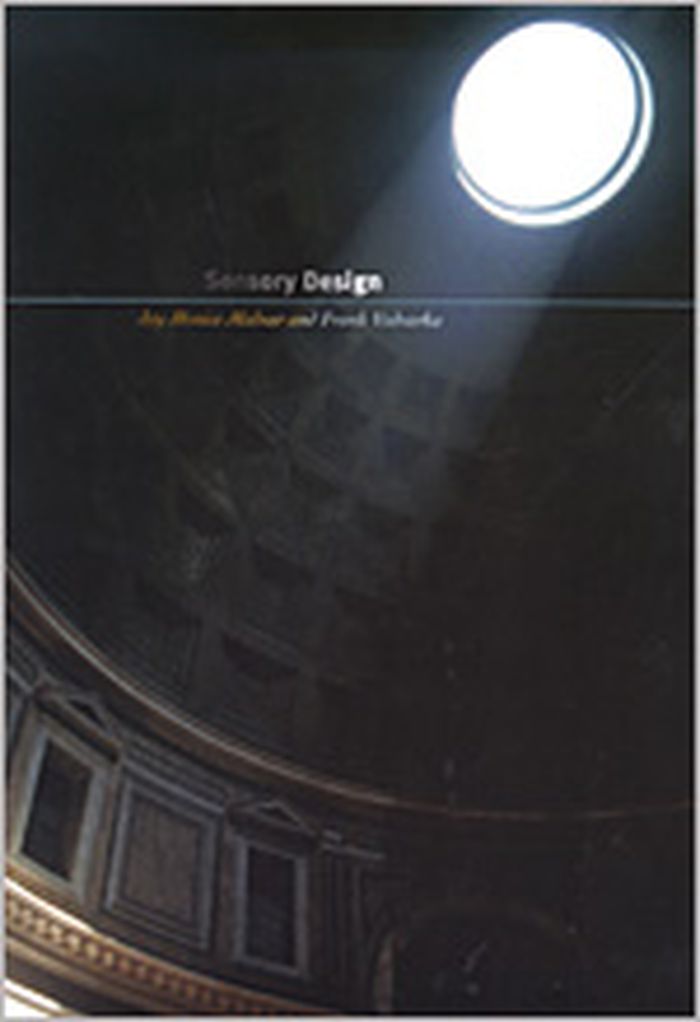
In Sensory Design, Joy Monice Malnar and Frank Vodvarka explore the nature of our responses to spatial constructs—from various sorts of buildings to gardens and outdoor spaces, to constructions of fantasy. To the degree that this response can be calculated, it can serve as a typology for the design of significant spaces, one that would sharply contrast with the Cartesian model that dominates architecture today.
Sensory design
Actions:
Price:
$37.50
(available to order)
Summary:
In Sensory Design, Joy Monice Malnar and Frank Vodvarka explore the nature of our responses to spatial constructs—from various sorts of buildings to gardens and outdoor spaces, to constructions of fantasy. To the degree that this response can be calculated, it can serve as a typology for the design of significant spaces, one that would sharply contrast with the Cartesian model that dominates architecture today.
Form:
books
books
Publication:
January 2004, Minneapolis
January 2004, Minneapolis
Subject:
Architectural Theory
Architectural Theory
Form:
books
books
Price:
$37.50
(available to order)
Summary:
In "Measure for measure", Alex Hebra offers an instructive history of measurement systems from ancient times to the present, exploring how and why such units as the stadium, the span, and the parsec first came about. Tracing civilization's various efforts to calculate distance, volume, mass, energy, and time, he explains how units of measurement are applied in such(...)
$37.50
(available to order)
Summary:
In "Measure for measure", Alex Hebra offers an instructive history of measurement systems from ancient times to the present, exploring how and why such units as the stadium, the span, and the parsec first came about. Tracing civilization's various efforts to calculate distance, volume, mass, energy, and time, he explains how units of measurement are applied in such(...)
Title:
Measure for measure : the story of imperial, metric, and other units
Actions:
Price:
$37.50
(available to order)
Summary:
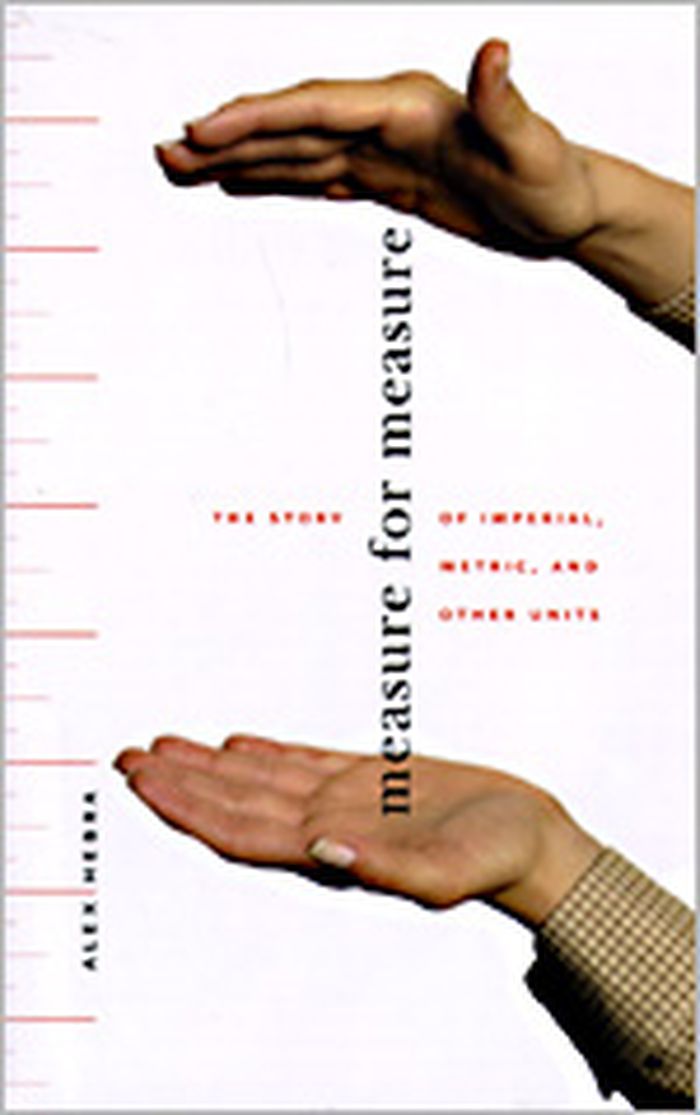
In "Measure for measure", Alex Hebra offers an instructive history of measurement systems from ancient times to the present, exploring how and why such units as the stadium, the span, and the parsec first came about. Tracing civilization's various efforts to calculate distance, volume, mass, energy, and time, he explains how units of measurement are applied in such fields as mechanical engineering, physics, optics, and astronomy. In particular, Hebra focuses on the development of the metric system, arguing that even the United States will eventually join the worldwide metric community. Deeply informed, this book chronicles humanity's imperfect search for the perfect system with which to quantify reality.
Measure for measure : the story of imperial, metric, and other units
Actions:
Price:
$37.50
(available to order)
Summary:
In "Measure for measure", Alex Hebra offers an instructive history of measurement systems from ancient times to the present, exploring how and why such units as the stadium, the span, and the parsec first came about. Tracing civilization's various efforts to calculate distance, volume, mass, energy, and time, he explains how units of measurement are applied in such fields as mechanical engineering, physics, optics, and astronomy. In particular, Hebra focuses on the development of the metric system, arguing that even the United States will eventually join the worldwide metric community. Deeply informed, this book chronicles humanity's imperfect search for the perfect system with which to quantify reality.
Form:
books
books
Publication:
March 2003, Baltimore / London
March 2003, Baltimore / London
Subject:
Architectural Theory
Architectural Theory
Form:
books
books
Title:
The fashion of architecture
The fashion of architecture
Actions:
Price:
$44.95
(available to order)
Summary:
Architecture is making its presence felt in cutting-edge fashion. The pliable metals, membrane structures, lightweight glasses and plastics used in building construction are creeping onto the catwalk. As they do so, their impact on recent textile developments has produced fabrics that enable clothing to act as individual climate-controlled environments that can exchange(...)
$44.95
(available to order)
Summary:
Architecture is making its presence felt in cutting-edge fashion. The pliable metals, membrane structures, lightweight glasses and plastics used in building construction are creeping onto the catwalk. As they do so, their impact on recent textile developments has produced fabrics that enable clothing to act as individual climate-controlled environments that can exchange(...)
Title:
The fashion of architecture
Actions:
Price:
$44.95
(available to order)
Summary:
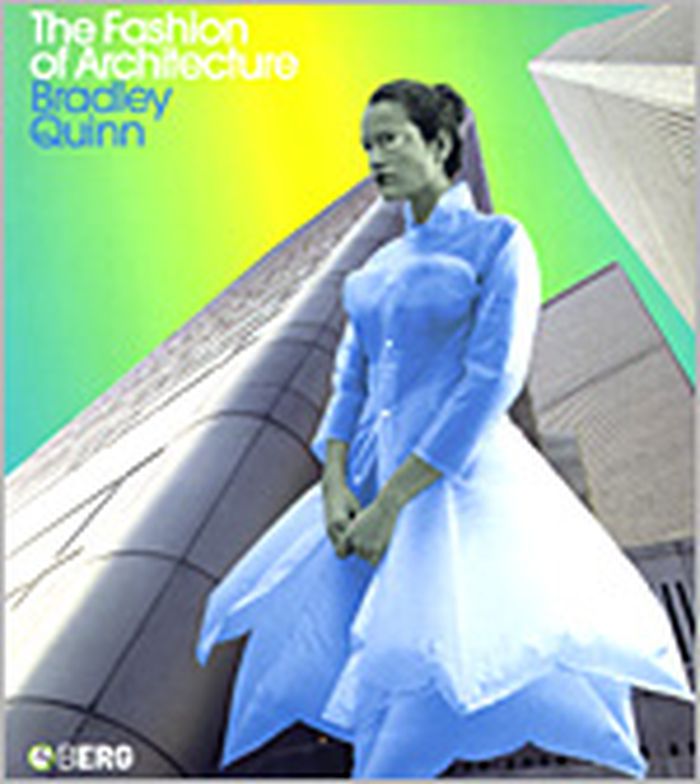
Architecture is making its presence felt in cutting-edge fashion. The pliable metals, membrane structures, lightweight glasses and plastics used in building construction are creeping onto the catwalk. As they do so, their impact on recent textile developments has produced fabrics that enable clothing to act as individual climate-controlled environments that can exchange information with embedded sensors, resulting in wearable "dwellings" that act as both shelter and clothing. At the same time, architects are borrowing the techniques of pleating, stapling, cutting and draping from traditional tailoring to design buildings that are flexible, interactive, inflatable and even portable. Although the relationship between architecture and fashion was recognized more than a century ago, the connection between them has rarely been explored by historians, designers or practicing architects. "The Fashion of Architecture" is the first attempt to investigate the contemporary relationship between architecture and fashion in considerable depth, by examining the ideas, imagery, techniques and materials used by visionaries such as Martin Margiela, Issey Miyake, Alexander McQueen, Tadao Ando and Daniel Libeskind. As mavericks ranging from Hussein Chalayan and Rei Kawakubo to Rem Koolhaas and Zaha Hadid describe architecture’s role in the formation of fashion identities, new readings of both areas emerge. Probing and far-reaching in its content, The Fashion of Architecture is the most comprehensive study of this exciting area to date.
The fashion of architecture
Actions:
Price:
$44.95
(available to order)
Summary:
Architecture is making its presence felt in cutting-edge fashion. The pliable metals, membrane structures, lightweight glasses and plastics used in building construction are creeping onto the catwalk. As they do so, their impact on recent textile developments has produced fabrics that enable clothing to act as individual climate-controlled environments that can exchange information with embedded sensors, resulting in wearable "dwellings" that act as both shelter and clothing. At the same time, architects are borrowing the techniques of pleating, stapling, cutting and draping from traditional tailoring to design buildings that are flexible, interactive, inflatable and even portable. Although the relationship between architecture and fashion was recognized more than a century ago, the connection between them has rarely been explored by historians, designers or practicing architects. "The Fashion of Architecture" is the first attempt to investigate the contemporary relationship between architecture and fashion in considerable depth, by examining the ideas, imagery, techniques and materials used by visionaries such as Martin Margiela, Issey Miyake, Alexander McQueen, Tadao Ando and Daniel Libeskind. As mavericks ranging from Hussein Chalayan and Rei Kawakubo to Rem Koolhaas and Zaha Hadid describe architecture’s role in the formation of fashion identities, new readings of both areas emerge. Probing and far-reaching in its content, The Fashion of Architecture is the most comprehensive study of this exciting area to date.
Form:
books
books
Publication:
December 2003, Oxford / New York
December 2003, Oxford / New York
Subject:
Architectural Theory
Architectural Theory
Form:
books
books

Price:
$60.99
(available to order)
Summary:
Defined as "the practice of architecture, planning and interior design in which psychology is the principal design tool", the purpose of "Design psychology" is to create environments that reflect the individual or group as well as encourage positive change.
$60.99
(available to order)
Summary:
Defined as "the practice of architecture, planning and interior design in which psychology is the principal design tool", the purpose of "Design psychology" is to create environments that reflect the individual or group as well as encourage positive change.
Title:
Some place like home : using design psychology to create ideal places
Actions:
Price:
$60.99
(available to order)
Summary:
Defined as "the practice of architecture, planning and interior design in which psychology is the principal design tool", the purpose of "Design psychology" is to create environments that reflect the individual or group as well as encourage positive change.
Some place like home : using design psychology to create ideal places
Actions:
Price:
$60.99
(available to order)
Summary:
Defined as "the practice of architecture, planning and interior design in which psychology is the principal design tool", the purpose of "Design psychology" is to create environments that reflect the individual or group as well as encourage positive change.
Form:
books
books
Publication:
September 2003, Chichester
September 2003, Chichester
Subject:
Architectural Theory
Architectural Theory
Form:
books
books
Title:
Esthétique de l'éphémère
Esthétique de l'éphémère
Actions:
Price:
$31.95
(available to order)
Summary:
Que l'éphémère soit devenu une dimension de l'existence humaine à l'époque de la mondialisation, tel est le point de départ de cette esthétique qui prendra l'art comme symptôme et révélateur d'un temps passage et devenir. Car, depuis les Vanités du XVIIe siècle jusqu'au moderne d'un Manet ou d'un Monet, l'éphémère est comme la face cachée de l'art. Une face cachée à(...)
$31.95
(available to order)
Summary:
Que l'éphémère soit devenu une dimension de l'existence humaine à l'époque de la mondialisation, tel est le point de départ de cette esthétique qui prendra l'art comme symptôme et révélateur d'un temps passage et devenir. Car, depuis les Vanités du XVIIe siècle jusqu'au moderne d'un Manet ou d'un Monet, l'éphémère est comme la face cachée de l'art. Une face cachée à(...)
Title:
Esthétique de l'éphémère
Actions:
Price:
$31.95
(available to order)
Summary:
Que l'éphémère soit devenu une dimension de l'existence humaine à l'époque de la mondialisation, tel est le point de départ de cette esthétique qui prendra l'art comme symptôme et révélateur d'un temps passage et devenir. Car, depuis les Vanités du XVIIe siècle jusqu'au moderne d'un Manet ou d'un Monet, l'éphémère est comme la face cachée de l'art. Une face cachée à interpréter, qui devient explicite avec l'apparition d'un art éphémère (installations, in situ) dans les années 1960. Toutefois, c'est bien avec la culture des flux contemporaine que cette conscience d'un temps fragile et nomade prend toute sa portée, modifiant les conditions de l'image, du paysage comme de l'urbain. Entre l'Europe et l'Asie, où le transitoire et l'" impermanence " sont des notions positives, elle donne naissance à des transparences et à des légèretés propres à l'art et à l'architecture. Avec ses images-flux, ses scénarii urbains et interculturels, ses hybrides et ses artifices, le temps éphémère modifie notre relation au monde et engendre une nouvelle esthétique, celle des fluidités. Aussi, si tout éphémère se joue entre la présence et l'absence, la vie et la mort, le " il y a " et le " il n'y a pas ", ou " il n'y a plus ", l'esthétique est inséparable d'une éthique, voire d'une politique. Dans ce monde en processus, l'art ouvrirait-il à une nouvelle sagesse du temps, dans une immanence au-delà de toute mélancolie.
Esthétique de l'éphémère
Actions:
Price:
$31.95
(available to order)
Summary:
Que l'éphémère soit devenu une dimension de l'existence humaine à l'époque de la mondialisation, tel est le point de départ de cette esthétique qui prendra l'art comme symptôme et révélateur d'un temps passage et devenir. Car, depuis les Vanités du XVIIe siècle jusqu'au moderne d'un Manet ou d'un Monet, l'éphémère est comme la face cachée de l'art. Une face cachée à interpréter, qui devient explicite avec l'apparition d'un art éphémère (installations, in situ) dans les années 1960. Toutefois, c'est bien avec la culture des flux contemporaine que cette conscience d'un temps fragile et nomade prend toute sa portée, modifiant les conditions de l'image, du paysage comme de l'urbain. Entre l'Europe et l'Asie, où le transitoire et l'" impermanence " sont des notions positives, elle donne naissance à des transparences et à des légèretés propres à l'art et à l'architecture. Avec ses images-flux, ses scénarii urbains et interculturels, ses hybrides et ses artifices, le temps éphémère modifie notre relation au monde et engendre une nouvelle esthétique, celle des fluidités. Aussi, si tout éphémère se joue entre la présence et l'absence, la vie et la mort, le " il y a " et le " il n'y a pas ", ou " il n'y a plus ", l'esthétique est inséparable d'une éthique, voire d'une politique. Dans ce monde en processus, l'art ouvrirait-il à une nouvelle sagesse du temps, dans une immanence au-delà de toute mélancolie.
Form:
books
books
Publication:
October 2003, Paris
October 2003, Paris
Subject:
Architectural Theory
Architectural Theory


