


2227 Results
Form:
books
books

Title:
L'univers Playboy
L'univers Playboy
Actions:
Price:
$41.00
(available in store)
Summary:
Né en 1926, Hugh Hefner est à l'origine du magazine Playboy et de sa compagne indissociable : la playmate. Pourtant, en dépit d'un tirage centuplé entre 1953 et 1973, il faut se défaire de ce storytelling de banal self-made-man. Car à mi-chemin de Walt Disney et d'Albert R. Broccoli (le principal producteur des films de James Bond), Hefner est d'abord un authentique(...)
$41.00
(available in store)
Summary:
Né en 1926, Hugh Hefner est à l'origine du magazine Playboy et de sa compagne indissociable : la playmate. Pourtant, en dépit d'un tirage centuplé entre 1953 et 1973, il faut se défaire de ce storytelling de banal self-made-man. Car à mi-chemin de Walt Disney et d'Albert R. Broccoli (le principal producteur des films de James Bond), Hefner est d'abord un authentique(...)
Title:
L'univers Playboy
Actions:
Price:
$41.00
(available in store)
Summary:
Né en 1926, Hugh Hefner est à l'origine du magazine Playboy et de sa compagne indissociable : la playmate. Pourtant, en dépit d'un tirage centuplé entre 1953 et 1973, il faut se défaire de ce storytelling de banal self-made-man. Car à mi-chemin de Walt Disney et d'Albert R. Broccoli (le principal producteur des films de James Bond), Hefner est d'abord un authentique créateur d'univers. Sexy pour les uns, sexiste pour les autres, l'excentricité érotique de ses penthouses cache en réalité une cosmétique bien plus vaste. Avec son jet privé Big Bunny, ses hôtesses, ses clubs, ses Manoirs Est et Ouest, sa Grotte, son zoo, son lit connecté et ses filiales multimédias, Hefner a finalement inventé un monde illusoire à l'image de l'Amérique : le sien.
L'univers Playboy
Actions:
Price:
$41.00
(available in store)
Summary:
Né en 1926, Hugh Hefner est à l'origine du magazine Playboy et de sa compagne indissociable : la playmate. Pourtant, en dépit d'un tirage centuplé entre 1953 et 1973, il faut se défaire de ce storytelling de banal self-made-man. Car à mi-chemin de Walt Disney et d'Albert R. Broccoli (le principal producteur des films de James Bond), Hefner est d'abord un authentique créateur d'univers. Sexy pour les uns, sexiste pour les autres, l'excentricité érotique de ses penthouses cache en réalité une cosmétique bien plus vaste. Avec son jet privé Big Bunny, ses hôtesses, ses clubs, ses Manoirs Est et Ouest, sa Grotte, son zoo, son lit connecté et ses filiales multimédias, Hefner a finalement inventé un monde illusoire à l'image de l'Amérique : le sien.
Form:
books
books
Publication:
November 2016
November 2016
Subject:
Architectural Theory
Architectural Theory
Form:
books
books
Actions:
Price:
$38.00
(available to order)
Summary:
In this title, Daniel M. Abramson investigates this notion of architectural expendability and the logic by which buildings lose their value and utility. The idea that the new necessarily outperforms and makes superfluous the old, Abramson argues, helps people come to terms with modernity and capitalism’s fast-paced change. 'Obsolescence', then, gives an unsettling(...)
$38.00
(available to order)
Summary:
In this title, Daniel M. Abramson investigates this notion of architectural expendability and the logic by which buildings lose their value and utility. The idea that the new necessarily outperforms and makes superfluous the old, Abramson argues, helps people come to terms with modernity and capitalism’s fast-paced change. 'Obsolescence', then, gives an unsettling(...)
Title:
Obsolescence: an architectural history
Actions:
Price:
$38.00
(available to order)
Summary:
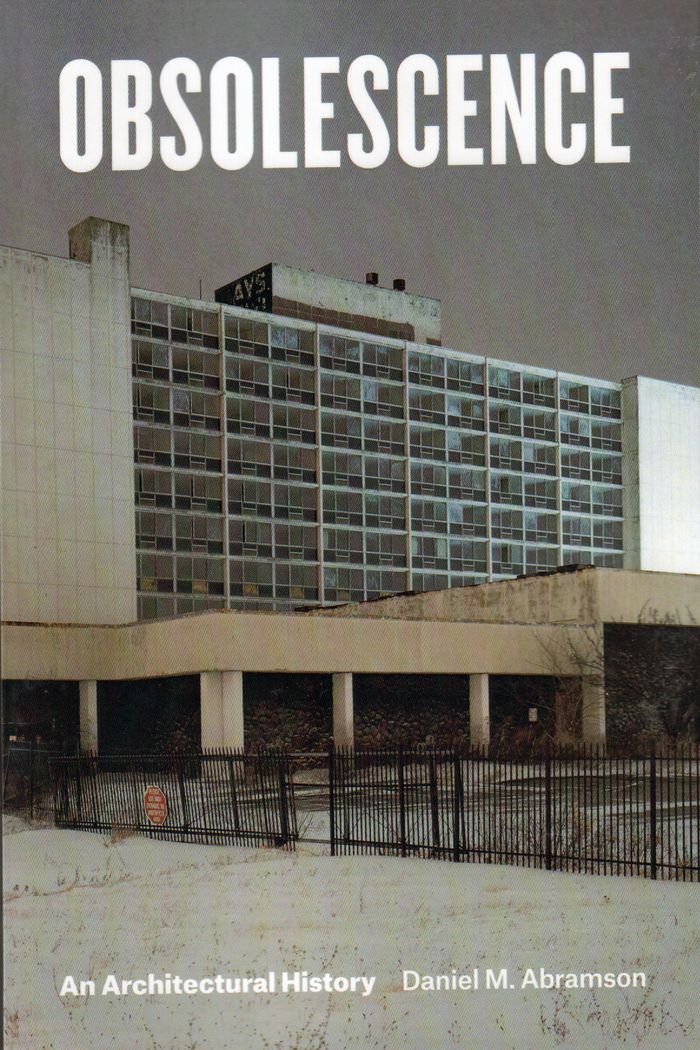
In this title, Daniel M. Abramson investigates this notion of architectural expendability and the logic by which buildings lose their value and utility. The idea that the new necessarily outperforms and makes superfluous the old, Abramson argues, helps people come to terms with modernity and capitalism’s fast-paced change. 'Obsolescence', then, gives an unsettling experience purpose and meaning.
Obsolescence: an architectural history
Actions:
Price:
$38.00
(available to order)
Summary:
In this title, Daniel M. Abramson investigates this notion of architectural expendability and the logic by which buildings lose their value and utility. The idea that the new necessarily outperforms and makes superfluous the old, Abramson argues, helps people come to terms with modernity and capitalism’s fast-paced change. 'Obsolescence', then, gives an unsettling experience purpose and meaning.
Form:
books
books
Publication:
January 2017
January 2017
Subject:
Architectural Theory
Architectural Theory
Form:
books
books
Actions:
Price:
$57.50
(available to order)
Summary:
"Lessons for students in architecture", written by Dutch architect and educator Herman Hertzberger (born 1932), was first published in 1991 as an elaborated version of lectures Hertzberger had given since 1973 at Delft University of Technology. Since its first edition, the book has become a classic for students the world over; this immensely successful volume has gone(...)
$57.50
(available to order)
Summary:
"Lessons for students in architecture", written by Dutch architect and educator Herman Hertzberger (born 1932), was first published in 1991 as an elaborated version of lectures Hertzberger had given since 1973 at Delft University of Technology. Since its first edition, the book has become a classic for students the world over; this immensely successful volume has gone(...)
Title:
Lessons for students in architecture, 3rd edition
Actions:
Price:
$57.50
(available to order)
Summary:
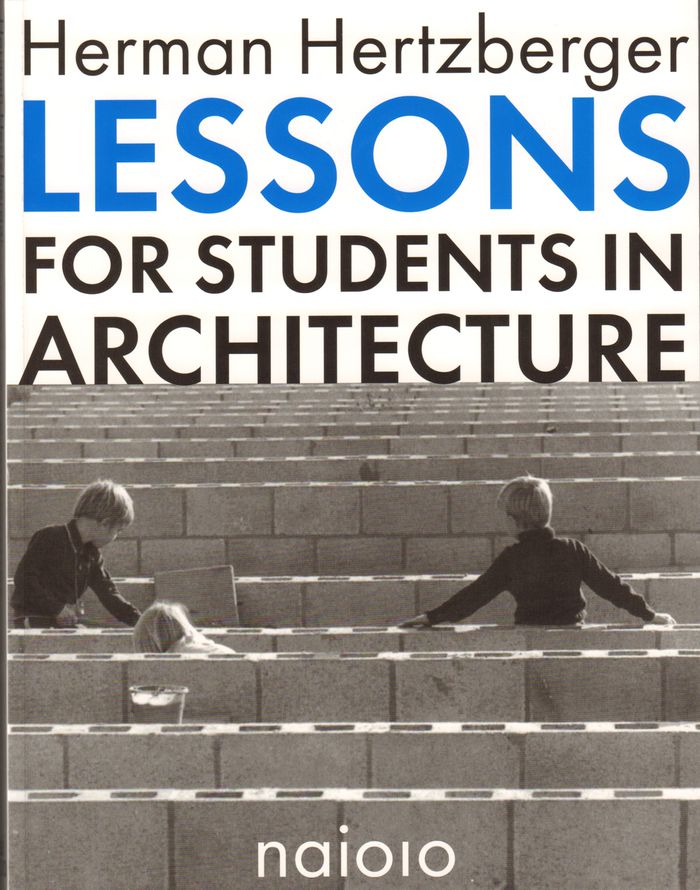
"Lessons for students in architecture", written by Dutch architect and educator Herman Hertzberger (born 1932), was first published in 1991 as an elaborated version of lectures Hertzberger had given since 1973 at Delft University of Technology. Since its first edition, the book has become a classic for students the world over; this immensely successful volume has gone through many reprints and has also been published in Japanese, German, Italian, Portuguese, Taiwanese, Dutch, Greek, Chinese, French, Polish and Persian. This new edition brings the classic book back into print.
Lessons for students in architecture, 3rd edition
Actions:
Price:
$57.50
(available to order)
Summary:
"Lessons for students in architecture", written by Dutch architect and educator Herman Hertzberger (born 1932), was first published in 1991 as an elaborated version of lectures Hertzberger had given since 1973 at Delft University of Technology. Since its first edition, the book has become a classic for students the world over; this immensely successful volume has gone through many reprints and has also been published in Japanese, German, Italian, Portuguese, Taiwanese, Dutch, Greek, Chinese, French, Polish and Persian. This new edition brings the classic book back into print.
Form:
books
books
Publication:
March 2017
March 2017
Subject:
Architectural Theory
Architectural Theory
Form:
books
books
Price:
$52.00
(available in store)
Summary:
Renowned for his extensive work in architectural history and historic preservation as an educator, scholar, activist, and public lecturer, Richard Longstreth is one of the most important architectural preservationists of the recent past. Looking beyond the Icons offers a generous and diverse selection of his writings over the past twenty-five years. The author explores a(...)
$52.00
(available in store)
Summary:
Renowned for his extensive work in architectural history and historic preservation as an educator, scholar, activist, and public lecturer, Richard Longstreth is one of the most important architectural preservationists of the recent past. Looking beyond the Icons offers a generous and diverse selection of his writings over the past twenty-five years. The author explores a(...)
Title:
Looking beyond the icons: midcentury architecture, landscape and urbanism
Actions:
Price:
$52.00
(available in store)
Summary:
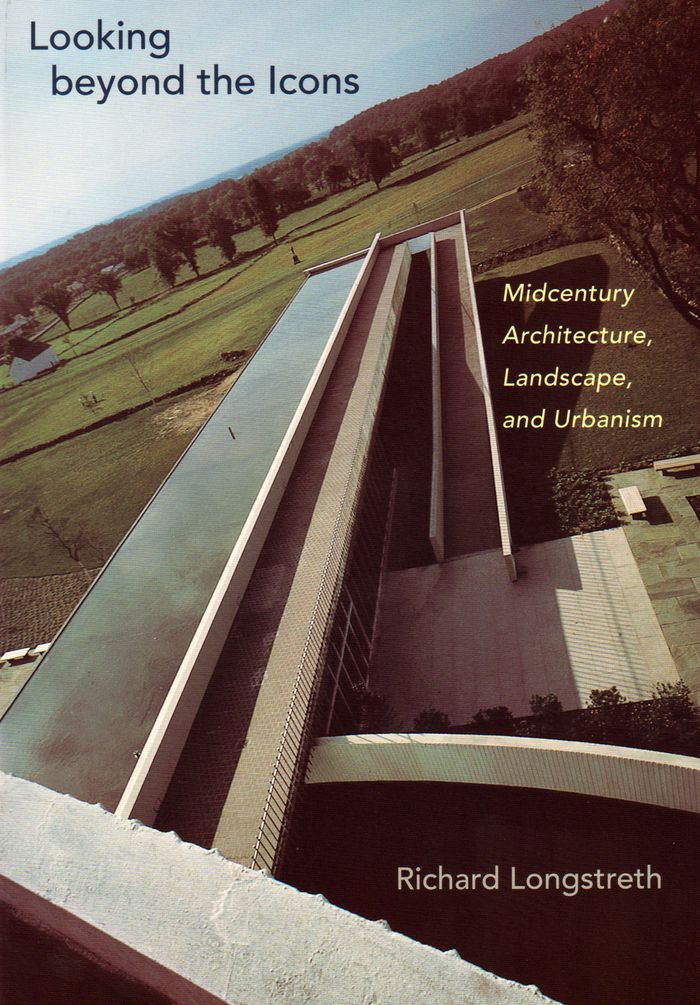
Renowned for his extensive work in architectural history and historic preservation as an educator, scholar, activist, and public lecturer, Richard Longstreth is one of the most important architectural preservationists of the recent past. Looking beyond the Icons offers a generous and diverse selection of his writings over the past twenty-five years. The author explores a variety of topics related to midcentury (ca. 1945–70) preservation efforts, including practical, intellectual, and psychological dilemmas associated with preserving the recent past, preservation-related deficiencies in the urban planning process, and preservation of specific types of buildings. This collection offers a new understanding of the richness and variety of mid-twentieth-century U.S. architecture, landscape, and urbanism, and provides a detailed analysis of both the imperatives for and the challenges involved in preserving this legacy.
Looking beyond the icons: midcentury architecture, landscape and urbanism
Actions:
Price:
$52.00
(available in store)
Summary:
Renowned for his extensive work in architectural history and historic preservation as an educator, scholar, activist, and public lecturer, Richard Longstreth is one of the most important architectural preservationists of the recent past. Looking beyond the Icons offers a generous and diverse selection of his writings over the past twenty-five years. The author explores a variety of topics related to midcentury (ca. 1945–70) preservation efforts, including practical, intellectual, and psychological dilemmas associated with preserving the recent past, preservation-related deficiencies in the urban planning process, and preservation of specific types of buildings. This collection offers a new understanding of the richness and variety of mid-twentieth-century U.S. architecture, landscape, and urbanism, and provides a detailed analysis of both the imperatives for and the challenges involved in preserving this legacy.
Form:
books
books
Publication:
August 2016
August 2016
Subject:
Architectural Theory
Architectural Theory
Form:
books
books
Actions:
Price:
$73.00
(available in store)
Summary:
Le présent recueil rassemble pour la première fois près de quarante textes publiés initialement entre 1970 et 1993, souvent introuvables et parfois inédits en français. Il interroge les concepts qui ont été mis en oeuvre pour définir l'action efficace selon des règles: classification, normalisation, standardisation, schématisme, structure, mais aussi dans son dynamisme:(...)
$73.00
(available in store)
Summary:
Le présent recueil rassemble pour la première fois près de quarante textes publiés initialement entre 1970 et 1993, souvent introuvables et parfois inédits en français. Il interroge les concepts qui ont été mis en oeuvre pour définir l'action efficace selon des règles: classification, normalisation, standardisation, schématisme, structure, mais aussi dans son dynamisme:(...)
Title:
L'art du projet: histoire, technique, architecture
Actions:
Price:
$73.00
(available in store)
Summary:
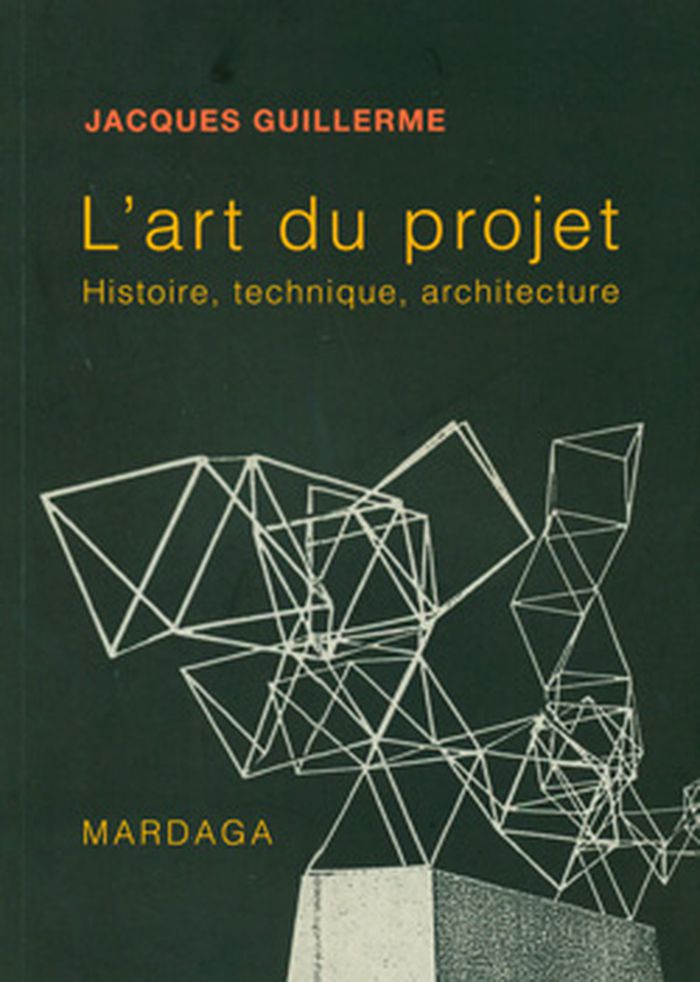
Le présent recueil rassemble pour la première fois près de quarante textes publiés initialement entre 1970 et 1993, souvent introuvables et parfois inédits en français. Il interroge les concepts qui ont été mis en oeuvre pour définir l'action efficace selon des règles: classification, normalisation, standardisation, schématisme, structure, mais aussi dans son dynamisme: processus de conception, invention.
L'art du projet: histoire, technique, architecture
Actions:
Price:
$73.00
(available in store)
Summary:
Le présent recueil rassemble pour la première fois près de quarante textes publiés initialement entre 1970 et 1993, souvent introuvables et parfois inédits en français. Il interroge les concepts qui ont été mis en oeuvre pour définir l'action efficace selon des règles: classification, normalisation, standardisation, schématisme, structure, mais aussi dans son dynamisme: processus de conception, invention.
Form:
books
books
Publication:
November 2008, Wavre
November 2008, Wavre
Subject:
Architectural Theory
Architectural Theory
Form:
books
books
Actions:
Price:
$57.50
(available to order)
Summary:
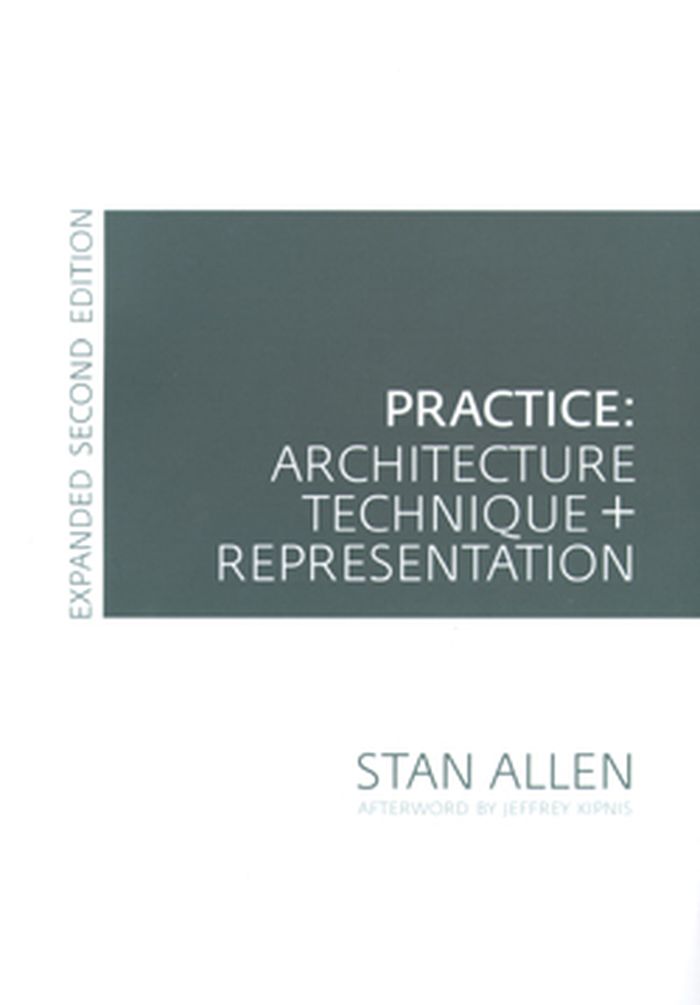
Conversant in contemporary theory and architectural history, Stan Allen argues that concepts in architecture are not imported from other disciplines, but emerge through the materials and procedures of architectural practice itself. Drawing on his own experience as a working architect, he examines the ways in which the tools available to the architect affect the design and(...)
$57.50
(available to order)
Summary:
Conversant in contemporary theory and architectural history, Stan Allen argues that concepts in architecture are not imported from other disciplines, but emerge through the materials and procedures of architectural practice itself. Drawing on his own experience as a working architect, he examines the ways in which the tools available to the architect affect the design and(...)
Title:
Practice: architecture + technique + representation
Actions:
Price:
$57.50
(available to order)
Summary:
Conversant in contemporary theory and architectural history, Stan Allen argues that concepts in architecture are not imported from other disciplines, but emerge through the materials and procedures of architectural practice itself. Drawing on his own experience as a working architect, he examines the ways in which the tools available to the architect affect the design and production of buildings. This second edition includes revised essays together with previously unpublished work. Allen's seminal piece on "Field Conditions" is included in this reworked, revised and redesigned volume. This is a compelling read for student and practitioner alike.
Practice: architecture + technique + representation
Actions:
Price:
$57.50
(available to order)
Summary:
Conversant in contemporary theory and architectural history, Stan Allen argues that concepts in architecture are not imported from other disciplines, but emerge through the materials and procedures of architectural practice itself. Drawing on his own experience as a working architect, he examines the ways in which the tools available to the architect affect the design and production of buildings. This second edition includes revised essays together with previously unpublished work. Allen's seminal piece on "Field Conditions" is included in this reworked, revised and redesigned volume. This is a compelling read for student and practitioner alike.
Form:
books
books
Publication:
December 2008, New York
December 2008, New York
Subject:
Architectural Theory
Architectural Theory
Form:
books
books
Title:
mu.dot: magazine for urban documentation - opinion - theory no. 1,: memory, amnesia and urbanism
mu.dot: magazine for urban documentation - opinion - theory no. 1,: memory, amnesia and urbanism
Actions:
Price:
$43.00
(available to order)
Summary:
Contributions by Andrei Harwell, Vesta Zareh, Volker Zander, Rania Ghosn, Lorraine Mannion, Alessandro Busa, Christian Schmutz + Marisol Rivas Velsquez, Rebecca Krucoff, Baruch Gottlieb with Jin Hee Beack, Timothy O'Callaghan, Bert de Muynck, Maria Lewicka, Inge Manka, Yvonne Hung, Pedro Juanario Gomes, Pedro Viana, Luis Santiago Baptista, Nuno Messias, Pedro Ferreira
$43.00
(available to order)
Summary:
Contributions by Andrei Harwell, Vesta Zareh, Volker Zander, Rania Ghosn, Lorraine Mannion, Alessandro Busa, Christian Schmutz + Marisol Rivas Velsquez, Rebecca Krucoff, Baruch Gottlieb with Jin Hee Beack, Timothy O'Callaghan, Bert de Muynck, Maria Lewicka, Inge Manka, Yvonne Hung, Pedro Juanario Gomes, Pedro Viana, Luis Santiago Baptista, Nuno Messias, Pedro Ferreira
Title:
mu.dot: magazine for urban documentation - opinion - theory no. 1,: memory, amnesia and urbanism
Actions:
Price:
$43.00
(available to order)
Summary:
Contributions by Andrei Harwell, Vesta Zareh, Volker Zander, Rania Ghosn, Lorraine Mannion, Alessandro Busa, Christian Schmutz + Marisol Rivas Velsquez, Rebecca Krucoff, Baruch Gottlieb with Jin Hee Beack, Timothy O'Callaghan, Bert de Muynck, Maria Lewicka, Inge Manka, Yvonne Hung, Pedro Juanario Gomes, Pedro Viana, Luis Santiago Baptista, Nuno Messias, Pedro Ferreira
mu.dot: magazine for urban documentation - opinion - theory no. 1,: memory, amnesia and urbanism
Actions:
Price:
$43.00
(available to order)
Summary:
Contributions by Andrei Harwell, Vesta Zareh, Volker Zander, Rania Ghosn, Lorraine Mannion, Alessandro Busa, Christian Schmutz + Marisol Rivas Velsquez, Rebecca Krucoff, Baruch Gottlieb with Jin Hee Beack, Timothy O'Callaghan, Bert de Muynck, Maria Lewicka, Inge Manka, Yvonne Hung, Pedro Juanario Gomes, Pedro Viana, Luis Santiago Baptista, Nuno Messias, Pedro Ferreira
Form:
books
books
Publication:
January 1900, Los Angeles
January 1900, Los Angeles
Subject:
Architectural Theory
Architectural Theory
Form:
books
books
Actions:
Price:
$34.95
(available to order)
Summary:
'There is no alternative to free market liberalism and managerialism', is the orthodoxy of the twenty-first century. All too often, ordinary people across the world are being told that the problem of organization is already solved, or that it is being solved somewhere else, or that it need not concern them because they have no choices. This dictionary provides those who(...)
$34.95
(available to order)
Summary:
'There is no alternative to free market liberalism and managerialism', is the orthodoxy of the twenty-first century. All too often, ordinary people across the world are being told that the problem of organization is already solved, or that it is being solved somewhere else, or that it need not concern them because they have no choices. This dictionary provides those who(...)
Subject:
Architectural Theory
Architectural Theory
Publication:
July 2007, London, New York
July 2007, London, New York
Title:
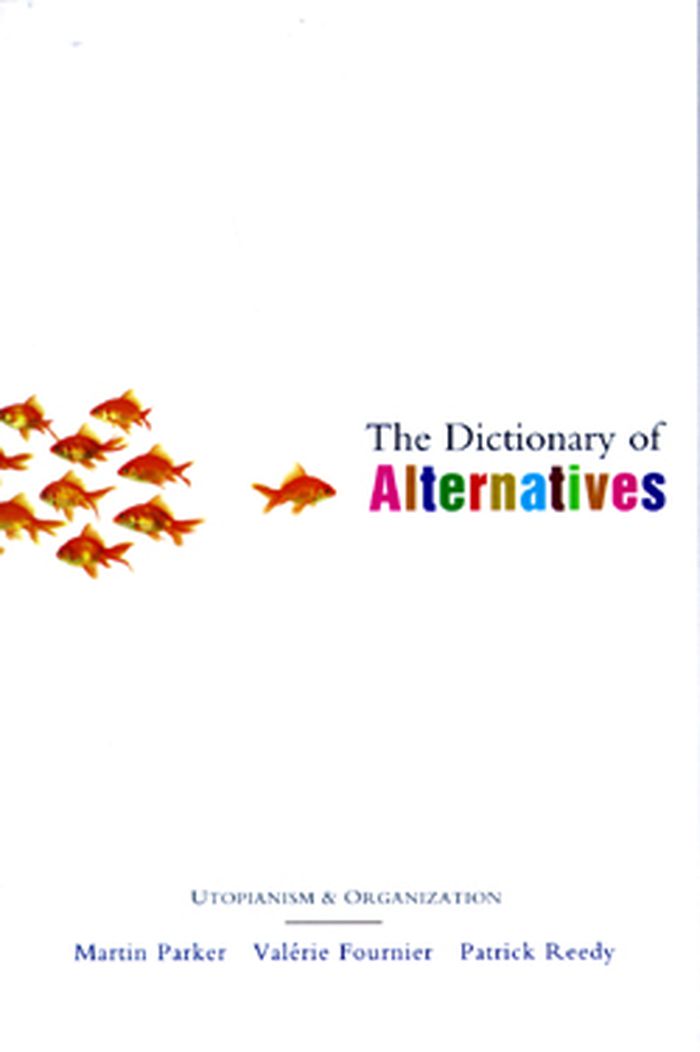
The dictionary of alternatives: utopianism & organization
Actions:
Price:
$34.95
(available to order)
Summary:
'There is no alternative to free market liberalism and managerialism', is the orthodoxy of the twenty-first century. All too often, ordinary people across the world are being told that the problem of organization is already solved, or that it is being solved somewhere else, or that it need not concern them because they have no choices. This dictionary provides those who disagree with the evidence. Using hundreds of entries and cross-references, it proves that there are many alternatives to the way that we currently organize ourselves. These alternatives could be expressed as fictional utopias, they could be excavated from the past, or they could be described in terms of the contemporary politics of anti-corporate protest, environmentalism, feminism and localism. Part reference work, part source book, and part polemic, this dictionary provides a rich understanding of the ways in which fiction, history and today's politics provide different ways of thinking about how we can and should organize for the coming century. Martin Parker is Professor of Organisation and Culture in the Management Centre at the University of Leicester. Valérie Fournier is Senior Lecturer in Organisation Studies in the Management Centre at the University of Leicester. Patrick Reedy lectures in organizational behaviour and human resource management at the Business School of the University of Newcastle upon Tyne.
The dictionary of alternatives: utopianism & organization
Actions:
Price:
$34.95
(available to order)
Summary:
'There is no alternative to free market liberalism and managerialism', is the orthodoxy of the twenty-first century. All too often, ordinary people across the world are being told that the problem of organization is already solved, or that it is being solved somewhere else, or that it need not concern them because they have no choices. This dictionary provides those who disagree with the evidence. Using hundreds of entries and cross-references, it proves that there are many alternatives to the way that we currently organize ourselves. These alternatives could be expressed as fictional utopias, they could be excavated from the past, or they could be described in terms of the contemporary politics of anti-corporate protest, environmentalism, feminism and localism. Part reference work, part source book, and part polemic, this dictionary provides a rich understanding of the ways in which fiction, history and today's politics provide different ways of thinking about how we can and should organize for the coming century. Martin Parker is Professor of Organisation and Culture in the Management Centre at the University of Leicester. Valérie Fournier is Senior Lecturer in Organisation Studies in the Management Centre at the University of Leicester. Patrick Reedy lectures in organizational behaviour and human resource management at the Business School of the University of Newcastle upon Tyne.
Form:
books
books
Publication:
July 2007, London, New York
July 2007, London, New York
Subject:
Architectural Theory
Architectural Theory
Form:
books
books
Actions:
Price:
$42.95
(available to order)
Summary:
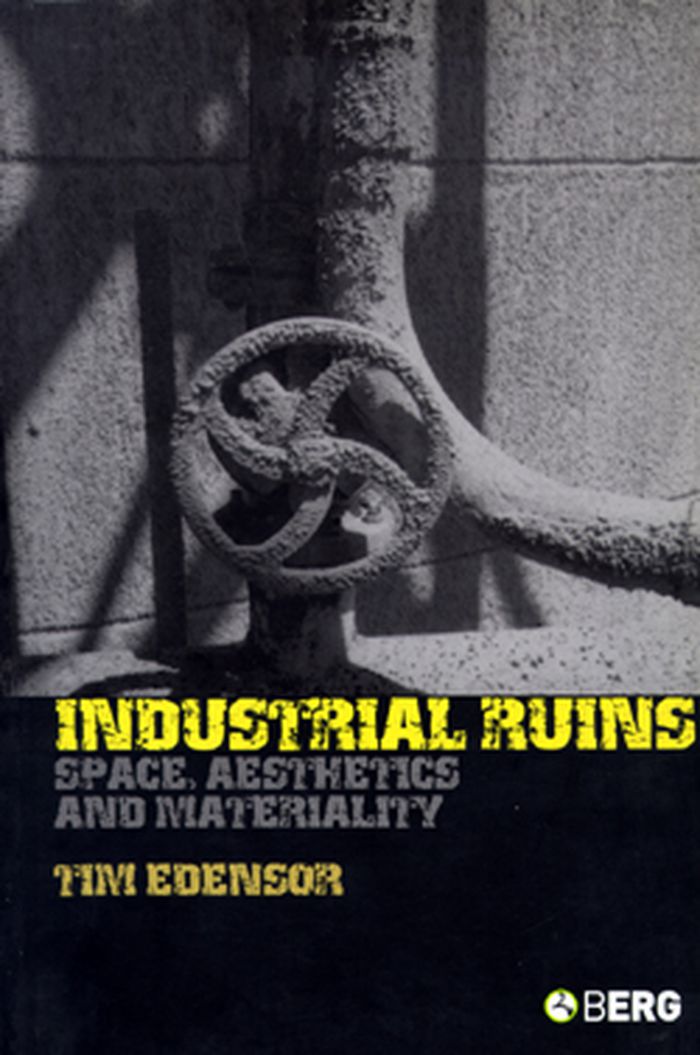
Tim Edensor highlights the danger of eradicating the evocative urban sites of industrial ruins through policies that privilege homogeneous new developments. It is precisely their fragmentary nature and lack of fixed meaning that render ruins deeply meaningful.
$42.95
(available to order)
Summary:
Tim Edensor highlights the danger of eradicating the evocative urban sites of industrial ruins through policies that privilege homogeneous new developments. It is precisely their fragmentary nature and lack of fixed meaning that render ruins deeply meaningful.
Title:
Industrial ruins : space, aesthetics and materiality
Actions:
Price:
$42.95
(available to order)
Summary:
Tim Edensor highlights the danger of eradicating the evocative urban sites of industrial ruins through policies that privilege homogeneous new developments. It is precisely their fragmentary nature and lack of fixed meaning that render ruins deeply meaningful.
Industrial ruins : space, aesthetics and materiality
Actions:
Price:
$42.95
(available to order)
Summary:
Tim Edensor highlights the danger of eradicating the evocative urban sites of industrial ruins through policies that privilege homogeneous new developments. It is precisely their fragmentary nature and lack of fixed meaning that render ruins deeply meaningful.
Form:
books
books
Publication:
January 1900, Oxford, New York
January 1900, Oxford, New York
Subject:
Architectural Theory
Architectural Theory
Form:
books
books

Price:
$30.00
(available to order)
Summary:
Visiting markets, bookstores, cemeteries, and courtyards, Barbara Hodgson looks to the world's cast-offs and curiosities to reveal rich and intimate insights into people, places, and time past.
$30.00
(available to order)
Summary:
Visiting markets, bookstores, cemeteries, and courtyards, Barbara Hodgson looks to the world's cast-offs and curiosities to reveal rich and intimate insights into people, places, and time past.
Subject:
Architectural Theory
Architectural Theory
Publication:
December 2007, Vancouver, Toronto, Berkeley
December 2007, Vancouver, Toronto, Berkeley
Title:
Trading in memories: travels through a scavenger's favorite places
Actions:
Price:
$30.00
(available to order)
Summary:
Visiting markets, bookstores, cemeteries, and courtyards, Barbara Hodgson looks to the world's cast-offs and curiosities to reveal rich and intimate insights into people, places, and time past.
Trading in memories: travels through a scavenger's favorite places
Actions:
Price:
$30.00
(available to order)
Summary:
Visiting markets, bookstores, cemeteries, and courtyards, Barbara Hodgson looks to the world's cast-offs and curiosities to reveal rich and intimate insights into people, places, and time past.
Form:
books
books
Publication:
December 2007, Vancouver, Toronto, Berkeley
December 2007, Vancouver, Toronto, Berkeley
Subject:
Architectural Theory
Architectural Theory


