


2227 Results
Form:
books
books
Actions:
Price:
$60.00
(available to order)
Summary:
L'ornement est-il un crime ou un style? C'est en ces termes que s'ouvrit à Vienne la scène qui décida de son statut au XXe siècle: d'un côté, sa condamnation par Loos et par tout le modernisme au nom de la pureté, et, de l'autre, l'élaboration d'une stylistique, de Riegl à Worringer, ou Deleuze. Développer aujourd'hui une "philosophie de l'ornement", c'est donc revenir(...)
$60.00
(available to order)
Summary:
L'ornement est-il un crime ou un style? C'est en ces termes que s'ouvrit à Vienne la scène qui décida de son statut au XXe siècle: d'un côté, sa condamnation par Loos et par tout le modernisme au nom de la pureté, et, de l'autre, l'élaboration d'une stylistique, de Riegl à Worringer, ou Deleuze. Développer aujourd'hui une "philosophie de l'ornement", c'est donc revenir(...)
Title:
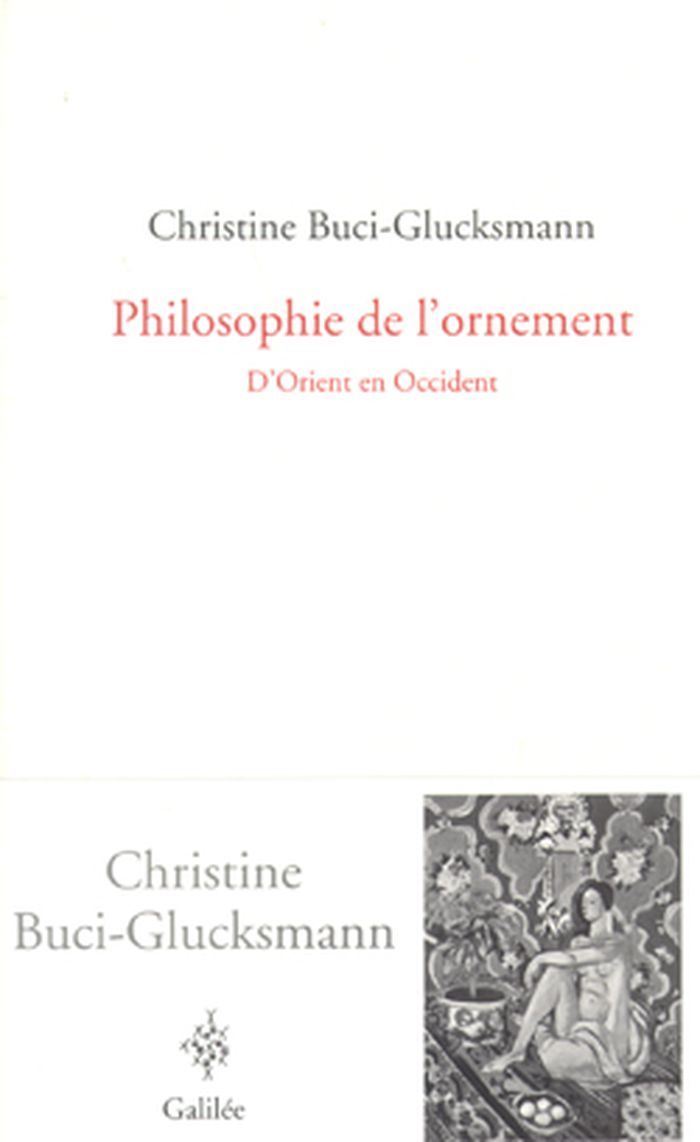
Philosophie de l'ornement: d'orient en Occident
Actions:
Price:
$60.00
(available to order)
Summary:
L'ornement est-il un crime ou un style? C'est en ces termes que s'ouvrit à Vienne la scène qui décida de son statut au XXe siècle: d'un côté, sa condamnation par Loos et par tout le modernisme au nom de la pureté, et, de l'autre, l'élaboration d'une stylistique, de Riegl à Worringer, ou Deleuze. Développer aujourd'hui une "philosophie de l'ornement", c'est donc revenir sur ses enjeux et ses refoulés: ligne courbe du féminin, décor et exotisme de tous les Orients ou parures "primitives". Aussi cette philosophie prend-elle la forme d'un voyage dans l'ornemental, de Vienne à Tokyo. Car il s'agit de déjouer les visions dualistes d'un Orient radicalement autre" pour mieux confronter l'ornementalisme islamique ou japonais à certains moments privilégiés de la modernité, qu'il s'agisse du cogito ornemental de Venise, de Fontainebleau et de toutes les " manières ", ou du modernisme américain. Cette réinterprétation de la modernité "décorative", revendiquée par Matisse et Klee, traverse les frontières établies entre le pur et l'impur, l'art noble et l'art mineur, le masculin et le féminin, l'abstrait et le décoratif, pour dégager une esthétique transversale propre à l'articulation des différences culturelles d'une pensée postcoloniale. C'est pourquoi, à l'heure de la mondialisation, cette philosophie de l'ornement relève d'une culture de la fluidité et d'un "ornement de masse" qui exige une nouvelle théorie de l'artificiel et une philosophie du style" réinventée. Mais, à devenir virtuel, l'ornement, à travers toutes ses singularités culturelles et anthropologiques, ne devient-il pas aussi, ou surtout, universel?
Philosophie de l'ornement: d'orient en Occident
Actions:
Price:
$60.00
(available to order)
Summary:
L'ornement est-il un crime ou un style? C'est en ces termes que s'ouvrit à Vienne la scène qui décida de son statut au XXe siècle: d'un côté, sa condamnation par Loos et par tout le modernisme au nom de la pureté, et, de l'autre, l'élaboration d'une stylistique, de Riegl à Worringer, ou Deleuze. Développer aujourd'hui une "philosophie de l'ornement", c'est donc revenir sur ses enjeux et ses refoulés: ligne courbe du féminin, décor et exotisme de tous les Orients ou parures "primitives". Aussi cette philosophie prend-elle la forme d'un voyage dans l'ornemental, de Vienne à Tokyo. Car il s'agit de déjouer les visions dualistes d'un Orient radicalement autre" pour mieux confronter l'ornementalisme islamique ou japonais à certains moments privilégiés de la modernité, qu'il s'agisse du cogito ornemental de Venise, de Fontainebleau et de toutes les " manières ", ou du modernisme américain. Cette réinterprétation de la modernité "décorative", revendiquée par Matisse et Klee, traverse les frontières établies entre le pur et l'impur, l'art noble et l'art mineur, le masculin et le féminin, l'abstrait et le décoratif, pour dégager une esthétique transversale propre à l'articulation des différences culturelles d'une pensée postcoloniale. C'est pourquoi, à l'heure de la mondialisation, cette philosophie de l'ornement relève d'une culture de la fluidité et d'un "ornement de masse" qui exige une nouvelle théorie de l'artificiel et une philosophie du style" réinventée. Mais, à devenir virtuel, l'ornement, à travers toutes ses singularités culturelles et anthropologiques, ne devient-il pas aussi, ou surtout, universel?
Form:
books
books
Publication:
March 2008, Paris
March 2008, Paris
Subject:
Architectural Theory
Architectural Theory
Form:
books
books
Title:
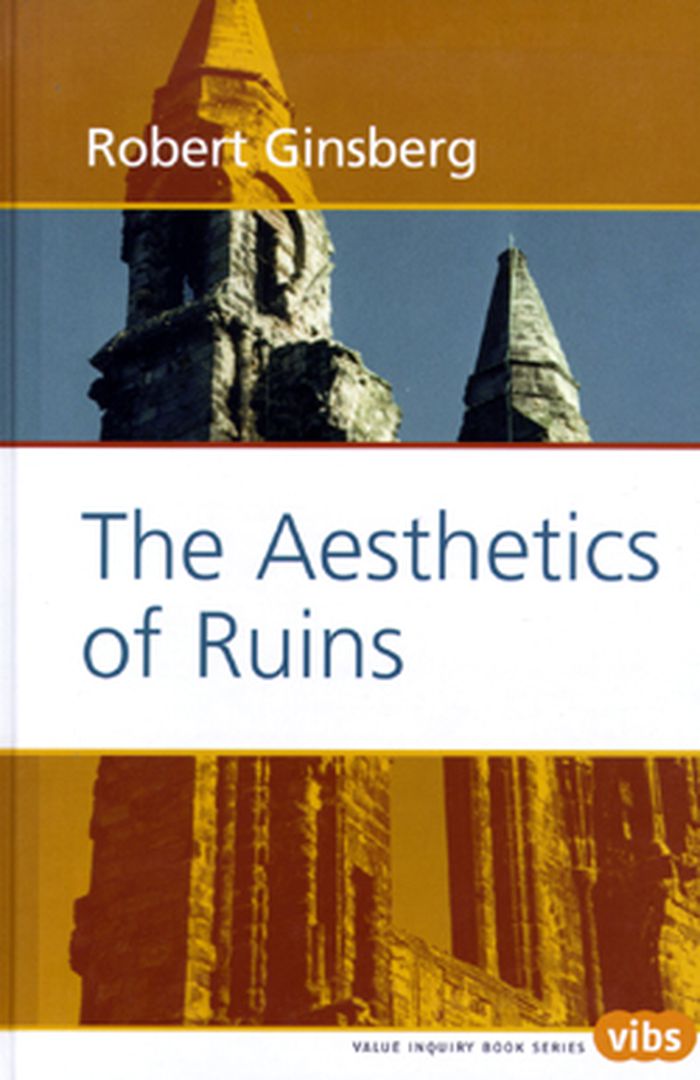
The aesthetic of ruins
The aesthetic of ruins
Actions:
Price:
$189.99
(available to order)
Summary:
This book constructs a theory of ruins that celebrates their vitality and unity in aesthetic experience. Its argument draws upon over 100 illustrations prepared in 40 countries. Ruins flourish as matter, form, function, incongruity, site, and symbol. Ruin underlies cultural values in cinema, literature, and philosophy. Finally, ruin guides meditations upon our mortality(...)
$189.99
(available to order)
Summary:
This book constructs a theory of ruins that celebrates their vitality and unity in aesthetic experience. Its argument draws upon over 100 illustrations prepared in 40 countries. Ruins flourish as matter, form, function, incongruity, site, and symbol. Ruin underlies cultural values in cinema, literature, and philosophy. Finally, ruin guides meditations upon our mortality(...)
Subject:
Architectural Theory
Architectural Theory
Publication:
October 2004, Amsterdam, New York
October 2004, Amsterdam, New York
Title:
The aesthetic of ruins
Actions:
Price:
$189.99
(available to order)
Summary:
This book constructs a theory of ruins that celebrates their vitality and unity in aesthetic experience. Its argument draws upon over 100 illustrations prepared in 40 countries. Ruins flourish as matter, form, function, incongruity, site, and symbol. Ruin underlies cultural values in cinema, literature, and philosophy. Finally, ruin guides meditations upon our mortality and endangered world.
The aesthetic of ruins
Actions:
Price:
$189.99
(available to order)
Summary:
This book constructs a theory of ruins that celebrates their vitality and unity in aesthetic experience. Its argument draws upon over 100 illustrations prepared in 40 countries. Ruins flourish as matter, form, function, incongruity, site, and symbol. Ruin underlies cultural values in cinema, literature, and philosophy. Finally, ruin guides meditations upon our mortality and endangered world.
Form:
books
books
Publication:
October 2004, Amsterdam, New York
October 2004, Amsterdam, New York
Subject:
Architectural Theory
Architectural Theory
Form:
books
books
Title:
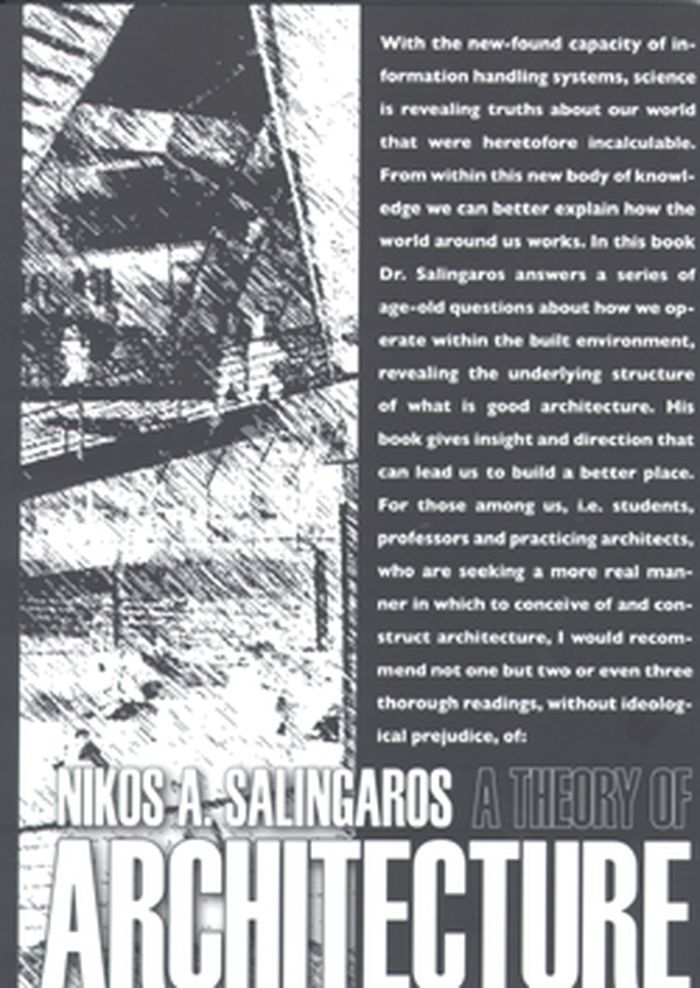
A theory of architecture
A theory of architecture
Actions:
Price:
$34.00
(available in store)
Summary:
More than a decade in the making, this is a textbook of architecture rich with design techniques and useful for every architect whether a first-year students or experienced practicing architects. The book teaches the reader how to design by adapting to human needs and sensibilities, yet independently of any particular style. It explains much of what people instinctively(...)
$34.00
(available in store)
Summary:
More than a decade in the making, this is a textbook of architecture rich with design techniques and useful for every architect whether a first-year students or experienced practicing architects. The book teaches the reader how to design by adapting to human needs and sensibilities, yet independently of any particular style. It explains much of what people instinctively(...)
Title:
A theory of architecture
Actions:
Price:
$34.00
(available in store)
Summary:
More than a decade in the making, this is a textbook of architecture rich with design techniques and useful for every architect whether a first-year students or experienced practicing architects. The book teaches the reader how to design by adapting to human needs and sensibilities, yet independently of any particular style. It explains much of what people instinctively know about architecture, and puts that knowledge for the first time in a concise, understandable form. There has not been such a book treating the very essence of architecture.
A theory of architecture
Actions:
Price:
$34.00
(available in store)
Summary:
More than a decade in the making, this is a textbook of architecture rich with design techniques and useful for every architect whether a first-year students or experienced practicing architects. The book teaches the reader how to design by adapting to human needs and sensibilities, yet independently of any particular style. It explains much of what people instinctively know about architecture, and puts that knowledge for the first time in a concise, understandable form. There has not been such a book treating the very essence of architecture.
Form:
books
books
Publication:
July 2007, Solingen
July 2007, Solingen
Subject:
Architectural Theory
Architectural Theory
Form:
books
books
Actions:
Price:
$34.95
(available to order)
Summary:
With a foreword by Heiner Muehlmann and the project '5 codes: space of conflict (tempel of Janus revisited, Washington D.C., 2009' by Exit Ltd. 'First we shape things, then they shape us', was Churchill's view. What kind of architecture can be said to shape? And by what means does it shape? The author's answer to this question is a surprise: through war and proximity to(...)
$34.95
(available to order)
Summary:
With a foreword by Heiner Muehlmann and the project '5 codes: space of conflict (tempel of Janus revisited, Washington D.C., 2009' by Exit Ltd. 'First we shape things, then they shape us', was Churchill's view. What kind of architecture can be said to shape? And by what means does it shape? The author's answer to this question is a surprise: through war and proximity to(...)
Publication:
January 1900, Wien/New York
January 1900, Wien/New York
Title:
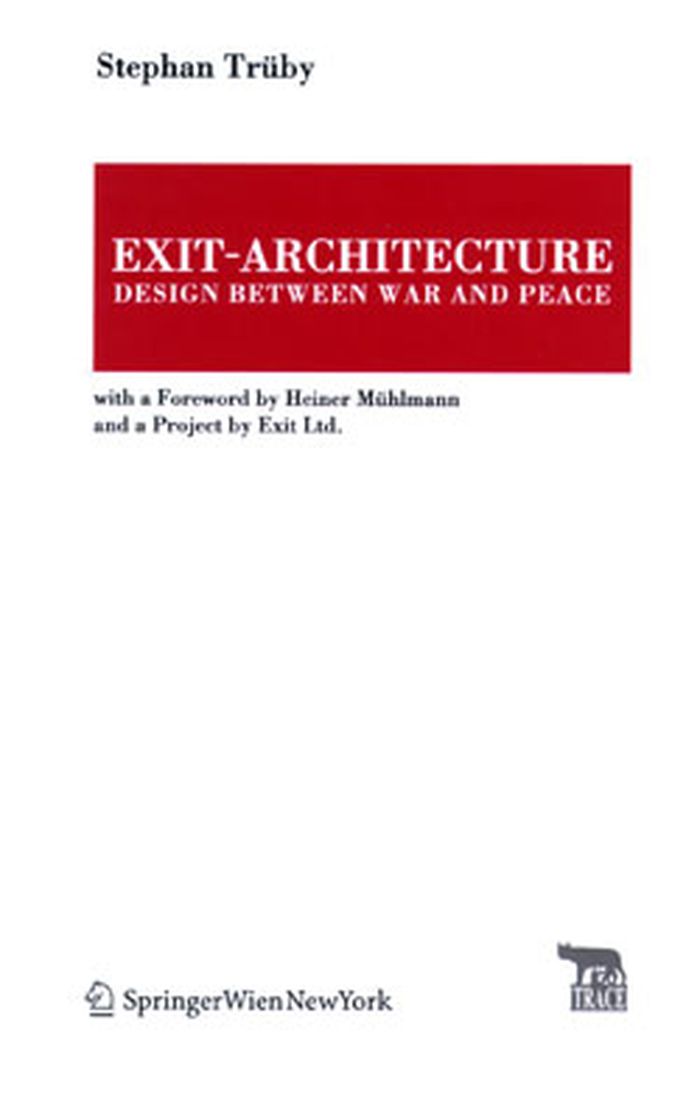
Exit-Architecture: design between war and peace
Actions:
Price:
$34.95
(available to order)
Summary:
With a foreword by Heiner Muehlmann and the project '5 codes: space of conflict (tempel of Janus revisited, Washington D.C., 2009' by Exit Ltd. 'First we shape things, then they shape us', was Churchill's view. What kind of architecture can be said to shape? And by what means does it shape? The author's answer to this question is a surprise: through war and proximity to stress. After a tour d'horizon through Roman temples, Washington's corridors of power and Mecca's anti-panic architecture it becomes clear that architecture is anything but in the background. Instead it is situated in the hot spot of transmission dynamics and is capable of altering cultures, empires and even religions.
Exit-Architecture: design between war and peace
Actions:
Price:
$34.95
(available to order)
Summary:
With a foreword by Heiner Muehlmann and the project '5 codes: space of conflict (tempel of Janus revisited, Washington D.C., 2009' by Exit Ltd. 'First we shape things, then they shape us', was Churchill's view. What kind of architecture can be said to shape? And by what means does it shape? The author's answer to this question is a surprise: through war and proximity to stress. After a tour d'horizon through Roman temples, Washington's corridors of power and Mecca's anti-panic architecture it becomes clear that architecture is anything but in the background. Instead it is situated in the hot spot of transmission dynamics and is capable of altering cultures, empires and even religions.
Form:
books
books
Publication:
January 1900, Wien/New York
January 1900, Wien/New York
Form:
books
books
Title:
Crucial words
Crucial words
Actions:
Price:
$39.95
(available to order)
Summary:
The conditions in which present-day architecture is produced are partly local and singular and partly global and universal. Understanding contemporary architecture means understanding all of these aspects. What are the pivotal themes? Gert Wingårdh and Rasmus Wærn, Swedens most active architect and its best-known architecture critic, asked themselves this question and(...)
$39.95
(available to order)
Summary:
The conditions in which present-day architecture is produced are partly local and singular and partly global and universal. Understanding contemporary architecture means understanding all of these aspects. What are the pivotal themes? Gert Wingårdh and Rasmus Wærn, Swedens most active architect and its best-known architecture critic, asked themselves this question and(...)
Title:
Crucial words
Actions:
Price:
$39.95
(available to order)
Summary:
The conditions in which present-day architecture is produced are partly local and singular and partly global and universal. Understanding contemporary architecture means understanding all of these aspects. What are the pivotal themes? Gert Wingårdh and Rasmus Wærn, Swedens most active architect and its best-known architecture critic, asked themselves this question and made a selection of approximately fifty terms and concepts, including Branding, Collaborators, Corporate, Desire, Future, Everyday, Ornament, and Wheelchair. The result is a very special dictionary with humorous illustrations and original articles by interesting protagonists such as Denise Scott Brown, Kenneth Frampton, Massimiliano Fuksas, Hans Ibelings, Peter Blundell Jones, Vittorio Magnago Lampugnani, Hans Ulrich Obrist, Juhani Pallasmaa, Joseph Rykwert, Jaime Salazar, Axel Sowa, and Wilfried Wang. A special highlight is the text by Nobel laureate Ohran Pamuk.
Crucial words
Actions:
Price:
$39.95
(available to order)
Summary:
The conditions in which present-day architecture is produced are partly local and singular and partly global and universal. Understanding contemporary architecture means understanding all of these aspects. What are the pivotal themes? Gert Wingårdh and Rasmus Wærn, Swedens most active architect and its best-known architecture critic, asked themselves this question and made a selection of approximately fifty terms and concepts, including Branding, Collaborators, Corporate, Desire, Future, Everyday, Ornament, and Wheelchair. The result is a very special dictionary with humorous illustrations and original articles by interesting protagonists such as Denise Scott Brown, Kenneth Frampton, Massimiliano Fuksas, Hans Ibelings, Peter Blundell Jones, Vittorio Magnago Lampugnani, Hans Ulrich Obrist, Juhani Pallasmaa, Joseph Rykwert, Jaime Salazar, Axel Sowa, and Wilfried Wang. A special highlight is the text by Nobel laureate Ohran Pamuk.
Form:
books
books
Publication:
March 2008, Berlin
March 2008, Berlin
Subject:
Architectural Theory
Architectural Theory
Form:
books
books
Actions:
Price:
$72.00
(available to order)
Summary:
This book includes essays from throughout Colquhoun’s distinguished career. In his early writing Colquhoun subjects modern architecture to a far more thorough reading than was then customary. His meticulous evaluation of Modernism raised the standard of architectural historiography and has influenced new directions in theory and practice ever since. This book encompasses(...)
$72.00
(available to order)
Summary:
This book includes essays from throughout Colquhoun’s distinguished career. In his early writing Colquhoun subjects modern architecture to a far more thorough reading than was then customary. His meticulous evaluation of Modernism raised the standard of architectural historiography and has influenced new directions in theory and practice ever since. This book encompasses(...)
Title:
Collected essays in architectural criticism
Actions:
Price:
$72.00
(available to order)
Summary:
This book includes essays from throughout Colquhoun’s distinguished career. In his early writing Colquhoun subjects modern architecture to a far more thorough reading than was then customary. His meticulous evaluation of Modernism raised the standard of architectural historiography and has influenced new directions in theory and practice ever since. This book encompasses the clarity of style and rigorous, erudite analysis that Colquhoun has brought to bear on a diverse range of subjects, including Le Corbusier, Robert Venturi and other.
Collected essays in architectural criticism
Actions:
Price:
$72.00
(available to order)
Summary:
This book includes essays from throughout Colquhoun’s distinguished career. In his early writing Colquhoun subjects modern architecture to a far more thorough reading than was then customary. His meticulous evaluation of Modernism raised the standard of architectural historiography and has influenced new directions in theory and practice ever since. This book encompasses the clarity of style and rigorous, erudite analysis that Colquhoun has brought to bear on a diverse range of subjects, including Le Corbusier, Robert Venturi and other.
Form:
books
books
Publication:
November 2008
November 2008
Subject:
Architectural Theory
Architectural Theory
Form:
books
books
Actions:
Price:
$65.00
(available to order)
Summary:
DRL TEN: A Design Research Compendium is an animated record of the first ten years of the AA's pioneering graduate design programme. It documents student projects developed by 104 design teams, the work of 25 esteemed graduates selected from a global network of 345 graduates, 27 entries to the DRL TEN Pavillon competition and projects by current DRL staff. Alongside the(...)
$65.00
(available to order)
Summary:
DRL TEN: A Design Research Compendium is an animated record of the first ten years of the AA's pioneering graduate design programme. It documents student projects developed by 104 design teams, the work of 25 esteemed graduates selected from a global network of 345 graduates, 27 entries to the DRL TEN Pavillon competition and projects by current DRL staff. Alongside the(...)
Title:
AADRL Documents 2, DRL ten: a design research compendium
Actions:
Price:
$65.00
(available to order)
Summary:
DRL TEN: A Design Research Compendium is an animated record of the first ten years of the AA's pioneering graduate design programme. It documents student projects developed by 104 design teams, the work of 25 esteemed graduates selected from a global network of 345 graduates, 27 entries to the DRL TEN Pavillon competition and projects by current DRL staff. Alongside the projects, a series of texts speculate on future directions for design research in the context of an evolving global architectural culture.
AADRL Documents 2, DRL ten: a design research compendium
Actions:
Price:
$65.00
(available to order)
Summary:
DRL TEN: A Design Research Compendium is an animated record of the first ten years of the AA's pioneering graduate design programme. It documents student projects developed by 104 design teams, the work of 25 esteemed graduates selected from a global network of 345 graduates, 27 entries to the DRL TEN Pavillon competition and projects by current DRL staff. Alongside the projects, a series of texts speculate on future directions for design research in the context of an evolving global architectural culture.
Form:
books
books
Publication:
February 2008, London
February 2008, London
Subject:
Architectural Theory
Architectural Theory
Form:
books
books
Actions:
Price:
$32.95
(available to order)
Summary:
De nombreuses disciplines ont contribué au développement d'une nouvelle forme de pensée apparue récemment qui conteste, critique, cherche à dépasser un rationalisme hérité du XVIIe siècle et jugé par trop simplificateur, inapte à rendre compte de la complexité du réel sur lequel on doit travailler aujourd'hui. Qu'en est-il de l'architecture?. Peut-elle rester à l'écart de(...)
$32.95
(available to order)
Summary:
De nombreuses disciplines ont contribué au développement d'une nouvelle forme de pensée apparue récemment qui conteste, critique, cherche à dépasser un rationalisme hérité du XVIIe siècle et jugé par trop simplificateur, inapte à rendre compte de la complexité du réel sur lequel on doit travailler aujourd'hui. Qu'en est-il de l'architecture?. Peut-elle rester à l'écart de(...)
Title:
Architecture et complexité : le troisième labyrinthe
Actions:
Price:
$32.95
(available to order)
Summary:
De nombreuses disciplines ont contribué au développement d'une nouvelle forme de pensée apparue récemment qui conteste, critique, cherche à dépasser un rationalisme hérité du XVIIe siècle et jugé par trop simplificateur, inapte à rendre compte de la complexité du réel sur lequel on doit travailler aujourd'hui. Qu'en est-il de l'architecture?. Peut-elle rester à l'écart de ce mouvement des idées? La mythique cabane des origines, le temple, le palais, la villa, l'immeuble de rapport, le grand ensemble marquent une évolution, parallèle à celle des sociétés, caractérisée par l'accroissement de la complexité des facteurs intervenant dans la conception. La critique du rationalisme en architecture développée dans la première partie du livre contribue à dépasser toutes les pensées simplificatrices à propos de l'architecture et de la ville. L'architecture ne peut pas se penser aujourd'hui sans la ville, ni la ville sans ses habitants. L'architecture doit donc convoquer à son chevet non seulement la technique et le design, mais également l'urbanisme, la sociologie, la psychologie, l'histoire voire la mythologie, la culture, la démographie, l'économie, l'écologie. La seconde partie (parcourant l'œuvre de Louis Kahn, Luis Barragàn, Henri Gaudin, Vittorio Gregotti, John Hejduk, Peter Eisenman, Bernard Tschumi, Christian de Portzamparc, Renzo Piano) vise à faire prendre conscience de la pertinence et de la puissance des outils conceptuels qui ont été forgés par des penseurs issus de domaines très divers, aussi bien en sciences exactes qu'en sciences humaines, et que l'on peut regrouper sous le label "pensée de la complexité"
Architecture et complexité : le troisième labyrinthe
Actions:
Price:
$32.95
(available to order)
Summary:
De nombreuses disciplines ont contribué au développement d'une nouvelle forme de pensée apparue récemment qui conteste, critique, cherche à dépasser un rationalisme hérité du XVIIe siècle et jugé par trop simplificateur, inapte à rendre compte de la complexité du réel sur lequel on doit travailler aujourd'hui. Qu'en est-il de l'architecture?. Peut-elle rester à l'écart de ce mouvement des idées? La mythique cabane des origines, le temple, le palais, la villa, l'immeuble de rapport, le grand ensemble marquent une évolution, parallèle à celle des sociétés, caractérisée par l'accroissement de la complexité des facteurs intervenant dans la conception. La critique du rationalisme en architecture développée dans la première partie du livre contribue à dépasser toutes les pensées simplificatrices à propos de l'architecture et de la ville. L'architecture ne peut pas se penser aujourd'hui sans la ville, ni la ville sans ses habitants. L'architecture doit donc convoquer à son chevet non seulement la technique et le design, mais également l'urbanisme, la sociologie, la psychologie, l'histoire voire la mythologie, la culture, la démographie, l'économie, l'écologie. La seconde partie (parcourant l'œuvre de Louis Kahn, Luis Barragàn, Henri Gaudin, Vittorio Gregotti, John Hejduk, Peter Eisenman, Bernard Tschumi, Christian de Portzamparc, Renzo Piano) vise à faire prendre conscience de la pertinence et de la puissance des outils conceptuels qui ont été forgés par des penseurs issus de domaines très divers, aussi bien en sciences exactes qu'en sciences humaines, et que l'on peut regrouper sous le label "pensée de la complexité"
Form:
books
books
Publication:
March 2008
March 2008
Subject:
Architectural Theory
Architectural Theory
Form:
books
books
Title:
Régionalisme
Régionalisme
Actions:
Price:
$15.95
(available to order)
Summary:
Architecte et historien, Jean-Claude Vigato enseigne à l'École nationale supérieure d'architecture de Nancy où il dirige le Laboratoire d'histoire de l'architecture contemporaine. Ses travaux portent sur l'École des Beaux-Arts, l'évolution des doctrines académiques et le développement des différentes formes du régionalisme architectural. Ainsi, il se passionne(...)
$15.95
(available to order)
Summary:
Architecte et historien, Jean-Claude Vigato enseigne à l'École nationale supérieure d'architecture de Nancy où il dirige le Laboratoire d'histoire de l'architecture contemporaine. Ses travaux portent sur l'École des Beaux-Arts, l'évolution des doctrines académiques et le développement des différentes formes du régionalisme architectural. Ainsi, il se passionne(...)
Title:
Régionalisme
Actions:
Price:
$15.95
(available to order)
Summary:
Architecte et historien, Jean-Claude Vigato enseigne à l'École nationale supérieure d'architecture de Nancy où il dirige le Laboratoire d'histoire de l'architecture contemporaine. Ses travaux portent sur l'École des Beaux-Arts, l'évolution des doctrines académiques et le développement des différentes formes du régionalisme architectural. Ainsi, il se passionne pour l'architecture tessinoise. Il a notamment publié L'architecture régionaliste : France, 1890-1950, L'École de Nancy et la question architecturale.
Régionalisme
Actions:
Price:
$15.95
(available to order)
Summary:
Architecte et historien, Jean-Claude Vigato enseigne à l'École nationale supérieure d'architecture de Nancy où il dirige le Laboratoire d'histoire de l'architecture contemporaine. Ses travaux portent sur l'École des Beaux-Arts, l'évolution des doctrines académiques et le développement des différentes formes du régionalisme architectural. Ainsi, il se passionne pour l'architecture tessinoise. Il a notamment publié L'architecture régionaliste : France, 1890-1950, L'École de Nancy et la question architecturale.
Form:
books
books
Publication:
February 2008, Paris
February 2008, Paris
Subject:
Architectural Theory
Architectural Theory
Form:
books
books
Price:
$23.95
(available to order)
Summary:
Edmund Burke's "A Philosophical Enquiry into the Sublime and Beautiful" is one of the most important works of aesthetics ever published. Whilst many writers have taken up their pen to write of "the beautiful", Burkes subject here was that quality he uniquely distinguished as "the sublime" - an all-consuming force beyond beauty that compelled terror as much as rapture in(...)
$23.95
(available to order)
Summary:
Edmund Burke's "A Philosophical Enquiry into the Sublime and Beautiful" is one of the most important works of aesthetics ever published. Whilst many writers have taken up their pen to write of "the beautiful", Burkes subject here was that quality he uniquely distinguished as "the sublime" - an all-consuming force beyond beauty that compelled terror as much as rapture in(...)
Title:
Burke: A philosophical enquiry into the sublime and beautiful
Actions:
Price:
$23.95
(available to order)
Summary:
Edmund Burke's "A Philosophical Enquiry into the Sublime and Beautiful" is one of the most important works of aesthetics ever published. Whilst many writers have taken up their pen to write of "the beautiful", Burkes subject here was that quality he uniquely distinguished as "the sublime" - an all-consuming force beyond beauty that compelled terror as much as rapture in all who beheld it. It was an analysis that would go on to inspire some of the leading thinkers of the Enlightenment, including Immanuel Kant and Denis Diderot. The Routledge Classics edition presents the authoritative text of the first critical edition of Burkes essay ever published, including a substantial critical and historical commentary.
Burke: A philosophical enquiry into the sublime and beautiful
Actions:
Price:
$23.95
(available to order)
Summary:
Edmund Burke's "A Philosophical Enquiry into the Sublime and Beautiful" is one of the most important works of aesthetics ever published. Whilst many writers have taken up their pen to write of "the beautiful", Burkes subject here was that quality he uniquely distinguished as "the sublime" - an all-consuming force beyond beauty that compelled terror as much as rapture in all who beheld it. It was an analysis that would go on to inspire some of the leading thinkers of the Enlightenment, including Immanuel Kant and Denis Diderot. The Routledge Classics edition presents the authoritative text of the first critical edition of Burkes essay ever published, including a substantial critical and historical commentary.
Form:
books
books
Publication:
April 2008, London, New York
April 2008, London, New York
Subject:
Architectural Theory
Architectural Theory


