


2227 Results
Form:
books
books
Actions:
Price:
$17.00
(available to order)
Summary:
The Age Of Earthquakes is a quick-fire paperback, harnessing the images, language and perceptions of our unfurling digital lives. The authors offer five characteristics of the Extreme Present; invent a glossary of new words to describe how we are truly feeling today; and ‘mindsource’ images and illustrations from over 30 contemporary artists. Wayne Daly’s striking graphic(...)
$17.00
(available to order)
Summary:
The Age Of Earthquakes is a quick-fire paperback, harnessing the images, language and perceptions of our unfurling digital lives. The authors offer five characteristics of the Extreme Present; invent a glossary of new words to describe how we are truly feeling today; and ‘mindsource’ images and illustrations from over 30 contemporary artists. Wayne Daly’s striking graphic(...)
Subject:
Architectural Theory
Architectural Theory
Publication:
May 2015
May 2015
Title:
The age of earthquakes : a guide to the extreme present
Actions:
Price:
$17.00
(available to order)
Summary:
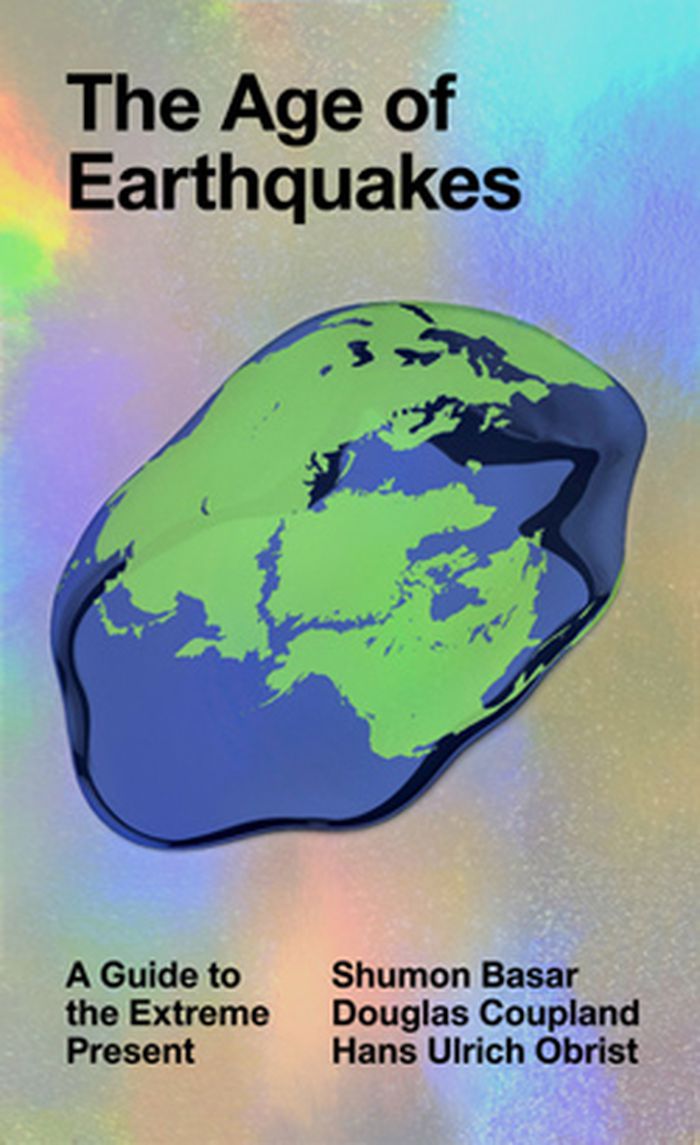
The Age Of Earthquakes is a quick-fire paperback, harnessing the images, language and perceptions of our unfurling digital lives. The authors offer five characteristics of the Extreme Present; invent a glossary of new words to describe how we are truly feeling today; and ‘mindsource’ images and illustrations from over 30 contemporary artists. Wayne Daly’s striking graphic design imports the surreal, juxtaposed, mashed mannerisms of screen to page.
The age of earthquakes : a guide to the extreme present
Actions:
Price:
$17.00
(available to order)
Summary:
The Age Of Earthquakes is a quick-fire paperback, harnessing the images, language and perceptions of our unfurling digital lives. The authors offer five characteristics of the Extreme Present; invent a glossary of new words to describe how we are truly feeling today; and ‘mindsource’ images and illustrations from over 30 contemporary artists. Wayne Daly’s striking graphic design imports the surreal, juxtaposed, mashed mannerisms of screen to page.
Form:
books
books
Publication:
May 2015
May 2015
Subject:
Architectural Theory
Architectural Theory
Form:
books
books
Actions:
Price:
$43.00
(available to order)
Summary:
Cities, estates and routing systems develop, change constantly and fundamentally cannot be planned. Claims to ownership, land and building regulations, planning decisions and political interventions make it difficult for settlement structures to adapt to constantly changing requirements to such an extent that meaningful and totally ecological use of the surface of the(...)
$43.00
(available to order)
Summary:
Cities, estates and routing systems develop, change constantly and fundamentally cannot be planned. Claims to ownership, land and building regulations, planning decisions and political interventions make it difficult for settlement structures to adapt to constantly changing requirements to such an extent that meaningful and totally ecological use of the surface of the(...)
Title:
Occupying and connecting: thoughts on territories and spheres of influence with particular reference to human settlement
Actions:
Price:
$43.00
(available to order)
Summary:
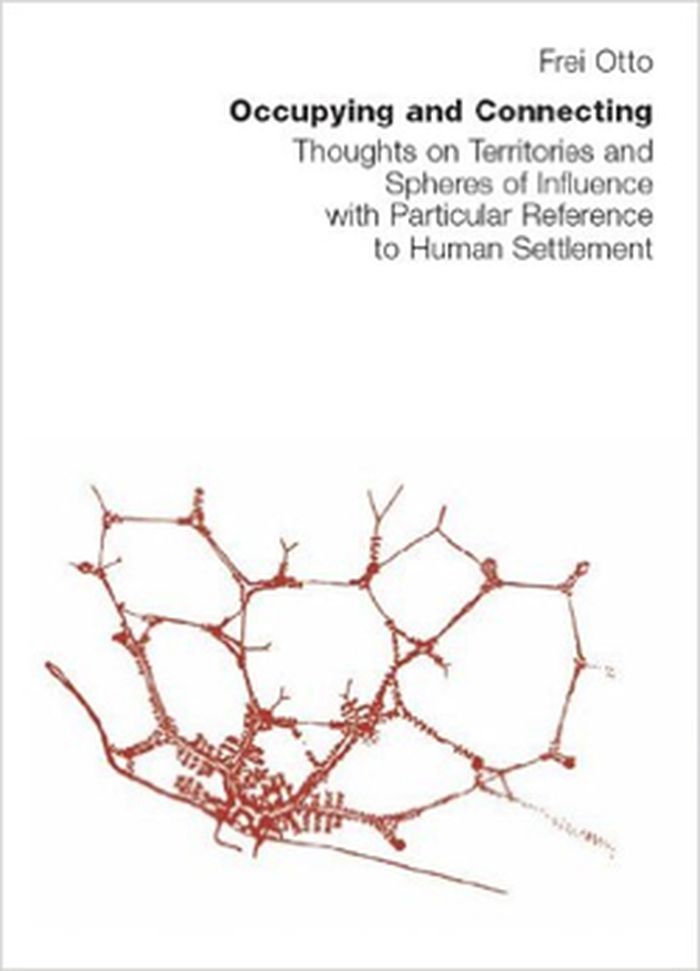
Cities, estates and routing systems develop, change constantly and fundamentally cannot be planned. Claims to ownership, land and building regulations, planning decisions and political interventions make it difficult for settlement structures to adapt to constantly changing requirements to such an extent that meaningful and totally ecological use of the surface of the earth is becoming increasingly difficult, although new techniques and flexible planning models mean that a connection could be found with the self-designing processes of urban-development history.
Occupying and connecting: thoughts on territories and spheres of influence with particular reference to human settlement
Actions:
Price:
$43.00
(available to order)
Summary:
Cities, estates and routing systems develop, change constantly and fundamentally cannot be planned. Claims to ownership, land and building regulations, planning decisions and political interventions make it difficult for settlement structures to adapt to constantly changing requirements to such an extent that meaningful and totally ecological use of the surface of the earth is becoming increasingly difficult, although new techniques and flexible planning models mean that a connection could be found with the self-designing processes of urban-development history.
Form:
books
books
Publication:
March 2009
March 2009
Subject:
Architectural Theory
Architectural Theory
Form:
books
books
Actions:
Price:
$16.50
(available to order)
Summary:
Una città in forma di palazzo : dans le dernier tiers du Quattrocento, à Urbino, Mantoue ou Milan, des princes voulurent faire de leur résidence des cités idéales, à l’écart de la ville mais s’imposant à elle, l’ordonnant. Ils suivaient en cela la leçon d’Alberti, qui avait fait de son De re aedificatoria un traité non pas de l’art de bâtir, mais de sa politisation. Car(...)
$16.50
(available to order)
Summary:
Una città in forma di palazzo : dans le dernier tiers du Quattrocento, à Urbino, Mantoue ou Milan, des princes voulurent faire de leur résidence des cités idéales, à l’écart de la ville mais s’imposant à elle, l’ordonnant. Ils suivaient en cela la leçon d’Alberti, qui avait fait de son De re aedificatoria un traité non pas de l’art de bâtir, mais de sa politisation. Car(...)
Title:
De l'éloquence architecturale
Actions:
Price:
$16.50
(available to order)
Summary:
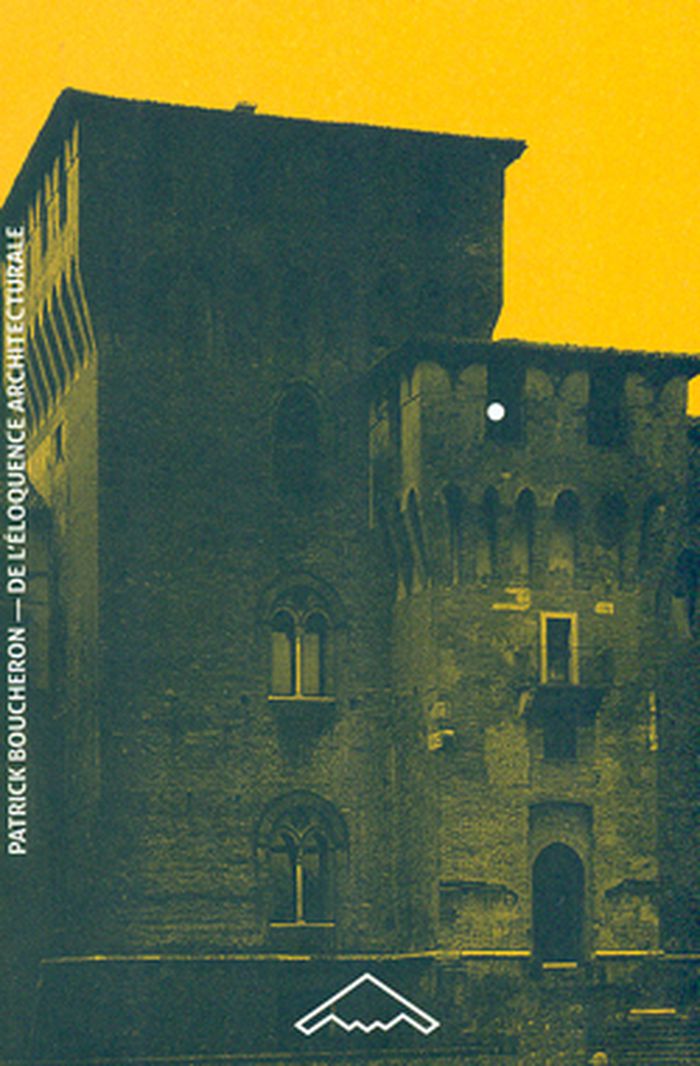
Una città in forma di palazzo : dans le dernier tiers du Quattrocento, à Urbino, Mantoue ou Milan, des princes voulurent faire de leur résidence des cités idéales, à l’écart de la ville mais s’imposant à elle, l’ordonnant. Ils suivaient en cela la leçon d’Alberti, qui avait fait de son De re aedificatoria un traité non pas de l’art de bâtir, mais de sa politisation. Car l’architecture humaniste devenait un art de la persuasion. Elle était chargée d’exprimer ce que les mots n’osaient pas encore dire : l’absolutisation du pouvoir princier. Ce petit livre confronte cette folle ambition au déniaisement machiavélien, rappelant que s’il existe un langage architectural, alors celui-ci ménage aussi des non-dits, suscite des incompréhensions, trahit des lapsus.
De l'éloquence architecturale
Actions:
Price:
$16.50
(available to order)
Summary:
Una città in forma di palazzo : dans le dernier tiers du Quattrocento, à Urbino, Mantoue ou Milan, des princes voulurent faire de leur résidence des cités idéales, à l’écart de la ville mais s’imposant à elle, l’ordonnant. Ils suivaient en cela la leçon d’Alberti, qui avait fait de son De re aedificatoria un traité non pas de l’art de bâtir, mais de sa politisation. Car l’architecture humaniste devenait un art de la persuasion. Elle était chargée d’exprimer ce que les mots n’osaient pas encore dire : l’absolutisation du pouvoir princier. Ce petit livre confronte cette folle ambition au déniaisement machiavélien, rappelant que s’il existe un langage architectural, alors celui-ci ménage aussi des non-dits, suscite des incompréhensions, trahit des lapsus.
Form:
books
books
Publication:
March 2015
March 2015
Subject:
Architectural Theory
Architectural Theory
Form:
books
books
Price:
$49.99
(available to order)
Summary:
This is a book conceived in the ever-widening realm of design practice and education. It is premised on the belief that the forces of globalization—that have affected design practice for decades—have, in recent years, manifest themselves in design education as well. Consequently, it brings authors, practitioners, and educators together from 10 countries across six(...)
$49.99
(available to order)
Summary:
This is a book conceived in the ever-widening realm of design practice and education. It is premised on the belief that the forces of globalization—that have affected design practice for decades—have, in recent years, manifest themselves in design education as well. Consequently, it brings authors, practitioners, and educators together from 10 countries across six(...)
Title:
Design for a complex world: challenges in practice and education
Actions:
Price:
$49.99
(available to order)
Summary:
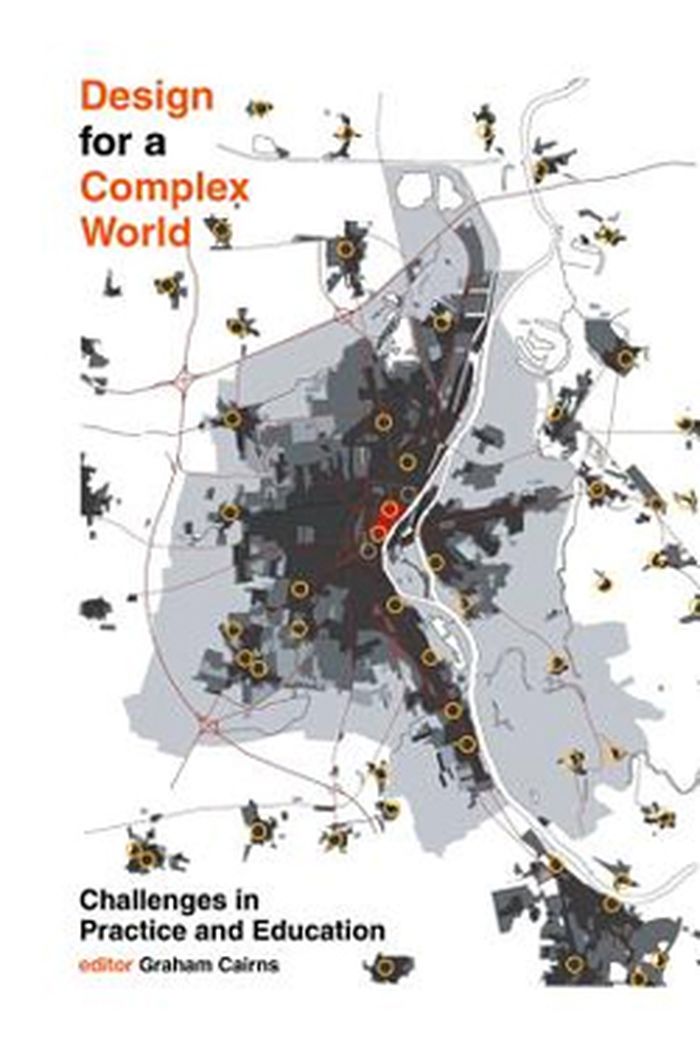
This is a book conceived in the ever-widening realm of design practice and education. It is premised on the belief that the forces of globalization—that have affected design practice for decades—have, in recent years, manifest themselves in design education as well. Consequently, it brings authors, practitioners, and educators together from 10 countries across six continents. They each offer an overview of the socio-cultural and economic factors that affect the built environment in their particular region of the world.
Design for a complex world: challenges in practice and education
Actions:
Price:
$49.99
(available to order)
Summary:
This is a book conceived in the ever-widening realm of design practice and education. It is premised on the belief that the forces of globalization—that have affected design practice for decades—have, in recent years, manifest themselves in design education as well. Consequently, it brings authors, practitioners, and educators together from 10 countries across six continents. They each offer an overview of the socio-cultural and economic factors that affect the built environment in their particular region of the world.
Form:
books
books
Publication:
May 2015
May 2015
Subject:
Architectural Theory
Architectural Theory
Form:
books
books
Actions:
Price:
$25.50
(available to order)
Summary:
This publication considers the process, methods, and value of architecture writing based on Carter Wiseman’s thirty years of personal experience writing, editing, and teaching young architects how to write. This book creatively tackles a problematic issue that Wiseman considers to crucial to successful architecture writing: clarity of thinking and expression. He argues(...)
$25.50
(available to order)
Summary:
This publication considers the process, methods, and value of architecture writing based on Carter Wiseman’s thirty years of personal experience writing, editing, and teaching young architects how to write. This book creatively tackles a problematic issue that Wiseman considers to crucial to successful architecture writing: clarity of thinking and expression. He argues(...)
Title:
Writing architecture : a practical guide to clear communication about the built environment
Actions:
Price:
$25.50
(available to order)
Summary:
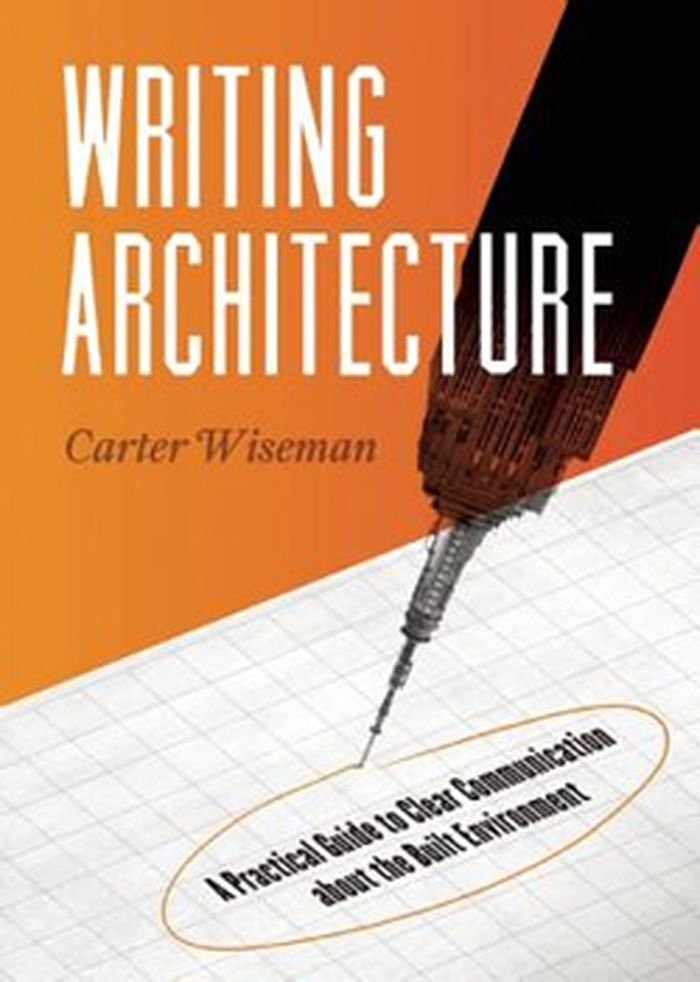
This publication considers the process, methods, and value of architecture writing based on Carter Wiseman’s thirty years of personal experience writing, editing, and teaching young architects how to write. This book creatively tackles a problematic issue that Wiseman considers to crucial to successful architecture writing: clarity of thinking and expression. He argues that because we live our lives within the built environment, architecture is the most comprehensive and complex of all art forms.
Writing architecture : a practical guide to clear communication about the built environment
Actions:
Price:
$25.50
(available to order)
Summary:
This publication considers the process, methods, and value of architecture writing based on Carter Wiseman’s thirty years of personal experience writing, editing, and teaching young architects how to write. This book creatively tackles a problematic issue that Wiseman considers to crucial to successful architecture writing: clarity of thinking and expression. He argues that because we live our lives within the built environment, architecture is the most comprehensive and complex of all art forms.
Form:
books
books
Publication:
September 2015
September 2015
Subject:
Architectural Theory
Architectural Theory
Form:
books
books
Actions:
Price:
$48.95
(available to order)
Summary:
What is it about ruins that are so alluring, so puzzling, that they can hold some of us in endless wonder over the half-erased story they tell? In this elegant book, Robert Harbison explores the captivating hold these remains and broken pieces—from architecture, art, and literature—have on us. He guides us through ruins and fragments, both ancient and modern, visual and(...)
$48.95
(available to order)
Summary:
What is it about ruins that are so alluring, so puzzling, that they can hold some of us in endless wonder over the half-erased story they tell? In this elegant book, Robert Harbison explores the captivating hold these remains and broken pieces—from architecture, art, and literature—have on us. He guides us through ruins and fragments, both ancient and modern, visual and(...)
Title:
Ruins and fragments: tales of loss and rediscovery
Actions:
Price:
$48.95
(available to order)
Summary:
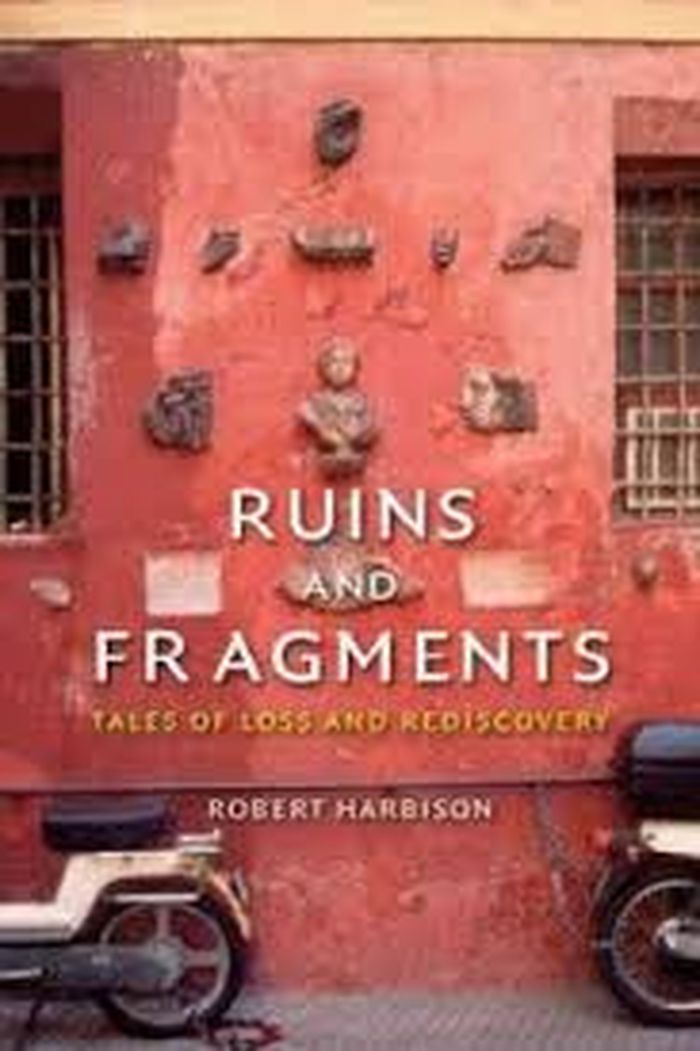
What is it about ruins that are so alluring, so puzzling, that they can hold some of us in endless wonder over the half-erased story they tell? In this elegant book, Robert Harbison explores the captivating hold these remains and broken pieces—from architecture, art, and literature—have on us. He guides us through ruins and fragments, both ancient and modern, visual and textual, showing us how they are crucial to understanding our current mindset and how we arrived here. First looking at ancient fragments, he examines the ways we have recovered, restored, and exhibited them as artworks. Then he moves on to modernist architecture and the ways that it seeks a fragmentary form, examining modern projects that have been designed into existing ruins, such as the Castelvecchio in Verona, Italy and the reconstruction of the Neues Museum in Berlin. From there he explores literature and the works of T. S. Eliot, Montaigne, Coleridge, Joyce, and Sterne, and how they have used fragments as the foundation for creating new work.
Ruins and fragments: tales of loss and rediscovery
Actions:
Price:
$48.95
(available to order)
Summary:
What is it about ruins that are so alluring, so puzzling, that they can hold some of us in endless wonder over the half-erased story they tell? In this elegant book, Robert Harbison explores the captivating hold these remains and broken pieces—from architecture, art, and literature—have on us. He guides us through ruins and fragments, both ancient and modern, visual and textual, showing us how they are crucial to understanding our current mindset and how we arrived here. First looking at ancient fragments, he examines the ways we have recovered, restored, and exhibited them as artworks. Then he moves on to modernist architecture and the ways that it seeks a fragmentary form, examining modern projects that have been designed into existing ruins, such as the Castelvecchio in Verona, Italy and the reconstruction of the Neues Museum in Berlin. From there he explores literature and the works of T. S. Eliot, Montaigne, Coleridge, Joyce, and Sterne, and how they have used fragments as the foundation for creating new work.
Form:
books
books
Publication:
June 2015
June 2015
Subject:
Architectural Theory
Architectural Theory
Form:
books
books
Actions:
Price:
$47.95
(available in store)
Summary:
This volume presents the result of a major undertaking by photographer Niels Lehmann and researcher Christoph Rauhut: to document all the remaining Expressionist buildings in Berlin. Expressionism powerfully heralded the onset of the twenties, and nowhere was it more important or powerful than in Berlin. The buildings that remain demonstrate great creativity with form and(...)
$47.95
(available in store)
Summary:
This volume presents the result of a major undertaking by photographer Niels Lehmann and researcher Christoph Rauhut: to document all the remaining Expressionist buildings in Berlin. Expressionism powerfully heralded the onset of the twenties, and nowhere was it more important or powerful than in Berlin. The buildings that remain demonstrate great creativity with form and(...)
Title:
Fragments of metropolis: Berlin's expressionist legacy
Actions:
Price:
$47.95
(available in store)
Summary:
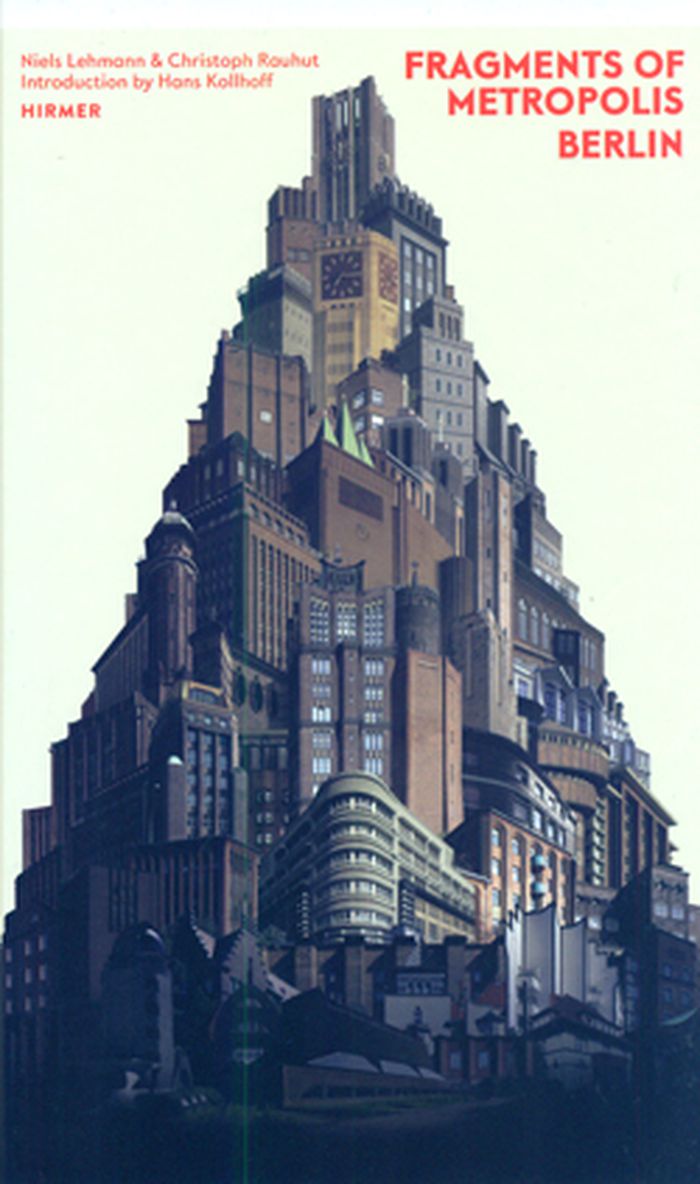
This volume presents the result of a major undertaking by photographer Niels Lehmann and researcher Christoph Rauhut: to document all the remaining Expressionist buildings in Berlin. Expressionism powerfully heralded the onset of the twenties, and nowhere was it more important or powerful than in Berlin. The buildings that remain demonstrate great creativity with form and skillful use of light, color, and material, highlighting verticality and drama—the essence of the modern metropolis.
Fragments of metropolis: Berlin's expressionist legacy
Actions:
Price:
$47.95
(available in store)
Summary:
This volume presents the result of a major undertaking by photographer Niels Lehmann and researcher Christoph Rauhut: to document all the remaining Expressionist buildings in Berlin. Expressionism powerfully heralded the onset of the twenties, and nowhere was it more important or powerful than in Berlin. The buildings that remain demonstrate great creativity with form and skillful use of light, color, and material, highlighting verticality and drama—the essence of the modern metropolis.
Form:
books
books
Publication:
March 2015
March 2015
Subject:
Architectural Theory
Architectural Theory
Form:
books
books
Actions:
Price:
$45.95
(available in store)
Summary:
The "Precisions", as the book is commonly known, emerged from a spontaneous and exuberant series of 10 lectures Le Corbusier gave in Buenos Aires in 1929, reflecting a new maturity in his thinking. They contain some of his most compelling aphorisms, covering technique as the basis of architecture, the human scale in design, furniture, the private house, apartments and(...)
$45.95
(available in store)
Summary:
The "Precisions", as the book is commonly known, emerged from a spontaneous and exuberant series of 10 lectures Le Corbusier gave in Buenos Aires in 1929, reflecting a new maturity in his thinking. They contain some of his most compelling aphorisms, covering technique as the basis of architecture, the human scale in design, furniture, the private house, apartments and(...)
Title:
Le Corbusier: precisions on the present state of architecture and city planning
Actions:
Price:
$45.95
(available in store)
Summary:
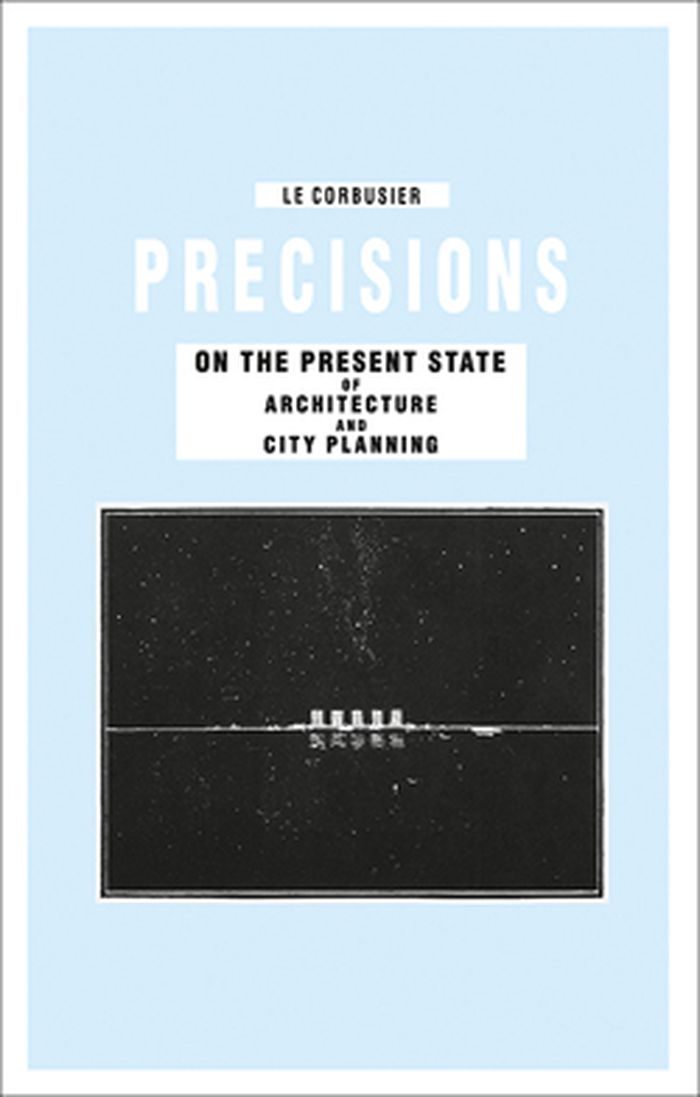
The "Precisions", as the book is commonly known, emerged from a spontaneous and exuberant series of 10 lectures Le Corbusier gave in Buenos Aires in 1929, reflecting a new maturity in his thinking. They contain some of his most compelling aphorisms, covering technique as the basis of architecture, the human scale in design, furniture, the private house, apartments and office buildings, the city, the League of Nations competition, teaching architecture. As he spoke, Le Corbusier improvised colour drawings on large sheets of paper. The drawings and lectures are unique in their eloquent and concise summary of his philosophy of architecture and urban design, stating the principles that informed his work from the 1920s on.
Le Corbusier: precisions on the present state of architecture and city planning
Actions:
Price:
$45.95
(available in store)
Summary:
The "Precisions", as the book is commonly known, emerged from a spontaneous and exuberant series of 10 lectures Le Corbusier gave in Buenos Aires in 1929, reflecting a new maturity in his thinking. They contain some of his most compelling aphorisms, covering technique as the basis of architecture, the human scale in design, furniture, the private house, apartments and office buildings, the city, the League of Nations competition, teaching architecture. As he spoke, Le Corbusier improvised colour drawings on large sheets of paper. The drawings and lectures are unique in their eloquent and concise summary of his philosophy of architecture and urban design, stating the principles that informed his work from the 1920s on.
Form:
books
books
Publication:
May 2015
May 2015
Subject:
Architectural Theory
Architectural Theory
Form:
books
books
Actions:
Price:
$39.95
(available to order)
Summary:
Qu'est-ce que l'art architectural ? La plupart des ouvrages de théorie de l'architecture n'émanent pas d'architectes, mais de chercheurs ou de critiques réputés qui pratiquent un autre métier, comme l'anthropologue Françoise Choay. Lorsqu'ils sont architectes, les auteurs produisent davantage des livres de recettes autobiographiques que des essais de réflexion théorique.(...)
$39.95
(available to order)
Summary:
Qu'est-ce que l'art architectural ? La plupart des ouvrages de théorie de l'architecture n'émanent pas d'architectes, mais de chercheurs ou de critiques réputés qui pratiquent un autre métier, comme l'anthropologue Françoise Choay. Lorsqu'ils sont architectes, les auteurs produisent davantage des livres de recettes autobiographiques que des essais de réflexion théorique.(...)
Title:
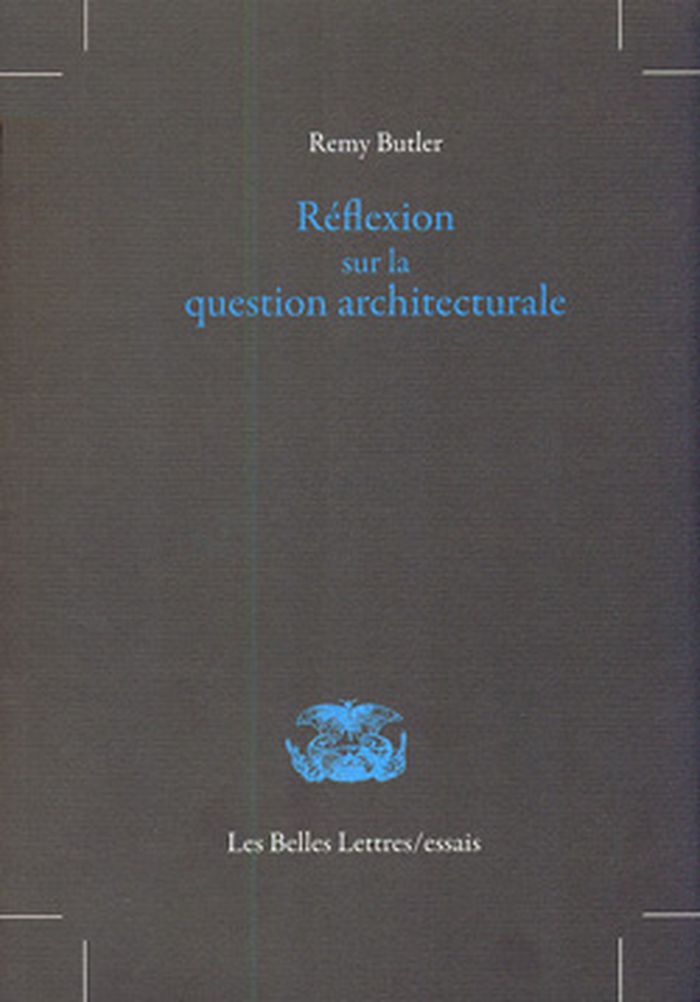
Réflexion sur la question architecturale
Actions:
Price:
$39.95
(available to order)
Summary:
Qu'est-ce que l'art architectural ? La plupart des ouvrages de théorie de l'architecture n'émanent pas d'architectes, mais de chercheurs ou de critiques réputés qui pratiquent un autre métier, comme l'anthropologue Françoise Choay. Lorsqu'ils sont architectes, les auteurs produisent davantage des livres de recettes autobiographiques que des essais de réflexion théorique. Le statut de Rémy Butler est donc assez atypique. Son questionnement, développé pendant des décennies au contact de générations d'élèves, est alimenté par une ample connaissance de la pratique. Sa méthode, originale, consiste à interroger quelques termes constamment utilisés pour la qualifier : échelle, rythme, ornement, composition... pour dessiner la valeur symbolique de l'architecture, de Vitruve à nos jours. Humaniste, la réflexion, nourrie par des ouvrages de tous bords, s'échafaude au moyen de multiples références qui décloisonnent le champ de la réflexion architecturale classique.
Réflexion sur la question architecturale
Actions:
Price:
$39.95
(available to order)
Summary:
Qu'est-ce que l'art architectural ? La plupart des ouvrages de théorie de l'architecture n'émanent pas d'architectes, mais de chercheurs ou de critiques réputés qui pratiquent un autre métier, comme l'anthropologue Françoise Choay. Lorsqu'ils sont architectes, les auteurs produisent davantage des livres de recettes autobiographiques que des essais de réflexion théorique. Le statut de Rémy Butler est donc assez atypique. Son questionnement, développé pendant des décennies au contact de générations d'élèves, est alimenté par une ample connaissance de la pratique. Sa méthode, originale, consiste à interroger quelques termes constamment utilisés pour la qualifier : échelle, rythme, ornement, composition... pour dessiner la valeur symbolique de l'architecture, de Vitruve à nos jours. Humaniste, la réflexion, nourrie par des ouvrages de tous bords, s'échafaude au moyen de multiples références qui décloisonnent le champ de la réflexion architecturale classique.
Form:
books
books
Publication:
March 2015
March 2015
Subject:
Architectural Theory
Architectural Theory
Form:
books
books
Price:
$19.95
(available in store)
Summary:
Literary Nonfiction. Art, Architecture, and Craft. Starting from 'I don't know' documents a 2011 week-long workshop at Sitterwerk, St. Gallen, in which Studio Mumbai's Bijoy Jain joined expert craftspeople from Switzerland to share the knowledge, techniques, and insights from their own practices with students, artists, and architects. The interviews in this book explore(...)
$19.95
(available in store)
Summary:
Literary Nonfiction. Art, Architecture, and Craft. Starting from 'I don't know' documents a 2011 week-long workshop at Sitterwerk, St. Gallen, in which Studio Mumbai's Bijoy Jain joined expert craftspeople from Switzerland to share the knowledge, techniques, and insights from their own practices with students, artists, and architects. The interviews in this book explore(...)
Title:
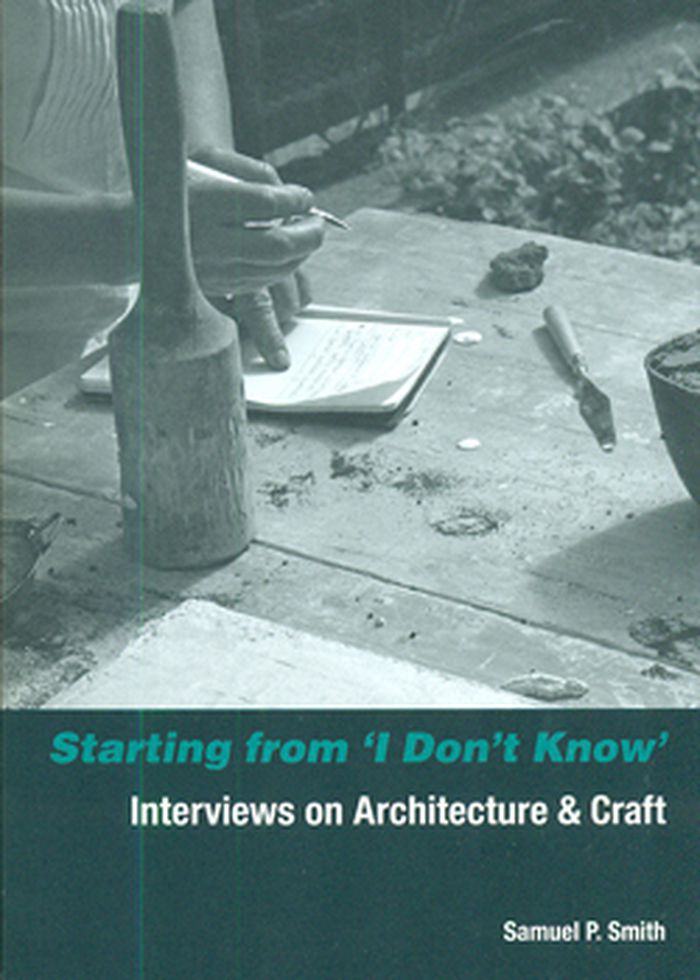
Starting from 'I don't know': interviews on architecture & craft
Actions:
Price:
$19.95
(available in store)
Summary:
Literary Nonfiction. Art, Architecture, and Craft. Starting from 'I don't know' documents a 2011 week-long workshop at Sitterwerk, St. Gallen, in which Studio Mumbai's Bijoy Jain joined expert craftspeople from Switzerland to share the knowledge, techniques, and insights from their own practices with students, artists, and architects. The interviews in this book explore the creative potential of hands-on learning, local knowledge, and open experimentation.
Starting from 'I don't know': interviews on architecture & craft
Actions:
Price:
$19.95
(available in store)
Summary:
Literary Nonfiction. Art, Architecture, and Craft. Starting from 'I don't know' documents a 2011 week-long workshop at Sitterwerk, St. Gallen, in which Studio Mumbai's Bijoy Jain joined expert craftspeople from Switzerland to share the knowledge, techniques, and insights from their own practices with students, artists, and architects. The interviews in this book explore the creative potential of hands-on learning, local knowledge, and open experimentation.
Form:
books
books
Publication:
March 2015
March 2015
Subject:
Architectural Theory
Architectural Theory


