


3197 Results
Form:
books
books
Title:
Ando Tadao
Ando Tadao
Actions:
Price:
$12.00
(available to order)
Summary:
Philippe Starck describes him as a "mystic in a country which is no longer mystic." Drew Philip calls his buildings "land art" that "struggle to emerge from the earth." He is the only architect to have won the discipline`s four most prestigious prizes: the Pritzker, Carlsberg, Praemium Imperiale, and Kyoto Prize. His name is Tadao Ando, and he is one of the world`s(...)
$12.00
(available to order)
Summary:
Philippe Starck describes him as a "mystic in a country which is no longer mystic." Drew Philip calls his buildings "land art" that "struggle to emerge from the earth." He is the only architect to have won the discipline`s four most prestigious prizes: the Pritzker, Carlsberg, Praemium Imperiale, and Kyoto Prize. His name is Tadao Ando, and he is one of the world`s(...)
Subject:
Architecture Monographs
Architecture Monographs
Publication:
January 1900, Hong Kong, Köln, London, Los Angeles, Madrid
January 1900, Hong Kong, Köln, London, Los Angeles, Madrid
Title:
Ando Tadao
Actions:
Price:
$12.00
(available to order)
Summary:
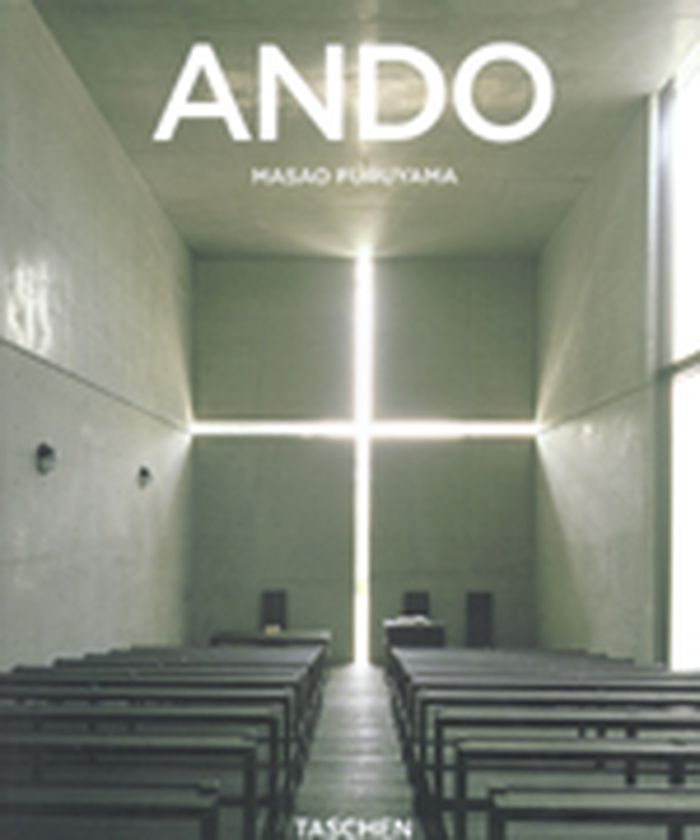
Philippe Starck describes him as a "mystic in a country which is no longer mystic." Drew Philip calls his buildings "land art" that "struggle to emerge from the earth." He is the only architect to have won the discipline`s four most prestigious prizes: the Pritzker, Carlsberg, Praemium Imperiale, and Kyoto Prize. His name is Tadao Ando, and he is one of the world`s greatest living architects. Combining influences from Japanese tradition with the best of Modernism, Ando has developed a completely unique building aesthetic that makes use of concrete, wood, water, light, space, and nature in a way that has never been witnessed elsewhere in architecture. This book provides the perfect introduction to Ando`s work, including private homes, churches, museums, apartment complexes, and cultural spaces throughout Japan, and in France, Italy, Spain, and the USA.
Ando Tadao
Actions:
Price:
$12.00
(available to order)
Summary:
Philippe Starck describes him as a "mystic in a country which is no longer mystic." Drew Philip calls his buildings "land art" that "struggle to emerge from the earth." He is the only architect to have won the discipline`s four most prestigious prizes: the Pritzker, Carlsberg, Praemium Imperiale, and Kyoto Prize. His name is Tadao Ando, and he is one of the world`s greatest living architects. Combining influences from Japanese tradition with the best of Modernism, Ando has developed a completely unique building aesthetic that makes use of concrete, wood, water, light, space, and nature in a way that has never been witnessed elsewhere in architecture. This book provides the perfect introduction to Ando`s work, including private homes, churches, museums, apartment complexes, and cultural spaces throughout Japan, and in France, Italy, Spain, and the USA.
Form:
books
books
Publication:
January 1900, Hong Kong, Köln, London, Los Angeles, Madrid
January 1900, Hong Kong, Köln, London, Los Angeles, Madrid
Subject:
Architecture Monographs
Architecture Monographs
Form:
books
books
Price:
$54.95
(available to order)
Summary:
Looking to expose the ways in which Fuller's synergetics can be seen in the ancient iconographies of the past in almost every human culture, this book also shows how the 'wholes' of Fuller's figures may find artistic applications within the future.
$54.95
(available to order)
Summary:
Looking to expose the ways in which Fuller's synergetics can be seen in the ancient iconographies of the past in almost every human culture, this book also shows how the 'wholes' of Fuller's figures may find artistic applications within the future.
Subject:
Architecture Monographs
Architecture Monographs
Publication:
June 2007, Cambridge, United Kingdom
June 2007, Cambridge, United Kingdom
Title:
American Dreamer : Bucky Fuller and the sacred geometry of nature
Actions:
Price:
$54.95
(available to order)
Summary:
Looking to expose the ways in which Fuller's synergetics can be seen in the ancient iconographies of the past in almost every human culture, this book also shows how the 'wholes' of Fuller's figures may find artistic applications within the future.
American Dreamer : Bucky Fuller and the sacred geometry of nature
Actions:
Price:
$54.95
(available to order)
Summary:
Looking to expose the ways in which Fuller's synergetics can be seen in the ancient iconographies of the past in almost every human culture, this book also shows how the 'wholes' of Fuller's figures may find artistic applications within the future.
Form:
books
books
Publication:
June 2007, Cambridge, United Kingdom
June 2007, Cambridge, United Kingdom
Subject:
Architecture Monographs
Architecture Monographs
Form:
books
books
Actions:
Price:
$44.95
(available to order)
Summary:
Ce livre témoigne des journées de l'architecte dans l'enceinte du Thoronet et de son travail à propos duquel il s'exprime longuement.
$44.95
(available to order)
Summary:
Ce livre témoigne des journées de l'architecte dans l'enceinte du Thoronet et de son travail à propos duquel il s'exprime longuement.
Title:
Siza au Thoronet : Le parcours et l'oeuvre
Actions:
Price:
$44.95
(available to order)
Summary:
Ce livre témoigne des journées de l'architecte dans l'enceinte du Thoronet et de son travail à propos duquel il s'exprime longuement.
Siza au Thoronet : Le parcours et l'oeuvre
Actions:
Price:
$44.95
(available to order)
Summary:
Ce livre témoigne des journées de l'architecte dans l'enceinte du Thoronet et de son travail à propos duquel il s'exprime longuement.
Form:
books
books
Publication:
August 2007, Marseille
August 2007, Marseille
Subject:
Architecture Monographs
Architecture Monographs
Form:
books
books
Actions:
Price:
$39.95
(available to order)
Summary:
This updated third edition revisits each of Wright’s existent structures, tracing the architect’s development from his Prairie works, such as the Frederick Robie house in Chicago, to the last building constructed to his specifications, the magnificent Aime and Norman Lykes residence in California. Renowned expert William Storrer deftly incorporates a series of key(...)
$39.95
(available to order)
Summary:
This updated third edition revisits each of Wright’s existent structures, tracing the architect’s development from his Prairie works, such as the Frederick Robie house in Chicago, to the last building constructed to his specifications, the magnificent Aime and Norman Lykes residence in California. Renowned expert William Storrer deftly incorporates a series of key(...)
Subject:
Architecture Monographs
Architecture Monographs
Publication:
October 2007, Chicago London
October 2007, Chicago London
Title:
The architecture of Frank Lloyd Wright : A complete catalog -3rd edition updated
Actions:
Price:
$39.95
(available to order)
Summary:
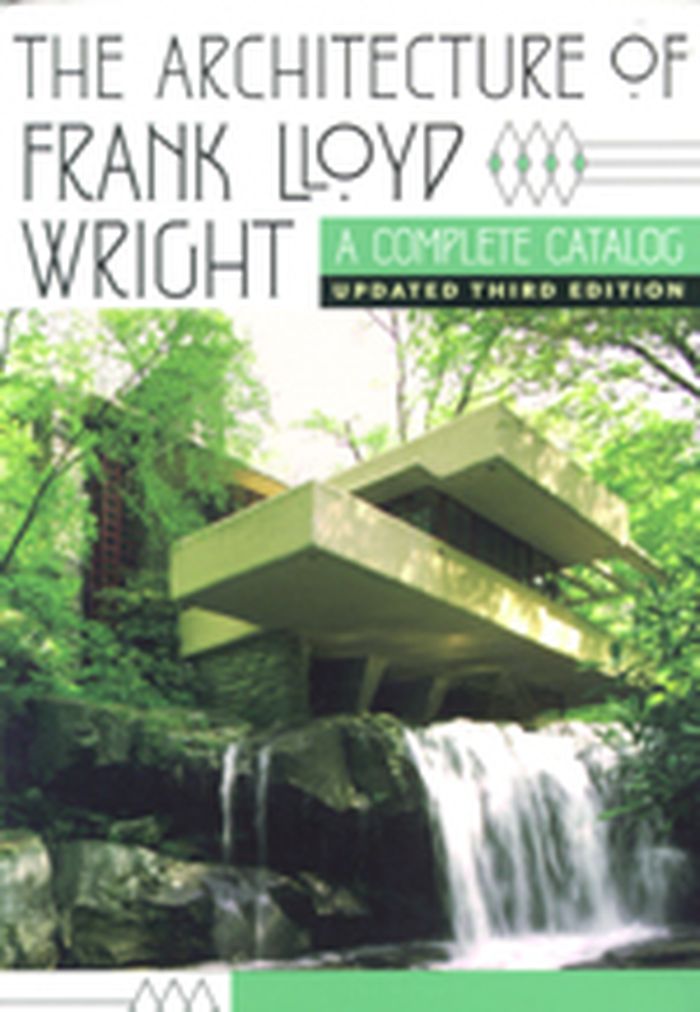
This updated third edition revisits each of Wright’s existent structures, tracing the architect’s development from his Prairie works, such as the Frederick Robie house in Chicago, to the last building constructed to his specifications, the magnificent Aime and Norman Lykes residence in California. Renowned expert William Storrer deftly incorporates a series of key revisions and brings each structure’s history up to the present day, as some buildings have been refurbished, some moved, and others sadly abandoned or destroyed by natural disasters like Hurricane Katrina—including the James Charnley bungalow in Ocean Springs, Mississippi. Organized chronologically, this updated third edition features full-color photographs of all extant work along with a description of each building and its history. Storrer also provides full addresses, GPS coordinates, and maps of locations throughout the United States, England, and Japan, indicating the shortest route to each building—perfect for Wright aficionados on the go.
The architecture of Frank Lloyd Wright : A complete catalog -3rd edition updated
Actions:
Price:
$39.95
(available to order)
Summary:
This updated third edition revisits each of Wright’s existent structures, tracing the architect’s development from his Prairie works, such as the Frederick Robie house in Chicago, to the last building constructed to his specifications, the magnificent Aime and Norman Lykes residence in California. Renowned expert William Storrer deftly incorporates a series of key revisions and brings each structure’s history up to the present day, as some buildings have been refurbished, some moved, and others sadly abandoned or destroyed by natural disasters like Hurricane Katrina—including the James Charnley bungalow in Ocean Springs, Mississippi. Organized chronologically, this updated third edition features full-color photographs of all extant work along with a description of each building and its history. Storrer also provides full addresses, GPS coordinates, and maps of locations throughout the United States, England, and Japan, indicating the shortest route to each building—perfect for Wright aficionados on the go.
Form:
books
books
Publication:
October 2007, Chicago London
October 2007, Chicago London
Subject:
Architecture Monographs
Architecture Monographs
Form:
books
books
Actions:
Price:
$44.95
(available to order)
Summary:
This book is a real first in the world of architecture publishing. It is the first time that the work of Donald Judd has been fully expounded in an architectural context. As one of the most important exponents of American minimal art, Donald Judd (1928–1994) has exerted a lasting influence in the field of architecture. Among the lesser-known aspects of his work is a(...)
$44.95
(available to order)
Summary:
This book is a real first in the world of architecture publishing. It is the first time that the work of Donald Judd has been fully expounded in an architectural context. As one of the most important exponents of American minimal art, Donald Judd (1928–1994) has exerted a lasting influence in the field of architecture. Among the lesser-known aspects of his work is a(...)
Subject:
Architecture Monographs
Architecture Monographs
Publication:
September 2007, Basel, Boston, Berlin
September 2007, Basel, Boston, Berlin
Title:
Donald Judd : Architecture in Marfa, Texas
Actions:
Price:
$44.95
(available to order)
Summary:
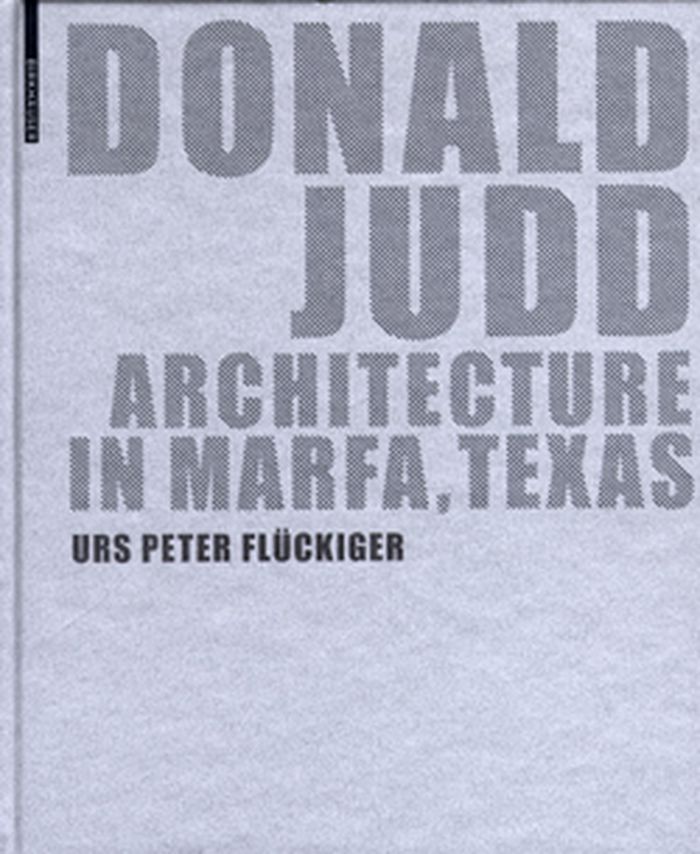
This book is a real first in the world of architecture publishing. It is the first time that the work of Donald Judd has been fully expounded in an architectural context. As one of the most important exponents of American minimal art, Donald Judd (1928–1994) has exerted a lasting influence in the field of architecture. Among the lesser-known aspects of his work is a large collection of architectural designs that explore the relationship between architecture and art. Of special importance for Judd’s work in this field is a former military fort in Marfa, Texas, part of which he purchased and then, beginning in 1971, transformed into one of the largest existing ensembles of contemporary art. The Marfa buildings have for the first time been carefully measured and drawn to scale by the author and his students. Using standard CAD drawings together with historical and contemporary photographs, this volume illustrates Judd’s architectural alterations to the buildings in Marfa, and discusses and describes them in its accompanying text. The result is an invaluable source of inspiration for contemporary architecture.
Donald Judd : Architecture in Marfa, Texas
Actions:
Price:
$44.95
(available to order)
Summary:
This book is a real first in the world of architecture publishing. It is the first time that the work of Donald Judd has been fully expounded in an architectural context. As one of the most important exponents of American minimal art, Donald Judd (1928–1994) has exerted a lasting influence in the field of architecture. Among the lesser-known aspects of his work is a large collection of architectural designs that explore the relationship between architecture and art. Of special importance for Judd’s work in this field is a former military fort in Marfa, Texas, part of which he purchased and then, beginning in 1971, transformed into one of the largest existing ensembles of contemporary art. The Marfa buildings have for the first time been carefully measured and drawn to scale by the author and his students. Using standard CAD drawings together with historical and contemporary photographs, this volume illustrates Judd’s architectural alterations to the buildings in Marfa, and discusses and describes them in its accompanying text. The result is an invaluable source of inspiration for contemporary architecture.
Form:
books
books
Publication:
September 2007, Basel, Boston, Berlin
September 2007, Basel, Boston, Berlin
Subject:
Architecture Monographs
Architecture Monographs
Form:
books
books
Actions:
Price:
$66.95
(available in store)
Summary:
Presented under the title Surface/Subsurface, the recent work of Marion Weiss and Michael Manfredi poses a question that is both difficult and important: how can architecture with such obvious visual beauty be understood to depend on conditions that not essentially visual, conditions that exercise their influence without making a show of it, operating somewhere beneath,(...)
$66.95
(available in store)
Summary:
Presented under the title Surface/Subsurface, the recent work of Marion Weiss and Michael Manfredi poses a question that is both difficult and important: how can architecture with such obvious visual beauty be understood to depend on conditions that not essentially visual, conditions that exercise their influence without making a show of it, operating somewhere beneath,(...)
Title:
Weiss Manfredi surface / subsurface
Actions:
Price:
$66.95
(available in store)
Summary:
Presented under the title Surface/Subsurface, the recent work of Marion Weiss and Michael Manfredi poses a question that is both difficult and important: how can architecture with such obvious visual beauty be understood to depend on conditions that not essentially visual, conditions that exercise their influence without making a show of it, operating somewhere beneath, behind, or beyond the work's surfaces, conditions that constitute the work's sub-surface?
Weiss Manfredi surface / subsurface
Actions:
Price:
$66.95
(available in store)
Summary:
Presented under the title Surface/Subsurface, the recent work of Marion Weiss and Michael Manfredi poses a question that is both difficult and important: how can architecture with such obvious visual beauty be understood to depend on conditions that not essentially visual, conditions that exercise their influence without making a show of it, operating somewhere beneath, behind, or beyond the work's surfaces, conditions that constitute the work's sub-surface?
Form:
books
books
Publication:
December 2007, New York
December 2007, New York
Subject:
Architecture Monographs
Architecture Monographs
Form:
books
books
Actions:
Price:
$66.00
(available to order)
Summary:
Contemporary urban development is increasingly characterized by a reliance on diagrams to convey the rational statistical point of view of the professional urban planner. In his new book Urbanisms architect Steven Holl suggests that just as modern medicine has recognized the power of the irrational psyche urban planners need to realize that the experiential power of(...)
$66.00
(available to order)
Summary:
Contemporary urban development is increasingly characterized by a reliance on diagrams to convey the rational statistical point of view of the professional urban planner. In his new book Urbanisms architect Steven Holl suggests that just as modern medicine has recognized the power of the irrational psyche urban planners need to realize that the experiential power of(...)
Title:
Urbanisms: working with doubt
Actions:
Price:
$66.00
(available to order)
Summary:
Contemporary urban development is increasingly characterized by a reliance on diagrams to convey the rational statistical point of view of the professional urban planner. In his new book Urbanisms architect Steven Holl suggests that just as modern medicine has recognized the power of the irrational psyche urban planners need to realize that the experiential power of cities cannot be completely rationalized and must be studied subjectively. With a selection of urban and architectural projects from his thirty year practice Holl stretches urban planning into the domain of uncertainty. Analyzing a wide range of matters from everyday experiences to spatial data Urbanisms examines how perception and the senses are intertwined with the material space and light of urban form
Urbanisms: working with doubt
Actions:
Price:
$66.00
(available to order)
Summary:
Contemporary urban development is increasingly characterized by a reliance on diagrams to convey the rational statistical point of view of the professional urban planner. In his new book Urbanisms architect Steven Holl suggests that just as modern medicine has recognized the power of the irrational psyche urban planners need to realize that the experiential power of cities cannot be completely rationalized and must be studied subjectively. With a selection of urban and architectural projects from his thirty year practice Holl stretches urban planning into the domain of uncertainty. Analyzing a wide range of matters from everyday experiences to spatial data Urbanisms examines how perception and the senses are intertwined with the material space and light of urban form
Form:
books
books
Publication:
December 2008
December 2008
Subject:
Architecture Monographs
Architecture Monographs
Form:
books
books
Actions:
Price:
$89.95
(available to order)
Summary:
This monograph surveys thirty of the most iconic buildings designed by Skidmore, Owings Merrill (SOM), the legendary American architecture firm, since its founding in 1936. Along with such architects as Ludwig Mies van der Rohe and Le Corbusier, SOM is largely credited with propagating the Internationalist style of architecture that filled the New York skyline with such(...)
$89.95
(available to order)
Summary:
This monograph surveys thirty of the most iconic buildings designed by Skidmore, Owings Merrill (SOM), the legendary American architecture firm, since its founding in 1936. Along with such architects as Ludwig Mies van der Rohe and Le Corbusier, SOM is largely credited with propagating the Internationalist style of architecture that filled the New York skyline with such(...)
Title:
Skidmore, Owings & Merrill : SOM since 1936
Actions:
Price:
$89.95
(available to order)
Summary:
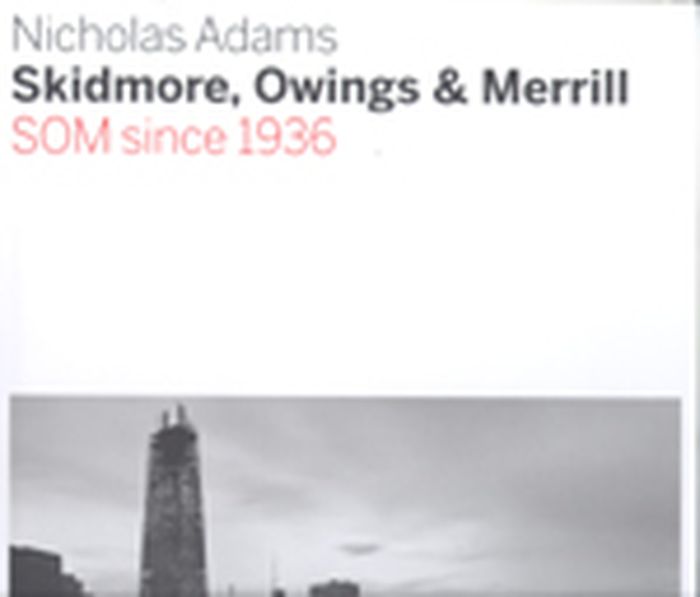
This monograph surveys thirty of the most iconic buildings designed by Skidmore, Owings Merrill (SOM), the legendary American architecture firm, since its founding in 1936. Along with such architects as Ludwig Mies van der Rohe and Le Corbusier, SOM is largely credited with propagating the Internationalist style of architecture that filled the New York skyline with such mid-century masterworks as Lever House (1952) and Chase Manhattan Plaza (1961). Before the current age of the super skyscraper, SOM designed what was for almost thirty years the world's tallest building, Chicago's Sears Tower (1973), as well as the city's John Hancock Center (1970). With an essay by the American critic Nicholas Adams that contextualizes the importance of SOM's contribution to the globalization of architecture - and its participation in less emphatically vertical structures, such as the Albright-Knox Art Gallery in Buffalo (1962) and the l Hajj Terminal at King Abdul Aziz International Airport in Jeddah, Saudi Arabia (1981) - this title provides the first-ever independently authored overview on a firm that continues to make headlines to this day.
Skidmore, Owings & Merrill : SOM since 1936
Actions:
Price:
$89.95
(available to order)
Summary:
This monograph surveys thirty of the most iconic buildings designed by Skidmore, Owings Merrill (SOM), the legendary American architecture firm, since its founding in 1936. Along with such architects as Ludwig Mies van der Rohe and Le Corbusier, SOM is largely credited with propagating the Internationalist style of architecture that filled the New York skyline with such mid-century masterworks as Lever House (1952) and Chase Manhattan Plaza (1961). Before the current age of the super skyscraper, SOM designed what was for almost thirty years the world's tallest building, Chicago's Sears Tower (1973), as well as the city's John Hancock Center (1970). With an essay by the American critic Nicholas Adams that contextualizes the importance of SOM's contribution to the globalization of architecture - and its participation in less emphatically vertical structures, such as the Albright-Knox Art Gallery in Buffalo (1962) and the l Hajj Terminal at King Abdul Aziz International Airport in Jeddah, Saudi Arabia (1981) - this title provides the first-ever independently authored overview on a firm that continues to make headlines to this day.
Form:
books
books
Publication:
June 2007, Milan
June 2007, Milan
Subject:
Architecture Monographs
Architecture Monographs
Form:
books
books
Actions:
Price:
$39.95
(available to order)
Summary:
This volume complements the travelling exhibition on Kuma's projects which opens in Syracuse (Sicily) in May. Kuma's creative process and his painstaking work on the material in order to transform it into a building is documented through the presentation of the most important of his architectural works designed between 1994 and 2004. Luigi Alini's essay describes the(...)
$39.95
(available to order)
Summary:
This volume complements the travelling exhibition on Kuma's projects which opens in Syracuse (Sicily) in May. Kuma's creative process and his painstaking work on the material in order to transform it into a building is documented through the presentation of the most important of his architectural works designed between 1994 and 2004. Luigi Alini's essay describes the(...)
Title:
Kengo Kuma works and projects
Actions:
Price:
$39.95
(available to order)
Summary:
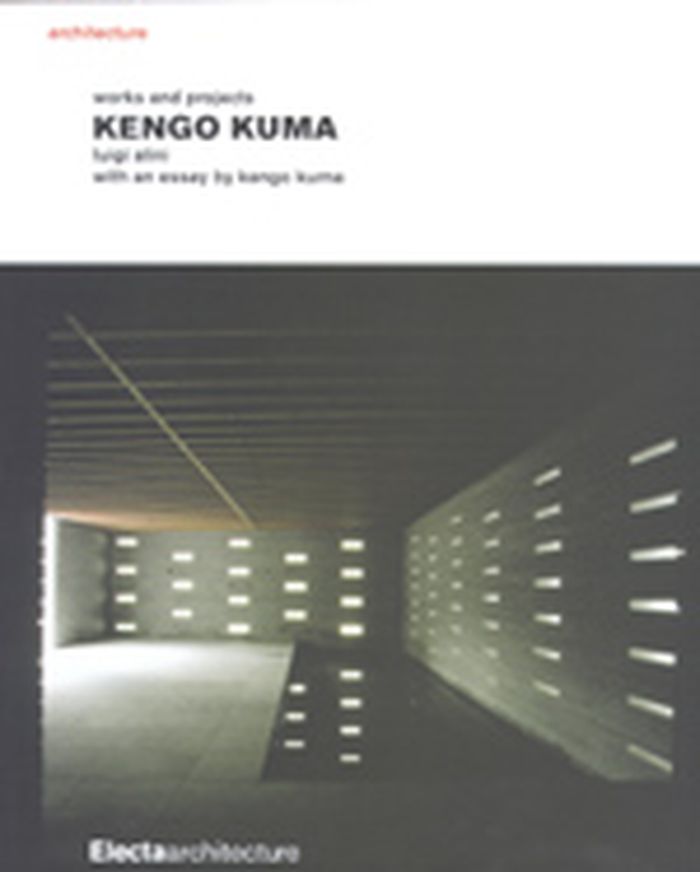
This volume complements the travelling exhibition on Kuma's projects which opens in Syracuse (Sicily) in May. Kuma's creative process and his painstaking work on the material in order to transform it into a building is documented through the presentation of the most important of his architectural works designed between 1994 and 2004. Luigi Alini's essay describes the artist's formative years, analyzing the various aspects of his research through themes and compositional mechanisms that have remained constant, his study and profound knowledge of materials, and the symbiosis between architecture and nature. A selection of Kuma's writings completes the volume
Kengo Kuma works and projects
Actions:
Price:
$39.95
(available to order)
Summary:
This volume complements the travelling exhibition on Kuma's projects which opens in Syracuse (Sicily) in May. Kuma's creative process and his painstaking work on the material in order to transform it into a building is documented through the presentation of the most important of his architectural works designed between 1994 and 2004. Luigi Alini's essay describes the artist's formative years, analyzing the various aspects of his research through themes and compositional mechanisms that have remained constant, his study and profound knowledge of materials, and the symbiosis between architecture and nature. A selection of Kuma's writings completes the volume
Form:
books
books
Publication:
July 2007, Milan
July 2007, Milan
Subject:
Architecture Monographs
Architecture Monographs
Form:
books
books
Actions:
Price:
$74.95
(available to order)
Summary:
The Supercrit series revisits some of the most influential architectural projects of the recent past and examines their impact on the way we think and design today. Supercrit 1: Potteries Thinkbelt, Cedric Price examines Cedric Price's unsurpassed proposals for education, the Potteries Thinkbelt project from the 1960s. You can hear the architect's project definition,(...)
$74.95
(available to order)
Summary:
The Supercrit series revisits some of the most influential architectural projects of the recent past and examines their impact on the way we think and design today. Supercrit 1: Potteries Thinkbelt, Cedric Price examines Cedric Price's unsurpassed proposals for education, the Potteries Thinkbelt project from the 1960s. You can hear the architect's project definition,(...)
Subject:
Architecture Monographs
Architecture Monographs
Publication:
February 2008, London, New York
February 2008, London, New York
Title:
Supercrit 1 Cedric Price Potteries Thinkbelt
Actions:
Price:
$74.95
(available to order)
Summary:
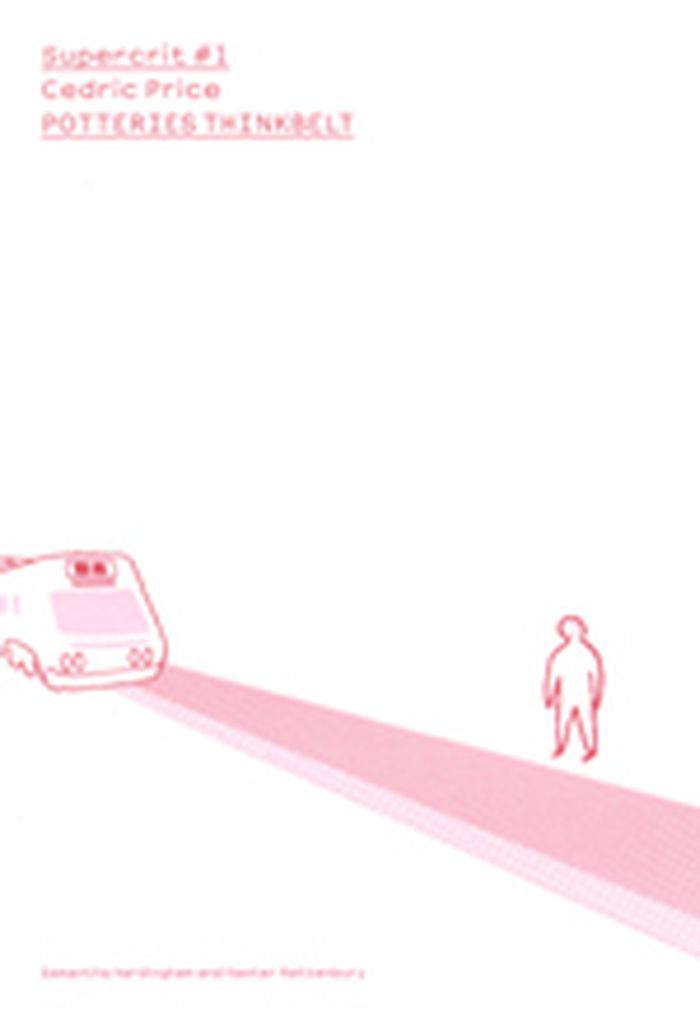
The Supercrit series revisits some of the most influential architectural projects of the recent past and examines their impact on the way we think and design today. Supercrit 1: Potteries Thinkbelt, Cedric Price examines Cedric Price's unsurpassed proposals for education, the Potteries Thinkbelt project from the 1960s. You can hear the architect's project definition, see the drawings and join the crit. This innovative and compelling book is an invaluable resource for any architecture student.
Supercrit 1 Cedric Price Potteries Thinkbelt
Actions:
Price:
$74.95
(available to order)
Summary:
The Supercrit series revisits some of the most influential architectural projects of the recent past and examines their impact on the way we think and design today. Supercrit 1: Potteries Thinkbelt, Cedric Price examines Cedric Price's unsurpassed proposals for education, the Potteries Thinkbelt project from the 1960s. You can hear the architect's project definition, see the drawings and join the crit. This innovative and compelling book is an invaluable resource for any architecture student.
Form:
books
books
Publication:
February 2008, London, New York
February 2008, London, New York
Subject:
Architecture Monographs
Architecture Monographs


