


281 Results
Form:
books
books
Title:
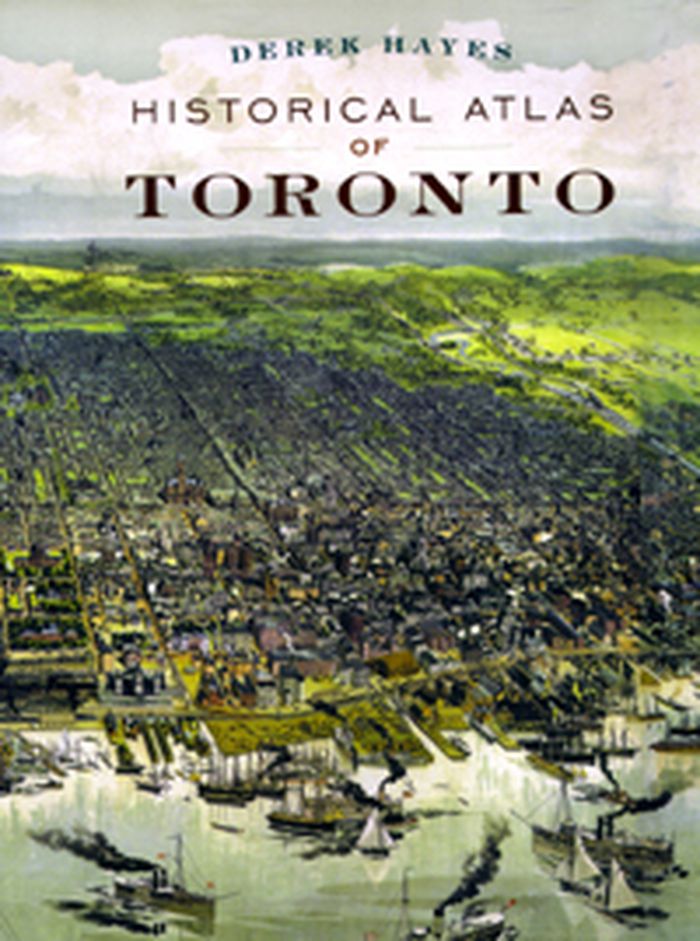
Historical atlas of Toronto
Historical atlas of Toronto
Actions:
Price:
$34.95
(available to order)
Summary:
Renowned historian Derek Hayes brings Toronto’s colourful past to life through stunning maps, rare historical documents and rich stories. In just two centuries, Toronto has grown from a far-flung outpost of the British Empire to a world-class city, the largest in Canada. This book is the first to illustrate Toronto’s history through contemporary maps, drawn at the time(...)
$34.95
(available to order)
Summary:
Renowned historian Derek Hayes brings Toronto’s colourful past to life through stunning maps, rare historical documents and rich stories. In just two centuries, Toronto has grown from a far-flung outpost of the British Empire to a world-class city, the largest in Canada. This book is the first to illustrate Toronto’s history through contemporary maps, drawn at the time(...)
Title:
Historical atlas of Toronto
Actions:
Price:
$34.95
(available to order)
Summary:
Renowned historian Derek Hayes brings Toronto’s colourful past to life through stunning maps, rare historical documents and rich stories. In just two centuries, Toronto has grown from a far-flung outpost of the British Empire to a world-class city, the largest in Canada. This book is the first to illustrate Toronto’s history through contemporary maps, drawn at the time to record, promote or illustrate major events. Collected together for the first time, these beautiful, revelatory documents add up to a fascinating visual history of the city’s development. The book covers all of today’s Greater Toronto Area, from Mississauga in the west to Oshawa in the east.
Historical atlas of Toronto
Actions:
Price:
$34.95
(available to order)
Summary:
Renowned historian Derek Hayes brings Toronto’s colourful past to life through stunning maps, rare historical documents and rich stories. In just two centuries, Toronto has grown from a far-flung outpost of the British Empire to a world-class city, the largest in Canada. This book is the first to illustrate Toronto’s history through contemporary maps, drawn at the time to record, promote or illustrate major events. Collected together for the first time, these beautiful, revelatory documents add up to a fascinating visual history of the city’s development. The book covers all of today’s Greater Toronto Area, from Mississauga in the west to Oshawa in the east.
Form:
books
books
Publication:
August 2008, Vancouver, Toronto
August 2008, Vancouver, Toronto
Subject:
Architecture in Canada
Architecture in Canada
Form:
books
books
Actions:
Price:
$24.00
(available to order)
Summary:
Catalogue de l'exposition réalisée par la Bibliothèque et Archives nationales du Québe (BAnQ) et présentée au Centre de conservation de BAnQ. Répertoire 107 oeuvres caractérisées par un intérêt marqué pour la notion de 'pensée visuelle'.
$24.00
(available to order)
Summary:
Catalogue de l'exposition réalisée par la Bibliothèque et Archives nationales du Québe (BAnQ) et présentée au Centre de conservation de BAnQ. Répertoire 107 oeuvres caractérisées par un intérêt marqué pour la notion de 'pensée visuelle'.
Title:
Graphzines et autres publications d'artistes
Actions:
Price:
$24.00
(available to order)
Summary:
Catalogue de l'exposition réalisée par la Bibliothèque et Archives nationales du Québe (BAnQ) et présentée au Centre de conservation de BAnQ. Répertoire 107 oeuvres caractérisées par un intérêt marqué pour la notion de 'pensée visuelle'.
Graphzines et autres publications d'artistes
Actions:
Price:
$24.00
(available to order)
Summary:
Catalogue de l'exposition réalisée par la Bibliothèque et Archives nationales du Québe (BAnQ) et présentée au Centre de conservation de BAnQ. Répertoire 107 oeuvres caractérisées par un intérêt marqué pour la notion de 'pensée visuelle'.
Form:
books
books
Publication:
October 2007, Montreal
October 2007, Montreal
Subject:
Architecture in Canada
Architecture in Canada
Form:
books
books
Actions:
Price:
$24.95
(available to order)
Summary:
Thousands of newcomers are pouring into Alberta from around the globe, bringing unexpected gifts. Many are writers and storytellers. What pulls them to Canada? What happens to them on the journey? What experiences have they deliberately left behind? What treasures do they bring? How do they describe their emerging sense of place and their creative aspirations in a new(...)
$24.95
(available to order)
Summary:
Thousands of newcomers are pouring into Alberta from around the globe, bringing unexpected gifts. Many are writers and storytellers. What pulls them to Canada? What happens to them on the journey? What experiences have they deliberately left behind? What treasures do they bring? How do they describe their emerging sense of place and their creative aspirations in a new(...)
Title:
The story that brought me here: to Alberta from everywhere
Actions:
Price:
$24.95
(available to order)
Summary:
Thousands of newcomers are pouring into Alberta from around the globe, bringing unexpected gifts. Many are writers and storytellers. What pulls them to Canada? What happens to them on the journey? What experiences have they deliberately left behind? What treasures do they bring? How do they describe their emerging sense of place and their creative aspirations in a new home? In this moving collection of stories and poems, writers from around the world share their thoughts on creating a life in Alberta. Expressed with beauty and clarity, and sometimes translated from the writer's native tongue, these very personal accounts of joy and sadness, regret and humour, homesickness and exuberance, describe the defining moments of a departure and an arrival. Linda Goyette is an Edmonton writer and journalist with an interest in giving voice to a new Canadian dialogue. Her previous books include Rocky Mountain Kids, Kidmonton: True Stories of River City Kids; Edmonton in Our Own Words, which won the Grant MacEwan Authors Award in 2005; Standing Together: Women Speak Out About Violence and Abuse and Second Opinion.
The story that brought me here: to Alberta from everywhere
Actions:
Price:
$24.95
(available to order)
Summary:
Thousands of newcomers are pouring into Alberta from around the globe, bringing unexpected gifts. Many are writers and storytellers. What pulls them to Canada? What happens to them on the journey? What experiences have they deliberately left behind? What treasures do they bring? How do they describe their emerging sense of place and their creative aspirations in a new home? In this moving collection of stories and poems, writers from around the world share their thoughts on creating a life in Alberta. Expressed with beauty and clarity, and sometimes translated from the writer's native tongue, these very personal accounts of joy and sadness, regret and humour, homesickness and exuberance, describe the defining moments of a departure and an arrival. Linda Goyette is an Edmonton writer and journalist with an interest in giving voice to a new Canadian dialogue. Her previous books include Rocky Mountain Kids, Kidmonton: True Stories of River City Kids; Edmonton in Our Own Words, which won the Grant MacEwan Authors Award in 2005; Standing Together: Women Speak Out About Violence and Abuse and Second Opinion.
Form:
books
books
Publication:
September 2008, Edmonton
September 2008, Edmonton
Subject:
Architecture in Canada
Architecture in Canada
Form:
books
books
Title:
Crystallography
Crystallography
Actions:
Price:
$16.95
(available to order)
Summary:
Crystallography’ means the study of crystals, but also, taken literally, ‘lucid writing.’ The book exists in the intersection of poetry and science, exploring the relationship between language and crystals – looking at language as a crystal, a space in which the chaos of individual parts align to expose a perfect formation of structure. As Bök himself says, ‘a word is a(...)
$16.95
(available to order)
Summary:
Crystallography’ means the study of crystals, but also, taken literally, ‘lucid writing.’ The book exists in the intersection of poetry and science, exploring the relationship between language and crystals – looking at language as a crystal, a space in which the chaos of individual parts align to expose a perfect formation of structure. As Bök himself says, ‘a word is a(...)
Title:
Crystallography
Actions:
Price:
$16.95
(available to order)
Summary:
Crystallography’ means the study of crystals, but also, taken literally, ‘lucid writing.’ The book exists in the intersection of poetry and science, exploring the relationship between language and crystals – looking at language as a crystal, a space in which the chaos of individual parts align to expose a perfect formation of structure. As Bök himself says, ‘a word is a bit of crystal in formation,’ suggesting there is a space in which words, like crystals, can resonate pure form. Christian Bök is the author of Eunoia, winner of the 2002 Griffin Prize for Poetic Excellence. Bök has created artiflcial languages for two television shows: Gene Roddenberry’s Earth: Final Confiict and Peter Benchley’s Amazon. His conceptual artworks (which include books built out of Rubik cubes and Lego bricks) have appeared at the Marianne Boesky Gallery in New York. He teaches Canadian Literature at York University.
Crystallography
Actions:
Price:
$16.95
(available to order)
Summary:
Crystallography’ means the study of crystals, but also, taken literally, ‘lucid writing.’ The book exists in the intersection of poetry and science, exploring the relationship between language and crystals – looking at language as a crystal, a space in which the chaos of individual parts align to expose a perfect formation of structure. As Bök himself says, ‘a word is a bit of crystal in formation,’ suggesting there is a space in which words, like crystals, can resonate pure form. Christian Bök is the author of Eunoia, winner of the 2002 Griffin Prize for Poetic Excellence. Bök has created artiflcial languages for two television shows: Gene Roddenberry’s Earth: Final Confiict and Peter Benchley’s Amazon. His conceptual artworks (which include books built out of Rubik cubes and Lego bricks) have appeared at the Marianne Boesky Gallery in New York. He teaches Canadian Literature at York University.
Form:
books
books
Publication:
June 2003, Toronto
June 2003, Toronto
Subject:
Architecture in Canada
Architecture in Canada
Form:
books
books
Actions:
Price:
$24.95
(available to order)
Summary:
Freakier rich people. More suburban art. A venue for new music. Better staplers. An infrastructure for hip-hop. Laneway art. More wi-fi. A more understanding marriage between art and business. Affordable live-work spaces. What would make Toronto a better place for the arts? City Hall proclaimed 2006 the Year of Creativity. ‘Live With Culture’ banners flap over the city.(...)
$24.95
(available to order)
Summary:
Freakier rich people. More suburban art. A venue for new music. Better staplers. An infrastructure for hip-hop. Laneway art. More wi-fi. A more understanding marriage between art and business. Affordable live-work spaces. What would make Toronto a better place for the arts? City Hall proclaimed 2006 the Year of Creativity. ‘Live With Culture’ banners flap over the city.(...)
Subject:
Architecture in Canada
Architecture in Canada
Publication:
November 2006, Toronto
November 2006, Toronto
Title:
The state of the arts: living with culture in Toronto
Actions:
Price:
$24.95
(available to order)
Summary:
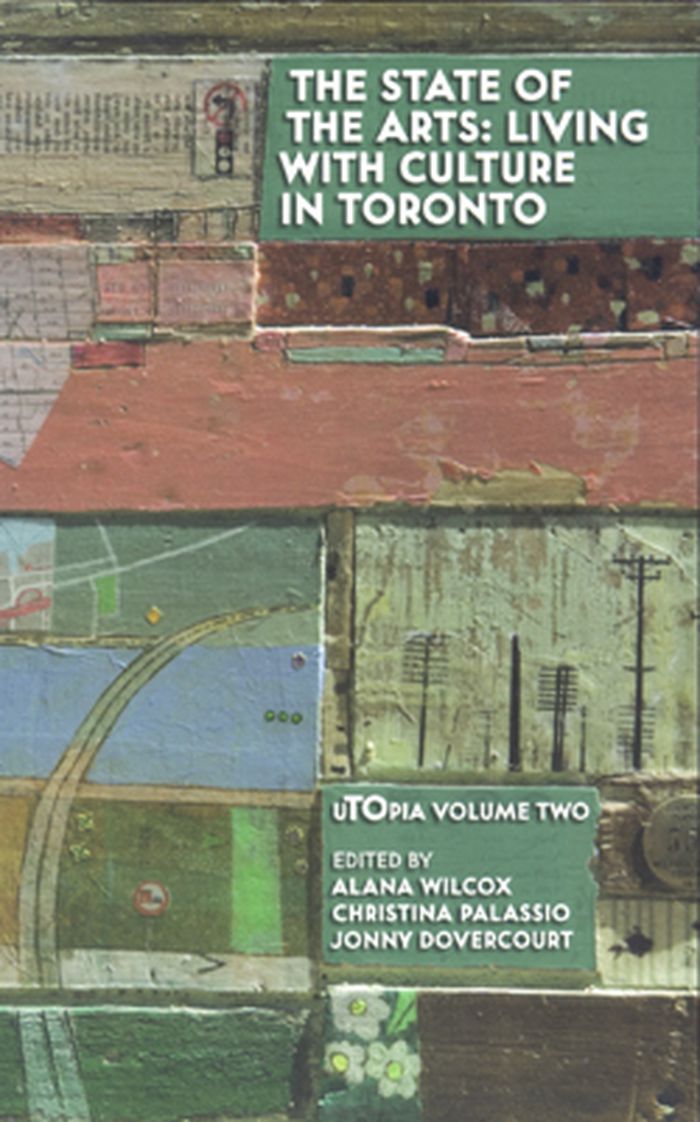
Freakier rich people. More suburban art. A venue for new music. Better staplers. An infrastructure for hip-hop. Laneway art. More wi-fi. A more understanding marriage between art and business. Affordable live-work spaces. What would make Toronto a better place for the arts? City Hall proclaimed 2006 the Year of Creativity. ‘Live With Culture’ banners flap over the city. And across the city, donors are ponying up millions for the ROM and the AGO. Culture’s never had it so good. Right? The State of the Arts explores the Toronto culture scene from every angle, applauding, assailing and arguing about art in our fair burg. The essays consider the big-ticket and the ticket-free, from the CNE to unintentional art. In between, you'll find thoughts on the ’creative city’ and photobloggers, Toronto on film and the fine line between part and art. Taken together the thoughts of these writers, artists and city-builders create a snapshot of culture in T.O. as it grows from ’Toronto the Good’ to ’Toronto the Could’ to ’Toronto the Can-Do.’ Includes sixteen colour pages of eye-level Toronto, and cover art by Susan Szenes. With essays by Sandra Alland, Jason Anderson, Anna Bowness, Stephen Cain, Kate Carraway, Hanna Cho, Brendan Cormier, Natalie De Vito, Liz Forsberg, Mark Fram, Marc Glassman, Katarina Gligorijevic-Collins, Brenda Goldstein, Amy Lavender Harris, Karen Hines, Sarah B. Hood, Christopher Hume, Sam Javanrouh, Dory Kornfeld, Adam Krawesky, More Or Les, John Lorinc, James MacNevin, Claudia McKoy, Brian McLachlan, Ryan McLaren, Shawn Micallef, Jill Murray, Matt O'Sullivan, Christopher Pandolfi, Michael Redhill, Dylan Reid, Damian Rogers, Stuart Ross, Lisa Rundle, Dana Samuel, Nadja Sayej, Susan Szenes, Kevin Temple, Pablo Torres, Gayla Trail, Rannie Turingan, Jason van Eyk, Adam Vaughan, RM Vaughan, Stéphanie Verge, Lisa Whittington-Hill and Carl Wilson.
The state of the arts: living with culture in Toronto
Actions:
Price:
$24.95
(available to order)
Summary:
Freakier rich people. More suburban art. A venue for new music. Better staplers. An infrastructure for hip-hop. Laneway art. More wi-fi. A more understanding marriage between art and business. Affordable live-work spaces. What would make Toronto a better place for the arts? City Hall proclaimed 2006 the Year of Creativity. ‘Live With Culture’ banners flap over the city. And across the city, donors are ponying up millions for the ROM and the AGO. Culture’s never had it so good. Right? The State of the Arts explores the Toronto culture scene from every angle, applauding, assailing and arguing about art in our fair burg. The essays consider the big-ticket and the ticket-free, from the CNE to unintentional art. In between, you'll find thoughts on the ’creative city’ and photobloggers, Toronto on film and the fine line between part and art. Taken together the thoughts of these writers, artists and city-builders create a snapshot of culture in T.O. as it grows from ’Toronto the Good’ to ’Toronto the Could’ to ’Toronto the Can-Do.’ Includes sixteen colour pages of eye-level Toronto, and cover art by Susan Szenes. With essays by Sandra Alland, Jason Anderson, Anna Bowness, Stephen Cain, Kate Carraway, Hanna Cho, Brendan Cormier, Natalie De Vito, Liz Forsberg, Mark Fram, Marc Glassman, Katarina Gligorijevic-Collins, Brenda Goldstein, Amy Lavender Harris, Karen Hines, Sarah B. Hood, Christopher Hume, Sam Javanrouh, Dory Kornfeld, Adam Krawesky, More Or Les, John Lorinc, James MacNevin, Claudia McKoy, Brian McLachlan, Ryan McLaren, Shawn Micallef, Jill Murray, Matt O'Sullivan, Christopher Pandolfi, Michael Redhill, Dylan Reid, Damian Rogers, Stuart Ross, Lisa Rundle, Dana Samuel, Nadja Sayej, Susan Szenes, Kevin Temple, Pablo Torres, Gayla Trail, Rannie Turingan, Jason van Eyk, Adam Vaughan, RM Vaughan, Stéphanie Verge, Lisa Whittington-Hill and Carl Wilson.
Form:
books
books
Publication:
November 2006, Toronto
November 2006, Toronto
Subject:
Architecture in Canada
Architecture in Canada
Form:
books
books
Price:
$24.95
(available to order)
Summary:
Drained by a half-dozen major watersheds, cut by a network of deep ravines and fronting on a Great Lake, Toronto is dominated by water. Like most cities, though, Toronto has mismanaged its water, from the decades-long transformation of the citys creeks into sewersheds to the alteration of Torontos waterfront. Recently, the trend of fettering Torontos water and putting it(...)
$24.95
(available to order)
Summary:
Drained by a half-dozen major watersheds, cut by a network of deep ravines and fronting on a Great Lake, Toronto is dominated by water. Like most cities, though, Toronto has mismanaged its water, from the decades-long transformation of the citys creeks into sewersheds to the alteration of Torontos waterfront. Recently, the trend of fettering Torontos water and putting it(...)
Subject:
Architecture in Canada
Architecture in Canada
Publication:
November 2008, Toronto
November 2008, Toronto
Title:
HTO Toronto's water from Lake Iroquois to lost Rivers to Low-flow toilets
Actions:
Price:
$24.95
(available to order)
Summary:
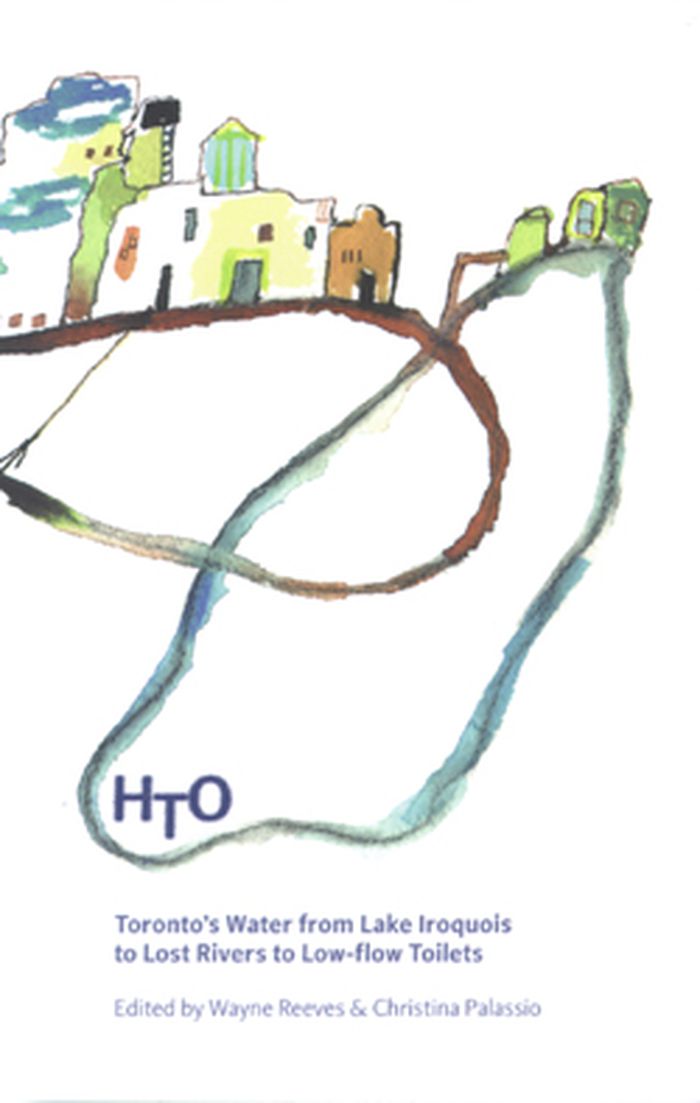
Drained by a half-dozen major watersheds, cut by a network of deep ravines and fronting on a Great Lake, Toronto is dominated by water. Like most cities, though, Toronto has mismanaged its water, from the decades-long transformation of the citys creeks into sewersheds to the alteration of Torontos waterfront. Recently, the trend of fettering Torontos water and putting it underground has been countered by persistent citizen-led efforts to recall and restore the citys surface water. In HTO: Torontos Water From Lake Iroquois to Taddle Creek and Beyond, 30 contributors examine the ever-changing interplay between nature and culture, and call into question the citys past, present and future engagement with water.
HTO Toronto's water from Lake Iroquois to lost Rivers to Low-flow toilets
Actions:
Price:
$24.95
(available to order)
Summary:
Drained by a half-dozen major watersheds, cut by a network of deep ravines and fronting on a Great Lake, Toronto is dominated by water. Like most cities, though, Toronto has mismanaged its water, from the decades-long transformation of the citys creeks into sewersheds to the alteration of Torontos waterfront. Recently, the trend of fettering Torontos water and putting it underground has been countered by persistent citizen-led efforts to recall and restore the citys surface water. In HTO: Torontos Water From Lake Iroquois to Taddle Creek and Beyond, 30 contributors examine the ever-changing interplay between nature and culture, and call into question the citys past, present and future engagement with water.
Form:
books
books
Publication:
November 2008, Toronto
November 2008, Toronto
Subject:
Architecture in Canada
Architecture in Canada
Form:
books
books
Actions:
Price:
$60.00
(available to order)
Summary:
Since its formation in 1975, Diamond and Schmitt Architects has been at the vanguard of socially responsible architecture and urban planning, and Jack Diamond and Donald Schmitt have long been vocal advocates for environmental sustainability. Part manifesto, part architectural monograph, this book features the most important projects in Diamond & Schmitt's oeuvre,(...)
$60.00
(available to order)
Summary:
Since its formation in 1975, Diamond and Schmitt Architects has been at the vanguard of socially responsible architecture and urban planning, and Jack Diamond and Donald Schmitt have long been vocal advocates for environmental sustainability. Part manifesto, part architectural monograph, this book features the most important projects in Diamond & Schmitt's oeuvre,(...)
Subject:
Architecture in Canada
Architecture in Canada
Publication:
September 2008, Vancouver, Toronto
September 2008, Vancouver, Toronto
Title:
Insight and on site: the architecture of Diamond and Schmitt
Actions:
Price:
$60.00
(available to order)
Summary:
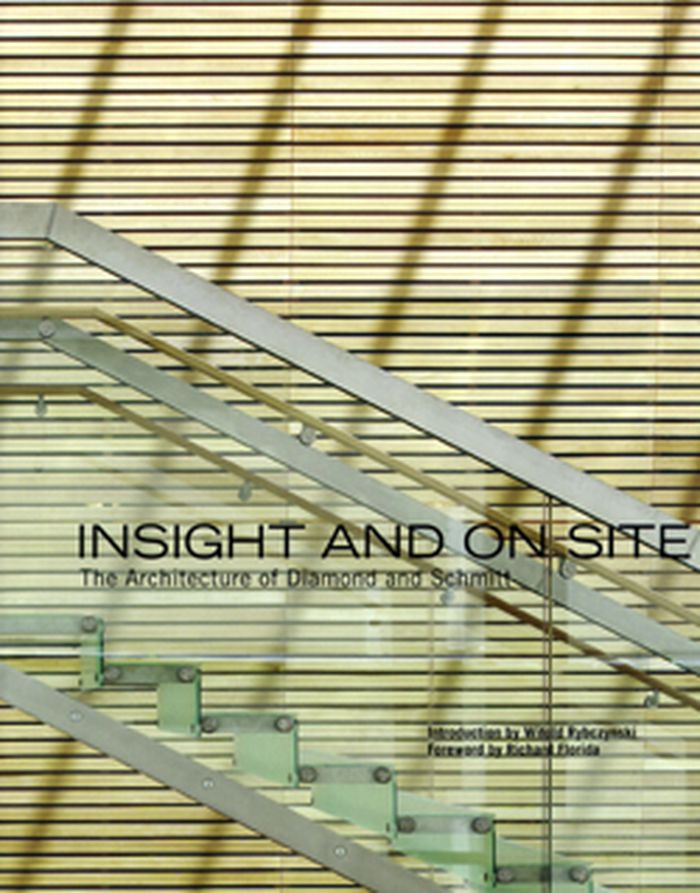
Since its formation in 1975, Diamond and Schmitt Architects has been at the vanguard of socially responsible architecture and urban planning, and Jack Diamond and Donald Schmitt have long been vocal advocates for environmental sustainability. Part manifesto, part architectural monograph, this book features the most important projects in Diamond & Schmitt's oeuvre, interspersed with 11 essays, including one by Witold Rybczynski.
Insight and on site: the architecture of Diamond and Schmitt
Actions:
Price:
$60.00
(available to order)
Summary:
Since its formation in 1975, Diamond and Schmitt Architects has been at the vanguard of socially responsible architecture and urban planning, and Jack Diamond and Donald Schmitt have long been vocal advocates for environmental sustainability. Part manifesto, part architectural monograph, this book features the most important projects in Diamond & Schmitt's oeuvre, interspersed with 11 essays, including one by Witold Rybczynski.
Form:
books
books
Publication:
September 2008, Vancouver, Toronto
September 2008, Vancouver, Toronto
Subject:
Architecture in Canada
Architecture in Canada
Form:
books
books
Title:
The Kandik map
The Kandik map
Actions:
Price:
$36.95
(available to order)
Summary:
In 1880, a Native American named Paul Kandik and a French explorer, François Mercier, traveled across northeastern Alaska and western Canada to create the earliest known map of the region. Linda Johnson now delves into the fascinating story behind the Kandik Map, examining the reasons why and how these two men from such different backgrounds combined their extensive(...)
$36.95
(available to order)
Summary:
In 1880, a Native American named Paul Kandik and a French explorer, François Mercier, traveled across northeastern Alaska and western Canada to create the earliest known map of the region. Linda Johnson now delves into the fascinating story behind the Kandik Map, examining the reasons why and how these two men from such different backgrounds combined their extensive(...)
Title:
The Kandik map
Actions:
Price:
$36.95
(available to order)
Summary:
In 1880, a Native American named Paul Kandik and a French explorer, François Mercier, traveled across northeastern Alaska and western Canada to create the earliest known map of the region. Linda Johnson now delves into the fascinating story behind the Kandik Map, examining the reasons why and how these two men from such different backgrounds combined their extensive knowledge of the country to map the Kandik River region. Drawing on historical letters, geographical analysis, and the original map itself held in the University of California’s Bancroft Library, Johnson produces a groundbreaking study on the history of the Kandik Map and reveals its significant implications for Native American scholarship.
The Kandik map
Actions:
Price:
$36.95
(available to order)
Summary:
In 1880, a Native American named Paul Kandik and a French explorer, François Mercier, traveled across northeastern Alaska and western Canada to create the earliest known map of the region. Linda Johnson now delves into the fascinating story behind the Kandik Map, examining the reasons why and how these two men from such different backgrounds combined their extensive knowledge of the country to map the Kandik River region. Drawing on historical letters, geographical analysis, and the original map itself held in the University of California’s Bancroft Library, Johnson produces a groundbreaking study on the history of the Kandik Map and reveals its significant implications for Native American scholarship.
Form:
books
books
Publication:
October 2008
October 2008
Subject:
Architecture in Canada
Architecture in Canada
Form:
books
books
Actions:
Price:
$35.00
(available to order)
Summary:
The rigorous essays and original works of art collected in this volume present a compelling demonstration of the strategies, aesthetic and otherwise, used by artists to elicit intellectual, sensual, or emotional responses that can only be obtained through artistic practices in public places. Public Art in Canada is a major contribution to the study of Canadian art and culture.
$35.00
(available to order)
Summary:
The rigorous essays and original works of art collected in this volume present a compelling demonstration of the strategies, aesthetic and otherwise, used by artists to elicit intellectual, sensual, or emotional responses that can only be obtained through artistic practices in public places. Public Art in Canada is a major contribution to the study of Canadian art and culture.
Title:
Public art in Canada: critical perspectives
Actions:
Price:
$35.00
(available to order)
Summary:
The rigorous essays and original works of art collected in this volume present a compelling demonstration of the strategies, aesthetic and otherwise, used by artists to elicit intellectual, sensual, or emotional responses that can only be obtained through artistic practices in public places. Public Art in Canada is a major contribution to the study of Canadian art and culture.
Public art in Canada: critical perspectives
Actions:
Price:
$35.00
(available to order)
Summary:
The rigorous essays and original works of art collected in this volume present a compelling demonstration of the strategies, aesthetic and otherwise, used by artists to elicit intellectual, sensual, or emotional responses that can only be obtained through artistic practices in public places. Public Art in Canada is a major contribution to the study of Canadian art and culture.
Form:
books
books
Publication:
December 2008
December 2008
Subject:
Architecture in Canada
Architecture in Canada
Form:
books
books
Price:
$30.00
(available to order)
Summary:
Terra Nostra célèbre la cartographie du Canada et permet de partager cette incroyable ressource historique conservée dans les fonds de Bibliothèque et Archives Canada. Cette institution réunit un grand éventail de réalisations cartographiques, qui s'étendent des portulans préparés par les premiers explorateurs aux images aériennes récentes des floes (ou glacesflottantes)(...)
$30.00
(available to order)
Summary:
Terra Nostra célèbre la cartographie du Canada et permet de partager cette incroyable ressource historique conservée dans les fonds de Bibliothèque et Archives Canada. Cette institution réunit un grand éventail de réalisations cartographiques, qui s'étendent des portulans préparés par les premiers explorateurs aux images aériennes récentes des floes (ou glacesflottantes)(...)
Title:
Terra nostra 1550-1950: les cartes du Canada et leurs secrets
Actions:
Price:
$30.00
(available to order)
Summary:
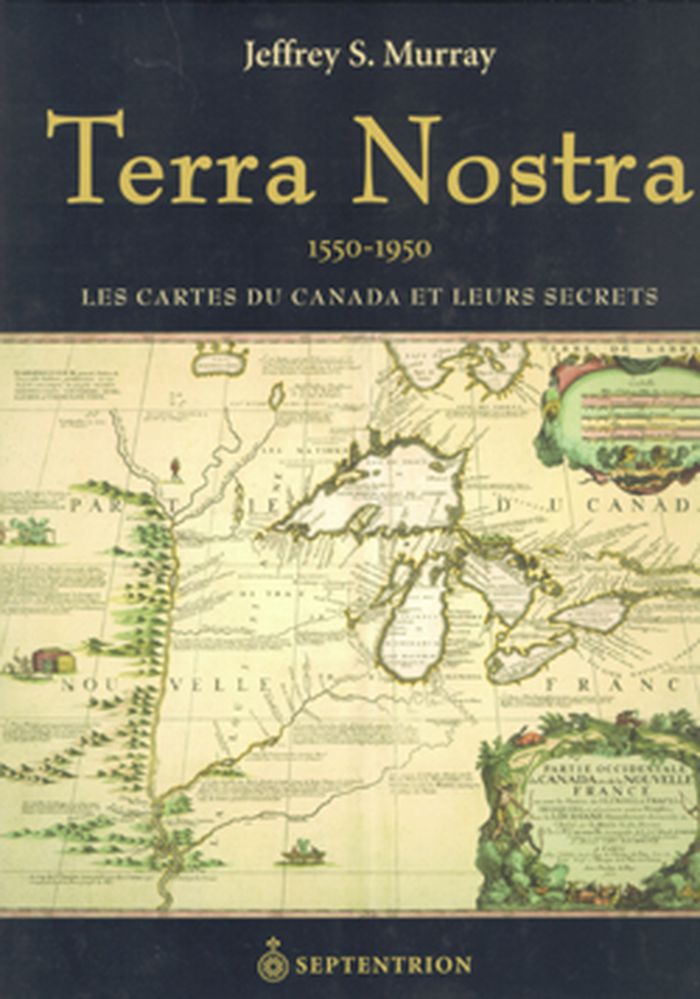
Terra Nostra célèbre la cartographie du Canada et permet de partager cette incroyable ressource historique conservée dans les fonds de Bibliothèque et Archives Canada. Cette institution réunit un grand éventail de réalisations cartographiques, qui s'étendent des portulans préparés par les premiers explorateurs aux images aériennes récentes des floes (ou glacesflottantes) de la côte Est. Les cartes du Canada ont servi à plusieurs, et ont rempli de multiples fonctions. Elles ont entretenu, chez les premiers marchands et aventuriers, la promesse de gloire et de fortune ; les chefs d'armée s'en sont servis pour consolider leur mainmise territoriale ; les politiciens ont, grâce aux cartes, légitimé l'empire qu'ils ont établi au pays ; les hommes d'affaires y ont eu recours pour proclamer leur fière appartenance à la communauté ; enfin, les cartes témoignent du type de collectivité que les simples citoyens veulent léguer à leurs enfants. Dépositaires de nos pensées et réflexions, les cartes canadiennes montrent les exploits techniques que notre pays a accomplis, et nous font mesurer l'évolution du savoir géographique. Elles sont une fenêtre ouverte sur le monde. Jeffrey S. Murray, archiviste principal à Bibliothèque et Archives Canada, participe depuis plus de vingt ans à l'acquisition de documents qui composent l'héritage cartographique du Canada. Depuis toujours passionné d'histoire canadienne, il a publié plus de cent articles de revues et plusieurs guides d'archives; il a aussi monté de nombreuses expositions.
Terra nostra 1550-1950: les cartes du Canada et leurs secrets
Actions:
Price:
$30.00
(available to order)
Summary:
Terra Nostra célèbre la cartographie du Canada et permet de partager cette incroyable ressource historique conservée dans les fonds de Bibliothèque et Archives Canada. Cette institution réunit un grand éventail de réalisations cartographiques, qui s'étendent des portulans préparés par les premiers explorateurs aux images aériennes récentes des floes (ou glacesflottantes) de la côte Est. Les cartes du Canada ont servi à plusieurs, et ont rempli de multiples fonctions. Elles ont entretenu, chez les premiers marchands et aventuriers, la promesse de gloire et de fortune ; les chefs d'armée s'en sont servis pour consolider leur mainmise territoriale ; les politiciens ont, grâce aux cartes, légitimé l'empire qu'ils ont établi au pays ; les hommes d'affaires y ont eu recours pour proclamer leur fière appartenance à la communauté ; enfin, les cartes témoignent du type de collectivité que les simples citoyens veulent léguer à leurs enfants. Dépositaires de nos pensées et réflexions, les cartes canadiennes montrent les exploits techniques que notre pays a accomplis, et nous font mesurer l'évolution du savoir géographique. Elles sont une fenêtre ouverte sur le monde. Jeffrey S. Murray, archiviste principal à Bibliothèque et Archives Canada, participe depuis plus de vingt ans à l'acquisition de documents qui composent l'héritage cartographique du Canada. Depuis toujours passionné d'histoire canadienne, il a publié plus de cent articles de revues et plusieurs guides d'archives; il a aussi monté de nombreuses expositions.
Form:
books
books
Publication:
April 2006, Québec
April 2006, Québec
Subject:
Architecture in Canada
Architecture in Canada


