


49 Results
Form:
books
books
Actions:
Price:
$46.95
(available in store)
Summary:
En contrepoint de l'abondante littérature existante qui porte sur ce que l'écologie fait à l’architecture, le présent ouvrage renverse la perspective et ouvre un débat. Les auteurs rassemblés au sein de l’ouvrage, chercheurs et praticiens, s'interrogent en effet sur les multiples manières qu’ont les acteurs de l'aménagement des espaces construits — architectes,(...)
$46.95
(available in store)
Summary:
En contrepoint de l'abondante littérature existante qui porte sur ce que l'écologie fait à l’architecture, le présent ouvrage renverse la perspective et ouvre un débat. Les auteurs rassemblés au sein de l’ouvrage, chercheurs et praticiens, s'interrogent en effet sur les multiples manières qu’ont les acteurs de l'aménagement des espaces construits — architectes,(...)
Title:
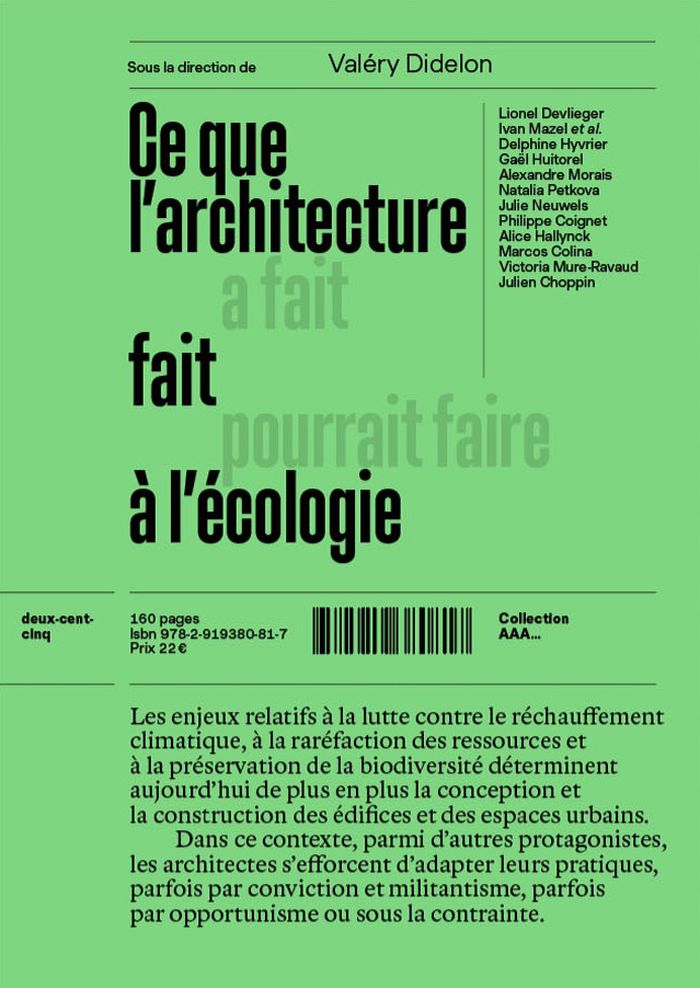
Ce que l'architecture fait à l'écologie
Actions:
Price:
$46.95
(available in store)
Summary:
En contrepoint de l'abondante littérature existante qui porte sur ce que l'écologie fait à l’architecture, le présent ouvrage renverse la perspective et ouvre un débat. Les auteurs rassemblés au sein de l’ouvrage, chercheurs et praticiens, s'interrogent en effet sur les multiples manières qu’ont les acteurs de l'aménagement des espaces construits — architectes, paysagistes, ingénieurs, etc. — de façonner les attentes de la société en matière de lutte contre le dérèglement climatique, l’épuisement des ressources et l’effondrement de la biodiversité. Ce que l’architecture fait à l’écologie montre que leurs pratiques et discours déterminent les conditions de production du cadre bâti autant qu’ils sont déterminés par celles-ci. Dans cet ouvrage, l’architecture est ainsi considérée comme l’un des laboratoires où s’inventent la technique, l’esthétique et plus encore l’éthique qui peut orienter et guider l’action collective dans le monde qui vient.
Ce que l'architecture fait à l'écologie
Actions:
Price:
$46.95
(available in store)
Summary:
En contrepoint de l'abondante littérature existante qui porte sur ce que l'écologie fait à l’architecture, le présent ouvrage renverse la perspective et ouvre un débat. Les auteurs rassemblés au sein de l’ouvrage, chercheurs et praticiens, s'interrogent en effet sur les multiples manières qu’ont les acteurs de l'aménagement des espaces construits — architectes, paysagistes, ingénieurs, etc. — de façonner les attentes de la société en matière de lutte contre le dérèglement climatique, l’épuisement des ressources et l’effondrement de la biodiversité. Ce que l’architecture fait à l’écologie montre que leurs pratiques et discours déterminent les conditions de production du cadre bâti autant qu’ils sont déterminés par celles-ci. Dans cet ouvrage, l’architecture est ainsi considérée comme l’un des laboratoires où s’inventent la technique, l’esthétique et plus encore l’éthique qui peut orienter et guider l’action collective dans le monde qui vient.
Form:
books
books
Publication:
June 2024
June 2024
Subject:
Architecture ecologies
Architecture ecologies
Form:
books
books
Actions:
Price:
$59.00
(available in store)
Summary:
La moyenne montagne est un territoire à l’avant-poste de la crise climatique et de l’habitabilité que nous connaissons. Le réchauffement y est en effet deux fois plus rapide que partout ailleurs. Les conséquences sont évidentes, implacables: disparition de la neige et son corollaire économique qui met à mal une dynamique enclenchée pendant les Trente Glorieuses et les(...)
$59.00
(available in store)
Summary:
La moyenne montagne est un territoire à l’avant-poste de la crise climatique et de l’habitabilité que nous connaissons. Le réchauffement y est en effet deux fois plus rapide que partout ailleurs. Les conséquences sont évidentes, implacables: disparition de la neige et son corollaire économique qui met à mal une dynamique enclenchée pendant les Trente Glorieuses et les(...)
Title:
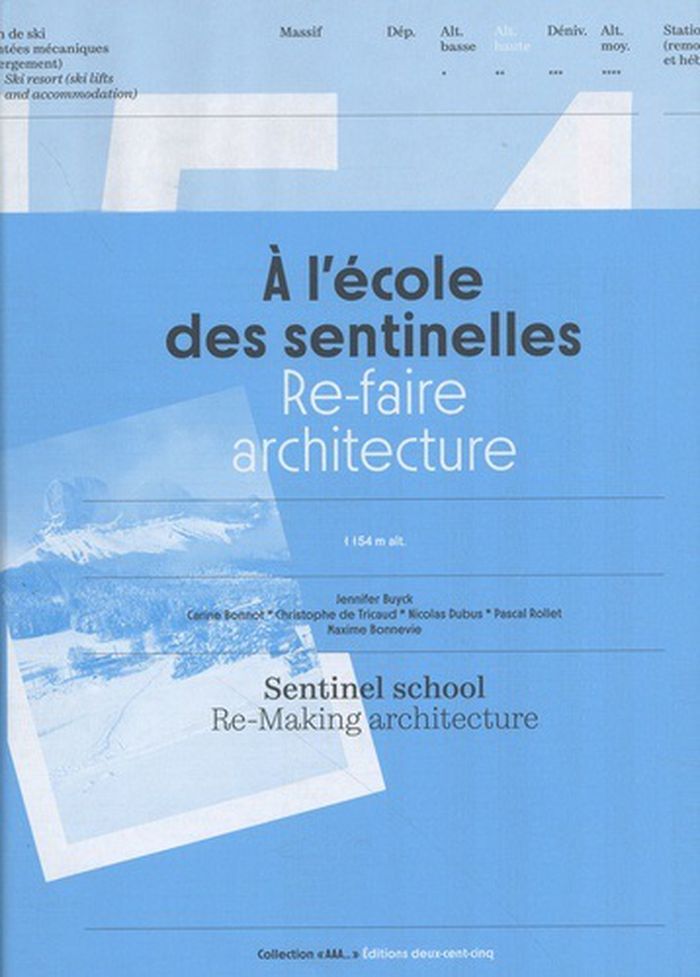
À l'école des sentinelles : Re-faire architecture
Actions:
Price:
$59.00
(available in store)
Summary:
La moyenne montagne est un territoire à l’avant-poste de la crise climatique et de l’habitabilité que nous connaissons. Le réchauffement y est en effet deux fois plus rapide que partout ailleurs. Les conséquences sont évidentes, implacables: disparition de la neige et son corollaire économique qui met à mal une dynamique enclenchée pendant les Trente Glorieuses et les investissements des plans neige. Que faire alors des infrastructures et du bâti — patrimoine architectural ordinaire du XXe siècle? Est-il voué à l’abandon, à disparaître? Ce livre relate une expérience simultanément pédagogique, humaine, technique et prospective. Celle de l’hôtel des Deux-Sœurs au col de l’Arzelier et de sa possible réhabilitation imaginée par une équipe engagée dans la compétition Solar Decathlon Europe 2021-2022.
À l'école des sentinelles : Re-faire architecture
Actions:
Price:
$59.00
(available in store)
Summary:
La moyenne montagne est un territoire à l’avant-poste de la crise climatique et de l’habitabilité que nous connaissons. Le réchauffement y est en effet deux fois plus rapide que partout ailleurs. Les conséquences sont évidentes, implacables: disparition de la neige et son corollaire économique qui met à mal une dynamique enclenchée pendant les Trente Glorieuses et les investissements des plans neige. Que faire alors des infrastructures et du bâti — patrimoine architectural ordinaire du XXe siècle? Est-il voué à l’abandon, à disparaître? Ce livre relate une expérience simultanément pédagogique, humaine, technique et prospective. Celle de l’hôtel des Deux-Sœurs au col de l’Arzelier et de sa possible réhabilitation imaginée par une équipe engagée dans la compétition Solar Decathlon Europe 2021-2022.
Form:
books
books
Publication:
June 2024
June 2024
Subject:
Architecture ecologies
Architecture ecologies
Form:
books
books
Actions:
Price:
$59.00
(available to order)
Summary:
Que veut — encore — dire inventer pour un architecte aujourd’hui dans le paysage troublé de l’Anthropocène? Et cette invention en architecture, si elle existe, en quoi se distingue-t-elle d’autres modes inventifs? Alors que la crise de l’habitabilité du monde est patente, la notion d’invention, commune à la philosophie et à l’architecture, se voit actuellement(...)
$59.00
(available to order)
Summary:
Que veut — encore — dire inventer pour un architecte aujourd’hui dans le paysage troublé de l’Anthropocène? Et cette invention en architecture, si elle existe, en quoi se distingue-t-elle d’autres modes inventifs? Alors que la crise de l’habitabilité du monde est patente, la notion d’invention, commune à la philosophie et à l’architecture, se voit actuellement(...)
Title:
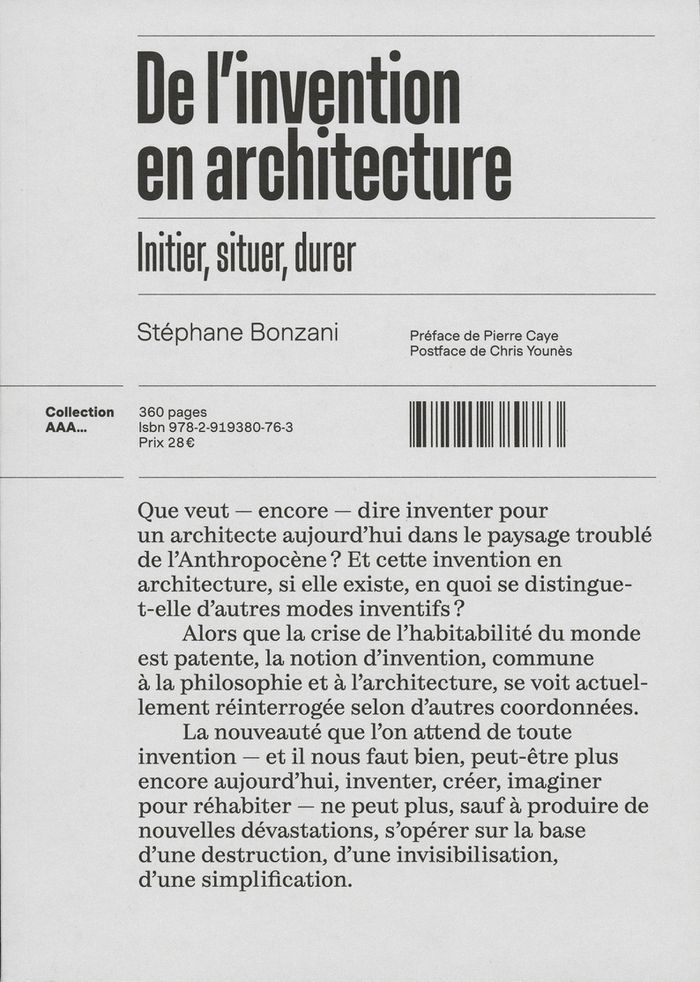
De l'invention en architecture : Initier, situer, durer
Actions:
Price:
$59.00
(available to order)
Summary:
Que veut — encore — dire inventer pour un architecte aujourd’hui dans le paysage troublé de l’Anthropocène? Et cette invention en architecture, si elle existe, en quoi se distingue-t-elle d’autres modes inventifs? Alors que la crise de l’habitabilité du monde est patente, la notion d’invention, commune à la philosophie et à l’architecture, se voit actuellement réinterrogée selon d’autres coordonnées. La nouveauté que l’on attend de toute invention — et il nous faut bien, peut-être plus encore aujourd’hui, inventer, créer, imaginer pour ré-habiter — ne peut plus, sauf à produire de nouvelles dévastations, s’opérer sur la base d’une destruction, d’une invisibilisation, d’une simplification.
De l'invention en architecture : Initier, situer, durer
Actions:
Price:
$59.00
(available to order)
Summary:
Que veut — encore — dire inventer pour un architecte aujourd’hui dans le paysage troublé de l’Anthropocène? Et cette invention en architecture, si elle existe, en quoi se distingue-t-elle d’autres modes inventifs? Alors que la crise de l’habitabilité du monde est patente, la notion d’invention, commune à la philosophie et à l’architecture, se voit actuellement réinterrogée selon d’autres coordonnées. La nouveauté que l’on attend de toute invention — et il nous faut bien, peut-être plus encore aujourd’hui, inventer, créer, imaginer pour ré-habiter — ne peut plus, sauf à produire de nouvelles dévastations, s’opérer sur la base d’une destruction, d’une invisibilisation, d’une simplification.
Form:
books
books
Publication:
January 2024
January 2024
Subject:
Architecture ecologies
Architecture ecologies
Form:
books
books
Price:
$39.95
(available to order)
Summary:
Debrisphere is a yet-unnamed stratum of Earth's crust, a supra-stratum of the Lithosphere. It contains the worldwide man-made landscapes: the artificial mountains of Germany, the “blooming deserts” of Israel, the military coral reefs of China and the United States, and other similar constructions around the world resulted from, or still serving, conflict and war. The(...)
$39.95
(available to order)
Summary:
Debrisphere is a yet-unnamed stratum of Earth's crust, a supra-stratum of the Lithosphere. It contains the worldwide man-made landscapes: the artificial mountains of Germany, the “blooming deserts” of Israel, the military coral reefs of China and the United States, and other similar constructions around the world resulted from, or still serving, conflict and war. The(...)
Title:
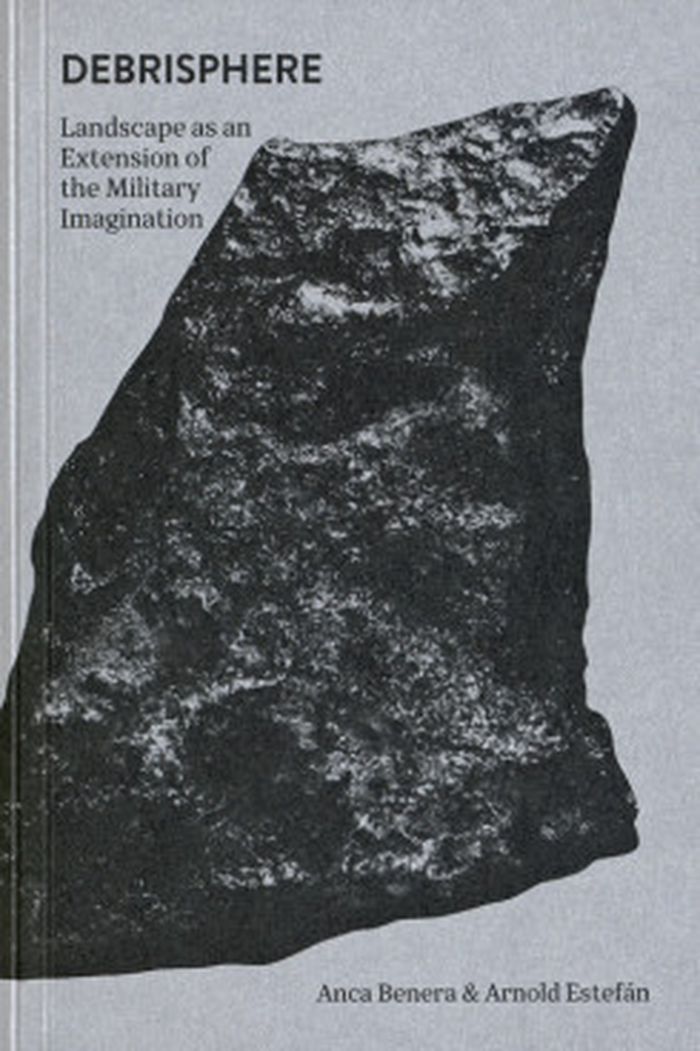
Debrisphere: Landscape as an extension of the military imagination
Actions:
Price:
$39.95
(available to order)
Summary:
Debrisphere is a yet-unnamed stratum of Earth's crust, a supra-stratum of the Lithosphere. It contains the worldwide man-made landscapes: the artificial mountains of Germany, the “blooming deserts” of Israel, the military coral reefs of China and the United States, and other similar constructions around the world resulted from, or still serving, conflict and war. The artist's book by Anca Benera and Arnold Estefan is published as an extension to their eponymous installation, presented for the first time in the frame of “Natural Histories. Traces of the Political” exhibition at MUMOK Vienna in 2017. Alongside the artists' case studies, which include Ariel Sharon Park, Teuflesberg, Diego Garcia, Johnston Atoll and the Spartly Islands, the publication includes four republished texts by Andrew Chubb, Hito Steyerl and Eyal Weizman, and newly commissioned texts by Noit Banai, Maja & Reuben Fowkes and Raluca Voinea.
Debrisphere: Landscape as an extension of the military imagination
Actions:
Price:
$39.95
(available to order)
Summary:
Debrisphere is a yet-unnamed stratum of Earth's crust, a supra-stratum of the Lithosphere. It contains the worldwide man-made landscapes: the artificial mountains of Germany, the “blooming deserts” of Israel, the military coral reefs of China and the United States, and other similar constructions around the world resulted from, or still serving, conflict and war. The artist's book by Anca Benera and Arnold Estefan is published as an extension to their eponymous installation, presented for the first time in the frame of “Natural Histories. Traces of the Political” exhibition at MUMOK Vienna in 2017. Alongside the artists' case studies, which include Ariel Sharon Park, Teuflesberg, Diego Garcia, Johnston Atoll and the Spartly Islands, the publication includes four republished texts by Andrew Chubb, Hito Steyerl and Eyal Weizman, and newly commissioned texts by Noit Banai, Maja & Reuben Fowkes and Raluca Voinea.
Form:
books
books
Publication:
February 2020
February 2020
Subject:
Architecture ecologies
Architecture ecologies
Form:
books
books
Actions:
Price:
$32.00
(available in store)
Summary:
Architecture is a constant presence in the study of human interaction- acting as both the ground on which human social behavior is performed and a means of shaping subjectivity itself. ''Proxemics'' was an attempt to visualize and instrumentalize these dynamics, appealing to both the social sciences and the emerging field of environmental design. Founded by anthropologist(...)
$32.00
(available in store)
Summary:
Architecture is a constant presence in the study of human interaction- acting as both the ground on which human social behavior is performed and a means of shaping subjectivity itself. ''Proxemics'' was an attempt to visualize and instrumentalize these dynamics, appealing to both the social sciences and the emerging field of environmental design. Founded by anthropologist(...)
Title:
Proxemics and the architecture of social interaction
Actions:
Price:
$32.00
(available in store)
Summary:
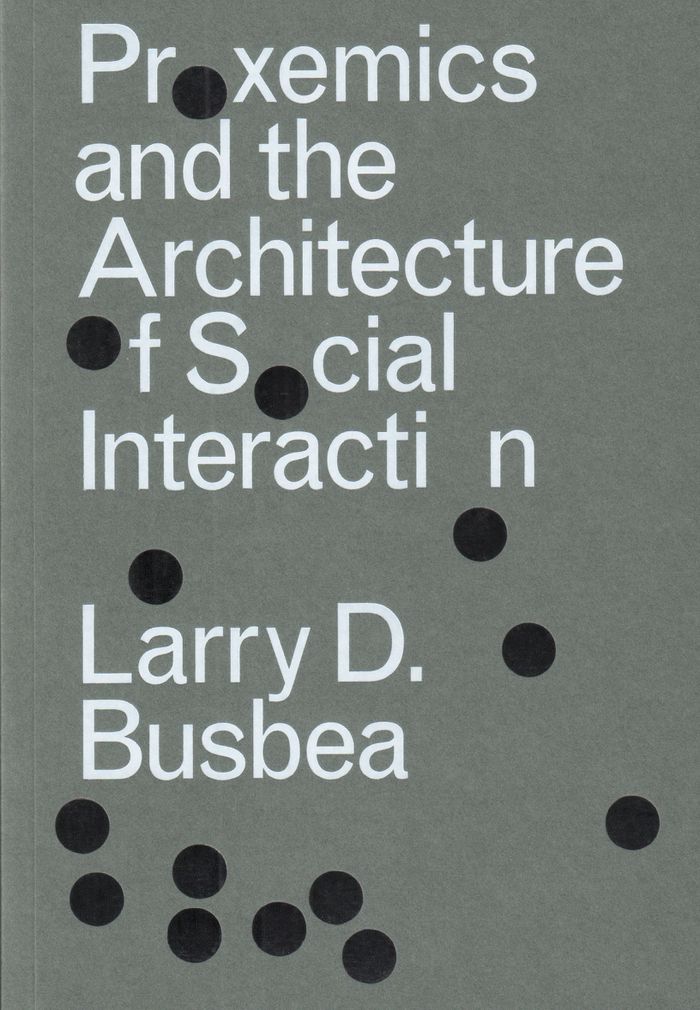
Architecture is a constant presence in the study of human interaction- acting as both the ground on which human social behavior is performed and a means of shaping subjectivity itself. ''Proxemics'' was an attempt to visualize and instrumentalize these dynamics, appealing to both the social sciences and the emerging field of environmental design. Founded by anthropologist Edward T. Hall and taking shape between the departments of architecture and anthropology at the Illinois Institute of Technology, proxemics developed amidst cold war political tensions and intense social and civil unrest. ''Proxemics and the Architecture of Social Interaction'' presents selections from Hall’s extensive archive of visual materials alongside a critical analysis that traces transformations in the fields of design and science. Together these materials illuminate a moment in American history when new spatial practices arose to challenge the environmental conditions of cultural, political, and racial identity.
Proxemics and the architecture of social interaction
Actions:
Price:
$32.00
(available in store)
Summary:
Architecture is a constant presence in the study of human interaction- acting as both the ground on which human social behavior is performed and a means of shaping subjectivity itself. ''Proxemics'' was an attempt to visualize and instrumentalize these dynamics, appealing to both the social sciences and the emerging field of environmental design. Founded by anthropologist Edward T. Hall and taking shape between the departments of architecture and anthropology at the Illinois Institute of Technology, proxemics developed amidst cold war political tensions and intense social and civil unrest. ''Proxemics and the Architecture of Social Interaction'' presents selections from Hall’s extensive archive of visual materials alongside a critical analysis that traces transformations in the fields of design and science. Together these materials illuminate a moment in American history when new spatial practices arose to challenge the environmental conditions of cultural, political, and racial identity.
Form:
books
books
Publication:
January 2021
January 2021
Subject:
Architecture ecologies
Architecture ecologies
Form:
books
books
Price:
$33.95
(available in store)
Summary:
There is widespread consensus that we are living at the end—of democracy, of liberalism, of capitalism, of a healthy planet, of the Holocene, of civilization as we know it. In this book, drawing on radical futurisms and visions of justice-to-come emerging from the traditions of the oppressed—Indigenous, African-American, multispecies, anti-capitalist—as materialized in(...)
$33.95
(available in store)
Summary:
There is widespread consensus that we are living at the end—of democracy, of liberalism, of capitalism, of a healthy planet, of the Holocene, of civilization as we know it. In this book, drawing on radical futurisms and visions of justice-to-come emerging from the traditions of the oppressed—Indigenous, African-American, multispecies, anti-capitalist—as materialized in(...)
Title:
Radical futurisms: Ecologies of collapse/chronopolitics/justice to come
Actions:
Price:
$33.95
(available in store)
Summary:
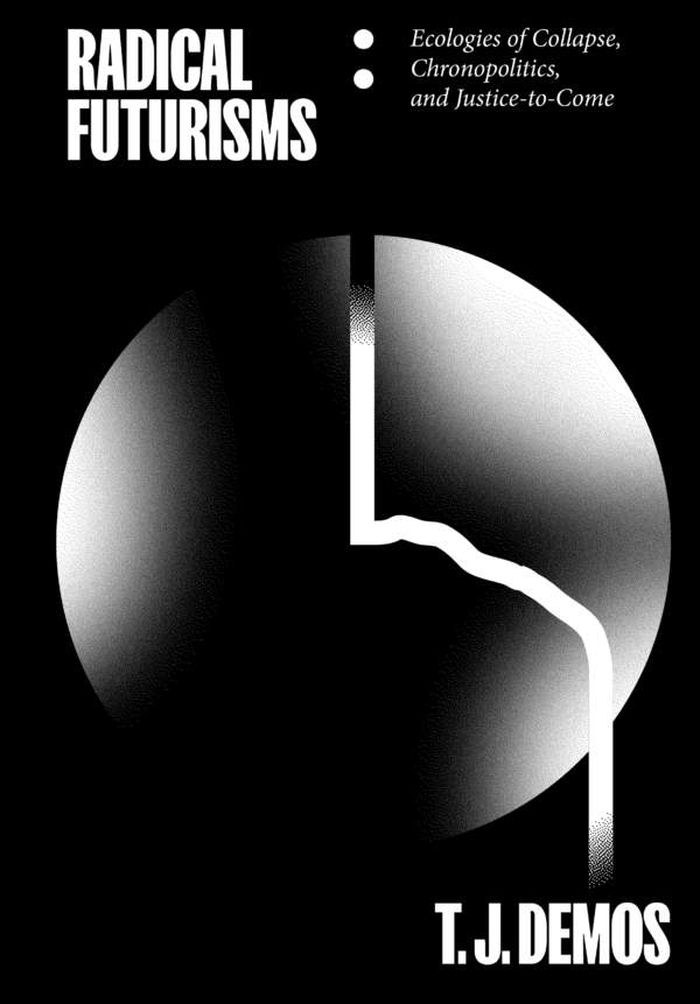
There is widespread consensus that we are living at the end—of democracy, of liberalism, of capitalism, of a healthy planet, of the Holocene, of civilization as we know it. In this book, drawing on radical futurisms and visions of justice-to-come emerging from the traditions of the oppressed—Indigenous, African-American, multispecies, anti-capitalist—as materialized in experimental visual cultural, new media, aesthetic practices, and social movements, T. J. Demos poses speculative questions about what comes after end-of-world narratives. He argues that it's as vital to defeat fatalistic nihilism as it is to defeat the false solutions of green capitalism and algorithmic governance. How might we decolonize the future, and cultivate an emancipated chronopolitics in relation to an undetermined not-yet? If we are to avoid climate emergency's cooptation by technofixes, and the defuturing of multitudes by xenophobic eco-fascism, Demos argues, we must cultivate visions of just futurity and multispecies flourishing.
Radical futurisms: Ecologies of collapse/chronopolitics/justice to come
Actions:
Price:
$33.95
(available in store)
Summary:
There is widespread consensus that we are living at the end—of democracy, of liberalism, of capitalism, of a healthy planet, of the Holocene, of civilization as we know it. In this book, drawing on radical futurisms and visions of justice-to-come emerging from the traditions of the oppressed—Indigenous, African-American, multispecies, anti-capitalist—as materialized in experimental visual cultural, new media, aesthetic practices, and social movements, T. J. Demos poses speculative questions about what comes after end-of-world narratives. He argues that it's as vital to defeat fatalistic nihilism as it is to defeat the false solutions of green capitalism and algorithmic governance. How might we decolonize the future, and cultivate an emancipated chronopolitics in relation to an undetermined not-yet? If we are to avoid climate emergency's cooptation by technofixes, and the defuturing of multitudes by xenophobic eco-fascism, Demos argues, we must cultivate visions of just futurity and multispecies flourishing.
Form:
books
books
Publication:
May 2023
May 2023
Subject:
Architecture ecologies
Architecture ecologies
Form:
books
books
Actions:
Price:
$35.95
(available in store)
Summary:
From the late nineteenth through most of the twentieth century, the evangelical Protestant Grenfell Mission in Newfoundland and Labrador, Canada, created a network of hospitals, schools, orphanages, stores, and industries with the goal of bringing health and organized society to settler fisherfolk and Indigenous populations. This infrastructure also served to support(...)
$35.95
(available in store)
Summary:
From the late nineteenth through most of the twentieth century, the evangelical Protestant Grenfell Mission in Newfoundland and Labrador, Canada, created a network of hospitals, schools, orphanages, stores, and industries with the goal of bringing health and organized society to settler fisherfolk and Indigenous populations. This infrastructure also served to support(...)
Title:
Slow disturbance: infrastructural mediation on the settler colonial resource frontier
Actions:
Price:
$35.95
(available in store)
Summary:
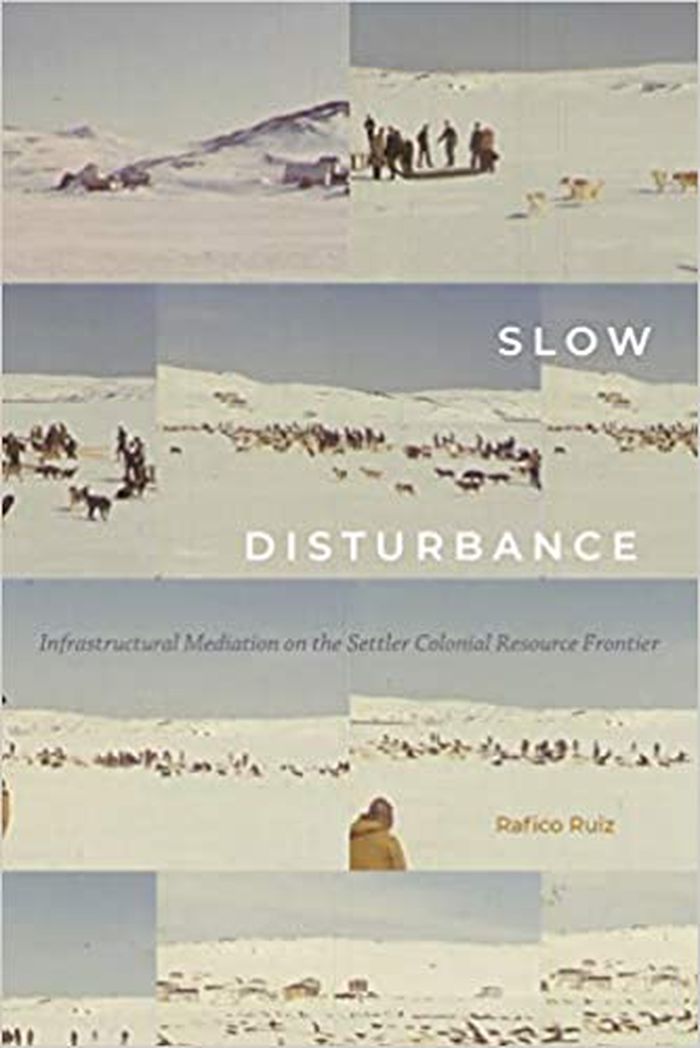
From the late nineteenth through most of the twentieth century, the evangelical Protestant Grenfell Mission in Newfoundland and Labrador, Canada, created a network of hospitals, schools, orphanages, stores, and industries with the goal of bringing health and organized society to settler fisherfolk and Indigenous populations. This infrastructure also served to support resource extraction of fisheries off Labrador's coast. In 'Slow Disturbance' Rafico Ruiz engages with the Grenfell Mission to theorize how settler colonialism establishes itself through what he calls infrastructural mediation—the ways in which colonial lifeworlds, subjectivities, and affects come into being through the creation and maintenance of infrastructures. Drawing on archival documents, maps, interviews with municipal officials, teachers, and residents, as well as his field photography, Ruiz shows how the mission's infrastructural mediation—from its attempts to restructure the local economy to the aerial surveying and mapping of the coastline—responded to the colony's environmental conditions in ways that expanded the bounds of the settler frontier. By tracing the mission's history and the mechanisms that enabled its functioning, Ruiz complicates understandings of mediation and infrastructure while expanding current debates surrounding settler colonialism and extractive capitalism.
Slow disturbance: infrastructural mediation on the settler colonial resource frontier
Actions:
Price:
$35.95
(available in store)
Summary:
From the late nineteenth through most of the twentieth century, the evangelical Protestant Grenfell Mission in Newfoundland and Labrador, Canada, created a network of hospitals, schools, orphanages, stores, and industries with the goal of bringing health and organized society to settler fisherfolk and Indigenous populations. This infrastructure also served to support resource extraction of fisheries off Labrador's coast. In 'Slow Disturbance' Rafico Ruiz engages with the Grenfell Mission to theorize how settler colonialism establishes itself through what he calls infrastructural mediation—the ways in which colonial lifeworlds, subjectivities, and affects come into being through the creation and maintenance of infrastructures. Drawing on archival documents, maps, interviews with municipal officials, teachers, and residents, as well as his field photography, Ruiz shows how the mission's infrastructural mediation—from its attempts to restructure the local economy to the aerial surveying and mapping of the coastline—responded to the colony's environmental conditions in ways that expanded the bounds of the settler frontier. By tracing the mission's history and the mechanisms that enabled its functioning, Ruiz complicates understandings of mediation and infrastructure while expanding current debates surrounding settler colonialism and extractive capitalism.
Form:
books
books
Publication:
April 2021
April 2021
Subject:
Architecture ecologies
Architecture ecologies
Form:
books
books
Price:
$36.95
(available to order)
Summary:
In this book, Brenna Bhandar examines how modern property law contributes to the formation of racial subjects in settler colonies and to the development of racial capitalism. Examining both historical cases and ongoing processes of settler colonialism in Canada, Australia, and Israel and Palestine, Bhandar shows how the colonial appropriation of indigenous lands depends(...)
$36.95
(available to order)
Summary:
In this book, Brenna Bhandar examines how modern property law contributes to the formation of racial subjects in settler colonies and to the development of racial capitalism. Examining both historical cases and ongoing processes of settler colonialism in Canada, Australia, and Israel and Palestine, Bhandar shows how the colonial appropriation of indigenous lands depends(...)
Title:
Colonial lives of property: law, land, and racial regimes of ownership
Actions:
Price:
$36.95
(available to order)
Summary:
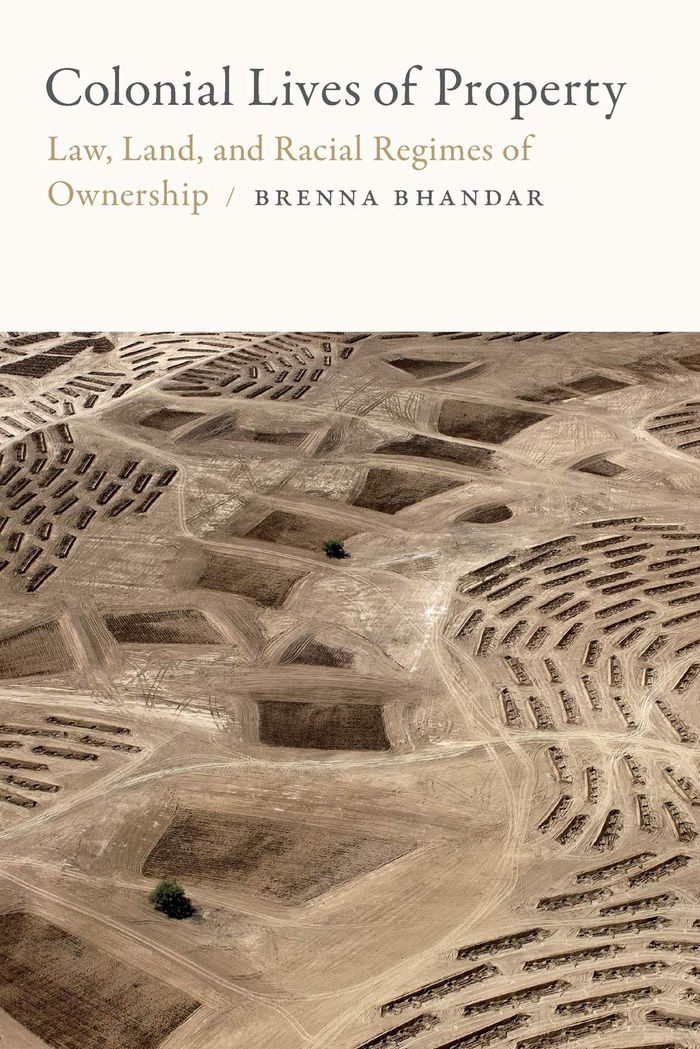
In this book, Brenna Bhandar examines how modern property law contributes to the formation of racial subjects in settler colonies and to the development of racial capitalism. Examining both historical cases and ongoing processes of settler colonialism in Canada, Australia, and Israel and Palestine, Bhandar shows how the colonial appropriation of indigenous lands depends upon ideologies of European racial superiority as well as upon legal narratives that equate civilized life with English concepts of property. In this way, property law legitimates and rationalizes settler colonial practices while it racializes those deemed unfit to own property. The solution to these enduring racial and economic inequities, Bhandar demonstrates, requires developing a new political imaginary of property in which freedom is connected to shared practices of use and community rather than individual possession.
Colonial lives of property: law, land, and racial regimes of ownership
Actions:
Price:
$36.95
(available to order)
Summary:
In this book, Brenna Bhandar examines how modern property law contributes to the formation of racial subjects in settler colonies and to the development of racial capitalism. Examining both historical cases and ongoing processes of settler colonialism in Canada, Australia, and Israel and Palestine, Bhandar shows how the colonial appropriation of indigenous lands depends upon ideologies of European racial superiority as well as upon legal narratives that equate civilized life with English concepts of property. In this way, property law legitimates and rationalizes settler colonial practices while it racializes those deemed unfit to own property. The solution to these enduring racial and economic inequities, Bhandar demonstrates, requires developing a new political imaginary of property in which freedom is connected to shared practices of use and community rather than individual possession.
Form:
books
books
Publication:
May 2018
May 2018
Subject:
Architecture ecologies
Architecture ecologies
Form:
books
books
Title:
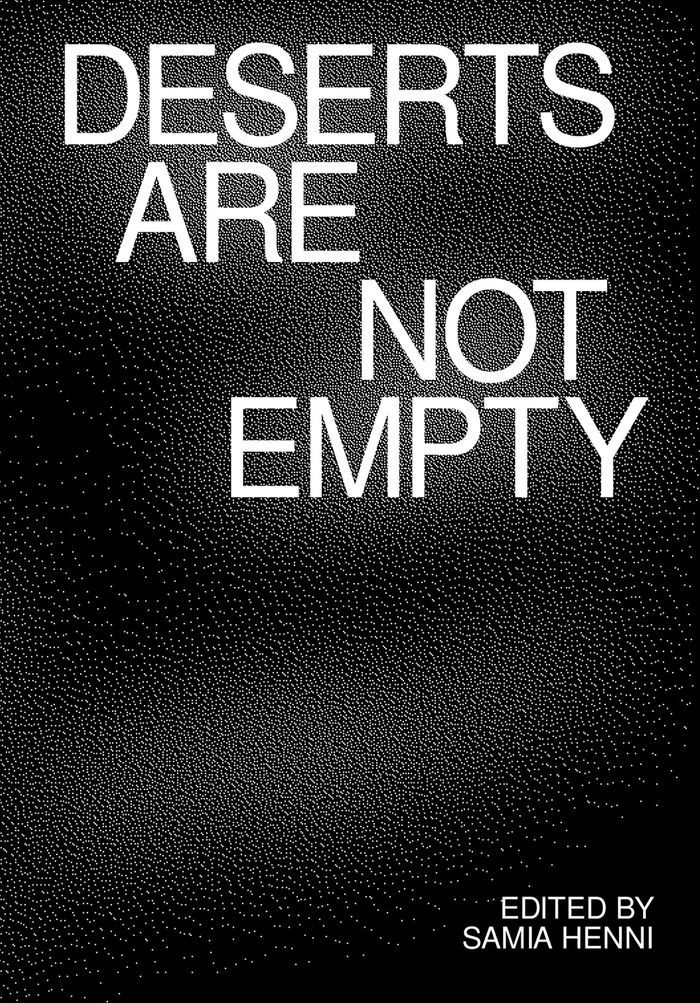
Deserts are not empty
Deserts are not empty
Actions:
Price:
$31.00
(available in store)
Summary:
Colonial and imperial powers have often portrayed arid lands as “empty” spaces ready to be occupied, exploited, extracted, and polluted. Despite the undeniable presence of human and nonhuman lives and forces in desert territories, the “regime of emptiness” has inhabited, and is still inhabiting, many imaginaries. This volume challenges this colonial tendency, questions(...)
$31.00
(available in store)
Summary:
Colonial and imperial powers have often portrayed arid lands as “empty” spaces ready to be occupied, exploited, extracted, and polluted. Despite the undeniable presence of human and nonhuman lives and forces in desert territories, the “regime of emptiness” has inhabited, and is still inhabiting, many imaginaries. This volume challenges this colonial tendency, questions(...)
Title:
Deserts are not empty
Actions:
Price:
$31.00
(available in store)
Summary:
Colonial and imperial powers have often portrayed arid lands as “empty” spaces ready to be occupied, exploited, extracted, and polluted. Despite the undeniable presence of human and nonhuman lives and forces in desert territories, the “regime of emptiness” has inhabited, and is still inhabiting, many imaginaries. This volume challenges this colonial tendency, questions its roots and ramifications, and remaps the representations, theories, histories, and stories of arid lands—which comprise approximately one-third of the Earth’s land surface. It brings together poems in original languages, conversations with collectives, and essays by scholars and professionals from the fields of architecture, architectural history and theory, curatorial studies, comparative literature, film studies, landscape architecture, and photography. These different approaches and diverse voices draw on a framework of decoloniality to unsettle and unlearn the desert, opening up possibilities to see, think, imagine it otherwise.
Deserts are not empty
Actions:
Price:
$31.00
(available in store)
Summary:
Colonial and imperial powers have often portrayed arid lands as “empty” spaces ready to be occupied, exploited, extracted, and polluted. Despite the undeniable presence of human and nonhuman lives and forces in desert territories, the “regime of emptiness” has inhabited, and is still inhabiting, many imaginaries. This volume challenges this colonial tendency, questions its roots and ramifications, and remaps the representations, theories, histories, and stories of arid lands—which comprise approximately one-third of the Earth’s land surface. It brings together poems in original languages, conversations with collectives, and essays by scholars and professionals from the fields of architecture, architectural history and theory, curatorial studies, comparative literature, film studies, landscape architecture, and photography. These different approaches and diverse voices draw on a framework of decoloniality to unsettle and unlearn the desert, opening up possibilities to see, think, imagine it otherwise.
Form:
books
books
Publication:
October 2022
October 2022
Subject:
Architecture ecologies
Architecture ecologies


