


137 Results
Form:
books
books

Price:
$39.99
(available to order)
Summary:
To live in data in the twenty-first century is to be incessantly extracted from, classified and categorized, statisti-fied, sold, and surveilled. Data - our data - is mined and processed for profit, power, and political gain. In Living in Data, Thorp asks a crucial question of our time: How do we stop passively inhabiting data, and instead become active citizens of it?
$39.99
(available to order)
Summary:
To live in data in the twenty-first century is to be incessantly extracted from, classified and categorized, statisti-fied, sold, and surveilled. Data - our data - is mined and processed for profit, power, and political gain. In Living in Data, Thorp asks a crucial question of our time: How do we stop passively inhabiting data, and instead become active citizens of it?
Title:
Living in data: a citizen's guide to a better information future
Actions:
Price:
$39.99
(available to order)
Summary:
To live in data in the twenty-first century is to be incessantly extracted from, classified and categorized, statisti-fied, sold, and surveilled. Data - our data - is mined and processed for profit, power, and political gain. In Living in Data, Thorp asks a crucial question of our time: How do we stop passively inhabiting data, and instead become active citizens of it?
Living in data: a citizen's guide to a better information future
Actions:
Price:
$39.99
(available to order)
Summary:
To live in data in the twenty-first century is to be incessantly extracted from, classified and categorized, statisti-fied, sold, and surveilled. Data - our data - is mined and processed for profit, power, and political gain. In Living in Data, Thorp asks a crucial question of our time: How do we stop passively inhabiting data, and instead become active citizens of it?
Form:
books
books
Publication:
May 2021
May 2021
Subject:
Archive, library and the digital
Archive, library and the digital
Form:
books
books
Actions:
Price:
$54.00
(available to order)
Summary:
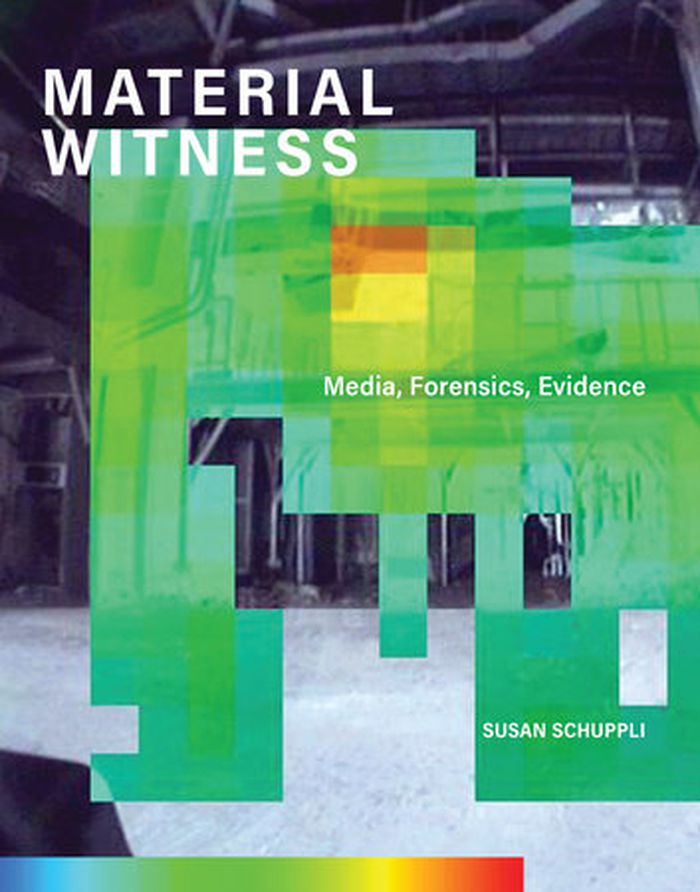
In this book, Susan Schuppli introduces a new operative concept: material witness, an exploration of the evidential role of matter as both registering external events and exposing the practices and procedures that enable matter to bear witness. Organized in the format of a trial, 'Material witness' moves through a series of cases that provide insight into the ways in(...)
$54.00
(available to order)
Summary:
In this book, Susan Schuppli introduces a new operative concept: material witness, an exploration of the evidential role of matter as both registering external events and exposing the practices and procedures that enable matter to bear witness. Organized in the format of a trial, 'Material witness' moves through a series of cases that provide insight into the ways in(...)
Title:
Material witness: Media, forensics, evidence
Actions:
Price:
$54.00
(available to order)
Summary:
In this book, Susan Schuppli introduces a new operative concept: material witness, an exploration of the evidential role of matter as both registering external events and exposing the practices and procedures that enable matter to bear witness. Organized in the format of a trial, 'Material witness' moves through a series of cases that provide insight into the ways in which materials become contested agents of dispute around which stake holders gather.
Material witness: Media, forensics, evidence
Actions:
Price:
$54.00
(available to order)
Summary:
In this book, Susan Schuppli introduces a new operative concept: material witness, an exploration of the evidential role of matter as both registering external events and exposing the practices and procedures that enable matter to bear witness. Organized in the format of a trial, 'Material witness' moves through a series of cases that provide insight into the ways in which materials become contested agents of dispute around which stake holders gather.
Form:
books
books
Publication:
February 2020
February 2020
Subject:
Archive, library and the digital
Archive, library and the digital
Form:
books
books

Title:
Promenade en Enfer
Promenade en Enfer
Actions:
Price:
$29.95
(available to order)
Summary:
Longtemps soumises à la censure ecclésiastique, certaines bibliothèques conservaient les ouvrages mis à l’Index dans un huis clos mythique nommé Enfer. La simple lecture d’une œuvre proscrite par l’Église pouvait entraîner la damnation éternelle de l’âme. La levée de l’Index dans les années 1960 a entraîné le démantèlement des sections logeant les livres interdits qui ont(...)
$29.95
(available to order)
Summary:
Longtemps soumises à la censure ecclésiastique, certaines bibliothèques conservaient les ouvrages mis à l’Index dans un huis clos mythique nommé Enfer. La simple lecture d’une œuvre proscrite par l’Église pouvait entraîner la damnation éternelle de l’âme. La levée de l’Index dans les années 1960 a entraîné le démantèlement des sections logeant les livres interdits qui ont(...)
Title:
Promenade en Enfer
Actions:
Price:
$29.95
(available to order)
Summary:
Longtemps soumises à la censure ecclésiastique, certaines bibliothèques conservaient les ouvrages mis à l’Index dans un huis clos mythique nommé Enfer. La simple lecture d’une œuvre proscrite par l’Église pouvait entraîner la damnation éternelle de l’âme. La levée de l’Index dans les années 1960 a entraîné le démantèlement des sections logeant les livres interdits qui ont disparu tout en conservant leurs secrets. L’une des rares collections encore existantes des livres mis à l’Index, regroupant des centaines de volumes, se retrouve cependant dans la bibliothèque historique du Séminaire de Québec, fondé en 1663. Pierrette Lafond lève le voile sur ces ouvrages jugés immoraux, hérétiques ou dangereux, témoins silencieux de la censure pendant trois siècles et qui racontent un volet occulté de l’histoire morale et culturelle du Québec.
Promenade en Enfer
Actions:
Price:
$29.95
(available to order)
Summary:
Longtemps soumises à la censure ecclésiastique, certaines bibliothèques conservaient les ouvrages mis à l’Index dans un huis clos mythique nommé Enfer. La simple lecture d’une œuvre proscrite par l’Église pouvait entraîner la damnation éternelle de l’âme. La levée de l’Index dans les années 1960 a entraîné le démantèlement des sections logeant les livres interdits qui ont disparu tout en conservant leurs secrets. L’une des rares collections encore existantes des livres mis à l’Index, regroupant des centaines de volumes, se retrouve cependant dans la bibliothèque historique du Séminaire de Québec, fondé en 1663. Pierrette Lafond lève le voile sur ces ouvrages jugés immoraux, hérétiques ou dangereux, témoins silencieux de la censure pendant trois siècles et qui racontent un volet occulté de l’histoire morale et culturelle du Québec.
Form:
books
books
Publication:
April 2019
April 2019
Subject:
Archive, library and the digital
Archive, library and the digital
Form:
books
books

Actions:
Price:
$16.95
(available to order)
Summary:
Vous souffrez d'agoraphobie, de la crise de la quarantaine, d'une jambe cassée ou d'un chagrin d'amour ? Sachez qu’un livre peut avoir l'effet d'un prodigieux médicament, voire vous sauver ! Vous en doutez ? Essayez plutôt... Vous trouverez ici les meilleurs romans adaptés à votre cas. Garantis sans effets secondaires, ils vous permettront de traiter les pathologies(...)
$16.95
(available to order)
Summary:
Vous souffrez d'agoraphobie, de la crise de la quarantaine, d'une jambe cassée ou d'un chagrin d'amour ? Sachez qu’un livre peut avoir l'effet d'un prodigieux médicament, voire vous sauver ! Vous en doutez ? Essayez plutôt... Vous trouverez ici les meilleurs romans adaptés à votre cas. Garantis sans effets secondaires, ils vous permettront de traiter les pathologies(...)
Publication:
November 2016
November 2016
Title:
Remèdes littéraires : se soigner par les livres
Actions:
Price:
$16.95
(available to order)
Summary:
Vous souffrez d'agoraphobie, de la crise de la quarantaine, d'une jambe cassée ou d'un chagrin d'amour ? Sachez qu’un livre peut avoir l'effet d'un prodigieux médicament, voire vous sauver ! Vous en doutez ? Essayez plutôt... Vous trouverez ici les meilleurs romans adaptés à votre cas. Garantis sans effets secondaires, ils vous permettront de traiter les pathologies telles que : abandon, alcoolisme, calvitie, rage de dents, mal de dos, harcèlement, hémorroïdes, insomnie, jalousie, ménopause, obésité, rhume des foins, solitude… et bien d'autres !
Remèdes littéraires : se soigner par les livres
Actions:
Price:
$16.95
(available to order)
Summary:
Vous souffrez d'agoraphobie, de la crise de la quarantaine, d'une jambe cassée ou d'un chagrin d'amour ? Sachez qu’un livre peut avoir l'effet d'un prodigieux médicament, voire vous sauver ! Vous en doutez ? Essayez plutôt... Vous trouverez ici les meilleurs romans adaptés à votre cas. Garantis sans effets secondaires, ils vous permettront de traiter les pathologies telles que : abandon, alcoolisme, calvitie, rage de dents, mal de dos, harcèlement, hémorroïdes, insomnie, jalousie, ménopause, obésité, rhume des foins, solitude… et bien d'autres !
Form:
books
books
Publication:
November 2016
November 2016
Form:
books
books
Title:
Espaces de savoir
Espaces de savoir
Actions:
Price:
$25.00
(available in store)
Summary:
Dans le paradigme de complexité qui est le nôtre, les contextes institutionnels dans lesquels s'exerce le savoir doivent dorénavant ouvrir sur un environnement général qui le réclame, dans l'idée d'un continuum devenu nécessaire entre les situations humaines et le savoir. C'est à cette problématique contemporaine que le présent ouvrage réfléchit. Il résulte de trois(...)
$25.00
(available in store)
Summary:
Dans le paradigme de complexité qui est le nôtre, les contextes institutionnels dans lesquels s'exerce le savoir doivent dorénavant ouvrir sur un environnement général qui le réclame, dans l'idée d'un continuum devenu nécessaire entre les situations humaines et le savoir. C'est à cette problématique contemporaine que le présent ouvrage réfléchit. Il résulte de trois(...)
Title:
Espaces de savoir
Actions:
Price:
$25.00
(available in store)
Summary:
Dans le paradigme de complexité qui est le nôtre, les contextes institutionnels dans lesquels s'exerce le savoir doivent dorénavant ouvrir sur un environnement général qui le réclame, dans l'idée d'un continuum devenu nécessaire entre les situations humaines et le savoir. C'est à cette problématique contemporaine que le présent ouvrage réfléchit. Il résulte de trois années de travail dans le cadre d'un projet réunissant cinq contributeurs de quatre universités québécoises ainsi qu'une artiste du milieu littéraire. L'équipe s'est intéressée à faire émerger et à développer des stratégies de spatialisation permettant d'accéder de manière inédite à des environnements de savoir ainsi qu'à générer et à organiser de manière singulière de tels environnements. Il s'agit ici d'ouvrir un champ de recherche artistique sur la question de la spatialisation du savoir, dans le cadre des mises en situation individuelles et créatives dont l'efficacité et la validité répondent ainsi à des impératifs très différents de ceux commandés par des critères de multitude et d'universalité.
Espaces de savoir
Actions:
Price:
$25.00
(available in store)
Summary:
Dans le paradigme de complexité qui est le nôtre, les contextes institutionnels dans lesquels s'exerce le savoir doivent dorénavant ouvrir sur un environnement général qui le réclame, dans l'idée d'un continuum devenu nécessaire entre les situations humaines et le savoir. C'est à cette problématique contemporaine que le présent ouvrage réfléchit. Il résulte de trois années de travail dans le cadre d'un projet réunissant cinq contributeurs de quatre universités québécoises ainsi qu'une artiste du milieu littéraire. L'équipe s'est intéressée à faire émerger et à développer des stratégies de spatialisation permettant d'accéder de manière inédite à des environnements de savoir ainsi qu'à générer et à organiser de manière singulière de tels environnements. Il s'agit ici d'ouvrir un champ de recherche artistique sur la question de la spatialisation du savoir, dans le cadre des mises en situation individuelles et créatives dont l'efficacité et la validité répondent ainsi à des impératifs très différents de ceux commandés par des critères de multitude et d'universalité.
Form:
books
books
Publication:
November 2016
November 2016
Form:
books
books
Price:
$34.50
(available to order)
Summary:
Archives are collections of records that are preserved for historical, cultural and evidentiary purposes. As such, archives are considered as sites of a past, places that contain traces of a collective memory of a nation, a people or a group. Digital archives have changed from stable entities into flexible systems, at times referred to with the term ‘Living Archives’. In(...)
$34.50
(available to order)
Summary:
Archives are collections of records that are preserved for historical, cultural and evidentiary purposes. As such, archives are considered as sites of a past, places that contain traces of a collective memory of a nation, a people or a group. Digital archives have changed from stable entities into flexible systems, at times referred to with the term ‘Living Archives’. In(...)
Title:
Lost and living (in) archives collectively shaping new memories
Actions:
Price:
$34.50
(available to order)
Summary:
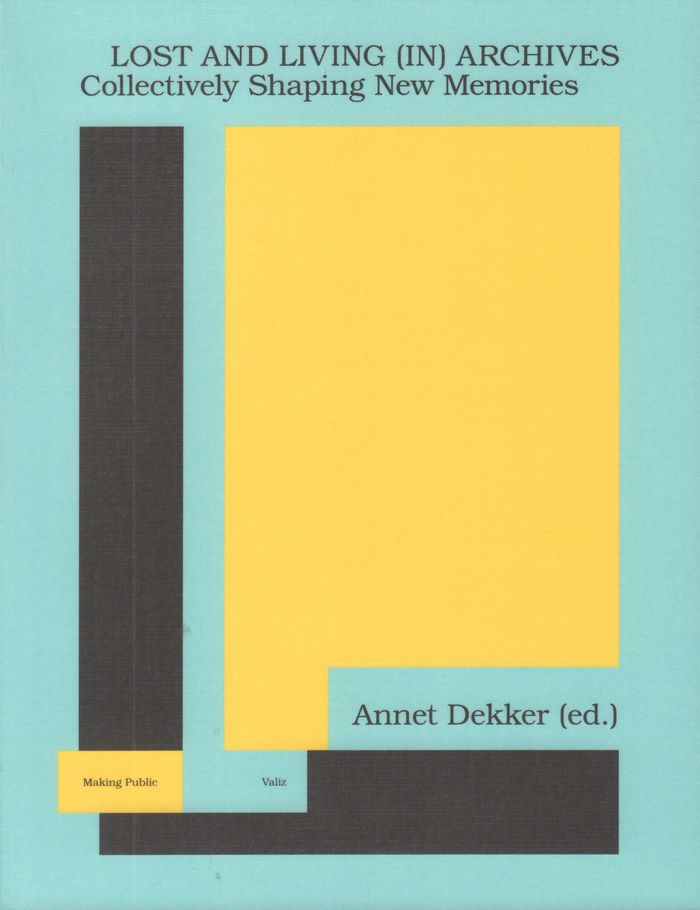
Archives are collections of records that are preserved for historical, cultural and evidentiary purposes. As such, archives are considered as sites of a past, places that contain traces of a collective memory of a nation, a people or a group. Digital archives have changed from stable entities into flexible systems, at times referred to with the term ‘Living Archives’. In which ways has this change affected our relationship to the past? Will the erased, forgotten and neglected be redeemed, and new memories be allowed? Will the fictional versus factual mode of archiving offer the democracy that the public domain implies, or is it another way for public instruments of power to operate? Lost and Living (in) Archives shows that archives are not simply a recording, a reflection, or an image of an event, but that THEY shape the event itself and thus influence the past, present and future.
Lost and living (in) archives collectively shaping new memories
Actions:
Price:
$34.50
(available to order)
Summary:
Archives are collections of records that are preserved for historical, cultural and evidentiary purposes. As such, archives are considered as sites of a past, places that contain traces of a collective memory of a nation, a people or a group. Digital archives have changed from stable entities into flexible systems, at times referred to with the term ‘Living Archives’. In which ways has this change affected our relationship to the past? Will the erased, forgotten and neglected be redeemed, and new memories be allowed? Will the fictional versus factual mode of archiving offer the democracy that the public domain implies, or is it another way for public instruments of power to operate? Lost and Living (in) Archives shows that archives are not simply a recording, a reflection, or an image of an event, but that THEY shape the event itself and thus influence the past, present and future.
Form:
books
books
Publication:
November 2017
November 2017
Subject:
Archive, library and the digital
Archive, library and the digital
Form:
books
books
Title:
In the swarm
In the swarm
Actions:
Price:
$18.95
(available to order)
Summary:
Digital communication and social media have taken over our lives. In this contrarian reflection on digitized life, Byung-Chul Han counters the cheerleaders for Twitter revolutions and Facebook activism by arguing that digital communication is in fact responsible for the disintegration of community and public space and is slowly eroding any possibility for real political(...)
$18.95
(available to order)
Summary:
Digital communication and social media have taken over our lives. In this contrarian reflection on digitized life, Byung-Chul Han counters the cheerleaders for Twitter revolutions and Facebook activism by arguing that digital communication is in fact responsible for the disintegration of community and public space and is slowly eroding any possibility for real political(...)
Title:
In the swarm
Actions:
Price:
$18.95
(available to order)
Summary:
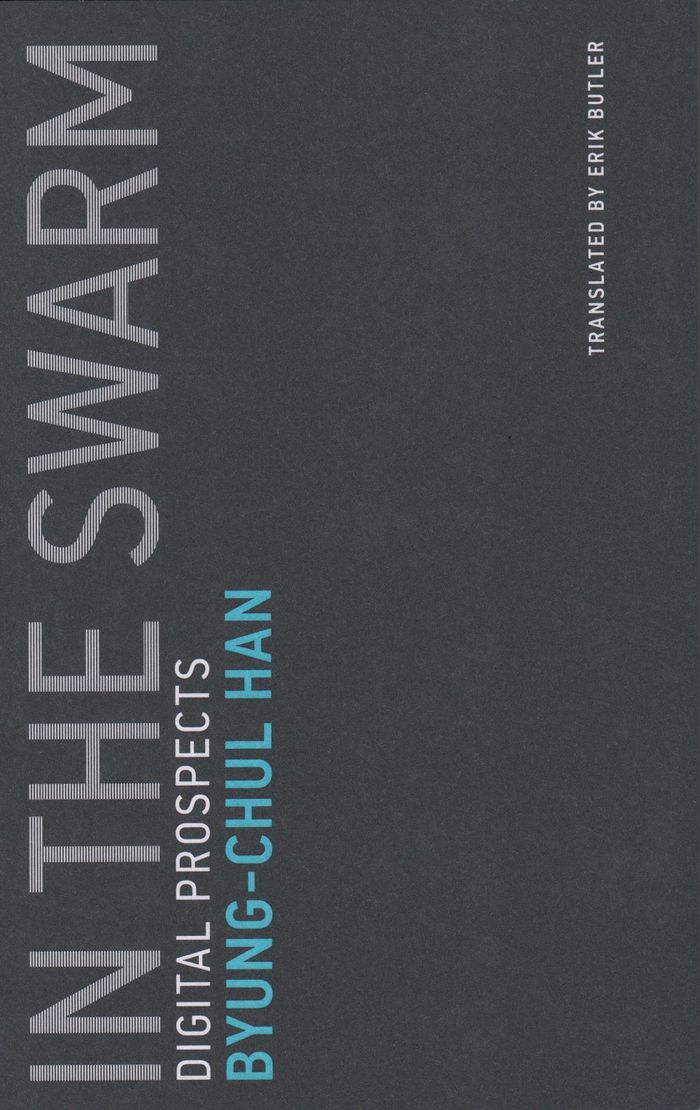
Digital communication and social media have taken over our lives. In this contrarian reflection on digitized life, Byung-Chul Han counters the cheerleaders for Twitter revolutions and Facebook activism by arguing that digital communication is in fact responsible for the disintegration of community and public space and is slowly eroding any possibility for real political action and meaningful political discourse. In the predigital, analog era, by the time an angry letter to the editor had been composed, mailed, and received, the immediate agitation had passed. Today, digital communication enables instantaneous, impulsive reaction, meant to express and stir up outrage on the spot. “The shitstorm,” writes Han, ”represents an authentic phenomenon of digital communication.” Meanwhile, the public, the senders and receivers of these communications have become a digital swarm—not a mass, or a crowd, or Negri and Hardt’s antiquated notion of a “multitude,” but a set of isolated individuals incapable of forming a “we,” incapable of calling dominant power relations into question, incapable of formulating a future because of an obsession with the present. The digital swarm is a fragmented entity that can focus on individual persons only in order to make them an object of scandal. Han, one of the most widely read philosophers in Europe today, describes a society in which information has overrun thought, in which the same algorithms are employed by Facebook, the stock market, and the intelligence services. Democracy is under threat because digital communication has made freedom and control indistinguishable. Big Brother has been succeeded by Big Data.
In the swarm
Actions:
Price:
$18.95
(available to order)
Summary:
Digital communication and social media have taken over our lives. In this contrarian reflection on digitized life, Byung-Chul Han counters the cheerleaders for Twitter revolutions and Facebook activism by arguing that digital communication is in fact responsible for the disintegration of community and public space and is slowly eroding any possibility for real political action and meaningful political discourse. In the predigital, analog era, by the time an angry letter to the editor had been composed, mailed, and received, the immediate agitation had passed. Today, digital communication enables instantaneous, impulsive reaction, meant to express and stir up outrage on the spot. “The shitstorm,” writes Han, ”represents an authentic phenomenon of digital communication.” Meanwhile, the public, the senders and receivers of these communications have become a digital swarm—not a mass, or a crowd, or Negri and Hardt’s antiquated notion of a “multitude,” but a set of isolated individuals incapable of forming a “we,” incapable of calling dominant power relations into question, incapable of formulating a future because of an obsession with the present. The digital swarm is a fragmented entity that can focus on individual persons only in order to make them an object of scandal. Han, one of the most widely read philosophers in Europe today, describes a society in which information has overrun thought, in which the same algorithms are employed by Facebook, the stock market, and the intelligence services. Democracy is under threat because digital communication has made freedom and control indistinguishable. Big Brother has been succeeded by Big Data.
Form:
books
books
Publication:
April 2017
April 2017
Subject:
Archive, library and the digital
Archive, library and the digital
Form:
books
books
Title:
The stuff of bits
The stuff of bits
Actions:
Price:
$46.95
(available to order)
Summary:
In this publication, Paul Dourish examines the specific materialities that certain digital objects exhibit. He presents four case studies: emulation, the creation of a “virtual” computer inside another; digital spreadsheets and their role in organizational practice; relational databases and the issue of “the databaseable”; and the evolution of digital networking and the(...)
$46.95
(available to order)
Summary:
In this publication, Paul Dourish examines the specific materialities that certain digital objects exhibit. He presents four case studies: emulation, the creation of a “virtual” computer inside another; digital spreadsheets and their role in organizational practice; relational databases and the issue of “the databaseable”; and the evolution of digital networking and the(...)
Title:
The stuff of bits
Actions:
Price:
$46.95
(available to order)
Summary:
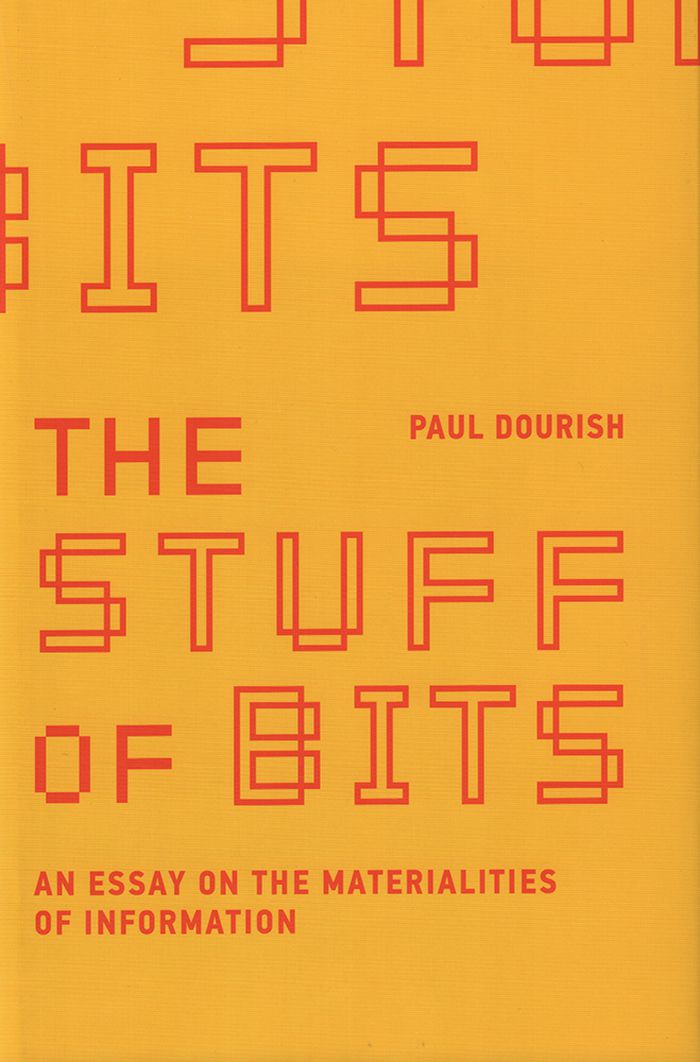
In this publication, Paul Dourish examines the specific materialities that certain digital objects exhibit. He presents four case studies: emulation, the creation of a “virtual” computer inside another; digital spreadsheets and their role in organizational practice; relational databases and the issue of “the databaseable”; and the evolution of digital networking and the representational entailments of network protocols. These case studies demonstrate how a materialist account can offer an entry point to broader concerns - questions of power, policy, and polity in the realm of the digital.
The stuff of bits
Actions:
Price:
$46.95
(available to order)
Summary:
In this publication, Paul Dourish examines the specific materialities that certain digital objects exhibit. He presents four case studies: emulation, the creation of a “virtual” computer inside another; digital spreadsheets and their role in organizational practice; relational databases and the issue of “the databaseable”; and the evolution of digital networking and the representational entailments of network protocols. These case studies demonstrate how a materialist account can offer an entry point to broader concerns - questions of power, policy, and polity in the realm of the digital.
Form:
books
books
Publication:
April 2017
April 2017
Subject:
Archive, library and the digital
Archive, library and the digital
Form:
books
books
Title:
Programmed inequality: how Britain discarded women technologists and lost its edge in computing
Programmed inequality: how Britain discarded women technologists and lost its edge in computing
Actions:
Price:
$51.95
(available to order)
Summary:
In 1944, Britain led the world in electronic computing. By 1974, the British computer industry was all but extinct. What happened in the intervening thirty years holds lessons for all postindustrial superpowers. As Britain struggled to use technology to retain its global power, the nation’s inability to manage its technical labor force hobbled its transition into the(...)
$51.95
(available to order)
Summary:
In 1944, Britain led the world in electronic computing. By 1974, the British computer industry was all but extinct. What happened in the intervening thirty years holds lessons for all postindustrial superpowers. As Britain struggled to use technology to retain its global power, the nation’s inability to manage its technical labor force hobbled its transition into the(...)
Title:
Programmed inequality: how Britain discarded women technologists and lost its edge in computing
Actions:
Price:
$51.95
(available to order)
Summary:
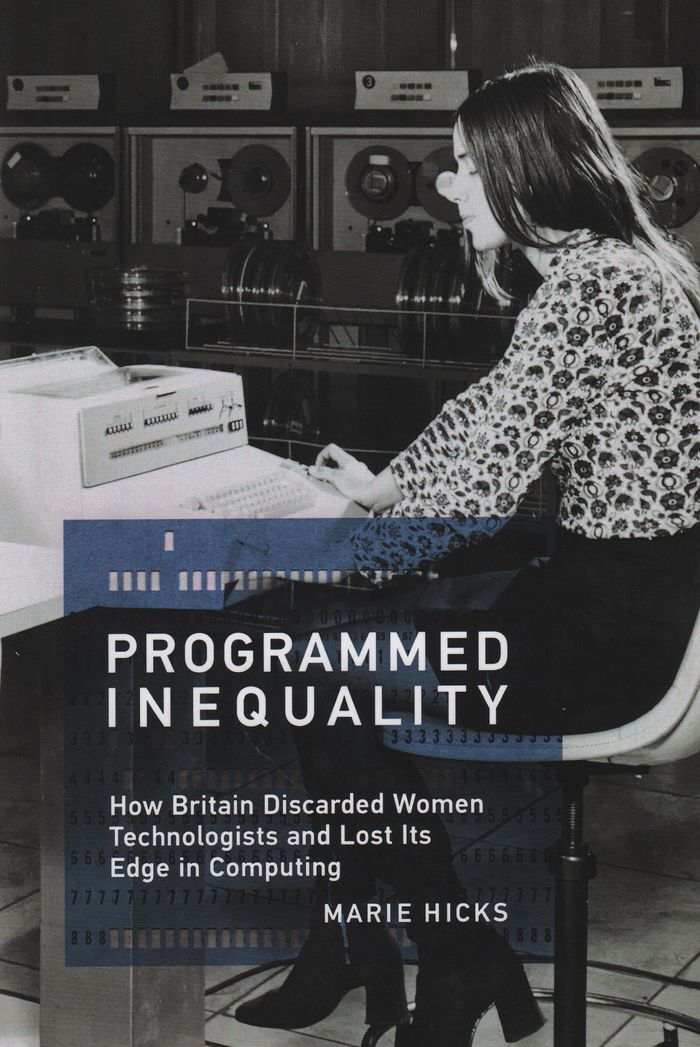
In 1944, Britain led the world in electronic computing. By 1974, the British computer industry was all but extinct. What happened in the intervening thirty years holds lessons for all postindustrial superpowers. As Britain struggled to use technology to retain its global power, the nation’s inability to manage its technical labor force hobbled its transition into the information age. In "Programmed inequality", Marie Hicks explores the story of labor feminization and gendered technocracy that undercut British efforts to computerize. That failure sprang from the government’s systematic neglect of its largest trained technical workforce simply because they were women. Women were a hidden engine of growth in high technology from World War II to the 1960s. As computing experienced a gender flip, becoming male-identified in the 1960s and 1970s, labor problems grew into structural ones and gender discrimination caused the nation’s largest computer user—the civil service and sprawling public sector—to make decisions that were disastrous for the British computer industry and the nation as a whole.
Programmed inequality: how Britain discarded women technologists and lost its edge in computing
Actions:
Price:
$51.95
(available to order)
Summary:
In 1944, Britain led the world in electronic computing. By 1974, the British computer industry was all but extinct. What happened in the intervening thirty years holds lessons for all postindustrial superpowers. As Britain struggled to use technology to retain its global power, the nation’s inability to manage its technical labor force hobbled its transition into the information age. In "Programmed inequality", Marie Hicks explores the story of labor feminization and gendered technocracy that undercut British efforts to computerize. That failure sprang from the government’s systematic neglect of its largest trained technical workforce simply because they were women. Women were a hidden engine of growth in high technology from World War II to the 1960s. As computing experienced a gender flip, becoming male-identified in the 1960s and 1970s, labor problems grew into structural ones and gender discrimination caused the nation’s largest computer user—the civil service and sprawling public sector—to make decisions that were disastrous for the British computer industry and the nation as a whole.
Form:
books
books
Publication:
February 2017
February 2017
Subject:
Archive, library and the digital
Archive, library and the digital
Form:
books
books
Title:
The big archive
The big archive
Actions:
Price:
$35.50
(available to order)
Summary:
The typewriter, the card index, and the filing cabinet: these are technologies and modalities of the archive. To the bureaucrat, archives contain little more than garbage, paperwork no longer needed; to the historian, on the other hand, the archive’s content stands as a quasi-objective correlative of the “living” past. Twentieth-century art made use of the archive in a(...)
$35.50
(available to order)
Summary:
The typewriter, the card index, and the filing cabinet: these are technologies and modalities of the archive. To the bureaucrat, archives contain little more than garbage, paperwork no longer needed; to the historian, on the other hand, the archive’s content stands as a quasi-objective correlative of the “living” past. Twentieth-century art made use of the archive in a(...)
Title:
The big archive
Actions:
Price:
$35.50
(available to order)
Summary:
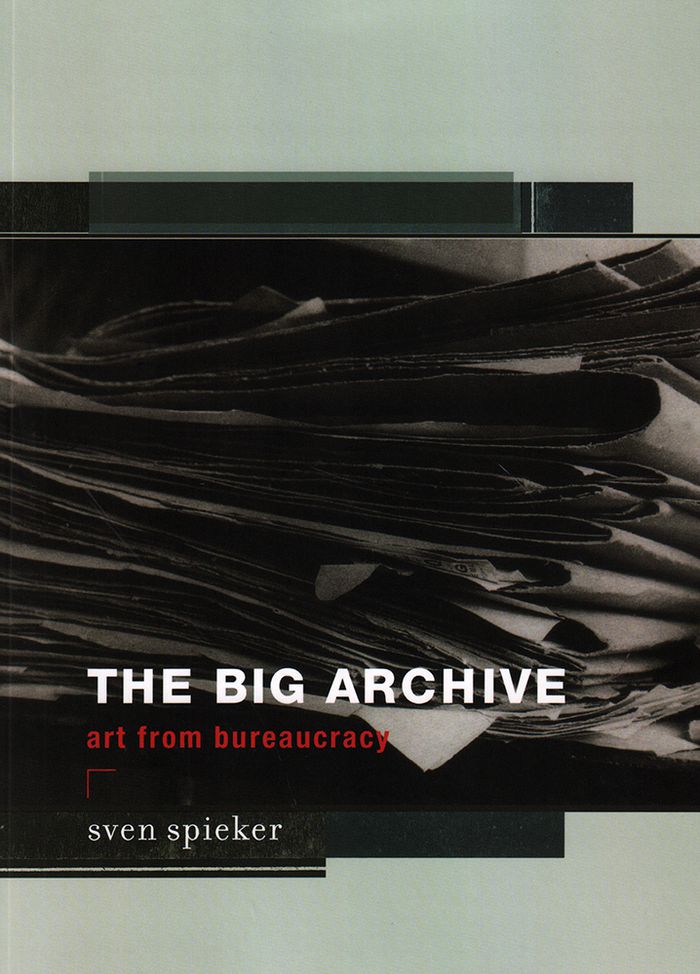
The typewriter, the card index, and the filing cabinet: these are technologies and modalities of the archive. To the bureaucrat, archives contain little more than garbage, paperwork no longer needed; to the historian, on the other hand, the archive’s content stands as a quasi-objective correlative of the “living” past. Twentieth-century art made use of the archive in a variety of ways—from what Spieker calls Marcel Duchamp’s “anemic archive” of readymades and El Lissitzky’s Demonstration Rooms to the compilations of photographs made by such postwar artists as Susan Hiller and Gerhard Richter. In "The big archive", Sven Spieker investigates the archive—as both bureaucratic institution and index of evolving attitudes toward contingent time in science and art—and finds it to be a crucible of twentieth-century modernism.
The big archive
Actions:
Price:
$35.50
(available to order)
Summary:
The typewriter, the card index, and the filing cabinet: these are technologies and modalities of the archive. To the bureaucrat, archives contain little more than garbage, paperwork no longer needed; to the historian, on the other hand, the archive’s content stands as a quasi-objective correlative of the “living” past. Twentieth-century art made use of the archive in a variety of ways—from what Spieker calls Marcel Duchamp’s “anemic archive” of readymades and El Lissitzky’s Demonstration Rooms to the compilations of photographs made by such postwar artists as Susan Hiller and Gerhard Richter. In "The big archive", Sven Spieker investigates the archive—as both bureaucratic institution and index of evolving attitudes toward contingent time in science and art—and finds it to be a crucible of twentieth-century modernism.
Form:
books
books
Publication:
March 2017
March 2017
Subject:
Archive, library and the digital
Archive, library and the digital


