


138 Results
Form:
books
books
Actions:
Price:
$38.50
(available to order)
Summary:
Over the past fifty years, preservation policy has evolved very little, despite escalating accusations that landmarking and historic districting can inhibit affordable housing, economic development, and socioeconomic diversity. The potential to understand these dynamics and effect positive change is hindered by a lack of data and evidence-based research to better(...)
$38.50
(available to order)
Summary:
Over the past fifty years, preservation policy has evolved very little, despite escalating accusations that landmarking and historic districting can inhibit affordable housing, economic development, and socioeconomic diversity. The potential to understand these dynamics and effect positive change is hindered by a lack of data and evidence-based research to better(...)
Title:
Preservation and the new data landscape
Actions:
Price:
$38.50
(available to order)
Summary:
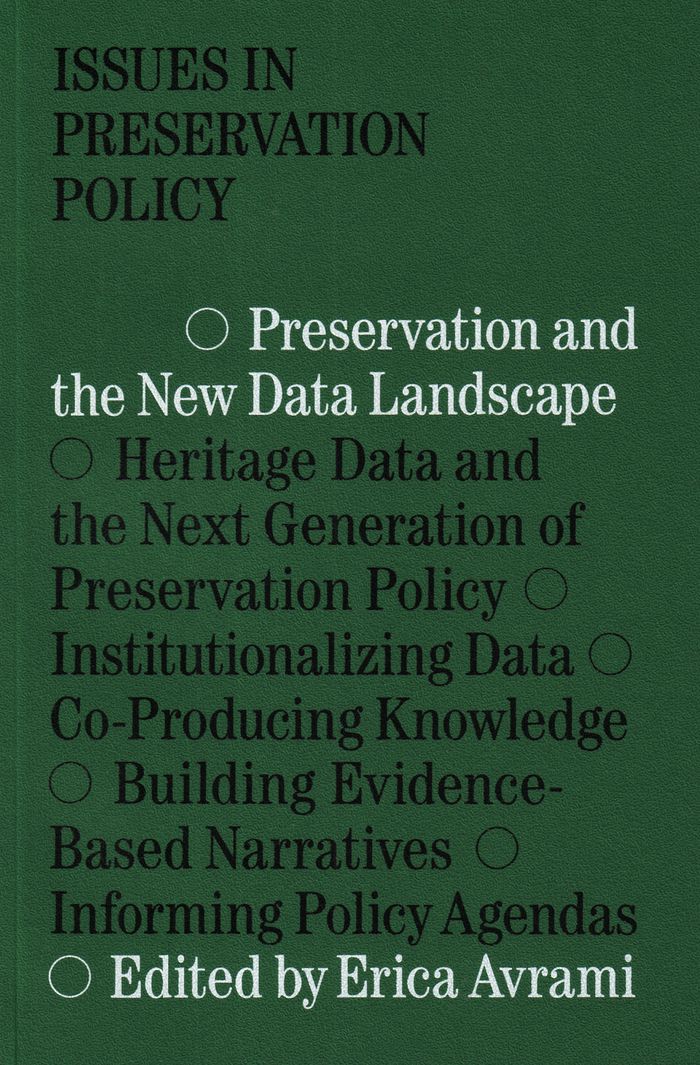
Over the past fifty years, preservation policy has evolved very little, despite escalating accusations that landmarking and historic districting can inhibit affordable housing, economic development, and socioeconomic diversity. The potential to understand these dynamics and effect positive change is hindered by a lack of data and evidence-based research to better understand these impacts. One of the biggest barriers to preservation research has been the lack of data sets that can be used for geospatial, evidence-based, and longitudinal analyses. This first book in the series ''Issues in Preservation Policy'' explores the ways that enhancing the collection, accuracy, and management of data can serve a critical role in identifying vulnerable neighborhoods, understanding the role of older buildings in economic vitality and community resilience, planning sustainable growth, and more.
Preservation and the new data landscape
Actions:
Price:
$38.50
(available to order)
Summary:
Over the past fifty years, preservation policy has evolved very little, despite escalating accusations that landmarking and historic districting can inhibit affordable housing, economic development, and socioeconomic diversity. The potential to understand these dynamics and effect positive change is hindered by a lack of data and evidence-based research to better understand these impacts. One of the biggest barriers to preservation research has been the lack of data sets that can be used for geospatial, evidence-based, and longitudinal analyses. This first book in the series ''Issues in Preservation Policy'' explores the ways that enhancing the collection, accuracy, and management of data can serve a critical role in identifying vulnerable neighborhoods, understanding the role of older buildings in economic vitality and community resilience, planning sustainable growth, and more.
Form:
books
books
Publication:
March 2019
March 2019
Subject:
Archive, library and the digital
Archive, library and the digital
Form:
books
books
Actions:
Price:
$34.95
(available to order)
Summary:
En plein air — painting outdoors — traditionally describes the impressionist revolt against the studio. This book compiles texts by media scholars, scientists, artists, anthropologists and theorists exploring the concept of en plein air in terms of the digital, a realm with ever-evolving boundaries.
$34.95
(available to order)
Summary:
En plein air — painting outdoors — traditionally describes the impressionist revolt against the studio. This book compiles texts by media scholars, scientists, artists, anthropologists and theorists exploring the concept of en plein air in terms of the digital, a realm with ever-evolving boundaries.
Title:
En plein air: ethnographies of the digital
Actions:
Price:
$34.95
(available to order)
Summary:
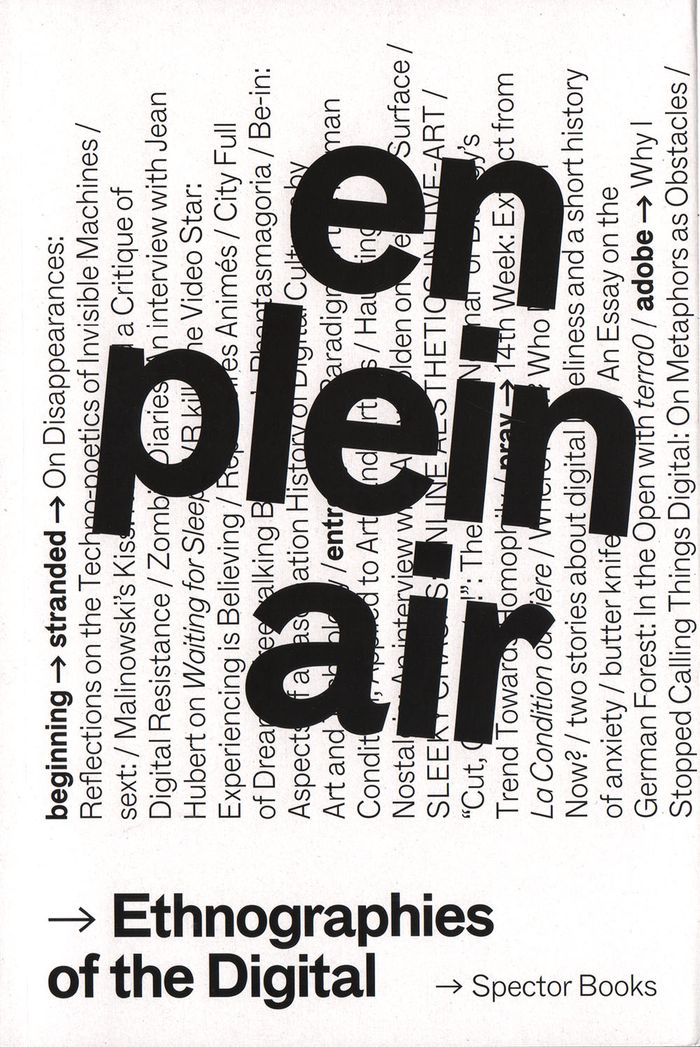
En plein air — painting outdoors — traditionally describes the impressionist revolt against the studio. This book compiles texts by media scholars, scientists, artists, anthropologists and theorists exploring the concept of en plein air in terms of the digital, a realm with ever-evolving boundaries.
En plein air: ethnographies of the digital
Actions:
Price:
$34.95
(available to order)
Summary:
En plein air — painting outdoors — traditionally describes the impressionist revolt against the studio. This book compiles texts by media scholars, scientists, artists, anthropologists and theorists exploring the concept of en plein air in terms of the digital, a realm with ever-evolving boundaries.
Form:
books
books
Publication:
April 2019
April 2019
Subject:
Archive, library and the digital
Archive, library and the digital
Form:
books
books
Actions:
Price:
$31.95
(available to order)
Summary:
L'architecture, son évolution comme sa connaissance, dépend en grande partie de la circulation et de la transmission dans l'espace et le temps d'une accumulation d'expériences, de règles ou de modèles. Voilà pourquoi ce livre examine les moyens de communication utilisés par les architectes occidentaux, de Vitruve à l'époque moderne, en montrant comment chaque média influe(...)
$31.95
(available to order)
Summary:
L'architecture, son évolution comme sa connaissance, dépend en grande partie de la circulation et de la transmission dans l'espace et le temps d'une accumulation d'expériences, de règles ou de modèles. Voilà pourquoi ce livre examine les moyens de communication utilisés par les architectes occidentaux, de Vitruve à l'époque moderne, en montrant comment chaque média influe(...)
Title:
L'architecture à l'âge de l'imprimerie
Actions:
Price:
$31.95
(available to order)
Summary:
L'architecture, son évolution comme sa connaissance, dépend en grande partie de la circulation et de la transmission dans l'espace et le temps d'une accumulation d'expériences, de règles ou de modèles. Voilà pourquoi ce livre examine les moyens de communication utilisés par les architectes occidentaux, de Vitruve à l'époque moderne, en montrant comment chaque média influe sur les formes spécifiques de la pensée architecturale et sur les modalités de la diffusion des savoirs.
L'architecture à l'âge de l'imprimerie
Actions:
Price:
$31.95
(available to order)
Summary:
L'architecture, son évolution comme sa connaissance, dépend en grande partie de la circulation et de la transmission dans l'espace et le temps d'une accumulation d'expériences, de règles ou de modèles. Voilà pourquoi ce livre examine les moyens de communication utilisés par les architectes occidentaux, de Vitruve à l'époque moderne, en montrant comment chaque média influe sur les formes spécifiques de la pensée architecturale et sur les modalités de la diffusion des savoirs.
Form:
books
books
Publication:
April 2009, Paris
April 2009, Paris
Subject:
Archive, library and the digital
Archive, library and the digital
Form:
books
books
Actions:
Price:
$56.95
(available to order)
Summary:
Comment assurer une conservation pérenne et efficace des archives des architectes? Quelles sont les normes et les tendances actuelles? Les réflexions présentées dans cet ouvrage émanent d'architectes, d'archivistes et conservateurs, historiens d'architecture, de chercheurs et d'enseignants. Issus d'une dizaine de pays d'Europe, des États-Unis et du Canada.
$56.95
(available to order)
Summary:
Comment assurer une conservation pérenne et efficace des archives des architectes? Quelles sont les normes et les tendances actuelles? Les réflexions présentées dans cet ouvrage émanent d'architectes, d'archivistes et conservateurs, historiens d'architecture, de chercheurs et d'enseignants. Issus d'une dizaine de pays d'Europe, des États-Unis et du Canada.
Subject:
Archive, library and the digital
Archive, library and the digital
Publication:
February 2009
February 2009
Title:
Architectures et archives numériques: l'architecture à l'ère numérique: un enjeu de mémoire
Actions:
Price:
$56.95
(available to order)
Summary:
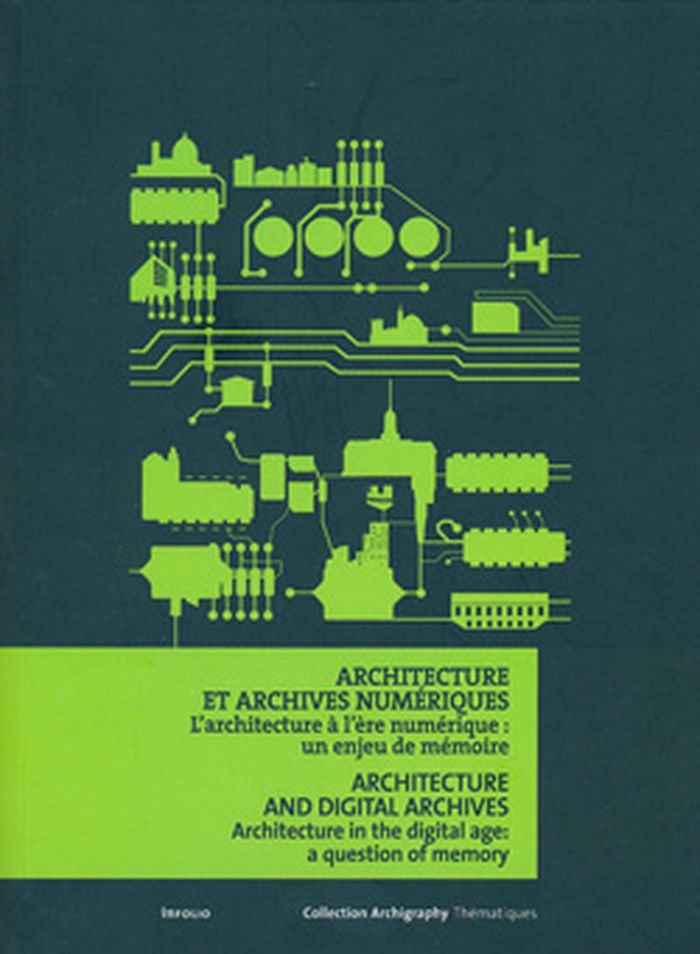
Comment assurer une conservation pérenne et efficace des archives des architectes? Quelles sont les normes et les tendances actuelles? Les réflexions présentées dans cet ouvrage émanent d'architectes, d'archivistes et conservateurs, historiens d'architecture, de chercheurs et d'enseignants. Issus d'une dizaine de pays d'Europe, des États-Unis et du Canada.
Architectures et archives numériques: l'architecture à l'ère numérique: un enjeu de mémoire
Actions:
Price:
$56.95
(available to order)
Summary:
Comment assurer une conservation pérenne et efficace des archives des architectes? Quelles sont les normes et les tendances actuelles? Les réflexions présentées dans cet ouvrage émanent d'architectes, d'archivistes et conservateurs, historiens d'architecture, de chercheurs et d'enseignants. Issus d'une dizaine de pays d'Europe, des États-Unis et du Canada.
Form:
books
books
Publication:
February 2009
February 2009
Subject:
Archive, library and the digital
Archive, library and the digital
Form:
books
books
Actions:
Price:
$90.00
(available in store)
Summary:
Print on demand has revolutionized publishing. Digital printing and online platforms such as Blurb, Lulu and Kindle Direct Publishing allow anyone to publish work immediately and without financial risk, opening up spaces beyond the trade book world and ostensibly democratizing production. Today an entire subculture is exploring print on demand in search of new economies(...)
$90.00
(available in store)
Summary:
Print on demand has revolutionized publishing. Digital printing and online platforms such as Blurb, Lulu and Kindle Direct Publishing allow anyone to publish work immediately and without financial risk, opening up spaces beyond the trade book world and ostensibly democratizing production. Today an entire subculture is exploring print on demand in search of new economies(...)
Subject:
Archive, library and the digital
Archive, library and the digital
Publication:
September 2025
September 2025
Title:
Library of artistic print on demand: Post-digital publishing in times of platform capitalism
Actions:
Price:
$90.00
(available in store)
Summary:
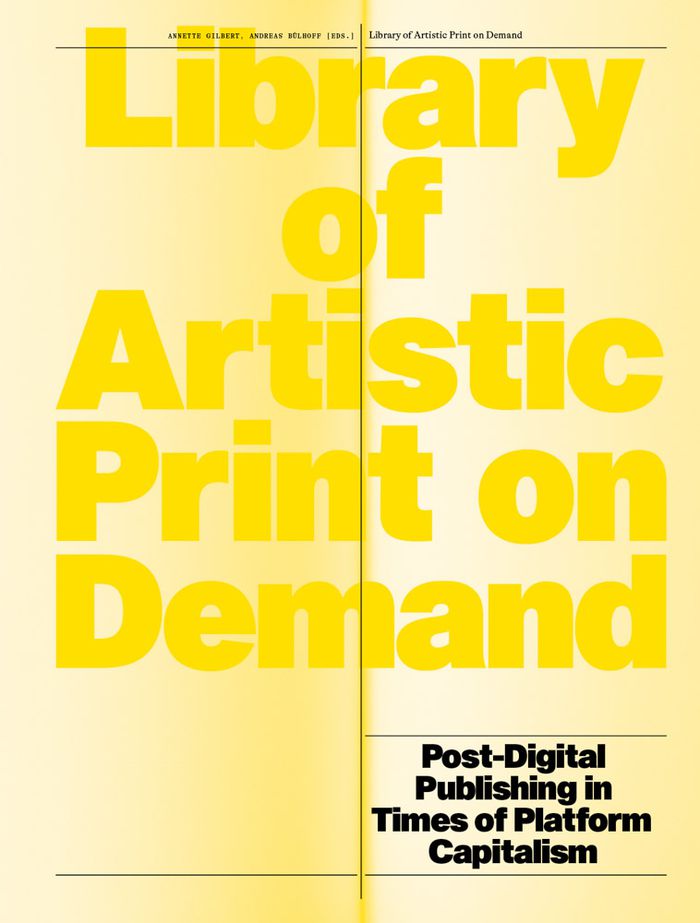
Print on demand has revolutionized publishing. Digital printing and online platforms such as Blurb, Lulu and Kindle Direct Publishing allow anyone to publish work immediately and without financial risk, opening up spaces beyond the trade book world and ostensibly democratizing production. Today an entire subculture is exploring print on demand in search of new economies and publics, while also critically negotiating our digital present. "The Library of Artistic Print on Demand" maps this experimental field for the first time, exploring its global spread, history, contradictions and political relevance through writings from international publishers and authors.
Library of artistic print on demand: Post-digital publishing in times of platform capitalism
Actions:
Price:
$90.00
(available in store)
Summary:
Print on demand has revolutionized publishing. Digital printing and online platforms such as Blurb, Lulu and Kindle Direct Publishing allow anyone to publish work immediately and without financial risk, opening up spaces beyond the trade book world and ostensibly democratizing production. Today an entire subculture is exploring print on demand in search of new economies and publics, while also critically negotiating our digital present. "The Library of Artistic Print on Demand" maps this experimental field for the first time, exploring its global spread, history, contradictions and political relevance through writings from international publishers and authors.
Form:
books
books
Publication:
September 2025
September 2025
Subject:
Archive, library and the digital
Archive, library and the digital
Form:
books
books
Price:
$33.95
(available to order)
Summary:
A social history of AI that finally reveals its roots in the spatial computation of industrial factories and the surveillance of collective behaviour. What is AI? A dominant view describes it as the quest ''to solve intelligence,'' a solution supposedly to be found in the secret logic of the mind or in the deep physiology of the brain, such as in its complex neural(...)
$33.95
(available to order)
Summary:
A social history of AI that finally reveals its roots in the spatial computation of industrial factories and the surveillance of collective behaviour. What is AI? A dominant view describes it as the quest ''to solve intelligence,'' a solution supposedly to be found in the secret logic of the mind or in the deep physiology of the brain, such as in its complex neural(...)
Title:
The eye of the master: A social history of artificial intelligence
Actions:
Price:
$33.95
(available to order)
Summary:
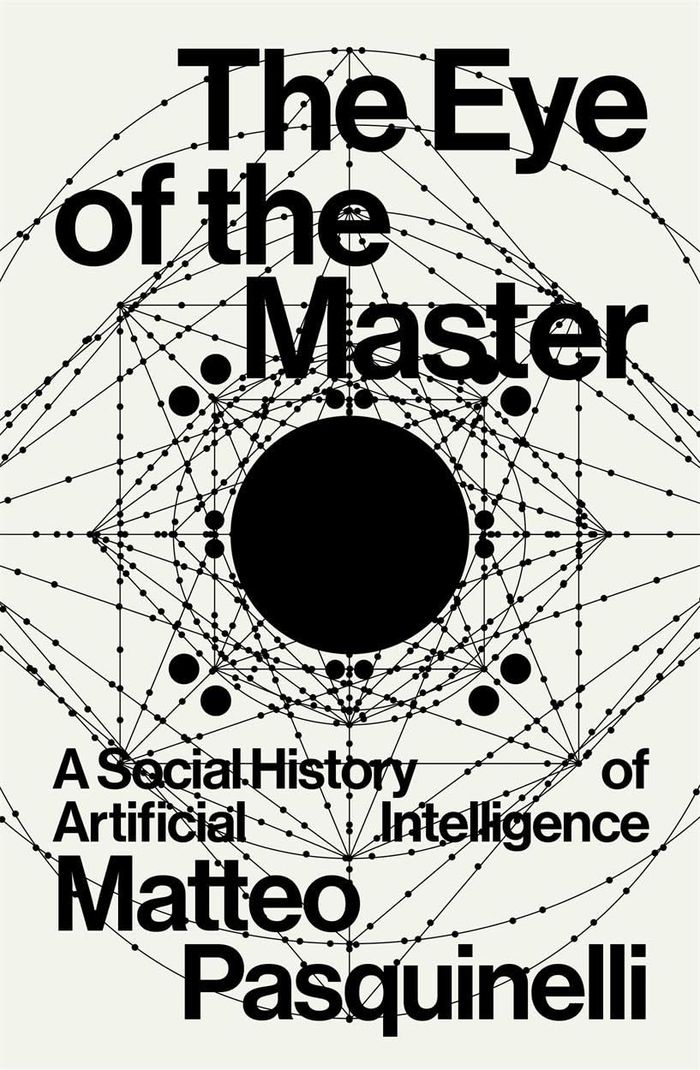
A social history of AI that finally reveals its roots in the spatial computation of industrial factories and the surveillance of collective behaviour. What is AI? A dominant view describes it as the quest ''to solve intelligence,'' a solution supposedly to be found in the secret logic of the mind or in the deep physiology of the brain, such as in its complex neural networks. ''The eye of the master'' argues, to the contrary, that the inner code of AI is shaped not by the imitation of biological intelligence, but the intelligence of labour and social relations, as it is found in Babbage's ''calculating engines'' of the industrial age as well as in the recent algorithms for image recognition and surveillance. The idea that AI may one day become autonomous (or ''sentient'', as someone thought of Google's LaMDA) is pure fantasy. Computer algorithms have always imitated the form of social relations and the organisation of labour in their own inner structure and their purpose remains blind automation. ''The eye of the master'' urges a new literacy on AI for scientists, journalists and new generations of activists, who should recognise that the ''mystery'' of AI is just the automation of labour at the highest degree, not intelligence per se.
The eye of the master: A social history of artificial intelligence
Actions:
Price:
$33.95
(available to order)
Summary:
A social history of AI that finally reveals its roots in the spatial computation of industrial factories and the surveillance of collective behaviour. What is AI? A dominant view describes it as the quest ''to solve intelligence,'' a solution supposedly to be found in the secret logic of the mind or in the deep physiology of the brain, such as in its complex neural networks. ''The eye of the master'' argues, to the contrary, that the inner code of AI is shaped not by the imitation of biological intelligence, but the intelligence of labour and social relations, as it is found in Babbage's ''calculating engines'' of the industrial age as well as in the recent algorithms for image recognition and surveillance. The idea that AI may one day become autonomous (or ''sentient'', as someone thought of Google's LaMDA) is pure fantasy. Computer algorithms have always imitated the form of social relations and the organisation of labour in their own inner structure and their purpose remains blind automation. ''The eye of the master'' urges a new literacy on AI for scientists, journalists and new generations of activists, who should recognise that the ''mystery'' of AI is just the automation of labour at the highest degree, not intelligence per se.
Form:
books
books
Publication:
October 2023
October 2023
Subject:
Archive, library and the digital
Archive, library and the digital
Form:
books
books
Title:
The specter of the archive: Political practice and the information state in early modern Britain
The specter of the archive: Political practice and the information state in early modern Britain
Actions:
Price:
$53.95
(available to order)
Summary:
In ''The Specter of the Archive'', Nicholas Popper shows that earlier eras had to grapple with the same problem—how to deal with too much information at their fingertips. He reveals that early modern Britain was a society newly drowning in paper, a light and durable technology whose spread allowed statesmen to record drafts, memoranda, and other ephemera that might(...)
$53.95
(available to order)
Summary:
In ''The Specter of the Archive'', Nicholas Popper shows that earlier eras had to grapple with the same problem—how to deal with too much information at their fingertips. He reveals that early modern Britain was a society newly drowning in paper, a light and durable technology whose spread allowed statesmen to record drafts, memoranda, and other ephemera that might(...)
Title:
The specter of the archive: Political practice and the information state in early modern Britain
Actions:
Price:
$53.95
(available to order)
Summary:
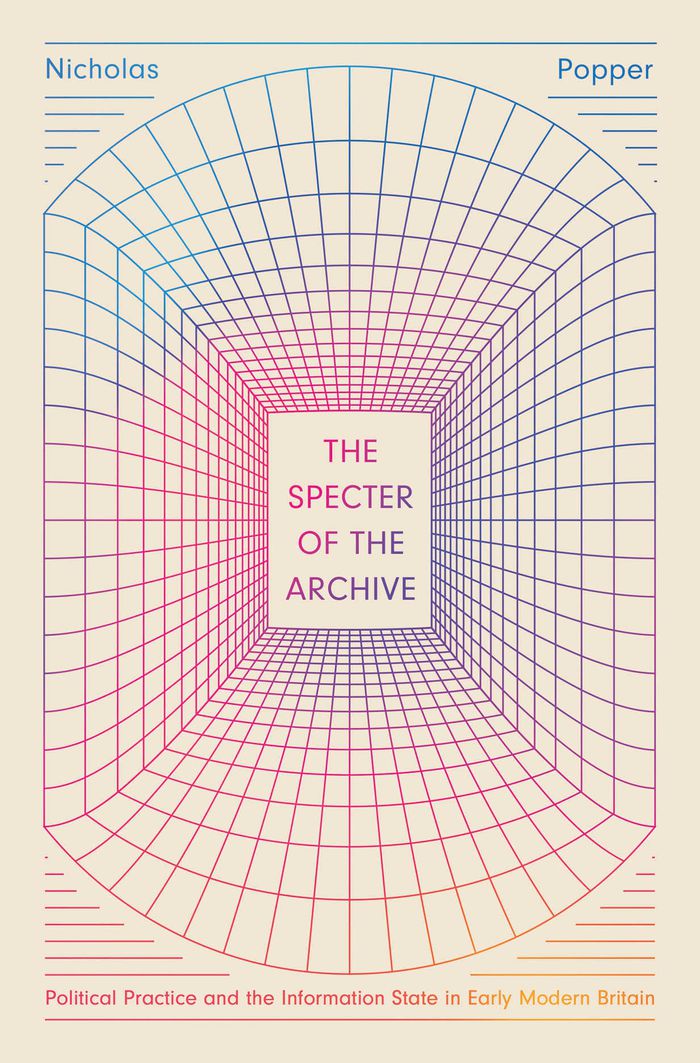
In ''The Specter of the Archive'', Nicholas Popper shows that earlier eras had to grapple with the same problem—how to deal with too much information at their fingertips. He reveals that early modern Britain was a society newly drowning in paper, a light and durable technology whose spread allowed statesmen to record drafts, memoranda, and other ephemera that might otherwise have been lost, and also made it possible for ordinary people to collect political texts. As original paperwork and copies alike flooded the government, information management became the core of politics. Focusing on two of the primary political archives of early modern England, the Tower of London Record Office and the State Paper Office, Popper traces the circulation of their materials through the government and the broader public sphere.
The specter of the archive: Political practice and the information state in early modern Britain
Actions:
Price:
$53.95
(available to order)
Summary:
In ''The Specter of the Archive'', Nicholas Popper shows that earlier eras had to grapple with the same problem—how to deal with too much information at their fingertips. He reveals that early modern Britain was a society newly drowning in paper, a light and durable technology whose spread allowed statesmen to record drafts, memoranda, and other ephemera that might otherwise have been lost, and also made it possible for ordinary people to collect political texts. As original paperwork and copies alike flooded the government, information management became the core of politics. Focusing on two of the primary political archives of early modern England, the Tower of London Record Office and the State Paper Office, Popper traces the circulation of their materials through the government and the broader public sphere.
Form:
books
books
Publication:
January 2024
January 2024
Subject:
Archive, library and the digital
Archive, library and the digital
Form:
books
books
Title:
On the digital humanities
On the digital humanities
Actions:
Price:
$35.99
(available to order)
Summary:
Since its inception, the digital humanities has been repeatedly attacked as a threat to the humanities: warnings from literary and cultural theorists of technology overtaking English departments and the mechanization of teaching have peppered popular media. Stephen Ramsay’s ''On the digital humanities'', a collection of essays spanning the personal to the polemic, is a(...)
$35.99
(available to order)
Summary:
Since its inception, the digital humanities has been repeatedly attacked as a threat to the humanities: warnings from literary and cultural theorists of technology overtaking English departments and the mechanization of teaching have peppered popular media. Stephen Ramsay’s ''On the digital humanities'', a collection of essays spanning the personal to the polemic, is a(...)
Title:
On the digital humanities
Actions:
Price:
$35.99
(available to order)
Summary:
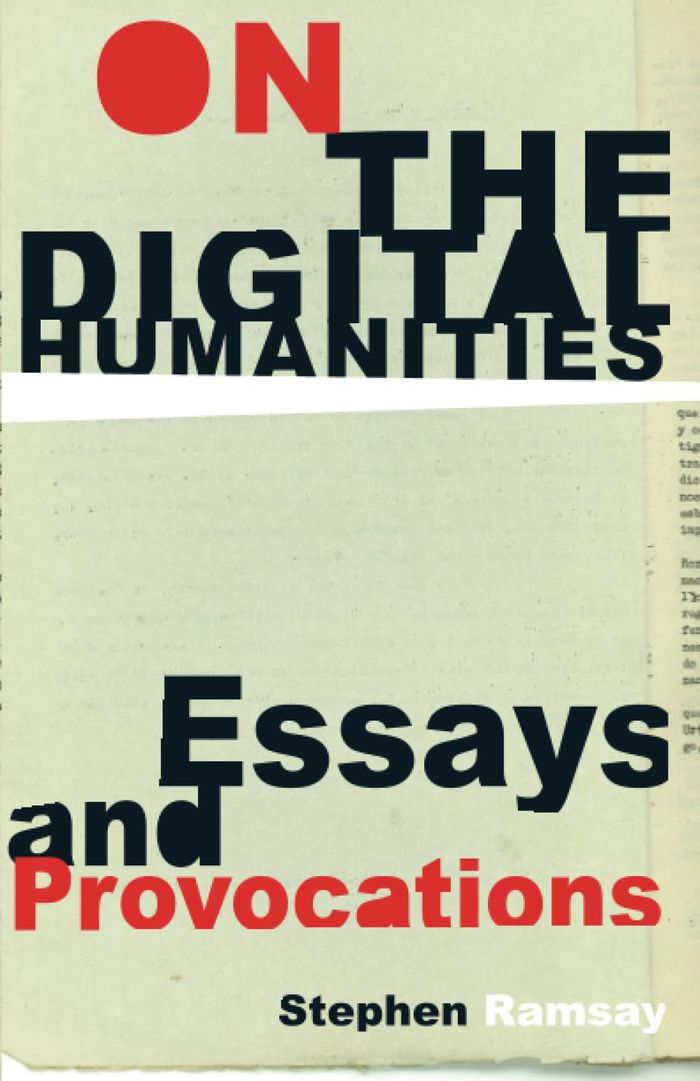
Since its inception, the digital humanities has been repeatedly attacked as a threat to the humanities: warnings from literary and cultural theorists of technology overtaking English departments and the mechanization of teaching have peppered popular media. Stephen Ramsay’s ''On the digital humanities'', a collection of essays spanning the personal to the polemic, is a spirited defense of the field of digital humanities. A founding figure in what was once known as 'humanities computing,' Ramsay has a well-known and contentious relationship with what is now called the digital humanities (DH). Here Ramsay collects and updates his most influential and notorious essays and speeches from the past fifteen years, considering DH from an array of practical and theoretical perspectives. The essays pursue a broad variety of themes, including the nature of data and its place in more conventional notions of text and interpretation, the relationship between the constraints of computation and the more open-ended nature of the humanities, the positioning of practical skills and infrastructures in both research and pedagogical contexts, the status of DH as a program for political and social action, and personal reflections on the author’s journey into the field as both a theorist and a technologist. These wide-ranging essays all center around one idea: that DH not forsake its connection to the humanities. While 'digital humanities' may sound like an entirely new form of engagement with the artifacts of human culture, Ramsay argues that the field well reveals what is most essential to humanistic inquiry.
On the digital humanities
Actions:
Price:
$35.99
(available to order)
Summary:
Since its inception, the digital humanities has been repeatedly attacked as a threat to the humanities: warnings from literary and cultural theorists of technology overtaking English departments and the mechanization of teaching have peppered popular media. Stephen Ramsay’s ''On the digital humanities'', a collection of essays spanning the personal to the polemic, is a spirited defense of the field of digital humanities. A founding figure in what was once known as 'humanities computing,' Ramsay has a well-known and contentious relationship with what is now called the digital humanities (DH). Here Ramsay collects and updates his most influential and notorious essays and speeches from the past fifteen years, considering DH from an array of practical and theoretical perspectives. The essays pursue a broad variety of themes, including the nature of data and its place in more conventional notions of text and interpretation, the relationship between the constraints of computation and the more open-ended nature of the humanities, the positioning of practical skills and infrastructures in both research and pedagogical contexts, the status of DH as a program for political and social action, and personal reflections on the author’s journey into the field as both a theorist and a technologist. These wide-ranging essays all center around one idea: that DH not forsake its connection to the humanities. While 'digital humanities' may sound like an entirely new form of engagement with the artifacts of human culture, Ramsay argues that the field well reveals what is most essential to humanistic inquiry.
Form:
books
books
Publication:
August 2023
August 2023
Subject:
Archive, library and the digital
Archive, library and the digital
Form:
books
books
Actions:
Price:
$72.50
(available to order)
Summary:
"Urgent archives" argues that archivists can and should do more to disrupt white supremacy and hetero-patriarchy beyond the standard liberal archival solutions of more diverse collecting and more inclusive description. Grounded in the emerging field of critical archival studies, this book uncovers how dominant western archival theories and practices are oppressive by(...)
$72.50
(available to order)
Summary:
"Urgent archives" argues that archivists can and should do more to disrupt white supremacy and hetero-patriarchy beyond the standard liberal archival solutions of more diverse collecting and more inclusive description. Grounded in the emerging field of critical archival studies, this book uncovers how dominant western archival theories and practices are oppressive by(...)
Title:
Urgent Archives: Enacting liberatory memory work
Actions:
Price:
$72.50
(available to order)
Summary:
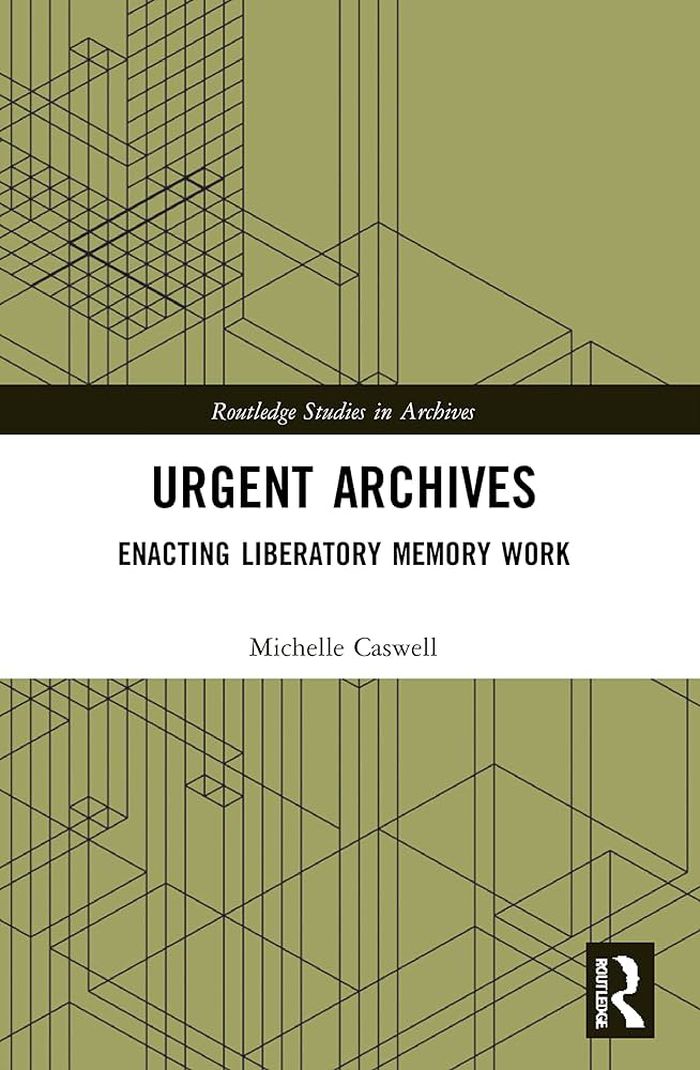
"Urgent archives" argues that archivists can and should do more to disrupt white supremacy and hetero-patriarchy beyond the standard liberal archival solutions of more diverse collecting and more inclusive description. Grounded in the emerging field of critical archival studies, this book uncovers how dominant western archival theories and practices are oppressive by design, while looking toward the the radical politics of community archives to envision new liberatory theories and practices. Based on more than a decade of ethnography at community archives sites including the South Asian American Digital Archive (SAADA), the book explores how members of minoritized communities activate records to build solidarities across and within communities, trouble linear progress narratives, and disrupt cycles of oppression. Caswell explores the temporal, representational, and material aspects of liberatory memory work, arguing that archival disruptions in time and space should be neither about the past nor the future, but about the liberatory affects and effects of memory work in the present.
Urgent Archives: Enacting liberatory memory work
Actions:
Price:
$72.50
(available to order)
Summary:
"Urgent archives" argues that archivists can and should do more to disrupt white supremacy and hetero-patriarchy beyond the standard liberal archival solutions of more diverse collecting and more inclusive description. Grounded in the emerging field of critical archival studies, this book uncovers how dominant western archival theories and practices are oppressive by design, while looking toward the the radical politics of community archives to envision new liberatory theories and practices. Based on more than a decade of ethnography at community archives sites including the South Asian American Digital Archive (SAADA), the book explores how members of minoritized communities activate records to build solidarities across and within communities, trouble linear progress narratives, and disrupt cycles of oppression. Caswell explores the temporal, representational, and material aspects of liberatory memory work, arguing that archival disruptions in time and space should be neither about the past nor the future, but about the liberatory affects and effects of memory work in the present.
Form:
books
books
Publication:
January 2023
January 2023
Subject:
Archive, library and the digital
Archive, library and the digital
Form:
books
books
Actions:
Price:
$33.00
(available in store)
Summary:
How does media architecture distribute suspicion and trust? What is a collage of media architecture? How is media architecture vectored? How can media architecture address privilege? These questions and conceptual provocations aim to challenge the binary of techno-optimism and technological agoraphobia, offering a platform for developing new, critically and contextually(...)
$33.00
(available in store)
Summary:
How does media architecture distribute suspicion and trust? What is a collage of media architecture? How is media architecture vectored? How can media architecture address privilege? These questions and conceptual provocations aim to challenge the binary of techno-optimism and technological agoraphobia, offering a platform for developing new, critically and contextually(...)
Subject:
Archive, library and the digital
Archive, library and the digital
Publication:
November 2023
November 2023
Title:
Provocations on media architecture
Actions:
Price:
$33.00
(available in store)
Summary:
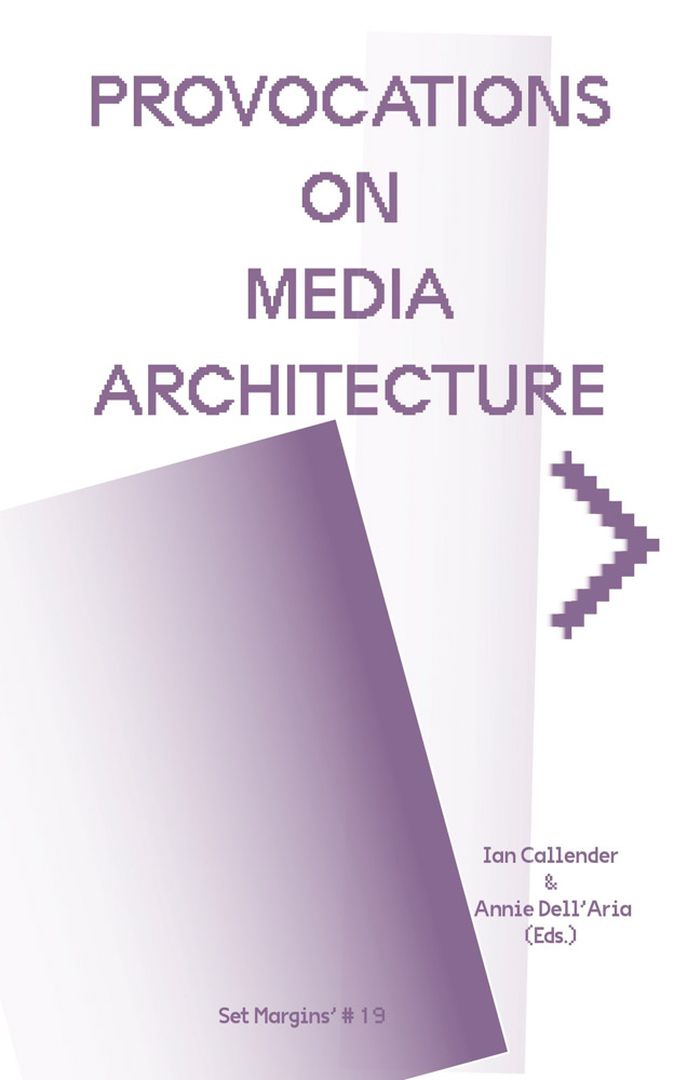
How does media architecture distribute suspicion and trust? What is a collage of media architecture? How is media architecture vectored? How can media architecture address privilege? These questions and conceptual provocations aim to challenge the binary of techno-optimism and technological agoraphobia, offering a platform for developing new, critically and contextually rooted theories that media architecture might grab hold of. Intentionally open-ended, ''Provocations on Media Architecture'' brings together 21 thought leaders across architecture, visual arts, design, curation, academia and public policy to address these ideas and themes. Authors respond with images and brief texts incorporating the perspective of their own creative and scholarly practice. Entries range from descriptions of relevant artworks and design projects to reflections spawned from first-person encounters with media architecture in situ, scholarly analyses and AI-assisted theory.
Provocations on media architecture
Actions:
Price:
$33.00
(available in store)
Summary:
How does media architecture distribute suspicion and trust? What is a collage of media architecture? How is media architecture vectored? How can media architecture address privilege? These questions and conceptual provocations aim to challenge the binary of techno-optimism and technological agoraphobia, offering a platform for developing new, critically and contextually rooted theories that media architecture might grab hold of. Intentionally open-ended, ''Provocations on Media Architecture'' brings together 21 thought leaders across architecture, visual arts, design, curation, academia and public policy to address these ideas and themes. Authors respond with images and brief texts incorporating the perspective of their own creative and scholarly practice. Entries range from descriptions of relevant artworks and design projects to reflections spawned from first-person encounters with media architecture in situ, scholarly analyses and AI-assisted theory.
Form:
books
books
Publication:
November 2023
November 2023
Subject:
Archive, library and the digital
Archive, library and the digital


