


380 Results
Form:
books
books
Actions:
Price:
$105.00
(available to order)
Summary:
In "The NAi effect", Sergio Figueiredo elegantly elucidates the social and cultural aims of architecture museums – arguably the most significant institutions in creating architecture culture as well as directing architectural discourse and practice. By providing a critical survey of the history and the legacy of the Netherlands Architecture Institute (NAi), Figueiredo(...)
$105.00
(available to order)
Summary:
In "The NAi effect", Sergio Figueiredo elegantly elucidates the social and cultural aims of architecture museums – arguably the most significant institutions in creating architecture culture as well as directing architectural discourse and practice. By providing a critical survey of the history and the legacy of the Netherlands Architecture Institute (NAi), Figueiredo(...)
Title:
The NAi effect: creating architecture culture
Actions:
Price:
$105.00
(available to order)
Summary:
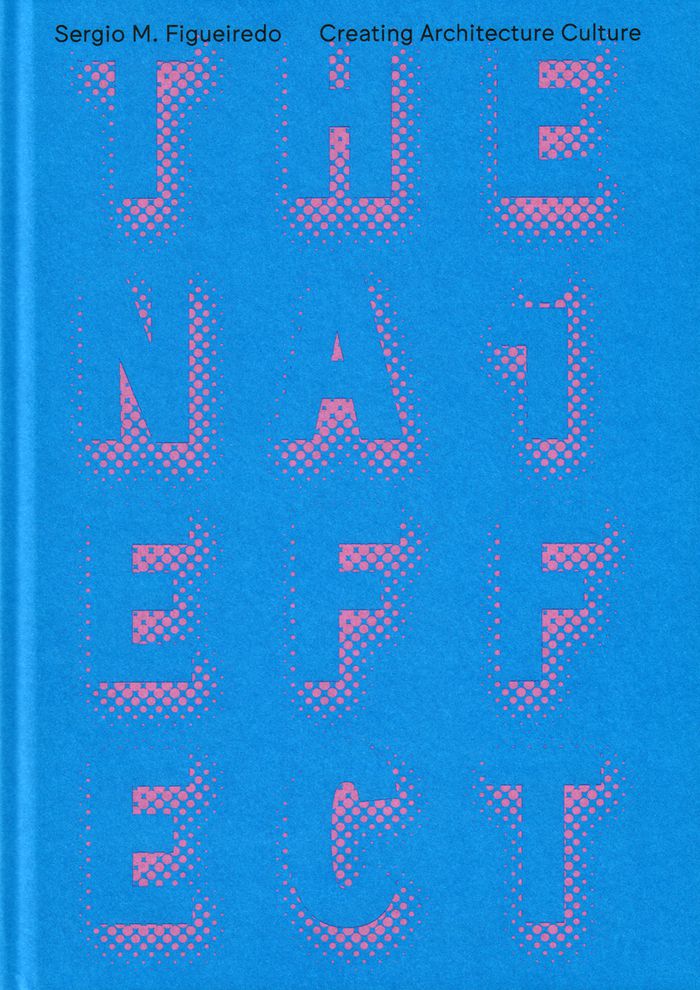
In "The NAi effect", Sergio Figueiredo elegantly elucidates the social and cultural aims of architecture museums – arguably the most significant institutions in creating architecture culture as well as directing architectural discourse and practice. By providing a critical survey of the history and the legacy of the Netherlands Architecture Institute (NAi), Figueiredo provides insights to how cultural policy works in practice and how specific national cultural institutions relate to a fast changing global context. This book is a probing study of one of the most important architectural institutions in the world as well as a critical analysis of a fundamental instrument for architecture’s advancement and dissemination since their inception in the early nineteenth century.
The NAi effect: creating architecture culture
Actions:
Price:
$105.00
(available to order)
Summary:
In "The NAi effect", Sergio Figueiredo elegantly elucidates the social and cultural aims of architecture museums – arguably the most significant institutions in creating architecture culture as well as directing architectural discourse and practice. By providing a critical survey of the history and the legacy of the Netherlands Architecture Institute (NAi), Figueiredo provides insights to how cultural policy works in practice and how specific national cultural institutions relate to a fast changing global context. This book is a probing study of one of the most important architectural institutions in the world as well as a critical analysis of a fundamental instrument for architecture’s advancement and dissemination since their inception in the early nineteenth century.
Form:
books
books
Publication:
November 2016
November 2016
Subject:
Contemporary Architecture
Contemporary Architecture
Form:
books
books
Actions:
Price:
$52.50
(available in store)
Summary:
The Serpentine Architecture Program expands for 2016, with four Summer Houses joining the Serpentine Pavilion. The Pavilion, designed by Bjarke Ingels Group (BIG), is an unzipped wall that is transformed from straight line to three-dimensional space, creating a dramatic structure that by day houses a café and by night becomes a space for the Serpentine’s Park Nights(...)
$52.50
(available in store)
Summary:
The Serpentine Architecture Program expands for 2016, with four Summer Houses joining the Serpentine Pavilion. The Pavilion, designed by Bjarke Ingels Group (BIG), is an unzipped wall that is transformed from straight line to three-dimensional space, creating a dramatic structure that by day houses a café and by night becomes a space for the Serpentine’s Park Nights(...)
Subject:
Contemporary Architecture
Contemporary Architecture
Publication:
May 2017
May 2017
Title:
Serpentine Pavilion and summer houses 2016. BIG, Kunlé Adeyemi, Yona Friedman, Barkow Leib
Actions:
Price:
$52.50
(available in store)
Summary:
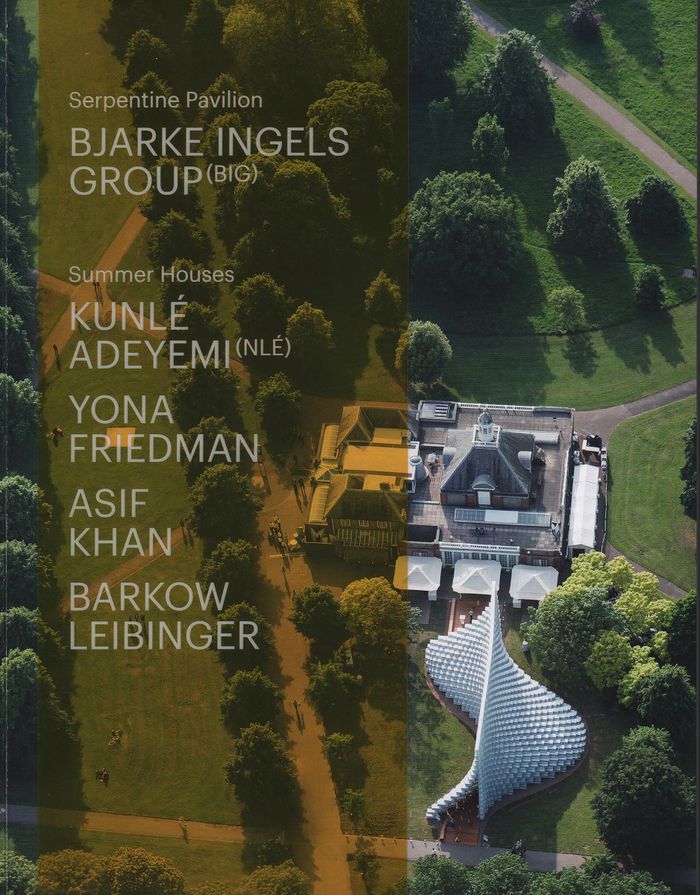
The Serpentine Architecture Program expands for 2016, with four Summer Houses joining the Serpentine Pavilion. The Pavilion, designed by Bjarke Ingels Group (BIG), is an unzipped wall that is transformed from straight line to three-dimensional space, creating a dramatic structure that by day houses a café and by night becomes a space for the Serpentine’s Park Nights performance program. Kunlé Adeyemi’s Summer House is an inverse replica of Queen Caroline’s Temple—a tribute to its robust form, space and material, recomposed into a new sculptural object. Barkow Leibinger were inspired by another, now extinct, 18th-century pavilion also designed by William Kent, which rotated and offered 360-degree views of the Park. Yona Friedman’s Summer House takes the form of a modular structure that can be assembled and disassembled. Asif Khan’s design is inspired by the fact that Queen Caroline’s Temple was positioned in a way that would allow it to catch the sunlight from the Serpentine lake.
Serpentine Pavilion and summer houses 2016. BIG, Kunlé Adeyemi, Yona Friedman, Barkow Leib
Actions:
Price:
$52.50
(available in store)
Summary:
The Serpentine Architecture Program expands for 2016, with four Summer Houses joining the Serpentine Pavilion. The Pavilion, designed by Bjarke Ingels Group (BIG), is an unzipped wall that is transformed from straight line to three-dimensional space, creating a dramatic structure that by day houses a café and by night becomes a space for the Serpentine’s Park Nights performance program. Kunlé Adeyemi’s Summer House is an inverse replica of Queen Caroline’s Temple—a tribute to its robust form, space and material, recomposed into a new sculptural object. Barkow Leibinger were inspired by another, now extinct, 18th-century pavilion also designed by William Kent, which rotated and offered 360-degree views of the Park. Yona Friedman’s Summer House takes the form of a modular structure that can be assembled and disassembled. Asif Khan’s design is inspired by the fact that Queen Caroline’s Temple was positioned in a way that would allow it to catch the sunlight from the Serpentine lake.
Form:
books
books
Publication:
May 2017
May 2017
Subject:
Contemporary Architecture
Contemporary Architecture
Form:
books
books
Title:
Les Docks de Marseille
Les Docks de Marseille
Actions:
Price:
$26.95
(available to order)
Summary:
Le bâtiment des Docks accompagne, depuis quelque 150 ans, les heurs et malheurs de l'économie marseillaise. Emblématique, à l'époque de sa construction, de l'essor de l'un des tout premiers ports mondiaux et de l'entrée triomphale de la deuxième ville de France dans l'ère industrielle, il fut aussi le miroir de leur déclin commun au terme des fameuses « Trente glorieuses(...)
$26.95
(available to order)
Summary:
Le bâtiment des Docks accompagne, depuis quelque 150 ans, les heurs et malheurs de l'économie marseillaise. Emblématique, à l'époque de sa construction, de l'essor de l'un des tout premiers ports mondiaux et de l'entrée triomphale de la deuxième ville de France dans l'ère industrielle, il fut aussi le miroir de leur déclin commun au terme des fameuses « Trente glorieuses(...)
Title:
Les Docks de Marseille
Actions:
Price:
$26.95
(available to order)
Summary:
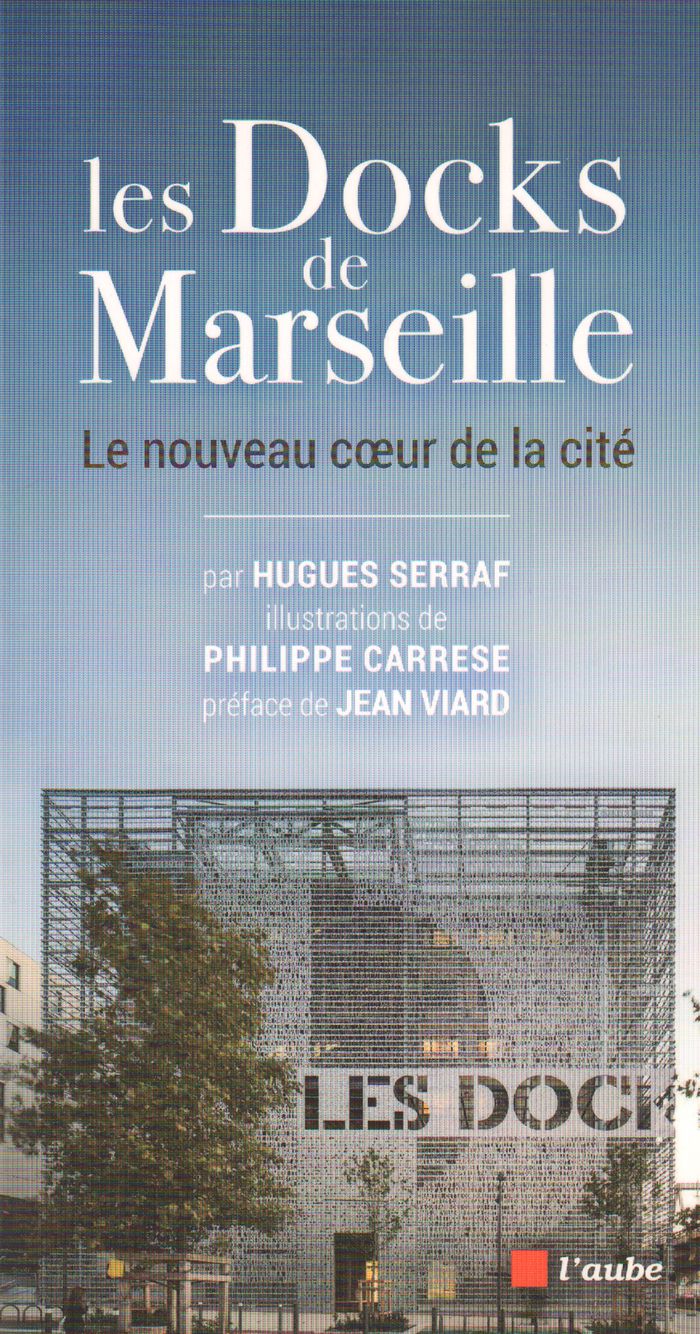
Le bâtiment des Docks accompagne, depuis quelque 150 ans, les heurs et malheurs de l'économie marseillaise. Emblématique, à l'époque de sa construction, de l'essor de l'un des tout premiers ports mondiaux et de l'entrée triomphale de la deuxième ville de France dans l'ère industrielle, il fut aussi le miroir de leur déclin commun au terme des fameuses « Trente glorieuses ». Réinventé au tournant des années 90 avant d'être littéralement transfiguré en 2016, il est désormais symbolique du passage de Marseille à l'ère post-industrielle en même temps que la porte d'entrée de ce pôle d'affaires majeur qu'est Euroméditerranée.
Les Docks de Marseille
Actions:
Price:
$26.95
(available to order)
Summary:
Le bâtiment des Docks accompagne, depuis quelque 150 ans, les heurs et malheurs de l'économie marseillaise. Emblématique, à l'époque de sa construction, de l'essor de l'un des tout premiers ports mondiaux et de l'entrée triomphale de la deuxième ville de France dans l'ère industrielle, il fut aussi le miroir de leur déclin commun au terme des fameuses « Trente glorieuses ». Réinventé au tournant des années 90 avant d'être littéralement transfiguré en 2016, il est désormais symbolique du passage de Marseille à l'ère post-industrielle en même temps que la porte d'entrée de ce pôle d'affaires majeur qu'est Euroméditerranée.
Form:
books
books
Publication:
February 2017
February 2017
Subject:
Contemporary Architecture
Contemporary Architecture
Form:
books
books
Title:
Possible mediums
Possible mediums
Actions:
Price:
$46.00
(available to order)
Summary:
''Possible Mediums'' presents a collection of sixteen speculative design mediums by emerging architects. Each chapter defines an active medium in contemporary architecture through descriptions, drawings, and objects. ''Possible Mediums'' arranges projects according to shared technical and aesthetic traits, creating a vibrant taxonomy of design. Descriptive texts explain(...)
$46.00
(available to order)
Summary:
''Possible Mediums'' presents a collection of sixteen speculative design mediums by emerging architects. Each chapter defines an active medium in contemporary architecture through descriptions, drawings, and objects. ''Possible Mediums'' arranges projects according to shared technical and aesthetic traits, creating a vibrant taxonomy of design. Descriptive texts explain(...)
Subject:
Contemporary Architecture
Contemporary Architecture
Publication:
February 2019
February 2019
Title:
Possible mediums
Actions:
Price:
$46.00
(available to order)
Summary:
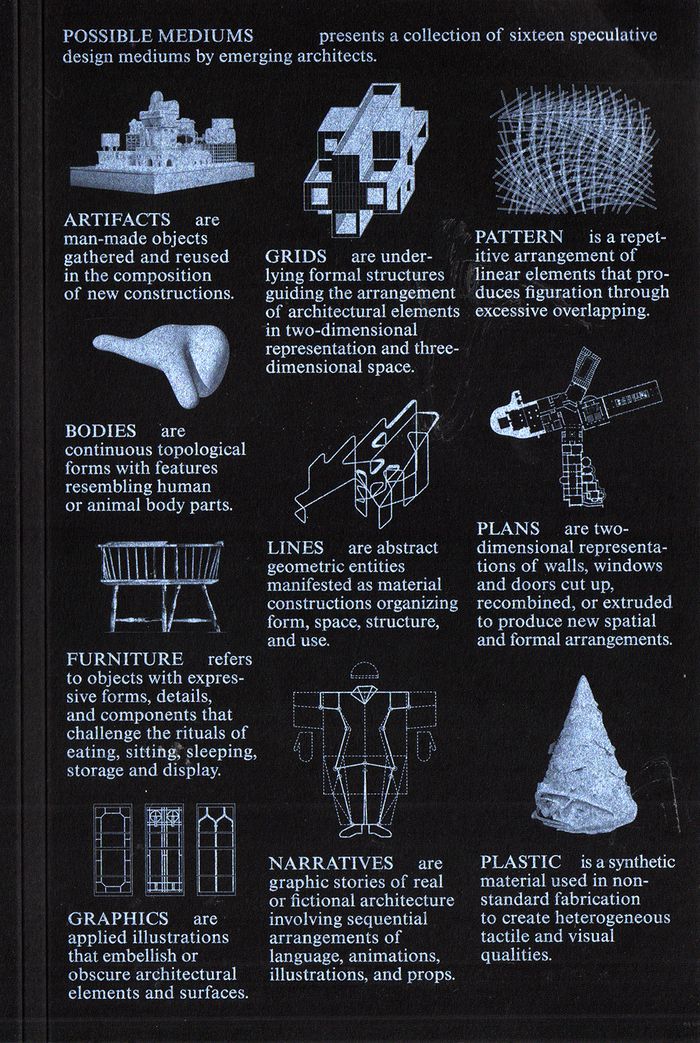
''Possible Mediums'' presents a collection of sixteen speculative design mediums by emerging architects. Each chapter defines an active medium in contemporary architecture through descriptions, drawings, and objects. ''Possible Mediums'' arranges projects according to shared technical and aesthetic traits, creating a vibrant taxonomy of design. Descriptive texts explain the working principles behind each medium and introduce design concepts intended to inspire students and professionals alike. Through its many contributors, ''Possible Mediums'' establishes design as a collective endeavor propelled by the open exchange of ideas and techniques. ''Possible Mediums'' is not a systematic theory, a manifesto, or a banal survey; it is a projection of architecture and knowledge to come.
Possible mediums
Actions:
Price:
$46.00
(available to order)
Summary:
''Possible Mediums'' presents a collection of sixteen speculative design mediums by emerging architects. Each chapter defines an active medium in contemporary architecture through descriptions, drawings, and objects. ''Possible Mediums'' arranges projects according to shared technical and aesthetic traits, creating a vibrant taxonomy of design. Descriptive texts explain the working principles behind each medium and introduce design concepts intended to inspire students and professionals alike. Through its many contributors, ''Possible Mediums'' establishes design as a collective endeavor propelled by the open exchange of ideas and techniques. ''Possible Mediums'' is not a systematic theory, a manifesto, or a banal survey; it is a projection of architecture and knowledge to come.
Form:
books
books
Publication:
February 2019
February 2019
Subject:
Contemporary Architecture
Contemporary Architecture
Form:
books
books
Price:
$45.00
(available to order)
Summary:
"Against the grain" features the work of three studios of the Louis I. Kahn Visiting Assistant Professors at Yale. Marcelo Spina and Georgina Huljich in "Brutal beauty: piles, monoliths and the incongruous whole" explored ways to make mute icons through monolithic form so that the buildings were foreign to their context and difficult to read formally for a film center in(...)
$45.00
(available to order)
Summary:
"Against the grain" features the work of three studios of the Louis I. Kahn Visiting Assistant Professors at Yale. Marcelo Spina and Georgina Huljich in "Brutal beauty: piles, monoliths and the incongruous whole" explored ways to make mute icons through monolithic form so that the buildings were foreign to their context and difficult to read formally for a film center in(...)
Title:
Against the grain: Louis I. Kahn visiting assistant professorship
Actions:
Price:
$45.00
(available to order)
Summary:
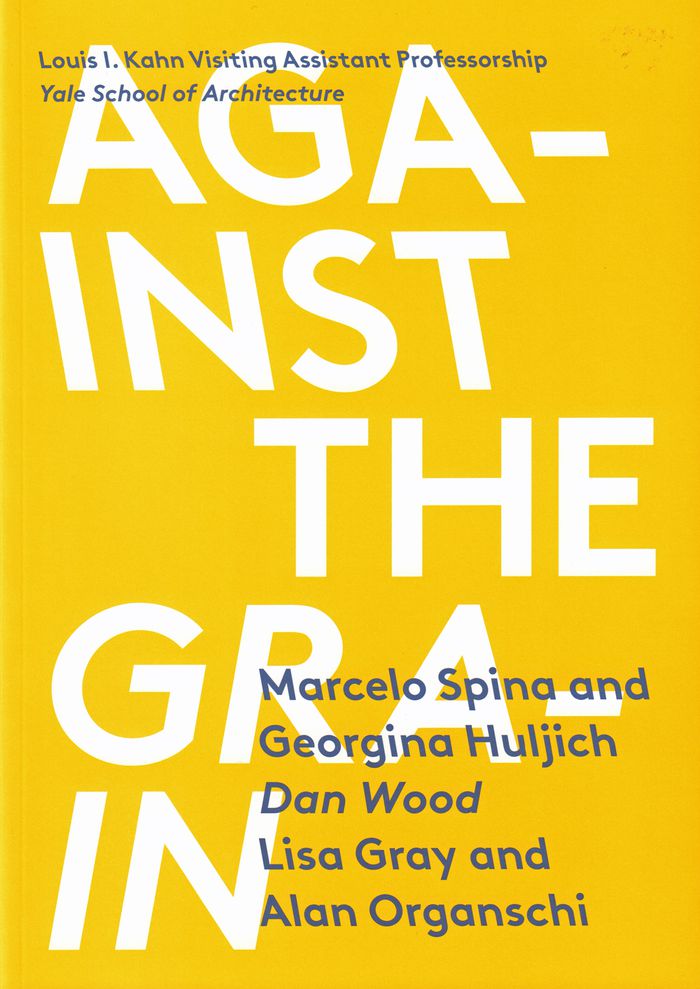
"Against the grain" features the work of three studios of the Louis I. Kahn Visiting Assistant Professors at Yale. Marcelo Spina and Georgina Huljich in "Brutal beauty: piles, monoliths and the incongruous whole" explored ways to make mute icons through monolithic form so that the buildings were foreign to their context and difficult to read formally for a film center in Los Angeles. Dan Wood in "Boulevard Triumphant: ecological infrastructure, architecture, modernization, and the image of the city" a studio for a civic center in Gabon that challenged the architectural language in Africa beyond the clichés and nostalgia to create an architecture that embodied a new ambition. Lisa Gray and Alan Organschi in "Timber innovation district: new timber technologies and contemporary high performance wood architecture" researched wood as a material for larger-scale projects for a site on New Haven’s working waterfront, with projects ranging from bridges to manufacturing facilities and multi-family housing. Edited by Jackie Kow and Nina Rappaport the book is designed by MGMT.design and is distributed by Actar D.
Against the grain: Louis I. Kahn visiting assistant professorship
Actions:
Price:
$45.00
(available to order)
Summary:
"Against the grain" features the work of three studios of the Louis I. Kahn Visiting Assistant Professors at Yale. Marcelo Spina and Georgina Huljich in "Brutal beauty: piles, monoliths and the incongruous whole" explored ways to make mute icons through monolithic form so that the buildings were foreign to their context and difficult to read formally for a film center in Los Angeles. Dan Wood in "Boulevard Triumphant: ecological infrastructure, architecture, modernization, and the image of the city" a studio for a civic center in Gabon that challenged the architectural language in Africa beyond the clichés and nostalgia to create an architecture that embodied a new ambition. Lisa Gray and Alan Organschi in "Timber innovation district: new timber technologies and contemporary high performance wood architecture" researched wood as a material for larger-scale projects for a site on New Haven’s working waterfront, with projects ranging from bridges to manufacturing facilities and multi-family housing. Edited by Jackie Kow and Nina Rappaport the book is designed by MGMT.design and is distributed by Actar D.
Form:
books
books
Publication:
August 2016
August 2016
Subject:
Contemporary Architecture
Contemporary Architecture
Form:
books
books
Title:
A sustainable bodega and hotel: Edward P. Bass distinguished visiting architecture fellowship
A sustainable bodega and hotel: Edward P. Bass distinguished visiting architecture fellowship
Actions:
Price:
$47.95
(available to order)
Summary:
"A sustainable bodega and hotel in Rioja" presents the studio of the Yale Edward P. Bass Distinguished Visiting Architecture Fellowship taught by John Spence, entrepreneur and chairman of Karma Resorts worldwide with architect Andy Bow, a senior partner at Foster & Partners in London; environmental engineer Patrick Bellew, principal of Atelier Ten; and Timothy Newton of(...)
$47.95
(available to order)
Summary:
"A sustainable bodega and hotel in Rioja" presents the studio of the Yale Edward P. Bass Distinguished Visiting Architecture Fellowship taught by John Spence, entrepreneur and chairman of Karma Resorts worldwide with architect Andy Bow, a senior partner at Foster & Partners in London; environmental engineer Patrick Bellew, principal of Atelier Ten; and Timothy Newton of(...)
Title:
A sustainable bodega and hotel: Edward P. Bass distinguished visiting architecture fellowship
Actions:
Price:
$47.95
(available to order)
Summary:
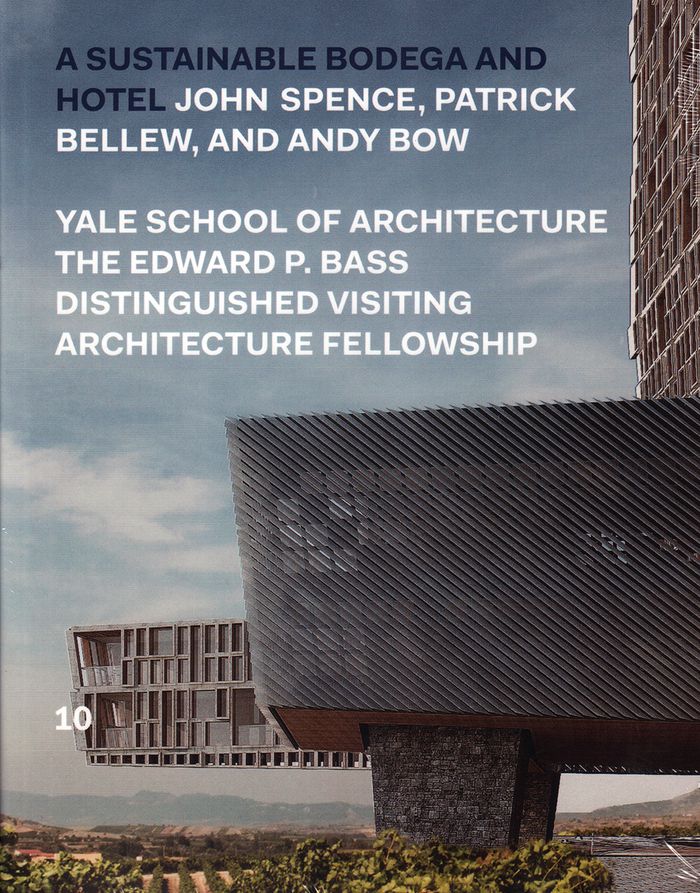
"A sustainable bodega and hotel in Rioja" presents the studio of the Yale Edward P. Bass Distinguished Visiting Architecture Fellowship taught by John Spence, entrepreneur and chairman of Karma Resorts worldwide with architect Andy Bow, a senior partner at Foster & Partners in London; environmental engineer Patrick Bellew, principal of Atelier Ten; and Timothy Newton of the Yale faculty. The studio proposed designs for a world-class winery and hotel complex in Rioja, Spain where wineries are both vernacular and exuberant in design. The students were challenged to address social, economic, and environmental sustainability in a holistic and integrated way. The project resulted in a range of strategies to sustainably harvest, engage local workforce, integrate landscape, and source materials responsibly. The project features attractions and symbiotic food production to facilitate tourist visits. Edited by Henry Chan and Nina Rappaport the book is designed by MGMT.design and is distributed by Actar D.
A sustainable bodega and hotel: Edward P. Bass distinguished visiting architecture fellowship
Actions:
Price:
$47.95
(available to order)
Summary:
"A sustainable bodega and hotel in Rioja" presents the studio of the Yale Edward P. Bass Distinguished Visiting Architecture Fellowship taught by John Spence, entrepreneur and chairman of Karma Resorts worldwide with architect Andy Bow, a senior partner at Foster & Partners in London; environmental engineer Patrick Bellew, principal of Atelier Ten; and Timothy Newton of the Yale faculty. The studio proposed designs for a world-class winery and hotel complex in Rioja, Spain where wineries are both vernacular and exuberant in design. The students were challenged to address social, economic, and environmental sustainability in a holistic and integrated way. The project resulted in a range of strategies to sustainably harvest, engage local workforce, integrate landscape, and source materials responsibly. The project features attractions and symbiotic food production to facilitate tourist visits. Edited by Henry Chan and Nina Rappaport the book is designed by MGMT.design and is distributed by Actar D.
Form:
books
books
Publication:
March 2017
March 2017
Subject:
Contemporary Architecture
Contemporary Architecture
Form:
books
books
Actions:
Price:
$79.95
(available to order)
Summary:
The book highlights the architectural consequences of humanitarian actions on the basis of three case studies in Port-au-Prince, the West Bank, and Nairobi. Twelve projects are analyzed in terms of typology and construction. The authors investigate the far-reaching effects of such architectural aid and supply architects, town planners, and NGOs with useful advice for(...)
$79.95
(available to order)
Summary:
The book highlights the architectural consequences of humanitarian actions on the basis of three case studies in Port-au-Prince, the West Bank, and Nairobi. Twelve projects are analyzed in terms of typology and construction. The authors investigate the far-reaching effects of such architectural aid and supply architects, town planners, and NGOs with useful advice for(...)
Subject:
Contemporary Architecture
Contemporary Architecture
Publication:
September 2017
September 2017
Title:
Architectures of humanitarian space: forms of aid
Actions:
Price:
$79.95
(available to order)
Summary:
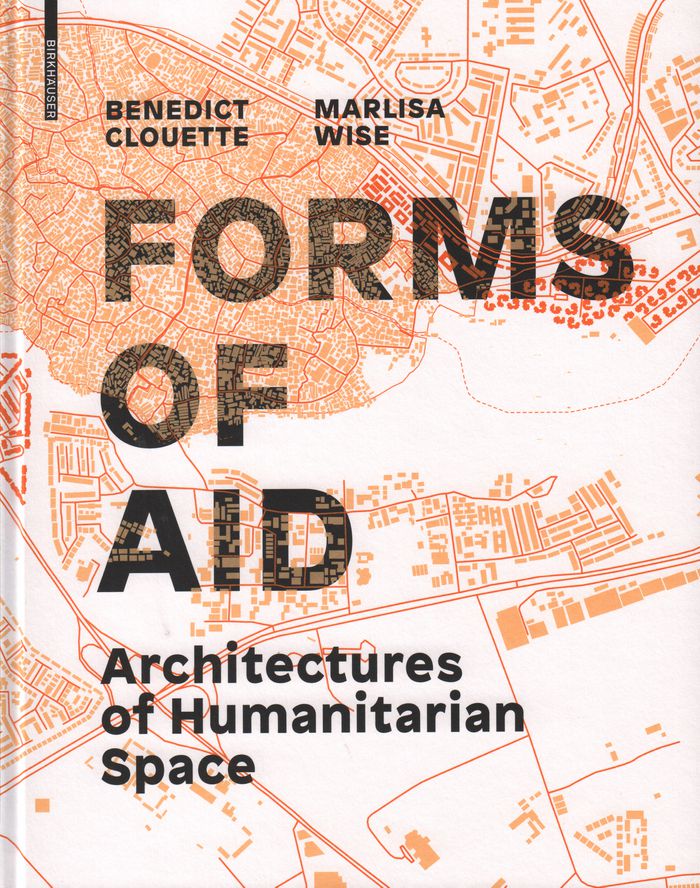
The book highlights the architectural consequences of humanitarian actions on the basis of three case studies in Port-au-Prince, the West Bank, and Nairobi. Twelve projects are analyzed in terms of typology and construction. The authors investigate the far-reaching effects of such architectural aid and supply architects, town planners, and NGOs with useful advice for future planning and design.
Architectures of humanitarian space: forms of aid
Actions:
Price:
$79.95
(available to order)
Summary:
The book highlights the architectural consequences of humanitarian actions on the basis of three case studies in Port-au-Prince, the West Bank, and Nairobi. Twelve projects are analyzed in terms of typology and construction. The authors investigate the far-reaching effects of such architectural aid and supply architects, town planners, and NGOs with useful advice for future planning and design.
Form:
books
books
Publication:
September 2017
September 2017
Subject:
Contemporary Architecture
Contemporary Architecture
Form:
books
books
Actions:
Price:
$52.50
(available to order)
Summary:
Architecture accounts for one third of global carbon emissions, energy consumption and waste. Buildings are increasingly understood to impact broader ecologies. Yet embodied energy – the various forms of energy required to extract raw matter, to produce and transport building materials and to assemble a given building – remains largely underexplored. "Embodied Energy and(...)
$52.50
(available to order)
Summary:
Architecture accounts for one third of global carbon emissions, energy consumption and waste. Buildings are increasingly understood to impact broader ecologies. Yet embodied energy – the various forms of energy required to extract raw matter, to produce and transport building materials and to assemble a given building – remains largely underexplored. "Embodied Energy and(...)
Title:
Embodied energy and design: making architecture between metrics and narratives
Actions:
Price:
$52.50
(available to order)
Summary:
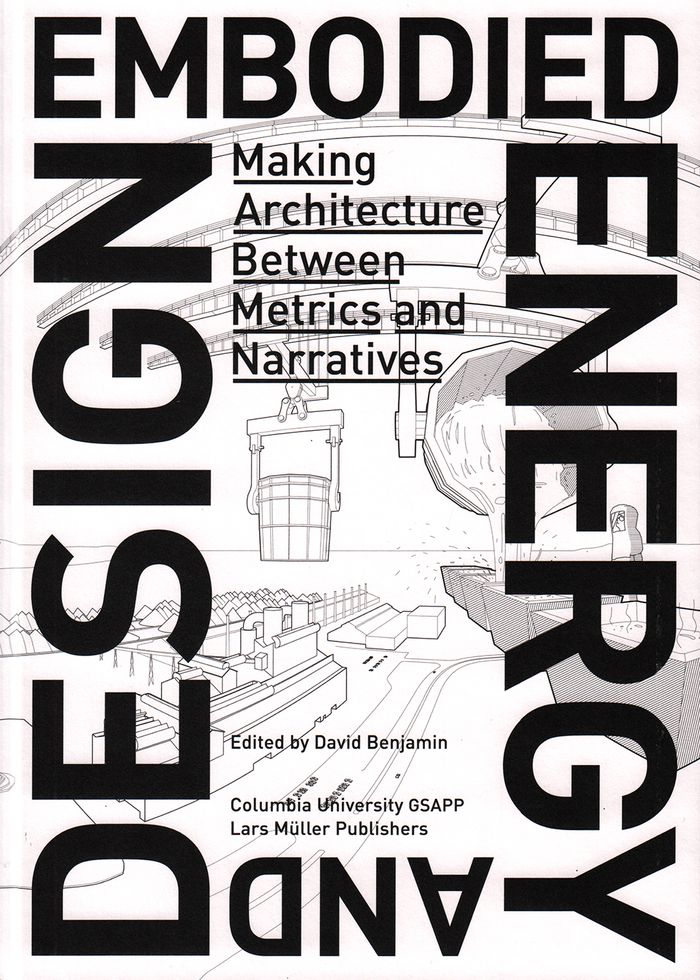
Architecture accounts for one third of global carbon emissions, energy consumption and waste. Buildings are increasingly understood to impact broader ecologies. Yet embodied energy – the various forms of energy required to extract raw matter, to produce and transport building materials and to assemble a given building – remains largely underexplored. "Embodied Energy and Design: Making Architecture Between Metrics and Narratives" addresses and thoroughly examines the issue. This book reconsiders the act of making a building as an act of energy expenditure and asks questions about a variety of related scales, methods of analysis and design opportunities. How might new technologies and materials challenge default positions on sustainability? Should we think of buildings as dynamic systems connecting multiple sites rather than as static and isolated objects? Does the duration of architecture extend beyond the life of a built structure?
Embodied energy and design: making architecture between metrics and narratives
Actions:
Price:
$52.50
(available to order)
Summary:
Architecture accounts for one third of global carbon emissions, energy consumption and waste. Buildings are increasingly understood to impact broader ecologies. Yet embodied energy – the various forms of energy required to extract raw matter, to produce and transport building materials and to assemble a given building – remains largely underexplored. "Embodied Energy and Design: Making Architecture Between Metrics and Narratives" addresses and thoroughly examines the issue. This book reconsiders the act of making a building as an act of energy expenditure and asks questions about a variety of related scales, methods of analysis and design opportunities. How might new technologies and materials challenge default positions on sustainability? Should we think of buildings as dynamic systems connecting multiple sites rather than as static and isolated objects? Does the duration of architecture extend beyond the life of a built structure?
Form:
books
books
Publication:
January 2018
January 2018
Subject:
Contemporary Architecture
Contemporary Architecture
Form:
books
books
Price:
$45.00
(available to order)
Summary:
This book brings together a diverse range of exemplary architectural projects from across the globe. Carefully selected and examined by a team of experts, these projects demonstrate innovative approaches that respond to the challenges and potentials of contemporary conditions and contexts. One guiding principle of this cycle of the Aga Khan Award for Architecture is the(...)
$45.00
(available to order)
Summary:
This book brings together a diverse range of exemplary architectural projects from across the globe. Carefully selected and examined by a team of experts, these projects demonstrate innovative approaches that respond to the challenges and potentials of contemporary conditions and contexts. One guiding principle of this cycle of the Aga Khan Award for Architecture is the(...)
Title:
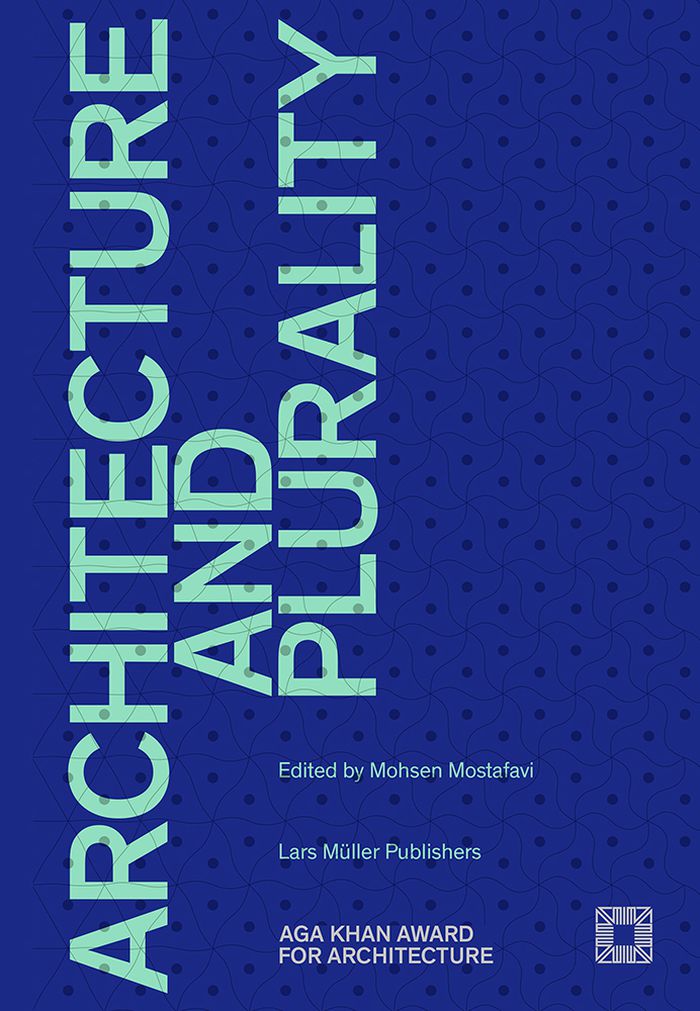
Architecture and plurality: Aga Khan award for architecture 2016
Actions:
Price:
$45.00
(available to order)
Summary:
This book brings together a diverse range of exemplary architectural projects from across the globe. Carefully selected and examined by a team of experts, these projects demonstrate innovative approaches that respond to the challenges and potentials of contemporary conditions and contexts. One guiding principle of this cycle of the Aga Khan Award for Architecture is the importance of plurality. Since its inception the Award has aimed to be inclusive and to embrace the engagement of a diverse group of users. But equally, it has sought projects that explore a plurality of methods and architectures in achieving that goal. Here, the authors of the essays use that productive tension between architecture and plurality not only to provide a framework for the examination of the projects but also to explore the intellectual and projective means by which architecture and plurality can find other common grounds in the future.
Architecture and plurality: Aga Khan award for architecture 2016
Actions:
Price:
$45.00
(available to order)
Summary:
This book brings together a diverse range of exemplary architectural projects from across the globe. Carefully selected and examined by a team of experts, these projects demonstrate innovative approaches that respond to the challenges and potentials of contemporary conditions and contexts. One guiding principle of this cycle of the Aga Khan Award for Architecture is the importance of plurality. Since its inception the Award has aimed to be inclusive and to embrace the engagement of a diverse group of users. But equally, it has sought projects that explore a plurality of methods and architectures in achieving that goal. Here, the authors of the essays use that productive tension between architecture and plurality not only to provide a framework for the examination of the projects but also to explore the intellectual and projective means by which architecture and plurality can find other common grounds in the future.
Form:
books
books
Publication:
November 2016
November 2016
Subject:
Contemporary Architecture
Contemporary Architecture
Form:
books
books
Actions:
Price:
$19.95
(available to order)
Summary:
L’histoire de l’architecture ne cesse de conjuguer deux regards : celui, panoramique, portant sur les ensembles urbains, révélant les politiques sociales ou techniques, et celui sur les édifices et leurs intérieurs, vus en gros plan, qui reflète les idéaux et l’engagement de leurs auteurs et de leurs habitants. Faisant dialoguer théoriciens, philosophes et écrivains avec(...)
$19.95
(available to order)
Summary:
L’histoire de l’architecture ne cesse de conjuguer deux regards : celui, panoramique, portant sur les ensembles urbains, révélant les politiques sociales ou techniques, et celui sur les édifices et leurs intérieurs, vus en gros plan, qui reflète les idéaux et l’engagement de leurs auteurs et de leurs habitants. Faisant dialoguer théoriciens, philosophes et écrivains avec(...)
Publication:
February 2017
February 2017
Title:
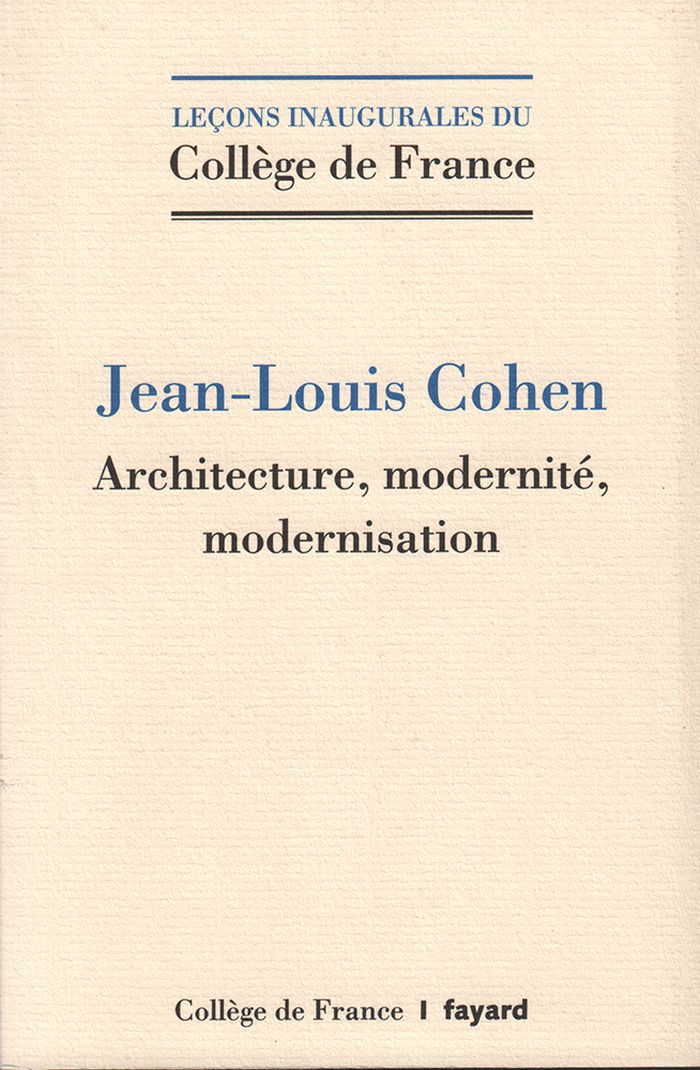
Architecture, modernité et modernisation
Actions:
Price:
$19.95
(available to order)
Summary:
L’histoire de l’architecture ne cesse de conjuguer deux regards : celui, panoramique, portant sur les ensembles urbains, révélant les politiques sociales ou techniques, et celui sur les édifices et leurs intérieurs, vus en gros plan, qui reflète les idéaux et l’engagement de leurs auteurs et de leurs habitants. Faisant dialoguer théoriciens, philosophes et écrivains avec les architectes du xxe siècle (Mies van der Rohe, Wright ou Le Corbusier), Jean-Louis Cohen suggère une approche renouvelée, ancrée dans l’histoire culturelle et dans l’humain, de l’architecture comme questionnement et comme pratique.
Architecture, modernité et modernisation
Actions:
Price:
$19.95
(available to order)
Summary:
L’histoire de l’architecture ne cesse de conjuguer deux regards : celui, panoramique, portant sur les ensembles urbains, révélant les politiques sociales ou techniques, et celui sur les édifices et leurs intérieurs, vus en gros plan, qui reflète les idéaux et l’engagement de leurs auteurs et de leurs habitants. Faisant dialoguer théoriciens, philosophes et écrivains avec les architectes du xxe siècle (Mies van der Rohe, Wright ou Le Corbusier), Jean-Louis Cohen suggère une approche renouvelée, ancrée dans l’histoire culturelle et dans l’humain, de l’architecture comme questionnement et comme pratique.
Form:
books
books
Publication:
February 2017
February 2017


