


878 Results
Form:
books
books
Actions:
Price:
$27.00
(available to order)
Summary:
Imagine a world without things. There would be nothing to describe, nothing to explain, remark, interpret, or complain about. Without things, we would stop speaking; we would become as mute as things are alleged to be. In nine original essays, internationally renowned historians of art and of science seek to understand how objects become charged with significance without(...)
$27.00
(available to order)
Summary:
Imagine a world without things. There would be nothing to describe, nothing to explain, remark, interpret, or complain about. Without things, we would stop speaking; we would become as mute as things are alleged to be. In nine original essays, internationally renowned historians of art and of science seek to understand how objects become charged with significance without(...)
Title:
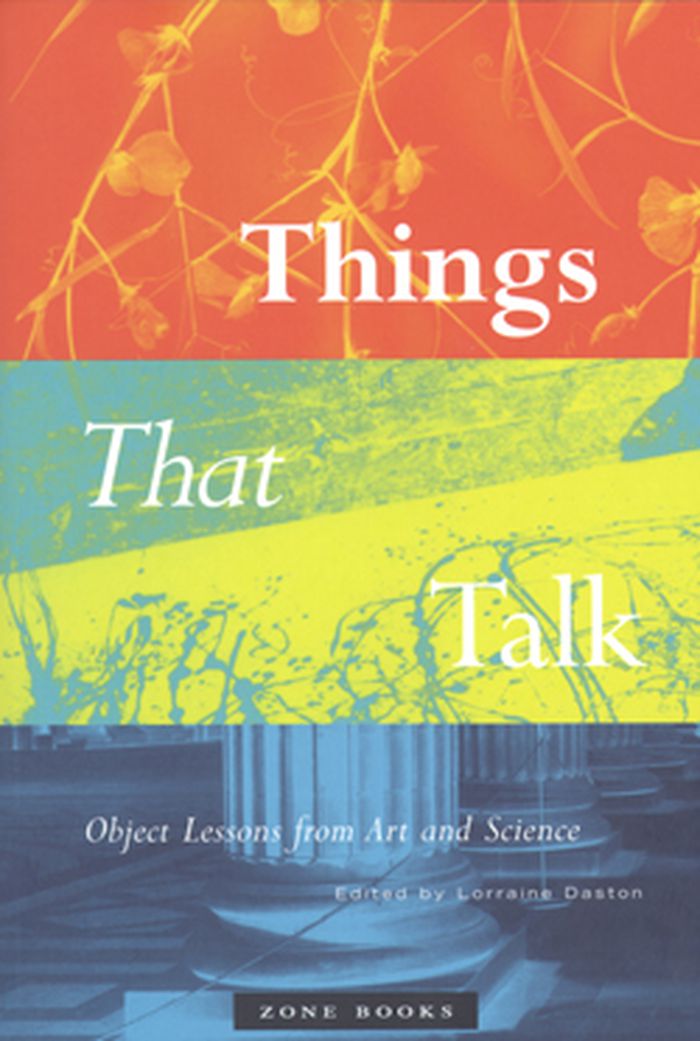
Things that talk : Object lessons from art and science
Actions:
Price:
$27.00
(available to order)
Summary:
Imagine a world without things. There would be nothing to describe, nothing to explain, remark, interpret, or complain about. Without things, we would stop speaking; we would become as mute as things are alleged to be. In nine original essays, internationally renowned historians of art and of science seek to understand how objects become charged with significance without losing their gritty materiality. True to the particularity of things, each of the essays singles out one object for close attention: a Bosch drawing, the freestanding column, a Prussian island, soap bubbles, early photographs, glass flowers, Rorschach blots, newspaper clippings, paintings by Jackson Pollock. Each is revealed to be a node around which meanings accrete thickly. But not just any meanings: what these things are made of and how they are made shape what they can mean. Neither the pure texts of semiotics nor the brute objects of positivism, these things are saturated with cultural significance. Things become talkative when they fuse matter and meaning; they lapse into speechlessness when their matter and meanings no longer mesh. Each of the nine objects examined in this book had its historical moment, when the match of this thing to that thought seemed irresistible. At these junctures, certain things become objects of fascination, association, and endless consideration; they begin to talk. Things that talk fleetingly realize the dream of a perfect language, in which words and world merge.
Things that talk : Object lessons from art and science
Actions:
Price:
$27.00
(available to order)
Summary:
Imagine a world without things. There would be nothing to describe, nothing to explain, remark, interpret, or complain about. Without things, we would stop speaking; we would become as mute as things are alleged to be. In nine original essays, internationally renowned historians of art and of science seek to understand how objects become charged with significance without losing their gritty materiality. True to the particularity of things, each of the essays singles out one object for close attention: a Bosch drawing, the freestanding column, a Prussian island, soap bubbles, early photographs, glass flowers, Rorschach blots, newspaper clippings, paintings by Jackson Pollock. Each is revealed to be a node around which meanings accrete thickly. But not just any meanings: what these things are made of and how they are made shape what they can mean. Neither the pure texts of semiotics nor the brute objects of positivism, these things are saturated with cultural significance. Things become talkative when they fuse matter and meaning; they lapse into speechlessness when their matter and meanings no longer mesh. Each of the nine objects examined in this book had its historical moment, when the match of this thing to that thought seemed irresistible. At these junctures, certain things become objects of fascination, association, and endless consideration; they begin to talk. Things that talk fleetingly realize the dream of a perfect language, in which words and world merge.
Form:
books
books
Publication:
November 2007, New York
November 2007, New York
Subject:
Critical Theory
Critical Theory
Form:
books
books
Title:
The culture industry
The culture industry
Actions:
Price:
$33.95
(available to order)
Summary:
The creation of the Frankfurt School of critical theory in the 1920s saw the birth of some of the most exciting and challenging writings of the twentieth century. It is out of this background that the great critic Theodor Adorno emerged. His finest essays are collected here, offering the reader unparalleled insights into Adorno's thoughts on culture. He argued that the(...)
$33.95
(available to order)
Summary:
The creation of the Frankfurt School of critical theory in the 1920s saw the birth of some of the most exciting and challenging writings of the twentieth century. It is out of this background that the great critic Theodor Adorno emerged. His finest essays are collected here, offering the reader unparalleled insights into Adorno's thoughts on culture. He argued that the(...)
Title:
The culture industry
Actions:
Price:
$33.95
(available to order)
Summary:
The creation of the Frankfurt School of critical theory in the 1920s saw the birth of some of the most exciting and challenging writings of the twentieth century. It is out of this background that the great critic Theodor Adorno emerged. His finest essays are collected here, offering the reader unparalleled insights into Adorno's thoughts on culture. He argued that the culture industry commodified and standardized all art. In turn this suffocated individuality and destroyed critical thinking. At the time, Adorno was accused of everything from overreaction to deranged hysteria by his many detractors. In today's world, where even the least cynical of consumers is aware of the influence of the media, Adorno's work takes on a more immediate significance. "The culture industry" is an unrivalled indictment of the banality of mass culture.
The culture industry
Actions:
Price:
$33.95
(available to order)
Summary:
The creation of the Frankfurt School of critical theory in the 1920s saw the birth of some of the most exciting and challenging writings of the twentieth century. It is out of this background that the great critic Theodor Adorno emerged. His finest essays are collected here, offering the reader unparalleled insights into Adorno's thoughts on culture. He argued that the culture industry commodified and standardized all art. In turn this suffocated individuality and destroyed critical thinking. At the time, Adorno was accused of everything from overreaction to deranged hysteria by his many detractors. In today's world, where even the least cynical of consumers is aware of the influence of the media, Adorno's work takes on a more immediate significance. "The culture industry" is an unrivalled indictment of the banality of mass culture.
Form:
books
books
Publication:
May 2001, London, New York
May 2001, London, New York
Subject:
Critical Theory
Critical Theory
Form:
books
books
Actions:
Price:
$32.00
(available to order)
Summary:
Michel de Certeau considers the uses to which social representation and modes of social behavior are put by individuals and groups, describing the tactics available to the common man for reclaiming his own autonomy from the all-pervasive forces of commerce, politics, and culture. In exploring the public meaning of ingeniously defended private meanings, de Certeau draws(...)
$32.00
(available to order)
Summary:
Michel de Certeau considers the uses to which social representation and modes of social behavior are put by individuals and groups, describing the tactics available to the common man for reclaiming his own autonomy from the all-pervasive forces of commerce, politics, and culture. In exploring the public meaning of ingeniously defended private meanings, de Certeau draws(...)
Subject:
Critical Theory
Critical Theory
Publication:
December 2002, Berkeley, Los Angeles, London
December 2002, Berkeley, Los Angeles, London
Title:
The practice of everyday life
Actions:
Price:
$32.00
(available to order)
Summary:
Michel de Certeau considers the uses to which social representation and modes of social behavior are put by individuals and groups, describing the tactics available to the common man for reclaiming his own autonomy from the all-pervasive forces of commerce, politics, and culture. In exploring the public meaning of ingeniously defended private meanings, de Certeau draws brilliantly on an immense theoretical literature in analytic philosophy, linguistics, sociology, semiology, and anthropology - to speak of an apposite use of imaginative literature.
The practice of everyday life
Actions:
Price:
$32.00
(available to order)
Summary:
Michel de Certeau considers the uses to which social representation and modes of social behavior are put by individuals and groups, describing the tactics available to the common man for reclaiming his own autonomy from the all-pervasive forces of commerce, politics, and culture. In exploring the public meaning of ingeniously defended private meanings, de Certeau draws brilliantly on an immense theoretical literature in analytic philosophy, linguistics, sociology, semiology, and anthropology - to speak of an apposite use of imaginative literature.
Form:
books
books
Publication:
December 2002, Berkeley, Los Angeles, London
December 2002, Berkeley, Los Angeles, London
Subject:
Critical Theory
Critical Theory
Form:
books
books
Price:
$47.50
(available in store)
Summary:
Pour Peter Sloterdijk, l'année 1492 sonne le début de cette «mondialisation» qui a été précédée, du point de vue scientifique, par «l'arrondissement» d'une planète que l'on croyait plate. Esprit d'entreprise et goût du risque caractérisaient ce phénomène d'abord porté par des découvreurs et des investisseurs, et qui a pris aujourd'hui une tournure essentiellement(...)
$47.50
(available in store)
Summary:
Pour Peter Sloterdijk, l'année 1492 sonne le début de cette «mondialisation» qui a été précédée, du point de vue scientifique, par «l'arrondissement» d'une planète que l'on croyait plate. Esprit d'entreprise et goût du risque caractérisaient ce phénomène d'abord porté par des découvreurs et des investisseurs, et qui a pris aujourd'hui une tournure essentiellement(...)
Title:
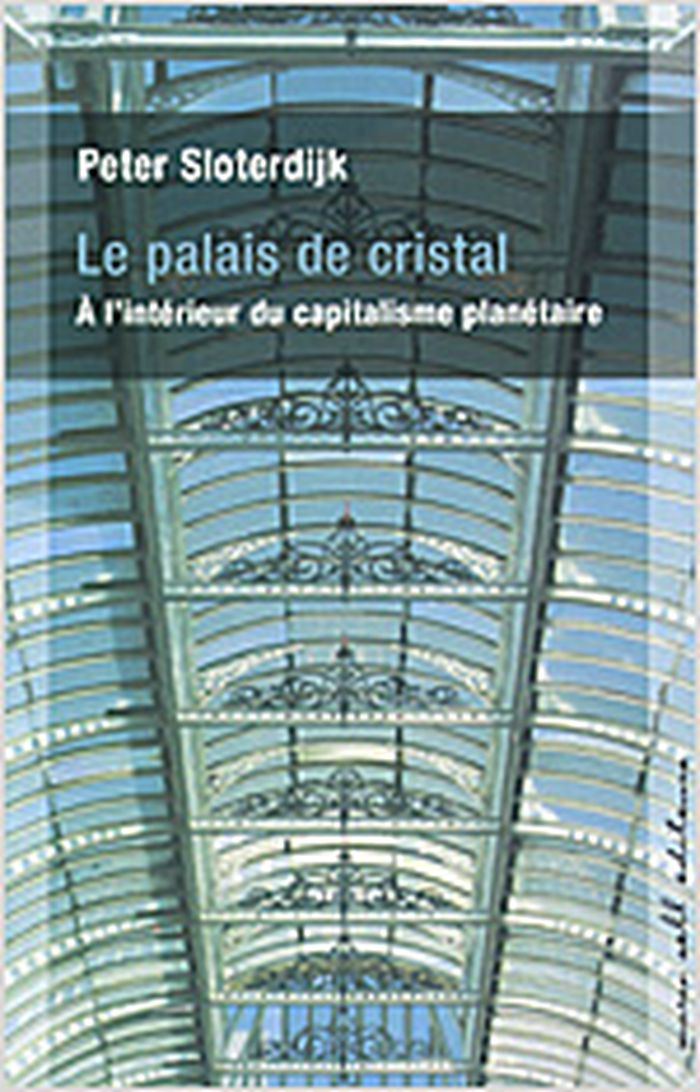
Le palais de cristal : à l'intérieur du capitalisme planétaire
Actions:
Price:
$47.50
(available in store)
Summary:
Pour Peter Sloterdijk, l'année 1492 sonne le début de cette «mondialisation» qui a été précédée, du point de vue scientifique, par «l'arrondissement» d'une planète que l'on croyait plate. Esprit d'entreprise et goût du risque caractérisaient ce phénomène d'abord porté par des découvreurs et des investisseurs, et qui a pris aujourd'hui une tournure essentiellement économique. Dans la phase finale de la globalisation, le système mondial s'est totalement épanoui ; il donne à toutes les formes de la vie les traits du capitalisme. Peter Sloterdijk utilise le Palais de Cristal de Londres, lieu de la première exposition mondiale de 1851, comme métaphore extrêmement éloquente de cette situation : le palais symbolise le caractère inévitablement exclusif de la globalisation, la création d'une structure de confort, c'est-à-dire la construction d'un espace intérieur prenant l'aspect d'une «gelée hyperactive» qui avale les humains devenus des consommateurs, un milliard et demi de gagnants de la globalisation - ils sont trois fois plus nombreux à attendre devant la porte. «Le fait central des Temps modernes n'est pas que la Terre tourne autour du soleil, mais que l'argent court autour de la Terre.» Avec les moyens d'un grand récit d'inspiration philosophique, Peter Sloterdijk trace les contours d'une théorie du temps présent.
Le palais de cristal : à l'intérieur du capitalisme planétaire
Actions:
Price:
$47.50
(available in store)
Summary:
Pour Peter Sloterdijk, l'année 1492 sonne le début de cette «mondialisation» qui a été précédée, du point de vue scientifique, par «l'arrondissement» d'une planète que l'on croyait plate. Esprit d'entreprise et goût du risque caractérisaient ce phénomène d'abord porté par des découvreurs et des investisseurs, et qui a pris aujourd'hui une tournure essentiellement économique. Dans la phase finale de la globalisation, le système mondial s'est totalement épanoui ; il donne à toutes les formes de la vie les traits du capitalisme. Peter Sloterdijk utilise le Palais de Cristal de Londres, lieu de la première exposition mondiale de 1851, comme métaphore extrêmement éloquente de cette situation : le palais symbolise le caractère inévitablement exclusif de la globalisation, la création d'une structure de confort, c'est-à-dire la construction d'un espace intérieur prenant l'aspect d'une «gelée hyperactive» qui avale les humains devenus des consommateurs, un milliard et demi de gagnants de la globalisation - ils sont trois fois plus nombreux à attendre devant la porte. «Le fait central des Temps modernes n'est pas que la Terre tourne autour du soleil, mais que l'argent court autour de la Terre.» Avec les moyens d'un grand récit d'inspiration philosophique, Peter Sloterdijk trace les contours d'une théorie du temps présent.
Form:
books
books
Publication:
November 2006, Paris
November 2006, Paris
Subject:
Critical Theory
Critical Theory
Form:
books
books
Title:
On touching - Jean-Luc Nancy
On touching - Jean-Luc Nancy
Actions:
Price:
$25.95
(available to order)
Summary:
Using the philosophy of Jean-Luc Nancy as an anchoring point, Jacques Derrida in this book conducts a profound review of the philosophy of the sense of touch, from Plato and Aristotle to Jean-Luc Nancy, whose ground-breaking book Corpus he discusses in detail. Emmanuel Levinas, Maurice Merleau-Ponty, Edmund Husserl, Didier Franck, Martin Heidegger, Francoise Dastur, and(...)
$25.95
(available to order)
Summary:
Using the philosophy of Jean-Luc Nancy as an anchoring point, Jacques Derrida in this book conducts a profound review of the philosophy of the sense of touch, from Plato and Aristotle to Jean-Luc Nancy, whose ground-breaking book Corpus he discusses in detail. Emmanuel Levinas, Maurice Merleau-Ponty, Edmund Husserl, Didier Franck, Martin Heidegger, Francoise Dastur, and(...)
Title:
On touching - Jean-Luc Nancy
Actions:
Price:
$25.95
(available to order)
Summary:
Using the philosophy of Jean-Luc Nancy as an anchoring point, Jacques Derrida in this book conducts a profound review of the philosophy of the sense of touch, from Plato and Aristotle to Jean-Luc Nancy, whose ground-breaking book Corpus he discusses in detail. Emmanuel Levinas, Maurice Merleau-Ponty, Edmund Husserl, Didier Franck, Martin Heidegger, Francoise Dastur, and Jean-Louis Chrétien are discussed, as are René Descartes, Diderot, Maine de Biran, Félix Ravaisson, Immanuel Kant, Sigmund Freud, and others. The scope of Derrida’s deliberations makes this book a virtual encyclopedia of the philosophy of touch (and the body). Derrida gives special consideration to the thinking of touch in Christianity and, in discussing Jean-Luc Nancy’s essay “Deconstruction of Christianity,” devotes a section of the book to the sense of touch in the Gospels. Another section concentrates on “the flesh,” as treated by Merleau-Ponty and others in his wake. Derrida’s critique of intuitionism, notably in the phenomenological tradition, is one of the guiding threads of the book.
On touching - Jean-Luc Nancy
Actions:
Price:
$25.95
(available to order)
Summary:
Using the philosophy of Jean-Luc Nancy as an anchoring point, Jacques Derrida in this book conducts a profound review of the philosophy of the sense of touch, from Plato and Aristotle to Jean-Luc Nancy, whose ground-breaking book Corpus he discusses in detail. Emmanuel Levinas, Maurice Merleau-Ponty, Edmund Husserl, Didier Franck, Martin Heidegger, Francoise Dastur, and Jean-Louis Chrétien are discussed, as are René Descartes, Diderot, Maine de Biran, Félix Ravaisson, Immanuel Kant, Sigmund Freud, and others. The scope of Derrida’s deliberations makes this book a virtual encyclopedia of the philosophy of touch (and the body). Derrida gives special consideration to the thinking of touch in Christianity and, in discussing Jean-Luc Nancy’s essay “Deconstruction of Christianity,” devotes a section of the book to the sense of touch in the Gospels. Another section concentrates on “the flesh,” as treated by Merleau-Ponty and others in his wake. Derrida’s critique of intuitionism, notably in the phenomenological tradition, is one of the guiding threads of the book.
Form:
books
books
Publication:
January 2004, Stanford
January 2004, Stanford
Subject:
Critical Theory
Critical Theory
Form:
books
books
Actions:
Price:
$37.50
(available to order)
Summary:
The twelve new essays in this volume use a contemporary context to think through and with Deleuze. Engaging the here and now, the contributors use the Deleuzian theoretical apparatus to think about issues such as military activity in the Middle East, refugees, terrorism, information and communication, and the State. The book is aimed both at specialists of Deleuze and(...)
$37.50
(available to order)
Summary:
The twelve new essays in this volume use a contemporary context to think through and with Deleuze. Engaging the here and now, the contributors use the Deleuzian theoretical apparatus to think about issues such as military activity in the Middle East, refugees, terrorism, information and communication, and the State. The book is aimed both at specialists of Deleuze and(...)
Title:
Deleuze and the contemporary world
Actions:
Price:
$37.50
(available to order)
Summary:
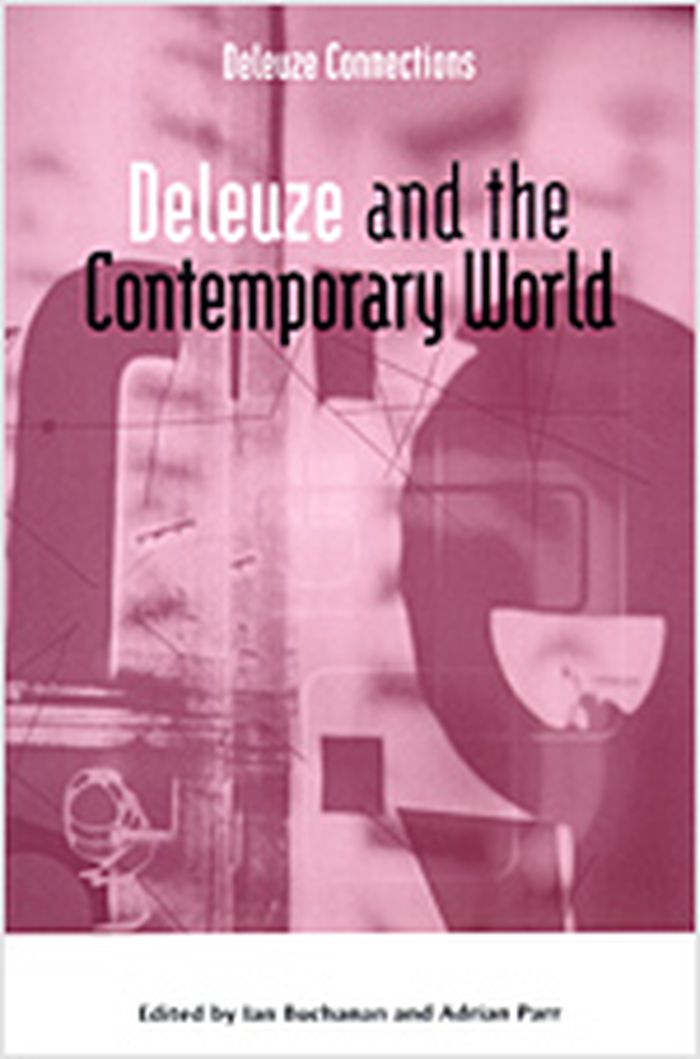
The twelve new essays in this volume use a contemporary context to think through and with Deleuze. Engaging the here and now, the contributors use the Deleuzian theoretical apparatus to think about issues such as military activity in the Middle East, refugees, terrorism, information and communication, and the State. The book is aimed both at specialists of Deleuze and those who are unfamiliar with his work but who are interested in current affairs. Incorporating political theory and philosophy, culture studies, sociology, international studies, and Middle Eastern studies, the book is designed to appeal to a wide audience. Contributors include: Rosi Braidotti, Claire Colebrook, Verena Conley, Eugene Holland, John Marks, Paul Patton, Patricia Pisters, Laurence J. Silberstein, Kenneth Surin and Nicholas Thoburn.
Deleuze and the contemporary world
Actions:
Price:
$37.50
(available to order)
Summary:
The twelve new essays in this volume use a contemporary context to think through and with Deleuze. Engaging the here and now, the contributors use the Deleuzian theoretical apparatus to think about issues such as military activity in the Middle East, refugees, terrorism, information and communication, and the State. The book is aimed both at specialists of Deleuze and those who are unfamiliar with his work but who are interested in current affairs. Incorporating political theory and philosophy, culture studies, sociology, international studies, and Middle Eastern studies, the book is designed to appeal to a wide audience. Contributors include: Rosi Braidotti, Claire Colebrook, Verena Conley, Eugene Holland, John Marks, Paul Patton, Patricia Pisters, Laurence J. Silberstein, Kenneth Surin and Nicholas Thoburn.
Form:
books
books
Publication:
September 2006, Edinburgh
September 2006, Edinburgh
Subject:
Critical Theory
Critical Theory
Form:
books
books
Title:
What comes after farce?
What comes after farce?
Actions:
Price:
$33.95
(available to order)
Summary:
If farce follows tragedy, what follows farce? Where does the double predicament of a post-truth and post-shame politics leave artists and critics on the left? How to demystify a hegemonic order that dismisses its own contradictions? How to belittle a political elite that cannot be embarrassed, or to mock party leaders who thrive on the absurd? How to out-dada President(...)
$33.95
(available to order)
Summary:
If farce follows tragedy, what follows farce? Where does the double predicament of a post-truth and post-shame politics leave artists and critics on the left? How to demystify a hegemonic order that dismisses its own contradictions? How to belittle a political elite that cannot be embarrassed, or to mock party leaders who thrive on the absurd? How to out-dada President(...)
Title:
What comes after farce?
Actions:
Price:
$33.95
(available to order)
Summary:
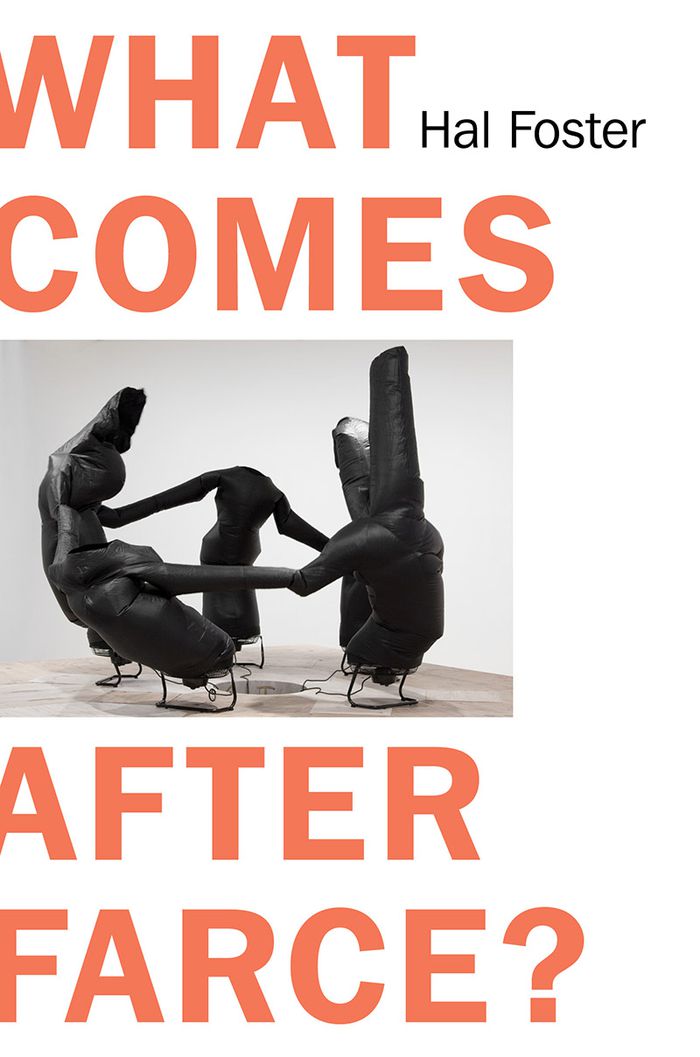
If farce follows tragedy, what follows farce? Where does the double predicament of a post-truth and post-shame politics leave artists and critics on the left? How to demystify a hegemonic order that dismisses its own contradictions? How to belittle a political elite that cannot be embarrassed, or to mock party leaders who thrive on the absurd? How to out-dada President Ubu? And, in any event, why add outrage to a media economy that thrives on the same? 'What Comes After Farce?' comments on shifts in art, criticism, and fiction in the face of the current regime of war, surveillance, extreme inequality, and media disruption. A first section focuses on the cultural politics of emergency since 9/11, including the use and abuse of trauma, paranoia, and kitsch. A second reviews the neoliberal makeover of art institutions during the same period. Finally, a third section surveys transformations in media as reflected in recent art, film, and fiction. Among the phenomena explored here are “machine vision” (images produced by machines for other machines without a human interface),“operational images” (images that do not represent the world so much as intervene in it), and the algorithmic scripting of information so pervasive in our everyday lives.
What comes after farce?
Actions:
Price:
$33.95
(available to order)
Summary:
If farce follows tragedy, what follows farce? Where does the double predicament of a post-truth and post-shame politics leave artists and critics on the left? How to demystify a hegemonic order that dismisses its own contradictions? How to belittle a political elite that cannot be embarrassed, or to mock party leaders who thrive on the absurd? How to out-dada President Ubu? And, in any event, why add outrage to a media economy that thrives on the same? 'What Comes After Farce?' comments on shifts in art, criticism, and fiction in the face of the current regime of war, surveillance, extreme inequality, and media disruption. A first section focuses on the cultural politics of emergency since 9/11, including the use and abuse of trauma, paranoia, and kitsch. A second reviews the neoliberal makeover of art institutions during the same period. Finally, a third section surveys transformations in media as reflected in recent art, film, and fiction. Among the phenomena explored here are “machine vision” (images produced by machines for other machines without a human interface),“operational images” (images that do not represent the world so much as intervene in it), and the algorithmic scripting of information so pervasive in our everyday lives.
Form:
books
books
Publication:
June 2020
June 2020
Subject:
Critical Theory
Critical Theory
Form:
books
books
Actions:
Price:
$13.99
(available in store)
Summary:
Accelerationism is the bastard offspring of a furtive liaison between Marxism and science fiction. Its basic premise is that the only way out is the way through: to get beyond capitalism, we need to push its technologies to the point where they explode. This may be dubious as a political strategy, but it works as a powerful artistic program. Other authors have debated(...)
$13.99
(available in store)
Summary:
Accelerationism is the bastard offspring of a furtive liaison between Marxism and science fiction. Its basic premise is that the only way out is the way through: to get beyond capitalism, we need to push its technologies to the point where they explode. This may be dubious as a political strategy, but it works as a powerful artistic program. Other authors have debated(...)
Title:
No speed limit: essays on accelerationsim
Actions:
Price:
$13.99
(available in store)
Summary:
Accelerationism is the bastard offspring of a furtive liaison between Marxism and science fiction. Its basic premise is that the only way out is the way through: to get beyond capitalism, we need to push its technologies to the point where they explode. This may be dubious as a political strategy, but it works as a powerful artistic program. Other authors have debated the pros and cons of accelerationist politics; 'No Speed Limit' makes the case for an accelerationist aesthetics. Our present moment is illuminated, both for good and for ill, in the cracked mirror of science-fictional futurity.
No speed limit: essays on accelerationsim
Actions:
Price:
$13.99
(available in store)
Summary:
Accelerationism is the bastard offspring of a furtive liaison between Marxism and science fiction. Its basic premise is that the only way out is the way through: to get beyond capitalism, we need to push its technologies to the point where they explode. This may be dubious as a political strategy, but it works as a powerful artistic program. Other authors have debated the pros and cons of accelerationist politics; 'No Speed Limit' makes the case for an accelerationist aesthetics. Our present moment is illuminated, both for good and for ill, in the cracked mirror of science-fictional futurity.
Form:
books
books
Publication:
May 2016
May 2016
Subject:
Critical Theory
Critical Theory
Form:
books
books
Title:
À nos amis
À nos amis
Actions:
Price:
$17.95
(available to order)
Summary:
« À nos amis » se veut un rapport sur l’état du monde et du mouvement, un écrit essentiellement stratégique et ouvertement partisan. Son ambition politique est démesurée : produire une intelligibilité partagée de l’époque, en dépit de l’extrême confusion du présent. On ne peut se contenter de célébrer l’onde insurrectionnelle qui parcourt présentement le monde, tout en se(...)
$17.95
(available to order)
Summary:
« À nos amis » se veut un rapport sur l’état du monde et du mouvement, un écrit essentiellement stratégique et ouvertement partisan. Son ambition politique est démesurée : produire une intelligibilité partagée de l’époque, en dépit de l’extrême confusion du présent. On ne peut se contenter de célébrer l’onde insurrectionnelle qui parcourt présentement le monde, tout en se(...)
Title:
À nos amis
Actions:
Price:
$17.95
(available to order)
Summary:
« À nos amis » se veut un rapport sur l’état du monde et du mouvement, un écrit essentiellement stratégique et ouvertement partisan. Son ambition politique est démesurée : produire une intelligibilité partagée de l’époque, en dépit de l’extrême confusion du présent. On ne peut se contenter de célébrer l’onde insurrectionnelle qui parcourt présentement le monde, tout en se félicitant de l’avoir senti poindre avant les autres, sans s’étendre sur le caractère composite, et parfois franchement équivoque, de certains soulèvements. Ce dont il s’agit aujourd’hui pour le Comité Invisible, c’est plutôt cerner et prendre à bras le corps les difficultés, les impasses et les embûches que rencontre ce mouvement mondial qui n’a pas de nom, mais qui fait tout trembler. Comment faire pour que les insurrections ne s’étranglent pas au stade l’émeute ? Quelles sont les stratégies adverses et les moyens de les déjouer ? Sommes-nous bien sûrs d’avoir saisi le type de gouvernementalité qui nous fait face ? Quelle part de la tradition révolutionnaire faut-il laisser derrière nous pour pouvoir à nouveau envisager une victoire ? Et d’ailleurs, en quoi consisterait une « victoire » ?
À nos amis
Actions:
Price:
$17.95
(available to order)
Summary:
« À nos amis » se veut un rapport sur l’état du monde et du mouvement, un écrit essentiellement stratégique et ouvertement partisan. Son ambition politique est démesurée : produire une intelligibilité partagée de l’époque, en dépit de l’extrême confusion du présent. On ne peut se contenter de célébrer l’onde insurrectionnelle qui parcourt présentement le monde, tout en se félicitant de l’avoir senti poindre avant les autres, sans s’étendre sur le caractère composite, et parfois franchement équivoque, de certains soulèvements. Ce dont il s’agit aujourd’hui pour le Comité Invisible, c’est plutôt cerner et prendre à bras le corps les difficultés, les impasses et les embûches que rencontre ce mouvement mondial qui n’a pas de nom, mais qui fait tout trembler. Comment faire pour que les insurrections ne s’étranglent pas au stade l’émeute ? Quelles sont les stratégies adverses et les moyens de les déjouer ? Sommes-nous bien sûrs d’avoir saisi le type de gouvernementalité qui nous fait face ? Quelle part de la tradition révolutionnaire faut-il laisser derrière nous pour pouvoir à nouveau envisager une victoire ? Et d’ailleurs, en quoi consisterait une « victoire » ?
Form:
books
books
Publication:
November 2014
November 2014
Subject:
Critical Theory
Critical Theory
Form:
books
books
Actions:
Price:
$38.95
(available in store)
Summary:
La métamorphose, tout vivant y passe. C’est l’expérience élémentaire et originaire de la vie, celle qui définit ses forces et ses limites. Depuis Darwin, nous savons que toute forme de vie – l’être humain compris – n’est que la métamorphose d’une autre, bien souvent disparue. De notre naissance à notre alimentation, nous en faisons tous l’expérience. Dans l’acte(...)
$38.95
(available in store)
Summary:
La métamorphose, tout vivant y passe. C’est l’expérience élémentaire et originaire de la vie, celle qui définit ses forces et ses limites. Depuis Darwin, nous savons que toute forme de vie – l’être humain compris – n’est que la métamorphose d’une autre, bien souvent disparue. De notre naissance à notre alimentation, nous en faisons tous l’expérience. Dans l’acte(...)
Title:
Métamorphoses : la matière de la vie
Actions:
Price:
$38.95
(available in store)
Summary:
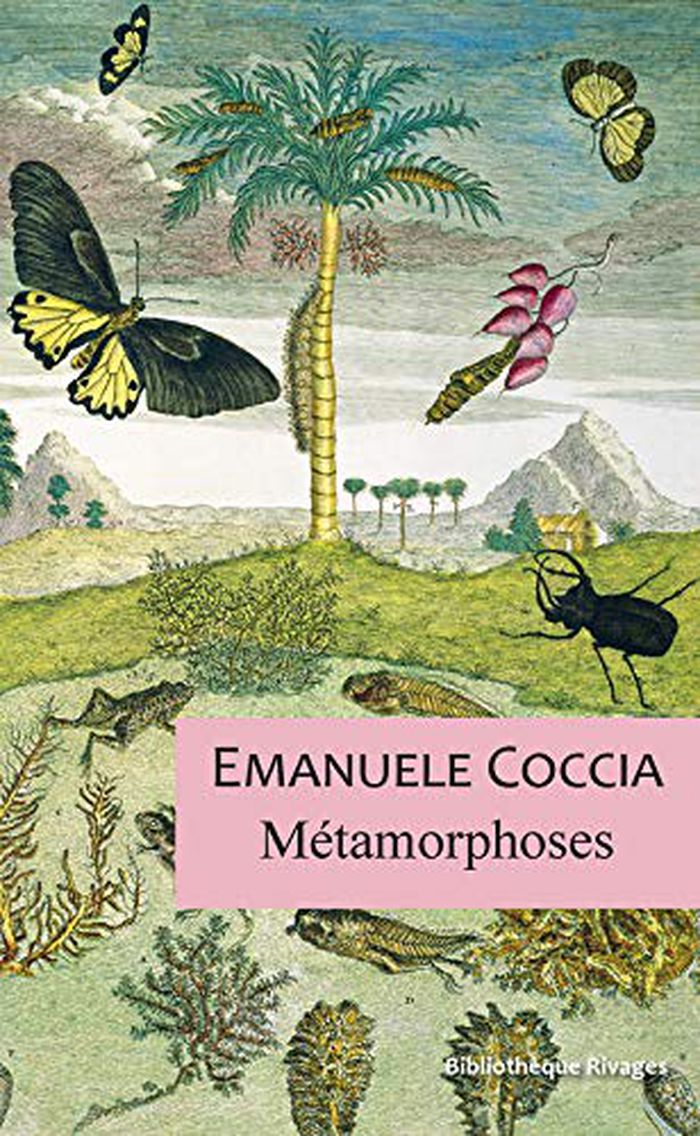
La métamorphose, tout vivant y passe. C’est l’expérience élémentaire et originaire de la vie, celle qui définit ses forces et ses limites. Depuis Darwin, nous savons que toute forme de vie – l’être humain compris – n’est que la métamorphose d’une autre, bien souvent disparue. De notre naissance à notre alimentation, nous en faisons tous l’expérience. Dans l’acte métamorphique, changement de soi et changement du monde coïncident. Affirmer que toute vie est un fait métamorphique signifie qu’elle traverse les identités et les mondes sans jamais les subir passivement. Cet essai novateur jette les bases d’une philosophie de la métamorphose.
Métamorphoses : la matière de la vie
Actions:
Price:
$38.95
(available in store)
Summary:
La métamorphose, tout vivant y passe. C’est l’expérience élémentaire et originaire de la vie, celle qui définit ses forces et ses limites. Depuis Darwin, nous savons que toute forme de vie – l’être humain compris – n’est que la métamorphose d’une autre, bien souvent disparue. De notre naissance à notre alimentation, nous en faisons tous l’expérience. Dans l’acte métamorphique, changement de soi et changement du monde coïncident. Affirmer que toute vie est un fait métamorphique signifie qu’elle traverse les identités et les mondes sans jamais les subir passivement. Cet essai novateur jette les bases d’une philosophie de la métamorphose.
Form:
books
books
Publication:
June 2020
June 2020
Subject:
Critical Theory
Critical Theory


