


878 Results
Form:
books
books
Title:
Undoing the Demos
Undoing the Demos
Actions:
Price:
$25.50
(available to order)
Summary:
In Undoing the Demos, Wendy Brown explains how democracy itself is imperiled. The demos disintegrates into bits of human capital; concerns with justice bow to the mandates of growth rates, credit ratings, and investment climates; liberty submits to the imperative of human capital appreciation; equality dissolves into market competition; and popular sovereignty grows(...)
$25.50
(available to order)
Summary:
In Undoing the Demos, Wendy Brown explains how democracy itself is imperiled. The demos disintegrates into bits of human capital; concerns with justice bow to the mandates of growth rates, credit ratings, and investment climates; liberty submits to the imperative of human capital appreciation; equality dissolves into market competition; and popular sovereignty grows(...)
Title:
Undoing the Demos
Actions:
Price:
$25.50
(available to order)
Summary:
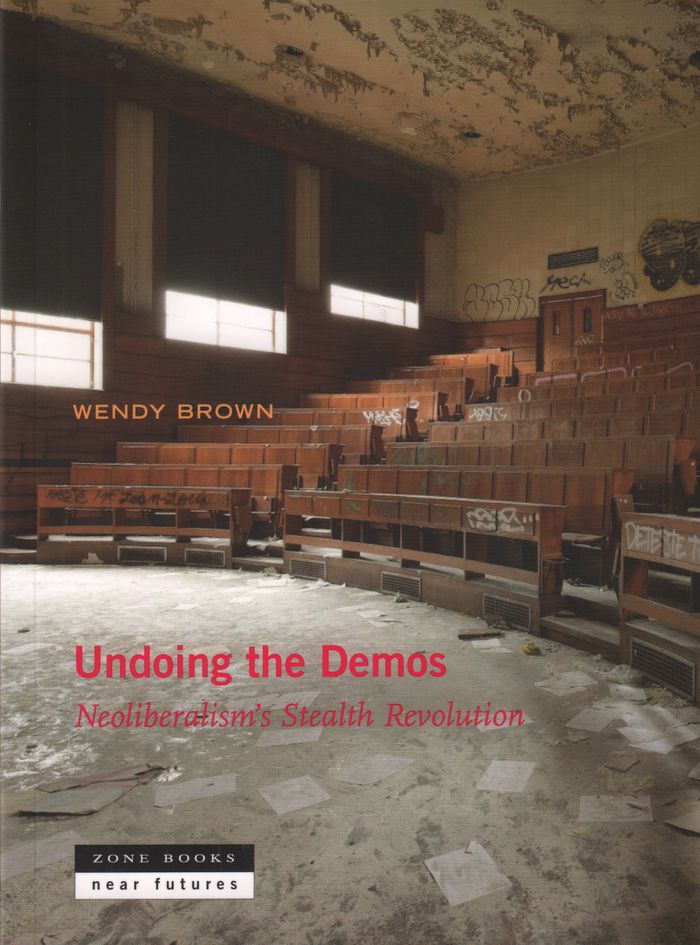
In Undoing the Demos, Wendy Brown explains how democracy itself is imperiled. The demos disintegrates into bits of human capital; concerns with justice bow to the mandates of growth rates, credit ratings, and investment climates; liberty submits to the imperative of human capital appreciation; equality dissolves into market competition; and popular sovereignty grows incoherent. Liberal democratic practices may not survive these transformations. Radical democratic dreams may not either.
Undoing the Demos
Actions:
Price:
$25.50
(available to order)
Summary:
In Undoing the Demos, Wendy Brown explains how democracy itself is imperiled. The demos disintegrates into bits of human capital; concerns with justice bow to the mandates of growth rates, credit ratings, and investment climates; liberty submits to the imperative of human capital appreciation; equality dissolves into market competition; and popular sovereignty grows incoherent. Liberal democratic practices may not survive these transformations. Radical democratic dreams may not either.
Form:
books
books
Publication:
August 2017
August 2017
Subject:
Critical Theory
Critical Theory
Form:
books
books
Actions:
Price:
$42.50
(available to order)
Summary:
The publication of "Cultural Studies 1983" is a touchstone event in the history of Cultural Studies and a testament to Stuart Hall's unparalleled contributions. The eight foundational lectures Hall delivered at the University of Illinois in 1983 introduced North American audiences to a thinker and discipline that would shift the course of critical scholarship. Unavailable(...)
$42.50
(available to order)
Summary:
The publication of "Cultural Studies 1983" is a touchstone event in the history of Cultural Studies and a testament to Stuart Hall's unparalleled contributions. The eight foundational lectures Hall delivered at the University of Illinois in 1983 introduced North American audiences to a thinker and discipline that would shift the course of critical scholarship. Unavailable(...)
Title:
Cultural studies 1983 : a theoretical history
Actions:
Price:
$42.50
(available to order)
Summary:
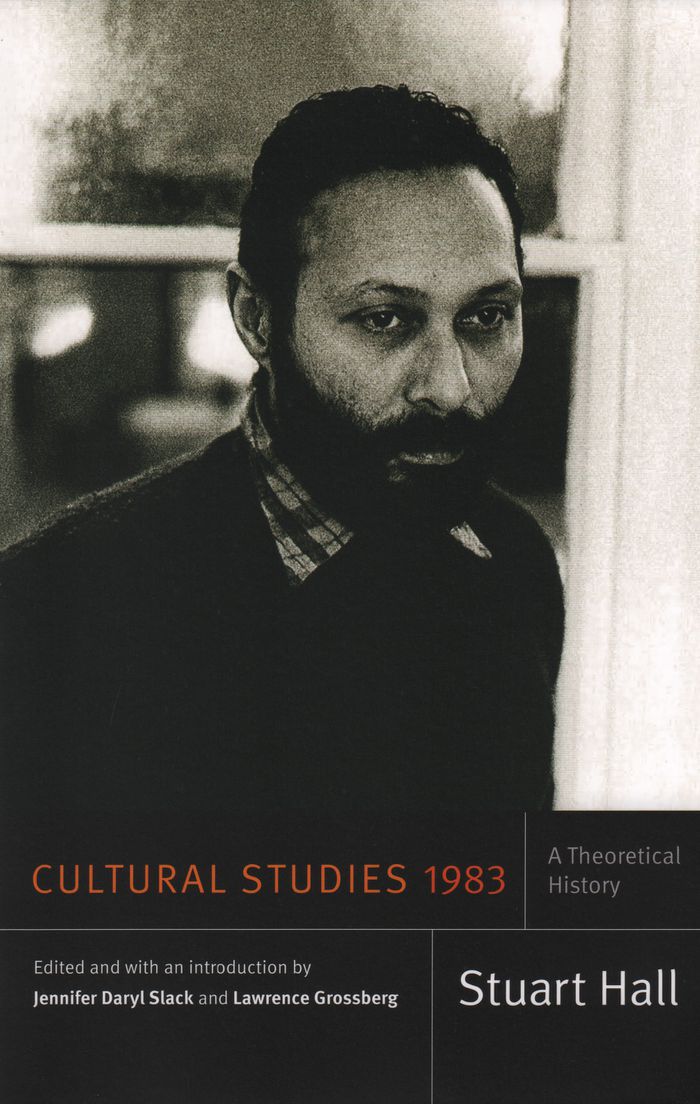
The publication of "Cultural Studies 1983" is a touchstone event in the history of Cultural Studies and a testament to Stuart Hall's unparalleled contributions. The eight foundational lectures Hall delivered at the University of Illinois in 1983 introduced North American audiences to a thinker and discipline that would shift the course of critical scholarship. Unavailable until now, these lectures present Hall's original engagements with the theoretical positions that contributed to the formation of Cultural Studies. Throughout this personally guided tour of Cultural Studies' intellectual genealogy, Hall discusses the work of Richard Hoggart, Raymond Williams, and E. P. Thompson; the influence of structuralism; the limitations and possibilities of Marxist theory; and the importance of Althusser and Gramsci. Throughout these theoretical reflections, Hall insists that "Cultural Studies" aims to provide the means for political change.
Cultural studies 1983 : a theoretical history
Actions:
Price:
$42.50
(available to order)
Summary:
The publication of "Cultural Studies 1983" is a touchstone event in the history of Cultural Studies and a testament to Stuart Hall's unparalleled contributions. The eight foundational lectures Hall delivered at the University of Illinois in 1983 introduced North American audiences to a thinker and discipline that would shift the course of critical scholarship. Unavailable until now, these lectures present Hall's original engagements with the theoretical positions that contributed to the formation of Cultural Studies. Throughout this personally guided tour of Cultural Studies' intellectual genealogy, Hall discusses the work of Richard Hoggart, Raymond Williams, and E. P. Thompson; the influence of structuralism; the limitations and possibilities of Marxist theory; and the importance of Althusser and Gramsci. Throughout these theoretical reflections, Hall insists that "Cultural Studies" aims to provide the means for political change.
Form:
books
books
Publication:
October 2016
October 2016
Subject:
Critical Theory
Critical Theory
Form:
books
books
Actions:
Price:
$22.95
(available to order)
Summary:
Shanzhai is a Chinese neologism that means "fake," originally coined to describe knock-off cell phones marketed under such names as Nokir and Samsing. These cell phones were not crude forgeries but multifunctional, stylish, and as good as or better than the originals. Shanzhai has since spread into other parts of Chinese life, with shanzhai books, shanzhai politicians,(...)
$22.95
(available to order)
Summary:
Shanzhai is a Chinese neologism that means "fake," originally coined to describe knock-off cell phones marketed under such names as Nokir and Samsing. These cell phones were not crude forgeries but multifunctional, stylish, and as good as or better than the originals. Shanzhai has since spread into other parts of Chinese life, with shanzhai books, shanzhai politicians,(...)
Title:
Shanzhai : deconstruction in chinese
Actions:
Price:
$22.95
(available to order)
Summary:
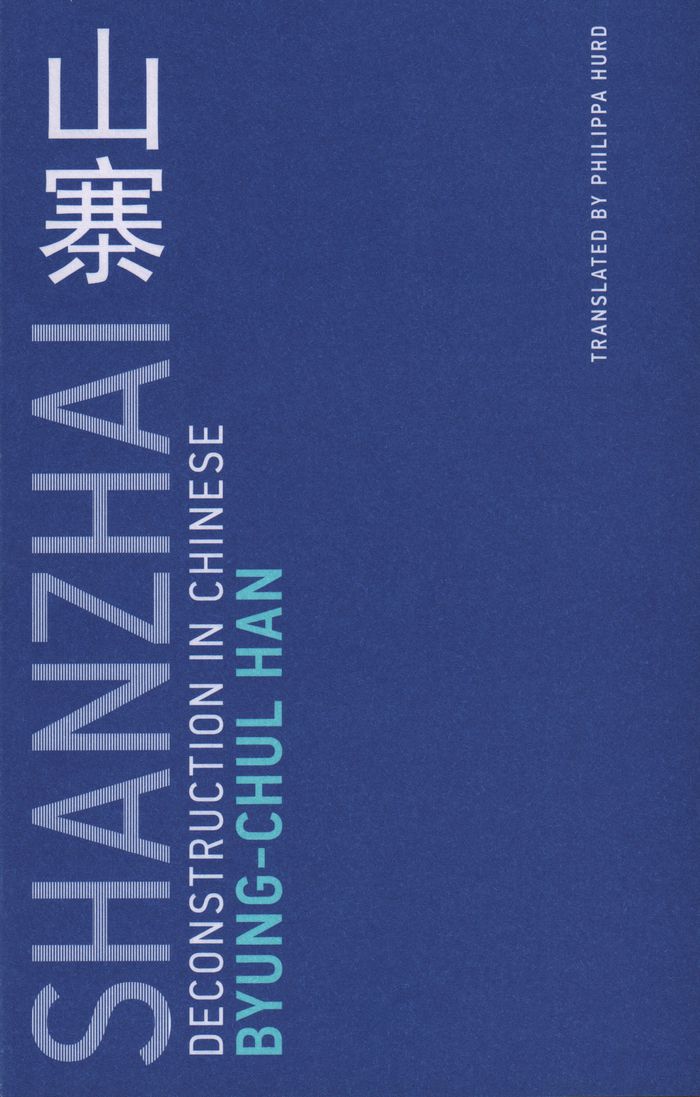
Shanzhai is a Chinese neologism that means "fake," originally coined to describe knock-off cell phones marketed under such names as Nokir and Samsing. These cell phones were not crude forgeries but multifunctional, stylish, and as good as or better than the originals. Shanzhai has since spread into other parts of Chinese life, with shanzhai books, shanzhai politicians, shanzhai stars. In the West, this would be seen as piracy, or even desecration, but in Chinese culture, originals are continually transformed -- deconstructed. In this volume in the Untimely Meditations series, Byung-Chul Han traces the thread of deconstruction, or "decreation," in Chinese thought, from ancient masterpieces that invite inscription and transcription to Maoism -- "a kind a shanzhai Marxism," Han writes.
Shanzhai : deconstruction in chinese
Actions:
Price:
$22.95
(available to order)
Summary:
Shanzhai is a Chinese neologism that means "fake," originally coined to describe knock-off cell phones marketed under such names as Nokir and Samsing. These cell phones were not crude forgeries but multifunctional, stylish, and as good as or better than the originals. Shanzhai has since spread into other parts of Chinese life, with shanzhai books, shanzhai politicians, shanzhai stars. In the West, this would be seen as piracy, or even desecration, but in Chinese culture, originals are continually transformed -- deconstructed. In this volume in the Untimely Meditations series, Byung-Chul Han traces the thread of deconstruction, or "decreation," in Chinese thought, from ancient masterpieces that invite inscription and transcription to Maoism -- "a kind a shanzhai Marxism," Han writes.
Form:
books
books
Publication:
October 2017
October 2017
Subject:
Critical Theory
Critical Theory
Form:
books
books
Price:
$35.99
(available to order)
Summary:
Why are we so obsessed by the pursuit of happiness? With new ways to measure contentment we are told that we have a right to individual joy. But at what cost? In an age of increasing individualism, we have never been more alone and miserable. But what if the true nature of happiness can only be found in others? In Radical Happiness, leading feminist thinker Lynne Segal(...)
$35.99
(available to order)
Summary:
Why are we so obsessed by the pursuit of happiness? With new ways to measure contentment we are told that we have a right to individual joy. But at what cost? In an age of increasing individualism, we have never been more alone and miserable. But what if the true nature of happiness can only be found in others? In Radical Happiness, leading feminist thinker Lynne Segal(...)
Title:
Radical happiness: the search for movements of collective joy
Actions:
Price:
$35.99
(available to order)
Summary:
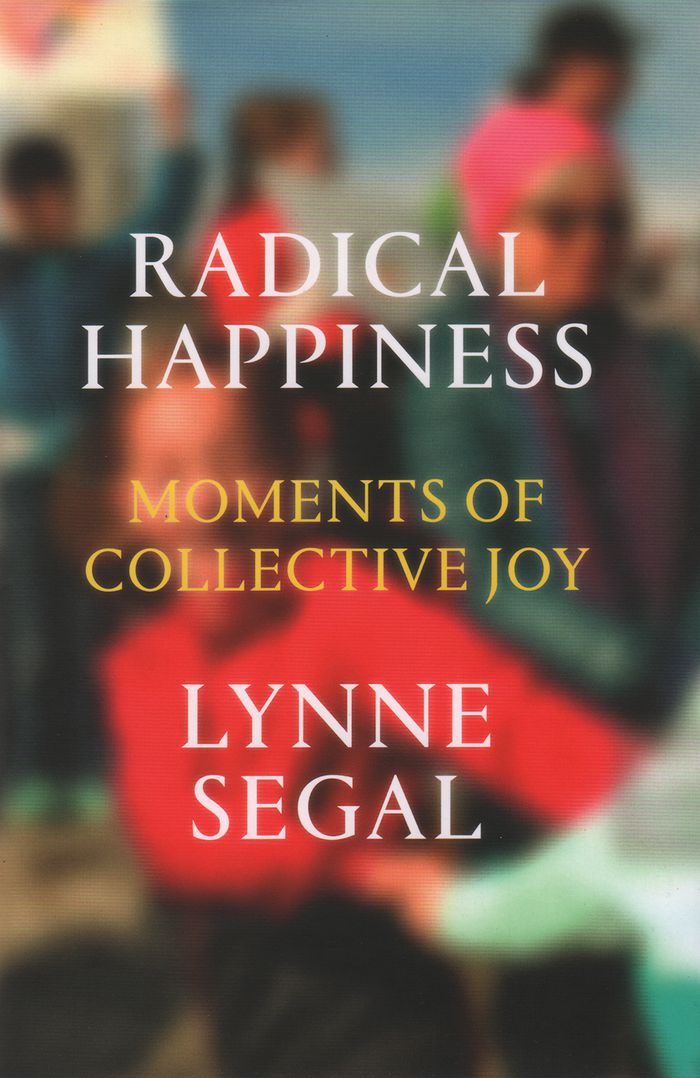
Why are we so obsessed by the pursuit of happiness? With new ways to measure contentment we are told that we have a right to individual joy. But at what cost? In an age of increasing individualism, we have never been more alone and miserable. But what if the true nature of happiness can only be found in others? In Radical Happiness, leading feminist thinker Lynne Segal believes that we have lost the art of radical happiness— the art of transformative, collective joy. She shows that only in the revolutionary potential of coming together it is that we can come to understand the powers of flourishing. Radical Happiness is a passionate call for the re-discovery of the political and emotional joy that emerge when we learn to share our lives together.
Radical happiness: the search for movements of collective joy
Actions:
Price:
$35.99
(available to order)
Summary:
Why are we so obsessed by the pursuit of happiness? With new ways to measure contentment we are told that we have a right to individual joy. But at what cost? In an age of increasing individualism, we have never been more alone and miserable. But what if the true nature of happiness can only be found in others? In Radical Happiness, leading feminist thinker Lynne Segal believes that we have lost the art of radical happiness— the art of transformative, collective joy. She shows that only in the revolutionary potential of coming together it is that we can come to understand the powers of flourishing. Radical Happiness is a passionate call for the re-discovery of the political and emotional joy that emerge when we learn to share our lives together.
Form:
books
books
Publication:
December 2017
December 2017
Subject:
Critical Theory
Critical Theory
Form:
books
books
Actions:
Price:
$25.95
(available to order)
Summary:
Byung-Chul Han, a star of German philosophy, continues his passionate critique of neoliberalism, trenchantly describing a regime of technological domination that, in contrast to Foucault’s biopower, has discovered the productive force of the psyche. In the course of discussing all the facets of neoliberal psychopolitics fueling our contemporary crisis of freedom, Han(...)
$25.95
(available to order)
Summary:
Byung-Chul Han, a star of German philosophy, continues his passionate critique of neoliberalism, trenchantly describing a regime of technological domination that, in contrast to Foucault’s biopower, has discovered the productive force of the psyche. In the course of discussing all the facets of neoliberal psychopolitics fueling our contemporary crisis of freedom, Han(...)
Title:
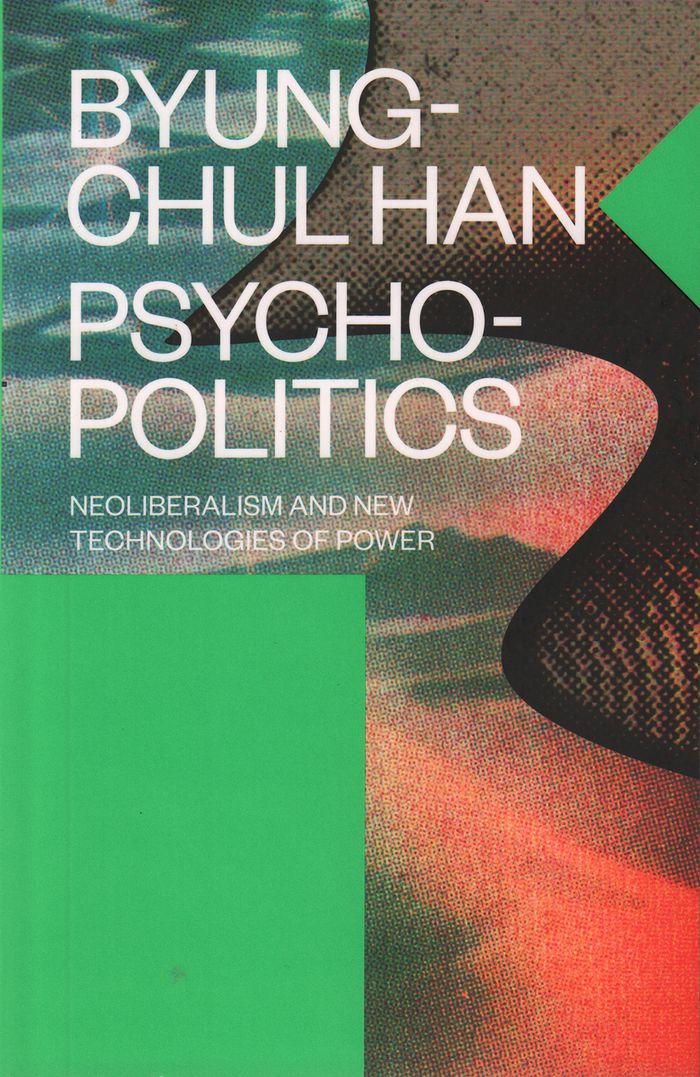
Psychopolitics: neoliberalism and new technologies of power
Actions:
Price:
$25.95
(available to order)
Summary:
Byung-Chul Han, a star of German philosophy, continues his passionate critique of neoliberalism, trenchantly describing a regime of technological domination that, in contrast to Foucault’s biopower, has discovered the productive force of the psyche. In the course of discussing all the facets of neoliberal psychopolitics fueling our contemporary crisis of freedom, Han elaborates an analytical framework that provides an original theory of Big Data and a lucid phenomenology of emotion. But this provocative essay proposes counter models too, presenting a wealth of ideas and surprising alternatives at every turn.
Psychopolitics: neoliberalism and new technologies of power
Actions:
Price:
$25.95
(available to order)
Summary:
Byung-Chul Han, a star of German philosophy, continues his passionate critique of neoliberalism, trenchantly describing a regime of technological domination that, in contrast to Foucault’s biopower, has discovered the productive force of the psyche. In the course of discussing all the facets of neoliberal psychopolitics fueling our contemporary crisis of freedom, Han elaborates an analytical framework that provides an original theory of Big Data and a lucid phenomenology of emotion. But this provocative essay proposes counter models too, presenting a wealth of ideas and surprising alternatives at every turn.
Form:
books
books
Publication:
December 2017
December 2017
Subject:
Critical Theory
Critical Theory
Form:
books
books
Actions:
Price:
$22.99
(available to order)
Summary:
In 1923, a group of young radical German thinkers and intellectuals came together to at Victoria Alle 7, Frankfurt, determined to explain the workings of the modern world. Among the most prominent members of what became the Frankfurt School were the philosophers Walter Benjamin, Theodor Adorno, Max Horkheimer, and Herbert Marcuse. Not only would they change the way we(...)
$22.99
(available to order)
Summary:
In 1923, a group of young radical German thinkers and intellectuals came together to at Victoria Alle 7, Frankfurt, determined to explain the workings of the modern world. Among the most prominent members of what became the Frankfurt School were the philosophers Walter Benjamin, Theodor Adorno, Max Horkheimer, and Herbert Marcuse. Not only would they change the way we(...)
Title:
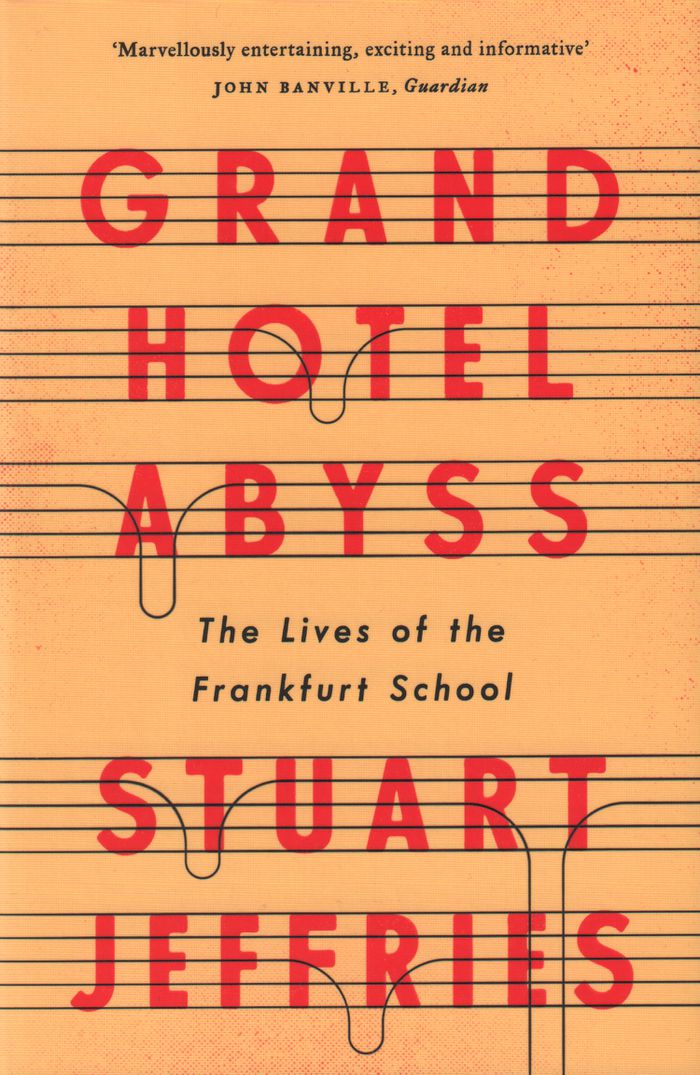
Grand Hotel Abyss: the lives of the Frankfurt school
Actions:
Price:
$22.99
(available to order)
Summary:
In 1923, a group of young radical German thinkers and intellectuals came together to at Victoria Alle 7, Frankfurt, determined to explain the workings of the modern world. Among the most prominent members of what became the Frankfurt School were the philosophers Walter Benjamin, Theodor Adorno, Max Horkheimer, and Herbert Marcuse. Not only would they change the way we think, but also the subjects we deem worthy of intellectual investigation. Their lives, like their ideas, profoundly, sometimes tragically, reflected and shaped the shattering events of the twentieth century. "Grand Hotel Abyss" combines biography, philosophy, and storytelling to reveal how the Frankfurt thinkers gathered in hopes of understanding the politics of culture during the rise of fascism. Some of them, forced to escape the horrors of Nazi Germany, later found exile in the United States. Benjamin, with his last great work—the incomplete Arcades Project—in his suitcase, was arrested in Spain and committed suicide when threatened with deportation to Nazi-occupied France. On the other side of the Atlantic, Adorno failed in his bid to become a Hollywood screenwriter, denounced jazz, and even met Charlie Chaplin in Malibu. After the war, there was a resurgence of interest in the School. From the relative comfort of sun-drenched California, Herbert Marcuse wrote the classic One Dimensional Man, which influenced the 1960s counterculture and thinkers such as Angela Davis; while in a tragic coda, Adorno died from a heart attack following confrontations with student radicals in Berlin. By taking popular culture seriously as an object of study—whether it was film, music, ideas, or consumerism—the Frankfurt School elaborated upon the nature and crisis of our mass-produced, mechanised society. Grand Hotel Abyss shows how much these ideas still tell us about our age of social media and runaway consumption.
Grand Hotel Abyss: the lives of the Frankfurt school
Actions:
Price:
$22.99
(available to order)
Summary:
In 1923, a group of young radical German thinkers and intellectuals came together to at Victoria Alle 7, Frankfurt, determined to explain the workings of the modern world. Among the most prominent members of what became the Frankfurt School were the philosophers Walter Benjamin, Theodor Adorno, Max Horkheimer, and Herbert Marcuse. Not only would they change the way we think, but also the subjects we deem worthy of intellectual investigation. Their lives, like their ideas, profoundly, sometimes tragically, reflected and shaped the shattering events of the twentieth century. "Grand Hotel Abyss" combines biography, philosophy, and storytelling to reveal how the Frankfurt thinkers gathered in hopes of understanding the politics of culture during the rise of fascism. Some of them, forced to escape the horrors of Nazi Germany, later found exile in the United States. Benjamin, with his last great work—the incomplete Arcades Project—in his suitcase, was arrested in Spain and committed suicide when threatened with deportation to Nazi-occupied France. On the other side of the Atlantic, Adorno failed in his bid to become a Hollywood screenwriter, denounced jazz, and even met Charlie Chaplin in Malibu. After the war, there was a resurgence of interest in the School. From the relative comfort of sun-drenched California, Herbert Marcuse wrote the classic One Dimensional Man, which influenced the 1960s counterculture and thinkers such as Angela Davis; while in a tragic coda, Adorno died from a heart attack following confrontations with student radicals in Berlin. By taking popular culture seriously as an object of study—whether it was film, music, ideas, or consumerism—the Frankfurt School elaborated upon the nature and crisis of our mass-produced, mechanised society. Grand Hotel Abyss shows how much these ideas still tell us about our age of social media and runaway consumption.
Form:
books
books
Publication:
September 2017
September 2017
Subject:
Critical Theory
Critical Theory
Form:
books
books

Title:
Comment nous pourrions vivre
Comment nous pourrions vivre
Actions:
Price:
$12.95
(available in store)
Summary:
Une passionnante conférence datée de 1884 qui nous semble écrite hier ! Esthète utopiste et décroissant, militant socialiste révolutionnaire, William Morris cherchait à construire une société plus juste alliant le socialisme à une vision écologique. Ses souhaits résonnent en parfaite harmonie avec les thèmes chers aux objecteurs de croissance.
$12.95
(available in store)
Summary:
Une passionnante conférence datée de 1884 qui nous semble écrite hier ! Esthète utopiste et décroissant, militant socialiste révolutionnaire, William Morris cherchait à construire une société plus juste alliant le socialisme à une vision écologique. Ses souhaits résonnent en parfaite harmonie avec les thèmes chers aux objecteurs de croissance.
Title:
Comment nous pourrions vivre
Actions:
Price:
$12.95
(available in store)
Summary:
Une passionnante conférence datée de 1884 qui nous semble écrite hier ! Esthète utopiste et décroissant, militant socialiste révolutionnaire, William Morris cherchait à construire une société plus juste alliant le socialisme à une vision écologique. Ses souhaits résonnent en parfaite harmonie avec les thèmes chers aux objecteurs de croissance.
Comment nous pourrions vivre
Actions:
Price:
$12.95
(available in store)
Summary:
Une passionnante conférence datée de 1884 qui nous semble écrite hier ! Esthète utopiste et décroissant, militant socialiste révolutionnaire, William Morris cherchait à construire une société plus juste alliant le socialisme à une vision écologique. Ses souhaits résonnent en parfaite harmonie avec les thèmes chers aux objecteurs de croissance.
Form:
books
books
Publication:
April 2017
April 2017
Subject:
Critical Theory
Critical Theory
Form:
books
books
Actions:
Price:
$32.95
(available to order)
Summary:
La philosophie de Ludwig Wittgenstein est une philosophie des chemins : chemins depuis une " première " philosophie fascinée par la pureté de la logique vers une " seconde " philosophie opérant un retour à l'ordinaire – tentatives sans cesse répétées de trouver une orientation dans le labyrinthe du langage. Ces parcours wittgensteiniens sont aussi ceux par lesquels le(...)
$32.95
(available to order)
Summary:
La philosophie de Ludwig Wittgenstein est une philosophie des chemins : chemins depuis une " première " philosophie fascinée par la pureté de la logique vers une " seconde " philosophie opérant un retour à l'ordinaire – tentatives sans cesse répétées de trouver une orientation dans le labyrinthe du langage. Ces parcours wittgensteiniens sont aussi ceux par lesquels le(...)
Title:
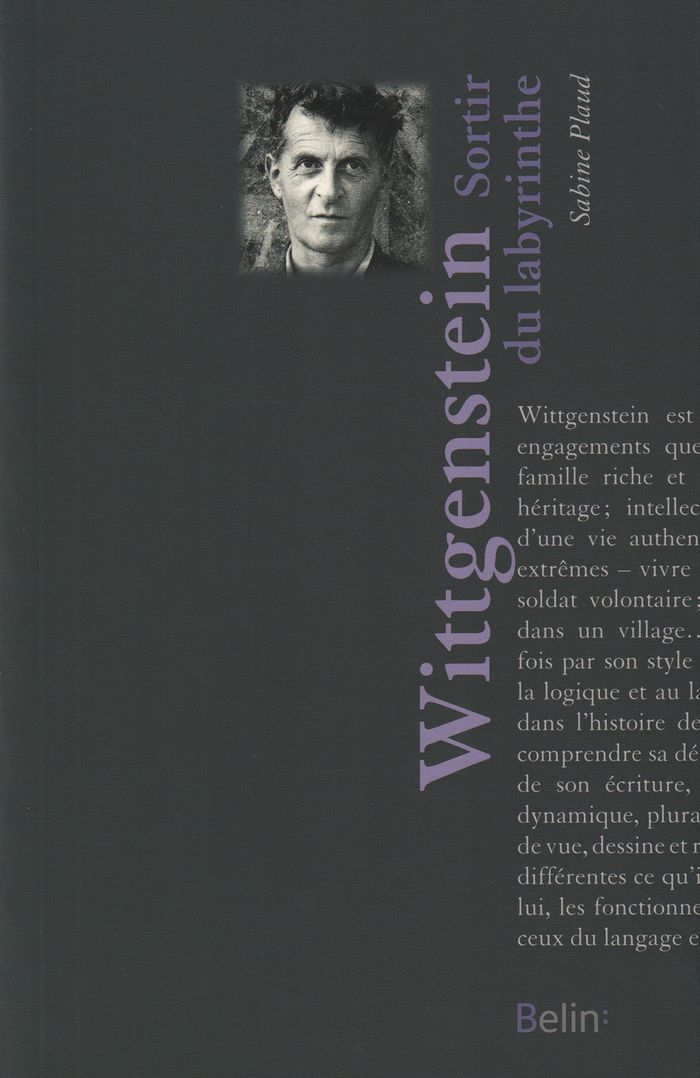
Ludwig Wittgenstein : sortir du labyrinthe
Actions:
Price:
$32.95
(available to order)
Summary:
La philosophie de Ludwig Wittgenstein est une philosophie des chemins : chemins depuis une " première " philosophie fascinée par la pureté de la logique vers une " seconde " philosophie opérant un retour à l'ordinaire – tentatives sans cesse répétées de trouver une orientation dans le labyrinthe du langage. Ces parcours wittgensteiniens sont aussi ceux par lesquels le philosophe tente de déchiffrer les mystères de l'intériorité de l'esprit. Ce sont enfin ces sentiers par où l'on apprend progressivement à voir le monde autrement, pour parvenir enfin à être un homme digne. Les ouvrages sur Wittgenstein qui existent ou bien sont très succincts et ne permettent pas une connaissance solide de l'oeuvre, ou bien sont beaucoup plus fouillés mais s'adressent à des lecteurs déjà spécialisés dans sa philosophie. Cet ouvrage répond à ces deux défis en même temps : il parle un langage clair, ne présupposant pas de connaissance préalable de cet auteur, et il permet de cheminer en profondeur dans sa pensée.
Ludwig Wittgenstein : sortir du labyrinthe
Actions:
Price:
$32.95
(available to order)
Summary:
La philosophie de Ludwig Wittgenstein est une philosophie des chemins : chemins depuis une " première " philosophie fascinée par la pureté de la logique vers une " seconde " philosophie opérant un retour à l'ordinaire – tentatives sans cesse répétées de trouver une orientation dans le labyrinthe du langage. Ces parcours wittgensteiniens sont aussi ceux par lesquels le philosophe tente de déchiffrer les mystères de l'intériorité de l'esprit. Ce sont enfin ces sentiers par où l'on apprend progressivement à voir le monde autrement, pour parvenir enfin à être un homme digne. Les ouvrages sur Wittgenstein qui existent ou bien sont très succincts et ne permettent pas une connaissance solide de l'oeuvre, ou bien sont beaucoup plus fouillés mais s'adressent à des lecteurs déjà spécialisés dans sa philosophie. Cet ouvrage répond à ces deux défis en même temps : il parle un langage clair, ne présupposant pas de connaissance préalable de cet auteur, et il permet de cheminer en profondeur dans sa pensée.
Form:
books
books
Publication:
June 2017
June 2017
Subject:
Critical Theory
Critical Theory
Form:
books
books
Price:
$25.95
(available to order)
Summary:
This study traces the emergence of community as an idea to South America, rather than to nineteenth-century Europe. Later, this sense of belonging was formed and reformulated at every level, from high politics to popular culture, through print, literature, maps and museums. Following the rise and conflict of nations and the decline of empires, Anderson draws on examples(...)
$25.95
(available to order)
Summary:
This study traces the emergence of community as an idea to South America, rather than to nineteenth-century Europe. Later, this sense of belonging was formed and reformulated at every level, from high politics to popular culture, through print, literature, maps and museums. Following the rise and conflict of nations and the decline of empires, Anderson draws on examples(...)
Title:
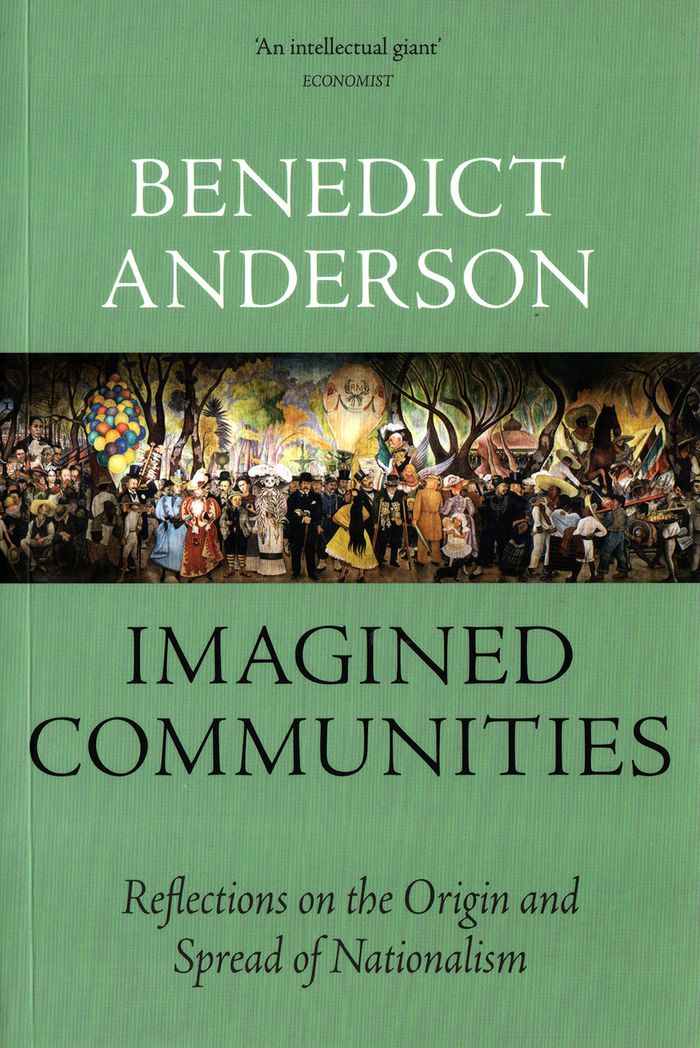
Imagined communities: reflections on the origin and spread of nationalism
Actions:
Price:
$25.95
(available to order)
Summary:
This study traces the emergence of community as an idea to South America, rather than to nineteenth-century Europe. Later, this sense of belonging was formed and reformulated at every level, from high politics to popular culture, through print, literature, maps and museums. Following the rise and conflict of nations and the decline of empires, Anderson draws on examples from South East Asia, Latin America and Europe’s recent past to show how nationalism shaped the modern world.
Imagined communities: reflections on the origin and spread of nationalism
Actions:
Price:
$25.95
(available to order)
Summary:
This study traces the emergence of community as an idea to South America, rather than to nineteenth-century Europe. Later, this sense of belonging was formed and reformulated at every level, from high politics to popular culture, through print, literature, maps and museums. Following the rise and conflict of nations and the decline of empires, Anderson draws on examples from South East Asia, Latin America and Europe’s recent past to show how nationalism shaped the modern world.
Form:
books
books
Publication:
September 2016
September 2016
Subject:
Critical Theory
Critical Theory
Form:
books
books
Actions:
Price:
$13.95
(available to order)
Summary:
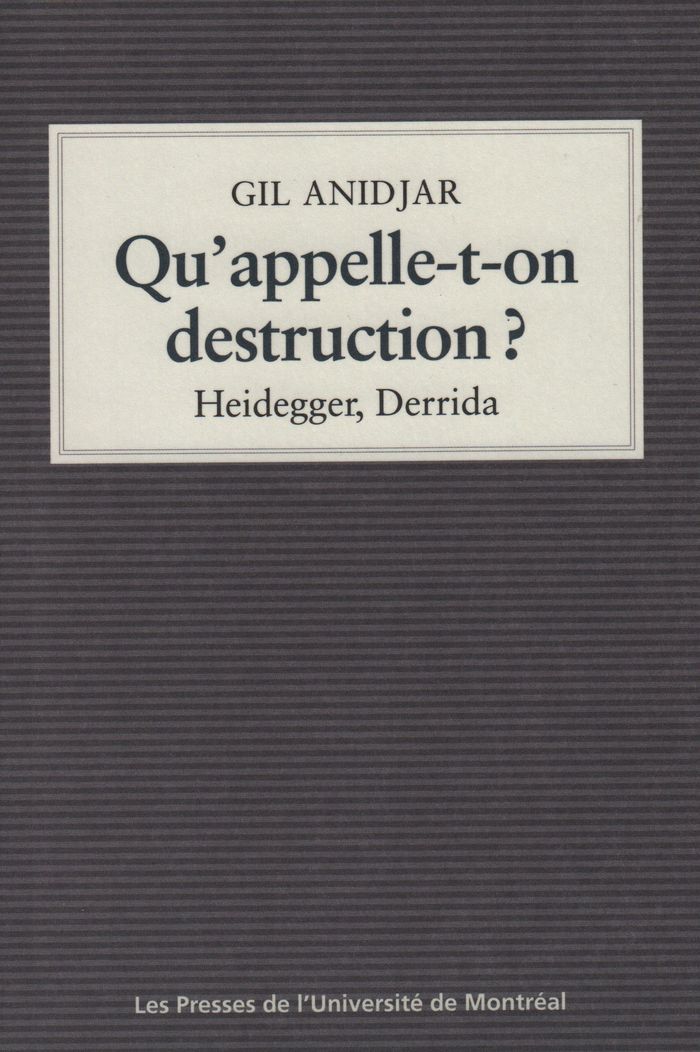
Qu’appelle-t-on destruction ? Après Heidegger, Derrida s’y est attardé, lui qui parlait, encore et encore, de destination et de destruction, lui qui nous a rappelé si souvent à la destruction qui arrive, partout où elle arrive. Posons que c’était l’un de ses combats, l’une de ses longues guerres (avec luimême, d’abord, et avec la destruction). Sera-ce finalement la nôtre(...)
$13.95
(available to order)
Summary:
Qu’appelle-t-on destruction ? Après Heidegger, Derrida s’y est attardé, lui qui parlait, encore et encore, de destination et de destruction, lui qui nous a rappelé si souvent à la destruction qui arrive, partout où elle arrive. Posons que c’était l’un de ses combats, l’une de ses longues guerres (avec luimême, d’abord, et avec la destruction). Sera-ce finalement la nôtre(...)
Title:
Qu'appelle-t-on destruction? Heidegger, Derrida
Actions:
Price:
$13.95
(available to order)
Summary:
Qu’appelle-t-on destruction ? Après Heidegger, Derrida s’y est attardé, lui qui parlait, encore et encore, de destination et de destruction, lui qui nous a rappelé si souvent à la destruction qui arrive, partout où elle arrive. Posons que c’était l’un de ses combats, l’une de ses longues guerres (avec luimême, d’abord, et avec la destruction). Sera-ce finalement la nôtre ? Est-il aujourd’hui temps de penser — après Heidegger, avec Derrida —, temps de combattre aussi peut-être, au moins d’écouter, la destruction qui vient ? Est-il encore temps de témoigner de la destruction qui croît ?
Qu'appelle-t-on destruction? Heidegger, Derrida
Actions:
Price:
$13.95
(available to order)
Summary:
Qu’appelle-t-on destruction ? Après Heidegger, Derrida s’y est attardé, lui qui parlait, encore et encore, de destination et de destruction, lui qui nous a rappelé si souvent à la destruction qui arrive, partout où elle arrive. Posons que c’était l’un de ses combats, l’une de ses longues guerres (avec luimême, d’abord, et avec la destruction). Sera-ce finalement la nôtre ? Est-il aujourd’hui temps de penser — après Heidegger, avec Derrida —, temps de combattre aussi peut-être, au moins d’écouter, la destruction qui vient ? Est-il encore temps de témoigner de la destruction qui croît ?
Form:
books
books
Publication:
September 2017
September 2017
Subject:
Critical Theory
Critical Theory


