


878 Results
Form:
books
books
Actions:
Price:
$33.95
(available to order)
Summary:
The current ecological crisis brings about a new relational landscape: an unprecedented collapse of distances creates interspecies promiscuities and a crisis of the human scale. In his latest book, Nicolas Bourriaud proposes that artists are the anthropologists of this new era. Artists acknowledge the fading of the division between nature and culture, which has been the(...)
$33.95
(available to order)
Summary:
The current ecological crisis brings about a new relational landscape: an unprecedented collapse of distances creates interspecies promiscuities and a crisis of the human scale. In his latest book, Nicolas Bourriaud proposes that artists are the anthropologists of this new era. Artists acknowledge the fading of the division between nature and culture, which has been the(...)
Title:
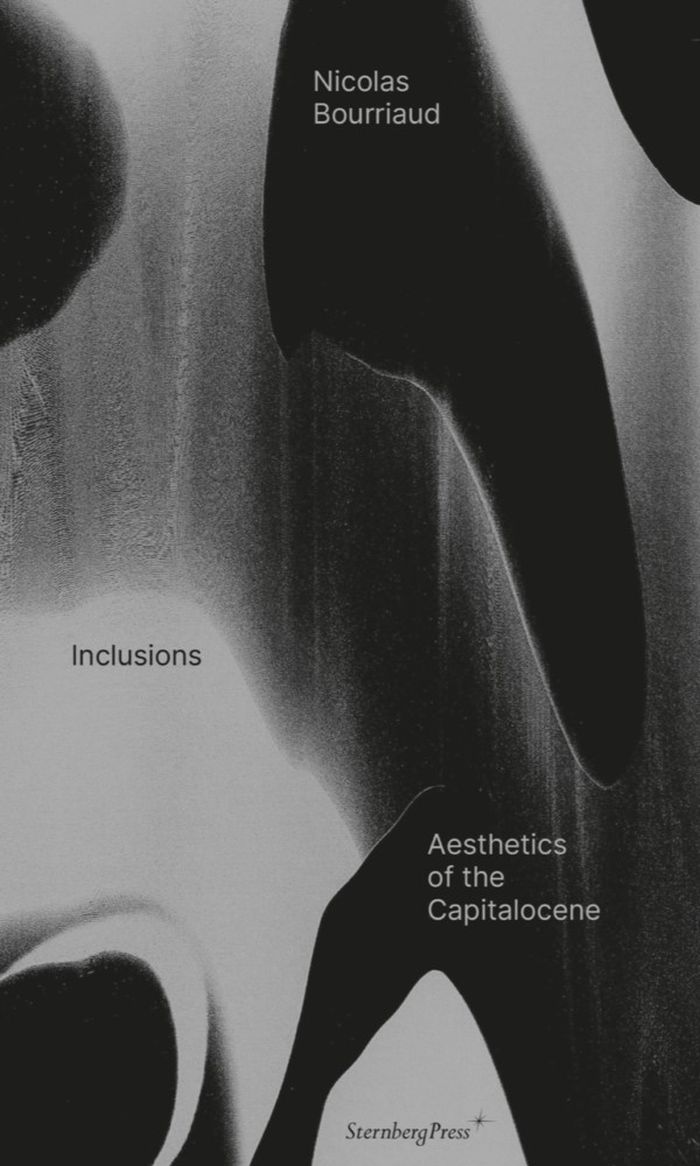
Inclusions: Aesthetics of the Capitalocene
Actions:
Price:
$33.95
(available to order)
Summary:
The current ecological crisis brings about a new relational landscape: an unprecedented collapse of distances creates interspecies promiscuities and a crisis of the human scale. In his latest book, Nicolas Bourriaud proposes that artists are the anthropologists of this new era. Artists acknowledge the fading of the division between nature and culture, which has been the matrix of segregation for millenia. Capitalism, patriarchy, slavery, social segregation, the exploitation of land, subsoil, and animals—all are based on status distinctions between subject and object. Against the commodification of natural elements, Bourriaud sees a new generation of artists calling for a molecular anthropology that studies the human effects on the universe and the interaction between humans and nonhumans. Contemporary art reconnects to archaic magic, the witches, sorcerers, and shamans of precapitalist societies. Against the devitalization of the world, art has managed to preserve certain aspects of the social function and spiritualist practices of these societies.
Inclusions: Aesthetics of the Capitalocene
Actions:
Price:
$33.95
(available to order)
Summary:
The current ecological crisis brings about a new relational landscape: an unprecedented collapse of distances creates interspecies promiscuities and a crisis of the human scale. In his latest book, Nicolas Bourriaud proposes that artists are the anthropologists of this new era. Artists acknowledge the fading of the division between nature and culture, which has been the matrix of segregation for millenia. Capitalism, patriarchy, slavery, social segregation, the exploitation of land, subsoil, and animals—all are based on status distinctions between subject and object. Against the commodification of natural elements, Bourriaud sees a new generation of artists calling for a molecular anthropology that studies the human effects on the universe and the interaction between humans and nonhumans. Contemporary art reconnects to archaic magic, the witches, sorcerers, and shamans of precapitalist societies. Against the devitalization of the world, art has managed to preserve certain aspects of the social function and spiritualist practices of these societies.
Form:
books
books
Publication:
September 2021
September 2021
Subject:
Critical Theory
Critical Theory
Form:
books
books
Title:
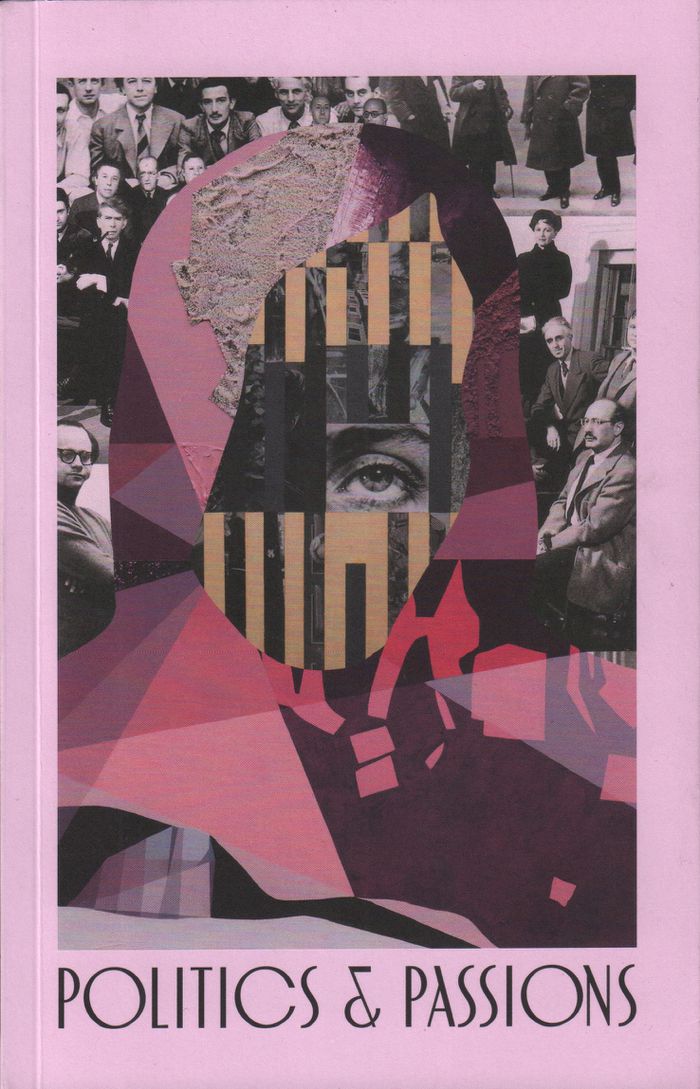
Politics and Passions
Politics and Passions
Actions:
Price:
$30.50
(available in store)
Summary:
In 2009, the artist Anna Ostoya created a booklet with textual collages using an essay by the political theorist Chantal Mouffe, ''Politics and passions: The stakes of democracy'' (2002). In the essay, Mouffe critiqued the then-dominant ‘beyond left and right’ politics of neoliberalism and warned of its dangers – the rise of right-wing populist parties. Fascinated by(...)
$30.50
(available in store)
Summary:
In 2009, the artist Anna Ostoya created a booklet with textual collages using an essay by the political theorist Chantal Mouffe, ''Politics and passions: The stakes of democracy'' (2002). In the essay, Mouffe critiqued the then-dominant ‘beyond left and right’ politics of neoliberalism and warned of its dangers – the rise of right-wing populist parties. Fascinated by(...)
Title:
Politics and Passions
Actions:
Price:
$30.50
(available in store)
Summary:
In 2009, the artist Anna Ostoya created a booklet with textual collages using an essay by the political theorist Chantal Mouffe, ''Politics and passions: The stakes of democracy'' (2002). In the essay, Mouffe critiqued the then-dominant ‘beyond left and right’ politics of neoliberalism and warned of its dangers – the rise of right-wing populist parties. Fascinated by Mouffe’s strikingly prophetic ideas, as well as her bold call to fight the status quo in order to radicalise democracy and to prevent violence, Ostoya returned to the booklet in 2019. She composed for it a series of portraits based on sketches of people on the New York City subway and on reproductions of her paintings and collages from the preceding decade. She also conducted a conversation with Mouffe about the politics of the last forty years, about the contemporary moment and about art, which is included in this publication.
Politics and Passions
Actions:
Price:
$30.50
(available in store)
Summary:
In 2009, the artist Anna Ostoya created a booklet with textual collages using an essay by the political theorist Chantal Mouffe, ''Politics and passions: The stakes of democracy'' (2002). In the essay, Mouffe critiqued the then-dominant ‘beyond left and right’ politics of neoliberalism and warned of its dangers – the rise of right-wing populist parties. Fascinated by Mouffe’s strikingly prophetic ideas, as well as her bold call to fight the status quo in order to radicalise democracy and to prevent violence, Ostoya returned to the booklet in 2019. She composed for it a series of portraits based on sketches of people on the New York City subway and on reproductions of her paintings and collages from the preceding decade. She also conducted a conversation with Mouffe about the politics of the last forty years, about the contemporary moment and about art, which is included in this publication.
Form:
books
books
Publication:
July 2021
July 2021
Form:
books
books
Actions:
Price:
$19.95
(available to order)
Summary:
Untrammelled neoliberalism and the inexorable force of production have produced a 21st century crisis of community: a narcissistic cult of authenticity and mass turning-inward are among the pathologies engendered by it. We are individuals afloat in an atomised society, where the loss of the symbolic structures inherent in ritual behaviour has led to overdependence on the(...)
$19.95
(available to order)
Summary:
Untrammelled neoliberalism and the inexorable force of production have produced a 21st century crisis of community: a narcissistic cult of authenticity and mass turning-inward are among the pathologies engendered by it. We are individuals afloat in an atomised society, where the loss of the symbolic structures inherent in ritual behaviour has led to overdependence on the(...)
Title:
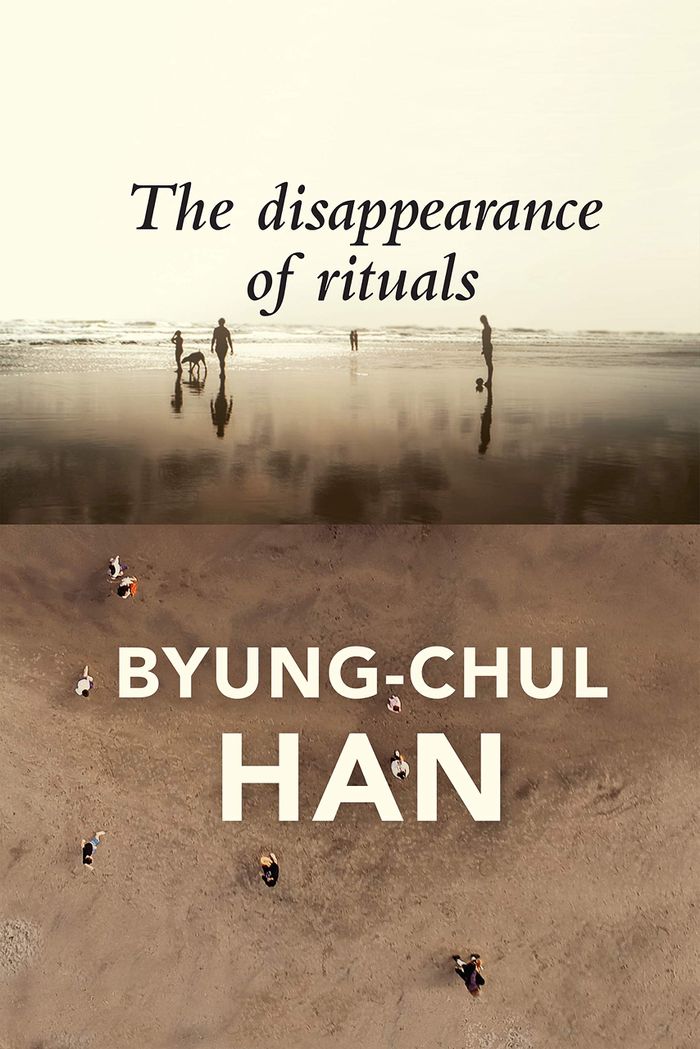
The disappearance of rituals: A topology of the present
Actions:
Price:
$19.95
(available to order)
Summary:
Untrammelled neoliberalism and the inexorable force of production have produced a 21st century crisis of community: a narcissistic cult of authenticity and mass turning-inward are among the pathologies engendered by it. We are individuals afloat in an atomised society, where the loss of the symbolic structures inherent in ritual behaviour has led to overdependence on the contingent to steer identity. Avoiding saccharine nostalgia for the rituals of the past, Han provides a genealogy of their disappearance as a means of diagnosing the pathologies of the present. He juxtaposes a community without communication – where the intensity of togetherness in silent recognition provides structure and meaning – to today’s communication without community, which does away with collective feelings and leaves individuals exposed to exploitation and manipulation by neoliberal psycho-politics. The community that is invoked everywhere today is an atrophied and commoditized community that lacks the symbolic power to bind people together. For Han, it is only the mutual praxis of recognition borne by the ritualistic sharing of the symbolic between members of a community which creates the footholds of objectivity allowing us to make sense of time.
The disappearance of rituals: A topology of the present
Actions:
Price:
$19.95
(available to order)
Summary:
Untrammelled neoliberalism and the inexorable force of production have produced a 21st century crisis of community: a narcissistic cult of authenticity and mass turning-inward are among the pathologies engendered by it. We are individuals afloat in an atomised society, where the loss of the symbolic structures inherent in ritual behaviour has led to overdependence on the contingent to steer identity. Avoiding saccharine nostalgia for the rituals of the past, Han provides a genealogy of their disappearance as a means of diagnosing the pathologies of the present. He juxtaposes a community without communication – where the intensity of togetherness in silent recognition provides structure and meaning – to today’s communication without community, which does away with collective feelings and leaves individuals exposed to exploitation and manipulation by neoliberal psycho-politics. The community that is invoked everywhere today is an atrophied and commoditized community that lacks the symbolic power to bind people together. For Han, it is only the mutual praxis of recognition borne by the ritualistic sharing of the symbolic between members of a community which creates the footholds of objectivity allowing us to make sense of time.
Form:
books
books
Publication:
October 2020
October 2020
Subject:
Critical Theory
Critical Theory
Form:
books
books
Actions:
Price:
$44.95
(available in store)
Summary:
Dans le prolongement de l’'Occupation du monde' paru en 2018, 'Généalogie de la morale économique' expose quelques-unes des voies par lesquelles s’est constitué l’imaginaire économique qui gouverne les sociétés occidentales et entrave l’appréciation de la catastrophe environnementale produite par l’expansion du capitalisme industriel et financier.
$44.95
(available in store)
Summary:
Dans le prolongement de l’'Occupation du monde' paru en 2018, 'Généalogie de la morale économique' expose quelques-unes des voies par lesquelles s’est constitué l’imaginaire économique qui gouverne les sociétés occidentales et entrave l’appréciation de la catastrophe environnementale produite par l’expansion du capitalisme industriel et financier.
Title:
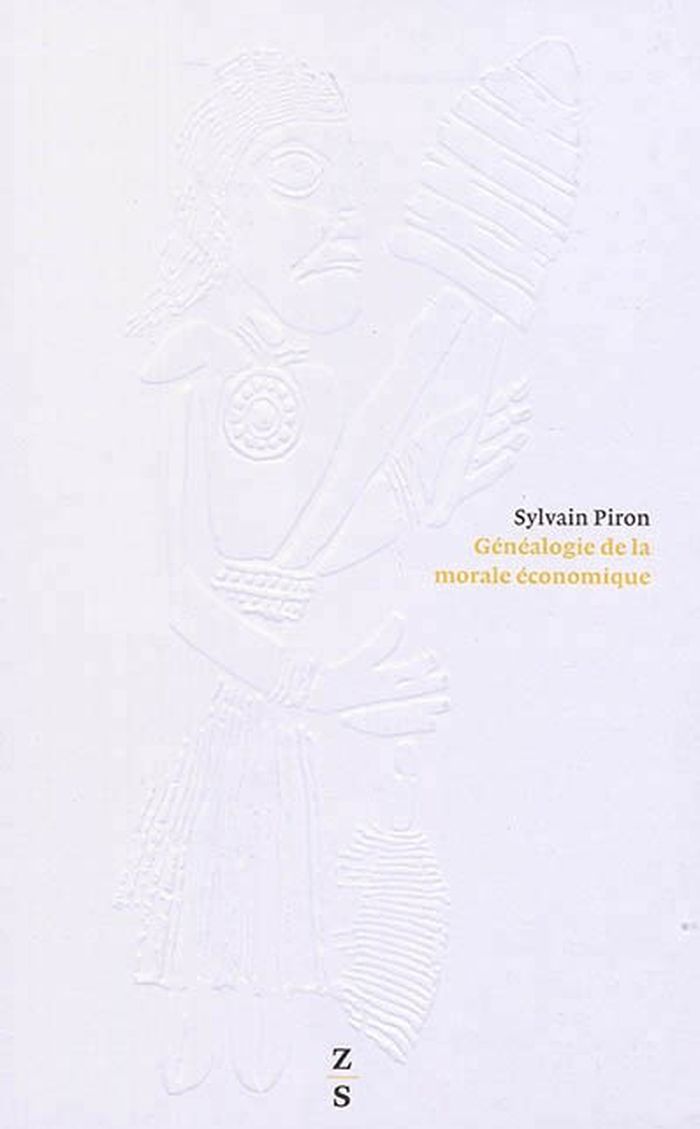
Généalogie de la morale économique
Actions:
Price:
$44.95
(available in store)
Summary:
Dans le prolongement de l’'Occupation du monde' paru en 2018, 'Généalogie de la morale économique' expose quelques-unes des voies par lesquelles s’est constitué l’imaginaire économique qui gouverne les sociétés occidentales et entrave l’appréciation de la catastrophe environnementale produite par l’expansion du capitalisme industriel et financier.
Généalogie de la morale économique
Actions:
Price:
$44.95
(available in store)
Summary:
Dans le prolongement de l’'Occupation du monde' paru en 2018, 'Généalogie de la morale économique' expose quelques-unes des voies par lesquelles s’est constitué l’imaginaire économique qui gouverne les sociétés occidentales et entrave l’appréciation de la catastrophe environnementale produite par l’expansion du capitalisme industriel et financier.
Form:
books
books
Publication:
January 2021
January 2021
Subject:
Critical Theory
Critical Theory
Form:
books
books
Title:
Les limites du capital
Les limites du capital
Actions:
Price:
$52.95
(available in store)
Summary:
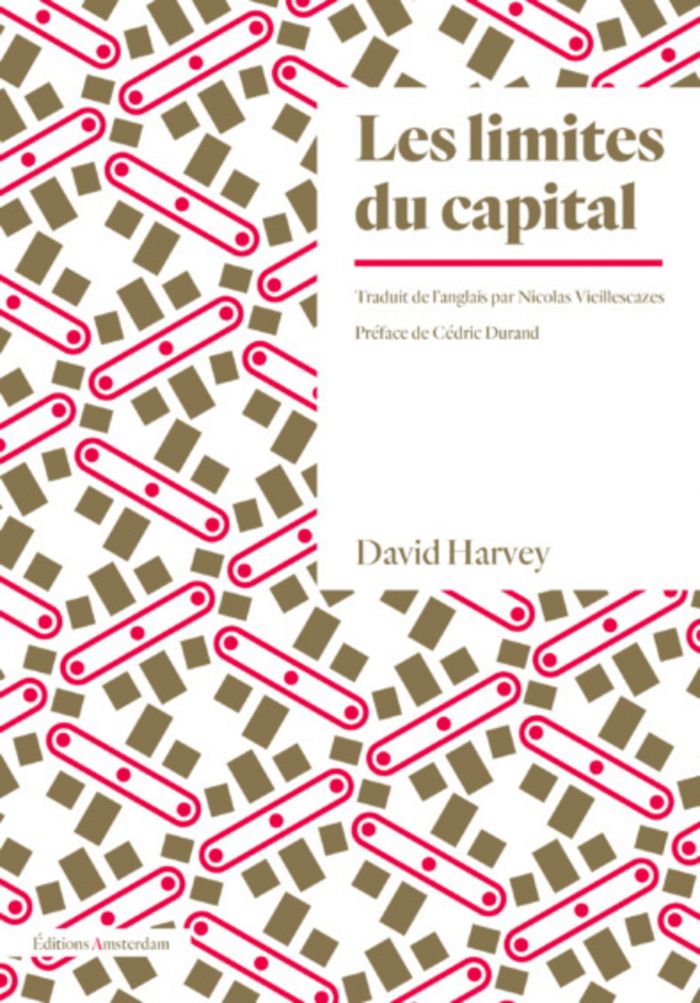
Produit d'une dizaine d'années de recherches et de réflexions de l'auteur, géographe, cet ouvrage propose une reconstruction historico-géographique de l'analyse du capitalisme développée par Karl Marx. Selon lui, le capitalisme est un système socio-économique qui se développe et résout ses crises d'accumulation en créant et en détruisant des territoires.
$52.95
(available in store)
Summary:
Produit d'une dizaine d'années de recherches et de réflexions de l'auteur, géographe, cet ouvrage propose une reconstruction historico-géographique de l'analyse du capitalisme développée par Karl Marx. Selon lui, le capitalisme est un système socio-économique qui se développe et résout ses crises d'accumulation en créant et en détruisant des territoires.
Title:
Les limites du capital
Actions:
Price:
$52.95
(available in store)
Summary:
Produit d'une dizaine d'années de recherches et de réflexions de l'auteur, géographe, cet ouvrage propose une reconstruction historico-géographique de l'analyse du capitalisme développée par Karl Marx. Selon lui, le capitalisme est un système socio-économique qui se développe et résout ses crises d'accumulation en créant et en détruisant des territoires.
Les limites du capital
Actions:
Price:
$52.95
(available in store)
Summary:
Produit d'une dizaine d'années de recherches et de réflexions de l'auteur, géographe, cet ouvrage propose une reconstruction historico-géographique de l'analyse du capitalisme développée par Karl Marx. Selon lui, le capitalisme est un système socio-économique qui se développe et résout ses crises d'accumulation en créant et en détruisant des territoires.
Form:
books
books
Publication:
January 2021
January 2021
Subject:
Critical Theory
Critical Theory
Form:
books
books

Actions:
Price:
$36.95
(available in store)
Summary:
Partant de l’expérience de ses trente déménagements, dans un style de conteur très personnel, croisant les disciplines et analysant des sujets apparemment ordinaires comme la cuisine, les armoires, les lits, les couloirs et jusqu’aux salles de bains, sans négliger la parentalité, le sexe et le soin, Coccia aborde de manière passionnante un sujet ancestral et très moderne,(...)
$36.95
(available in store)
Summary:
Partant de l’expérience de ses trente déménagements, dans un style de conteur très personnel, croisant les disciplines et analysant des sujets apparemment ordinaires comme la cuisine, les armoires, les lits, les couloirs et jusqu’aux salles de bains, sans négliger la parentalité, le sexe et le soin, Coccia aborde de manière passionnante un sujet ancestral et très moderne,(...)
Title:
Philosophie de la maison : l’espace domestique et le bonheur
Actions:
Price:
$36.95
(available in store)
Summary:
Partant de l’expérience de ses trente déménagements, dans un style de conteur très personnel, croisant les disciplines et analysant des sujets apparemment ordinaires comme la cuisine, les armoires, les lits, les couloirs et jusqu’aux salles de bains, sans négliger la parentalité, le sexe et le soin, Coccia aborde de manière passionnante un sujet ancestral et très moderne, qui nous concerne tous.
Philosophie de la maison : l’espace domestique et le bonheur
Actions:
Price:
$36.95
(available in store)
Summary:
Partant de l’expérience de ses trente déménagements, dans un style de conteur très personnel, croisant les disciplines et analysant des sujets apparemment ordinaires comme la cuisine, les armoires, les lits, les couloirs et jusqu’aux salles de bains, sans négliger la parentalité, le sexe et le soin, Coccia aborde de manière passionnante un sujet ancestral et très moderne, qui nous concerne tous.
Form:
books
books
Publication:
October 2021
October 2021
Subject:
Critical Theory
Critical Theory
Form:
books
books
Price:
$25.95
(available in store)
Summary:
Today, artists are engaged in investigation. They probe corruption, human rights violations, environmental crimes and technological domination. At the same time, areas not usually thought of as artistic make powerful use of aesthetics. Journalists and legal professionals pore over opensource videos and satellite imagery to undertake visual investigations. This combination(...)
$25.95
(available in store)
Summary:
Today, artists are engaged in investigation. They probe corruption, human rights violations, environmental crimes and technological domination. At the same time, areas not usually thought of as artistic make powerful use of aesthetics. Journalists and legal professionals pore over opensource videos and satellite imagery to undertake visual investigations. This combination(...)
Title:
Investigative aesthetics: conflicts and commons in the politics of truth
Actions:
Price:
$25.95
(available in store)
Summary:
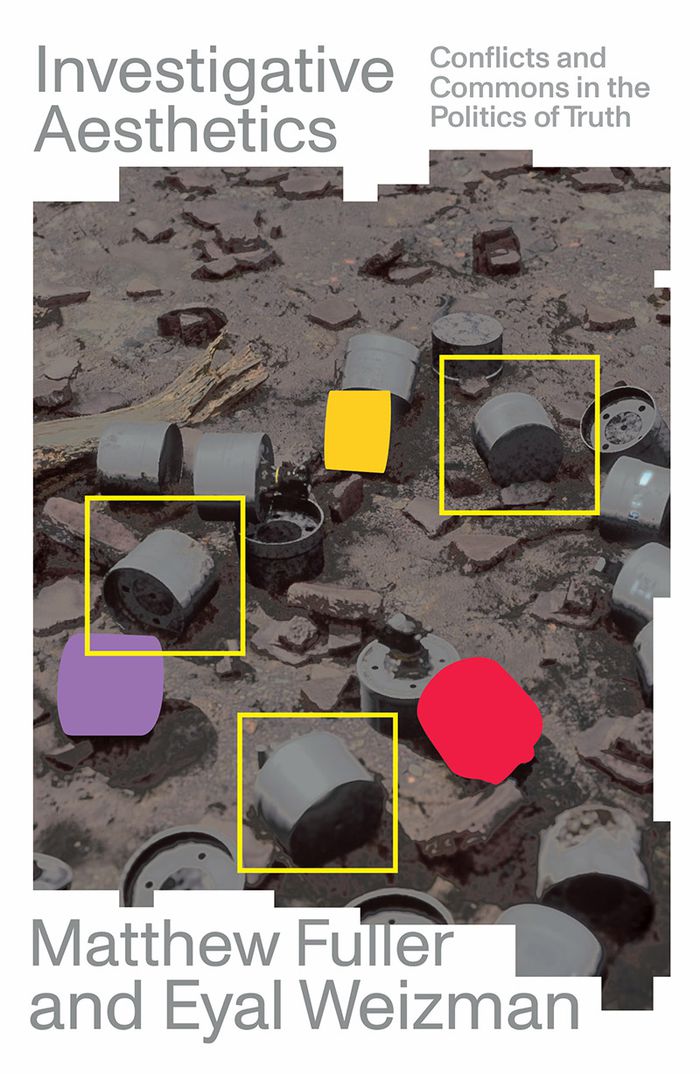
Today, artists are engaged in investigation. They probe corruption, human rights violations, environmental crimes and technological domination. At the same time, areas not usually thought of as artistic make powerful use of aesthetics. Journalists and legal professionals pore over opensource videos and satellite imagery to undertake visual investigations. This combination of diverse fields is what the authors call “investigative aesthetics”: the mobilisation of sensibilities associated with art, architecture and other such practices in order to speak truth to power. ''Investigative Aesthetics'' draws on theories of knowledge, ecology and technology; evaluates the methods of citizen counter-forensics, micro-history and art; and examines radical practices such as those of WikiLeaks, Bellingcat, and Forensic Architecture. These new practices take place in the studio and the laboratory, the courtroom and the gallery, online and in the streets, as they strive towards the construction of a new common sense. Matthew Fuller and Eyal Weizman have here provided an inspiring introduction to a new field that will change how we understand and confront power today.
Investigative aesthetics: conflicts and commons in the politics of truth
Actions:
Price:
$25.95
(available in store)
Summary:
Today, artists are engaged in investigation. They probe corruption, human rights violations, environmental crimes and technological domination. At the same time, areas not usually thought of as artistic make powerful use of aesthetics. Journalists and legal professionals pore over opensource videos and satellite imagery to undertake visual investigations. This combination of diverse fields is what the authors call “investigative aesthetics”: the mobilisation of sensibilities associated with art, architecture and other such practices in order to speak truth to power. ''Investigative Aesthetics'' draws on theories of knowledge, ecology and technology; evaluates the methods of citizen counter-forensics, micro-history and art; and examines radical practices such as those of WikiLeaks, Bellingcat, and Forensic Architecture. These new practices take place in the studio and the laboratory, the courtroom and the gallery, online and in the streets, as they strive towards the construction of a new common sense. Matthew Fuller and Eyal Weizman have here provided an inspiring introduction to a new field that will change how we understand and confront power today.
Form:
books
books
Publication:
August 2021
August 2021
Subject:
Critical Theory
Critical Theory
Form:
books
books
Price:
$52.00
(available in store)
Summary:
Taking as a point of departure Derrida's notion of "hostipitality" – that is the presence of hostility in all hospitality and hosting – this anthology brings together original contributions from artists, scholars, activists, poets, curators, and musicians who reflect on different experiences and notions of hospitality. In an age of flourishing resentments and antipathy(...)
$52.00
(available in store)
Summary:
Taking as a point of departure Derrida's notion of "hostipitality" – that is the presence of hostility in all hospitality and hosting – this anthology brings together original contributions from artists, scholars, activists, poets, curators, and musicians who reflect on different experiences and notions of hospitality. In an age of flourishing resentments and antipathy(...)
Title:
Whose land have I lit on now? Contemplations on the notions of hospitality
Actions:
Price:
$52.00
(available in store)
Summary:
Taking as a point of departure Derrida's notion of "hostipitality" – that is the presence of hostility in all hospitality and hosting – this anthology brings together original contributions from artists, scholars, activists, poets, curators, and musicians who reflect on different experiences and notions of hospitality. In an age of flourishing resentments and antipathy towards all that seems conceptually or physically "strange"/ a "stranger," in a time when the historical violence of the guest (as a colonizer) over the host is reiterated and fortified; in an era that has turned hospitality into a neoliberal commodity, it becomes urgent to reconsider hospitality's gradients of power.
Whose land have I lit on now? Contemplations on the notions of hospitality
Actions:
Price:
$52.00
(available in store)
Summary:
Taking as a point of departure Derrida's notion of "hostipitality" – that is the presence of hostility in all hospitality and hosting – this anthology brings together original contributions from artists, scholars, activists, poets, curators, and musicians who reflect on different experiences and notions of hospitality. In an age of flourishing resentments and antipathy towards all that seems conceptually or physically "strange"/ a "stranger," in a time when the historical violence of the guest (as a colonizer) over the host is reiterated and fortified; in an era that has turned hospitality into a neoliberal commodity, it becomes urgent to reconsider hospitality's gradients of power.
Form:
books
books
Publication:
October 2021
October 2021
Subject:
Critical Theory
Critical Theory
Form:
books
books
Actions:
Price:
$32.95
(available in store)
Summary:
A small but growing group of today's knowledge workers actively seek a lifestyle of freedom, using technology to perform their jobs, traveling far and wide, and moving as often as they like. These digital nomads have left their local coffee shops behind and now proudly post their "office of the day" photos from exotic locales, but what do their lives really look like? In(...)
$32.95
(available in store)
Summary:
A small but growing group of today's knowledge workers actively seek a lifestyle of freedom, using technology to perform their jobs, traveling far and wide, and moving as often as they like. These digital nomads have left their local coffee shops behind and now proudly post their "office of the day" photos from exotic locales, but what do their lives really look like? In(...)
Publication:
January 2021
January 2021
Title:
Digital nomads: In search of freedom, community and meaningful work in the new economy
Actions:
Price:
$32.95
(available in store)
Summary:
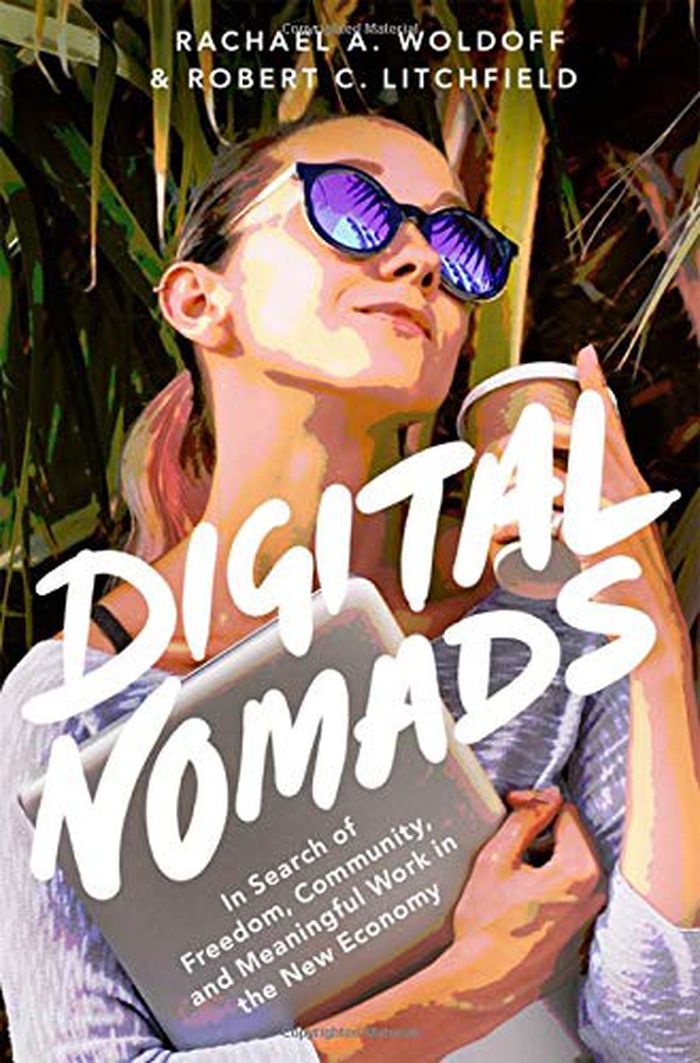
A small but growing group of today's knowledge workers actively seek a lifestyle of freedom, using technology to perform their jobs, traveling far and wide, and moving as often as they like. These digital nomads have left their local coffee shops behind and now proudly post their "office of the day" photos from exotic locales, but what do their lives really look like? In ''Digital nomads,'' Rachael Woldoff and Robert Litchfield take readers into an expatriate digital nomad community in Bali, Indonesia to better understand this growing demographic of typically Millennial workers. Through dozens of interviews and several stints living in a digital nomad hub, Woldoff and Litchfield present new answers to classic questions about community, creativity, and work. They further show why digital nomads leave their conventional lives behind, arguing that creative class and Millennial workers, though successful, often feel that their "world class cities" and desirable jobs are anything but paradise. They first follow their transitions into freelancing, entrepreneurship, and remote work, then explain how digital nomads create a fluid but intimate community abroad in the company of like-minded others. Ultimately, Woldoff and Litchfield provide insight into digital nomads' efforts to live and work in ways that balance freedom, community, and creative fulfillment in the digital age. A sympathetic yet critical take on this emerging group of workers, ''Digital nomads'' provides a revealing take on the changing nature of work and the problems of the new economy.
Digital nomads: In search of freedom, community and meaningful work in the new economy
Actions:
Price:
$32.95
(available in store)
Summary:
A small but growing group of today's knowledge workers actively seek a lifestyle of freedom, using technology to perform their jobs, traveling far and wide, and moving as often as they like. These digital nomads have left their local coffee shops behind and now proudly post their "office of the day" photos from exotic locales, but what do their lives really look like? In ''Digital nomads,'' Rachael Woldoff and Robert Litchfield take readers into an expatriate digital nomad community in Bali, Indonesia to better understand this growing demographic of typically Millennial workers. Through dozens of interviews and several stints living in a digital nomad hub, Woldoff and Litchfield present new answers to classic questions about community, creativity, and work. They further show why digital nomads leave their conventional lives behind, arguing that creative class and Millennial workers, though successful, often feel that their "world class cities" and desirable jobs are anything but paradise. They first follow their transitions into freelancing, entrepreneurship, and remote work, then explain how digital nomads create a fluid but intimate community abroad in the company of like-minded others. Ultimately, Woldoff and Litchfield provide insight into digital nomads' efforts to live and work in ways that balance freedom, community, and creative fulfillment in the digital age. A sympathetic yet critical take on this emerging group of workers, ''Digital nomads'' provides a revealing take on the changing nature of work and the problems of the new economy.
Form:
books
books
Publication:
January 2021
January 2021
Form:
books
books
Title:
Debt: The first 5,000 years
Debt: The first 5,000 years
Actions:
Price:
$29.99
(available to order)
Summary:
Before there was money, there was debt. Every economics textbook says the same thing: Money was invented to replace onerous and complicated barter systems—to relieve ancient people from having to haul their goods to market. The problem with this version of history? There’s not a shred of evidence to support it. Here anthropologist David Graeber presents a stunning(...)
$29.99
(available to order)
Summary:
Before there was money, there was debt. Every economics textbook says the same thing: Money was invented to replace onerous and complicated barter systems—to relieve ancient people from having to haul their goods to market. The problem with this version of history? There’s not a shred of evidence to support it. Here anthropologist David Graeber presents a stunning(...)
Title:
Debt: The first 5,000 years
Actions:
Price:
$29.99
(available to order)
Summary:
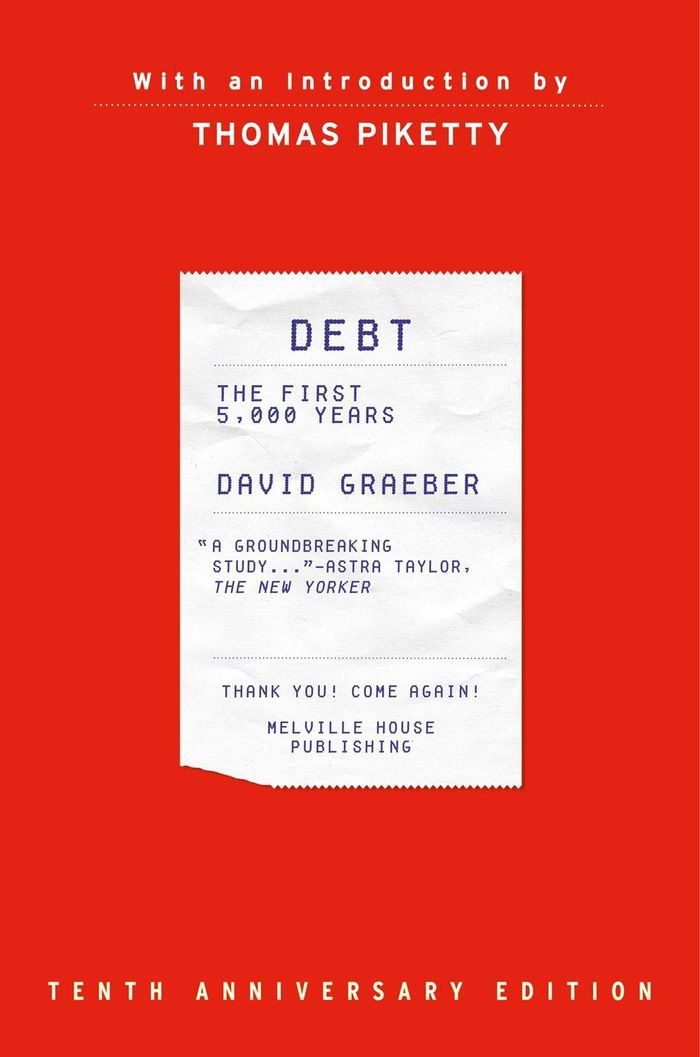
Before there was money, there was debt. Every economics textbook says the same thing: Money was invented to replace onerous and complicated barter systems—to relieve ancient people from having to haul their goods to market. The problem with this version of history? There’s not a shred of evidence to support it. Here anthropologist David Graeber presents a stunning reversal of conventional wisdom. He shows that for more than 5,000 years, since the beginnings of the first agrarian empires, humans have used elaborate credit systems to buy and sell goods—that is, long before the invention of coins or cash. It is in this era, Graeber argues, that we also first encounter a society divided into debtors and creditors. Graeber shows that arguments about debt and debt forgiveness have been at the center of political debates from Italy to China, as well as sparking innumerable insurrections. He also brilliantly demonstrates that the language of the ancient works of law and religion (words like ''guilt,'' ''sin,'' and ''redemption'') derive in large part from ancient debates about debt, and shape even our most basic ideas of right and wrong. We are still fighting these battles today without knowing it. ''Debt: The first 5,000 years'' is a fascinating chronicle of this little known history—as well as how it has defined human history. It shows how debt has defined our human past, and what that means for our economic future.
Debt: The first 5,000 years
Actions:
Price:
$29.99
(available to order)
Summary:
Before there was money, there was debt. Every economics textbook says the same thing: Money was invented to replace onerous and complicated barter systems—to relieve ancient people from having to haul their goods to market. The problem with this version of history? There’s not a shred of evidence to support it. Here anthropologist David Graeber presents a stunning reversal of conventional wisdom. He shows that for more than 5,000 years, since the beginnings of the first agrarian empires, humans have used elaborate credit systems to buy and sell goods—that is, long before the invention of coins or cash. It is in this era, Graeber argues, that we also first encounter a society divided into debtors and creditors. Graeber shows that arguments about debt and debt forgiveness have been at the center of political debates from Italy to China, as well as sparking innumerable insurrections. He also brilliantly demonstrates that the language of the ancient works of law and religion (words like ''guilt,'' ''sin,'' and ''redemption'') derive in large part from ancient debates about debt, and shape even our most basic ideas of right and wrong. We are still fighting these battles today without knowing it. ''Debt: The first 5,000 years'' is a fascinating chronicle of this little known history—as well as how it has defined human history. It shows how debt has defined our human past, and what that means for our economic future.
Form:
books
books
Publication:
October 2014
October 2014
Subject:
Critical Theory
Critical Theory


