


878 Results
Form:
books
books
Actions:
Price:
$43.95
(available to order)
Summary:
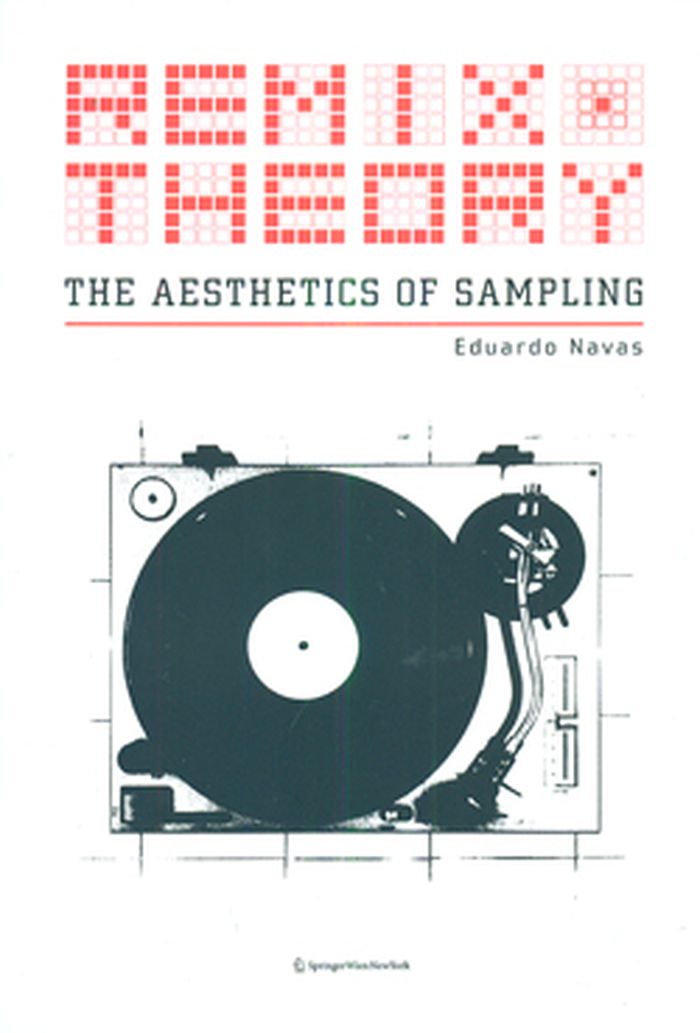
Remix Theory: The Aesthetics of Sampling is an analysis of Remix in art, music, and new media. Navas argues that Remix, as a form of discourse, affects culture in ways that go beyond the basic recombination of material. His investigation locates the roots of Remix in early forms of mechanical reproduction, in seven stages, beginning in the nineteenth century with the(...)
$43.95
(available to order)
Summary:
Remix Theory: The Aesthetics of Sampling is an analysis of Remix in art, music, and new media. Navas argues that Remix, as a form of discourse, affects culture in ways that go beyond the basic recombination of material. His investigation locates the roots of Remix in early forms of mechanical reproduction, in seven stages, beginning in the nineteenth century with the(...)
Title:
Remix theory : the aesthetics of sampling
Actions:
Price:
$43.95
(available to order)
Summary:
Remix Theory: The Aesthetics of Sampling is an analysis of Remix in art, music, and new media. Navas argues that Remix, as a form of discourse, affects culture in ways that go beyond the basic recombination of material. His investigation locates the roots of Remix in early forms of mechanical reproduction, in seven stages, beginning in the nineteenth century with the development of the photo camera and the phonograph, leading to contemporary Remix culture. This book places particular emphasis on the rise of Remix in music during the 1970s and '80s in relation to art and media at the beginning of the twenty-first Century. Navas argues that Remix is a type of binder, a cultural glue - a virus - that informs and supports contemporary culture.
Remix theory : the aesthetics of sampling
Actions:
Price:
$43.95
(available to order)
Summary:
Remix Theory: The Aesthetics of Sampling is an analysis of Remix in art, music, and new media. Navas argues that Remix, as a form of discourse, affects culture in ways that go beyond the basic recombination of material. His investigation locates the roots of Remix in early forms of mechanical reproduction, in seven stages, beginning in the nineteenth century with the development of the photo camera and the phonograph, leading to contemporary Remix culture. This book places particular emphasis on the rise of Remix in music during the 1970s and '80s in relation to art and media at the beginning of the twenty-first Century. Navas argues that Remix is a type of binder, a cultural glue - a virus - that informs and supports contemporary culture.
Form:
books
books
Publication:
October 2012
October 2012
Subject:
Critical Theory
Critical Theory
Form:
books
books

Actions:
Price:
$15.95
(available to order)
Summary:
En s'autorisant de la pratique de la citation et du montage, courante chez Walter Benjamin (1892-1940), le présent recueil propose à la lecture un certain nombre d'écrits de cet auteur qu'on ne cesse de découvrir à neuf : notes, articles, fragments théoriques, extraits conséquents de grandes études et recherches, ici organisés autour du concept de critique, doublé de celui d'utopie.
$15.95
(available to order)
Summary:
En s'autorisant de la pratique de la citation et du montage, courante chez Walter Benjamin (1892-1940), le présent recueil propose à la lecture un certain nombre d'écrits de cet auteur qu'on ne cesse de découvrir à neuf : notes, articles, fragments théoriques, extraits conséquents de grandes études et recherches, ici organisés autour du concept de critique, doublé de celui d'utopie.
Title:
Walter Benjamin : critique et utopie
Actions:
Price:
$15.95
(available to order)
Summary:
En s'autorisant de la pratique de la citation et du montage, courante chez Walter Benjamin (1892-1940), le présent recueil propose à la lecture un certain nombre d'écrits de cet auteur qu'on ne cesse de découvrir à neuf : notes, articles, fragments théoriques, extraits conséquents de grandes études et recherches, ici organisés autour du concept de critique, doublé de celui d'utopie.
Walter Benjamin : critique et utopie
Actions:
Price:
$15.95
(available to order)
Summary:
En s'autorisant de la pratique de la citation et du montage, courante chez Walter Benjamin (1892-1940), le présent recueil propose à la lecture un certain nombre d'écrits de cet auteur qu'on ne cesse de découvrir à neuf : notes, articles, fragments théoriques, extraits conséquents de grandes études et recherches, ici organisés autour du concept de critique, doublé de celui d'utopie.
Form:
books
books
Publication:
October 2012
October 2012
Subject:
Critical Theory
Critical Theory
Form:
books
books

Actions:
Price:
$17.95
(available to order)
Summary:
La plupart des essais regroupés ici paraissent en français pour la première fois ; ils fournissent un aperçu non seulement sur les livres que possédait Walter Benjamin, mais aussi sur le type même du collectionneur, ce "mystérieux genre d'homme qui peut dire : Je crois à mon âme, la Chose". Les curiosités que Walter Benjamin déballe sous nos yeux - livres pour enfants,(...)
$17.95
(available to order)
Summary:
La plupart des essais regroupés ici paraissent en français pour la première fois ; ils fournissent un aperçu non seulement sur les livres que possédait Walter Benjamin, mais aussi sur le type même du collectionneur, ce "mystérieux genre d'homme qui peut dire : Je crois à mon âme, la Chose". Les curiosités que Walter Benjamin déballe sous nos yeux - livres pour enfants,(...)
Title:
Walter Benjamin : Je déballe ma bibliothèque
Actions:
Price:
$17.95
(available to order)
Summary:
La plupart des essais regroupés ici paraissent en français pour la première fois ; ils fournissent un aperçu non seulement sur les livres que possédait Walter Benjamin, mais aussi sur le type même du collectionneur, ce "mystérieux genre d'homme qui peut dire : Je crois à mon âme, la Chose". Les curiosités que Walter Benjamin déballe sous nos yeux - livres pour enfants, abécédaires, rébus, témoignages rédigés par des malades mentaux - attestent toutes un refus de dissocier le texte de l'iconographie, ou plus généralement de la matérialité du livre. Les deux essais de 1931 - "Je déballe ma bibliothèque" et "Pour collectionneurs pauvres" - constituent un début de recherche théorique sur l'acte de collectionner. Enfin une liste de lectures - catalogue fragmentaire dressé par Benjamin lui-même - introduit au parcours de ce penseur aussi inclassable qu'inépuisable.
Walter Benjamin : Je déballe ma bibliothèque
Actions:
Price:
$17.95
(available to order)
Summary:
La plupart des essais regroupés ici paraissent en français pour la première fois ; ils fournissent un aperçu non seulement sur les livres que possédait Walter Benjamin, mais aussi sur le type même du collectionneur, ce "mystérieux genre d'homme qui peut dire : Je crois à mon âme, la Chose". Les curiosités que Walter Benjamin déballe sous nos yeux - livres pour enfants, abécédaires, rébus, témoignages rédigés par des malades mentaux - attestent toutes un refus de dissocier le texte de l'iconographie, ou plus généralement de la matérialité du livre. Les deux essais de 1931 - "Je déballe ma bibliothèque" et "Pour collectionneurs pauvres" - constituent un début de recherche théorique sur l'acte de collectionner. Enfin une liste de lectures - catalogue fragmentaire dressé par Benjamin lui-même - introduit au parcours de ce penseur aussi inclassable qu'inépuisable.
Form:
books
books
Publication:
October 2012
October 2012
Subject:
Critical Theory
Critical Theory
Form:
books
books

Actions:
Price:
$16.95
(available to order)
Summary:
Le poète naturaliste et philosophe américain Henry D. Thoreau, arpenteur infatigable de la nature, a collecté sa vie durant des observations sur les bois et les forêts. Peu avant sa mort, il rassemble ses notes et en extrait un très beau texte, Teintes d'automne, emblématique de ce genre littéraire dont il est considéré comme le père fondateur : le nature writing. La(...)
$16.95
(available to order)
Summary:
Le poète naturaliste et philosophe américain Henry D. Thoreau, arpenteur infatigable de la nature, a collecté sa vie durant des observations sur les bois et les forêts. Peu avant sa mort, il rassemble ses notes et en extrait un très beau texte, Teintes d'automne, emblématique de ce genre littéraire dont il est considéré comme le père fondateur : le nature writing. La(...)
Title:
Teintes d'automne & La sucession des arbres en forêt
Actions:
Price:
$16.95
(available to order)
Summary:
Le poète naturaliste et philosophe américain Henry D. Thoreau, arpenteur infatigable de la nature, a collecté sa vie durant des observations sur les bois et les forêts. Peu avant sa mort, il rassemble ses notes et en extrait un très beau texte, Teintes d'automne, emblématique de ce genre littéraire dont il est considéré comme le père fondateur : le nature writing. La Succession des arbres en forêt est quant à lui le texte d'une conférence que Thoreau a prononcée en 1860 devant une société d'agriculture. Évoquant la dissémination des graines d'arbres, il montre comment la compréhension de l'économie de la nature permet de la protéger tout en en tirant des ressources. Car Thoreau le poète, l'humaniste, le résistant, est aussi considéré comme un des pères de l'écologie. Traduit de l'anglais par Nicole Mallet et introduction et notes de Michel Granger.
Teintes d'automne & La sucession des arbres en forêt
Actions:
Price:
$16.95
(available to order)
Summary:
Le poète naturaliste et philosophe américain Henry D. Thoreau, arpenteur infatigable de la nature, a collecté sa vie durant des observations sur les bois et les forêts. Peu avant sa mort, il rassemble ses notes et en extrait un très beau texte, Teintes d'automne, emblématique de ce genre littéraire dont il est considéré comme le père fondateur : le nature writing. La Succession des arbres en forêt est quant à lui le texte d'une conférence que Thoreau a prononcée en 1860 devant une société d'agriculture. Évoquant la dissémination des graines d'arbres, il montre comment la compréhension de l'économie de la nature permet de la protéger tout en en tirant des ressources. Car Thoreau le poète, l'humaniste, le résistant, est aussi considéré comme un des pères de l'écologie. Traduit de l'anglais par Nicole Mallet et introduction et notes de Michel Granger.
Form:
books
books
Publication:
November 2012
November 2012
Subject:
Critical Theory
Critical Theory
Form:
books
books
Title:
Two cheers for anarchism
Two cheers for anarchism
Actions:
Price:
$26.95
(available to order)
Summary:
Having studied how people in marginal societies deal with the state, Yale political scientist and anthropologist Scott (The Art of Not Being Governed) found himself drawn to a study of anarchism. his brief, six-part study is the result. Having concluded that revolution too often leads to such repressive regimes as France's Committee of Public Safety or the Soviet(...)
$26.95
(available to order)
Summary:
Having studied how people in marginal societies deal with the state, Yale political scientist and anthropologist Scott (The Art of Not Being Governed) found himself drawn to a study of anarchism. his brief, six-part study is the result. Having concluded that revolution too often leads to such repressive regimes as France's Committee of Public Safety or the Soviet(...)
Title:
Two cheers for anarchism
Actions:
Price:
$26.95
(available to order)
Summary:
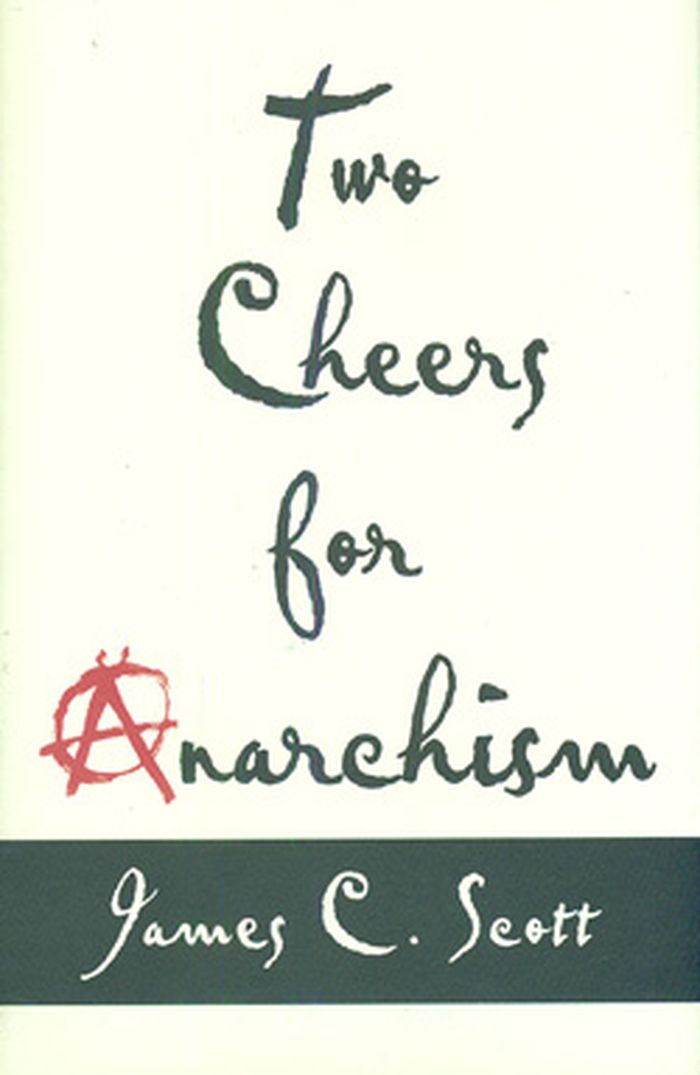
Having studied how people in marginal societies deal with the state, Yale political scientist and anthropologist Scott (The Art of Not Being Governed) found himself drawn to a study of anarchism. his brief, six-part study is the result. Having concluded that revolution too often leads to such repressive regimes as France's Committee of Public Safety or the Soviet state, Scott began to examine leaderless mass efforts disorganized strivings towards social improvement. Scott recognizes that anarchism is not a panacea and that there are problems that only government can treat. Nevertheless, he expresses a strong dislike for centralized governance and a preference for expanding chaos. He refers to his sections as "fragments," highlighting the book's key shortcoming: every chapter seems rushed and incomplete, as though Scott were hurrying to get his thoughts down on paper before they vanished.
Two cheers for anarchism
Actions:
Price:
$26.95
(available to order)
Summary:
Having studied how people in marginal societies deal with the state, Yale political scientist and anthropologist Scott (The Art of Not Being Governed) found himself drawn to a study of anarchism. his brief, six-part study is the result. Having concluded that revolution too often leads to such repressive regimes as France's Committee of Public Safety or the Soviet state, Scott began to examine leaderless mass efforts disorganized strivings towards social improvement. Scott recognizes that anarchism is not a panacea and that there are problems that only government can treat. Nevertheless, he expresses a strong dislike for centralized governance and a preference for expanding chaos. He refers to his sections as "fragments," highlighting the book's key shortcoming: every chapter seems rushed and incomplete, as though Scott were hurrying to get his thoughts down on paper before they vanished.
Form:
books
books
Publication:
November 2012
November 2012
Subject:
Critical Theory
Critical Theory
Form:
books
books
Actions:
Price:
$17.95
(available to order)
Summary:
First published in France in 1999, Preliminary Materials for a Theory of the Young-Girl dissects the impossibility of love under Empire. The Young-Girl is consumer society's total product and model citizen: whatever "type" of Young-Girl she may embody, whether by whim or concerted performance, she can only seduce by consuming. Filled with the language of French women's(...)
$17.95
(available to order)
Summary:
First published in France in 1999, Preliminary Materials for a Theory of the Young-Girl dissects the impossibility of love under Empire. The Young-Girl is consumer society's total product and model citizen: whatever "type" of Young-Girl she may embody, whether by whim or concerted performance, she can only seduce by consuming. Filled with the language of French women's(...)
Title:
Preliminary materials for a Theory of the Young-Girl
Actions:
Price:
$17.95
(available to order)
Summary:
First published in France in 1999, Preliminary Materials for a Theory of the Young-Girl dissects the impossibility of love under Empire. The Young-Girl is consumer society's total product and model citizen: whatever "type" of Young-Girl she may embody, whether by whim or concerted performance, she can only seduce by consuming. Filled with the language of French women's magazines, rooted in Proust's figure of Albertine and the amusing misery of (teenage) romance in Witold Gombrowicz's Ferdydurke, and informed by Pierre Klossowski's notion of "living currency" and libidinal economy, the essay diagnoses -- and makes visible -- a phenomenon that is so ubiquitous as to have become transparent.
Preliminary materials for a Theory of the Young-Girl
Actions:
Price:
$17.95
(available to order)
Summary:
First published in France in 1999, Preliminary Materials for a Theory of the Young-Girl dissects the impossibility of love under Empire. The Young-Girl is consumer society's total product and model citizen: whatever "type" of Young-Girl she may embody, whether by whim or concerted performance, she can only seduce by consuming. Filled with the language of French women's magazines, rooted in Proust's figure of Albertine and the amusing misery of (teenage) romance in Witold Gombrowicz's Ferdydurke, and informed by Pierre Klossowski's notion of "living currency" and libidinal economy, the essay diagnoses -- and makes visible -- a phenomenon that is so ubiquitous as to have become transparent.
Form:
books
books
Publication:
November 2012
November 2012
Subject:
Critical Theory
Critical Theory
Form:
books
books
Title:
The agony of power
The agony of power
Actions:
Price:
$15.95
(available to order)
Summary:
In these previously unpublished manuscripts written just before his death in 2007, Jean Baudrillard takes a last crack at the bewildering situation currently facing us as we exit the system of "domination" (based on alienation, revolt, revolution) and enter a world of generalized "hegemony" in which everyone becomes both hostage and accomplice of the global market. But in(...)
$15.95
(available to order)
Summary:
In these previously unpublished manuscripts written just before his death in 2007, Jean Baudrillard takes a last crack at the bewildering situation currently facing us as we exit the system of "domination" (based on alienation, revolt, revolution) and enter a world of generalized "hegemony" in which everyone becomes both hostage and accomplice of the global market. But in(...)
Title:
The agony of power
Actions:
Price:
$15.95
(available to order)
Summary:
In these previously unpublished manuscripts written just before his death in 2007, Jean Baudrillard takes a last crack at the bewildering situation currently facing us as we exit the system of "domination" (based on alienation, revolt, revolution) and enter a world of generalized "hegemony" in which everyone becomes both hostage and accomplice of the global market. But in the free-form market of political and sexual liberation, as the possibility of revolution (and our understanding of it) dissipates, Baudrillard sees the hegemonic process as only beginning. Once expelled, negativity returns from within ourselves as an antagonistic force — most vividly in the phenomenon of terrorism, but also as irony, mockery, and the symbolic liquidation of all human values. This is the dimension of hegemony marked by an unbridled circulation — of capital, goods, information, or manufactured history — that is bringing the very concept of exchange to an end and pushing capital beyond its limits : to the point at which it destroys the conditions of its own existence. In the system of hegemony, the alienated, the oppressed, and the colonized find themselves on the side of the system that holds them hostage. In this paradoxical moment in which history has turned to farce, domination itself may appear to have been a lesser evil.
The agony of power
Actions:
Price:
$15.95
(available to order)
Summary:
In these previously unpublished manuscripts written just before his death in 2007, Jean Baudrillard takes a last crack at the bewildering situation currently facing us as we exit the system of "domination" (based on alienation, revolt, revolution) and enter a world of generalized "hegemony" in which everyone becomes both hostage and accomplice of the global market. But in the free-form market of political and sexual liberation, as the possibility of revolution (and our understanding of it) dissipates, Baudrillard sees the hegemonic process as only beginning. Once expelled, negativity returns from within ourselves as an antagonistic force — most vividly in the phenomenon of terrorism, but also as irony, mockery, and the symbolic liquidation of all human values. This is the dimension of hegemony marked by an unbridled circulation — of capital, goods, information, or manufactured history — that is bringing the very concept of exchange to an end and pushing capital beyond its limits : to the point at which it destroys the conditions of its own existence. In the system of hegemony, the alienated, the oppressed, and the colonized find themselves on the side of the system that holds them hostage. In this paradoxical moment in which history has turned to farce, domination itself may appear to have been a lesser evil.
Form:
books
books
Publication:
November 2012
November 2012
Subject:
Critical Theory
Critical Theory
Form:
books
books

Price:
$32.95
(available in store)
Summary:
Anthologie d'essais parus dans la revue Liberté de 1959 à 2009, qui offre un panorama sans précédent de l’histoire du Québec, des débuts de la Révolution tranquille à nos jours.
$32.95
(available in store)
Summary:
Anthologie d'essais parus dans la revue Liberté de 1959 à 2009, qui offre un panorama sans précédent de l’histoire du Québec, des débuts de la Révolution tranquille à nos jours.
Title:
Anthologie Liberté 1959-2009: l'écrivain dans la cité, 50 ans d'essais
Actions:
Price:
$32.95
(available in store)
Summary:
Anthologie d'essais parus dans la revue Liberté de 1959 à 2009, qui offre un panorama sans précédent de l’histoire du Québec, des débuts de la Révolution tranquille à nos jours.
Anthologie Liberté 1959-2009: l'écrivain dans la cité, 50 ans d'essais
Actions:
Price:
$32.95
(available in store)
Summary:
Anthologie d'essais parus dans la revue Liberté de 1959 à 2009, qui offre un panorama sans précédent de l’histoire du Québec, des débuts de la Révolution tranquille à nos jours.
Form:
books
books
Publication:
November 2012
November 2012
Subject:
Critical Theory
Critical Theory
Form:
books
books
Actions:
Price:
$18.50
(available to order)
Summary:
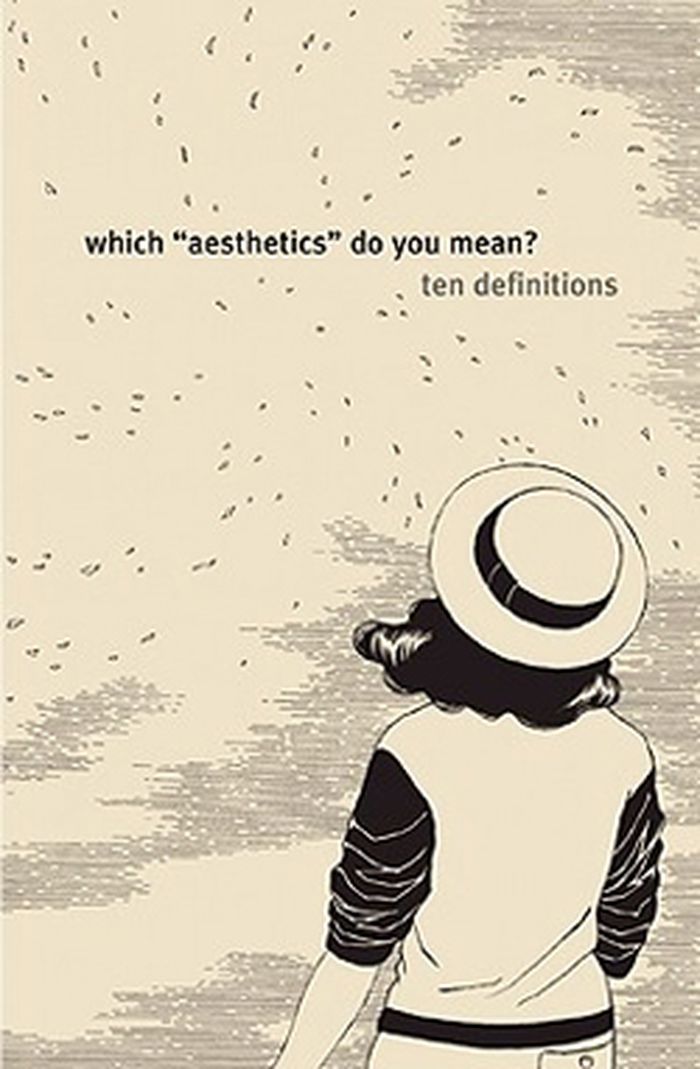
Aesthetics, in its totality of meanings, is about where your mind goes—conceptually, analytically, imaginatively—when you engage with things designed, artistic, and the like. This book is about building a deeper understanding of aesthetics so that you can more productively think about and discuss aesthetic phenomena and experience in your life and in your work.
$18.50
(available to order)
Summary:
Aesthetics, in its totality of meanings, is about where your mind goes—conceptually, analytically, imaginatively—when you engage with things designed, artistic, and the like. This book is about building a deeper understanding of aesthetics so that you can more productively think about and discuss aesthetic phenomena and experience in your life and in your work.
Title:
Which aesthetics do you mean? Ten definitions
Actions:
Price:
$18.50
(available to order)
Summary:
Aesthetics, in its totality of meanings, is about where your mind goes—conceptually, analytically, imaginatively—when you engage with things designed, artistic, and the like. This book is about building a deeper understanding of aesthetics so that you can more productively think about and discuss aesthetic phenomena and experience in your life and in your work.
Which aesthetics do you mean? Ten definitions
Actions:
Price:
$18.50
(available to order)
Summary:
Aesthetics, in its totality of meanings, is about where your mind goes—conceptually, analytically, imaginatively—when you engage with things designed, artistic, and the like. This book is about building a deeper understanding of aesthetics so that you can more productively think about and discuss aesthetic phenomena and experience in your life and in your work.
Form:
books
books
Publication:
November 2010
November 2010
Subject:
Critical Theory
Critical Theory
Form:
books
books
Title:
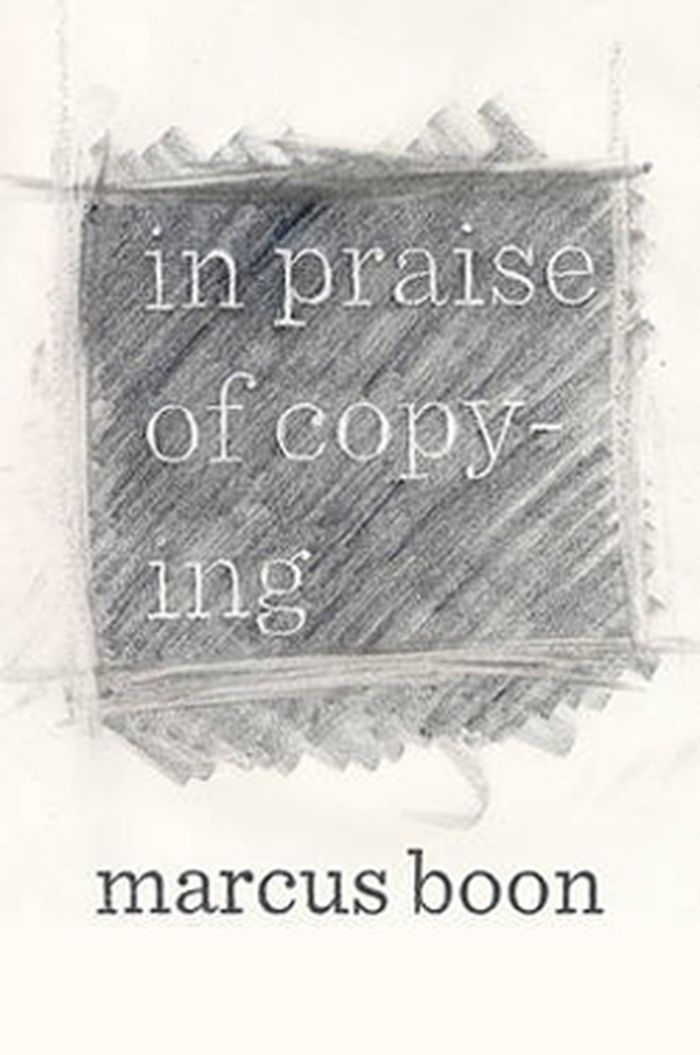
In praise of copying
In praise of copying
Actions:
Price:
$29.95
(available to order)
Summary:
This book is devoted to a deceptively simple but original argument: that copying is an essential part of being human, that the ability to copy is worthy of celebration, and that, without recognizing how integral copying is to being human, we cannot understand ourselves or the world we live in. In spite of the laws, stigmas, and anxieties attached to it, the word(...)
$29.95
(available to order)
Summary:
This book is devoted to a deceptively simple but original argument: that copying is an essential part of being human, that the ability to copy is worthy of celebration, and that, without recognizing how integral copying is to being human, we cannot understand ourselves or the world we live in. In spite of the laws, stigmas, and anxieties attached to it, the word(...)
Title:
In praise of copying
Actions:
Price:
$29.95
(available to order)
Summary:
This book is devoted to a deceptively simple but original argument: that copying is an essential part of being human, that the ability to copy is worthy of celebration, and that, without recognizing how integral copying is to being human, we cannot understand ourselves or the world we live in. In spite of the laws, stigmas, and anxieties attached to it, the word “copying” permeates contemporary culture, shaping discourse on issues from hip hop to digitization to gender reassignment, and is particularly crucial in legal debates concerning intellectual property and copyright. Yet as a philosophical concept, copying remains poorly understood. Working comparatively across cultures and times, Marcus Boon undertakes an examination of what this word means—historically, culturally, philosophically—and why it fills us with fear and fascination. He argues that the dominant legal-political structures that define copying today obscure much broader processes of imitation that have constituted human communities for ages and continue to shape various subcultures today. Drawing on contemporary art, music and film, the history of aesthetics, critical theory, and Buddhist philosophy and practice, In Praise of Copying seeks to show how and why copying works, what the sources of its power are, and the political stakes of renegotiating the way we value copying in the age of globalization.
In praise of copying
Actions:
Price:
$29.95
(available to order)
Summary:
This book is devoted to a deceptively simple but original argument: that copying is an essential part of being human, that the ability to copy is worthy of celebration, and that, without recognizing how integral copying is to being human, we cannot understand ourselves or the world we live in. In spite of the laws, stigmas, and anxieties attached to it, the word “copying” permeates contemporary culture, shaping discourse on issues from hip hop to digitization to gender reassignment, and is particularly crucial in legal debates concerning intellectual property and copyright. Yet as a philosophical concept, copying remains poorly understood. Working comparatively across cultures and times, Marcus Boon undertakes an examination of what this word means—historically, culturally, philosophically—and why it fills us with fear and fascination. He argues that the dominant legal-political structures that define copying today obscure much broader processes of imitation that have constituted human communities for ages and continue to shape various subcultures today. Drawing on contemporary art, music and film, the history of aesthetics, critical theory, and Buddhist philosophy and practice, In Praise of Copying seeks to show how and why copying works, what the sources of its power are, and the political stakes of renegotiating the way we value copying in the age of globalization.
Form:
books
books
Publication:
October 2010
October 2010
Subject:
Critical Theory
Critical Theory


