


878 Results
Form:
books
books
Actions:
Price:
$12.95
(available to order)
Summary:
paru en 1967. Guy Debord (1931-1994) a suivi dans sa vie, jusqu'à la mort qu'il s'est choisie, une seule règle. Celle-là même qu'il résume dans l'avertissement pour la troisième édition française de son livre "La Société du Spectacle". « Il faut lire ce livre en considérant qu'il a été sciemment écrit dans l'intention de nuire à la société spectaculaire. Il n'a jamais(...)
$12.95
(available to order)
Summary:
paru en 1967. Guy Debord (1931-1994) a suivi dans sa vie, jusqu'à la mort qu'il s'est choisie, une seule règle. Celle-là même qu'il résume dans l'avertissement pour la troisième édition française de son livre "La Société du Spectacle". « Il faut lire ce livre en considérant qu'il a été sciemment écrit dans l'intention de nuire à la société spectaculaire. Il n'a jamais(...)
Title:
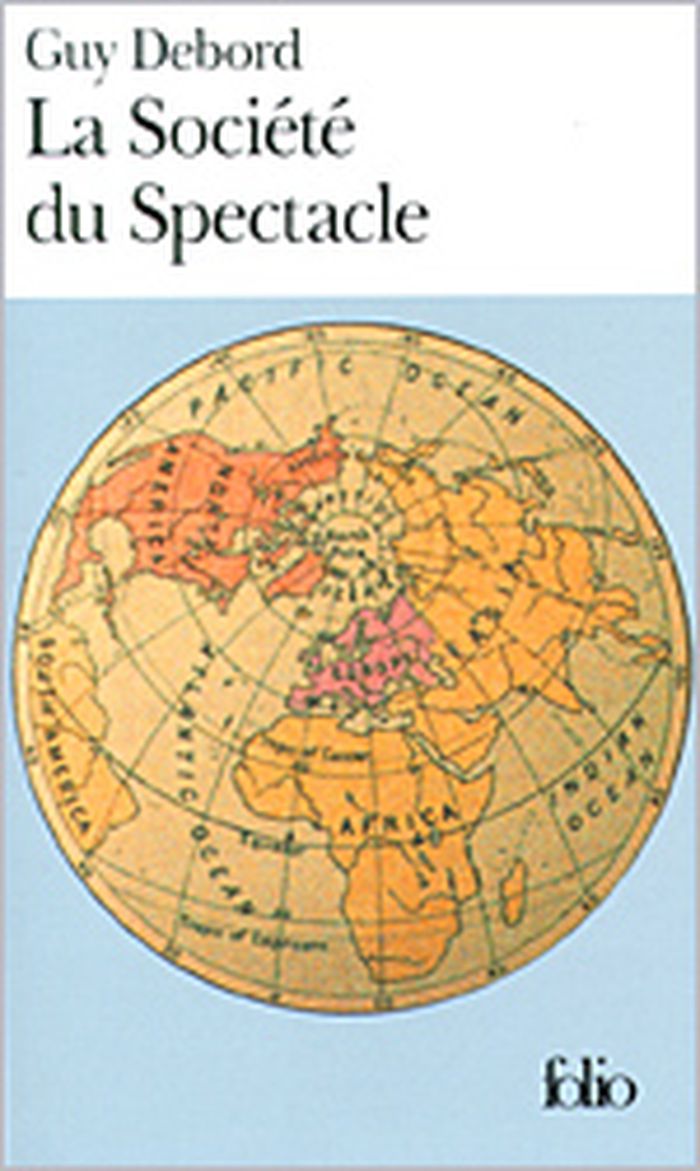
La société du spectacle, ancienne version
Actions:
Price:
$12.95
(available to order)
Summary:
paru en 1967. Guy Debord (1931-1994) a suivi dans sa vie, jusqu'à la mort qu'il s'est choisie, une seule règle. Celle-là même qu'il résume dans l'avertissement pour la troisième édition française de son livre "La Société du Spectacle". « Il faut lire ce livre en considérant qu'il a été sciemment écrit dans l'intention de nuire à la société spectaculaire. Il n'a jamais rien dit d'outrancier. »
La société du spectacle, ancienne version
Actions:
Price:
$12.95
(available to order)
Summary:
paru en 1967. Guy Debord (1931-1994) a suivi dans sa vie, jusqu'à la mort qu'il s'est choisie, une seule règle. Celle-là même qu'il résume dans l'avertissement pour la troisième édition française de son livre "La Société du Spectacle". « Il faut lire ce livre en considérant qu'il a été sciemment écrit dans l'intention de nuire à la société spectaculaire. Il n'a jamais rien dit d'outrancier. »
Form:
books
books
Publication:
January 2002, Paris
January 2002, Paris
Form:
books
books
Title:
L'amitié de Roland Barthes
L'amitié de Roland Barthes
Actions:
Price:
$34.95
(available to order)
Summary:
Philippe Sollers consacre un livre à celui qui fut son ami, dans le partage d'une foi entière en la littérature comme force d'invention, de découverte, d'innovation. Ils se voyaient régulièrement, échangeaient beaucoup, et ont partagé des combats importants, contre les académismes de tous genres, contre les régressions politiques ou idéologiques. Ils ont écrit l'un sur(...)
$34.95
(available to order)
Summary:
Philippe Sollers consacre un livre à celui qui fut son ami, dans le partage d'une foi entière en la littérature comme force d'invention, de découverte, d'innovation. Ils se voyaient régulièrement, échangeaient beaucoup, et ont partagé des combats importants, contre les académismes de tous genres, contre les régressions politiques ou idéologiques. Ils ont écrit l'un sur(...)
Title:
L'amitié de Roland Barthes
Actions:
Price:
$34.95
(available to order)
Summary:
Philippe Sollers consacre un livre à celui qui fut son ami, dans le partage d'une foi entière en la littérature comme force d'invention, de découverte, d'innovation. Ils se voyaient régulièrement, échangeaient beaucoup, et ont partagé des combats importants, contre les académismes de tous genres, contre les régressions politiques ou idéologiques. Ils ont écrit l'un sur l'autre. Barthes a éclairé le travail de Sollers par des articles qui demeurent d'une parfaite actualité. Sollers a été, dès les Essais critiques en 1964, l'éditeur de Barthes au Seuil, dans sa collection Tel Quel. Bref, ils étaient amis, et Sollers nous dit aujourd'hui ce que cela représentait, à l'époque, et ce que cela continue de représenter, et d'engager comme enjeux.
L'amitié de Roland Barthes
Actions:
Price:
$34.95
(available to order)
Summary:
Philippe Sollers consacre un livre à celui qui fut son ami, dans le partage d'une foi entière en la littérature comme force d'invention, de découverte, d'innovation. Ils se voyaient régulièrement, échangeaient beaucoup, et ont partagé des combats importants, contre les académismes de tous genres, contre les régressions politiques ou idéologiques. Ils ont écrit l'un sur l'autre. Barthes a éclairé le travail de Sollers par des articles qui demeurent d'une parfaite actualité. Sollers a été, dès les Essais critiques en 1964, l'éditeur de Barthes au Seuil, dans sa collection Tel Quel. Bref, ils étaient amis, et Sollers nous dit aujourd'hui ce que cela représentait, à l'époque, et ce que cela continue de représenter, et d'engager comme enjeux.
Form:
books
books
Publication:
November 2015
November 2015
Subject:
Critical Theory
Critical Theory
Form:
books
books
Actions:
Price:
$45.95
(available in store)
Summary:
Laboratoires du futur plus innovants que jamais, multinationales du web, géants de l’électronique, pouvoirs publics et techno-enthousiastes œuvrent de concert pour faire disparaître ce petit « cube de papier », qui fait figure de fossile à l’heure où la culture numérique s’impose partout. Bien que sa liquidation ne se fasse pas aussi vite que prévu – le marché de(...)
$45.95
(available in store)
Summary:
Laboratoires du futur plus innovants que jamais, multinationales du web, géants de l’électronique, pouvoirs publics et techno-enthousiastes œuvrent de concert pour faire disparaître ce petit « cube de papier », qui fait figure de fossile à l’heure où la culture numérique s’impose partout. Bien que sa liquidation ne se fasse pas aussi vite que prévu – le marché de(...)
Title:
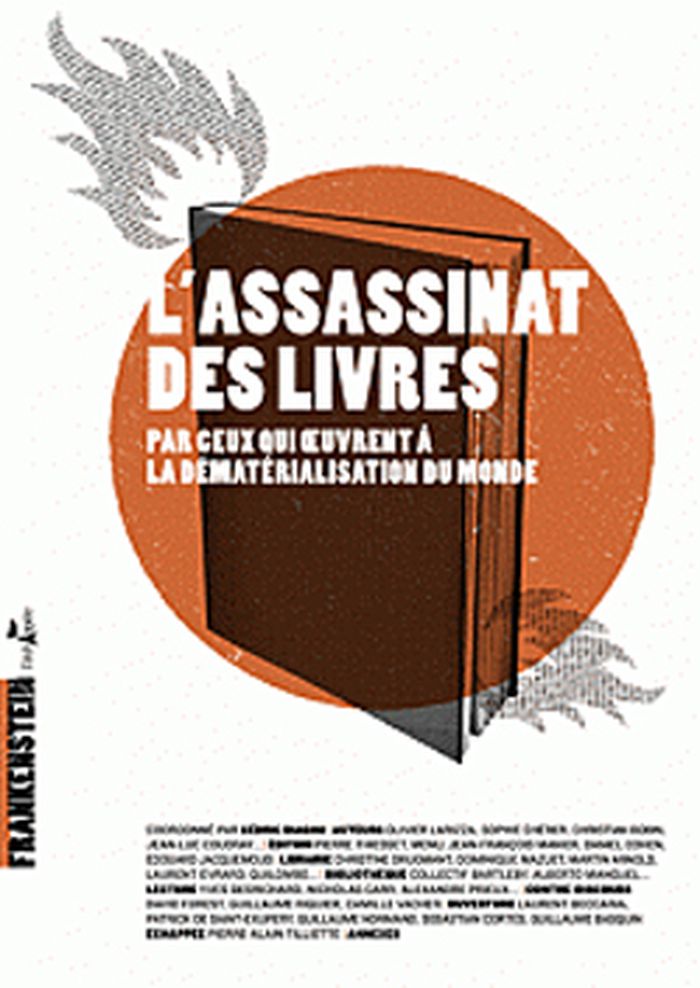
L'assassinat des livres: par ceux qui oeuvrent à la dématérialisation du monde
Actions:
Price:
$45.95
(available in store)
Summary:
Laboratoires du futur plus innovants que jamais, multinationales du web, géants de l’électronique, pouvoirs publics et techno-enthousiastes œuvrent de concert pour faire disparaître ce petit « cube de papier », qui fait figure de fossile à l’heure où la culture numérique s’impose partout. Bien que sa liquidation ne se fasse pas aussi vite que prévu – le marché de l’e-book peinant à s’imposer en France –, les acteurs de la chaîne du livre sont de plus en plus fragilisés, même si certains croient pouvoir transférer leur métier dans un monde qui n’a pourtant pas besoin d’eux. Le livre, dans sa linéarité et sa finitude, dans sa matérialité et sa présence, constitue un espace silencieux qui met en échec le culte de la vitesse, permet de maintenir une cohérence au milieu du chaos. Point d’ancrage, objet d’inscription pour une pensée critique et articulée, hors des réseaux et des flux incessants d’informations et de sollicitations, il est peut-être l’un des derniers lieux de résistance. C’est ce que nous rappellent les libraires, bibliothécaires, éditeurs, auteurs, traducteurs et lecteurs venus d’horizons divers, qui s’expriment dans cet ouvrage.
L'assassinat des livres: par ceux qui oeuvrent à la dématérialisation du monde
Actions:
Price:
$45.95
(available in store)
Summary:
Laboratoires du futur plus innovants que jamais, multinationales du web, géants de l’électronique, pouvoirs publics et techno-enthousiastes œuvrent de concert pour faire disparaître ce petit « cube de papier », qui fait figure de fossile à l’heure où la culture numérique s’impose partout. Bien que sa liquidation ne se fasse pas aussi vite que prévu – le marché de l’e-book peinant à s’imposer en France –, les acteurs de la chaîne du livre sont de plus en plus fragilisés, même si certains croient pouvoir transférer leur métier dans un monde qui n’a pourtant pas besoin d’eux. Le livre, dans sa linéarité et sa finitude, dans sa matérialité et sa présence, constitue un espace silencieux qui met en échec le culte de la vitesse, permet de maintenir une cohérence au milieu du chaos. Point d’ancrage, objet d’inscription pour une pensée critique et articulée, hors des réseaux et des flux incessants d’informations et de sollicitations, il est peut-être l’un des derniers lieux de résistance. C’est ce que nous rappellent les libraires, bibliothécaires, éditeurs, auteurs, traducteurs et lecteurs venus d’horizons divers, qui s’expriment dans cet ouvrage.
Form:
books
books
Publication:
November 2015
November 2015
Subject:
Critical Theory
Critical Theory
Form:
books
books
Actions:
Price:
$30.00
(available to order)
Summary:
Le mouvement de la décroissance, qui a pris naissance en France et rassemble aujourd’hui des personnes aux quatre coins du globe, milite pour des sociétés qui useraient moins de ressources naturelles et s’organiseraient selon des bases radicalement différentes. Simplicité, économie de la permanence, autonomie, audit de la dette, entropie, extractivisme, et buen vivir,(...)
$30.00
(available to order)
Summary:
Le mouvement de la décroissance, qui a pris naissance en France et rassemble aujourd’hui des personnes aux quatre coins du globe, milite pour des sociétés qui useraient moins de ressources naturelles et s’organiseraient selon des bases radicalement différentes. Simplicité, économie de la permanence, autonomie, audit de la dette, entropie, extractivisme, et buen vivir,(...)
Title:
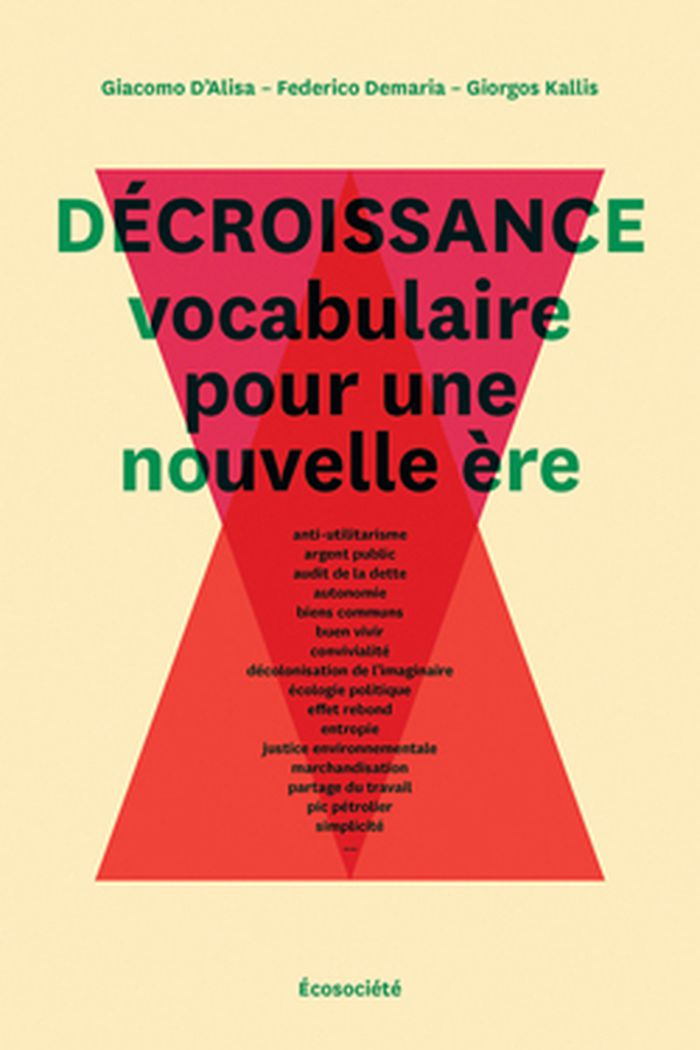
Décroissance: vocabulaire pour une nouvelle ère
Actions:
Price:
$30.00
(available to order)
Summary:
Le mouvement de la décroissance, qui a pris naissance en France et rassemble aujourd’hui des personnes aux quatre coins du globe, milite pour des sociétés qui useraient moins de ressources naturelles et s’organiseraient selon des bases radicalement différentes. Simplicité, économie de la permanence, autonomie, audit de la dette, entropie, extractivisme, et buen vivir, voilà quelques-unes des entrées présentées dans ce livre pour sortir des ornières idéologiques dominantes, décoloniser nos imaginaires. Et bâtir enfin une société égalitaire et soutenable, viable sur les plans écologique, économique et social.
Décroissance: vocabulaire pour une nouvelle ère
Actions:
Price:
$30.00
(available to order)
Summary:
Le mouvement de la décroissance, qui a pris naissance en France et rassemble aujourd’hui des personnes aux quatre coins du globe, milite pour des sociétés qui useraient moins de ressources naturelles et s’organiseraient selon des bases radicalement différentes. Simplicité, économie de la permanence, autonomie, audit de la dette, entropie, extractivisme, et buen vivir, voilà quelques-unes des entrées présentées dans ce livre pour sortir des ornières idéologiques dominantes, décoloniser nos imaginaires. Et bâtir enfin une société égalitaire et soutenable, viable sur les plans écologique, économique et social.
Form:
books
books
Publication:
November 2015
November 2015
Subject:
Critical Theory
Critical Theory
Form:
books
books

Title:
L'hiver, hier
L'hiver, hier
Actions:
Price:
$16.00
(available to order)
Summary:
Roman de fiction
$16.00
(available to order)
Summary:
Roman de fiction
Form:
books
books
Title:
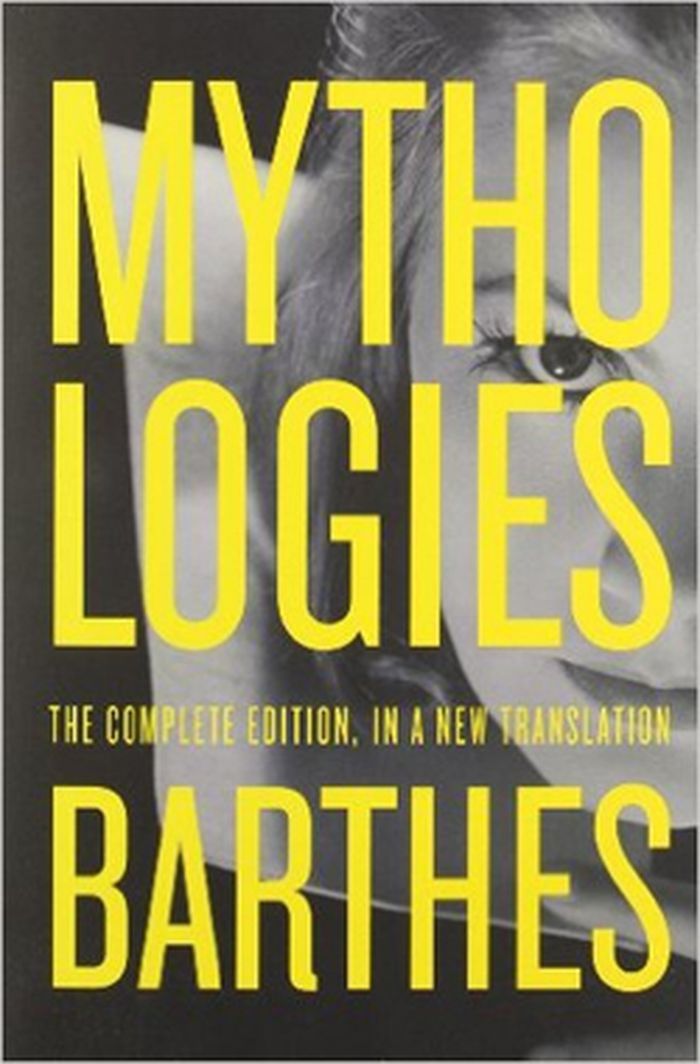
Mythologies
Mythologies
Actions:
Price:
$17.00
(available to order)
Summary:
"No denunciation without its proper instrument of close analysis," Roland Barthes wrote in his preface to Mythologies. There is no more proper instrument of analysis of our contemporary myths than this book—one of the most significant works in French theory, and one that has transformed the way readers and philosophers view the world around them. Our age is a triumph(...)
$17.00
(available to order)
Summary:
"No denunciation without its proper instrument of close analysis," Roland Barthes wrote in his preface to Mythologies. There is no more proper instrument of analysis of our contemporary myths than this book—one of the most significant works in French theory, and one that has transformed the way readers and philosophers view the world around them. Our age is a triumph(...)
Subject:
Critical Theory
Critical Theory
Publication:
November 2013
November 2013
Title:
Mythologies
Actions:
Price:
$17.00
(available to order)
Summary:
"No denunciation without its proper instrument of close analysis," Roland Barthes wrote in his preface to Mythologies. There is no more proper instrument of analysis of our contemporary myths than this book—one of the most significant works in French theory, and one that has transformed the way readers and philosophers view the world around them. Our age is a triumph of codification. We own devices that bring the world to the command of our fingertips. We have access to boundless information and prodigious quantities of stuff. We decide to like or not, to believe or not, to buy or not. We pick and choose. We think we are free. Yet all around us, in pop culture, politics, mainstream media, and advertising, there are codes and symbols that govern our choices. They are the fabrications of consumer society. They express myths of success, well-being, or happiness. As Barthes sees it, these myths must be carefully deciphered, and debunked. What Barthes discerned in mass media, the fashion of plastic, and the politics of postcolonial France applies with equal force to today's social networks, the iPhone, and the images of 9/11. This new edition of Mythologies, complete and beautifully rendered by the Pulitzer Prize–winning poet, critic, and translator Richard Howard, is a consecration of Barthes's classic—a lesson in clairvoyance that is more relevant now than ever.
Mythologies
Actions:
Price:
$17.00
(available to order)
Summary:
"No denunciation without its proper instrument of close analysis," Roland Barthes wrote in his preface to Mythologies. There is no more proper instrument of analysis of our contemporary myths than this book—one of the most significant works in French theory, and one that has transformed the way readers and philosophers view the world around them. Our age is a triumph of codification. We own devices that bring the world to the command of our fingertips. We have access to boundless information and prodigious quantities of stuff. We decide to like or not, to believe or not, to buy or not. We pick and choose. We think we are free. Yet all around us, in pop culture, politics, mainstream media, and advertising, there are codes and symbols that govern our choices. They are the fabrications of consumer society. They express myths of success, well-being, or happiness. As Barthes sees it, these myths must be carefully deciphered, and debunked. What Barthes discerned in mass media, the fashion of plastic, and the politics of postcolonial France applies with equal force to today's social networks, the iPhone, and the images of 9/11. This new edition of Mythologies, complete and beautifully rendered by the Pulitzer Prize–winning poet, critic, and translator Richard Howard, is a consecration of Barthes's classic—a lesson in clairvoyance that is more relevant now than ever.
Form:
books
books
Publication:
November 2013
November 2013
Subject:
Critical Theory
Critical Theory
Form:
books
books
Title:
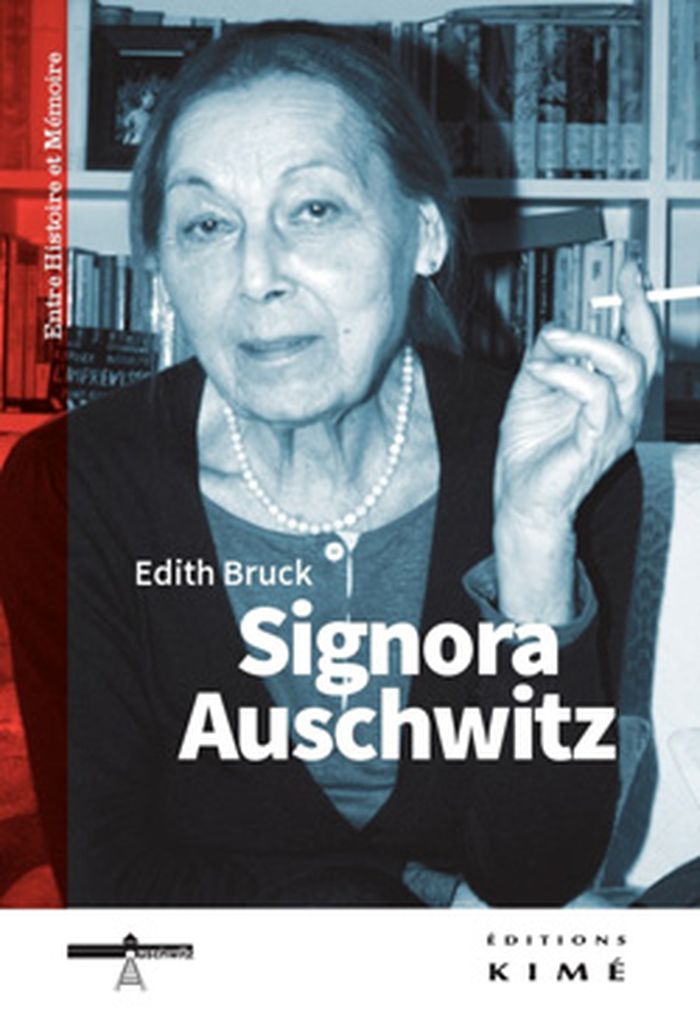
Signora Auschwitz
Signora Auschwitz
Actions:
Price:
$25.95
(available to order)
Summary:
Edith Bruck fait ici le récit de sa vie de rescapée et de témoin du génocide des Juifs. Elle raconte la douleur autant morale que physique née de deux aspirations apparemment contradictoires qui la tiraillent. D'un côté, témoigner pour se libérer en rendant justice aux victimes de la Shoah. De l'autre, ne plus parler d'Auschwitz pour tenter de revenir à une normalité(...)
$25.95
(available to order)
Summary:
Edith Bruck fait ici le récit de sa vie de rescapée et de témoin du génocide des Juifs. Elle raconte la douleur autant morale que physique née de deux aspirations apparemment contradictoires qui la tiraillent. D'un côté, témoigner pour se libérer en rendant justice aux victimes de la Shoah. De l'autre, ne plus parler d'Auschwitz pour tenter de revenir à une normalité(...)
Title:
Signora Auschwitz
Actions:
Price:
$25.95
(available to order)
Summary:
Edith Bruck fait ici le récit de sa vie de rescapée et de témoin du génocide des Juifs. Elle raconte la douleur autant morale que physique née de deux aspirations apparemment contradictoires qui la tiraillent. D'un côté, témoigner pour se libérer en rendant justice aux victimes de la Shoah. De l'autre, ne plus parler d'Auschwitz pour tenter de revenir à une normalité pourtant définitivement perdue au camp. Tous les thèmes centraux liés au mal-vivre du survivant sont abordés : la perte irréparable des proches et du monde de l'enfance, l'incrédulité des auditeurs, l'impossibilité de transmettre la réalité d'Auschwitz et l'éloignement irrémédiable de cette expérience, le rôle et la place du témoin et la fatigue qu'Edith Bruck ressent face aux "jeunes", fatigue que son ami Primo Levi avait déjà exprimée.
Signora Auschwitz
Actions:
Price:
$25.95
(available to order)
Summary:
Edith Bruck fait ici le récit de sa vie de rescapée et de témoin du génocide des Juifs. Elle raconte la douleur autant morale que physique née de deux aspirations apparemment contradictoires qui la tiraillent. D'un côté, témoigner pour se libérer en rendant justice aux victimes de la Shoah. De l'autre, ne plus parler d'Auschwitz pour tenter de revenir à une normalité pourtant définitivement perdue au camp. Tous les thèmes centraux liés au mal-vivre du survivant sont abordés : la perte irréparable des proches et du monde de l'enfance, l'incrédulité des auditeurs, l'impossibilité de transmettre la réalité d'Auschwitz et l'éloignement irrémédiable de cette expérience, le rôle et la place du témoin et la fatigue qu'Edith Bruck ressent face aux "jeunes", fatigue que son ami Primo Levi avait déjà exprimée.
Form:
books
books
Publication:
December 2015
December 2015
Subject:
Critical Theory
Critical Theory
Form:
books
books

Title:
L'aventure sémiologique
L'aventure sémiologique
Actions:
Price:
$18.95
(available to order)
Summary:
Roland Barthes a été aussi un chercheur au plein sens du terme, un de ceux qui, après Saussure et Greimas, ont fondé la sémiologie. Ce sont les travaux où il pose les assises de cette discipline nouvelle qui sont ici réunis.
$18.95
(available to order)
Summary:
Roland Barthes a été aussi un chercheur au plein sens du terme, un de ceux qui, après Saussure et Greimas, ont fondé la sémiologie. Ce sont les travaux où il pose les assises de cette discipline nouvelle qui sont ici réunis.
Title:
L'aventure sémiologique
Actions:
Price:
$18.95
(available to order)
Summary:
Roland Barthes a été aussi un chercheur au plein sens du terme, un de ceux qui, après Saussure et Greimas, ont fondé la sémiologie. Ce sont les travaux où il pose les assises de cette discipline nouvelle qui sont ici réunis.
L'aventure sémiologique
Actions:
Price:
$18.95
(available to order)
Summary:
Roland Barthes a été aussi un chercheur au plein sens du terme, un de ceux qui, après Saussure et Greimas, ont fondé la sémiologie. Ce sont les travaux où il pose les assises de cette discipline nouvelle qui sont ici réunis.
Form:
books
books
Publication:
December 2015
December 2015
Subject:
Critical Theory
Critical Theory
Form:
books
books
Title:
Lettres et autres textes
Lettres et autres textes
Actions:
Price:
$36.95
(available to order)
Summary:
Lettres et autres textes est le troisième et dernier volume des textes posthumes de Gilles Deleuze, publié à l’occasion du vingtième anniversaire de sa disparition. Il regroupe de nombreuses lettres adressées à ses contemporains (Michel Foucault, Pierre Klossowski, François Châtelet ou Clément Rosset). Particulièrement importantes à cet égard sont les lettres adressées à(...)
$36.95
(available to order)
Summary:
Lettres et autres textes est le troisième et dernier volume des textes posthumes de Gilles Deleuze, publié à l’occasion du vingtième anniversaire de sa disparition. Il regroupe de nombreuses lettres adressées à ses contemporains (Michel Foucault, Pierre Klossowski, François Châtelet ou Clément Rosset). Particulièrement importantes à cet égard sont les lettres adressées à(...)
Title:
Lettres et autres textes
Actions:
Price:
$36.95
(available to order)
Summary:
Lettres et autres textes est le troisième et dernier volume des textes posthumes de Gilles Deleuze, publié à l’occasion du vingtième anniversaire de sa disparition. Il regroupe de nombreuses lettres adressées à ses contemporains (Michel Foucault, Pierre Klossowski, François Châtelet ou Clément Rosset). Particulièrement importantes à cet égard sont les lettres adressées à Félix Guattari, qui constituent un témoignage irremplaçable sur leur « travail à deux », de L’Anti-Œdipe jusqu’à Qu’est-ce que la philosophie ? On y trouve aussi des lettres plus tardives adressées à des étudiants qui l’interrogent sur son œuvre et lui permettent de l’éclairer d’un regard nouveau. Y figurent également un ensemble de textes introuvables ou inédits, comme certains essais de jeunesse, quelques dessins insolites, ou un long entretien de 1973 sur L’Anti-Œdipe avec Guattari.
Lettres et autres textes
Actions:
Price:
$36.95
(available to order)
Summary:
Lettres et autres textes est le troisième et dernier volume des textes posthumes de Gilles Deleuze, publié à l’occasion du vingtième anniversaire de sa disparition. Il regroupe de nombreuses lettres adressées à ses contemporains (Michel Foucault, Pierre Klossowski, François Châtelet ou Clément Rosset). Particulièrement importantes à cet égard sont les lettres adressées à Félix Guattari, qui constituent un témoignage irremplaçable sur leur « travail à deux », de L’Anti-Œdipe jusqu’à Qu’est-ce que la philosophie ? On y trouve aussi des lettres plus tardives adressées à des étudiants qui l’interrogent sur son œuvre et lui permettent de l’éclairer d’un regard nouveau. Y figurent également un ensemble de textes introuvables ou inédits, comme certains essais de jeunesse, quelques dessins insolites, ou un long entretien de 1973 sur L’Anti-Œdipe avec Guattari.
Form:
books
books
Publication:
December 2015
December 2015
Subject:
Critical Theory
Critical Theory
Form:
books
books

Title:
Que sais-je? Le travail
Que sais-je? Le travail
Actions:
Price:
$16.95
(available to order)
Summary:
Le développement du chômage l’a montré : travailler est une norme. Dans nos sociétés occidentales, le travail est le principal moyen de subsistance mais aussi une part essentielle des occupations de chacun. L’ordre social s’organise autour de lui. En a-t-il toujours été ainsi ? Assiste-t-on, aujourd’hui, avec la réduction du temps de travail, à une remise en cause de sa(...)
$16.95
(available to order)
Summary:
Le développement du chômage l’a montré : travailler est une norme. Dans nos sociétés occidentales, le travail est le principal moyen de subsistance mais aussi une part essentielle des occupations de chacun. L’ordre social s’organise autour de lui. En a-t-il toujours été ainsi ? Assiste-t-on, aujourd’hui, avec la réduction du temps de travail, à une remise en cause de sa(...)
Title:
Que sais-je? Le travail
Actions:
Price:
$16.95
(available to order)
Summary:
Le développement du chômage l’a montré : travailler est une norme. Dans nos sociétés occidentales, le travail est le principal moyen de subsistance mais aussi une part essentielle des occupations de chacun. L’ordre social s’organise autour de lui. En a-t-il toujours été ainsi ? Assiste-t-on, aujourd’hui, avec la réduction du temps de travail, à une remise en cause de sa valeur ? Va-t-on vers de nouvelles formes de travail ? En croisant les regards historiques et philosophiques avec les résultats des enquêtes sociologiques et économiques les plus récentes, cet ouvrage interroge notre rapport au travail et, battant en brèche les idées reçues, nous invite à repenser sa nature ainsi que la place qu’il prend dans nos vies.
Que sais-je? Le travail
Actions:
Price:
$16.95
(available to order)
Summary:
Le développement du chômage l’a montré : travailler est une norme. Dans nos sociétés occidentales, le travail est le principal moyen de subsistance mais aussi une part essentielle des occupations de chacun. L’ordre social s’organise autour de lui. En a-t-il toujours été ainsi ? Assiste-t-on, aujourd’hui, avec la réduction du temps de travail, à une remise en cause de sa valeur ? Va-t-on vers de nouvelles formes de travail ? En croisant les regards historiques et philosophiques avec les résultats des enquêtes sociologiques et économiques les plus récentes, cet ouvrage interroge notre rapport au travail et, battant en brèche les idées reçues, nous invite à repenser sa nature ainsi que la place qu’il prend dans nos vies.
Form:
books
books
Publication:
December 2015
December 2015
Subject:
Critical Theory
Critical Theory


