


459 Results
Form:
books
books
Title:
Northern lights
Northern lights
Actions:
Price:
$19.95
(available to order)
Summary:
Since the beginning of time, people have gazed into the polar skies, spellbound by dancing beams of color... the northern lights. Though scientists have advanced many theories to explain the aurora borealis, and aboriginal people around the northern pole have passed down their beliefs through the centuries, mysteries still linger. As the auroral curtains shimmer(...)
$19.95
(available to order)
Summary:
Since the beginning of time, people have gazed into the polar skies, spellbound by dancing beams of color... the northern lights. Though scientists have advanced many theories to explain the aurora borealis, and aboriginal people around the northern pole have passed down their beliefs through the centuries, mysteries still linger. As the auroral curtains shimmer(...)
Title:
Northern lights
Actions:
Price:
$19.95
(available to order)
Summary:
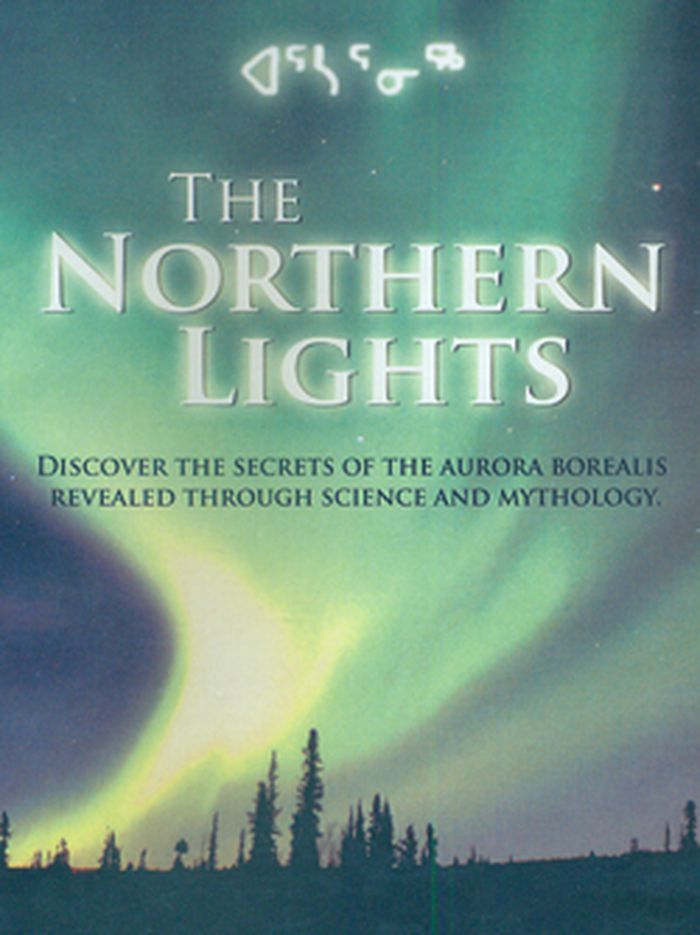
Since the beginning of time, people have gazed into the polar skies, spellbound by dancing beams of color... the northern lights. Though scientists have advanced many theories to explain the aurora borealis, and aboriginal people around the northern pole have passed down their beliefs through the centuries, mysteries still linger. As the auroral curtains shimmer throughout this production, we experience a visual panorama of animated legends, international space launches, and indigenous people and scientists offering their perceptions of the wondrous northern lights.
Northern lights
Actions:
Price:
$19.95
(available to order)
Summary:
Since the beginning of time, people have gazed into the polar skies, spellbound by dancing beams of color... the northern lights. Though scientists have advanced many theories to explain the aurora borealis, and aboriginal people around the northern pole have passed down their beliefs through the centuries, mysteries still linger. As the auroral curtains shimmer throughout this production, we experience a visual panorama of animated legends, international space launches, and indigenous people and scientists offering their perceptions of the wondrous northern lights.
Form:
books
books
Publication:
November 2009
November 2009
Subject:
Current Exhibitions
Current Exhibitions
Form:
books
books
Title:
I want to be an astronaut
I want to be an astronaut
Actions:
Price:
$9.25
(available to order)
Summary:
Up into the shy goes the space shuttle. Into orbit, the astronauts get a taste of ready-to-eat food, experience zero gravity, go for space walks, and even fix a satellite. It's fun to fly aboard the shuttle...and then come back to earth. A young girl declares her longing to fly on the shuttle into outer space.' The familiar acts of eating, sleeping, and working become(...)
$9.25
(available to order)
Summary:
Up into the shy goes the space shuttle. Into orbit, the astronauts get a taste of ready-to-eat food, experience zero gravity, go for space walks, and even fix a satellite. It's fun to fly aboard the shuttle...and then come back to earth. A young girl declares her longing to fly on the shuttle into outer space.' The familiar acts of eating, sleeping, and working become(...)
Title:
I want to be an astronaut
Actions:
Price:
$9.25
(available to order)
Summary:
Up into the shy goes the space shuttle. Into orbit, the astronauts get a taste of ready-to-eat food, experience zero gravity, go for space walks, and even fix a satellite. It's fun to fly aboard the shuttle...and then come back to earth. A young girl declares her longing to fly on the shuttle into outer space.' The familiar acts of eating, sleeping, and working become intense and special as she and the rest of the crew go about their business. The illustrations positively glow in this simple, lyrical picture book that will have nearly everyone off and flying.' -SLJ. Notable Children's Book of 1988 (ALA) 1988 Fanfare Honor List (The Horn Book) Best Illustrated Children's Books of 1988 (NYT) Oustanding Science Trade Books for Children 1988 (NSTA/CBC.
I want to be an astronaut
Actions:
Price:
$9.25
(available to order)
Summary:
Up into the shy goes the space shuttle. Into orbit, the astronauts get a taste of ready-to-eat food, experience zero gravity, go for space walks, and even fix a satellite. It's fun to fly aboard the shuttle...and then come back to earth. A young girl declares her longing to fly on the shuttle into outer space.' The familiar acts of eating, sleeping, and working become intense and special as she and the rest of the crew go about their business. The illustrations positively glow in this simple, lyrical picture book that will have nearly everyone off and flying.' -SLJ. Notable Children's Book of 1988 (ALA) 1988 Fanfare Honor List (The Horn Book) Best Illustrated Children's Books of 1988 (NYT) Oustanding Science Trade Books for Children 1988 (NSTA/CBC.
Form:
books
books
Publication:
November 1992
November 1992
Subject:
Current Exhibitions
Current Exhibitions
Form:
books
books
Price:
$16.95
(available to order)
Summary:
Fourth Galaxy, 4 November 2052: in the black sparkle of deep space a figure in a blue overall tumbles over and over as it drifts towards the planet Badr-al-Budur. No space suit, no helmet, no oxygen. He can't be alive, can he? But he is. First Navigator Fremder Gorn is the only survivor when the Corporation tanker Clever Daughter disappears. Nobady knows how he did it,(...)
$16.95
(available to order)
Summary:
Fourth Galaxy, 4 November 2052: in the black sparkle of deep space a figure in a blue overall tumbles over and over as it drifts towards the planet Badr-al-Budur. No space suit, no helmet, no oxygen. He can't be alive, can he? But he is. First Navigator Fremder Gorn is the only survivor when the Corporation tanker Clever Daughter disappears. Nobady knows how he did it,(...)
Title:
Fremder
Actions:
Price:
$16.95
(available to order)
Summary:
Fourth Galaxy, 4 November 2052: in the black sparkle of deep space a figure in a blue overall tumbles over and over as it drifts towards the planet Badr-al-Budur. No space suit, no helmet, no oxygen. He can't be alive, can he? But he is. First Navigator Fremder Gorn is the only survivor when the Corporation tanker Clever Daughter disappears. Nobady knows how he did it, and everybody, including Fremder himself, wants to know. Caroline Lovecraft, Head of the Physio/Psycho unit at Newton Centre, Hubble Straits finds that intimacy doesn't lead to answers and Fremder's own memories are resolutely obscure.
Fremder
Actions:
Price:
$16.95
(available to order)
Summary:
Fourth Galaxy, 4 November 2052: in the black sparkle of deep space a figure in a blue overall tumbles over and over as it drifts towards the planet Badr-al-Budur. No space suit, no helmet, no oxygen. He can't be alive, can he? But he is. First Navigator Fremder Gorn is the only survivor when the Corporation tanker Clever Daughter disappears. Nobady knows how he did it, and everybody, including Fremder himself, wants to know. Caroline Lovecraft, Head of the Physio/Psycho unit at Newton Centre, Hubble Straits finds that intimacy doesn't lead to answers and Fremder's own memories are resolutely obscure.
Form:
books
books
Publication:
November 2008
November 2008
Subject:
Current Exhibitions
Current Exhibitions
Form:
books
books
Title:
Fly me to the moon
Fly me to the moon
Actions:
Price:
$32.00
(available to order)
Summary:
Start with the fact that the Rijksmuseum in Amsterdam has in its collection a moon rock, brought to Earth in 1969 on Apollo 11. This book takes that artifact to the next step, asking a group of artists and writers whether perhaps the museum should be planning a branch on the moon itself in the future. This thought-provoking little book riffs on the themes of space travel(...)
$32.00
(available to order)
Summary:
Start with the fact that the Rijksmuseum in Amsterdam has in its collection a moon rock, brought to Earth in 1969 on Apollo 11. This book takes that artifact to the next step, asking a group of artists and writers whether perhaps the museum should be planning a branch on the moon itself in the future. This thought-provoking little book riffs on the themes of space travel(...)
Title:
Fly me to the moon
Actions:
Price:
$32.00
(available to order)
Summary:
Start with the fact that the Rijksmuseum in Amsterdam has in its collection a moon rock, brought to Earth in 1969 on Apollo 11. This book takes that artifact to the next step, asking a group of artists and writers whether perhaps the museum should be planning a branch on the moon itself in the future. This thought-provoking little book riffs on the themes of space travel and colonization, with texts on site-specificity, history, space law and its global implications. Also included is a list of almost 800 songs which have the word "moon" in their title. In a world where eager buyers trade "moon lots" on the internet, is the whole idea of a moon museum so far fetched?
Fly me to the moon
Actions:
Price:
$32.00
(available to order)
Summary:
Start with the fact that the Rijksmuseum in Amsterdam has in its collection a moon rock, brought to Earth in 1969 on Apollo 11. This book takes that artifact to the next step, asking a group of artists and writers whether perhaps the museum should be planning a branch on the moon itself in the future. This thought-provoking little book riffs on the themes of space travel and colonization, with texts on site-specificity, history, space law and its global implications. Also included is a list of almost 800 songs which have the word "moon" in their title. In a world where eager buyers trade "moon lots" on the internet, is the whole idea of a moon museum so far fetched?
Form:
books
books
Publication:
November 2006
November 2006
Subject:
Current Exhibitions
Current Exhibitions
Form:
books
books
Price:
$80.00
(available to order)
Summary:
During a tumultuous period in the 1960s and 70s, a new generation of architects began their careers amidst a period of profound social change, new conditions for architecture and the city and lasting changes to popular and critical forms of cultural production. First Works tells the story of this period and reassesses the conditions of architecture and the beginnings of(...)
$80.00
(available to order)
Summary:
During a tumultuous period in the 1960s and 70s, a new generation of architects began their careers amidst a period of profound social change, new conditions for architecture and the city and lasting changes to popular and critical forms of cultural production. First Works tells the story of this period and reassesses the conditions of architecture and the beginnings of(...)
Publication:
December 2009
December 2009
Title:
First works: emerging architectural experimentation of the 1960s and 1970s
Actions:
Price:
$80.00
(available to order)
Summary:
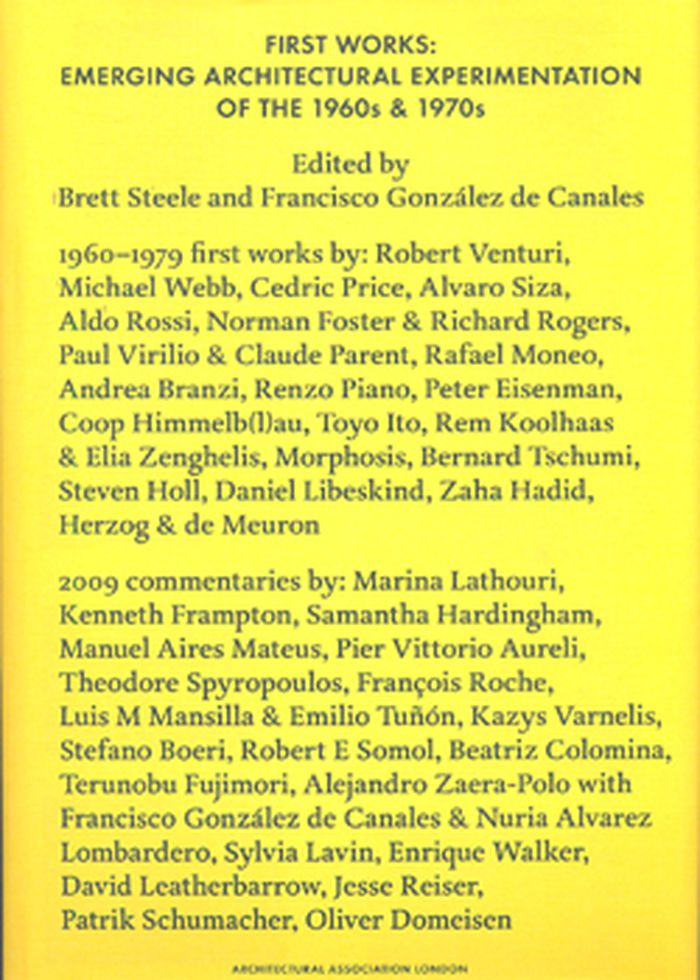
During a tumultuous period in the 1960s and 70s, a new generation of architects began their careers amidst a period of profound social change, new conditions for architecture and the city and lasting changes to popular and critical forms of cultural production. First Works tells the story of this period and reassesses the conditions of architecture and the beginnings of architectural careers through a selection of projects undertaken during the 60s and 70s. The book, accompanying a major travelling exhibition, presents a single key early project, in the form of models, sketches, photographs and drawings, by 20 young architectural practices, including Archigram, Aldo Rossi, Robert Venturi, Renzo Piano, Peter Eisenman, Herzog & de Meuron and Zaha Hadid. Alongside these ‘first works’, 20 invited critics, including Kenneth Frampton, Sylvia Lavin and Pier Vittorio Aureli, offer contemporary commentaries on these projects and their place within the architects’ subsequent careers.
First works: emerging architectural experimentation of the 1960s and 1970s
Actions:
Price:
$80.00
(available to order)
Summary:
During a tumultuous period in the 1960s and 70s, a new generation of architects began their careers amidst a period of profound social change, new conditions for architecture and the city and lasting changes to popular and critical forms of cultural production. First Works tells the story of this period and reassesses the conditions of architecture and the beginnings of architectural careers through a selection of projects undertaken during the 60s and 70s. The book, accompanying a major travelling exhibition, presents a single key early project, in the form of models, sketches, photographs and drawings, by 20 young architectural practices, including Archigram, Aldo Rossi, Robert Venturi, Renzo Piano, Peter Eisenman, Herzog & de Meuron and Zaha Hadid. Alongside these ‘first works’, 20 invited critics, including Kenneth Frampton, Sylvia Lavin and Pier Vittorio Aureli, offer contemporary commentaries on these projects and their place within the architects’ subsequent careers.
Form:
books
books
Publication:
December 2009
December 2009
Form:
video
video
Price:
$71.50
(available to order)
Summary:
Originally broadcast in April and May of 1998. Hosted by executive producer Tom Hanks, the miniseries tackles the daunting challenge of chronicling the entire history of NASA's Apollo space program from 1961 to 1972. For the most part, it's a rousing success. Some passages are flatly chronological, awkwardly wedging an abundance of factual detail into a routine dramatic(...)
$71.50
(available to order)
Summary:
Originally broadcast in April and May of 1998. Hosted by executive producer Tom Hanks, the miniseries tackles the daunting challenge of chronicling the entire history of NASA's Apollo space program from 1961 to 1972. For the most part, it's a rousing success. Some passages are flatly chronological, awkwardly wedging an abundance of factual detail into a routine dramatic(...)
Publication:
December 2009
December 2009
Title:
From the earth to the moon, Le voyage dans la lune, édition signature
Actions:
Price:
$71.50
(available to order)
Summary:
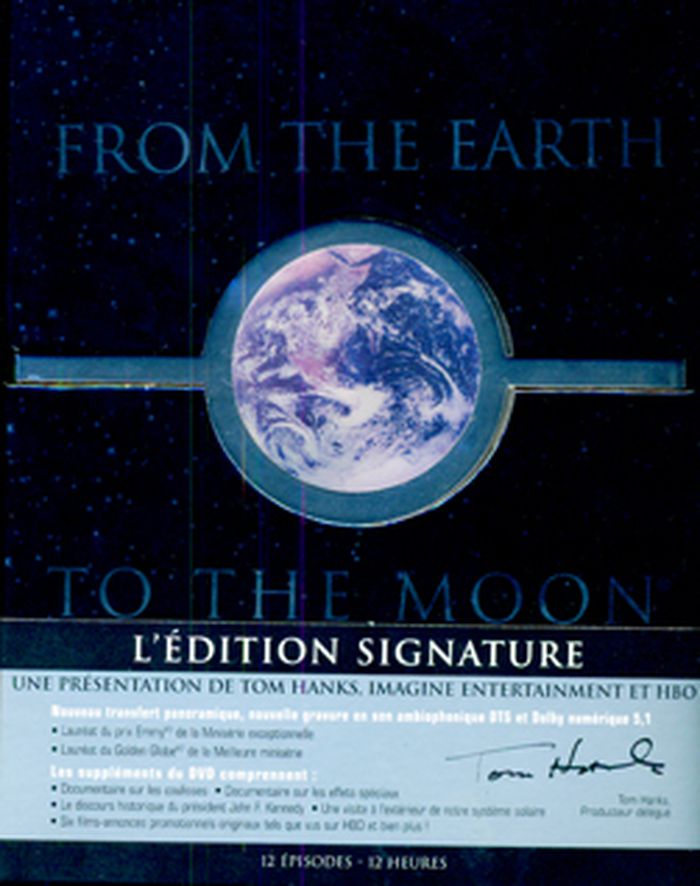
Originally broadcast in April and May of 1998. Hosted by executive producer Tom Hanks, the miniseries tackles the daunting challenge of chronicling the entire history of NASA's Apollo space program from 1961 to 1972. For the most part, it's a rousing success. Some passages are flatly chronological, awkwardly wedging an abundance of factual detail into a routine dramatic structure. But each episode is devoted to a crucial aspect of the Apollo program. The cumulative effect is a deep and thorough appreciation of NASA's monumental achievement. With the help of a superlative cast, consistent writing, and a stable of talented directors, Hanks has shared his infectious enthusiasm for space exploration and the inspiring power of conquering the final frontier. 12 épisodes, 12 heures.
From the earth to the moon, Le voyage dans la lune, édition signature
Actions:
Price:
$71.50
(available to order)
Summary:
Originally broadcast in April and May of 1998. Hosted by executive producer Tom Hanks, the miniseries tackles the daunting challenge of chronicling the entire history of NASA's Apollo space program from 1961 to 1972. For the most part, it's a rousing success. Some passages are flatly chronological, awkwardly wedging an abundance of factual detail into a routine dramatic structure. But each episode is devoted to a crucial aspect of the Apollo program. The cumulative effect is a deep and thorough appreciation of NASA's monumental achievement. With the help of a superlative cast, consistent writing, and a stable of talented directors, Hanks has shared his infectious enthusiasm for space exploration and the inspiring power of conquering the final frontier. 12 épisodes, 12 heures.
Form:
video
video
Publication:
December 2009
December 2009
Form:
books
books
Actions:
Price:
$61.00
(available to order)
Summary:
This follow-up to Kate Nesbitt's best-selling anthology Theorizing a New Agenda collects twenty-eight essays that address architecture theory from the mid-1990s, where Nesbitt left off, through the present. Kristin Sykes offers an overview of the myriad approaches and attitudes adopted by architects and architectural theorists during this era. Multiple themes—including(...)
$61.00
(available to order)
Summary:
This follow-up to Kate Nesbitt's best-selling anthology Theorizing a New Agenda collects twenty-eight essays that address architecture theory from the mid-1990s, where Nesbitt left off, through the present. Kristin Sykes offers an overview of the myriad approaches and attitudes adopted by architects and architectural theorists during this era. Multiple themes—including(...)
Title:
Constructing a new agenda: architectural theory, 1993-2009
Actions:
Price:
$61.00
(available to order)
Summary:
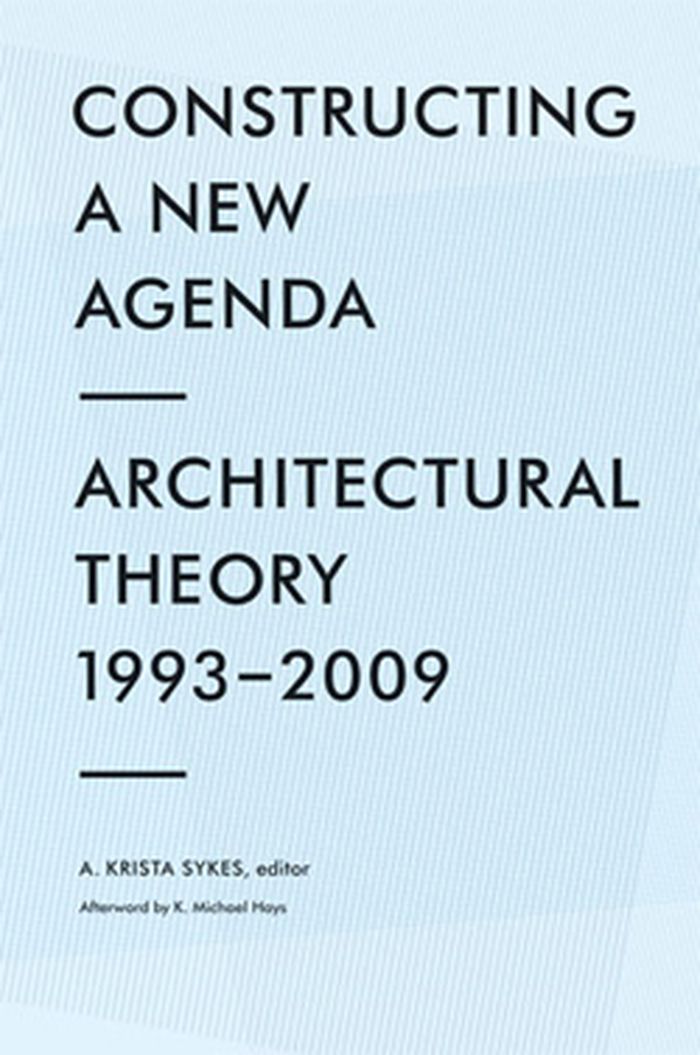
This follow-up to Kate Nesbitt's best-selling anthology Theorizing a New Agenda collects twenty-eight essays that address architecture theory from the mid-1990s, where Nesbitt left off, through the present. Kristin Sykes offers an overview of the myriad approaches and attitudes adopted by architects and architectural theorists during this era. Multiple themes—including the impact of digital technologies on processes of architectural design, production, materiality, and representation; the implications of globalization and networks of information; the growing emphasis on sustainable and green architecture; and the phenomenon of the "starchitect" and iconic architecture—appear against a background colored by architectural theory, as it existed from the 1960s on, in a period of transition (if not crisis) that centers around the perceived abyss between theory and practice. Theory's transitional state persists today, rendering its immediate history particularly relevant to contemporary thought and practice.
Constructing a new agenda: architectural theory, 1993-2009
Actions:
Price:
$61.00
(available to order)
Summary:
This follow-up to Kate Nesbitt's best-selling anthology Theorizing a New Agenda collects twenty-eight essays that address architecture theory from the mid-1990s, where Nesbitt left off, through the present. Kristin Sykes offers an overview of the myriad approaches and attitudes adopted by architects and architectural theorists during this era. Multiple themes—including the impact of digital technologies on processes of architectural design, production, materiality, and representation; the implications of globalization and networks of information; the growing emphasis on sustainable and green architecture; and the phenomenon of the "starchitect" and iconic architecture—appear against a background colored by architectural theory, as it existed from the 1960s on, in a period of transition (if not crisis) that centers around the perceived abyss between theory and practice. Theory's transitional state persists today, rendering its immediate history particularly relevant to contemporary thought and practice.
Form:
books
books
Publication:
March 2010
March 2010
Form:
books
books
Actions:
Price:
$31.95
(available to order)
Summary:
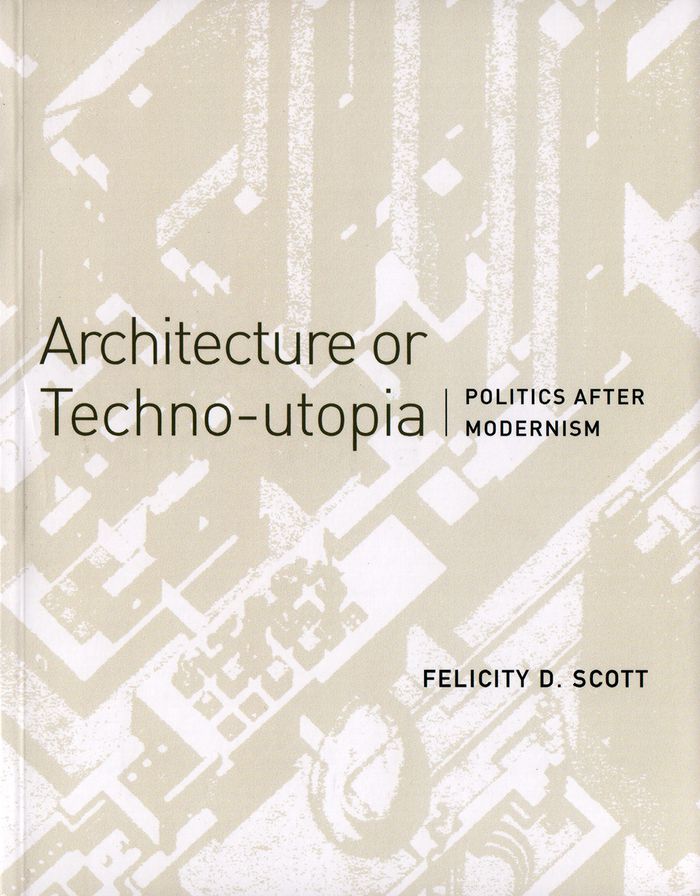
Architecture or Techno-Utopia offers a detailed account of the ways in which the work of architects and designers can speak to the contemporary condition. Felicity Scott traces an alternative genealogy of the postmodern turn in American architecture, focusing on a set of experimental practices and polemics that emerged in the late 1960s and early 1970s.
$31.95
(available to order)
Summary:
Architecture or Techno-Utopia offers a detailed account of the ways in which the work of architects and designers can speak to the contemporary condition. Felicity Scott traces an alternative genealogy of the postmodern turn in American architecture, focusing on a set of experimental practices and polemics that emerged in the late 1960s and early 1970s.
Publication:
April 2010
April 2010
Title:
Architecture or Techno-utopia: Politics after Modernism
Actions:
Price:
$31.95
(available to order)
Summary:
Architecture or Techno-Utopia offers a detailed account of the ways in which the work of architects and designers can speak to the contemporary condition. Felicity Scott traces an alternative genealogy of the postmodern turn in American architecture, focusing on a set of experimental practices and polemics that emerged in the late 1960s and early 1970s.
Architecture or Techno-utopia: Politics after Modernism
Actions:
Price:
$31.95
(available to order)
Summary:
Architecture or Techno-Utopia offers a detailed account of the ways in which the work of architects and designers can speak to the contemporary condition. Felicity Scott traces an alternative genealogy of the postmodern turn in American architecture, focusing on a set of experimental practices and polemics that emerged in the late 1960s and early 1970s.
Form:
books
books
Publication:
April 2010
April 2010
Form:
books
books
Actions:
Price:
$67.99
(available in store)
Summary:
The first major publication on O'Sullivan in more than thirty years, "Framing the West" offers a new aesthetic and formal interpretation of O'Sullivan's photographs and assesses his influence on the larger photographic canon. The book features previously unpublished and rarely seen images and serves as a field guide for O'Sullivan's original prints, presenting them for(...)
$67.99
(available in store)
Summary:
The first major publication on O'Sullivan in more than thirty years, "Framing the West" offers a new aesthetic and formal interpretation of O'Sullivan's photographs and assesses his influence on the larger photographic canon. The book features previously unpublished and rarely seen images and serves as a field guide for O'Sullivan's original prints, presenting them for(...)
Title:
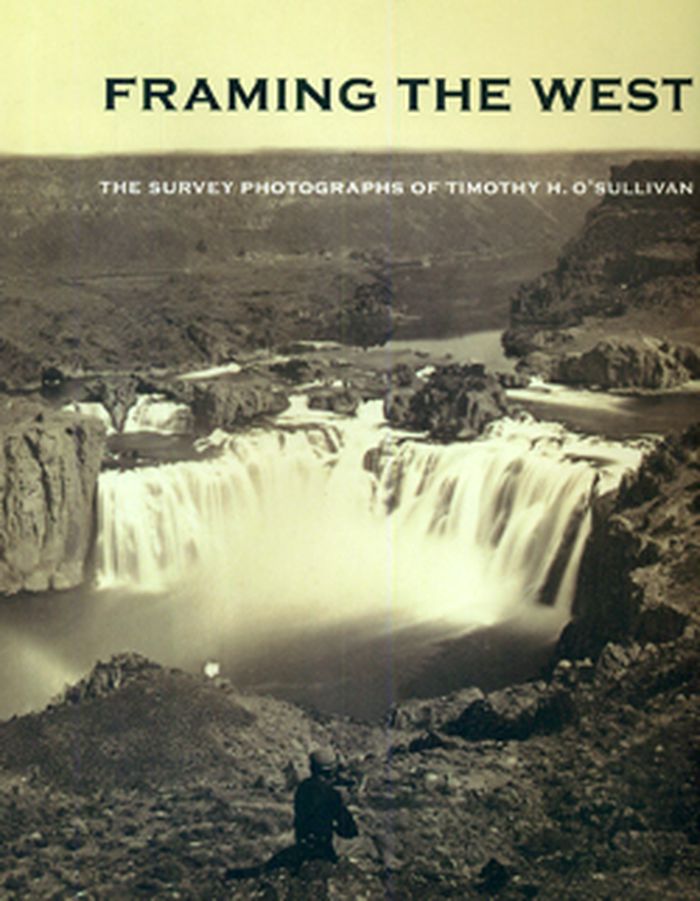
Framing the West: the survey of Timothy H. O'Sullivan
Actions:
Price:
$67.99
(available in store)
Summary:
The first major publication on O'Sullivan in more than thirty years, "Framing the West" offers a new aesthetic and formal interpretation of O'Sullivan's photographs and assesses his influence on the larger photographic canon. The book features previously unpublished and rarely seen images and serves as a field guide for O'Sullivan's original prints, presenting them for the first time in sequence with the chronology of their production. Trained under Mathew Brady, O'Sullivan accompanied several government expeditions to the West - most notably with geologist Clarence King in 1867 and cartographer George M. Wheeler in 1871.
Framing the West: the survey of Timothy H. O'Sullivan
Actions:
Price:
$67.99
(available in store)
Summary:
The first major publication on O'Sullivan in more than thirty years, "Framing the West" offers a new aesthetic and formal interpretation of O'Sullivan's photographs and assesses his influence on the larger photographic canon. The book features previously unpublished and rarely seen images and serves as a field guide for O'Sullivan's original prints, presenting them for the first time in sequence with the chronology of their production. Trained under Mathew Brady, O'Sullivan accompanied several government expeditions to the West - most notably with geologist Clarence King in 1867 and cartographer George M. Wheeler in 1871.
Form:
books
books
Publication:
March 2010
March 2010
Form:
books
books
Title:
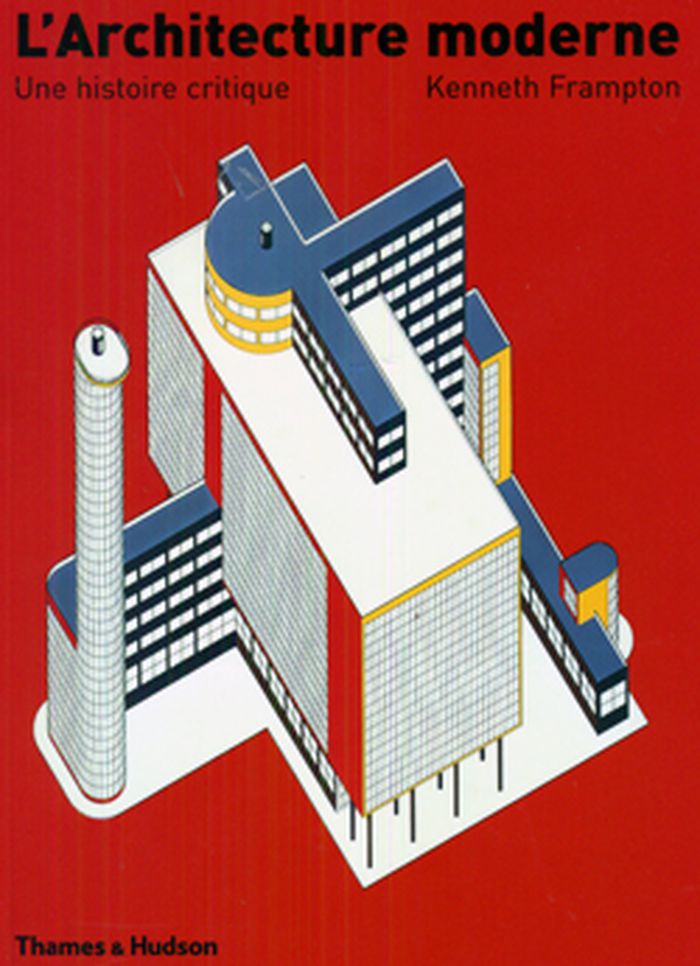
L'architecture moderne
L'architecture moderne
Actions:
Price:
$51.95
(available to order)
Summary:
Depuis sa première édition en langue anglaise en 1980, L'Architecture moderne - Une histoire critique, est devenu un classique incontesté. L'auteur retrace les origines tant culturelles qu'urbaines et techniques de l'architecture moderne en remontant jusqu'au tout début du XIXe siècle. Il examine ensuite en des chapitres clairement délimités - où bâtiments et théories(...)
$51.95
(available to order)
Summary:
Depuis sa première édition en langue anglaise en 1980, L'Architecture moderne - Une histoire critique, est devenu un classique incontesté. L'auteur retrace les origines tant culturelles qu'urbaines et techniques de l'architecture moderne en remontant jusqu'au tout début du XIXe siècle. Il examine ensuite en des chapitres clairement délimités - où bâtiments et théories(...)
Title:
L'architecture moderne
Actions:
Price:
$51.95
(available to order)
Summary:
Depuis sa première édition en langue anglaise en 1980, L'Architecture moderne - Une histoire critique, est devenu un classique incontesté. L'auteur retrace les origines tant culturelles qu'urbaines et techniques de l'architecture moderne en remontant jusqu'au tout début du XIXe siècle. Il examine ensuite en des chapitres clairement délimités - où bâtiments et théories architecturales sont toujours éclairés par leur contexte social, politique, économique et technique - les principaux mouvements, développements nationaux ou périodes de création des grands concepteurs du XXe siècle.
L'architecture moderne
Actions:
Price:
$51.95
(available to order)
Summary:
Depuis sa première édition en langue anglaise en 1980, L'Architecture moderne - Une histoire critique, est devenu un classique incontesté. L'auteur retrace les origines tant culturelles qu'urbaines et techniques de l'architecture moderne en remontant jusqu'au tout début du XIXe siècle. Il examine ensuite en des chapitres clairement délimités - où bâtiments et théories architecturales sont toujours éclairés par leur contexte social, politique, économique et technique - les principaux mouvements, développements nationaux ou périodes de création des grands concepteurs du XXe siècle.
Form:
books
books
Publication:
April 2010
April 2010


