


459 Results
Form:
books
books
Actions:
Price:
$54.95
(available to order)
Summary:
Rooted in the British apprenticeship system, the French Beaux-Arts, and the German polytechnical schools, architecture education in North America has had a unique history spanning almost three hundred years. Although architects in the United States and Canada began to identify themselves as professionals by the late eighteenth century, it was not until nearly a century(...)
$54.95
(available to order)
Summary:
Rooted in the British apprenticeship system, the French Beaux-Arts, and the German polytechnical schools, architecture education in North America has had a unique history spanning almost three hundred years. Although architects in the United States and Canada began to identify themselves as professionals by the late eighteenth century, it was not until nearly a century(...)
Title:
Architecture school: three centuries of educating architects in North America
Actions:
Price:
$54.95
(available to order)
Summary:
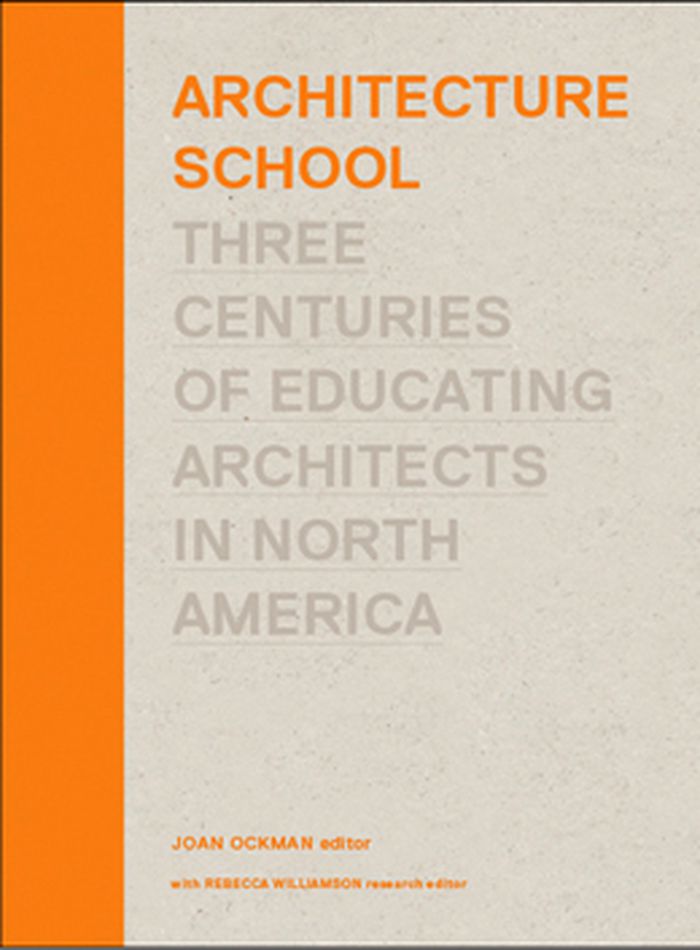
Rooted in the British apprenticeship system, the French Beaux-Arts, and the German polytechnical schools, architecture education in North America has had a unique history spanning almost three hundred years. Although architects in the United States and Canada began to identify themselves as professionals by the late eighteenth century, it was not until nearly a century later that North American universities began to offer formal architectural training; the first program was established at MIT in 1865. Today most architects receive their training within an academic setting that draws on the humanities, fine arts, applied science, and public service for its philosophy and methodology. This book, published in conjunction with the centennial of the Association of Collegiate Schools of Architecture (ACSA), provides the first comprehensive history of North American architecture education. Architecture School opens with six chronological essays, each devoted to a major period of development: before 1860; 1860--1920; 1920--1940; 1940--1968; 1968--1990; and 1990 to the present. This overview is followed by a "lexicon" containing shorter articles on more than two dozen topics that have figured centrally in archictecture education's history, from competitions and design pedagogy to research, structures, studio culture, and travel.
Architecture school: three centuries of educating architects in North America
Actions:
Price:
$54.95
(available to order)
Summary:
Rooted in the British apprenticeship system, the French Beaux-Arts, and the German polytechnical schools, architecture education in North America has had a unique history spanning almost three hundred years. Although architects in the United States and Canada began to identify themselves as professionals by the late eighteenth century, it was not until nearly a century later that North American universities began to offer formal architectural training; the first program was established at MIT in 1865. Today most architects receive their training within an academic setting that draws on the humanities, fine arts, applied science, and public service for its philosophy and methodology. This book, published in conjunction with the centennial of the Association of Collegiate Schools of Architecture (ACSA), provides the first comprehensive history of North American architecture education. Architecture School opens with six chronological essays, each devoted to a major period of development: before 1860; 1860--1920; 1920--1940; 1940--1968; 1968--1990; and 1990 to the present. This overview is followed by a "lexicon" containing shorter articles on more than two dozen topics that have figured centrally in archictecture education's history, from competitions and design pedagogy to research, structures, studio culture, and travel.
Form:
books
books
Publication:
March 2012
March 2012
Form:
books
books
Price:
$39.95
(available to order)
Summary:
Since the 1990s, critics and curators have broadly accepted the notion that participatory art is the ultimate political art: that by encouraging an audience to take part an artist can promote new emancipatory social relations. Around the world, the champions of this form of expression are numerous, ranging from art historians such as Grant Kester, curators such as Nicolas(...)
$39.95
(available to order)
Summary:
Since the 1990s, critics and curators have broadly accepted the notion that participatory art is the ultimate political art: that by encouraging an audience to take part an artist can promote new emancipatory social relations. Around the world, the champions of this form of expression are numerous, ranging from art historians such as Grant Kester, curators such as Nicolas(...)
Title:
Artificial hells : participatory art and the politics of spectatorship
Actions:
Price:
$39.95
(available to order)
Summary:
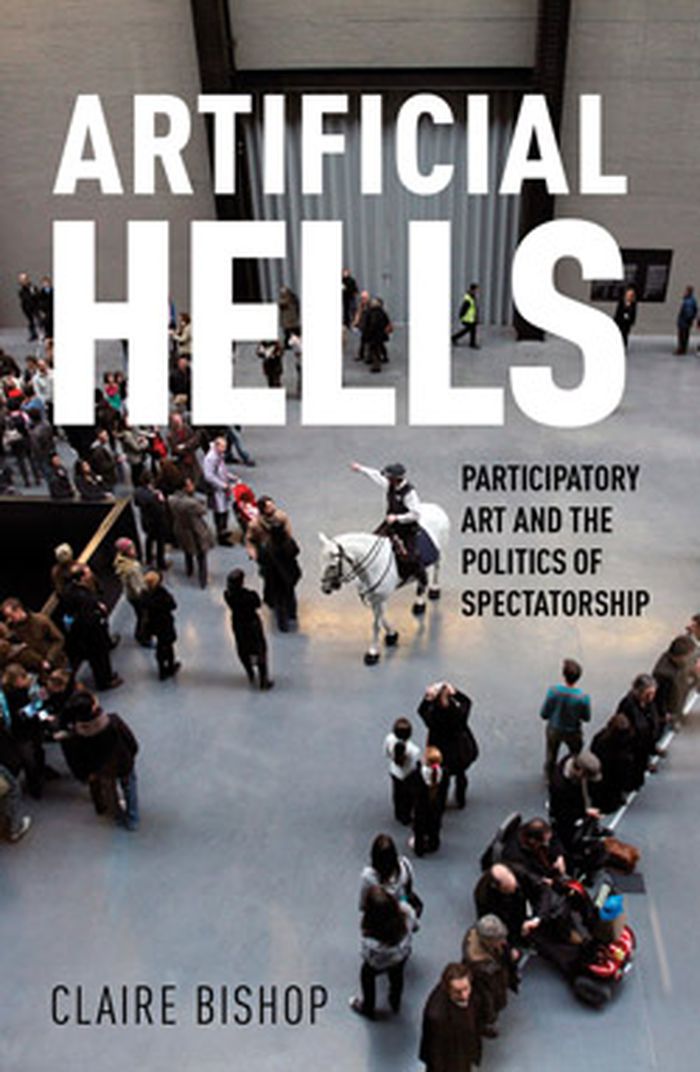
Since the 1990s, critics and curators have broadly accepted the notion that participatory art is the ultimate political art: that by encouraging an audience to take part an artist can promote new emancipatory social relations. Around the world, the champions of this form of expression are numerous, ranging from art historians such as Grant Kester, curators such as Nicolas Bourriaud and Nato Thompson, to performance theorists such as Shannon Jackson. Artificial Hells is the first historical and theoretical overview of socially engaged participatory art, known in the US as “social practice.” Claire Bishop follows the trajectory of twentieth-century art and examines key moments in the development of a participatory aesthetic. This itinerary takes in Futurism and Dada; the Situationist International; Happenings in Eastern Europe, Argentina and Paris; the 1970s Community Arts Movement; and the Artists Placement Group. It concludes with a discussion of long-term educational projects by contemporary artists such as Thomas Hirschhorn, Tania Bruguera, Pawe Althamer and Paul Chan. Since her controversial essay in Artforum in 2006, Claire Bishop has been one of the few to challenge the political and aesthetic ambitions of participatory art. In Artificial Hells, she not only scrutinizes the emancipatory claims made for these projects, but also provides an alternative to the ethical (rather than artistic) criteria invited by such artworks. Artificial Hells calls for a less prescriptive approach to art and politics, and for more compelling, troubling and bolder forms of participatory art and criticism.
Artificial hells : participatory art and the politics of spectatorship
Actions:
Price:
$39.95
(available to order)
Summary:
Since the 1990s, critics and curators have broadly accepted the notion that participatory art is the ultimate political art: that by encouraging an audience to take part an artist can promote new emancipatory social relations. Around the world, the champions of this form of expression are numerous, ranging from art historians such as Grant Kester, curators such as Nicolas Bourriaud and Nato Thompson, to performance theorists such as Shannon Jackson. Artificial Hells is the first historical and theoretical overview of socially engaged participatory art, known in the US as “social practice.” Claire Bishop follows the trajectory of twentieth-century art and examines key moments in the development of a participatory aesthetic. This itinerary takes in Futurism and Dada; the Situationist International; Happenings in Eastern Europe, Argentina and Paris; the 1970s Community Arts Movement; and the Artists Placement Group. It concludes with a discussion of long-term educational projects by contemporary artists such as Thomas Hirschhorn, Tania Bruguera, Pawe Althamer and Paul Chan. Since her controversial essay in Artforum in 2006, Claire Bishop has been one of the few to challenge the political and aesthetic ambitions of participatory art. In Artificial Hells, she not only scrutinizes the emancipatory claims made for these projects, but also provides an alternative to the ethical (rather than artistic) criteria invited by such artworks. Artificial Hells calls for a less prescriptive approach to art and politics, and for more compelling, troubling and bolder forms of participatory art and criticism.
Form:
books
books
Publication:
July 2012
July 2012
Form:
books
books
Actions:
Price:
$49.95
(available to order)
Summary:
This edited collection offers a unique perspective on twentieth-century architectural history, disputing the primacy placed on individuals in the design and planning process and instead looking to the larger influences of politics, culture, economics, and globalization to uncover the roots of how our built environment evolves.
$49.95
(available to order)
Summary:
This edited collection offers a unique perspective on twentieth-century architectural history, disputing the primacy placed on individuals in the design and planning process and instead looking to the larger influences of politics, culture, economics, and globalization to uncover the roots of how our built environment evolves.
Title:
Governing by design : architecture, economy, and politics in the 20th century
Actions:
Price:
$49.95
(available to order)
Summary:
This edited collection offers a unique perspective on twentieth-century architectural history, disputing the primacy placed on individuals in the design and planning process and instead looking to the larger influences of politics, culture, economics, and globalization to uncover the roots of how our built environment evolves.
Governing by design : architecture, economy, and politics in the 20th century
Actions:
Price:
$49.95
(available to order)
Summary:
This edited collection offers a unique perspective on twentieth-century architectural history, disputing the primacy placed on individuals in the design and planning process and instead looking to the larger influences of politics, culture, economics, and globalization to uncover the roots of how our built environment evolves.
Form:
books
books
Publication:
April 2012
April 2012
Form:
books
books
Title:
Hans Hollein
Hans Hollein
Actions:
Price:
$145.00
(available to order)
Summary:
The only Austrian winner of the Pritzker Prize (1985) and president of the architecture biennale in Venice, the Viennese architect Hans Hollein (born 1934) has been a leading exponent of postmodernism in architecture. Yet his global stature as an architect has overshadowed his design work of the 1970s and 1980s and his artistic work of the 1960s and 1970s, despite past(...)
$145.00
(available to order)
Summary:
The only Austrian winner of the Pritzker Prize (1985) and president of the architecture biennale in Venice, the Viennese architect Hans Hollein (born 1934) has been a leading exponent of postmodernism in architecture. Yet his global stature as an architect has overshadowed his design work of the 1970s and 1980s and his artistic work of the 1960s and 1970s, despite past(...)
Title:
Hans Hollein
Actions:
Price:
$145.00
(available to order)
Summary:
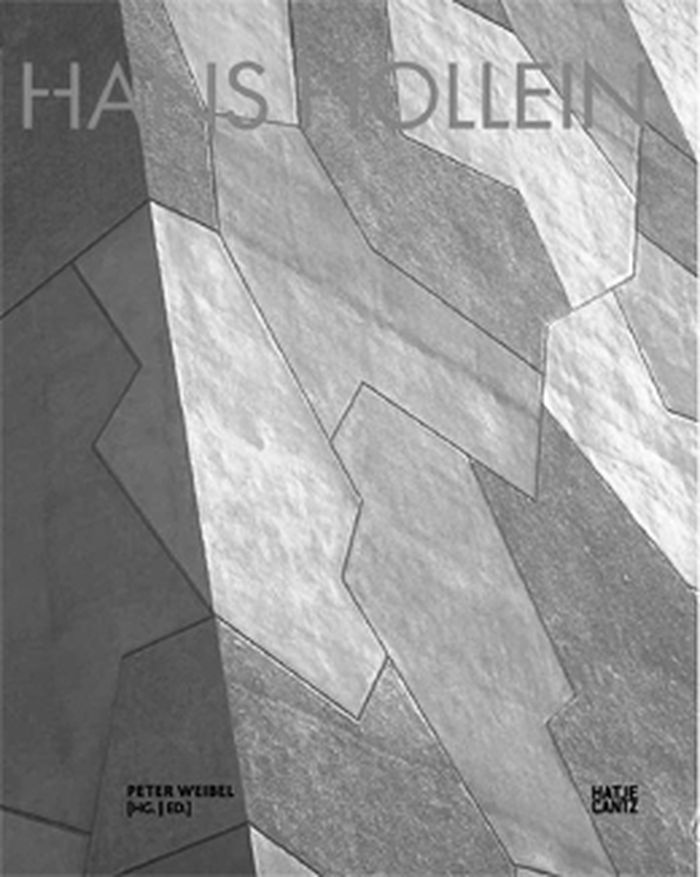
The only Austrian winner of the Pritzker Prize (1985) and president of the architecture biennale in Venice, the Viennese architect Hans Hollein (born 1934) has been a leading exponent of postmodernism in architecture. Yet his global stature as an architect has overshadowed his design work of the 1970s and 1980s and his artistic work of the 1960s and 1970s, despite past exhibitions at The Museum of Modern Art, New York and the Centre Pompidou in Paris. This richly illustrated, comprehensive catalogue, and the exhibition it accompanies at the Neue Galerie in Graz, is the first retrospective of Hollein as a truly universal artist and a renaissance man for the digital age. It is also the first to present Hollein's oeuvre as a whole: his work as artist, designer and architect, but also as theoretician, curator, teacher and collaborator with such artists as Christo and Claes Oldenburg.
Hans Hollein
Actions:
Price:
$145.00
(available to order)
Summary:
The only Austrian winner of the Pritzker Prize (1985) and president of the architecture biennale in Venice, the Viennese architect Hans Hollein (born 1934) has been a leading exponent of postmodernism in architecture. Yet his global stature as an architect has overshadowed his design work of the 1970s and 1980s and his artistic work of the 1960s and 1970s, despite past exhibitions at The Museum of Modern Art, New York and the Centre Pompidou in Paris. This richly illustrated, comprehensive catalogue, and the exhibition it accompanies at the Neue Galerie in Graz, is the first retrospective of Hollein as a truly universal artist and a renaissance man for the digital age. It is also the first to present Hollein's oeuvre as a whole: his work as artist, designer and architect, but also as theoretician, curator, teacher and collaborator with such artists as Christo and Claes Oldenburg.
Form:
books
books
Publication:
April 2012
April 2012
Form:
books
books
Title:
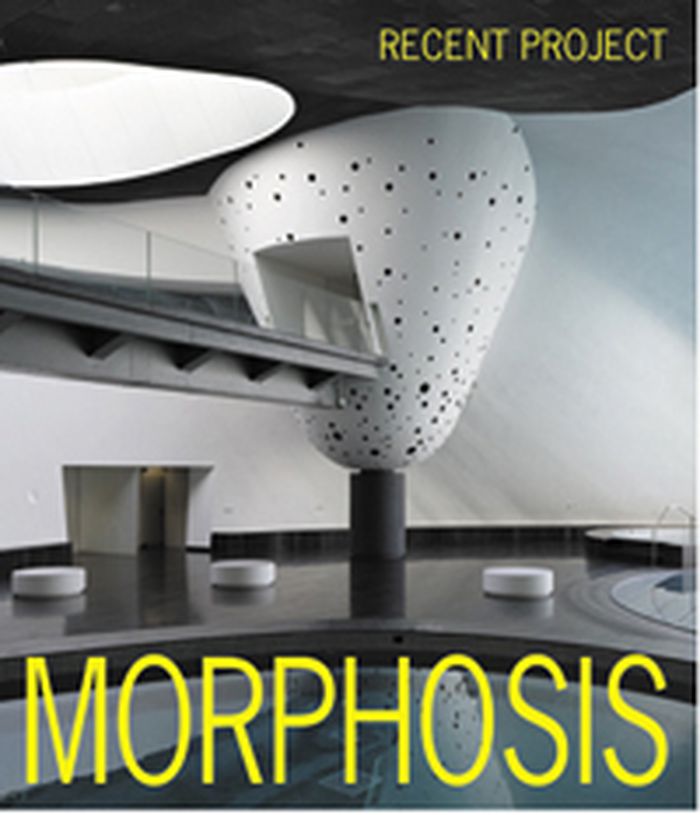
Morphosis: Recent project
Morphosis: Recent project
Actions:
Price:
$68.95
(available to order)
Summary:
Projects include the Giant Group Campus in Shanghai, The Phare Tower at La Défense in Paris, the Perot Museum of Nature & Science in Dallas, the Kuala Lumpur Towers in Kuala Lumpur, the new U.S. Embassy in London, the Emerson College at the Los Angeles Center, the New Orleans National Jazz, the Taipei Pop Music Center, the Seoul Performing Arts Center, the King Abdullah(...)
$68.95
(available to order)
Summary:
Projects include the Giant Group Campus in Shanghai, The Phare Tower at La Défense in Paris, the Perot Museum of Nature & Science in Dallas, the Kuala Lumpur Towers in Kuala Lumpur, the new U.S. Embassy in London, the Emerson College at the Los Angeles Center, the New Orleans National Jazz, the Taipei Pop Music Center, the Seoul Performing Arts Center, the King Abdullah(...)
Title:
Morphosis: Recent project
Actions:
Price:
$68.95
(available to order)
Summary:
Projects include the Giant Group Campus in Shanghai, The Phare Tower at La Défense in Paris, the Perot Museum of Nature & Science in Dallas, the Kuala Lumpur Towers in Kuala Lumpur, the new U.S. Embassy in London, the Emerson College at the Los Angeles Center, the New Orleans National Jazz, the Taipei Pop Music Center, the Seoul Performing Arts Center, the King Abdullah Petroleum Studies and Research Center in Riyadh. Also includes an interview with Thom Mayne from Morphosis.
Morphosis: Recent project
Actions:
Price:
$68.95
(available to order)
Summary:
Projects include the Giant Group Campus in Shanghai, The Phare Tower at La Défense in Paris, the Perot Museum of Nature & Science in Dallas, the Kuala Lumpur Towers in Kuala Lumpur, the new U.S. Embassy in London, the Emerson College at the Los Angeles Center, the New Orleans National Jazz, the Taipei Pop Music Center, the Seoul Performing Arts Center, the King Abdullah Petroleum Studies and Research Center in Riyadh. Also includes an interview with Thom Mayne from Morphosis.
Form:
books
books
Publication:
December 2010
December 2010
Form:
books
books
Actions:
Price:
$32.95
(available to order)
Summary:
In Fallout Shelter, David Monteyne traces the partnership that developed between architects and civil defense authorities during the 1950s and 1960s. Neither the civil defense bureaucracy nor the architectural profession was monolithic, however, and Monteyne shows that architecture for civil defense was a contested and often inconsistent project, reflecting specific(...)
$32.95
(available to order)
Summary:
In Fallout Shelter, David Monteyne traces the partnership that developed between architects and civil defense authorities during the 1950s and 1960s. Neither the civil defense bureaucracy nor the architectural profession was monolithic, however, and Monteyne shows that architecture for civil defense was a contested and often inconsistent project, reflecting specific(...)
Title:
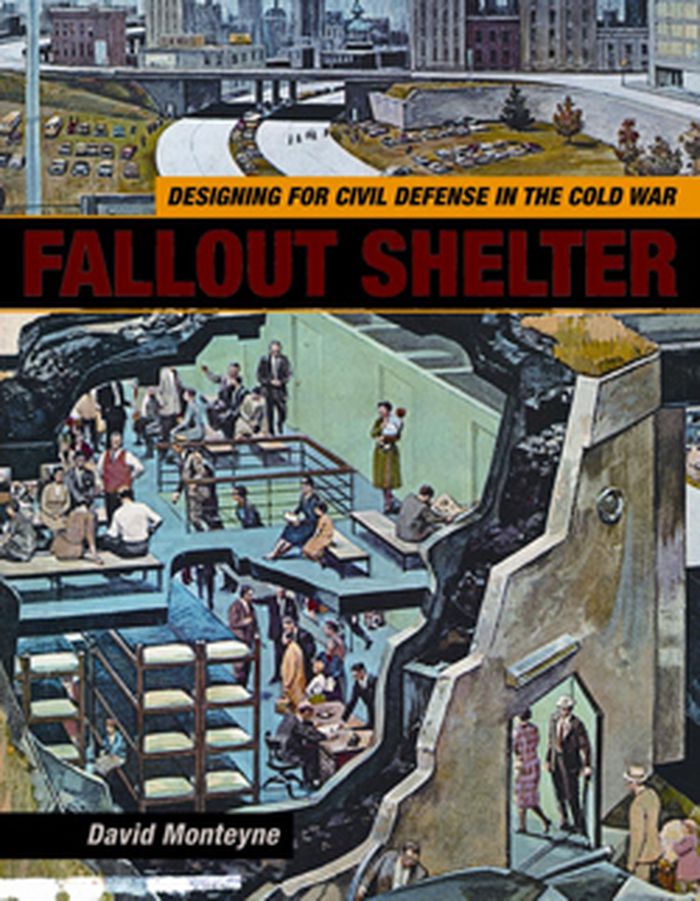
Fallout shelter: Designing for civil defense in the Cold War
Actions:
Price:
$32.95
(available to order)
Summary:
In Fallout Shelter, David Monteyne traces the partnership that developed between architects and civil defense authorities during the 1950s and 1960s. Neither the civil defense bureaucracy nor the architectural profession was monolithic, however, and Monteyne shows that architecture for civil defense was a contested and often inconsistent project, reflecting specific assumptions about race, gender, class, and power.
Fallout shelter: Designing for civil defense in the Cold War
Actions:
Price:
$32.95
(available to order)
Summary:
In Fallout Shelter, David Monteyne traces the partnership that developed between architects and civil defense authorities during the 1950s and 1960s. Neither the civil defense bureaucracy nor the architectural profession was monolithic, however, and Monteyne shows that architecture for civil defense was a contested and often inconsistent project, reflecting specific assumptions about race, gender, class, and power.
Form:
books
books
Publication:
April 2011
April 2011
Form:
books
books
Title:
Books by Ettore Sottsass
Books by Ettore Sottsass
Actions:
Price:
$59.99
(available to order)
Summary:
This book features the magazines and books which Ettore Sottsass wrote, illustrated or edited over a period of 60 years from 1947-2006. Works on printed paper for which Sottsass set up texts, illustrations and/or graphic inventions. His multi-faceted publishing works are grouped together in eight separate sections - the magazine “Room East 128. Chronicle”, books(...)
$59.99
(available to order)
Summary:
This book features the magazines and books which Ettore Sottsass wrote, illustrated or edited over a period of 60 years from 1947-2006. Works on printed paper for which Sottsass set up texts, illustrations and/or graphic inventions. His multi-faceted publishing works are grouped together in eight separate sections - the magazine “Room East 128. Chronicle”, books(...)
Publication:
March 2011
March 2011
Title:
Books by Ettore Sottsass
Actions:
Price:
$59.99
(available to order)
Summary:
This book features the magazines and books which Ettore Sottsass wrote, illustrated or edited over a period of 60 years from 1947-2006. Works on printed paper for which Sottsass set up texts, illustrations and/or graphic inventions. His multi-faceted publishing works are grouped together in eight separate sections - the magazine “Room East 128. Chronicle”, books published for the “East 128” edition, “Pianeta Fresco”, inserts in architecture and design magazines, illustrated books and theoretical writings, catalogues for the “Memphis” Group, the magazine “Terrazzo” and augural publications for Studio Sottsass Associati - and are accompanied by contributions by Barbara Radice, Andrea Branzi, Michele De Lucchi, Nathalie Du Pasquier, Elio Fiorucci, Christoph Radl, Franco Raggi and Lea Vergine.
Books by Ettore Sottsass
Actions:
Price:
$59.99
(available to order)
Summary:
This book features the magazines and books which Ettore Sottsass wrote, illustrated or edited over a period of 60 years from 1947-2006. Works on printed paper for which Sottsass set up texts, illustrations and/or graphic inventions. His multi-faceted publishing works are grouped together in eight separate sections - the magazine “Room East 128. Chronicle”, books published for the “East 128” edition, “Pianeta Fresco”, inserts in architecture and design magazines, illustrated books and theoretical writings, catalogues for the “Memphis” Group, the magazine “Terrazzo” and augural publications for Studio Sottsass Associati - and are accompanied by contributions by Barbara Radice, Andrea Branzi, Michele De Lucchi, Nathalie Du Pasquier, Elio Fiorucci, Christoph Radl, Franco Raggi and Lea Vergine.
Form:
books
books
Publication:
March 2011
March 2011
Form:
books
books
Actions:
Price:
$21.00
(available to order)
Summary:
W. G. Sebald completed this extraordinary, important and controversial book before his untimely death in December 2001. It is a harrowing study of the devastation of German cities by Allied bombardment in World War II, and an examination of the silence in German literature and culture about this unprecedented trauma. On the Natural History of Destruction is an essential(...)
$21.00
(available to order)
Summary:
W. G. Sebald completed this extraordinary, important and controversial book before his untimely death in December 2001. It is a harrowing study of the devastation of German cities by Allied bombardment in World War II, and an examination of the silence in German literature and culture about this unprecedented trauma. On the Natural History of Destruction is an essential(...)
Title:
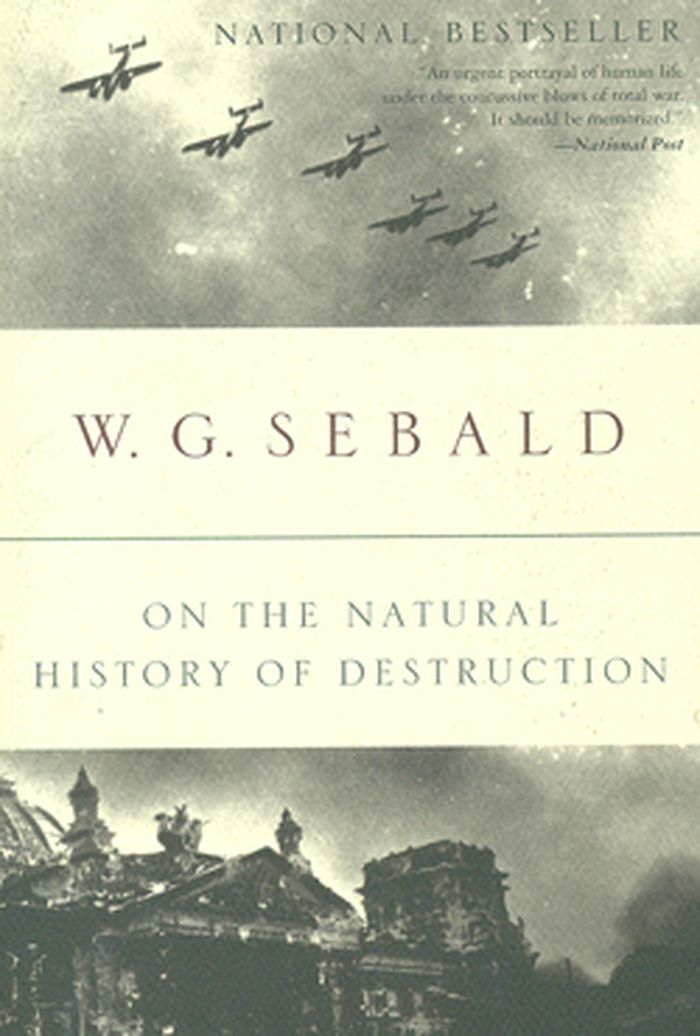
On the natural history of destruction
Actions:
Price:
$21.00
(available to order)
Summary:
W. G. Sebald completed this extraordinary, important and controversial book before his untimely death in December 2001. It is a harrowing study of the devastation of German cities by Allied bombardment in World War II, and an examination of the silence in German literature and culture about this unprecedented trauma. On the Natural History of Destruction is an essential and deeply relevant study of war and society, suffering and amnesia.
On the natural history of destruction
Actions:
Price:
$21.00
(available to order)
Summary:
W. G. Sebald completed this extraordinary, important and controversial book before his untimely death in December 2001. It is a harrowing study of the devastation of German cities by Allied bombardment in World War II, and an examination of the silence in German literature and culture about this unprecedented trauma. On the Natural History of Destruction is an essential and deeply relevant study of war and society, suffering and amnesia.
Form:
books
books
Publication:
April 2011
April 2011
Form:
books
books
Title:
Maus: A survivor's tale
Maus: A survivor's tale
Actions:
Price:
$17.95
(available to order)
Summary:
The first volume introduces readers to Vladek Spiegelman, a Jewish survivor of Hitler's Europe, and his son, a cartoonist trying to come to terms with his father, his father's terrifying story, and history itself. Its form, the cartoon (the Nazis are cats, the Jews mice), succeeds perfectly in shocking us out of any lingering sense of familiarity with the events(...)
$17.95
(available to order)
Summary:
The first volume introduces readers to Vladek Spiegelman, a Jewish survivor of Hitler's Europe, and his son, a cartoonist trying to come to terms with his father, his father's terrifying story, and history itself. Its form, the cartoon (the Nazis are cats, the Jews mice), succeeds perfectly in shocking us out of any lingering sense of familiarity with the events(...)
Title:
Maus: A survivor's tale
Actions:
Price:
$17.95
(available to order)
Summary:
The first volume introduces readers to Vladek Spiegelman, a Jewish survivor of Hitler's Europe, and his son, a cartoonist trying to come to terms with his father, his father's terrifying story, and history itself. Its form, the cartoon (the Nazis are cats, the Jews mice), succeeds perfectly in shocking us out of any lingering sense of familiarity with the events described, approaching, as it does, the unspeakable through the diminutive. Tragic and comic by turns, it attains a new complexity of theme and a precision of thought new to comics and rare in any medium.
Maus: A survivor's tale
Actions:
Price:
$17.95
(available to order)
Summary:
The first volume introduces readers to Vladek Spiegelman, a Jewish survivor of Hitler's Europe, and his son, a cartoonist trying to come to terms with his father, his father's terrifying story, and history itself. Its form, the cartoon (the Nazis are cats, the Jews mice), succeeds perfectly in shocking us out of any lingering sense of familiarity with the events described, approaching, as it does, the unspeakable through the diminutive. Tragic and comic by turns, it attains a new complexity of theme and a precision of thought new to comics and rare in any medium.
Form:
books
books
Publication:
April 1986
April 1986
Subject:
Current Exhibitions
Current Exhibitions
Form:
books
books

Actions:
Price:
$55.95
(available to order)
Summary:
Experiments with Life Itself investigates five projects of domestic radical architecture, built between the end of the Thirties and the end of the Fifties by architects and artists -- relegated to the margins of civil reality by war, exile and disenchantment -- in which they are also the object of their own experimentation. Through intimate analysis and personal(...)
$55.95
(available to order)
Summary:
Experiments with Life Itself investigates five projects of domestic radical architecture, built between the end of the Thirties and the end of the Fifties by architects and artists -- relegated to the margins of civil reality by war, exile and disenchantment -- in which they are also the object of their own experimentation. Through intimate analysis and personal(...)
Publication:
September 2011
September 2011
Title:
Experiments with life itself: radical domestic architectures between 1937 and 1959
Actions:
Price:
$55.95
(available to order)
Summary:
Experiments with Life Itself investigates five projects of domestic radical architecture, built between the end of the Thirties and the end of the Fifties by architects and artists -- relegated to the margins of civil reality by war, exile and disenchantment -- in which they are also the object of their own experimentation. Through intimate analysis and personal photographs, this publication offers a unique insight into projects by Charles and Ray Eames, Ralph Erskine, Alison and Peter Smithson, German Rodriguez Arias and Pablo Neruda, and Juan O'Gorman.
Experiments with life itself: radical domestic architectures between 1937 and 1959
Actions:
Price:
$55.95
(available to order)
Summary:
Experiments with Life Itself investigates five projects of domestic radical architecture, built between the end of the Thirties and the end of the Fifties by architects and artists -- relegated to the margins of civil reality by war, exile and disenchantment -- in which they are also the object of their own experimentation. Through intimate analysis and personal photographs, this publication offers a unique insight into projects by Charles and Ray Eames, Ralph Erskine, Alison and Peter Smithson, German Rodriguez Arias and Pablo Neruda, and Juan O'Gorman.
Form:
books
books
Publication:
September 2011
September 2011


