


319 Results
Form:
books
books
Actions:
Price:
$22.95
(available to order)
Summary:
Each year, the New York chapter of the AIGA invites a group of emerging designers to participate in the Fresh Dialogue forum. In/Visible: Graphic Data Revealed brings together a diverse group of information graphics designers for a lively discussion about the challenges they face visualizing information. Steve Duenes manages the New York Times print and online graphics(...)
$22.95
(available to order)
Summary:
Each year, the New York chapter of the AIGA invites a group of emerging designers to participate in the Fresh Dialogue forum. In/Visible: Graphic Data Revealed brings together a diverse group of information graphics designers for a lively discussion about the challenges they face visualizing information. Steve Duenes manages the New York Times print and online graphics(...)
Title:
Fresh dialogue nine: In/visible: graphic data revealed
Actions:
Price:
$22.95
(available to order)
Summary:
Each year, the New York chapter of the AIGA invites a group of emerging designers to participate in the Fresh Dialogue forum. In/Visible: Graphic Data Revealed brings together a diverse group of information graphics designers for a lively discussion about the challenges they face visualizing information. Steve Duenes manages the New York Times print and online graphics department; Andrew Kuo attempts to categorize unmeasurable human emotions through meticulous charts and diagrams; Fernanda Viégas of IBM’s Visual Communication Lab is the cocreator of the Many Eyes social website that encourages members to upload, interpret, and revisualize one another’s data. Their discussion, moderated by Rhode Island School of Design president John Maeda, covers a range of current and anticipated trends in visual journalism, including issues such as data integrity and visual ethics, judicious simplicity versus seductive complexity, and the everincreasing demand for dynamic information.
Fresh dialogue nine: In/visible: graphic data revealed
Actions:
Price:
$22.95
(available to order)
Summary:
Each year, the New York chapter of the AIGA invites a group of emerging designers to participate in the Fresh Dialogue forum. In/Visible: Graphic Data Revealed brings together a diverse group of information graphics designers for a lively discussion about the challenges they face visualizing information. Steve Duenes manages the New York Times print and online graphics department; Andrew Kuo attempts to categorize unmeasurable human emotions through meticulous charts and diagrams; Fernanda Viégas of IBM’s Visual Communication Lab is the cocreator of the Many Eyes social website that encourages members to upload, interpret, and revisualize one another’s data. Their discussion, moderated by Rhode Island School of Design president John Maeda, covers a range of current and anticipated trends in visual journalism, including issues such as data integrity and visual ethics, judicious simplicity versus seductive complexity, and the everincreasing demand for dynamic information.
Form:
books
books
Publication:
January 2009
January 2009
Subject:
Design Theory
Design Theory
Form:
books
books
Actions:
Price:
$32.50
(available to order)
Summary:
By winning the 2008 Winterhouse Award for Design Writing, David Barringer firmly established himself as the freshest and most interesting writer on the subject. His articles, which have appeared in publications from Print to Emigre, are notable for his strong personal point of view, literary style, and even humor, not always attributes associated with writing about(...)
$32.50
(available to order)
Summary:
By winning the 2008 Winterhouse Award for Design Writing, David Barringer firmly established himself as the freshest and most interesting writer on the subject. His articles, which have appeared in publications from Print to Emigre, are notable for his strong personal point of view, literary style, and even humor, not always attributes associated with writing about(...)
Title:
There's nothing funny about design
Actions:
Price:
$32.50
(available to order)
Summary:
By winning the 2008 Winterhouse Award for Design Writing, David Barringer firmly established himself as the freshest and most interesting writer on the subject. His articles, which have appeared in publications from Print to Emigre, are notable for his strong personal point of view, literary style, and even humor, not always attributes associated with writing about design. In this collection of essays, Barringer’s first, he wonders why drug names have so many X’s in them, ponders the rise of gory DVD covers, and ruminates on his father’s business card collection, pythons, and the human skull – proving again and again that design is everywhere you look for it, (but may not have seen) without the powerful magnifying lens of this talented and exciting observer and writer.
There's nothing funny about design
Actions:
Price:
$32.50
(available to order)
Summary:
By winning the 2008 Winterhouse Award for Design Writing, David Barringer firmly established himself as the freshest and most interesting writer on the subject. His articles, which have appeared in publications from Print to Emigre, are notable for his strong personal point of view, literary style, and even humor, not always attributes associated with writing about design. In this collection of essays, Barringer’s first, he wonders why drug names have so many X’s in them, ponders the rise of gory DVD covers, and ruminates on his father’s business card collection, pythons, and the human skull – proving again and again that design is everywhere you look for it, (but may not have seen) without the powerful magnifying lens of this talented and exciting observer and writer.
Form:
books
books
Publication:
January 2009
January 2009
Subject:
Design Theory
Design Theory
Form:
books
books

Actions:
Price:
$12.00
(available to order)
Summary:
This handbook has been put together on the occasion of Martin Beck's exhibition Panel 2: 'Nothing better than a touch of ecology and catastrophe to unite the social classes...' at Gasworks, 19 September - 9 November 2008.
$12.00
(available to order)
Summary:
This handbook has been put together on the occasion of Martin Beck's exhibition Panel 2: 'Nothing better than a touch of ecology and catastrophe to unite the social classes...' at Gasworks, 19 September - 9 November 2008.
Title:
Martin Beck 'Nothing better than a touch of ecology...'
Actions:
Price:
$12.00
(available to order)
Summary:
This handbook has been put together on the occasion of Martin Beck's exhibition Panel 2: 'Nothing better than a touch of ecology and catastrophe to unite the social classes...' at Gasworks, 19 September - 9 November 2008.
Martin Beck 'Nothing better than a touch of ecology...'
Actions:
Price:
$12.00
(available to order)
Summary:
This handbook has been put together on the occasion of Martin Beck's exhibition Panel 2: 'Nothing better than a touch of ecology and catastrophe to unite the social classes...' at Gasworks, 19 September - 9 November 2008.
Form:
books
books
Publication:
January 1900, London
January 1900, London
Subject:
Design Theory
Design Theory
Form:
books
books
Title:
The language of things
The language of things
Actions:
Price:
$29.00
(available to order)
Summary:
We live in a world drowning in objects. But what do they tell us about ourselves? The Language of Things, Deyan Sudjic charts our relationship - both innocent and knowing - with all things designed. From the opulent excesses of the catwalk, or the technical brilliance of a laptop computer, to the subtle refinement of a desk lamp, he shows how we can be manipulated and(...)
$29.00
(available to order)
Summary:
We live in a world drowning in objects. But what do they tell us about ourselves? The Language of Things, Deyan Sudjic charts our relationship - both innocent and knowing - with all things designed. From the opulent excesses of the catwalk, or the technical brilliance of a laptop computer, to the subtle refinement of a desk lamp, he shows how we can be manipulated and(...)
Title:
The language of things
Actions:
Price:
$29.00
(available to order)
Summary:
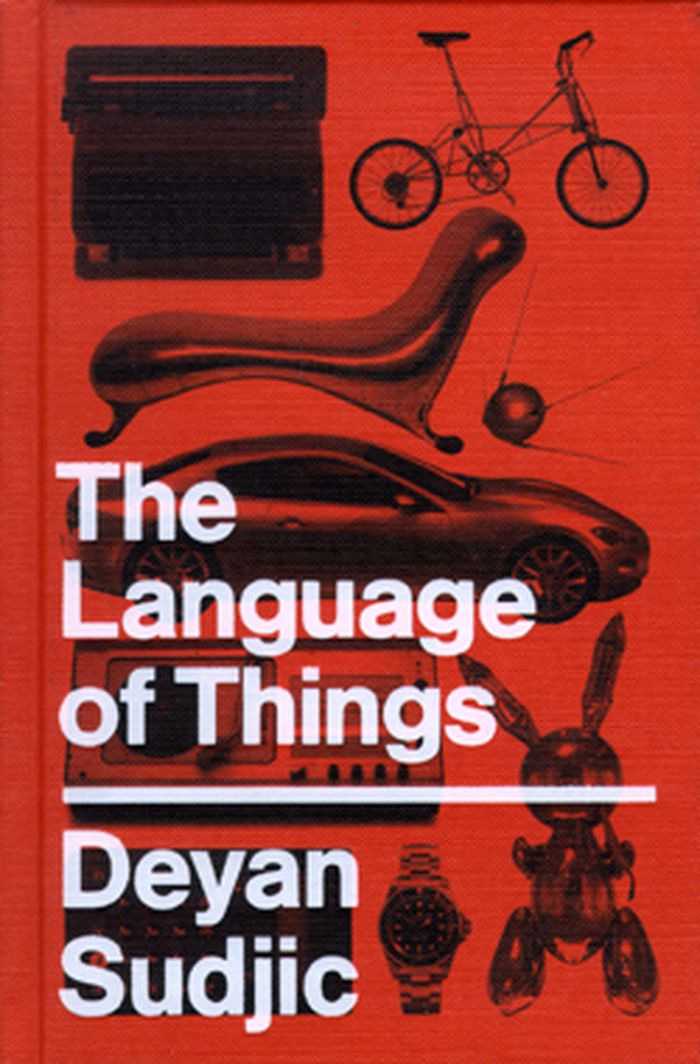
We live in a world drowning in objects. But what do they tell us about ourselves? The Language of Things, Deyan Sudjic charts our relationship - both innocent and knowing - with all things designed. From the opulent excesses of the catwalk, or the technical brilliance of a laptop computer, to the subtle refinement of a desk lamp, he shows how we can be manipulated and seduced by our possessions.
The language of things
Actions:
Price:
$29.00
(available to order)
Summary:
We live in a world drowning in objects. But what do they tell us about ourselves? The Language of Things, Deyan Sudjic charts our relationship - both innocent and knowing - with all things designed. From the opulent excesses of the catwalk, or the technical brilliance of a laptop computer, to the subtle refinement of a desk lamp, he shows how we can be manipulated and seduced by our possessions.
Form:
books
books
Publication:
December 2008, London
December 2008, London
Subject:
Design Theory
Design Theory
Form:
books
books
Title:
The grid book
The grid book
Actions:
Price:
$49.95
(available to order)
Summary:
In this publication, Higgins examines the history of ten grids that changed the world: the brick, the tablet, the gridiron city plan, the map, musical notation, the ledger, the screen, moveable type, the manufactured box, and the net. Charting the evolution of each grid, from the Paleolithic brick of ancient Mesopotamia through the virtual connections of the Internet,(...)
$49.95
(available to order)
Summary:
In this publication, Higgins examines the history of ten grids that changed the world: the brick, the tablet, the gridiron city plan, the map, musical notation, the ledger, the screen, moveable type, the manufactured box, and the net. Charting the evolution of each grid, from the Paleolithic brick of ancient Mesopotamia through the virtual connections of the Internet,(...)
Title:
The grid book
Actions:
Price:
$49.95
(available to order)
Summary:
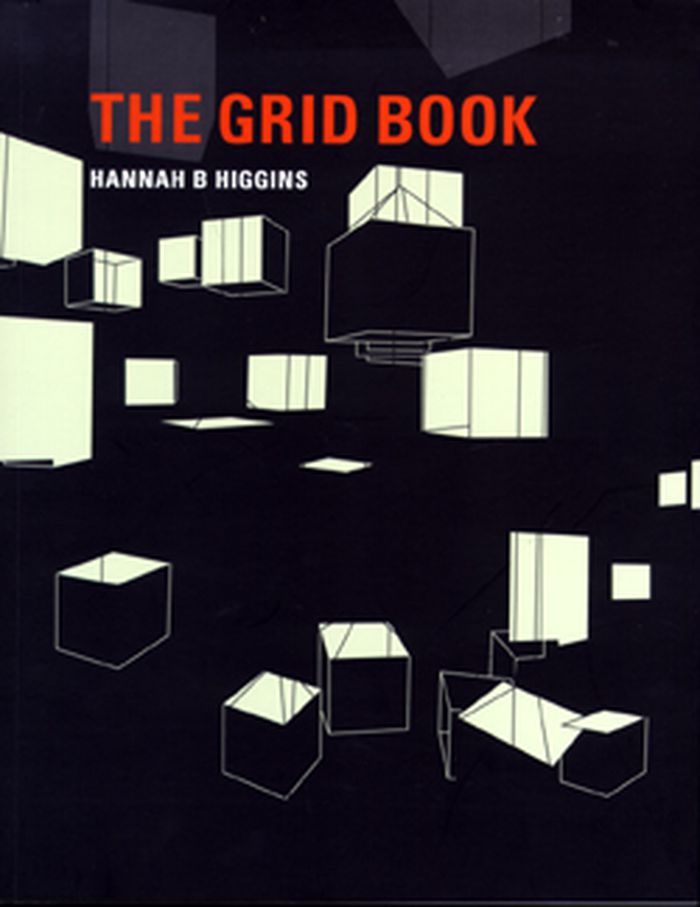
In this publication, Higgins examines the history of ten grids that changed the world: the brick, the tablet, the gridiron city plan, the map, musical notation, the ledger, the screen, moveable type, the manufactured box, and the net. Charting the evolution of each grid, from the Paleolithic brick of ancient Mesopotamia through the virtual connections of the Internet, Higgins demonstrates that once a grid is invented, it may bend, crumble, or shatter, but its organizing principle never disappears.
The grid book
Actions:
Price:
$49.95
(available to order)
Summary:
In this publication, Higgins examines the history of ten grids that changed the world: the brick, the tablet, the gridiron city plan, the map, musical notation, the ledger, the screen, moveable type, the manufactured box, and the net. Charting the evolution of each grid, from the Paleolithic brick of ancient Mesopotamia through the virtual connections of the Internet, Higgins demonstrates that once a grid is invented, it may bend, crumble, or shatter, but its organizing principle never disappears.
Form:
books
books
Publication:
March 2009, Cambridge
March 2009, Cambridge
Subject:
Design Theory
Design Theory
Form:
books
books
Title:
Design meets disability
Design meets disability
Actions:
Price:
$34.95
(available to order)
Summary:
Pullin offers examples of how design can meet disability today. Why, he asks, shouldn't hearing aids be as fashionable as eyewear? What new forms of braille signage might proliferate if designers kept both sighted and visually impaired people in mind? Can simple designs avoid the need for complicated accessibility features? Can such emerging design methods as "experience(...)
$34.95
(available to order)
Summary:
Pullin offers examples of how design can meet disability today. Why, he asks, shouldn't hearing aids be as fashionable as eyewear? What new forms of braille signage might proliferate if designers kept both sighted and visually impaired people in mind? Can simple designs avoid the need for complicated accessibility features? Can such emerging design methods as "experience(...)
Title:
Design meets disability
Actions:
Price:
$34.95
(available to order)
Summary:
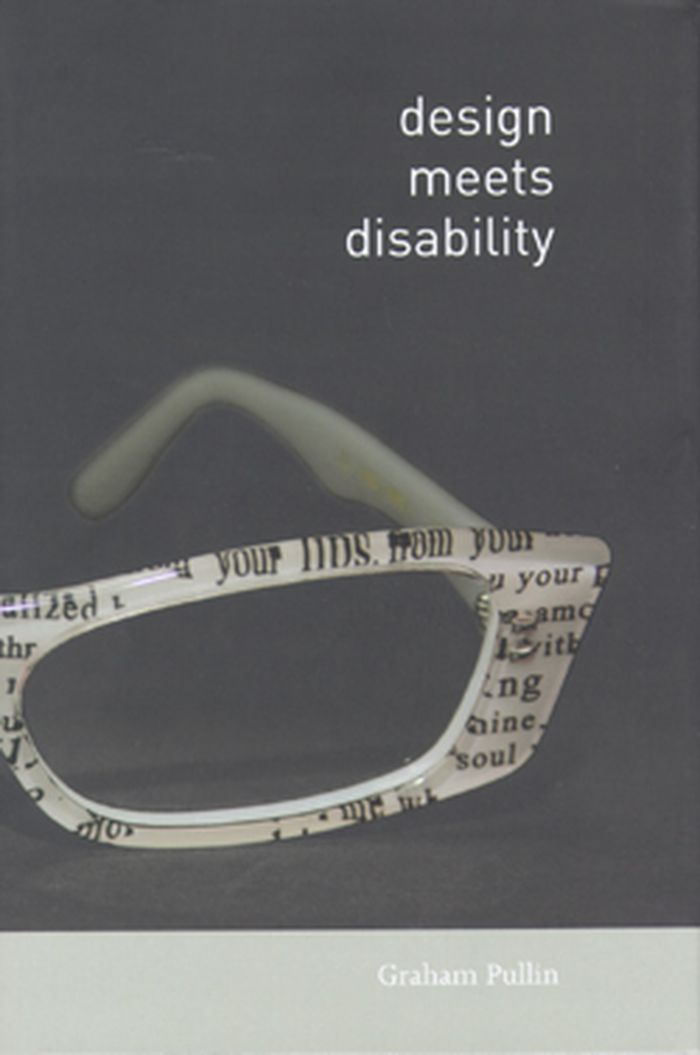
Pullin offers examples of how design can meet disability today. Why, he asks, shouldn't hearing aids be as fashionable as eyewear? What new forms of braille signage might proliferate if designers kept both sighted and visually impaired people in mind? Can simple designs avoid the need for complicated accessibility features? Can such emerging design methods as "experience prototyping" and "critical design" complement clinical trials? Pullin also presents a series of interviews with leading designers about specific disability design projects, including stepstools for people with restricted growth, prosthetic legs (and whether they can be both honest and beautifully designed), and text-to-speech technology with tone of voice.
Design meets disability
Actions:
Price:
$34.95
(available to order)
Summary:
Pullin offers examples of how design can meet disability today. Why, he asks, shouldn't hearing aids be as fashionable as eyewear? What new forms of braille signage might proliferate if designers kept both sighted and visually impaired people in mind? Can simple designs avoid the need for complicated accessibility features? Can such emerging design methods as "experience prototyping" and "critical design" complement clinical trials? Pullin also presents a series of interviews with leading designers about specific disability design projects, including stepstools for people with restricted growth, prosthetic legs (and whether they can be both honest and beautifully designed), and text-to-speech technology with tone of voice.
Form:
books
books
Publication:
April 2009, Cambridge (MA), London
April 2009, Cambridge (MA), London
Subject:
Design Theory
Design Theory
Form:
books
books
Price:
$26.00
(available to order)
Summary:
Desarting - a study of the tension between industrial and visual design.
$26.00
(available to order)
Summary:
Desarting - a study of the tension between industrial and visual design.
Title:
Desarting where visual and industrial design mutually attract and distract
Actions:
Price:
$26.00
(available to order)
Summary:
Desarting - a study of the tension between industrial and visual design.
Desarting where visual and industrial design mutually attract and distract
Actions:
Price:
$26.00
(available to order)
Summary:
Desarting - a study of the tension between industrial and visual design.
Form:
books
books
Publication:
December 2008, Eindhoven
December 2008, Eindhoven
Subject:
Design Theory
Design Theory
Form:
books
books

Title:
Design as art: Bruno Munari
Design as art: Bruno Munari
Actions:
Price:
$23.00
(available in store)
Summary:
Bruno Munari insisted that design be beautiful, functional and accessible, and this enlightening and highly entertaining book sets out his ideas about visual, graphic and industrial design and the role it plays in the objects we use everyday. Lamps, road signs, typography, posters, children's books, advertising, cars and chairs.
$23.00
(available in store)
Summary:
Bruno Munari insisted that design be beautiful, functional and accessible, and this enlightening and highly entertaining book sets out his ideas about visual, graphic and industrial design and the role it plays in the objects we use everyday. Lamps, road signs, typography, posters, children's books, advertising, cars and chairs.
Title:
Design as art: Bruno Munari
Actions:
Price:
$23.00
(available in store)
Summary:
Bruno Munari insisted that design be beautiful, functional and accessible, and this enlightening and highly entertaining book sets out his ideas about visual, graphic and industrial design and the role it plays in the objects we use everyday. Lamps, road signs, typography, posters, children's books, advertising, cars and chairs.
Design as art: Bruno Munari
Actions:
Price:
$23.00
(available in store)
Summary:
Bruno Munari insisted that design be beautiful, functional and accessible, and this enlightening and highly entertaining book sets out his ideas about visual, graphic and industrial design and the role it plays in the objects we use everyday. Lamps, road signs, typography, posters, children's books, advertising, cars and chairs.
Form:
books
books
Publication:
October 2019
October 2019
Subject:
Design Theory
Design Theory
Form:
books
books
Actions:
Price:
$32.95
(available to order)
Summary:
Design Futuring argues that responding to ethical, political, social and ecological concerns now requires a new type of practice that recognizes design's importance in overcoming a world made unsustainable. Illustrated throughout with international case material, Design Futuring presents the author's ground-breaking ideas in a coherent framework, focusing specifically(...)
$32.95
(available to order)
Summary:
Design Futuring argues that responding to ethical, political, social and ecological concerns now requires a new type of practice that recognizes design's importance in overcoming a world made unsustainable. Illustrated throughout with international case material, Design Futuring presents the author's ground-breaking ideas in a coherent framework, focusing specifically(...)
Title:
Design futuring: sustainability, ethics and new practice
Actions:
Price:
$32.95
(available to order)
Summary:
Design Futuring argues that responding to ethical, political, social and ecological concerns now requires a new type of practice that recognizes design's importance in overcoming a world made unsustainable. Illustrated throughout with international case material, Design Futuring presents the author's ground-breaking ideas in a coherent framework, focusing specifically on the ways in which concerns for ethics and sustainability can change the practice of Design for the twenty-first century. Design Futuring - a pathfinding text for the new era - extends far beyond Design courses and professional practice, and will also be invaluable to students and practitioners of Architecture, the Creative Arts, Business and Management. Tony Fry is a director of the sustainment consultancy Team D/E/S and Adjunct Professor of Design, Griffith University, Queensland College of Art.
Design futuring: sustainability, ethics and new practice
Actions:
Price:
$32.95
(available to order)
Summary:
Design Futuring argues that responding to ethical, political, social and ecological concerns now requires a new type of practice that recognizes design's importance in overcoming a world made unsustainable. Illustrated throughout with international case material, Design Futuring presents the author's ground-breaking ideas in a coherent framework, focusing specifically on the ways in which concerns for ethics and sustainability can change the practice of Design for the twenty-first century. Design Futuring - a pathfinding text for the new era - extends far beyond Design courses and professional practice, and will also be invaluable to students and practitioners of Architecture, the Creative Arts, Business and Management. Tony Fry is a director of the sustainment consultancy Team D/E/S and Adjunct Professor of Design, Griffith University, Queensland College of Art.
Form:
books
books
Publication:
December 2008, Oxford, New York
December 2008, Oxford, New York
Subject:
Design Theory
Design Theory
Form:
books
books
Price:
$44.95
(available in store)
Summary:
Pour une compréhension élargie des sujets et questionnements propres au design contemporain, revient-il d'appréhender, notamment, les correspondances et recoupements terminologiques, tant conceptuels que notionnels, que celui-ci entretient avec certaines de ses disciplines voisines, qu'elles proviennent des sciences humaines et sociales comme des sciences et techniques de(...)
$44.95
(available in store)
Summary:
Pour une compréhension élargie des sujets et questionnements propres au design contemporain, revient-il d'appréhender, notamment, les correspondances et recoupements terminologiques, tant conceptuels que notionnels, que celui-ci entretient avec certaines de ses disciplines voisines, qu'elles proviennent des sciences humaines et sociales comme des sciences et techniques de(...)
Title:
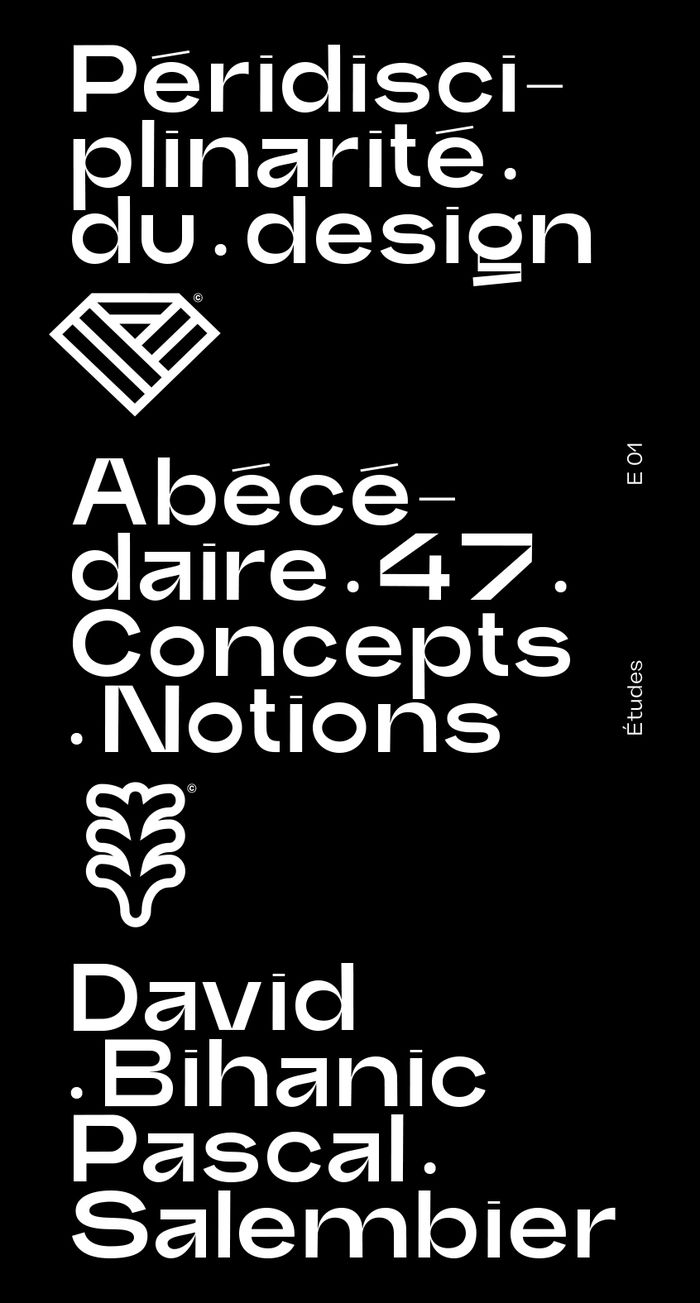
Péridisciplinarité du design : Abécédaire 47 concepts notions
Actions:
Price:
$44.95
(available in store)
Summary:
Pour une compréhension élargie des sujets et questionnements propres au design contemporain, revient-il d'appréhender, notamment, les correspondances et recoupements terminologiques, tant conceptuels que notionnels, que celui-ci entretient avec certaines de ses disciplines voisines, qu'elles proviennent des sciences humaines et sociales comme des sciences et techniques de l'ingénieur. C'est là précisément l'objet de ce livre. Conviant des auteurs, des chercheurs et/ou experts d'horizons disciplinaires divers, l'ouvrage compose un abécédaire de termes-clés que le design partage avec d'autres champs et domaines connexes. 26 lettres de l'alphabet pour 47 mots et notules, soit autant de chapitres au départ desquels s'ouvre la possibilité d'un abord proprement «?péridisciplinaire?» du design.
Péridisciplinarité du design : Abécédaire 47 concepts notions
Actions:
Price:
$44.95
(available in store)
Summary:
Pour une compréhension élargie des sujets et questionnements propres au design contemporain, revient-il d'appréhender, notamment, les correspondances et recoupements terminologiques, tant conceptuels que notionnels, que celui-ci entretient avec certaines de ses disciplines voisines, qu'elles proviennent des sciences humaines et sociales comme des sciences et techniques de l'ingénieur. C'est là précisément l'objet de ce livre. Conviant des auteurs, des chercheurs et/ou experts d'horizons disciplinaires divers, l'ouvrage compose un abécédaire de termes-clés que le design partage avec d'autres champs et domaines connexes. 26 lettres de l'alphabet pour 47 mots et notules, soit autant de chapitres au départ desquels s'ouvre la possibilité d'un abord proprement «?péridisciplinaire?» du design.
Form:
books
books
Publication:
July 2026
July 2026
Subject:
Design Theory
Design Theory


