


232 Results
Form:
books
books
Actions:
Price:
$63.95
(available to order)
Summary:
Glass has always been used to enhance and open up spaces to light - but in recent years artists have taken glass to another level. Presented here are the outstanding collaborations of almost fifty top glass artists with some of the world's leading architects and interior designers.
$63.95
(available to order)
Summary:
Glass has always been used to enhance and open up spaces to light - but in recent years artists have taken glass to another level. Presented here are the outstanding collaborations of almost fifty top glass artists with some of the world's leading architects and interior designers.
Title:
The art of glass : integrating architecture and glass
Actions:
Price:
$63.95
(available to order)
Summary:
Glass has always been used to enhance and open up spaces to light - but in recent years artists have taken glass to another level. Presented here are the outstanding collaborations of almost fifty top glass artists with some of the world's leading architects and interior designers.
The art of glass : integrating architecture and glass
Actions:
Price:
$63.95
(available to order)
Summary:
Glass has always been used to enhance and open up spaces to light - but in recent years artists have taken glass to another level. Presented here are the outstanding collaborations of almost fifty top glass artists with some of the world's leading architects and interior designers.
Form:
books
books
Publication:
February 1998, Gloucester, Mass.
February 1998, Gloucester, Mass.
Subject:
Engineering Structures
Engineering Structures
Form:
books
books
Title:
Station to station
Station to station
Actions:
Price:
$80.00
(available to order)
Summary:
Parissien discusses the history and development of railway station architecture from the early provincial and colonial railways through the Victorian Gothic of St. Pancras, the Beaux-Arts Grand Central Station in New York to Grimshaw's Waterloo International Terminal and Calatrava's Lyon Satolas. Archival photographs and railway ephemera complement the(...)
$80.00
(available to order)
Summary:
Parissien discusses the history and development of railway station architecture from the early provincial and colonial railways through the Victorian Gothic of St. Pancras, the Beaux-Arts Grand Central Station in New York to Grimshaw's Waterloo International Terminal and Calatrava's Lyon Satolas. Archival photographs and railway ephemera complement the(...)
Title:
Station to station
Actions:
Price:
$80.00
(available to order)
Summary:
Parissien discusses the history and development of railway station architecture from the early provincial and colonial railways through the Victorian Gothic of St. Pancras, the Beaux-Arts Grand Central Station in New York to Grimshaw's Waterloo International Terminal and Calatrava's Lyon Satolas. Archival photographs and railway ephemera complement the contemporary photographs in this volume.
Station to station
Actions:
Price:
$80.00
(available to order)
Summary:
Parissien discusses the history and development of railway station architecture from the early provincial and colonial railways through the Victorian Gothic of St. Pancras, the Beaux-Arts Grand Central Station in New York to Grimshaw's Waterloo International Terminal and Calatrava's Lyon Satolas. Archival photographs and railway ephemera complement the contemporary photographs in this volume.
Form:
books
books
Publication:
September 1997, London
September 1997, London
Subject:
Engineering Structures
Engineering Structures
Form:
books
books
Actions:
Price:
$65.00
(available to order)
Summary:
This book reveals a group of singular buildings created with glass structures and the interplay of transparencies.
$65.00
(available to order)
Summary:
This book reveals a group of singular buildings created with glass structures and the interplay of transparencies.
Subject:
Engineering Structures
Engineering Structures
Publication:
January 1998, New York
January 1998, New York
Title:
The architecture of glass : shaping light
Actions:
Price:
$65.00
(available to order)
Summary:
This book reveals a group of singular buildings created with glass structures and the interplay of transparencies.
The architecture of glass : shaping light
Actions:
Price:
$65.00
(available to order)
Summary:
This book reveals a group of singular buildings created with glass structures and the interplay of transparencies.
Form:
books
books
Publication:
January 1998, New York
January 1998, New York
Subject:
Engineering Structures
Engineering Structures
Form:
books
books
Title:
Cable nets
Cable nets
Actions:
Price:
$51.50
(available to order)
Summary:
This latest book in the Detail in Building Series examines historical and practical aspects of cable net structures.
$51.50
(available to order)
Summary:
This latest book in the Detail in Building Series examines historical and practical aspects of cable net structures.
Title:
Cable nets
Actions:
Price:
$51.50
(available to order)
Summary:
This latest book in the Detail in Building Series examines historical and practical aspects of cable net structures.
Cable nets
Actions:
Price:
$51.50
(available to order)
Summary:
This latest book in the Detail in Building Series examines historical and practical aspects of cable net structures.
Form:
books
books
Publication:
October 1998, London
October 1998, London
Subject:
Engineering Structures
Engineering Structures
Form:
books
books
Title:
Glass canopies
Glass canopies
Actions:
Price:
$35.50
(available to order)
Summary:
This book focuses on the use of glass as a horizontal weather shield. It is the third title in the "Detail in Building" series.
$35.50
(available to order)
Summary:
This book focuses on the use of glass as a horizontal weather shield. It is the third title in the "Detail in Building" series.
Title:
Glass canopies
Actions:
Price:
$35.50
(available to order)
Summary:
This book focuses on the use of glass as a horizontal weather shield. It is the third title in the "Detail in Building" series.
Glass canopies
Actions:
Price:
$35.50
(available to order)
Summary:
This book focuses on the use of glass as a horizontal weather shield. It is the third title in the "Detail in Building" series.
Form:
books
books
Publication:
January 1997, London
January 1997, London
Subject:
Engineering Structures
Engineering Structures
Form:
books
books
Actions:
Price:
$37.50
(available to order)
Summary:
This magnificent book presents a fascinating visual and historical exploration of fifty of the greatest skyscrapers in the world.
$37.50
(available to order)
Summary:
This magnificent book presents a fascinating visual and historical exploration of fifty of the greatest skyscrapers in the world.
Title:
Skyscrapers : a history of the world's most famous and important skyscrapers
Actions:
Price:
$37.50
(available to order)
Summary:
This magnificent book presents a fascinating visual and historical exploration of fifty of the greatest skyscrapers in the world.
Skyscrapers : a history of the world's most famous and important skyscrapers
Actions:
Price:
$37.50
(available to order)
Summary:
This magnificent book presents a fascinating visual and historical exploration of fifty of the greatest skyscrapers in the world.
Form:
books
books
Publication:
September 1996, New York
September 1996, New York
Subject:
Engineering Structures
Engineering Structures
Form:
books
books
Title:
L'invention du béton armé
L'invention du béton armé
Actions:
Price:
$45.50
(available to order)
Summary:
L'histoire de l'architecture a du mal à relater l'énorme dependance matérielle de son objet. Aujourd'hui, en France tout au moins, les statistiques affirment que 80% du poids de la construction produite annuellement est en béton. Or que sait-on de ce qui fonde cette moderne sujétion? Une figure capitalise toutes les valeurs originelle, et en partie originale, du béton(...)
$45.50
(available to order)
Summary:
L'histoire de l'architecture a du mal à relater l'énorme dependance matérielle de son objet. Aujourd'hui, en France tout au moins, les statistiques affirment que 80% du poids de la construction produite annuellement est en béton. Or que sait-on de ce qui fonde cette moderne sujétion? Une figure capitalise toutes les valeurs originelle, et en partie originale, du béton(...)
Title:
L'invention du béton armé
Actions:
Price:
$45.50
(available to order)
Summary:
L'histoire de l'architecture a du mal à relater l'énorme dependance matérielle de son objet. Aujourd'hui, en France tout au moins, les statistiques affirment que 80% du poids de la construction produite annuellement est en béton. Or que sait-on de ce qui fonde cette moderne sujétion? Une figure capitalise toutes les valeurs originelle, et en partie originale, du béton armé: elle a pour nom Hennebique. Il fallait en faire le portrait, il fallait en caractériser l'entreprises, il fallait décrire la sorte de magnétisme qui le positionne comme l'incontournable expérimentateur du matériau de la modernité architecturale. Le récit qu'à élaboré Gwenaël Delhumeau autout de la personnalité de François Hennebique répond à ces attentes: il démonte, pièce par pièce, la gigantesque machine que l'entrepreneur a contruite pour faire du béton armé les parois de nos espaces ou la matière de nos horizons. Le béton armé, «marbre du XXe siècle» selon Tadao Ando, méritait qu'on en restitue la paternité. Avec ce livre, c'est chose faite.
L'invention du béton armé
Actions:
Price:
$45.50
(available to order)
Summary:
L'histoire de l'architecture a du mal à relater l'énorme dependance matérielle de son objet. Aujourd'hui, en France tout au moins, les statistiques affirment que 80% du poids de la construction produite annuellement est en béton. Or que sait-on de ce qui fonde cette moderne sujétion? Une figure capitalise toutes les valeurs originelle, et en partie originale, du béton armé: elle a pour nom Hennebique. Il fallait en faire le portrait, il fallait en caractériser l'entreprises, il fallait décrire la sorte de magnétisme qui le positionne comme l'incontournable expérimentateur du matériau de la modernité architecturale. Le récit qu'à élaboré Gwenaël Delhumeau autout de la personnalité de François Hennebique répond à ces attentes: il démonte, pièce par pièce, la gigantesque machine que l'entrepreneur a contruite pour faire du béton armé les parois de nos espaces ou la matière de nos horizons. Le béton armé, «marbre du XXe siècle» selon Tadao Ando, méritait qu'on en restitue la paternité. Avec ce livre, c'est chose faite.
Form:
books
books
Publication:
June 1999, Paris
June 1999, Paris
Subject:
Engineering Structures
Engineering Structures
Form:
books
books
Price:
$74.00
(available to order)
Summary:
Consacré à la sauvegarde des grandes oeuvres de l’ingénierie du XXe siècle, ce premier numéro des Cahiers du TSAM explore le devenir de certaines des plus remarquables et emblématiques structures en béton du siècle passé. A travers les fi gures d’héroïques constructeurs, il interroge l’héritage construit des ingénieurs, convoquant les plus audacieux d’entre eux(...)
$74.00
(available to order)
Summary:
Consacré à la sauvegarde des grandes oeuvres de l’ingénierie du XXe siècle, ce premier numéro des Cahiers du TSAM explore le devenir de certaines des plus remarquables et emblématiques structures en béton du siècle passé. A travers les fi gures d’héroïques constructeurs, il interroge l’héritage construit des ingénieurs, convoquant les plus audacieux d’entre eux(...)
Title:
La sauvegarde des grandes oeuvres de l'ingénierie du XXe siècle
Actions:
Price:
$74.00
(available to order)
Summary:
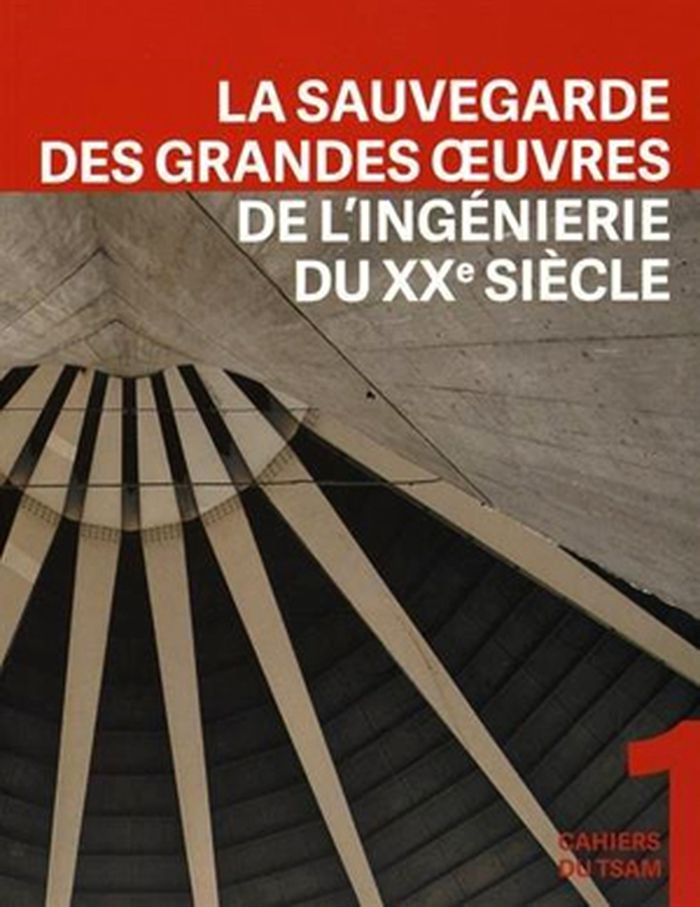
Consacré à la sauvegarde des grandes oeuvres de l’ingénierie du XXe siècle, ce premier numéro des Cahiers du TSAM explore le devenir de certaines des plus remarquables et emblématiques structures en béton du siècle passé. A travers les fi gures d’héroïques constructeurs, il interroge l’héritage construit des ingénieurs, convoquant les plus audacieux d’entre eux (Freyssinet, Isler, Maillart, Nervi, Vierendeel, etc.). Alors que la sauvegarde de l’architecture du XXe siècle s’est récemment constituée en discipline à part entière, la préservation des ouvrages de l’ingénierie de cette période est encore balbutiante. Considérés trop souvent sous le seul point de vue de la sécurité ou de la maintenance, ces ouvrages s’avèrent parfois de véritables chefs-d’oeuvre, jalons d’un «art de l’ingénieur» à la frontière entre performance technique et beauté plastique. Ces cahiers sont donc l’occasion d’initier, à l’appui d’exemples et de projets de sauvegarde concrets, une sensibilisation aux enjeux patrimoniaux dans le domaine de l’ingénierie. This first issue of the Cahiers du TSAM, dedicated to the conservation of the 20th century’s great works of engineering, aims to explore the future of some of the most remarkable and emblematic concrete structures of the previous century. Through the personalities of the heroic builders, this publication aims to consider what the engineers – the most daring of whom (Freyssinet, Isler, Maillart, Nervi, Vierendeel, etc.) are represented here – bequeathed to the century. While the conserva-tion of 20th century architecture has in recent years been seen as a discipline in its own right, the conservation of 20th century engineering is still in its infancy. Considered too offen purely from the point of view of security or maintenance, these works are now often seen as true masterpieces, cutting edge achievements of the “engineer’s art”, as stunning for their plastic beauty as for their technical performance. This publication provides an opportunity to stimulate, with reference to concrete examples and projects, an awareness of the heritage challenges to be addressed in the fi eld of engineering.
La sauvegarde des grandes oeuvres de l'ingénierie du XXe siècle
Actions:
Price:
$74.00
(available to order)
Summary:
Consacré à la sauvegarde des grandes oeuvres de l’ingénierie du XXe siècle, ce premier numéro des Cahiers du TSAM explore le devenir de certaines des plus remarquables et emblématiques structures en béton du siècle passé. A travers les fi gures d’héroïques constructeurs, il interroge l’héritage construit des ingénieurs, convoquant les plus audacieux d’entre eux (Freyssinet, Isler, Maillart, Nervi, Vierendeel, etc.). Alors que la sauvegarde de l’architecture du XXe siècle s’est récemment constituée en discipline à part entière, la préservation des ouvrages de l’ingénierie de cette période est encore balbutiante. Considérés trop souvent sous le seul point de vue de la sécurité ou de la maintenance, ces ouvrages s’avèrent parfois de véritables chefs-d’oeuvre, jalons d’un «art de l’ingénieur» à la frontière entre performance technique et beauté plastique. Ces cahiers sont donc l’occasion d’initier, à l’appui d’exemples et de projets de sauvegarde concrets, une sensibilisation aux enjeux patrimoniaux dans le domaine de l’ingénierie. This first issue of the Cahiers du TSAM, dedicated to the conservation of the 20th century’s great works of engineering, aims to explore the future of some of the most remarkable and emblematic concrete structures of the previous century. Through the personalities of the heroic builders, this publication aims to consider what the engineers – the most daring of whom (Freyssinet, Isler, Maillart, Nervi, Vierendeel, etc.) are represented here – bequeathed to the century. While the conserva-tion of 20th century architecture has in recent years been seen as a discipline in its own right, the conservation of 20th century engineering is still in its infancy. Considered too offen purely from the point of view of security or maintenance, these works are now often seen as true masterpieces, cutting edge achievements of the “engineer’s art”, as stunning for their plastic beauty as for their technical performance. This publication provides an opportunity to stimulate, with reference to concrete examples and projects, an awareness of the heritage challenges to be addressed in the fi eld of engineering.
Form:
books
books
Publication:
March 2016
March 2016
Subject:
Engineering Structures
Engineering Structures
Form:
books
books
Price:
$52.00
(available to order)
Summary:
As architectural projects have grown larger and more complex, as materials have become more specialized and advanced, as the world's cities have developed in size and density, the collaborative partnership of architects and structural engineers has gained prominence. Many of the major works of the early twenty-first century would have been difficult to build or even(...)
$52.00
(available to order)
Summary:
As architectural projects have grown larger and more complex, as materials have become more specialized and advanced, as the world's cities have developed in size and density, the collaborative partnership of architects and structural engineers has gained prominence. Many of the major works of the early twenty-first century would have been difficult to build or even(...)
Title:
Support and Resist : Structural engineers and design innovation
Actions:
Price:
$52.00
(available to order)
Summary:
As architectural projects have grown larger and more complex, as materials have become more specialized and advanced, as the world's cities have developed in size and density, the collaborative partnership of architects and structural engineers has gained prominence. Many of the major works of the early twenty-first century would have been difficult to build or even conceive without the contribution of firms like Ove Arup and Partners, Buro Happold, and Mutsuro Sasaki and Partners, to name just a few. Support and Resist is the first book to focus on the revolution in engineering culture in which structure shares the stage with design.
Support and Resist : Structural engineers and design innovation
Actions:
Price:
$52.00
(available to order)
Summary:
As architectural projects have grown larger and more complex, as materials have become more specialized and advanced, as the world's cities have developed in size and density, the collaborative partnership of architects and structural engineers has gained prominence. Many of the major works of the early twenty-first century would have been difficult to build or even conceive without the contribution of firms like Ove Arup and Partners, Buro Happold, and Mutsuro Sasaki and Partners, to name just a few. Support and Resist is the first book to focus on the revolution in engineering culture in which structure shares the stage with design.
Form:
books
books
Publication:
November 2007, New York
November 2007, New York
Subject:
Engineering Structures
Engineering Structures
Form:
books
books
Actions:
Price:
$85.00
(available to order)
Summary:
From Egypt and Classical Greece and Rome through the building booms of the Gothic era and the Renaissance, and from the Industrial Revolution to the present era of digital modeling, "Building : 3,000 Years of Design, Engineering, and Construction", charts centuries of innovations in engineering and building construction. This comprehensive and heavily illustrated volume,(...)
$85.00
(available to order)
Summary:
From Egypt and Classical Greece and Rome through the building booms of the Gothic era and the Renaissance, and from the Industrial Revolution to the present era of digital modeling, "Building : 3,000 Years of Design, Engineering, and Construction", charts centuries of innovations in engineering and building construction. This comprehensive and heavily illustrated volume,(...)
Title:
Building : 3000 years of design engineering and construction
Actions:
Price:
$85.00
(available to order)
Summary:
From Egypt and Classical Greece and Rome through the building booms of the Gothic era and the Renaissance, and from the Industrial Revolution to the present era of digital modeling, "Building : 3,000 Years of Design, Engineering, and Construction", charts centuries of innovations in engineering and building construction. This comprehensive and heavily illustrated volume, aimed at students and young professionals as well as general readers, explores the materials, classic texts, instruments, and theories that have propelled modern engineering, and the famous and not-so-famous buildings designed through the ages, from the Parthenon to Chartes Cathedral and the dome of St. Peter's, from eighteenth-century silk mills in England to the Crystal Palace, and on to the first Chicago high-rises, the Sydney Opera House, and the latest "green" skyscrapers. The book concentrates on developments since the industrial and scientific revolutions of the seventeenth and eighteenth centuries. Incorporated within the continuous narrative are sidebars with short biographies of eminent engineers, excerpts from classic texts, stories of individual projects of major importance, and brief histories of key concepts such as calculus. Also included are extensive reference materials: appendices, a glossary, bibliography, and index.
Building : 3000 years of design engineering and construction
Actions:
Price:
$85.00
(available to order)
Summary:
From Egypt and Classical Greece and Rome through the building booms of the Gothic era and the Renaissance, and from the Industrial Revolution to the present era of digital modeling, "Building : 3,000 Years of Design, Engineering, and Construction", charts centuries of innovations in engineering and building construction. This comprehensive and heavily illustrated volume, aimed at students and young professionals as well as general readers, explores the materials, classic texts, instruments, and theories that have propelled modern engineering, and the famous and not-so-famous buildings designed through the ages, from the Parthenon to Chartes Cathedral and the dome of St. Peter's, from eighteenth-century silk mills in England to the Crystal Palace, and on to the first Chicago high-rises, the Sydney Opera House, and the latest "green" skyscrapers. The book concentrates on developments since the industrial and scientific revolutions of the seventeenth and eighteenth centuries. Incorporated within the continuous narrative are sidebars with short biographies of eminent engineers, excerpts from classic texts, stories of individual projects of major importance, and brief histories of key concepts such as calculus. Also included are extensive reference materials: appendices, a glossary, bibliography, and index.
Form:
books
books
Publication:
March 2007, London, New York
March 2007, London, New York
Subject:
Engineering Structures
Engineering Structures


