


460 Results
Form:
books
books
Price:
$19.99
(available to order)
Summary:
Tomi Ungerer, illustrator of Jeff Brown's original Flat Stanley and winner of the prestigious 1998 Hans Christian Andersen Illustrator Award, paints the man in the moon as a benevolent, soft-bodied man who curls up in "his shimmering seat in space." Most evenings, he looks over longingly at the happy, dancing earth people, until one night when he can't resist catching the(...)
$19.99
(available to order)
Summary:
Tomi Ungerer, illustrator of Jeff Brown's original Flat Stanley and winner of the prestigious 1998 Hans Christian Andersen Illustrator Award, paints the man in the moon as a benevolent, soft-bodied man who curls up in "his shimmering seat in space." Most evenings, he looks over longingly at the happy, dancing earth people, until one night when he can't resist catching the(...)
Title:
Moon man
Actions:
Price:
$19.99
(available to order)
Summary:
Tomi Ungerer, illustrator of Jeff Brown's original Flat Stanley and winner of the prestigious 1998 Hans Christian Andersen Illustrator Award, paints the man in the moon as a benevolent, soft-bodied man who curls up in "his shimmering seat in space." Most evenings, he looks over longingly at the happy, dancing earth people, until one night when he can't resist catching the fiery tail of a comet and hitching a ride to Earth. Ungerer, ever satirical, reports the resulting frenzy of authorities upon hearing the crash landing: "The noise brought hundreds of people from a nearby town. Soldiers sped to defend the earth. Firemen hastened to quench the flaming light. The ice cream man hurried to set up his stand for the spectators." Of course, when the crowd discovers the unidentified fallen object, "statesmen, scientists, and generals panicked." Moon Man is thrown in jail, facing criminal investigation! How will he ever return to his lunar dwelling? Kids will love this quirky "there's no place like home" tale, and Ungerer's gentle, funny mocking of "important people" won't be lost on anyone. (Ages 4 to 8)
Moon man
Actions:
Price:
$19.99
(available to order)
Summary:
Tomi Ungerer, illustrator of Jeff Brown's original Flat Stanley and winner of the prestigious 1998 Hans Christian Andersen Illustrator Award, paints the man in the moon as a benevolent, soft-bodied man who curls up in "his shimmering seat in space." Most evenings, he looks over longingly at the happy, dancing earth people, until one night when he can't resist catching the fiery tail of a comet and hitching a ride to Earth. Ungerer, ever satirical, reports the resulting frenzy of authorities upon hearing the crash landing: "The noise brought hundreds of people from a nearby town. Soldiers sped to defend the earth. Firemen hastened to quench the flaming light. The ice cream man hurried to set up his stand for the spectators." Of course, when the crowd discovers the unidentified fallen object, "statesmen, scientists, and generals panicked." Moon Man is thrown in jail, facing criminal investigation! How will he ever return to his lunar dwelling? Kids will love this quirky "there's no place like home" tale, and Ungerer's gentle, funny mocking of "important people" won't be lost on anyone. (Ages 4 to 8)
Form:
books
books
Publication:
January 2008
January 2008
Form:
books
books

Actions:
Price:
$20.00
(available to order)
Summary:
The Medium is the Massage remains Marshall McLuhan's most popular book, perhaps as influential as Understanding Media.
$20.00
(available to order)
Summary:
The Medium is the Massage remains Marshall McLuhan's most popular book, perhaps as influential as Understanding Media.
Publication:
January 2009, Berkeley
January 2009, Berkeley
Title:
The medium is the massage: an inventory of effects
Actions:
Price:
$20.00
(available to order)
Summary:
The Medium is the Massage remains Marshall McLuhan's most popular book, perhaps as influential as Understanding Media.
The medium is the massage: an inventory of effects
Actions:
Price:
$20.00
(available to order)
Summary:
The Medium is the Massage remains Marshall McLuhan's most popular book, perhaps as influential as Understanding Media.
Form:
books
books
Publication:
January 2009, Berkeley
January 2009, Berkeley
Form:
books
books
Actions:
Price:
$29.95
(available to order)
Summary:
This book celebrates the design ingenuity made possible by digital fabrication techniques. Author Lisa Iwamoto explores the methods architects use to calibrate digital designs with physical forms. The book is organized according to five types of digital fabrication techniques: tessellating, sectioning, folding, contouring, and forming. Projects are shown both in their(...)
$29.95
(available to order)
Summary:
This book celebrates the design ingenuity made possible by digital fabrication techniques. Author Lisa Iwamoto explores the methods architects use to calibrate digital designs with physical forms. The book is organized according to five types of digital fabrication techniques: tessellating, sectioning, folding, contouring, and forming. Projects are shown both in their(...)
Title:
Digital fabrications : architectural and material techniques
Actions:
Price:
$29.95
(available to order)
Summary:
This book celebrates the design ingenuity made possible by digital fabrication techniques. Author Lisa Iwamoto explores the methods architects use to calibrate digital designs with physical forms. The book is organized according to five types of digital fabrication techniques: tessellating, sectioning, folding, contouring, and forming. Projects are shown both in their finished forms and in working drawings, templates, and prototypes, allowing the reader to watch the process of each fantastic construction unfold. The publication also presents projects designed and built by emerging practices that pioneer techniques and experiment with fabrication processes on a small scale with a do-it-yourself attitude. Featured architects include AEDS/Ammar Eloueini, Atelier Manferdini, Brennan Buck, MOS, Office dA, Florencia Pita/MOD, Mafoomby, URBAN A+O, SYSTEMarchitects, Andrew Kudless/Matsys, IwamotoScott, Atelier Hitoshi Abe, Chris Bosse, Tom Wiscombe/EMERGENT, Thom Faulders Architecture, Jeremy Ficca, SPAN, GNUFORM, Heather Roberge, PATTERNS, Ruy Klein, and servo.
Digital fabrications : architectural and material techniques
Actions:
Price:
$29.95
(available to order)
Summary:
This book celebrates the design ingenuity made possible by digital fabrication techniques. Author Lisa Iwamoto explores the methods architects use to calibrate digital designs with physical forms. The book is organized according to five types of digital fabrication techniques: tessellating, sectioning, folding, contouring, and forming. Projects are shown both in their finished forms and in working drawings, templates, and prototypes, allowing the reader to watch the process of each fantastic construction unfold. The publication also presents projects designed and built by emerging practices that pioneer techniques and experiment with fabrication processes on a small scale with a do-it-yourself attitude. Featured architects include AEDS/Ammar Eloueini, Atelier Manferdini, Brennan Buck, MOS, Office dA, Florencia Pita/MOD, Mafoomby, URBAN A+O, SYSTEMarchitects, Andrew Kudless/Matsys, IwamotoScott, Atelier Hitoshi Abe, Chris Bosse, Tom Wiscombe/EMERGENT, Thom Faulders Architecture, Jeremy Ficca, SPAN, GNUFORM, Heather Roberge, PATTERNS, Ruy Klein, and servo.
Form:
books
books
Publication:
January 2009
January 2009
Form:
books
books

Price:
$68.95
(available to order)
Summary:
Since the fall of Communism, Russians have struggled to reconcile their social traditions with a flood of Western cultural imports. Contemporary Russian cinema has latched on to the resulting confusion and ambivalence, mining societal upheaval for revolutionary cinematic topics. Yana Hashamova explores this largely uncharted territory in Pride and Panic.
$68.95
(available to order)
Summary:
Since the fall of Communism, Russians have struggled to reconcile their social traditions with a flood of Western cultural imports. Contemporary Russian cinema has latched on to the resulting confusion and ambivalence, mining societal upheaval for revolutionary cinematic topics. Yana Hashamova explores this largely uncharted territory in Pride and Panic.
Publication:
May 2007, Bristol
May 2007, Bristol
Title:
Pride & panic: Russian imagination of the west in post-soviet film
Actions:
Price:
$68.95
(available to order)
Summary:
Since the fall of Communism, Russians have struggled to reconcile their social traditions with a flood of Western cultural imports. Contemporary Russian cinema has latched on to the resulting confusion and ambivalence, mining societal upheaval for revolutionary cinematic topics. Yana Hashamova explores this largely uncharted territory in Pride and Panic.
Pride & panic: Russian imagination of the west in post-soviet film
Actions:
Price:
$68.95
(available to order)
Summary:
Since the fall of Communism, Russians have struggled to reconcile their social traditions with a flood of Western cultural imports. Contemporary Russian cinema has latched on to the resulting confusion and ambivalence, mining societal upheaval for revolutionary cinematic topics. Yana Hashamova explores this largely uncharted territory in Pride and Panic.
Form:
books
books
Publication:
May 2007, Bristol
May 2007, Bristol
Form:
books
books
Price:
$65.95
(available to order)
Summary:
Newlyweds on Tour is the first historical study to trace the origins and growth of the American honeymoon between 1820 and 1900. Rather than treating the honeymoon as a simple by-product of the privatization of the family, this work argues that it was formed at the interstices between (and helped to articulate) a variety of narratives—patriotic, conjugal, sentimental, and(...)
$65.95
(available to order)
Summary:
Newlyweds on Tour is the first historical study to trace the origins and growth of the American honeymoon between 1820 and 1900. Rather than treating the honeymoon as a simple by-product of the privatization of the family, this work argues that it was formed at the interstices between (and helped to articulate) a variety of narratives—patriotic, conjugal, sentimental, and(...)
Title:
Newlyweds on tour, honeymooning in nineteenth-century america
Actions:
Price:
$65.95
(available to order)
Summary:
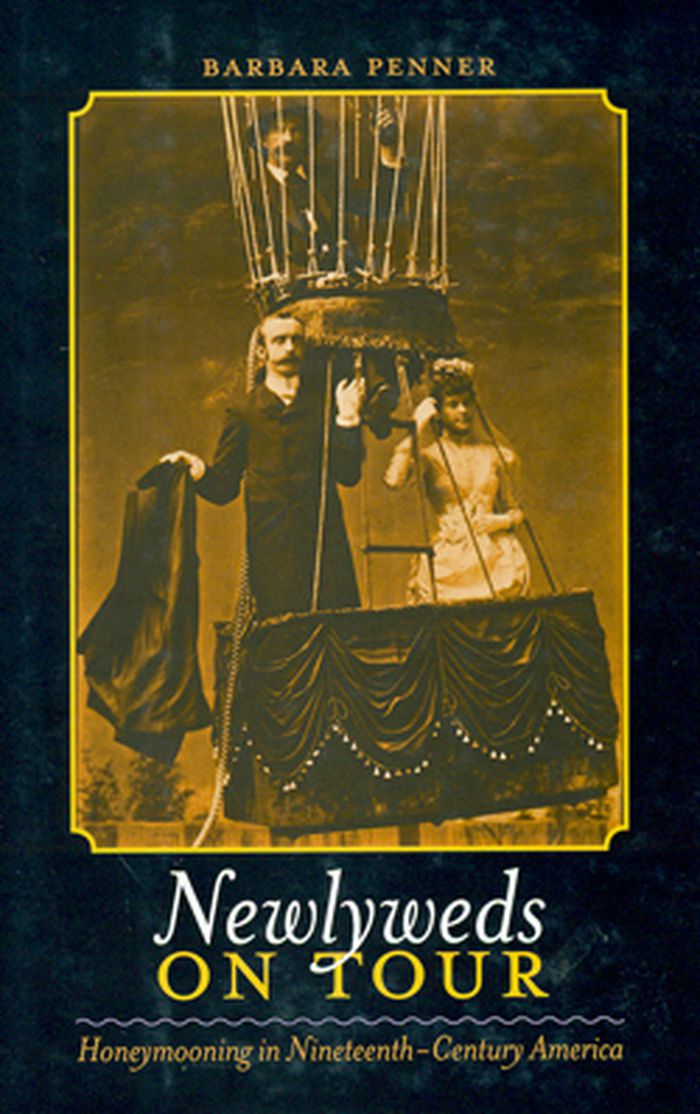
Newlyweds on Tour is the first historical study to trace the origins and growth of the American honeymoon between 1820 and 1900. Rather than treating the honeymoon as a simple by-product of the privatization of the family, this work argues that it was formed at the interstices between (and helped to articulate) a variety of narratives—patriotic, conjugal, sentimental, and sexual that were central to the modern American national identity. To track these narratives, Penner moves between primary accounts of newlywed experiences recorded in diaries and letters in addition to entries in a wide range of textual, visual, and architectural representations matrimonial maps, engravings from the popular press, sensational novels, and palace hotel bridal chambers.
Newlyweds on tour, honeymooning in nineteenth-century america
Actions:
Price:
$65.95
(available to order)
Summary:
Newlyweds on Tour is the first historical study to trace the origins and growth of the American honeymoon between 1820 and 1900. Rather than treating the honeymoon as a simple by-product of the privatization of the family, this work argues that it was formed at the interstices between (and helped to articulate) a variety of narratives—patriotic, conjugal, sentimental, and sexual that were central to the modern American national identity. To track these narratives, Penner moves between primary accounts of newlywed experiences recorded in diaries and letters in addition to entries in a wide range of textual, visual, and architectural representations matrimonial maps, engravings from the popular press, sensational novels, and palace hotel bridal chambers.
Form:
books
books
Publication:
July 2009
July 2009
Subject:
Current Exhibitions
Current Exhibitions
Form:
books
books
Actions:
Price:
$12.99
(available to order)
Summary:
The model is one of the oldest means of architectural representation and comes in an extravagant variety of forms, from miniaturizations of reality mesmerizing in their exactness to wildly energetic sculptural representations. "Modeling Messages: The Architect and the Model" is a study of the contemporary model, American and international, and its myriad uses in(...)
$12.99
(available to order)
Summary:
The model is one of the oldest means of architectural representation and comes in an extravagant variety of forms, from miniaturizations of reality mesmerizing in their exactness to wildly energetic sculptural representations. "Modeling Messages: The Architect and the Model" is a study of the contemporary model, American and international, and its myriad uses in(...)
Title:
Modeling messages : the architect and the model
Actions:
Price:
$12.99
(available to order)
Summary:
The model is one of the oldest means of architectural representation and comes in an extravagant variety of forms, from miniaturizations of reality mesmerizing in their exactness to wildly energetic sculptural representations. "Modeling Messages: The Architect and the Model" is a study of the contemporary model, American and international, and its myriad uses in architectural practice. Among the illustrations are inventive designs by architects Peter Eisenman, Frank Gehry, Zaha Hadid, and Rem Koolhaas. Author Karen Moon discusses the meaning of the model for the architect, the relationship between model and building, and the impact of scale. She also explores how architects use models for presentation and the creation of a public image. In addition, she focuses on the practice of model making: the relationship between the architect and the maker; the materials and new technologies that are transforming model making.
Modeling messages : the architect and the model
Actions:
Price:
$12.99
(available to order)
Summary:
The model is one of the oldest means of architectural representation and comes in an extravagant variety of forms, from miniaturizations of reality mesmerizing in their exactness to wildly energetic sculptural representations. "Modeling Messages: The Architect and the Model" is a study of the contemporary model, American and international, and its myriad uses in architectural practice. Among the illustrations are inventive designs by architects Peter Eisenman, Frank Gehry, Zaha Hadid, and Rem Koolhaas. Author Karen Moon discusses the meaning of the model for the architect, the relationship between model and building, and the impact of scale. She also explores how architects use models for presentation and the creation of a public image. In addition, she focuses on the practice of model making: the relationship between the architect and the maker; the materials and new technologies that are transforming model making.
Form:
books
books
Publication:
June 2004, New York
June 2004, New York
Form:
books
books
Actions:
Price:
$41.95
(available in store)
Summary:
"UN Studio/Erasmus Bridge" explores the eponymous Rotterdam bridge that brought UN Studio, the Dutch firm of Ben van Berkel and Caroline Bos, into the architectural spotlight. This volume features extensive photographic documentation by Hans Jurgen Commerell.
$41.95
(available in store)
Summary:
"UN Studio/Erasmus Bridge" explores the eponymous Rotterdam bridge that brought UN Studio, the Dutch firm of Ben van Berkel and Caroline Bos, into the architectural spotlight. This volume features extensive photographic documentation by Hans Jurgen Commerell.
Publication:
May 2004, New York
May 2004, New York
Title:
UN Studio : Erasmus bridge / source books in architecture 4
Actions:
Price:
$41.95
(available in store)
Summary:
"UN Studio/Erasmus Bridge" explores the eponymous Rotterdam bridge that brought UN Studio, the Dutch firm of Ben van Berkel and Caroline Bos, into the architectural spotlight. This volume features extensive photographic documentation by Hans Jurgen Commerell.
UN Studio : Erasmus bridge / source books in architecture 4
Actions:
Price:
$41.95
(available in store)
Summary:
"UN Studio/Erasmus Bridge" explores the eponymous Rotterdam bridge that brought UN Studio, the Dutch firm of Ben van Berkel and Caroline Bos, into the architectural spotlight. This volume features extensive photographic documentation by Hans Jurgen Commerell.
Form:
books
books
Publication:
May 2004, New York
May 2004, New York
Form:
books
books

Title:
Orientalism
Orientalism
Actions:
Price:
$19.95
(available to order)
Summary:
The noted critic and a Palestinian now teaching at Columbia University,examines the way in which the West observes the Arabs.
$19.95
(available to order)
Summary:
The noted critic and a Palestinian now teaching at Columbia University,examines the way in which the West observes the Arabs.
Publication:
June 2003, New York
June 2003, New York
Title:
Orientalism
Actions:
Price:
$19.95
(available to order)
Summary:
The noted critic and a Palestinian now teaching at Columbia University,examines the way in which the West observes the Arabs.
Orientalism
Actions:
Price:
$19.95
(available to order)
Summary:
The noted critic and a Palestinian now teaching at Columbia University,examines the way in which the West observes the Arabs.
Form:
books
books
Publication:
June 2003, New York
June 2003, New York
Form:
books
books
Actions:
Price:
$50.95
(available to order)
Summary:
Avec cet ouvrage, Philippe Bazin nous livre son point de vue d’artiste sur le travail d’un photographe mondialement célébré. Invitant sans arrêt l’irréel au sein du banal, Jeff Wall est passé maître dans l’art de l’étrangeté familière. Bazin propose ici un panorama de son œuvre qu’il balaye généreusement, depuis les tous premiers travaux de la fin des années 1970 jusqu’à(...)
$50.95
(available to order)
Summary:
Avec cet ouvrage, Philippe Bazin nous livre son point de vue d’artiste sur le travail d’un photographe mondialement célébré. Invitant sans arrêt l’irréel au sein du banal, Jeff Wall est passé maître dans l’art de l’étrangeté familière. Bazin propose ici un panorama de son œuvre qu’il balaye généreusement, depuis les tous premiers travaux de la fin des années 1970 jusqu’à(...)
Title:
Jeff Wall : refonder la modernité
Actions:
Price:
$50.95
(available to order)
Summary:
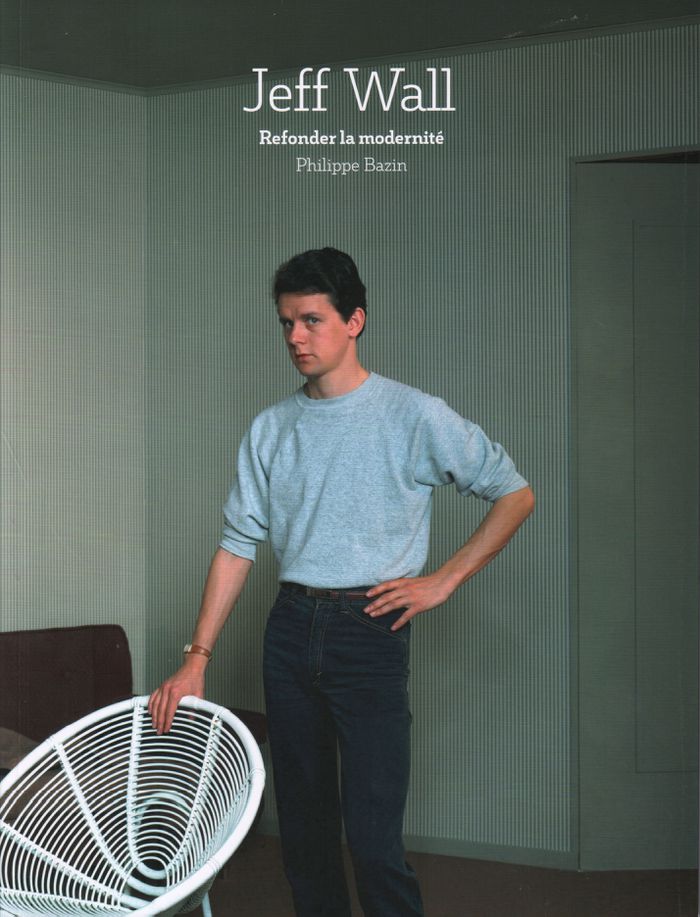
Avec cet ouvrage, Philippe Bazin nous livre son point de vue d’artiste sur le travail d’un photographe mondialement célébré. Invitant sans arrêt l’irréel au sein du banal, Jeff Wall est passé maître dans l’art de l’étrangeté familière. Bazin propose ici un panorama de son œuvre qu’il balaye généreusement, depuis les tous premiers travaux de la fin des années 1970 jusqu’à l’aube des années 2000. Il éclaire ainsi une trentaine de photographies, reproduites en grand format, en les confrontant à l’idéal baudelairien du «peintre de la vie moderne», qui irrigue la pratique et la réflexion de l’artiste canadien depuis ses débuts. Ce livre présente l’avantage de s’offrir comme une conversation fluide, un dialogue intellectuel et sensible entre deux photographes à l’affût du « antastique réel extrait de la vie», que Baudelaire avait entrevu.
Jeff Wall : refonder la modernité
Actions:
Price:
$50.95
(available to order)
Summary:
Avec cet ouvrage, Philippe Bazin nous livre son point de vue d’artiste sur le travail d’un photographe mondialement célébré. Invitant sans arrêt l’irréel au sein du banal, Jeff Wall est passé maître dans l’art de l’étrangeté familière. Bazin propose ici un panorama de son œuvre qu’il balaye généreusement, depuis les tous premiers travaux de la fin des années 1970 jusqu’à l’aube des années 2000. Il éclaire ainsi une trentaine de photographies, reproduites en grand format, en les confrontant à l’idéal baudelairien du «peintre de la vie moderne», qui irrigue la pratique et la réflexion de l’artiste canadien depuis ses débuts. Ce livre présente l’avantage de s’offrir comme une conversation fluide, un dialogue intellectuel et sensible entre deux photographes à l’affût du « antastique réel extrait de la vie», que Baudelaire avait entrevu.
Form:
books
books
Publication:
June 2023
June 2023
Form:
books
books
Actions:
Price:
$108.50
(available to order)
Summary:
Spanning 65 years of Ed Ruscha’s remarkable career and mirroring his own cross-disciplinary approach, ''Ed Ruscha / Now then'' features over 250 objects, produced from 1958 to the present, including paintings, drawings, prints, films, photographs, artist’s books and installations. Published to accompany the most comprehensive presentation of the artist’s work to date, and(...)
$108.50
(available to order)
Summary:
Spanning 65 years of Ed Ruscha’s remarkable career and mirroring his own cross-disciplinary approach, ''Ed Ruscha / Now then'' features over 250 objects, produced from 1958 to the present, including paintings, drawings, prints, films, photographs, artist’s books and installations. Published to accompany the most comprehensive presentation of the artist’s work to date, and(...)
Publication:
October 2023
October 2023
Title:
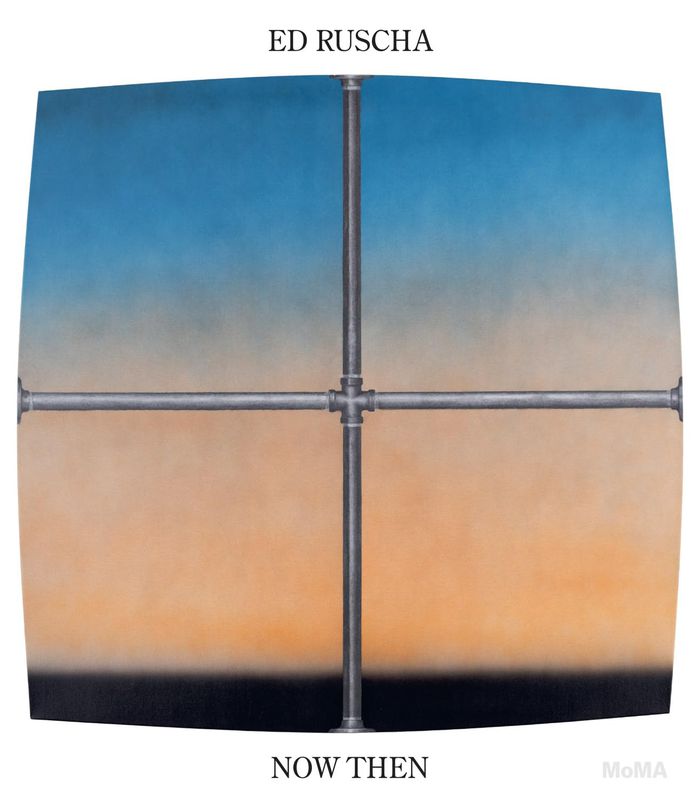
Ed Ruscha / Now then: A retrospective
Actions:
Price:
$108.50
(available to order)
Summary:
Spanning 65 years of Ed Ruscha’s remarkable career and mirroring his own cross-disciplinary approach, ''Ed Ruscha / Now then'' features over 250 objects, produced from 1958 to the present, including paintings, drawings, prints, films, photographs, artist’s books and installations. Published to accompany the most comprehensive presentation of the artist’s work to date, and his first solo exhibition at the Museum of Modern Art, New York, this richly illustrated catalog highlights Ruscha’s most acclaimed works alongside lesser-known aspects of his practice. Essays by an interdisciplinary group of contributors examine Ruscha’s work under a new light, beyond the categories of Pop and Conceptual art with which he has traditionally been associated, to present fresh perspectives on one of the most influential figures in postwar American art. Taken together, they underscore Ruscha’s singular contributions, including his material exploration of language, experiments with unconventional mediums--nsuch as gunpowder, chocolate or chewing tobacco-- and his groundbreaking self-published books. Supplemented by an illustrated chronology and exhibition history, this publication captures the ceaseless reinvention that has defined his prolific, six-decade career.
Ed Ruscha / Now then: A retrospective
Actions:
Price:
$108.50
(available to order)
Summary:
Spanning 65 years of Ed Ruscha’s remarkable career and mirroring his own cross-disciplinary approach, ''Ed Ruscha / Now then'' features over 250 objects, produced from 1958 to the present, including paintings, drawings, prints, films, photographs, artist’s books and installations. Published to accompany the most comprehensive presentation of the artist’s work to date, and his first solo exhibition at the Museum of Modern Art, New York, this richly illustrated catalog highlights Ruscha’s most acclaimed works alongside lesser-known aspects of his practice. Essays by an interdisciplinary group of contributors examine Ruscha’s work under a new light, beyond the categories of Pop and Conceptual art with which he has traditionally been associated, to present fresh perspectives on one of the most influential figures in postwar American art. Taken together, they underscore Ruscha’s singular contributions, including his material exploration of language, experiments with unconventional mediums--nsuch as gunpowder, chocolate or chewing tobacco-- and his groundbreaking self-published books. Supplemented by an illustrated chronology and exhibition history, this publication captures the ceaseless reinvention that has defined his prolific, six-decade career.
Form:
books
books
Publication:
October 2023
October 2023


