


457 Results
Form:
books
books
Title:
Morphosis: Recent project
Morphosis: Recent project
Actions:
Price:
$68.95
(available to order)
Summary:
Projects include the Giant Group Campus in Shanghai, The Phare Tower at La Défense in Paris, the Perot Museum of Nature & Science in Dallas, the Kuala Lumpur Towers in Kuala Lumpur, the new U.S. Embassy in London, the Emerson College at the Los Angeles Center, the New Orleans National Jazz, the Taipei Pop Music Center, the Seoul Performing Arts Center, the King Abdullah(...)
$68.95
(available to order)
Summary:
Projects include the Giant Group Campus in Shanghai, The Phare Tower at La Défense in Paris, the Perot Museum of Nature & Science in Dallas, the Kuala Lumpur Towers in Kuala Lumpur, the new U.S. Embassy in London, the Emerson College at the Los Angeles Center, the New Orleans National Jazz, the Taipei Pop Music Center, the Seoul Performing Arts Center, the King Abdullah(...)
Title:
Morphosis: Recent project
Actions:
Price:
$68.95
(available to order)
Summary:
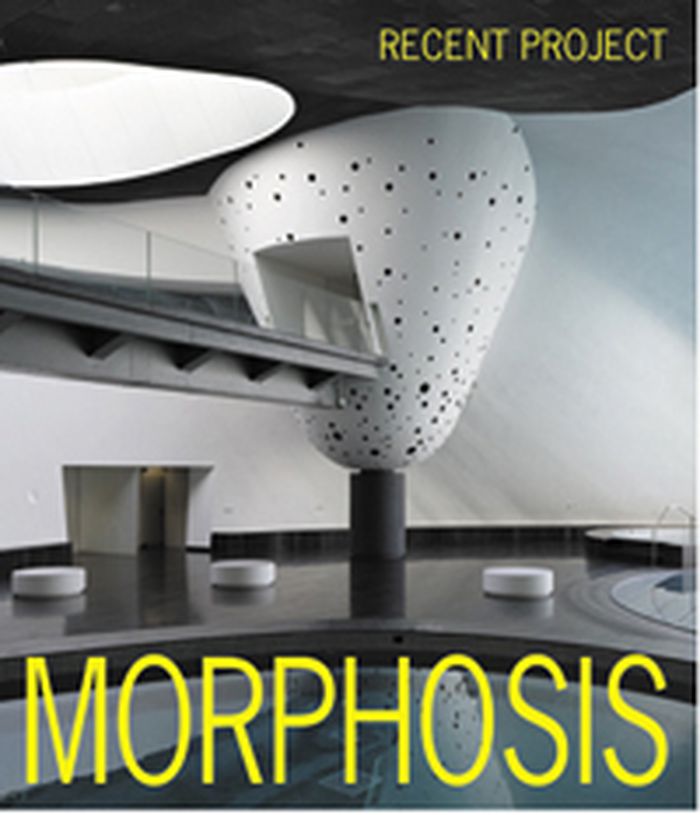
Projects include the Giant Group Campus in Shanghai, The Phare Tower at La Défense in Paris, the Perot Museum of Nature & Science in Dallas, the Kuala Lumpur Towers in Kuala Lumpur, the new U.S. Embassy in London, the Emerson College at the Los Angeles Center, the New Orleans National Jazz, the Taipei Pop Music Center, the Seoul Performing Arts Center, the King Abdullah Petroleum Studies and Research Center in Riyadh. Also includes an interview with Thom Mayne from Morphosis.
Morphosis: Recent project
Actions:
Price:
$68.95
(available to order)
Summary:
Projects include the Giant Group Campus in Shanghai, The Phare Tower at La Défense in Paris, the Perot Museum of Nature & Science in Dallas, the Kuala Lumpur Towers in Kuala Lumpur, the new U.S. Embassy in London, the Emerson College at the Los Angeles Center, the New Orleans National Jazz, the Taipei Pop Music Center, the Seoul Performing Arts Center, the King Abdullah Petroleum Studies and Research Center in Riyadh. Also includes an interview with Thom Mayne from Morphosis.
Form:
books
books
Publication:
December 2010
December 2010
Form:
books
books
Actions:
Price:
$32.95
(available to order)
Summary:
In Fallout Shelter, David Monteyne traces the partnership that developed between architects and civil defense authorities during the 1950s and 1960s. Neither the civil defense bureaucracy nor the architectural profession was monolithic, however, and Monteyne shows that architecture for civil defense was a contested and often inconsistent project, reflecting specific(...)
$32.95
(available to order)
Summary:
In Fallout Shelter, David Monteyne traces the partnership that developed between architects and civil defense authorities during the 1950s and 1960s. Neither the civil defense bureaucracy nor the architectural profession was monolithic, however, and Monteyne shows that architecture for civil defense was a contested and often inconsistent project, reflecting specific(...)
Title:
Fallout shelter: Designing for civil defense in the Cold War
Actions:
Price:
$32.95
(available to order)
Summary:
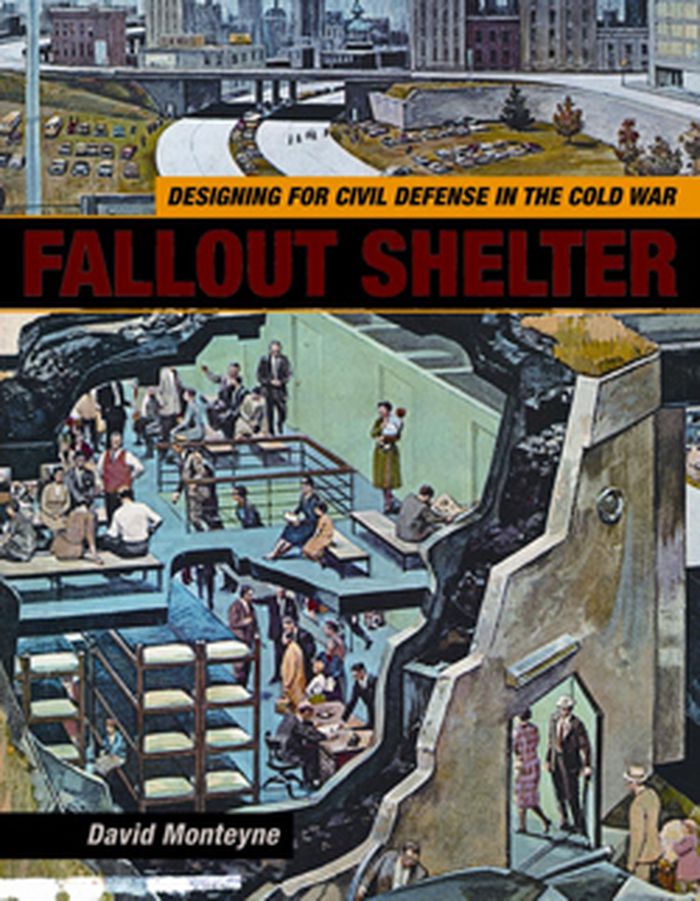
In Fallout Shelter, David Monteyne traces the partnership that developed between architects and civil defense authorities during the 1950s and 1960s. Neither the civil defense bureaucracy nor the architectural profession was monolithic, however, and Monteyne shows that architecture for civil defense was a contested and often inconsistent project, reflecting specific assumptions about race, gender, class, and power.
Fallout shelter: Designing for civil defense in the Cold War
Actions:
Price:
$32.95
(available to order)
Summary:
In Fallout Shelter, David Monteyne traces the partnership that developed between architects and civil defense authorities during the 1950s and 1960s. Neither the civil defense bureaucracy nor the architectural profession was monolithic, however, and Monteyne shows that architecture for civil defense was a contested and often inconsistent project, reflecting specific assumptions about race, gender, class, and power.
Form:
books
books
Publication:
April 2011
April 2011
Form:
books
books
Title:
Books by Ettore Sottsass
Books by Ettore Sottsass
Actions:
Price:
$59.99
(available to order)
Summary:
This book features the magazines and books which Ettore Sottsass wrote, illustrated or edited over a period of 60 years from 1947-2006. Works on printed paper for which Sottsass set up texts, illustrations and/or graphic inventions. His multi-faceted publishing works are grouped together in eight separate sections - the magazine “Room East 128. Chronicle”, books(...)
$59.99
(available to order)
Summary:
This book features the magazines and books which Ettore Sottsass wrote, illustrated or edited over a period of 60 years from 1947-2006. Works on printed paper for which Sottsass set up texts, illustrations and/or graphic inventions. His multi-faceted publishing works are grouped together in eight separate sections - the magazine “Room East 128. Chronicle”, books(...)
Publication:
March 2011
March 2011
Title:
Books by Ettore Sottsass
Actions:
Price:
$59.99
(available to order)
Summary:
This book features the magazines and books which Ettore Sottsass wrote, illustrated or edited over a period of 60 years from 1947-2006. Works on printed paper for which Sottsass set up texts, illustrations and/or graphic inventions. His multi-faceted publishing works are grouped together in eight separate sections - the magazine “Room East 128. Chronicle”, books published for the “East 128” edition, “Pianeta Fresco”, inserts in architecture and design magazines, illustrated books and theoretical writings, catalogues for the “Memphis” Group, the magazine “Terrazzo” and augural publications for Studio Sottsass Associati - and are accompanied by contributions by Barbara Radice, Andrea Branzi, Michele De Lucchi, Nathalie Du Pasquier, Elio Fiorucci, Christoph Radl, Franco Raggi and Lea Vergine.
Books by Ettore Sottsass
Actions:
Price:
$59.99
(available to order)
Summary:
This book features the magazines and books which Ettore Sottsass wrote, illustrated or edited over a period of 60 years from 1947-2006. Works on printed paper for which Sottsass set up texts, illustrations and/or graphic inventions. His multi-faceted publishing works are grouped together in eight separate sections - the magazine “Room East 128. Chronicle”, books published for the “East 128” edition, “Pianeta Fresco”, inserts in architecture and design magazines, illustrated books and theoretical writings, catalogues for the “Memphis” Group, the magazine “Terrazzo” and augural publications for Studio Sottsass Associati - and are accompanied by contributions by Barbara Radice, Andrea Branzi, Michele De Lucchi, Nathalie Du Pasquier, Elio Fiorucci, Christoph Radl, Franco Raggi and Lea Vergine.
Form:
books
books
Publication:
March 2011
March 2011
Form:
books
books

Actions:
Price:
$21.00
(available to order)
Summary:
W. G. Sebald completed this extraordinary, important and controversial book before his untimely death in December 2001. It is a harrowing study of the devastation of German cities by Allied bombardment in World War II, and an examination of the silence in German literature and culture about this unprecedented trauma. On the Natural History of Destruction is an essential(...)
$21.00
(available to order)
Summary:
W. G. Sebald completed this extraordinary, important and controversial book before his untimely death in December 2001. It is a harrowing study of the devastation of German cities by Allied bombardment in World War II, and an examination of the silence in German literature and culture about this unprecedented trauma. On the Natural History of Destruction is an essential(...)
Title:
On the natural history of destruction
Actions:
Price:
$21.00
(available to order)
Summary:
W. G. Sebald completed this extraordinary, important and controversial book before his untimely death in December 2001. It is a harrowing study of the devastation of German cities by Allied bombardment in World War II, and an examination of the silence in German literature and culture about this unprecedented trauma. On the Natural History of Destruction is an essential and deeply relevant study of war and society, suffering and amnesia.
On the natural history of destruction
Actions:
Price:
$21.00
(available to order)
Summary:
W. G. Sebald completed this extraordinary, important and controversial book before his untimely death in December 2001. It is a harrowing study of the devastation of German cities by Allied bombardment in World War II, and an examination of the silence in German literature and culture about this unprecedented trauma. On the Natural History of Destruction is an essential and deeply relevant study of war and society, suffering and amnesia.
Form:
books
books
Publication:
April 2011
April 2011
Form:
books
books
Title:
Maus: A survivor's tale
Maus: A survivor's tale
Actions:
Price:
$17.95
(available to order)
Summary:
The first volume introduces readers to Vladek Spiegelman, a Jewish survivor of Hitler's Europe, and his son, a cartoonist trying to come to terms with his father, his father's terrifying story, and history itself. Its form, the cartoon (the Nazis are cats, the Jews mice), succeeds perfectly in shocking us out of any lingering sense of familiarity with the events(...)
$17.95
(available to order)
Summary:
The first volume introduces readers to Vladek Spiegelman, a Jewish survivor of Hitler's Europe, and his son, a cartoonist trying to come to terms with his father, his father's terrifying story, and history itself. Its form, the cartoon (the Nazis are cats, the Jews mice), succeeds perfectly in shocking us out of any lingering sense of familiarity with the events(...)
Title:
Maus: A survivor's tale
Actions:
Price:
$17.95
(available to order)
Summary:
The first volume introduces readers to Vladek Spiegelman, a Jewish survivor of Hitler's Europe, and his son, a cartoonist trying to come to terms with his father, his father's terrifying story, and history itself. Its form, the cartoon (the Nazis are cats, the Jews mice), succeeds perfectly in shocking us out of any lingering sense of familiarity with the events described, approaching, as it does, the unspeakable through the diminutive. Tragic and comic by turns, it attains a new complexity of theme and a precision of thought new to comics and rare in any medium.
Maus: A survivor's tale
Actions:
Price:
$17.95
(available to order)
Summary:
The first volume introduces readers to Vladek Spiegelman, a Jewish survivor of Hitler's Europe, and his son, a cartoonist trying to come to terms with his father, his father's terrifying story, and history itself. Its form, the cartoon (the Nazis are cats, the Jews mice), succeeds perfectly in shocking us out of any lingering sense of familiarity with the events described, approaching, as it does, the unspeakable through the diminutive. Tragic and comic by turns, it attains a new complexity of theme and a precision of thought new to comics and rare in any medium.
Form:
books
books
Publication:
April 1986
April 1986
Subject:
Current Exhibitions
Current Exhibitions
Form:
books
books

Actions:
Price:
$55.95
(available to order)
Summary:
Experiments with Life Itself investigates five projects of domestic radical architecture, built between the end of the Thirties and the end of the Fifties by architects and artists -- relegated to the margins of civil reality by war, exile and disenchantment -- in which they are also the object of their own experimentation. Through intimate analysis and personal(...)
$55.95
(available to order)
Summary:
Experiments with Life Itself investigates five projects of domestic radical architecture, built between the end of the Thirties and the end of the Fifties by architects and artists -- relegated to the margins of civil reality by war, exile and disenchantment -- in which they are also the object of their own experimentation. Through intimate analysis and personal(...)
Publication:
September 2011
September 2011
Title:
Experiments with life itself: radical domestic architectures between 1937 and 1959
Actions:
Price:
$55.95
(available to order)
Summary:
Experiments with Life Itself investigates five projects of domestic radical architecture, built between the end of the Thirties and the end of the Fifties by architects and artists -- relegated to the margins of civil reality by war, exile and disenchantment -- in which they are also the object of their own experimentation. Through intimate analysis and personal photographs, this publication offers a unique insight into projects by Charles and Ray Eames, Ralph Erskine, Alison and Peter Smithson, German Rodriguez Arias and Pablo Neruda, and Juan O'Gorman.
Experiments with life itself: radical domestic architectures between 1937 and 1959
Actions:
Price:
$55.95
(available to order)
Summary:
Experiments with Life Itself investigates five projects of domestic radical architecture, built between the end of the Thirties and the end of the Fifties by architects and artists -- relegated to the margins of civil reality by war, exile and disenchantment -- in which they are also the object of their own experimentation. Through intimate analysis and personal photographs, this publication offers a unique insight into projects by Charles and Ray Eames, Ralph Erskine, Alison and Peter Smithson, German Rodriguez Arias and Pablo Neruda, and Juan O'Gorman.
Form:
books
books
Publication:
September 2011
September 2011
Form:
books
books
Actions:
Price:
$79.95
(available to order)
Summary:
In 1949, the photographer Lucien Hervé (1910–2007) took a picture of an innovative apartment building in Marseille, France, and sent it to the building’s architect, Le Corbusier (1887–1965). Le Corbusier responded by asking Hervé to become his official photographer. This book recounts the collaboration between these Modernists. The author takes the reader on a tour of(...)
$79.95
(available to order)
Summary:
In 1949, the photographer Lucien Hervé (1910–2007) took a picture of an innovative apartment building in Marseille, France, and sent it to the building’s architect, Le Corbusier (1887–1965). Le Corbusier responded by asking Hervé to become his official photographer. This book recounts the collaboration between these Modernists. The author takes the reader on a tour of(...)
Publication:
September 2011
September 2011
Title:
Le Corbusier and Lucien Hervé: a dialogue between architect and photographe
Actions:
Price:
$79.95
(available to order)
Summary:
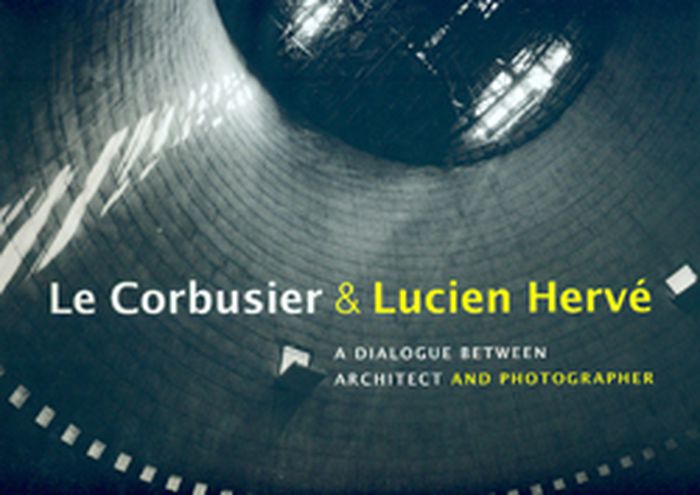
In 1949, the photographer Lucien Hervé (1910–2007) took a picture of an innovative apartment building in Marseille, France, and sent it to the building’s architect, Le Corbusier (1887–1965). Le Corbusier responded by asking Hervé to become his official photographer. This book recounts the collaboration between these Modernists. The author takes the reader on a tour of sixteen of Le Corbusier’s most iconic buildings using Hervé’s edited sheets of contact prints as visual guides. These sheets, which became an effective tool in the collaborative dissemination of Le Corbusier’s work, capture Hervé’s dynamic perspectives and dramatic use of light. His sequencing of the individual prints creates an exhilarating rhythm that showcases the architect’s novel forms and materials.
Le Corbusier and Lucien Hervé: a dialogue between architect and photographe
Actions:
Price:
$79.95
(available to order)
Summary:
In 1949, the photographer Lucien Hervé (1910–2007) took a picture of an innovative apartment building in Marseille, France, and sent it to the building’s architect, Le Corbusier (1887–1965). Le Corbusier responded by asking Hervé to become his official photographer. This book recounts the collaboration between these Modernists. The author takes the reader on a tour of sixteen of Le Corbusier’s most iconic buildings using Hervé’s edited sheets of contact prints as visual guides. These sheets, which became an effective tool in the collaborative dissemination of Le Corbusier’s work, capture Hervé’s dynamic perspectives and dramatic use of light. His sequencing of the individual prints creates an exhilarating rhythm that showcases the architect’s novel forms and materials.
Form:
books
books
Publication:
September 2011
September 2011
Form:
books
books
Actions:
Price:
$53.95
(available to order)
Summary:
With his astounding building cuts and intersects, Gordon Matta-Clark (1943-1978) opened up elegant geometries in the very structures that seem most substantial and most authoritative in urban existence, revealing the alienations of the urban fabric as convenient fictions and allowing life to flow into the most inhospitable and self-contained of buildings. One of his(...)
$53.95
(available to order)
Summary:
With his astounding building cuts and intersects, Gordon Matta-Clark (1943-1978) opened up elegant geometries in the very structures that seem most substantial and most authoritative in urban existence, revealing the alienations of the urban fabric as convenient fictions and allowing life to flow into the most inhospitable and self-contained of buildings. One of his(...)
Publication:
November 2011
November 2011
Title:
Gordon Matta-Clark, moment to moment : space
Actions:
Price:
$53.95
(available to order)
Summary:
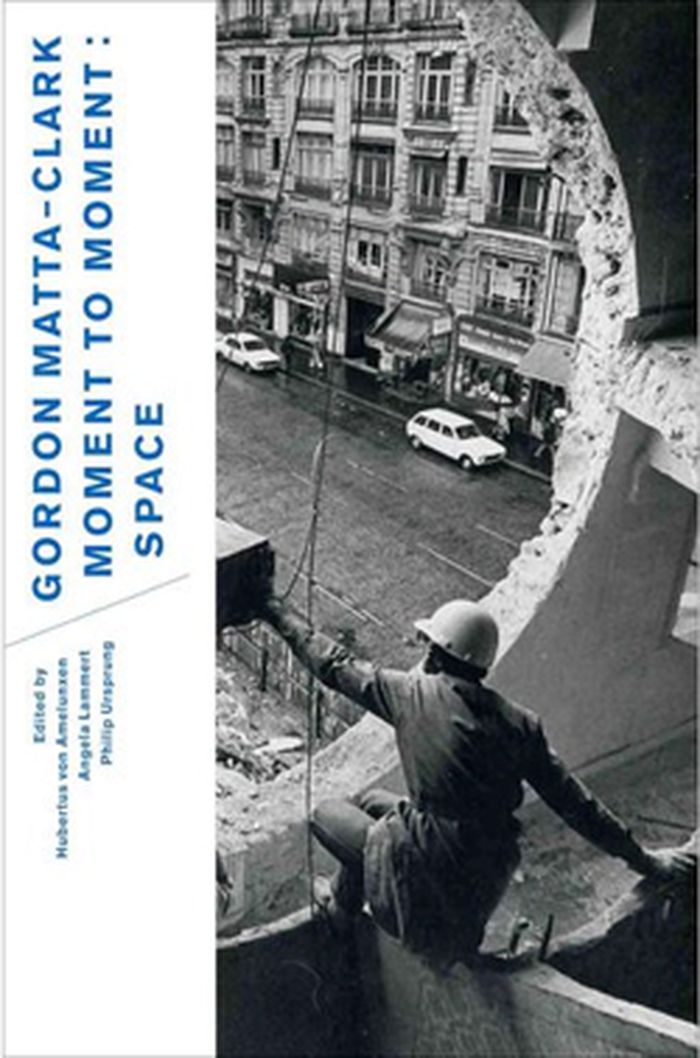
With his astounding building cuts and intersects, Gordon Matta-Clark (1943-1978) opened up elegant geometries in the very structures that seem most substantial and most authoritative in urban existence, revealing the alienations of the urban fabric as convenient fictions and allowing life to flow into the most inhospitable and self-contained of buildings. One of his favorite responses to a work came from a Parisian concierge: “I see the purpose for that hole - it is an experiment in bringing light and air into spaces that never had enough of either.” Throughout his all-too-brief career, Matta-Clark undertook civic aeration on many fronts, cofounding the now legendary Food Restaurant in 1971, buying up empty lots in Queens and evolving his theory of “anarchitecture” in films, photomontages and numerous writings and drawings. Anarchitecture redefined negative space in art as a political act, distinguishing itself from architecture by imagining a cure for its most pernicious effects. Gordon Matta-Clark : Moment to Moment offers a comprehensive overview of this courageous and liberating artist with a wealth of documentation and reproductions from across Matta-Clark's oeuvre, as well as critical commentary from Philip Ursprung, Angela Lammert, Hubertus von Amelunxen, Dan Graham and others.
Gordon Matta-Clark, moment to moment : space
Actions:
Price:
$53.95
(available to order)
Summary:
With his astounding building cuts and intersects, Gordon Matta-Clark (1943-1978) opened up elegant geometries in the very structures that seem most substantial and most authoritative in urban existence, revealing the alienations of the urban fabric as convenient fictions and allowing life to flow into the most inhospitable and self-contained of buildings. One of his favorite responses to a work came from a Parisian concierge: “I see the purpose for that hole - it is an experiment in bringing light and air into spaces that never had enough of either.” Throughout his all-too-brief career, Matta-Clark undertook civic aeration on many fronts, cofounding the now legendary Food Restaurant in 1971, buying up empty lots in Queens and evolving his theory of “anarchitecture” in films, photomontages and numerous writings and drawings. Anarchitecture redefined negative space in art as a political act, distinguishing itself from architecture by imagining a cure for its most pernicious effects. Gordon Matta-Clark : Moment to Moment offers a comprehensive overview of this courageous and liberating artist with a wealth of documentation and reproductions from across Matta-Clark's oeuvre, as well as critical commentary from Philip Ursprung, Angela Lammert, Hubertus von Amelunxen, Dan Graham and others.
Form:
books
books
Publication:
November 2011
November 2011
Form:
journals and magazines
journals and magazines
Title:
OASE #84: Models Maquettes
OASE #84: Models Maquettes
Actions:
Price:
$39.00
(available to order)
Summary:
In recent decades models have made a contribution to architectural discourse that should not be underestimated. Christophe Van Gerrewey considers the models in OMA’s oeuvre and ascertains that OMA’s models always take on a life of their own, turning into ‘a realisation of what architecture promises, yet can never attain itself’. For example, the two plaster models of(...)
$39.00
(available to order)
Summary:
In recent decades models have made a contribution to architectural discourse that should not be underestimated. Christophe Van Gerrewey considers the models in OMA’s oeuvre and ascertains that OMA’s models always take on a life of their own, turning into ‘a realisation of what architecture promises, yet can never attain itself’. For example, the two plaster models of(...)
Title:
OASE #84: Models Maquettes
Actions:
Price:
$39.00
(available to order)
Summary:
In recent decades models have made a contribution to architectural discourse that should not be underestimated. Christophe Van Gerrewey considers the models in OMA’s oeuvre and ascertains that OMA’s models always take on a life of their own, turning into ‘a realisation of what architecture promises, yet can never attain itself’. For example, the two plaster models of the Très Grande Bibliothèque in Paris afforded new insights into a space that can be read both as mass and as counter-mass, while the model of the cruise terminal in Zeebrugge exemplified the power of the iconic form. OASE 84 devotes considerable attention to (architectural) models that play an important part in the work of various artists as well, like in the work of Mike Kelley and Thomas Demand. These models are hardly ever meant to be realised on a different scale elsewhere; they work with the dualistic connotations of the model directly. Although the two disciplines have markedly different motives for using models, we are confident that the cross-pollination brought about here will generate novel insights about the model’s significance and possibilities. With contributions by Jacob Bil, Adam Caruso, Thomas Demand, Job Floris, Kersten Geers, Christophe Van Gerrewey, Anne Holtrop, Christian Hubert, Junya Ishigami, Krijn de Koning, Véronique Patteeuw, Bas Princen, Hans Teerds, Milica Topalovic and Stefaan Vervoort OASE is an independent, international journal published in Dutch and English that features architecture, urban design and landscape design. Each issue is devoted to a topical theme and thus makes a significant contribution to international discourse within these fields. OASE is published three times a year
OASE #84: Models Maquettes
Actions:
Price:
$39.00
(available to order)
Summary:
In recent decades models have made a contribution to architectural discourse that should not be underestimated. Christophe Van Gerrewey considers the models in OMA’s oeuvre and ascertains that OMA’s models always take on a life of their own, turning into ‘a realisation of what architecture promises, yet can never attain itself’. For example, the two plaster models of the Très Grande Bibliothèque in Paris afforded new insights into a space that can be read both as mass and as counter-mass, while the model of the cruise terminal in Zeebrugge exemplified the power of the iconic form. OASE 84 devotes considerable attention to (architectural) models that play an important part in the work of various artists as well, like in the work of Mike Kelley and Thomas Demand. These models are hardly ever meant to be realised on a different scale elsewhere; they work with the dualistic connotations of the model directly. Although the two disciplines have markedly different motives for using models, we are confident that the cross-pollination brought about here will generate novel insights about the model’s significance and possibilities. With contributions by Jacob Bil, Adam Caruso, Thomas Demand, Job Floris, Kersten Geers, Christophe Van Gerrewey, Anne Holtrop, Christian Hubert, Junya Ishigami, Krijn de Koning, Véronique Patteeuw, Bas Princen, Hans Teerds, Milica Topalovic and Stefaan Vervoort OASE is an independent, international journal published in Dutch and English that features architecture, urban design and landscape design. Each issue is devoted to a topical theme and thus makes a significant contribution to international discourse within these fields. OASE is published three times a year
Form:
journals and magazines
journals and magazines
Publication:
August 2011
August 2011
Form:
books
books
Actions:
Price:
$42.00
(available to order)
Summary:
In the late fifteenth century, clocks acquired minute hands. A century later, second hands appeared. But it wasn't until the 1850s that instruments could recognize a tenth of a second, and, once they did, their impact on modern science and society was profound. Tracing debates about the nature of time, causality, and free will, as well as the introduction of modern(...)
$42.00
(available to order)
Summary:
In the late fifteenth century, clocks acquired minute hands. A century later, second hands appeared. But it wasn't until the 1850s that instruments could recognize a tenth of a second, and, once they did, their impact on modern science and society was profound. Tracing debates about the nature of time, causality, and free will, as well as the introduction of modern(...)
Publication:
September 2011
September 2011
Title:
A tenth of a second: a history
Actions:
Price:
$42.00
(available to order)
Summary:
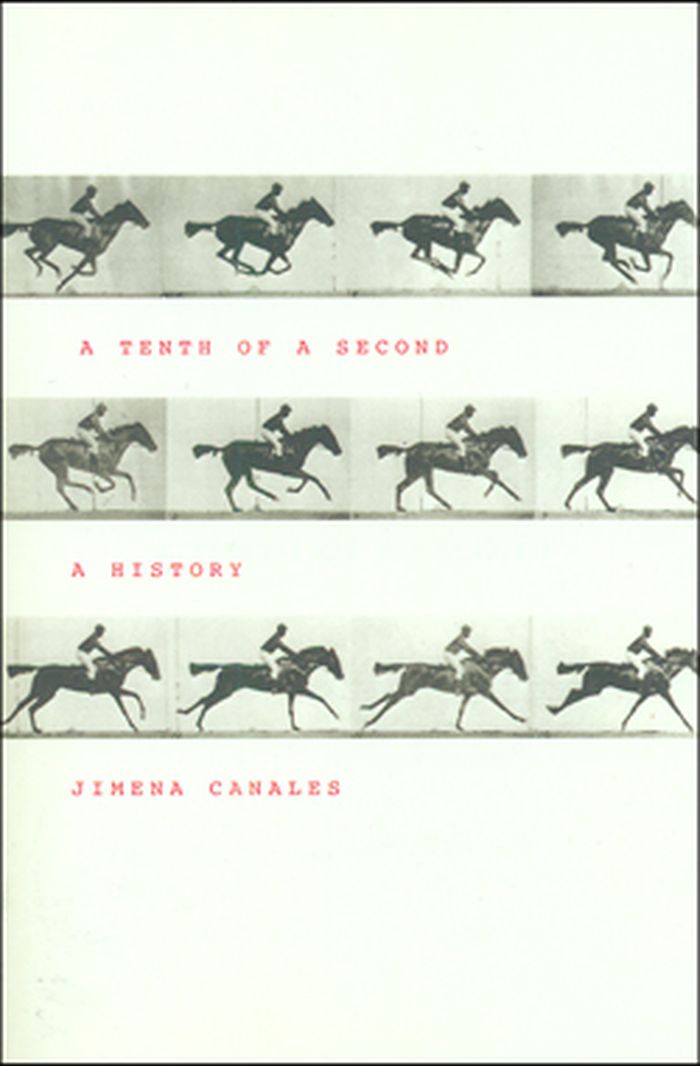
In the late fifteenth century, clocks acquired minute hands. A century later, second hands appeared. But it wasn't until the 1850s that instruments could recognize a tenth of a second, and, once they did, their impact on modern science and society was profound. Tracing debates about the nature of time, causality, and free will, as well as the introduction of modern technologies - telegraphy, photography, cinematography - Jimena Canales locates the reverberations of this "perceptual moment" throughout culture. Revealing the history behind this infinitesimal interval, Revealing the history behind this infinitesimal interval, A Tenth of a Second sheds new light on modernity and illuminates the work of important thinkers of the last two centuries.
A tenth of a second: a history
Actions:
Price:
$42.00
(available to order)
Summary:
In the late fifteenth century, clocks acquired minute hands. A century later, second hands appeared. But it wasn't until the 1850s that instruments could recognize a tenth of a second, and, once they did, their impact on modern science and society was profound. Tracing debates about the nature of time, causality, and free will, as well as the introduction of modern technologies - telegraphy, photography, cinematography - Jimena Canales locates the reverberations of this "perceptual moment" throughout culture. Revealing the history behind this infinitesimal interval, Revealing the history behind this infinitesimal interval, A Tenth of a Second sheds new light on modernity and illuminates the work of important thinkers of the last two centuries.
Form:
books
books
Publication:
September 2011
September 2011


