


460 Results
Form:
books
books
Price:
$34.00
(available to order)
Summary:
Architecture Without Content is architecture reduced to its very perimeter. The books in the series are the outcome of studios offered at EPFL. This 21st incarnation of Architecture Without Content is, more than previous editions, a report related to our current (political) malaise. Apart from political urgency, what has changed? If always an architecture of necessity(...)
$34.00
(available to order)
Summary:
Architecture Without Content is architecture reduced to its very perimeter. The books in the series are the outcome of studios offered at EPFL. This 21st incarnation of Architecture Without Content is, more than previous editions, a report related to our current (political) malaise. Apart from political urgency, what has changed? If always an architecture of necessity(...)
Title:
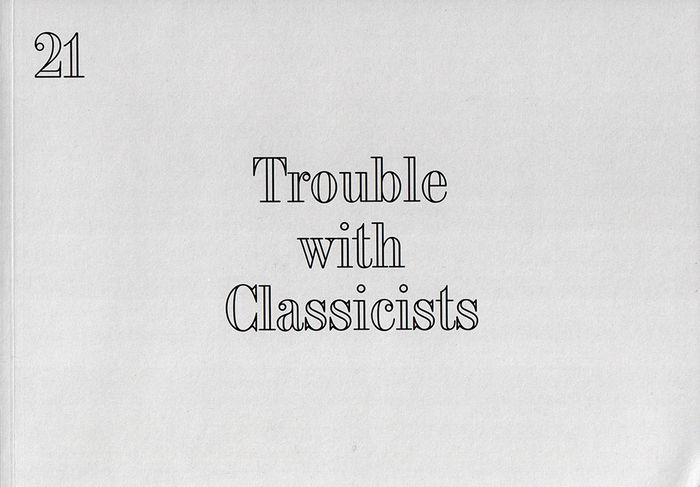
Trouble with classicists: The commons. Architecture without content 21
Actions:
Price:
$34.00
(available to order)
Summary:
Architecture Without Content is architecture reduced to its very perimeter. The books in the series are the outcome of studios offered at EPFL. This 21st incarnation of Architecture Without Content is, more than previous editions, a report related to our current (political) malaise. Apart from political urgency, what has changed? If always an architecture of necessity and economy (of means) was central to our argument, we felt it necessary to refine our recent arguments with a more Spartan catalogue. Classicism, acting as a catalyst for simplification, results in this collection of The Commons; an ambiguous collection of possible architecture themes. The catalogue spans from the obelisk, as pure architecture, to the fatto urbano, as a collection of architectural events in which the urban layout becomes the dominant factor.
Trouble with classicists: The commons. Architecture without content 21
Actions:
Price:
$34.00
(available to order)
Summary:
Architecture Without Content is architecture reduced to its very perimeter. The books in the series are the outcome of studios offered at EPFL. This 21st incarnation of Architecture Without Content is, more than previous editions, a report related to our current (political) malaise. Apart from political urgency, what has changed? If always an architecture of necessity and economy (of means) was central to our argument, we felt it necessary to refine our recent arguments with a more Spartan catalogue. Classicism, acting as a catalyst for simplification, results in this collection of The Commons; an ambiguous collection of possible architecture themes. The catalogue spans from the obelisk, as pure architecture, to the fatto urbano, as a collection of architectural events in which the urban layout becomes the dominant factor.
Form:
books
books
Publication:
April 2017
April 2017
Subject:
Current Exhibitions
Current Exhibitions
Form:
books
books
Actions:
Price:
$34.00
(available to order)
Summary:
Architecture Without Content is architecture reduced to its very perimeter. The books in the series are the outcome of studios held at EPFL. In Architecture Without Content 16, an interest in Neo-Palladianism has been added to a project that investigates the impact of scale, as Palladianism was a defining factor in the early identification of 'American Architecture.'(...)
$34.00
(available to order)
Summary:
Architecture Without Content is architecture reduced to its very perimeter. The books in the series are the outcome of studios held at EPFL. In Architecture Without Content 16, an interest in Neo-Palladianism has been added to a project that investigates the impact of scale, as Palladianism was a defining factor in the early identification of 'American Architecture.'(...)
Title:
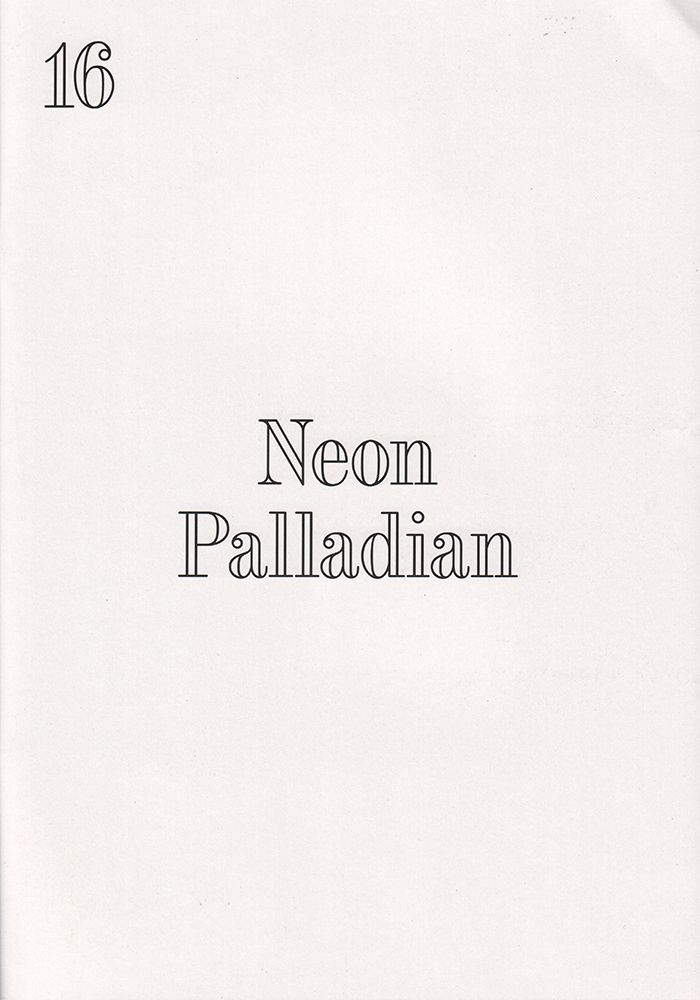
Neon Palladian: Architecture without content 16. Harvard GSD
Actions:
Price:
$34.00
(available to order)
Summary:
Architecture Without Content is architecture reduced to its very perimeter. The books in the series are the outcome of studios held at EPFL. In Architecture Without Content 16, an interest in Neo-Palladianism has been added to a project that investigates the impact of scale, as Palladianism was a defining factor in the early identification of 'American Architecture.' Thus, the studio was both formalistic and pragmatic and tried to inflate Palladian architecture to the scale of the strip: Neon Palladian. In the vast landscape of the United States of America, the scale of food production has always been gigantic. At the same time, it has seldom regained an architectural form similar to that of its most defining orgins. In this book, you will find projects that are organising an aspect of food production. In one way or another, they reconnect to the long-lost virtues of Jefferson's Palladianism.
Neon Palladian: Architecture without content 16. Harvard GSD
Actions:
Price:
$34.00
(available to order)
Summary:
Architecture Without Content is architecture reduced to its very perimeter. The books in the series are the outcome of studios held at EPFL. In Architecture Without Content 16, an interest in Neo-Palladianism has been added to a project that investigates the impact of scale, as Palladianism was a defining factor in the early identification of 'American Architecture.' Thus, the studio was both formalistic and pragmatic and tried to inflate Palladian architecture to the scale of the strip: Neon Palladian. In the vast landscape of the United States of America, the scale of food production has always been gigantic. At the same time, it has seldom regained an architectural form similar to that of its most defining orgins. In this book, you will find projects that are organising an aspect of food production. In one way or another, they reconnect to the long-lost virtues of Jefferson's Palladianism.
Form:
books
books
Publication:
April 2017
April 2017
Subject:
Current Exhibitions
Current Exhibitions
Form:
books
books
Actions:
Price:
$34.00
(available to order)
Summary:
Architecture Without Content is architecture reduced to its very perimeter. The books in the series are the outcome of studios offered at EPFL. In Architecture Without Content 19, Almost Classicism continues where Neon Palladian left us. It starts in full conviction that the current project on the United States has to focus both on the countryside and on an attenpt to(...)
$34.00
(available to order)
Summary:
Architecture Without Content is architecture reduced to its very perimeter. The books in the series are the outcome of studios offered at EPFL. In Architecture Without Content 19, Almost Classicism continues where Neon Palladian left us. It starts in full conviction that the current project on the United States has to focus both on the countryside and on an attenpt to(...)
Title:
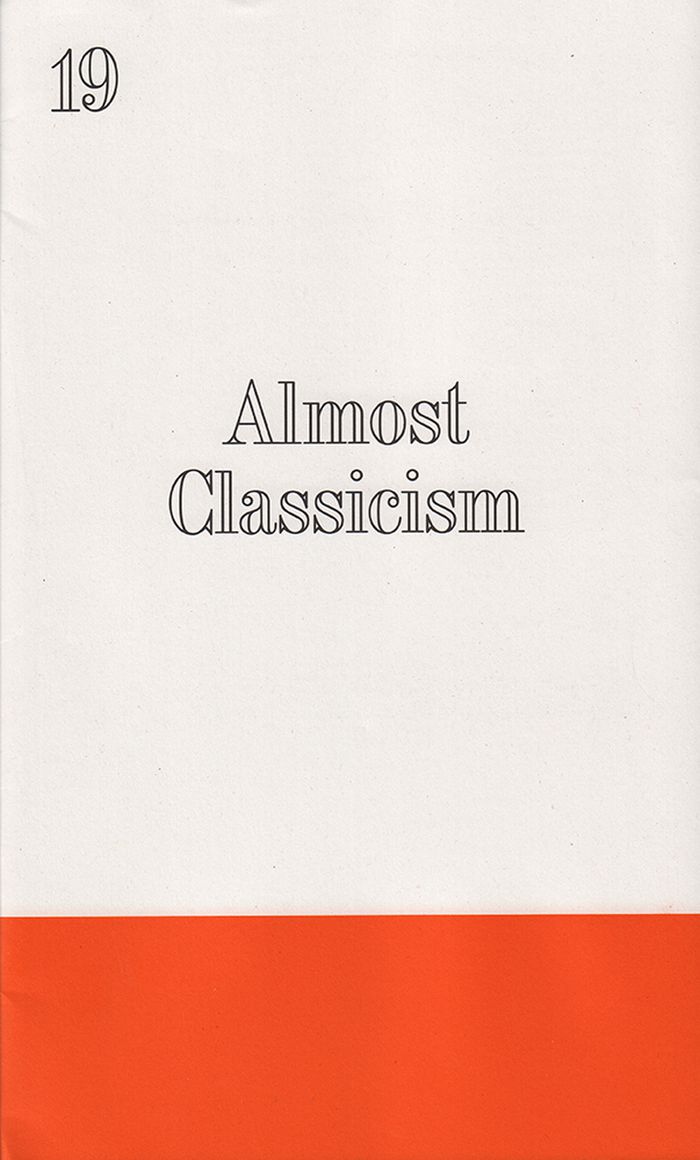
Almost classicism. Architecture without content 19
Actions:
Price:
$34.00
(available to order)
Summary:
Architecture Without Content is architecture reduced to its very perimeter. The books in the series are the outcome of studios offered at EPFL. In Architecture Without Content 19, Almost Classicism continues where Neon Palladian left us. It starts in full conviction that the current project on the United States has to focus both on the countryside and on an attenpt to introduce some kind of commons. We feel the best way to illustrate this is to start where the commons have dissolved, in what used to be called 'The Village'. Here in this booklet, two tracks are presented: a set of projects in agricultural Iowa that rethink co-op into small village centers, and another in post-industrial Ohio, where in the post-Hoover restart, fragments and islands are formalised as micro-urban organisms.
Almost classicism. Architecture without content 19
Actions:
Price:
$34.00
(available to order)
Summary:
Architecture Without Content is architecture reduced to its very perimeter. The books in the series are the outcome of studios offered at EPFL. In Architecture Without Content 19, Almost Classicism continues where Neon Palladian left us. It starts in full conviction that the current project on the United States has to focus both on the countryside and on an attenpt to introduce some kind of commons. We feel the best way to illustrate this is to start where the commons have dissolved, in what used to be called 'The Village'. Here in this booklet, two tracks are presented: a set of projects in agricultural Iowa that rethink co-op into small village centers, and another in post-industrial Ohio, where in the post-Hoover restart, fragments and islands are formalised as micro-urban organisms.
Form:
books
books
Publication:
April 2017
April 2017
Subject:
Current Exhibitions
Current Exhibitions
Form:
books
books
Actions:
Price:
$47.50
(available to order)
Summary:
Portman’s America & Other Speculations takes an unconventional and speculative approach towards the understanding and future potentials of the work of one of the world’s most creative, controversial, daring, and prolific architects. Combining the talents of an architect, artist, and developer, John Portman was able to embark on a series of large-scale building(...)
$47.50
(available to order)
Summary:
Portman’s America & Other Speculations takes an unconventional and speculative approach towards the understanding and future potentials of the work of one of the world’s most creative, controversial, daring, and prolific architects. Combining the talents of an architect, artist, and developer, John Portman was able to embark on a series of large-scale building(...)
Publication:
August 2017
August 2017
Title:
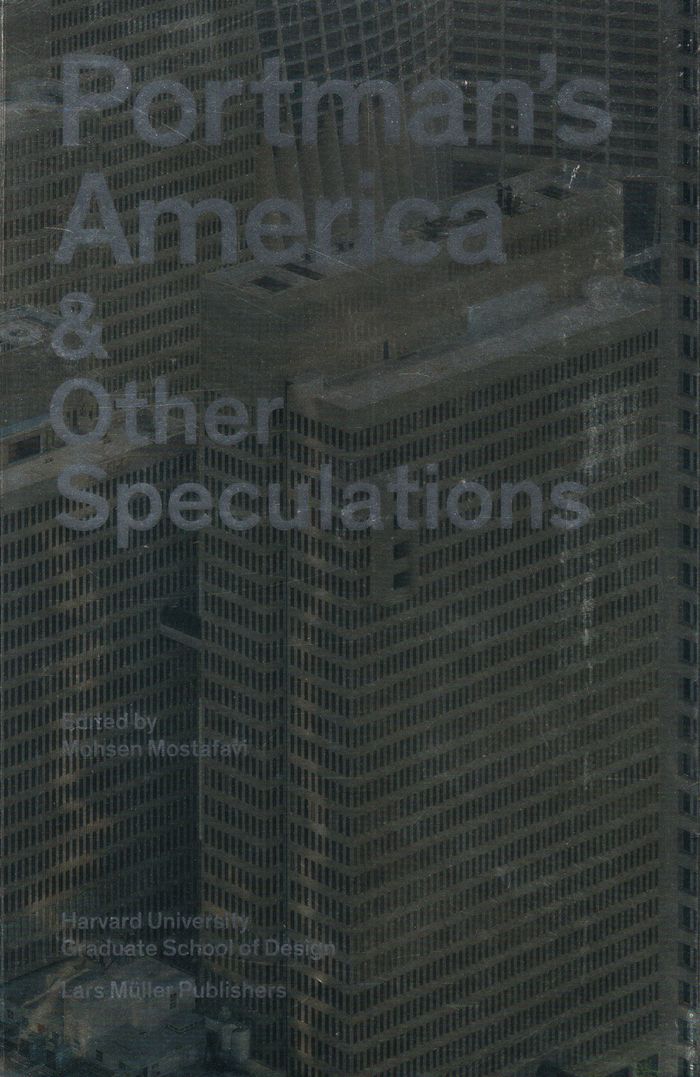
Portman's America & other speculations
Actions:
Price:
$47.50
(available to order)
Summary:
Portman’s America & Other Speculations takes an unconventional and speculative approach towards the understanding and future potentials of the work of one of the world’s most creative, controversial, daring, and prolific architects. Combining the talents of an architect, artist, and developer, John Portman was able to embark on a series of large-scale building projects—megastructures—that radically redefined the relationship of architecture to the city and its citizens. Portman’s own voice and ideas complement the contributions of others, including new photographs by Iwan Baan, to present a more complex and nuanced reading of both the architect and his architecture. Finally, the repertoire of Portman’s buildings is analyzed in meticulous detail and used by a group of students from the Harvard Graduate School of Design as a catalyst for a host of divergent and new architectural speculations.
Portman's America & other speculations
Actions:
Price:
$47.50
(available to order)
Summary:
Portman’s America & Other Speculations takes an unconventional and speculative approach towards the understanding and future potentials of the work of one of the world’s most creative, controversial, daring, and prolific architects. Combining the talents of an architect, artist, and developer, John Portman was able to embark on a series of large-scale building projects—megastructures—that radically redefined the relationship of architecture to the city and its citizens. Portman’s own voice and ideas complement the contributions of others, including new photographs by Iwan Baan, to present a more complex and nuanced reading of both the architect and his architecture. Finally, the repertoire of Portman’s buildings is analyzed in meticulous detail and used by a group of students from the Harvard Graduate School of Design as a catalyst for a host of divergent and new architectural speculations.
Form:
books
books
Publication:
August 2017
August 2017
Form:
books
books
Title:
Revisiting postmodernism
Revisiting postmodernism
Actions:
Price:
$67.10
(available to order)
Summary:
This book invites readers to see Postmodernism in a new light: not just a style but a cultural phenomenon that embraces all areas of life and thrives on complexity and pluralism, in contrast to the strait-laced, single-style, top-down inclination of its predecessor, Modernism. While focusing on architecture, this book also explores aspects such as urban masterplanning,(...)
$67.10
(available to order)
Summary:
This book invites readers to see Postmodernism in a new light: not just a style but a cultural phenomenon that embraces all areas of life and thrives on complexity and pluralism, in contrast to the strait-laced, single-style, top-down inclination of its predecessor, Modernism. While focusing on architecture, this book also explores aspects such as urban masterplanning,(...)
Title:
Revisiting postmodernism
Actions:
Price:
$67.10
(available to order)
Summary:
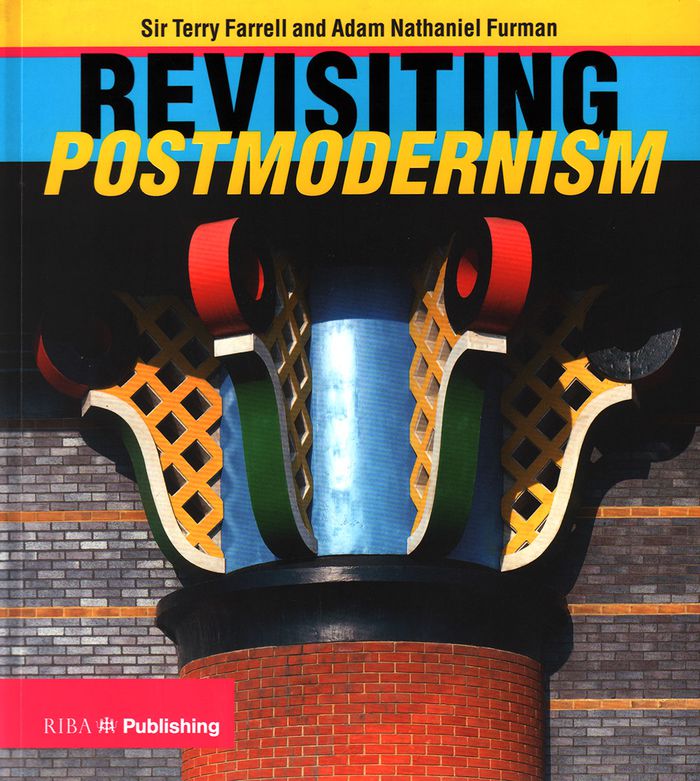
This book invites readers to see Postmodernism in a new light: not just a style but a cultural phenomenon that embraces all areas of life and thrives on complexity and pluralism, in contrast to the strait-laced, single-style, top-down inclination of its predecessor, Modernism. While focusing on architecture, this book also explores aspects such as urban masterplanning, furniture design, art and literature. Looking at Postmodernism through the lens of examples from around the world, each chapter explores the movement in the UK on the one hand, and its international counterparts on the other, reflecting on the historical movement but also how postmodernism influences practices today.
Revisiting postmodernism
Actions:
Price:
$67.10
(available to order)
Summary:
This book invites readers to see Postmodernism in a new light: not just a style but a cultural phenomenon that embraces all areas of life and thrives on complexity and pluralism, in contrast to the strait-laced, single-style, top-down inclination of its predecessor, Modernism. While focusing on architecture, this book also explores aspects such as urban masterplanning, furniture design, art and literature. Looking at Postmodernism through the lens of examples from around the world, each chapter explores the movement in the UK on the one hand, and its international counterparts on the other, reflecting on the historical movement but also how postmodernism influences practices today.
Form:
books
books
Publication:
November 2017
November 2017
Subject:
Current Exhibitions
Current Exhibitions
Form:
books
books
Actions:
Price:
$42.00
(available to order)
Summary:
One of the most prominent and prolific designers and architects of the late twentieth century, Michael Graves is best known for his popular product designs, including the world-famous Alessi whistling-bird teakettle, and controversial buildings, such as the Portland Building in Oregon, Humana Building in Kentucky, and Dolphin and Swan Hotels at Walt Disney World, Florida.(...)
$42.00
(available to order)
Summary:
One of the most prominent and prolific designers and architects of the late twentieth century, Michael Graves is best known for his popular product designs, including the world-famous Alessi whistling-bird teakettle, and controversial buildings, such as the Portland Building in Oregon, Humana Building in Kentucky, and Dolphin and Swan Hotels at Walt Disney World, Florida.(...)
Title:
Michael Graves: design for life
Actions:
Price:
$42.00
(available to order)
Summary:
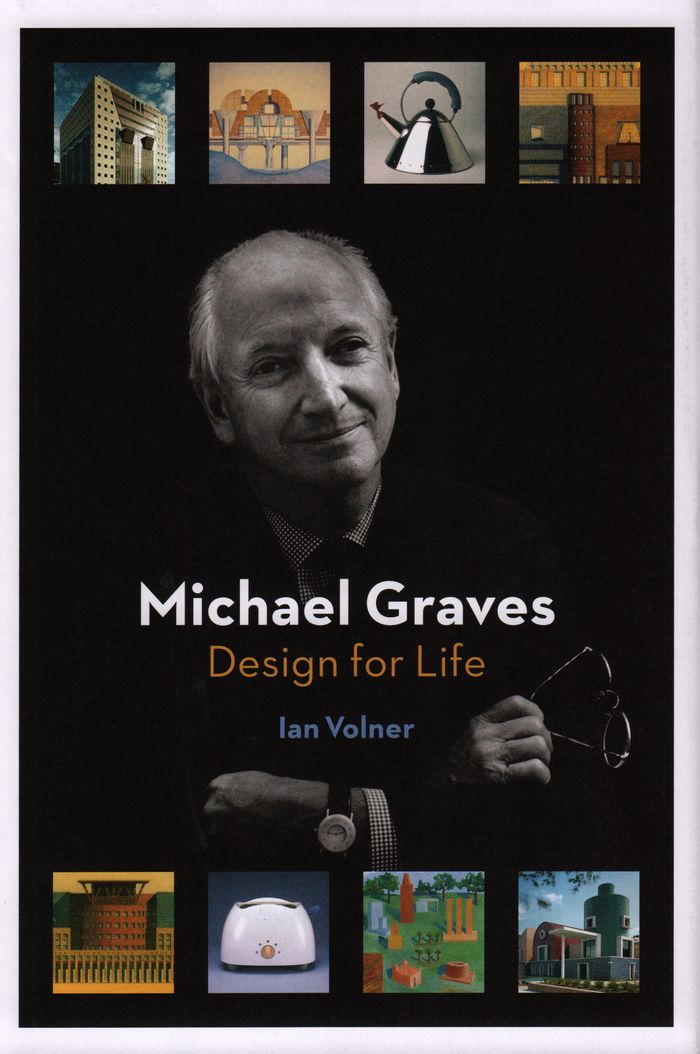
One of the most prominent and prolific designers and architects of the late twentieth century, Michael Graves is best known for his popular product designs, including the world-famous Alessi whistling-bird teakettle, and controversial buildings, such as the Portland Building in Oregon, Humana Building in Kentucky, and Dolphin and Swan Hotels at Walt Disney World, Florida. Graves was widely seen as the leading voice of postmodernist architecture, which reintroduced human scale, color, and, sometimes, playful forms into the stark white vocabulary of modernism.
Michael Graves: design for life
Actions:
Price:
$42.00
(available to order)
Summary:
One of the most prominent and prolific designers and architects of the late twentieth century, Michael Graves is best known for his popular product designs, including the world-famous Alessi whistling-bird teakettle, and controversial buildings, such as the Portland Building in Oregon, Humana Building in Kentucky, and Dolphin and Swan Hotels at Walt Disney World, Florida. Graves was widely seen as the leading voice of postmodernist architecture, which reintroduced human scale, color, and, sometimes, playful forms into the stark white vocabulary of modernism.
Form:
books
books
Publication:
November 2017
November 2017
Form:
books
books
Actions:
Price:
$46.95
(available to order)
Summary:
In Architectural Intelligence, Molly Wright Steenson explores the work of four architects in the 1960s and 1970s who incorporated elements of interactivity into their work. Christopher Alexander, Richard Saul Wurman, Cedric Price, and Nicholas Negroponte and the MIT Architecture Machine Group all incorporated technologies—including cybernetics and artificial(...)
$46.95
(available to order)
Summary:
In Architectural Intelligence, Molly Wright Steenson explores the work of four architects in the 1960s and 1970s who incorporated elements of interactivity into their work. Christopher Alexander, Richard Saul Wurman, Cedric Price, and Nicholas Negroponte and the MIT Architecture Machine Group all incorporated technologies—including cybernetics and artificial(...)
Publication:
December 2017
December 2017
Title:
Architectural intelligence: how designers and architects created the digital landscape
Actions:
Price:
$46.95
(available to order)
Summary:
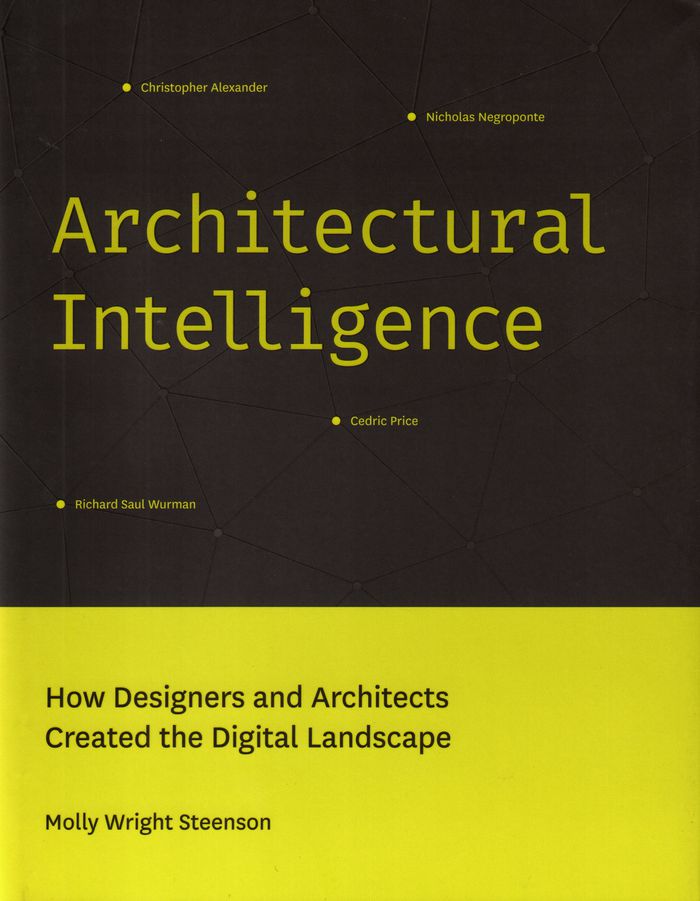
In Architectural Intelligence, Molly Wright Steenson explores the work of four architects in the 1960s and 1970s who incorporated elements of interactivity into their work. Christopher Alexander, Richard Saul Wurman, Cedric Price, and Nicholas Negroponte and the MIT Architecture Machine Group all incorporated technologies—including cybernetics and artificial intelligence—into their work and influenced digital design practices from the late 1980s to the present day.
Architectural intelligence: how designers and architects created the digital landscape
Actions:
Price:
$46.95
(available to order)
Summary:
In Architectural Intelligence, Molly Wright Steenson explores the work of four architects in the 1960s and 1970s who incorporated elements of interactivity into their work. Christopher Alexander, Richard Saul Wurman, Cedric Price, and Nicholas Negroponte and the MIT Architecture Machine Group all incorporated technologies—including cybernetics and artificial intelligence—into their work and influenced digital design practices from the late 1980s to the present day.
Form:
books
books
Publication:
December 2017
December 2017
Form:
books
books
Actions:
Price:
$44.00
(available in store)
Summary:
Le Plateau Mont-Royal est un carrefour géographique, social, culturel et un lieu d’expérimentations urbaines qui lui confèrent un rôle emblématique dans l’histoire de Montréal. Le Dictionnaire historique du Plateau Mont-Royal propose une promenade dans le temps et une rencontre avec des personnages, des lieux et des événements ayant modelé l’identité montréalaise.(...)
$44.00
(available in store)
Summary:
Le Plateau Mont-Royal est un carrefour géographique, social, culturel et un lieu d’expérimentations urbaines qui lui confèrent un rôle emblématique dans l’histoire de Montréal. Le Dictionnaire historique du Plateau Mont-Royal propose une promenade dans le temps et une rencontre avec des personnages, des lieux et des événements ayant modelé l’identité montréalaise.(...)
Publication:
August 2017
August 2017
Title:
Dictionnaire historique du Plateau Mont-Royal
Actions:
Price:
$44.00
(available in store)
Summary:
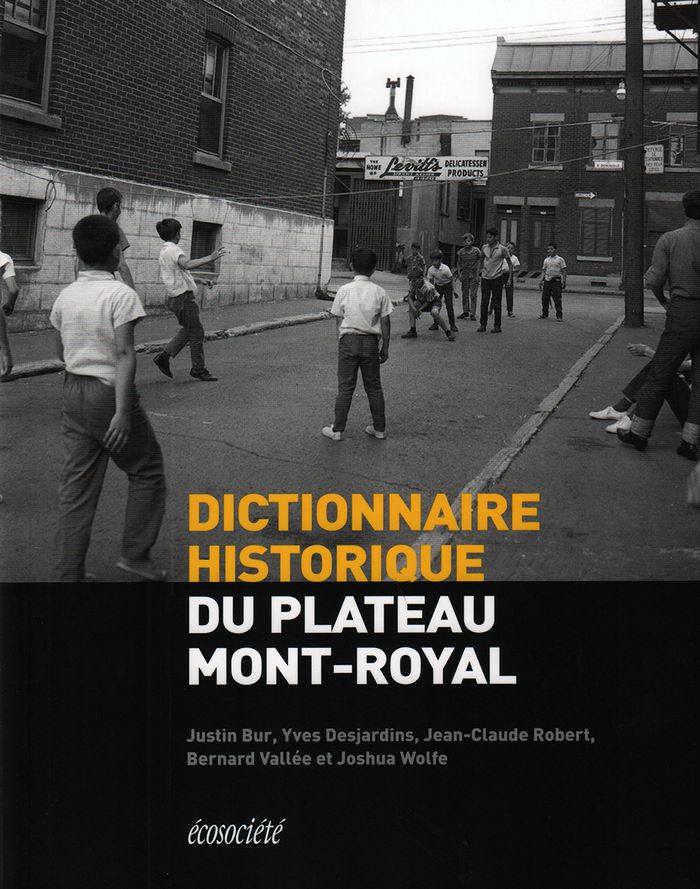
Le Plateau Mont-Royal est un carrefour géographique, social, culturel et un lieu d’expérimentations urbaines qui lui confèrent un rôle emblématique dans l’histoire de Montréal. Le Dictionnaire historique du Plateau Mont-Royal propose une promenade dans le temps et une rencontre avec des personnages, des lieux et des événements ayant modelé l’identité montréalaise. Patrimoine architectural, oeuvres d’art, personnalités publiques, communautés culturelles, luttes sociales, agriculture urbaine, commerces et industries... Cet ouvrage à la fois rigoureux et ludique offre une synthèse des multiples documents, articles et recherches publiés sur le Plateau, mais qui n’ont pas encore été rassemblés. Il met en valeur une iconographie abondante et diversifiée, malheureusement trop souvent disponible en ordre dispersé, sans la trame qui en révèle toute la richesse.
Dictionnaire historique du Plateau Mont-Royal
Actions:
Price:
$44.00
(available in store)
Summary:
Le Plateau Mont-Royal est un carrefour géographique, social, culturel et un lieu d’expérimentations urbaines qui lui confèrent un rôle emblématique dans l’histoire de Montréal. Le Dictionnaire historique du Plateau Mont-Royal propose une promenade dans le temps et une rencontre avec des personnages, des lieux et des événements ayant modelé l’identité montréalaise. Patrimoine architectural, oeuvres d’art, personnalités publiques, communautés culturelles, luttes sociales, agriculture urbaine, commerces et industries... Cet ouvrage à la fois rigoureux et ludique offre une synthèse des multiples documents, articles et recherches publiés sur le Plateau, mais qui n’ont pas encore été rassemblés. Il met en valeur une iconographie abondante et diversifiée, malheureusement trop souvent disponible en ordre dispersé, sans la trame qui en révèle toute la richesse.
Form:
books
books
Publication:
August 2017
August 2017
Form:
books
books
Title:
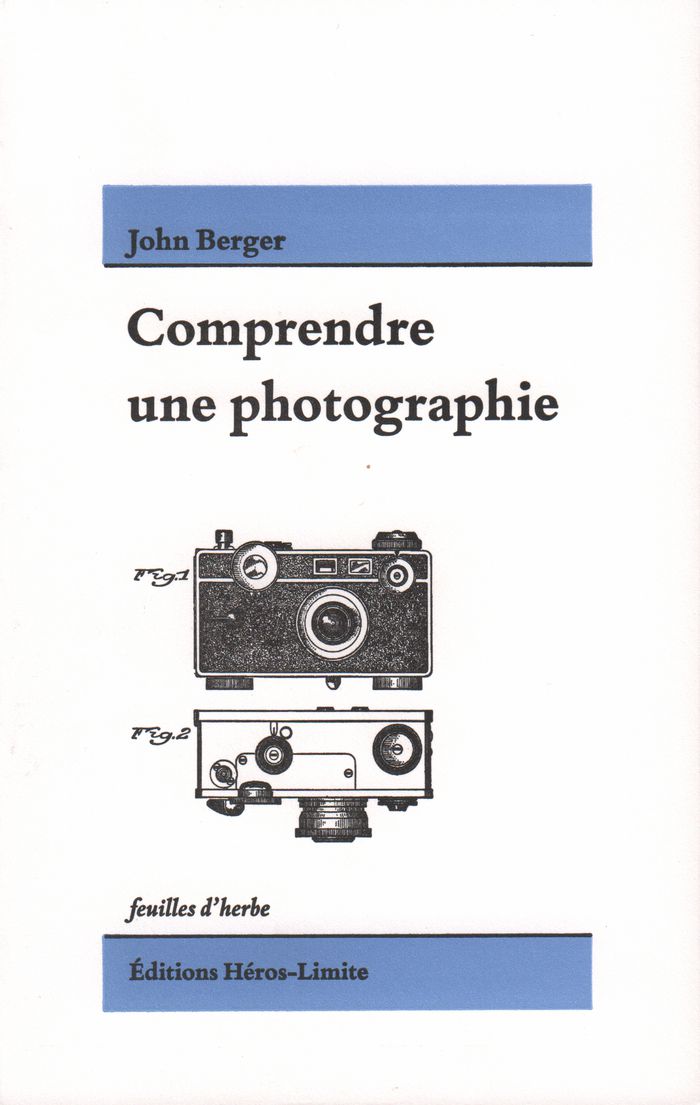
Comprendre une photographie
Comprendre une photographie
Actions:
Price:
$29.95
(available to order)
Summary:
Regroupant des textes issus de catalogues d’artistes, expositions, articles, etc., Comprendre une photographie est un voyage à travers les oeuvres de photographes divers, d’ André Kertész à Jitka Hanzlová, en passant par Marc Trivier, Jean Mohr ou Martine Franck. Certains des articles regroupés ici ont déjà fait partie de choix de textes de John Berger publiés notamment(...)
$29.95
(available to order)
Summary:
Regroupant des textes issus de catalogues d’artistes, expositions, articles, etc., Comprendre une photographie est un voyage à travers les oeuvres de photographes divers, d’ André Kertész à Jitka Hanzlová, en passant par Marc Trivier, Jean Mohr ou Martine Franck. Certains des articles regroupés ici ont déjà fait partie de choix de textes de John Berger publiés notamment(...)
Title:
Comprendre une photographie
Actions:
Price:
$29.95
(available to order)
Summary:
Regroupant des textes issus de catalogues d’artistes, expositions, articles, etc., Comprendre une photographie est un voyage à travers les oeuvres de photographes divers, d’ André Kertész à Jitka Hanzlová, en passant par Marc Trivier, Jean Mohr ou Martine Franck. Certains des articles regroupés ici ont déjà fait partie de choix de textes de John Berger publiés notamment aux éditions de L’Arche, Champ- Vallon ou Le Temps des Cerises, tandis que d’autres sont traduits en français pour la première fois. La présente sélection reprend l’édition anglaise intitulée Understanding a Photograph, établie par Geoff Dyer et publiée en 2013 chez Penguin Books.
Comprendre une photographie
Actions:
Price:
$29.95
(available to order)
Summary:
Regroupant des textes issus de catalogues d’artistes, expositions, articles, etc., Comprendre une photographie est un voyage à travers les oeuvres de photographes divers, d’ André Kertész à Jitka Hanzlová, en passant par Marc Trivier, Jean Mohr ou Martine Franck. Certains des articles regroupés ici ont déjà fait partie de choix de textes de John Berger publiés notamment aux éditions de L’Arche, Champ- Vallon ou Le Temps des Cerises, tandis que d’autres sont traduits en français pour la première fois. La présente sélection reprend l’édition anglaise intitulée Understanding a Photograph, établie par Geoff Dyer et publiée en 2013 chez Penguin Books.
Form:
books
books
Publication:
October 2017
October 2017
Form:
books
books
Actions:
Price:
$35.50
(available to order)
Summary:
Revolutionary developments in economics are rare. The conservative bias of the field and its enshrined knowledge make it difficult to introduce new ideas not in line with received theory. Happiness research, however, has the potential to change economics substantially in the future. Its findings, which are gradually being taken into account in standard economics, can be(...)
$35.50
(available to order)
Summary:
Revolutionary developments in economics are rare. The conservative bias of the field and its enshrined knowledge make it difficult to introduce new ideas not in line with received theory. Happiness research, however, has the potential to change economics substantially in the future. Its findings, which are gradually being taken into account in standard economics, can be(...)
Title:
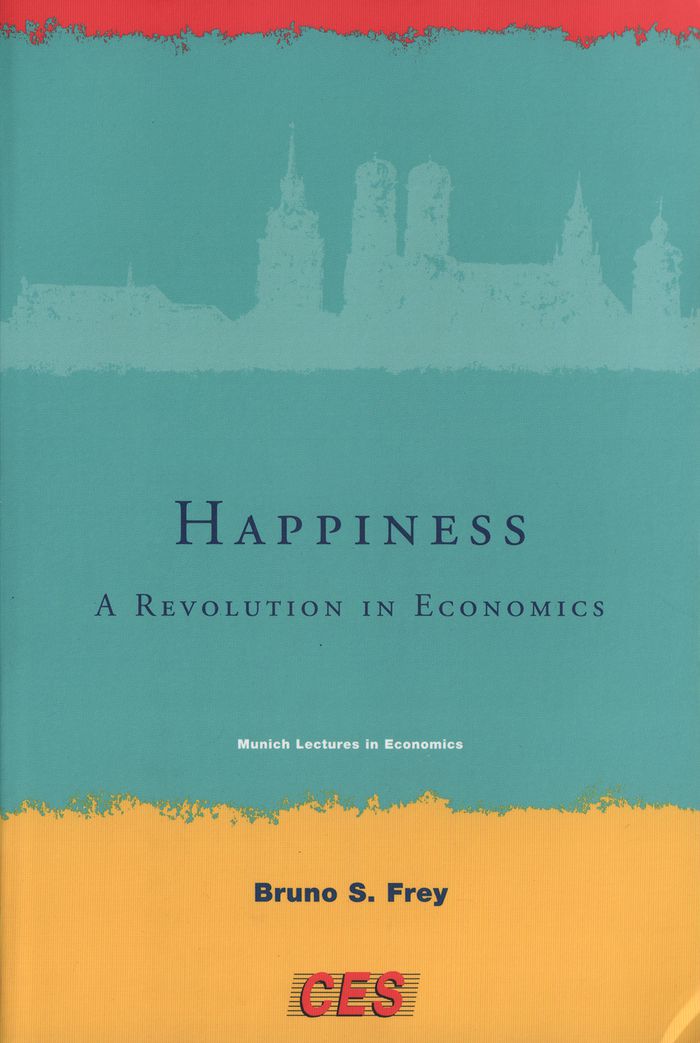
Happiness: a revolution in economics
Actions:
Price:
$35.50
(available to order)
Summary:
Revolutionary developments in economics are rare. The conservative bias of the field and its enshrined knowledge make it difficult to introduce new ideas not in line with received theory. Happiness research, however, has the potential to change economics substantially in the future. Its findings, which are gradually being taken into account in standard economics, can be considered revolutionary in three respects: the measurement of experienced utility using psychologists’ tools for measuring subjective well-being; new insights into how human beings value goods and services and social conditions that include consideration of such non-material values as autonomy and social relations; and policy consequences of these new insights that suggest different ways for government to affect individual well-being.
Happiness: a revolution in economics
Actions:
Price:
$35.50
(available to order)
Summary:
Revolutionary developments in economics are rare. The conservative bias of the field and its enshrined knowledge make it difficult to introduce new ideas not in line with received theory. Happiness research, however, has the potential to change economics substantially in the future. Its findings, which are gradually being taken into account in standard economics, can be considered revolutionary in three respects: the measurement of experienced utility using psychologists’ tools for measuring subjective well-being; new insights into how human beings value goods and services and social conditions that include consideration of such non-material values as autonomy and social relations; and policy consequences of these new insights that suggest different ways for government to affect individual well-being.
Form:
books
books
Publication:
August 2010
August 2010


