


593 Results
Form:
books
books
Actions:
Price:
$39.95
(available to order)
Summary:
Écologie, communauté et style de vie est le chef d'oeuvre de la philosophie environnementale d'Arne Naess. L'ouvrage présente sous une forme synthétique les fondamentaux de la deep ecology et en élucide les principes dans les divers registres où elle s'exprime: en théorie de la connaissance (où l'enjeu est d'examiner le lien qui existe entre agir, évaluer et éprouver des(...)
$39.95
(available to order)
Summary:
Écologie, communauté et style de vie est le chef d'oeuvre de la philosophie environnementale d'Arne Naess. L'ouvrage présente sous une forme synthétique les fondamentaux de la deep ecology et en élucide les principes dans les divers registres où elle s'exprime: en théorie de la connaissance (où l'enjeu est d'examiner le lien qui existe entre agir, évaluer et éprouver des(...)
Title:
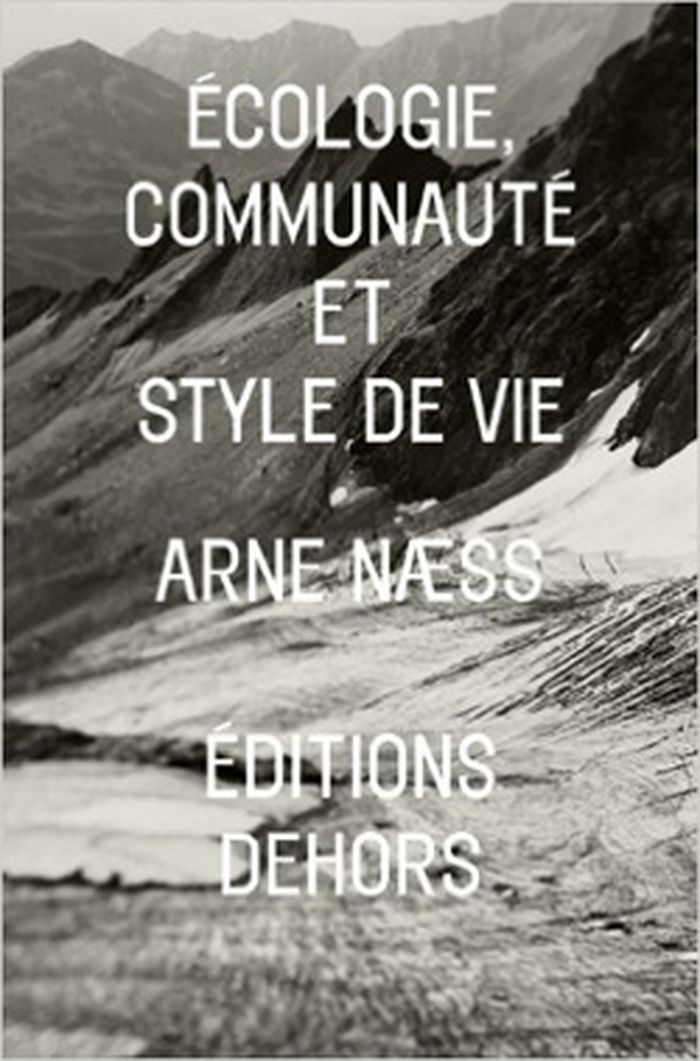
Écologie, communauté et style de vie
Actions:
Price:
$39.95
(available to order)
Summary:
Écologie, communauté et style de vie est le chef d'oeuvre de la philosophie environnementale d'Arne Naess. L'ouvrage présente sous une forme synthétique les fondamentaux de la deep ecology et en élucide les principes dans les divers registres où elle s'exprime: en théorie de la connaissance (où l'enjeu est d'examiner le lien qui existe entre agir, évaluer et éprouver des émotions), en éthique (où il s'agit de lier des jugements de valeur au sein d'un système normatif), en métaphysique (où il en va de déterminer la réalité comme système de relations et de processus interconnectés), et en politique (où l'objectif est de clarifier les grandes lignes d'un mouvement social susceptible de fédérer le plus grand nombre de bonnes volontés).
Écologie, communauté et style de vie
Actions:
Price:
$39.95
(available to order)
Summary:
Écologie, communauté et style de vie est le chef d'oeuvre de la philosophie environnementale d'Arne Naess. L'ouvrage présente sous une forme synthétique les fondamentaux de la deep ecology et en élucide les principes dans les divers registres où elle s'exprime: en théorie de la connaissance (où l'enjeu est d'examiner le lien qui existe entre agir, évaluer et éprouver des émotions), en éthique (où il s'agit de lier des jugements de valeur au sein d'un système normatif), en métaphysique (où il en va de déterminer la réalité comme système de relations et de processus interconnectés), et en politique (où l'objectif est de clarifier les grandes lignes d'un mouvement social susceptible de fédérer le plus grand nombre de bonnes volontés).
Form:
books
books
Publication:
February 2016
February 2016
Subject:
Green Architecture
Green Architecture
Form:
books
books
Title:
Mieux avec moins
Mieux avec moins
Actions:
Price:
$36.95
(available to order)
Summary:
Un essai qui présente les urgences écologiques dans le domaine de l'architecture et des territoires, porte des constats alarmants tout en proposant plusieurs solutions comme le réemploi, le choix des matériaux de construction et des lieux de ressources, ainsi que l'intelligence collective pour une architecture frugale.
$36.95
(available to order)
Summary:
Un essai qui présente les urgences écologiques dans le domaine de l'architecture et des territoires, porte des constats alarmants tout en proposant plusieurs solutions comme le réemploi, le choix des matériaux de construction et des lieux de ressources, ainsi que l'intelligence collective pour une architecture frugale.
Title:
Mieux avec moins
Actions:
Price:
$36.95
(available to order)
Summary:
Un essai qui présente les urgences écologiques dans le domaine de l'architecture et des territoires, porte des constats alarmants tout en proposant plusieurs solutions comme le réemploi, le choix des matériaux de construction et des lieux de ressources, ainsi que l'intelligence collective pour une architecture frugale.
Mieux avec moins
Actions:
Price:
$36.95
(available to order)
Summary:
Un essai qui présente les urgences écologiques dans le domaine de l'architecture et des territoires, porte des constats alarmants tout en proposant plusieurs solutions comme le réemploi, le choix des matériaux de construction et des lieux de ressources, ainsi que l'intelligence collective pour une architecture frugale.
Form:
books
books
Publication:
January 2022
January 2022
Subject:
Green Architecture
Green Architecture
Form:
books
books
Title:
The climate imaginary
The climate imaginary
Actions:
Price:
$56.95
(available in store)
Summary:
As climate change increasingly emerges as a critical and prominent concern for modern society, the design field has actively responded by deeply engaging with the complex social, political, and cultural transformations that are anticipated as a direct result of this ongoing crisis. Furthermore, there has also been a significant expansion in the diverse range of(...)
$56.95
(available in store)
Summary:
As climate change increasingly emerges as a critical and prominent concern for modern society, the design field has actively responded by deeply engaging with the complex social, political, and cultural transformations that are anticipated as a direct result of this ongoing crisis. Furthermore, there has also been a significant expansion in the diverse range of(...)
Title:
The climate imaginary
Actions:
Price:
$56.95
(available in store)
Summary:
As climate change increasingly emerges as a critical and prominent concern for modern society, the design field has actively responded by deeply engaging with the complex social, political, and cultural transformations that are anticipated as a direct result of this ongoing crisis. Furthermore, there has also been a significant expansion in the diverse range of climate-informed design explorations, moving well beyond merely the technical aspects of sustainability. ''The Climate Imaginary'' showcases an extensive global collection of innovative works that reflect this rich diversity. This pluralism resonates powerfully with the various disruptions that are set to impact every single aspect of our lives. The widespread and far-reaching consequences of this pressing emergency open up numerous subjects and themes for designers to explore creatively.
The climate imaginary
Actions:
Price:
$56.95
(available in store)
Summary:
As climate change increasingly emerges as a critical and prominent concern for modern society, the design field has actively responded by deeply engaging with the complex social, political, and cultural transformations that are anticipated as a direct result of this ongoing crisis. Furthermore, there has also been a significant expansion in the diverse range of climate-informed design explorations, moving well beyond merely the technical aspects of sustainability. ''The Climate Imaginary'' showcases an extensive global collection of innovative works that reflect this rich diversity. This pluralism resonates powerfully with the various disruptions that are set to impact every single aspect of our lives. The widespread and far-reaching consequences of this pressing emergency open up numerous subjects and themes for designers to explore creatively.
Form:
books
books
Publication:
December 2025
December 2025
Subject:
Green Architecture
Green Architecture
Form:
books
books
Price:
$59.95
(available to order)
Summary:
''Climax change!'' offers an overview of how the current environmental emergency will impact the practice of architecture. At a crossroads in which the construction sector and built environment produce nearly 40% of greenhouse gases accountable for global warming, architects are just starting to acknowledge their complicity in an impending disaster. In need of a(...)
$59.95
(available to order)
Summary:
''Climax change!'' offers an overview of how the current environmental emergency will impact the practice of architecture. At a crossroads in which the construction sector and built environment produce nearly 40% of greenhouse gases accountable for global warming, architects are just starting to acknowledge their complicity in an impending disaster. In need of a(...)
Title:
Climax change! Architecture's paradigm shift after the ecological crisis
Actions:
Price:
$59.95
(available to order)
Summary:
''Climax change!'' offers an overview of how the current environmental emergency will impact the practice of architecture. At a crossroads in which the construction sector and built environment produce nearly 40% of greenhouse gases accountable for global warming, architects are just starting to acknowledge their complicity in an impending disaster. In need of a paradigm shift similar to that of the Modern Movement, architecture desperately requires clear guidelines and targets so as to operate its inevitable transformation towards an ecologically-friendly design logic. From historical analyses of ecocide or the environmental avant-gardes, to topics such as decarbonization, degrowth, the Great Transition and the aspirations of Green New Deals, this book features ten essays around today's climate change debates, bringing them home to architectural thinking.
Climax change! Architecture's paradigm shift after the ecological crisis
Actions:
Price:
$59.95
(available to order)
Summary:
''Climax change!'' offers an overview of how the current environmental emergency will impact the practice of architecture. At a crossroads in which the construction sector and built environment produce nearly 40% of greenhouse gases accountable for global warming, architects are just starting to acknowledge their complicity in an impending disaster. In need of a paradigm shift similar to that of the Modern Movement, architecture desperately requires clear guidelines and targets so as to operate its inevitable transformation towards an ecologically-friendly design logic. From historical analyses of ecocide or the environmental avant-gardes, to topics such as decarbonization, degrowth, the Great Transition and the aspirations of Green New Deals, this book features ten essays around today's climate change debates, bringing them home to architectural thinking.
Form:
books
books
Publication:
July 2022
July 2022
Subject:
Green Architecture
Green Architecture
Form:
books
books
Actions:
Price:
$34.95
(available to order)
Summary:
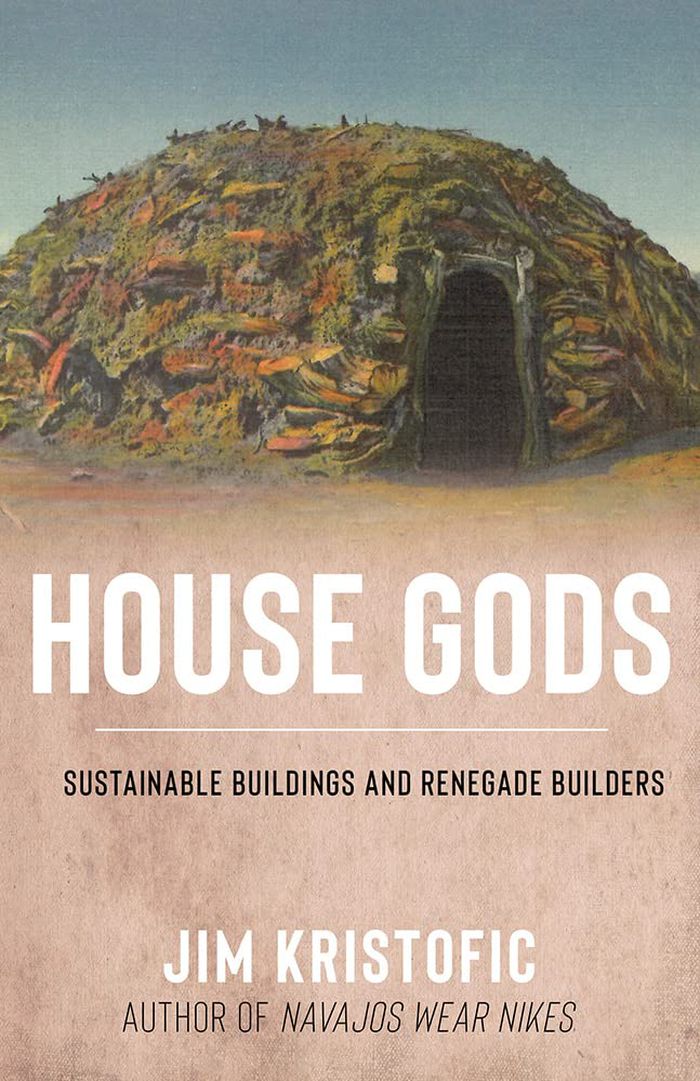
Our buildings are making us sick. Our homes, offices, factories, and dormitories are, in some sense, fresh parasites on the sacred Earth, "Nahasdzáán". In search of a better way, author Jim Kristofic journeys across the Southwest to apprentice with architects and builders who know how to make buildings that will take care of us. This is where he meets the House Gods who(...)
$34.95
(available to order)
Summary:
Our buildings are making us sick. Our homes, offices, factories, and dormitories are, in some sense, fresh parasites on the sacred Earth, "Nahasdzáán". In search of a better way, author Jim Kristofic journeys across the Southwest to apprentice with architects and builders who know how to make buildings that will take care of us. This is where he meets the House Gods who(...)
Title:
House gods: Sustainbable buildings and renegade builders
Actions:
Price:
$34.95
(available to order)
Summary:
Our buildings are making us sick. Our homes, offices, factories, and dormitories are, in some sense, fresh parasites on the sacred Earth, "Nahasdzáán". In search of a better way, author Jim Kristofic journeys across the Southwest to apprentice with architects and builders who know how to make buildings that will take care of us. This is where he meets the House Gods who are building to the sun so that we can live on Earth. Forever. In this publication, Kristofic pursues the techniques of sustainable building and the philosophies of its practitioners. What emerges is a strange and haunting quest through adobe mud and mayhem, encounters with shamans and stray dogs, solar panels, tragedy, and true believers. It is a story about doing something meaningful, and about the kinds of things that grow out of deep pain. One of these things is compassion--from which may come solace.
House gods: Sustainbable buildings and renegade builders
Actions:
Price:
$34.95
(available to order)
Summary:
Our buildings are making us sick. Our homes, offices, factories, and dormitories are, in some sense, fresh parasites on the sacred Earth, "Nahasdzáán". In search of a better way, author Jim Kristofic journeys across the Southwest to apprentice with architects and builders who know how to make buildings that will take care of us. This is where he meets the House Gods who are building to the sun so that we can live on Earth. Forever. In this publication, Kristofic pursues the techniques of sustainable building and the philosophies of its practitioners. What emerges is a strange and haunting quest through adobe mud and mayhem, encounters with shamans and stray dogs, solar panels, tragedy, and true believers. It is a story about doing something meaningful, and about the kinds of things that grow out of deep pain. One of these things is compassion--from which may come solace.
Form:
books
books
Publication:
May 2022
May 2022
Subject:
Green Architecture
Green Architecture
Form:
books
books
Actions:
Price:
$55.95
(available to order)
Summary:
In this volume, carbon pioneers Bruce King and Chris Magwood re-envision buildings as one of our most practical and affordable climate solutions instead of leading drivers of climate change. They provide a snapshot of a beginning and map towards a carbon-smart built environment that acts as a CO2 filter. Professional engineers, designers, and developers are invited to(...)
$55.95
(available to order)
Summary:
In this volume, carbon pioneers Bruce King and Chris Magwood re-envision buildings as one of our most practical and affordable climate solutions instead of leading drivers of climate change. They provide a snapshot of a beginning and map towards a carbon-smart built environment that acts as a CO2 filter. Professional engineers, designers, and developers are invited to(...)
Title:
Build beyond zero: New ideas for carbon smart architecture
Actions:
Price:
$55.95
(available to order)
Summary:
In this volume, carbon pioneers Bruce King and Chris Magwood re-envision buildings as one of our most practical and affordable climate solutions instead of leading drivers of climate change. They provide a snapshot of a beginning and map towards a carbon-smart built environment that acts as a CO2 filter. Professional engineers, designers, and developers are invited to imagine the very real potential for our built environment to be a site of net carbon storage, a massive drawdown pool that could help to heal our climate.This book looks at the good and the bad of how we track carbon (Life Cycle Assessment), then takes a deep dive into materials (with a focus on steel and concrete) and biological architecture, and wraps up with education, policy and governance, circular economy, and where we go in the next three decades.
Build beyond zero: New ideas for carbon smart architecture
Actions:
Price:
$55.95
(available to order)
Summary:
In this volume, carbon pioneers Bruce King and Chris Magwood re-envision buildings as one of our most practical and affordable climate solutions instead of leading drivers of climate change. They provide a snapshot of a beginning and map towards a carbon-smart built environment that acts as a CO2 filter. Professional engineers, designers, and developers are invited to imagine the very real potential for our built environment to be a site of net carbon storage, a massive drawdown pool that could help to heal our climate.This book looks at the good and the bad of how we track carbon (Life Cycle Assessment), then takes a deep dive into materials (with a focus on steel and concrete) and biological architecture, and wraps up with education, policy and governance, circular economy, and where we go in the next three decades.
Form:
books
books
Publication:
June 2022
June 2022
Subject:
Green Architecture
Green Architecture
Form:
books
books
Actions:
Price:
$43.95
(available to order)
Summary:
Le Corbusier famously said, ''A house is a machine for living in.'' We now confront the litany of environmental challenges associated with the legacy of the architectural machine: a changing climate, massive species die-off, diminished air and water quality, and resource scarcities. Brook Muller offers an alternative: water-centric urban design that fosters(...)
$43.95
(available to order)
Summary:
Le Corbusier famously said, ''A house is a machine for living in.'' We now confront the litany of environmental challenges associated with the legacy of the architectural machine: a changing climate, massive species die-off, diminished air and water quality, and resource scarcities. Brook Muller offers an alternative: water-centric urban design that fosters(...)
Title:
Blue architecture: Water, design, and environmental futures
Actions:
Price:
$43.95
(available to order)
Summary:
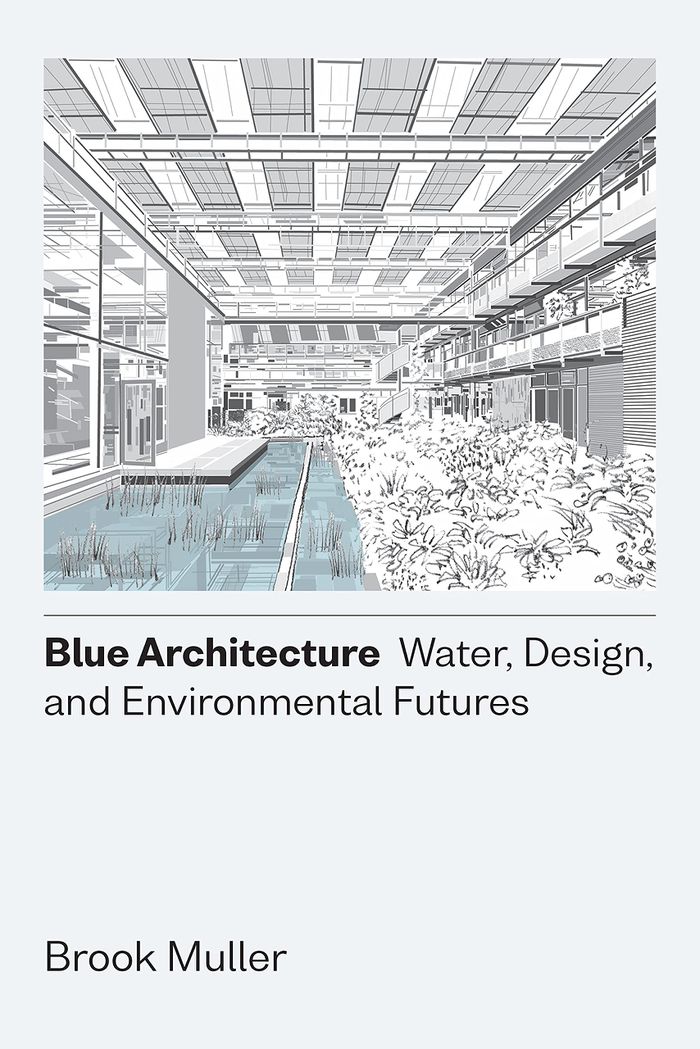
Le Corbusier famously said, ''A house is a machine for living in.'' We now confront the litany of environmental challenges associated with the legacy of the architectural machine: a changing climate, massive species die-off, diminished air and water quality, and resource scarcities. Brook Muller offers an alternative: water-centric urban design that fosters sustainability, equity, and architectural creativity. Inspired by the vernacular, such as the levadas of Madeira Island and both the arid and drenched places of the American West, Muller articulates a ''hydro-logical'' philosophy in which architects and planners begin by conceptualizing interactions between existing waterways and the spaces they intend to develop. From these interactions—and the new technologies and approaches enabling them—aesthetic, spatial, and experiential opportunities follow. Not content merely to work around sensitive ecology, Muller argues for genuinely climate-adapted urban landscapes in which buildings act as ecological infrastructure that actually improve watersheds while delivering functionality and beauty for diverse communities. Rich in images and practical examples, ''Blue architecture'' will change the way we think about our designed world.
Blue architecture: Water, design, and environmental futures
Actions:
Price:
$43.95
(available to order)
Summary:
Le Corbusier famously said, ''A house is a machine for living in.'' We now confront the litany of environmental challenges associated with the legacy of the architectural machine: a changing climate, massive species die-off, diminished air and water quality, and resource scarcities. Brook Muller offers an alternative: water-centric urban design that fosters sustainability, equity, and architectural creativity. Inspired by the vernacular, such as the levadas of Madeira Island and both the arid and drenched places of the American West, Muller articulates a ''hydro-logical'' philosophy in which architects and planners begin by conceptualizing interactions between existing waterways and the spaces they intend to develop. From these interactions—and the new technologies and approaches enabling them—aesthetic, spatial, and experiential opportunities follow. Not content merely to work around sensitive ecology, Muller argues for genuinely climate-adapted urban landscapes in which buildings act as ecological infrastructure that actually improve watersheds while delivering functionality and beauty for diverse communities. Rich in images and practical examples, ''Blue architecture'' will change the way we think about our designed world.
Form:
books
books
Publication:
May 2022
May 2022
Subject:
Green Architecture
Green Architecture
Form:
books
books
Actions:
Price:
$54.95
(available in store)
Summary:
This book, edited by Fulvio Irace, brings together for the first time the design stories and writings with which Emilio Ambasz accompanied the projects that marked the various stages of his prolific career: an anthology that puts his gentle manifesto into practice – green over gray – and where his most iconic pieces of architecture are retraced, alongside stories of(...)
$54.95
(available in store)
Summary:
This book, edited by Fulvio Irace, brings together for the first time the design stories and writings with which Emilio Ambasz accompanied the projects that marked the various stages of his prolific career: an anthology that puts his gentle manifesto into practice – green over gray – and where his most iconic pieces of architecture are retraced, alongside stories of(...)
Title:
Green architecture and design tales
Actions:
Price:
$54.95
(available in store)
Summary:
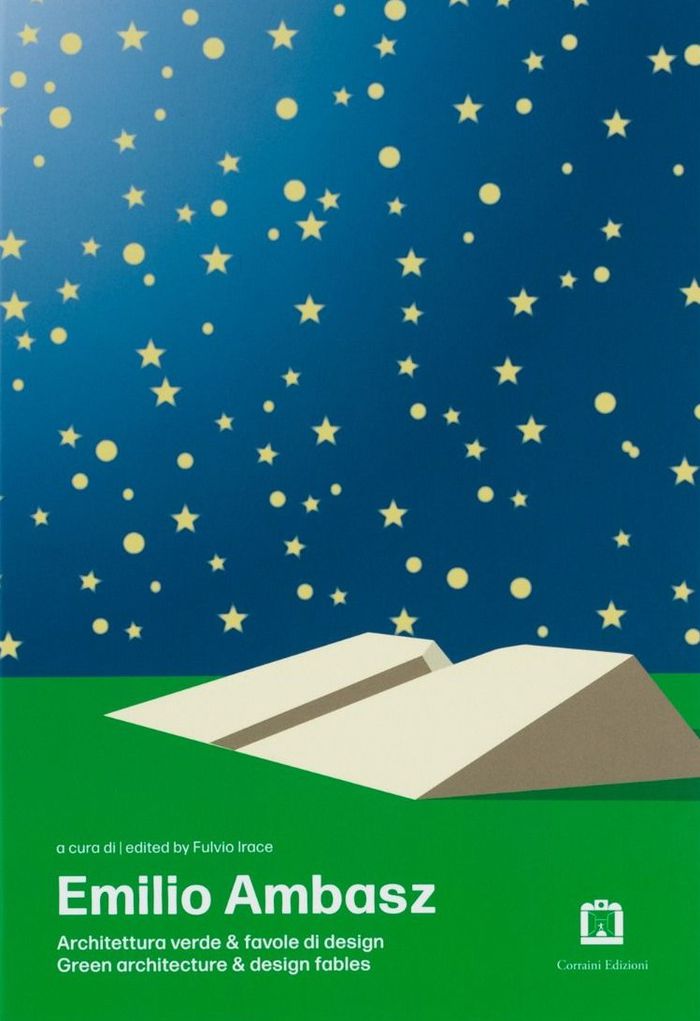
This book, edited by Fulvio Irace, brings together for the first time the design stories and writings with which Emilio Ambasz accompanied the projects that marked the various stages of his prolific career: an anthology that puts his gentle manifesto into practice – green over gray – and where his most iconic pieces of architecture are retraced, alongside stories of cities he has loved or dreamed of and conversations with architects and artists with whom he has established a unique relationship of elective affinities.
Green architecture and design tales
Actions:
Price:
$54.95
(available in store)
Summary:
This book, edited by Fulvio Irace, brings together for the first time the design stories and writings with which Emilio Ambasz accompanied the projects that marked the various stages of his prolific career: an anthology that puts his gentle manifesto into practice – green over gray – and where his most iconic pieces of architecture are retraced, alongside stories of cities he has loved or dreamed of and conversations with architects and artists with whom he has established a unique relationship of elective affinities.
Form:
books
books
Publication:
May 2022
May 2022
Subject:
Green Architecture
Green Architecture
Form:
books
books
Actions:
Price:
$164.95
(available to order)
Summary:
Les architectures légères contemporaines explorent la modularité, la construction participative ou la miniaturisation. Elles se fondent sur la conviction que construire, en conscience, plus léger réclame moins de matière, utilise moins de ressource, produit moins de déchets, demande moins de temps de montage, nécessite moins d’espace, requiert de façon exponentielle moins(...)
$164.95
(available to order)
Summary:
Les architectures légères contemporaines explorent la modularité, la construction participative ou la miniaturisation. Elles se fondent sur la conviction que construire, en conscience, plus léger réclame moins de matière, utilise moins de ressource, produit moins de déchets, demande moins de temps de montage, nécessite moins d’espace, requiert de façon exponentielle moins(...)
Title:
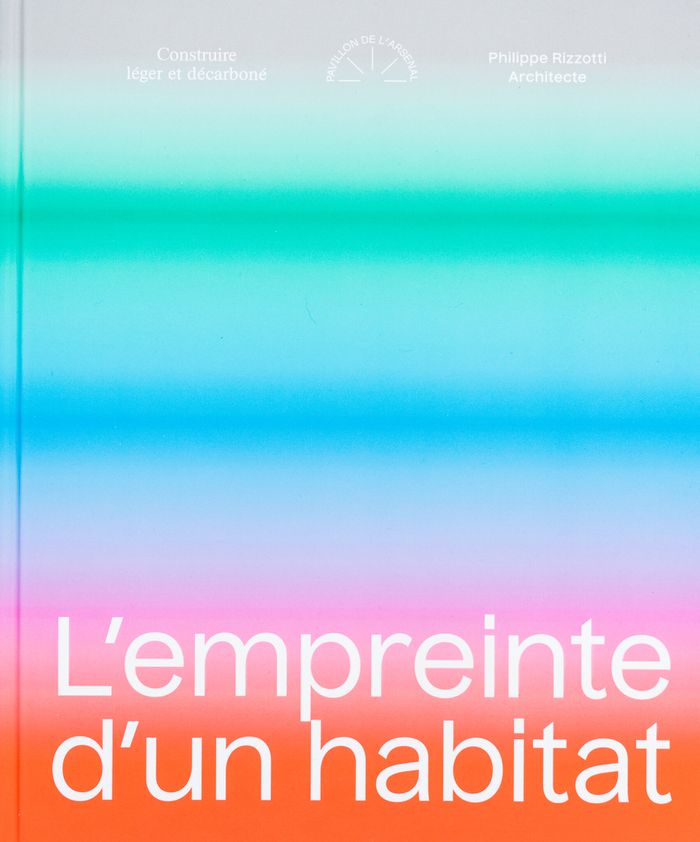
L'empreinte d'un habitat : construire léger et décarboné
Actions:
Price:
$164.95
(available to order)
Summary:
Les architectures légères contemporaines explorent la modularité, la construction participative ou la miniaturisation. Elles se fondent sur la conviction que construire, en conscience, plus léger réclame moins de matière, utilise moins de ressource, produit moins de déchets, demande moins de temps de montage, nécessite moins d’espace, requiert de façon exponentielle moins d’énergie, réduit symétriquement l’empreinte carbone de la construction d’un habitat. Cette étude menée sur une trentaine de projets internationaux révèle le potentiel et la diversité des systèmes constructifs développés. Elle témoigne de la capacité de ces architectures à s’adapter aux techniques et attentes de leur temps. Chaque exploration relue dans son contexte historique à partir d’archives reflète une démarche, une technique et un mode d’habiter. Redessiné et décomposé selon un protocole développé pour cette manifestation par l’agence Philippe Rizzotti Architecte et le laboratoire IBI de l’ETH Zürich, le corpus dévoile des correspondances, des qualités partagées. Cet inventaire permet de quantifier les constructions, comparer les matériaux, analyser les assemblages et classer tout ou partie pour faire émerger des logiques adaptables demain.
L'empreinte d'un habitat : construire léger et décarboné
Actions:
Price:
$164.95
(available to order)
Summary:
Les architectures légères contemporaines explorent la modularité, la construction participative ou la miniaturisation. Elles se fondent sur la conviction que construire, en conscience, plus léger réclame moins de matière, utilise moins de ressource, produit moins de déchets, demande moins de temps de montage, nécessite moins d’espace, requiert de façon exponentielle moins d’énergie, réduit symétriquement l’empreinte carbone de la construction d’un habitat. Cette étude menée sur une trentaine de projets internationaux révèle le potentiel et la diversité des systèmes constructifs développés. Elle témoigne de la capacité de ces architectures à s’adapter aux techniques et attentes de leur temps. Chaque exploration relue dans son contexte historique à partir d’archives reflète une démarche, une technique et un mode d’habiter. Redessiné et décomposé selon un protocole développé pour cette manifestation par l’agence Philippe Rizzotti Architecte et le laboratoire IBI de l’ETH Zürich, le corpus dévoile des correspondances, des qualités partagées. Cet inventaire permet de quantifier les constructions, comparer les matériaux, analyser les assemblages et classer tout ou partie pour faire émerger des logiques adaptables demain.
Form:
books
books
Publication:
January 2022
January 2022
Subject:
Green Architecture
Green Architecture
Form:
books
books
Title:
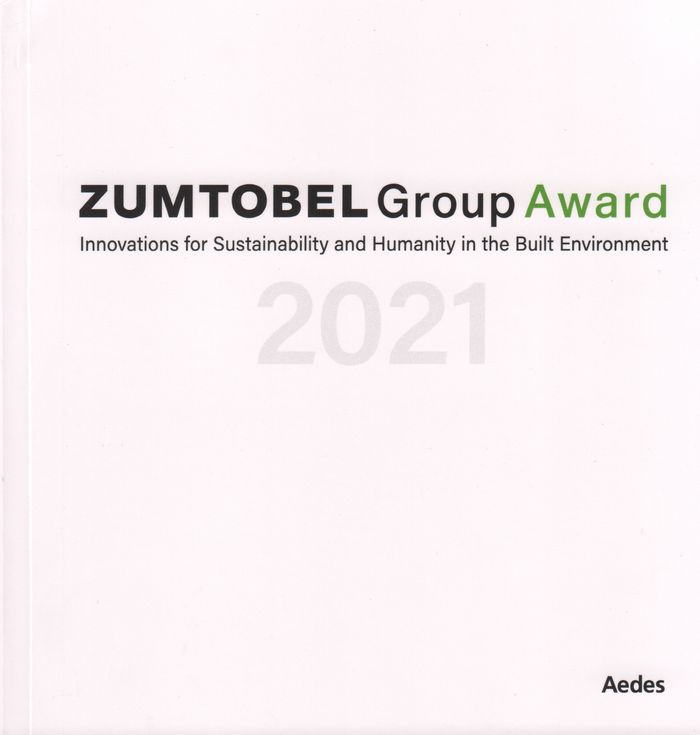
Zumtobel Group Award 2021 : Innovations for sustainability and humanity in the built environment
Zumtobel Group Award 2021 : Innovations for sustainability and humanity in the built environment
Actions:
Price:
$19.95
(available in store)
Summary:
The Zumtobel Group Award honours outstanding and innovative architectural and engineering performances in sustainable solutions; and pioneering social and humanitarian initiatives and research projects in the built environment that make a notable contribution to a liveable, sustainable and equitable future. The two categories of the award are buildings and urban(...)
$19.95
(available in store)
Summary:
The Zumtobel Group Award honours outstanding and innovative architectural and engineering performances in sustainable solutions; and pioneering social and humanitarian initiatives and research projects in the built environment that make a notable contribution to a liveable, sustainable and equitable future. The two categories of the award are buildings and urban(...)
Title:
Zumtobel Group Award 2021 : Innovations for sustainability and humanity in the built environment
Actions:
Price:
$19.95
(available in store)
Summary:
The Zumtobel Group Award honours outstanding and innovative architectural and engineering performances in sustainable solutions; and pioneering social and humanitarian initiatives and research projects in the built environment that make a notable contribution to a liveable, sustainable and equitable future. The two categories of the award are buildings and urban developments & initiative.
Zumtobel Group Award 2021 : Innovations for sustainability and humanity in the built environment
Actions:
Price:
$19.95
(available in store)
Summary:
The Zumtobel Group Award honours outstanding and innovative architectural and engineering performances in sustainable solutions; and pioneering social and humanitarian initiatives and research projects in the built environment that make a notable contribution to a liveable, sustainable and equitable future. The two categories of the award are buildings and urban developments & initiative.
Form:
books
books
Publication:
June 2022
June 2022
Subject:
Green Architecture
Green Architecture


