


19 Results
Form:
books
books
Price:
$43.95
(available to order)
Summary:
The Middle Eastern bazaar is much more than a context for commerce: the studies in this book illustrate that markets, regardless of their location, scale, and permanency, have also played important cultural roles within their societies, reflecting historical evolution, industrial development, social and political conditions, urban morphology, and architectural functions.(...)
$43.95
(available to order)
Summary:
The Middle Eastern bazaar is much more than a context for commerce: the studies in this book illustrate that markets, regardless of their location, scale, and permanency, have also played important cultural roles within their societies, reflecting historical evolution, industrial development, social and political conditions, urban morphology, and architectural functions.(...)
Title:
The bazaar in the Islamic city : design, culture, and history
Actions:
Price:
$43.95
(available to order)
Summary:
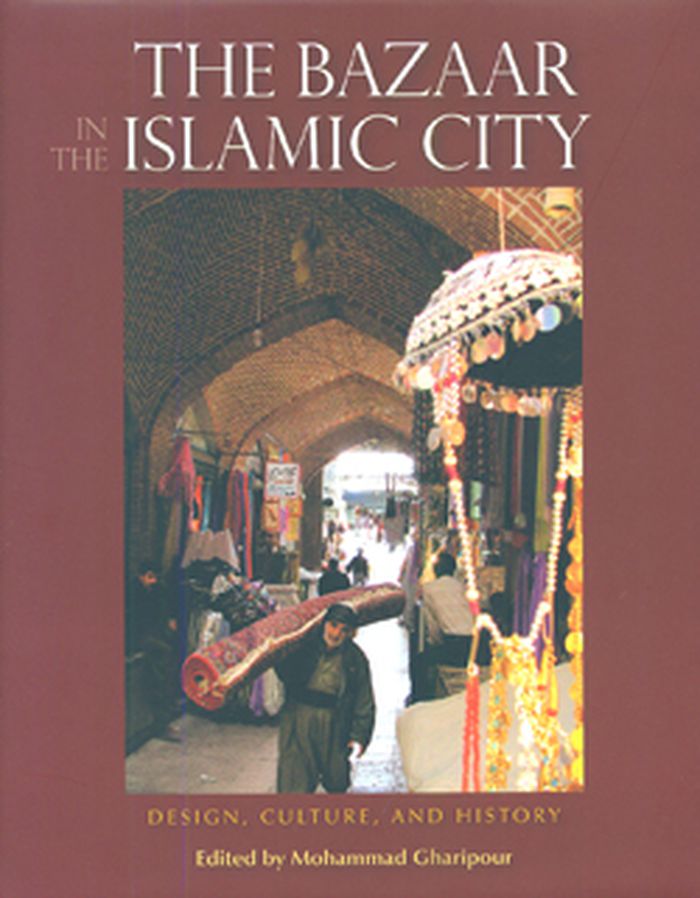
The Middle Eastern bazaar is much more than a context for commerce: the studies in this book illustrate that markets, regardless of their location, scale, and permanency, have also played important cultural roles within their societies, reflecting historical evolution, industrial development, social and political conditions, urban morphology, and architectural functions. This interdisciplinary volume explores the dynamics of the bazaar with a number of case studies from Cairo, Damascus, Aleppo, Nablus, Bursa, Istanbul, Sanaa, Kabul, Tehran, and Yazd. Although they share some contextual and functional characteristics, each bazaar has its own unique and fascinating history, traditions, cultural practices, and structure. One of the most intriguing aspects revealed in this volume is the thread of continuity from past to present exhibited by the bazaar as a forum where a society meets and intermingles in the practice of goods exchange—a social and cultural ritual that is as old as human history.
The bazaar in the Islamic city : design, culture, and history
Actions:
Price:
$43.95
(available to order)
Summary:
The Middle Eastern bazaar is much more than a context for commerce: the studies in this book illustrate that markets, regardless of their location, scale, and permanency, have also played important cultural roles within their societies, reflecting historical evolution, industrial development, social and political conditions, urban morphology, and architectural functions. This interdisciplinary volume explores the dynamics of the bazaar with a number of case studies from Cairo, Damascus, Aleppo, Nablus, Bursa, Istanbul, Sanaa, Kabul, Tehran, and Yazd. Although they share some contextual and functional characteristics, each bazaar has its own unique and fascinating history, traditions, cultural practices, and structure. One of the most intriguing aspects revealed in this volume is the thread of continuity from past to present exhibited by the bazaar as a forum where a society meets and intermingles in the practice of goods exchange—a social and cultural ritual that is as old as human history.
Form:
books
books
Publication:
June 2012
June 2012
Subject:
History until 1900, Middle East
History until 1900, Middle East
Form:
books
books
Title:
Tbilisi: it's complicated
Tbilisi: it's complicated
Actions:
Price:
$26.95
(available to order)
Summary:
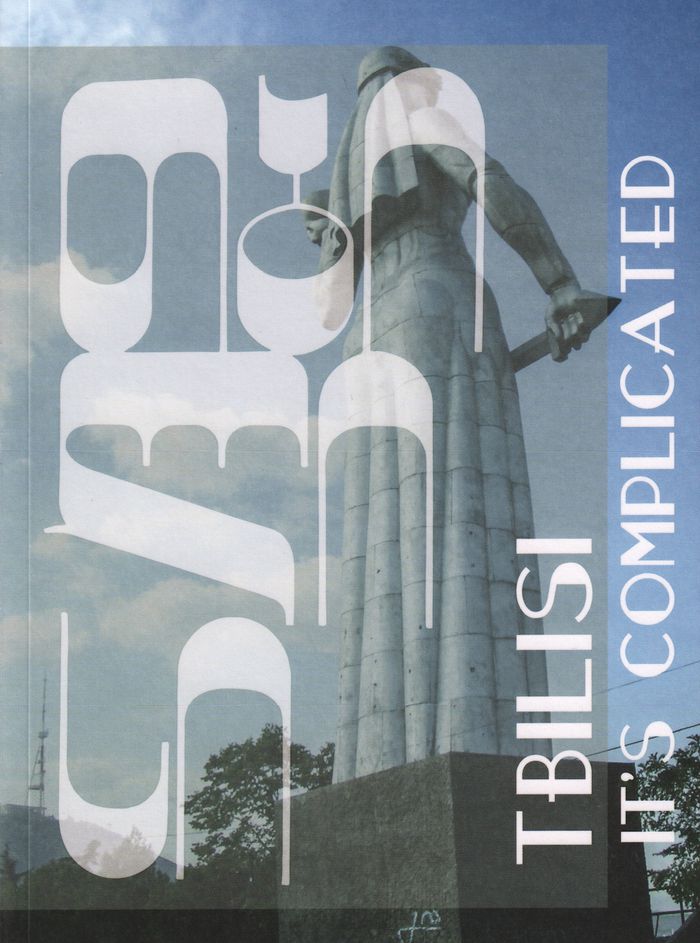
Composed of artistic accounts that critically reflect on recent urban and social changes in Georgia's capital Tbilisi, this book unveils multifaceted perspectives on a city trying to negotiate its complex heritage, its contentious present and potential for the future. It also serves as an alternative guidebook.
$26.95
(available to order)
Summary:
Composed of artistic accounts that critically reflect on recent urban and social changes in Georgia's capital Tbilisi, this book unveils multifaceted perspectives on a city trying to negotiate its complex heritage, its contentious present and potential for the future. It also serves as an alternative guidebook.
Subject:
History until 1900, Middle East
History until 1900, Middle East
Publication:
November 2019
November 2019
Title:
Tbilisi: it's complicated
Actions:
Price:
$26.95
(available to order)
Summary:
Composed of artistic accounts that critically reflect on recent urban and social changes in Georgia's capital Tbilisi, this book unveils multifaceted perspectives on a city trying to negotiate its complex heritage, its contentious present and potential for the future. It also serves as an alternative guidebook.
Tbilisi: it's complicated
Actions:
Price:
$26.95
(available to order)
Summary:
Composed of artistic accounts that critically reflect on recent urban and social changes in Georgia's capital Tbilisi, this book unveils multifaceted perspectives on a city trying to negotiate its complex heritage, its contentious present and potential for the future. It also serves as an alternative guidebook.
Form:
books
books
Publication:
November 2019
November 2019
Subject:
History until 1900, Middle East
History until 1900, Middle East
Form:
books
books
Actions:
Price:
$40.00
(available to order)
Summary:
In ''Street Archives and City Life'', Emily Callaci maps a new terrain of political and cultural production in mid- to late twentieth-century Tanzanian urban landscapes. While the postcolonial Tanzanian ruling party (TANU) adopted a policy of rural socialism known as Ujamaa between 1967 and 1985, an influx of youth migrants to the city of Dar es Salaam generated(...)
$40.00
(available to order)
Summary:
In ''Street Archives and City Life'', Emily Callaci maps a new terrain of political and cultural production in mid- to late twentieth-century Tanzanian urban landscapes. While the postcolonial Tanzanian ruling party (TANU) adopted a policy of rural socialism known as Ujamaa between 1967 and 1985, an influx of youth migrants to the city of Dar es Salaam generated(...)
Title:
Street archives and city life: popular intellectuals in postcolonial Tanzania
Actions:
Price:
$40.00
(available to order)
Summary:
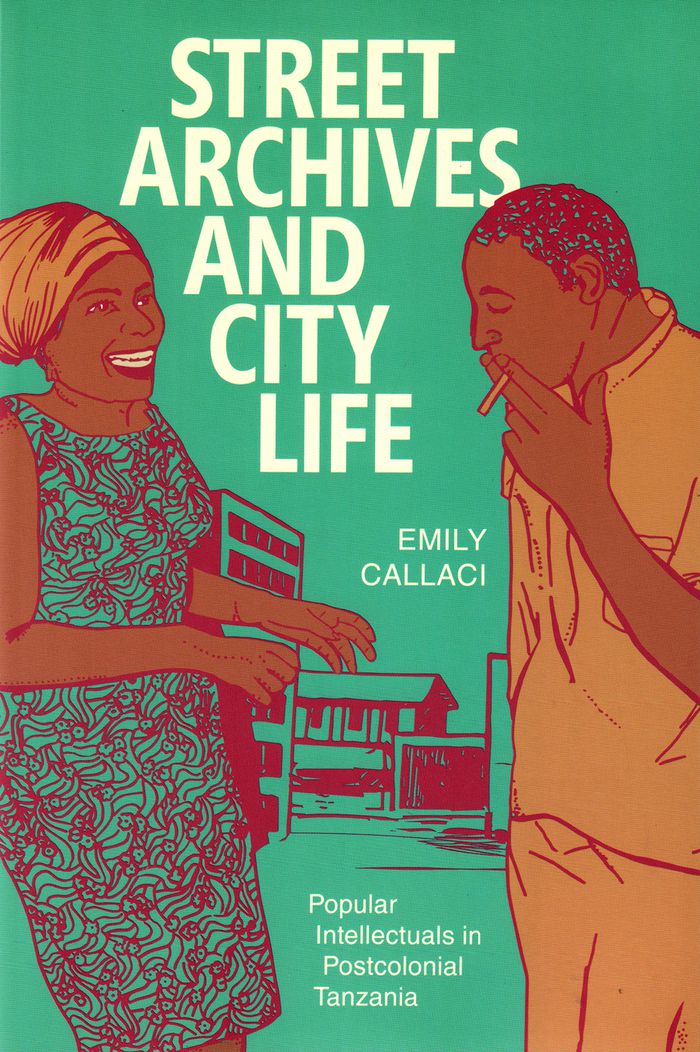
In ''Street Archives and City Life'', Emily Callaci maps a new terrain of political and cultural production in mid- to late twentieth-century Tanzanian urban landscapes. While the postcolonial Tanzanian ruling party (TANU) adopted a policy of rural socialism known as Ujamaa between 1967 and 1985, an influx of youth migrants to the city of Dar es Salaam generated innovative forms of urbanism through the production and circulation of what Callaci calls street archives. These urban intellectuals neither supported nor contested the ruling party's anti-city philosophy; rather, they navigated the complexities of inhabiting unplanned African cities during economic crisis and social transformation through various forms of popular texts that included women's Christian advice literature, newspaper columns, self-published pulp fiction novellas, and song lyrics. Through these textual networks, Callaci shows how youth migrants and urban intellectuals in Dar es Salaam fashioned a collective ethos of postcolonial African citizenship. This spirit ushered in a revolution rooted in the city and its networks—an urban revolution that arose in spite of the nation-state's pro-rural ideology.
Street archives and city life: popular intellectuals in postcolonial Tanzania
Actions:
Price:
$40.00
(available to order)
Summary:
In ''Street Archives and City Life'', Emily Callaci maps a new terrain of political and cultural production in mid- to late twentieth-century Tanzanian urban landscapes. While the postcolonial Tanzanian ruling party (TANU) adopted a policy of rural socialism known as Ujamaa between 1967 and 1985, an influx of youth migrants to the city of Dar es Salaam generated innovative forms of urbanism through the production and circulation of what Callaci calls street archives. These urban intellectuals neither supported nor contested the ruling party's anti-city philosophy; rather, they navigated the complexities of inhabiting unplanned African cities during economic crisis and social transformation through various forms of popular texts that included women's Christian advice literature, newspaper columns, self-published pulp fiction novellas, and song lyrics. Through these textual networks, Callaci shows how youth migrants and urban intellectuals in Dar es Salaam fashioned a collective ethos of postcolonial African citizenship. This spirit ushered in a revolution rooted in the city and its networks—an urban revolution that arose in spite of the nation-state's pro-rural ideology.
Form:
books
books
Publication:
November 2017
November 2017
Subject:
History until 1900, Middle East
History until 1900, Middle East
Form:
books
books
Price:
$72.95
(available to order)
Summary:
A land of promise, of contrasts between tradition and innovation, an example of a new social model based on the concept of human community, the African continent, protagonist of the exhibition at MAXXI in 2018, is examined from an innovative point of view which leads to questioning visitors on their knowledge of the places. The museum houses the site-specific works and(...)
$72.95
(available to order)
Summary:
A land of promise, of contrasts between tradition and innovation, an example of a new social model based on the concept of human community, the African continent, protagonist of the exhibition at MAXXI in 2018, is examined from an innovative point of view which leads to questioning visitors on their knowledge of the places. The museum houses the site-specific works and(...)
Title:
African metropolis: Una citta immaginaria / An imaginary city
Actions:
Price:
$72.95
(available to order)
Summary:
A land of promise, of contrasts between tradition and innovation, an example of a new social model based on the concept of human community, the African continent, protagonist of the exhibition at MAXXI in 2018, is examined from an innovative point of view which leads to questioning visitors on their knowledge of the places. The museum houses the site-specific works and projects from 40 artists who communicate their continent and investigate it in the dimension of urban space. The volume that accompanies the exhibitions contains essays and interview with international authors such as Marco Scotini, Sumesh Sharma, Edgar Pieterse, Akinbode Akinbiyi, and Bonaventure Ndikung.
African metropolis: Una citta immaginaria / An imaginary city
Actions:
Price:
$72.95
(available to order)
Summary:
A land of promise, of contrasts between tradition and innovation, an example of a new social model based on the concept of human community, the African continent, protagonist of the exhibition at MAXXI in 2018, is examined from an innovative point of view which leads to questioning visitors on their knowledge of the places. The museum houses the site-specific works and projects from 40 artists who communicate their continent and investigate it in the dimension of urban space. The volume that accompanies the exhibitions contains essays and interview with international authors such as Marco Scotini, Sumesh Sharma, Edgar Pieterse, Akinbode Akinbiyi, and Bonaventure Ndikung.
Form:
books
books
Publication:
October 2018
October 2018
Subject:
History until 1900, Middle East
History until 1900, Middle East
Form:
books
books
Actions:
Price:
$33.95
(available to order)
Summary:
Forteresse croisée dressée depuis huit siècles au coeur de la Syrie, le Crac des Chevaliers est un symbole permanent des échanges entre Orient et Occident, et de la fascination de deux mondes qui ne cessent de s'observer, de part et d'autre de la Méditerranée. Entièrement rebâti au XIIe siècle par les moines-soldats de l'ordre des Hospitaliers, le Crac est pris en 1271(...)
$33.95
(available to order)
Summary:
Forteresse croisée dressée depuis huit siècles au coeur de la Syrie, le Crac des Chevaliers est un symbole permanent des échanges entre Orient et Occident, et de la fascination de deux mondes qui ne cessent de s'observer, de part et d'autre de la Méditerranée. Entièrement rebâti au XIIe siècle par les moines-soldats de l'ordre des Hospitaliers, le Crac est pris en 1271(...)
Title:
Le crac des chevaliers : chroniques d'un rêve de pierre
Actions:
Price:
$33.95
(available to order)
Summary:
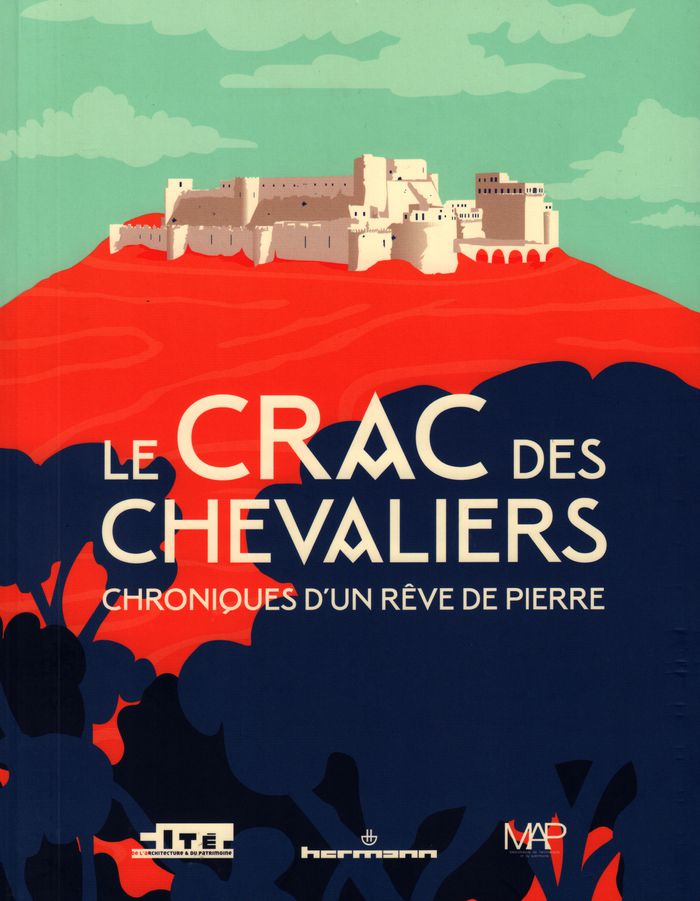
Forteresse croisée dressée depuis huit siècles au coeur de la Syrie, le Crac des Chevaliers est un symbole permanent des échanges entre Orient et Occident, et de la fascination de deux mondes qui ne cessent de s'observer, de part et d'autre de la Méditerranée. Entièrement rebâti au XIIe siècle par les moines-soldats de l'ordre des Hospitaliers, le Crac est pris en 1271 par les mamelouks du sultan Baybars. En 2006, le Crac est inscrit au patrimoine mondial de l'Unesco ; il fait encore aujourd'hui l'objet de recherches archéologiques et historiques. Le présent ouvrage offre une synthèse claire et illustrée de son histoire, où l'expression du château idéal se mêle sans cesse au rêve oriental.
Le crac des chevaliers : chroniques d'un rêve de pierre
Actions:
Price:
$33.95
(available to order)
Summary:
Forteresse croisée dressée depuis huit siècles au coeur de la Syrie, le Crac des Chevaliers est un symbole permanent des échanges entre Orient et Occident, et de la fascination de deux mondes qui ne cessent de s'observer, de part et d'autre de la Méditerranée. Entièrement rebâti au XIIe siècle par les moines-soldats de l'ordre des Hospitaliers, le Crac est pris en 1271 par les mamelouks du sultan Baybars. En 2006, le Crac est inscrit au patrimoine mondial de l'Unesco ; il fait encore aujourd'hui l'objet de recherches archéologiques et historiques. Le présent ouvrage offre une synthèse claire et illustrée de son histoire, où l'expression du château idéal se mêle sans cesse au rêve oriental.
Form:
books
books
Publication:
January 2019
January 2019
Subject:
History until 1900, Middle East
History until 1900, Middle East
Form:
books
books
Actions:
Price:
$67.95
(available in store)
Summary:
This publication is one of the few Western studies of modern African architecture. The architect Antoni Folkers calls into question the moralistic, simplified Western Modernism that has become stranded in the African savannah. The critique of the one-sidedness of Western architecture is not only theoretical, but also assumes a practical form in the pluriform and(...)
$67.95
(available in store)
Summary:
This publication is one of the few Western studies of modern African architecture. The architect Antoni Folkers calls into question the moralistic, simplified Western Modernism that has become stranded in the African savannah. The critique of the one-sidedness of Western architecture is not only theoretical, but also assumes a practical form in the pluriform and(...)
Title:
Modern architecture in Africa
Actions:
Price:
$67.95
(available in store)
Summary:
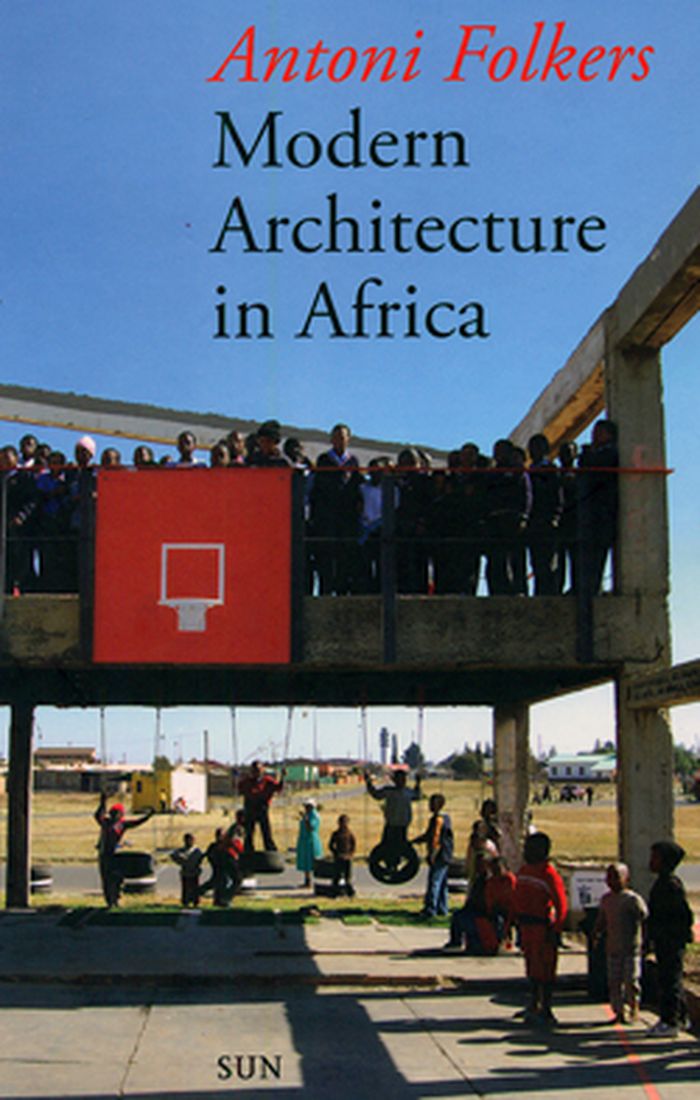
This publication is one of the few Western studies of modern African architecture. The architect Antoni Folkers calls into question the moralistic, simplified Western Modernism that has become stranded in the African savannah. The critique of the one-sidedness of Western architecture is not only theoretical, but also assumes a practical form in the pluriform and multi-coloured architecture of Africa.
Modern architecture in Africa
Actions:
Price:
$67.95
(available in store)
Summary:
This publication is one of the few Western studies of modern African architecture. The architect Antoni Folkers calls into question the moralistic, simplified Western Modernism that has become stranded in the African savannah. The critique of the one-sidedness of Western architecture is not only theoretical, but also assumes a practical form in the pluriform and multi-coloured architecture of Africa.
Form:
books
books
Publication:
December 2009
December 2009
Subject:
History until 1900, Middle East
History until 1900, Middle East
Form:
books
books
Actions:
Price:
$32.00
(available to order)
Summary:
Nairobi, in its short history spanning just over one hundred years, has grown to be one of the most varied and international cities of our contemporary world. Migration has been shown as one of the key forces infl uencing the city. In the context of Nairobi’s complex colonial and postindependence political trajectory, migration has reinforced ethnic, spatial, and economic(...)
$32.00
(available to order)
Summary:
Nairobi, in its short history spanning just over one hundred years, has grown to be one of the most varied and international cities of our contemporary world. Migration has been shown as one of the key forces infl uencing the city. In the context of Nairobi’s complex colonial and postindependence political trajectory, migration has reinforced ethnic, spatial, and economic(...)
Subject:
History until 1900, Middle East
History until 1900, Middle East
Publication:
October 2013
October 2013
Title:
Nairobi, Kenya: Migration shaping the city
Actions:
Price:
$32.00
(available to order)
Summary:
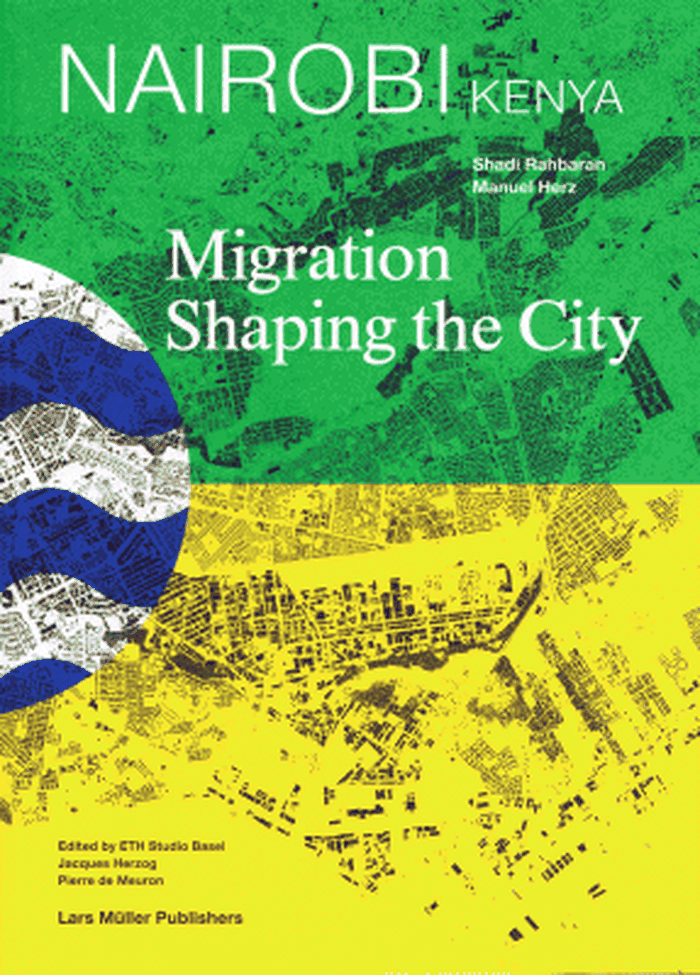
Nairobi, in its short history spanning just over one hundred years, has grown to be one of the most varied and international cities of our contemporary world. Migration has been shown as one of the key forces infl uencing the city. In the context of Nairobi’s complex colonial and postindependence political trajectory, migration has reinforced ethnic, spatial, and economic differences, leading to the formation of multiple power structures. This process is evident in the city’s radically different urban patterns. The book documents, along specific neighborhoods, how different cultures of urban life constitute the city today.
Nairobi, Kenya: Migration shaping the city
Actions:
Price:
$32.00
(available to order)
Summary:
Nairobi, in its short history spanning just over one hundred years, has grown to be one of the most varied and international cities of our contemporary world. Migration has been shown as one of the key forces infl uencing the city. In the context of Nairobi’s complex colonial and postindependence political trajectory, migration has reinforced ethnic, spatial, and economic differences, leading to the formation of multiple power structures. This process is evident in the city’s radically different urban patterns. The book documents, along specific neighborhoods, how different cultures of urban life constitute the city today.
Form:
books
books
Publication:
October 2013
October 2013
Subject:
History until 1900, Middle East
History until 1900, Middle East
Form:
books
books
Actions:
Price:
$34.95
(available to order)
Summary:
S'appuyant sur des plans et des documents photographiques inédits, cet ouvrage ne prétend pas dresser un plan exhaustif de l'histoire urbaine de Tunis de 1800 à 1950. Il propose plutôt une introduction au patrimoine urbain de cette période, mettant en relief les principales oeuvres architecturales qui y ont vu le jour. Le lecteur découvrira les différentes tendances qui(...)
$34.95
(available to order)
Summary:
S'appuyant sur des plans et des documents photographiques inédits, cet ouvrage ne prétend pas dresser un plan exhaustif de l'histoire urbaine de Tunis de 1800 à 1950. Il propose plutôt une introduction au patrimoine urbain de cette période, mettant en relief les principales oeuvres architecturales qui y ont vu le jour. Le lecteur découvrira les différentes tendances qui(...)
Publication:
April 2007, Tunis
April 2007, Tunis
Title:
Tunis 1800-1950 : portrait architectural et urbain
Actions:
Price:
$34.95
(available to order)
Summary:
S'appuyant sur des plans et des documents photographiques inédits, cet ouvrage ne prétend pas dresser un plan exhaustif de l'histoire urbaine de Tunis de 1800 à 1950. Il propose plutôt une introduction au patrimoine urbain de cette période, mettant en relief les principales oeuvres architecturales qui y ont vu le jour. Le lecteur découvrira les différentes tendances qui ont modelé l'environnement architectural et urbain du centre de Tunis tel que nous le connaissons aujourd'hui.
Tunis 1800-1950 : portrait architectural et urbain
Actions:
Price:
$34.95
(available to order)
Summary:
S'appuyant sur des plans et des documents photographiques inédits, cet ouvrage ne prétend pas dresser un plan exhaustif de l'histoire urbaine de Tunis de 1800 à 1950. Il propose plutôt une introduction au patrimoine urbain de cette période, mettant en relief les principales oeuvres architecturales qui y ont vu le jour. Le lecteur découvrira les différentes tendances qui ont modelé l'environnement architectural et urbain du centre de Tunis tel que nous le connaissons aujourd'hui.
Form:
books
books
Publication:
April 2007, Tunis
April 2007, Tunis
Form:
books
books
Title:
Asmara, the frozen city
Asmara, the frozen city
Actions:
Price:
$24.99
(available to order)
Summary:
Asmara, capital of the state of Eritrea, located in North Eastern Africa, is considered to be an impressive example of European urban construction of the 20th century. To this day, the influence of the former colonial power of Italy on the architecture of the city from the early 20th century to the 1940’s remains visible. Many of the buildings, erected in the futuristic,(...)
$24.99
(available to order)
Summary:
Asmara, capital of the state of Eritrea, located in North Eastern Africa, is considered to be an impressive example of European urban construction of the 20th century. To this day, the influence of the former colonial power of Italy on the architecture of the city from the early 20th century to the 1940’s remains visible. Many of the buildings, erected in the futuristic,(...)
Title:
Asmara, the frozen city
Actions:
Price:
$24.99
(available to order)
Summary:
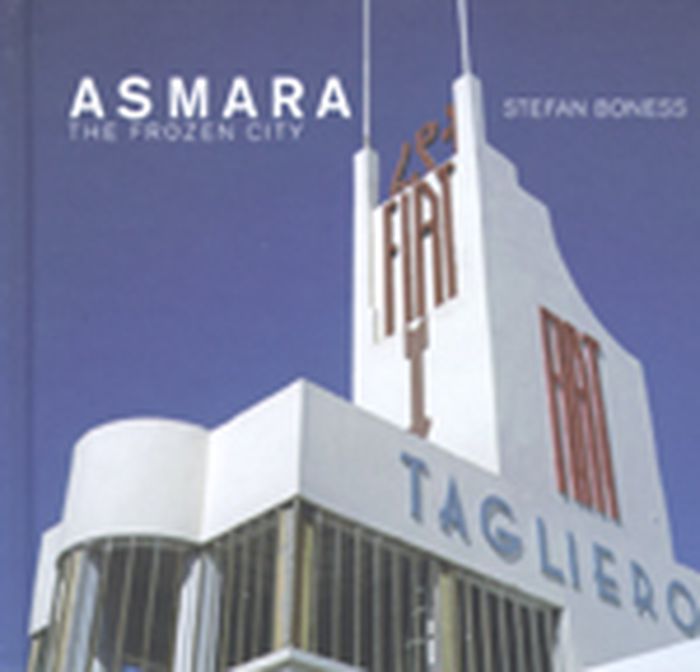
Asmara, capital of the state of Eritrea, located in North Eastern Africa, is considered to be an impressive example of European urban construction of the 20th century. To this day, the influence of the former colonial power of Italy on the architecture of the city from the early 20th century to the 1940’s remains visible. Many of the buildings, erected in the futuristic, monumentalist or rationalistic style have been preserved and dominate the cityscape of Asmara. In particular, architectural projects dating back to the late 1930’s and early 1940’s are the focal point of the work of photographer Stefan Boness. These include private, public and industrial buildings, which he photographed over the course of several months and which he staged incorporating their urban surroundings. Through his photographs, Stefan Boness has succeeded in expressing the unique atmosphere of Asmara, where time seemingly is standing still.
Asmara, the frozen city
Actions:
Price:
$24.99
(available to order)
Summary:
Asmara, capital of the state of Eritrea, located in North Eastern Africa, is considered to be an impressive example of European urban construction of the 20th century. To this day, the influence of the former colonial power of Italy on the architecture of the city from the early 20th century to the 1940’s remains visible. Many of the buildings, erected in the futuristic, monumentalist or rationalistic style have been preserved and dominate the cityscape of Asmara. In particular, architectural projects dating back to the late 1930’s and early 1940’s are the focal point of the work of photographer Stefan Boness. These include private, public and industrial buildings, which he photographed over the course of several months and which he staged incorporating their urban surroundings. Through his photographs, Stefan Boness has succeeded in expressing the unique atmosphere of Asmara, where time seemingly is standing still.
Form:
books
books
Publication:
July 2007, Berlin
July 2007, Berlin
Subject:
History until 1900, Middle East
History until 1900, Middle East
Form:
books
books
Title:
From Cameroon to Paris
From Cameroon to Paris
Actions:
Price:
$54.95
(available to order)
Summary:
The kind of extraordinary domed house constructed by Chad and Cameroon’s Mousgoum peoples has long held sway over the Western imagination. In fact, as Steven Nelson shows here, this prototypical beehive-shaped structure known as the teleuk has been cast as everything from a sign of authenticity to a tourist destination to a perfect fusion of form and function in an(...)
$54.95
(available to order)
Summary:
The kind of extraordinary domed house constructed by Chad and Cameroon’s Mousgoum peoples has long held sway over the Western imagination. In fact, as Steven Nelson shows here, this prototypical beehive-shaped structure known as the teleuk has been cast as everything from a sign of authenticity to a tourist destination to a perfect fusion of form and function in an(...)
Subject:
History until 1900, Middle East
History until 1900, Middle East
Publication:
March 2007, Chicago London
March 2007, Chicago London
Title:
From Cameroon to Paris
Actions:
Price:
$54.95
(available to order)
Summary:
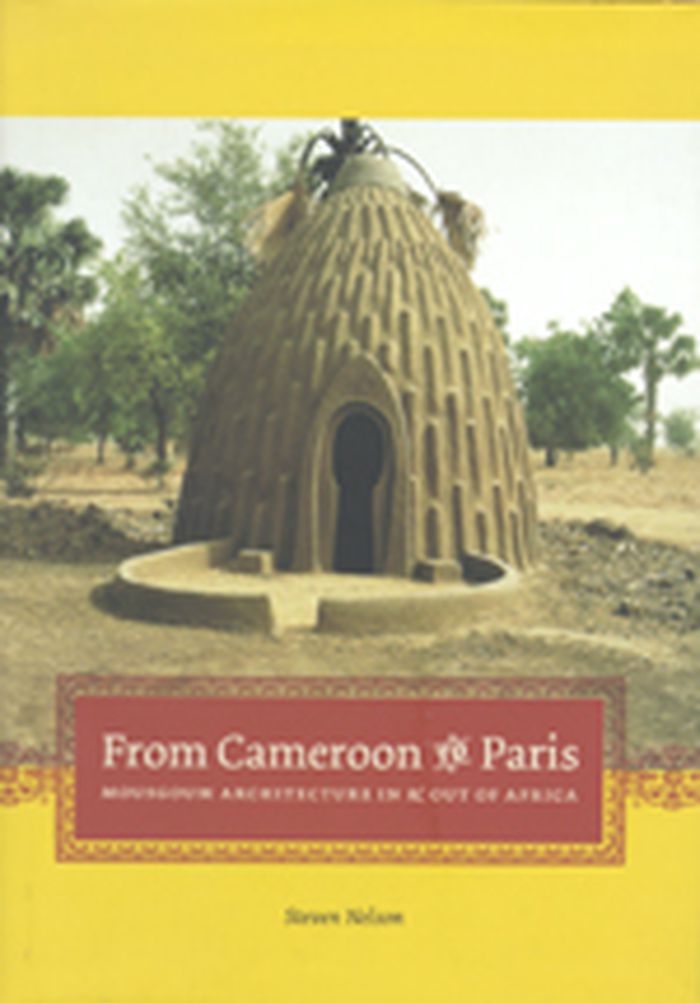
The kind of extraordinary domed house constructed by Chad and Cameroon’s Mousgoum peoples has long held sway over the Western imagination. In fact, as Steven Nelson shows here, this prototypical beehive-shaped structure known as the teleuk has been cast as everything from a sign of authenticity to a tourist destination to a perfect fusion of form and function in an unselfconscious culture. And in this multifaceted history of the teleuk, thought of by the Mousgoum themselves as a three-dimensional symbol of their culture, Nelson charts how a singular building’s meaning has the capacity to change over time and in different places. Drawing on fieldwork in Cameroon and Japan as well as archival research in Africa, the United States, and Europe, Nelson explores how the teleuk has been understood by groups ranging from contemporary tourists to the Cameroonian government and—most importantly—today’s Mousgoum people. In doing so, he moves in and out of Africa to provide a window into a changing Mousgoum culture and to show how both African and Western peoples use the built environment to advance their own needs and desires. Highlighting the global impact of African architecture, From Cameroon to Paris will appeal to scholars and students of African art history and architectural history, as well as those interested in Western interactions with Africa.
From Cameroon to Paris
Actions:
Price:
$54.95
(available to order)
Summary:
The kind of extraordinary domed house constructed by Chad and Cameroon’s Mousgoum peoples has long held sway over the Western imagination. In fact, as Steven Nelson shows here, this prototypical beehive-shaped structure known as the teleuk has been cast as everything from a sign of authenticity to a tourist destination to a perfect fusion of form and function in an unselfconscious culture. And in this multifaceted history of the teleuk, thought of by the Mousgoum themselves as a three-dimensional symbol of their culture, Nelson charts how a singular building’s meaning has the capacity to change over time and in different places. Drawing on fieldwork in Cameroon and Japan as well as archival research in Africa, the United States, and Europe, Nelson explores how the teleuk has been understood by groups ranging from contemporary tourists to the Cameroonian government and—most importantly—today’s Mousgoum people. In doing so, he moves in and out of Africa to provide a window into a changing Mousgoum culture and to show how both African and Western peoples use the built environment to advance their own needs and desires. Highlighting the global impact of African architecture, From Cameroon to Paris will appeal to scholars and students of African art history and architectural history, as well as those interested in Western interactions with Africa.
Form:
books
books
Publication:
March 2007, Chicago London
March 2007, Chicago London
Subject:
History until 1900, Middle East
History until 1900, Middle East


