


496 Results
Form:
books
books
Price:
$29.95
(available to order)
Summary:
The authors of this book offer aesthetically pleasing strategies for creating and caring for ecologically sound lawns. Revised and updated edition.
$29.95
(available to order)
Summary:
The authors of this book offer aesthetically pleasing strategies for creating and caring for ecologically sound lawns. Revised and updated edition.
Subject:
Landscape Theory
Landscape Theory
Publication:
May 2001, New Haven
May 2001, New Haven
Title:
Redesigning the american lawn : a search for environmental harmony
Actions:
Price:
$29.95
(available to order)
Summary:
The authors of this book offer aesthetically pleasing strategies for creating and caring for ecologically sound lawns. Revised and updated edition.
Redesigning the american lawn : a search for environmental harmony
Actions:
Price:
$29.95
(available to order)
Summary:
The authors of this book offer aesthetically pleasing strategies for creating and caring for ecologically sound lawns. Revised and updated edition.
Form:
books
books
Publication:
May 2001, New Haven
May 2001, New Haven
Subject:
Landscape Theory
Landscape Theory
Form:
books
books
Title:
Theory of garden art
Theory of garden art
Actions:
Price:
$98.95
(available to order)
Summary:
Published originally between 1779 and 1785 and comprising five volumes, Hirschfeld's Theory of Garden Art is here translated into English for the first time. In this one-volume abridged edition Linda Parshall translates the essential aspects of the Theory of Garden Art, Hirschfeld's seminal work. The translation is accompanied by an introduction by Parshall, which(...)
$98.95
(available to order)
Summary:
Published originally between 1779 and 1785 and comprising five volumes, Hirschfeld's Theory of Garden Art is here translated into English for the first time. In this one-volume abridged edition Linda Parshall translates the essential aspects of the Theory of Garden Art, Hirschfeld's seminal work. The translation is accompanied by an introduction by Parshall, which(...)
Title:
Theory of garden art
Actions:
Price:
$98.95
(available to order)
Summary:
Published originally between 1779 and 1785 and comprising five volumes, Hirschfeld's Theory of Garden Art is here translated into English for the first time. In this one-volume abridged edition Linda Parshall translates the essential aspects of the Theory of Garden Art, Hirschfeld's seminal work. The translation is accompanied by an introduction by Parshall, which analyzes Hirschfeld's place in the intellectual and cultural history of his time, and in the history of landscape design. This book will be a useful and authoritative contribution to both the history of landscape architecture and German cultural history.
Theory of garden art
Actions:
Price:
$98.95
(available to order)
Summary:
Published originally between 1779 and 1785 and comprising five volumes, Hirschfeld's Theory of Garden Art is here translated into English for the first time. In this one-volume abridged edition Linda Parshall translates the essential aspects of the Theory of Garden Art, Hirschfeld's seminal work. The translation is accompanied by an introduction by Parshall, which analyzes Hirschfeld's place in the intellectual and cultural history of his time, and in the history of landscape design. This book will be a useful and authoritative contribution to both the history of landscape architecture and German cultural history.
Form:
books
books
Publication:
May 2001, Philadelphia
May 2001, Philadelphia
Subject:
Landscape Theory
Landscape Theory
Form:
books
books
Actions:
Price:
$44.95
(available to order)
Summary:
The Nature of Landscape offers an inspiring, personal account of a quest into the meaning and background of the term ‘landscape’. The author, a landscape planner and designer currently teaching at Eindhoven University of Technology, researches the origins of landscape in our civilization and describes different points of view that have helped shape our opinions on(...)
$44.95
(available to order)
Summary:
The Nature of Landscape offers an inspiring, personal account of a quest into the meaning and background of the term ‘landscape’. The author, a landscape planner and designer currently teaching at Eindhoven University of Technology, researches the origins of landscape in our civilization and describes different points of view that have helped shape our opinions on(...)
Title:
The nature of landscape : a personal quest
Actions:
Price:
$44.95
(available to order)
Summary:
The Nature of Landscape offers an inspiring, personal account of a quest into the meaning and background of the term ‘landscape’. The author, a landscape planner and designer currently teaching at Eindhoven University of Technology, researches the origins of landscape in our civilization and describes different points of view that have helped shape our opinions on landscape. For the author, our notion of landscape is focused around the terms 'nature versus culture' and 'native versus foreign'. These counterparts make up his 'mindscape diamond', a modified matrix that not only explains trends in landscape perception and design, but also helps to define developments in land use, architecture, urban planning and environmental art. On a more metaphorical level, the author's abundantly illustrated quest is symbolized by a number of personal impressions, such as the discovery of a stone circle in the desert, a lesson in the peculiarities of the Russian language, a journey along the industrial heritage of the German Ruhrgebiet and a visit to a town where ‘Bavaria comes to Washington’. Offering an unexpected reading experience, these and other descriptions demonstrate how varied ‘landscape’ can be. In a worldwide overview of 30 landscape related artworks and 30 park designs, the author discusses landscape attitudes past and present. In a final chapter, he brings together recent developments in society, architecture and art to make a forecast of landscape trends in the near future. Themes such as man-made nature and reinvented heritage conclude this unusual book on the essence of landscape.
The nature of landscape : a personal quest
Actions:
Price:
$44.95
(available to order)
Summary:
The Nature of Landscape offers an inspiring, personal account of a quest into the meaning and background of the term ‘landscape’. The author, a landscape planner and designer currently teaching at Eindhoven University of Technology, researches the origins of landscape in our civilization and describes different points of view that have helped shape our opinions on landscape. For the author, our notion of landscape is focused around the terms 'nature versus culture' and 'native versus foreign'. These counterparts make up his 'mindscape diamond', a modified matrix that not only explains trends in landscape perception and design, but also helps to define developments in land use, architecture, urban planning and environmental art. On a more metaphorical level, the author's abundantly illustrated quest is symbolized by a number of personal impressions, such as the discovery of a stone circle in the desert, a lesson in the peculiarities of the Russian language, a journey along the industrial heritage of the German Ruhrgebiet and a visit to a town where ‘Bavaria comes to Washington’. Offering an unexpected reading experience, these and other descriptions demonstrate how varied ‘landscape’ can be. In a worldwide overview of 30 landscape related artworks and 30 park designs, the author discusses landscape attitudes past and present. In a final chapter, he brings together recent developments in society, architecture and art to make a forecast of landscape trends in the near future. Themes such as man-made nature and reinvented heritage conclude this unusual book on the essence of landscape.
Form:
books
books
Publication:
March 2001, Rotterdam
March 2001, Rotterdam
Subject:
Landscape Theory
Landscape Theory
Form:
books
books
Title:
The language of landscape
The language of landscape
Actions:
Price:
$25.95
(available to order)
Summary:
Offering examples that range across thousands of years and five continents, Spirn examines urban, rural, and natural landscapes. She discusses the thought of renowned landscape authors--Thomas Jefferson, Frank Lloyd Wright, Frederick Law Olmsted, Lawrence Halprin--and of less well known pioneers, including Australian architect Glenn Murcutt and Danish landscape artist C.(...)
$25.95
(available to order)
Summary:
Offering examples that range across thousands of years and five continents, Spirn examines urban, rural, and natural landscapes. She discusses the thought of renowned landscape authors--Thomas Jefferson, Frank Lloyd Wright, Frederick Law Olmsted, Lawrence Halprin--and of less well known pioneers, including Australian architect Glenn Murcutt and Danish landscape artist C.(...)
Title:
The language of landscape
Actions:
Price:
$25.95
(available to order)
Summary:
Offering examples that range across thousands of years and five continents, Spirn examines urban, rural, and natural landscapes. She discusses the thought of renowned landscape authors--Thomas Jefferson, Frank Lloyd Wright, Frederick Law Olmsted, Lawrence Halprin--and of less well known pioneers, including Australian architect Glenn Murcutt and Danish landscape artist C. Th. Sørensen. She discusses instances of great landscape designers using landscape fluently, masterfully, and sometimes cynically. And, in a probing analysis of the many meanings of landscape, Spirn shows how one person’s ideal landscape may be another’s nightmare, how Utopian landscapes can be dark. There is danger when we lose the connection between a place and our understanding of it, Spirn warns, and she calls for change in the way we shape our environment, based on the notions of nature as a set of ideas and landscape as the expression of action and ideas in place.
The language of landscape
Actions:
Price:
$25.95
(available to order)
Summary:
Offering examples that range across thousands of years and five continents, Spirn examines urban, rural, and natural landscapes. She discusses the thought of renowned landscape authors--Thomas Jefferson, Frank Lloyd Wright, Frederick Law Olmsted, Lawrence Halprin--and of less well known pioneers, including Australian architect Glenn Murcutt and Danish landscape artist C. Th. Sørensen. She discusses instances of great landscape designers using landscape fluently, masterfully, and sometimes cynically. And, in a probing analysis of the many meanings of landscape, Spirn shows how one person’s ideal landscape may be another’s nightmare, how Utopian landscapes can be dark. There is danger when we lose the connection between a place and our understanding of it, Spirn warns, and she calls for change in the way we shape our environment, based on the notions of nature as a set of ideas and landscape as the expression of action and ideas in place.
Form:
books
books
Publication:
May 2000, New haven
May 2000, New haven
Subject:
Landscape Theory
Landscape Theory
Form:
books
books
Actions:
Price:
$15.95
(available to order)
Summary:
Actes du colloque tenu au Musée d'art contemporain de Montréal les 14, 15 et 16 avril 2000. Essais par Christine Bernier, Michel Baridon, Anne Bélanger, Pierre Bonnechere, Thérèse Chabot, Melvin Charney, Danielle Dagenais, Bertrand Dumont, Philip Fry, Catherine Grout, Francine Larivée, Luc Lévesque, Philippe Nys, et Alexander Reford.
$15.95
(available to order)
Summary:
Actes du colloque tenu au Musée d'art contemporain de Montréal les 14, 15 et 16 avril 2000. Essais par Christine Bernier, Michel Baridon, Anne Bélanger, Pierre Bonnechere, Thérèse Chabot, Melvin Charney, Danielle Dagenais, Bertrand Dumont, Philip Fry, Catherine Grout, Francine Larivée, Luc Lévesque, Philippe Nys, et Alexander Reford.
Subject:
Landscape Theory
Landscape Theory
Publication:
September 2000, Montréal
September 2000, Montréal
Title:
Art et jardins : nature/culture
Actions:
Price:
$15.95
(available to order)
Summary:
Actes du colloque tenu au Musée d'art contemporain de Montréal les 14, 15 et 16 avril 2000. Essais par Christine Bernier, Michel Baridon, Anne Bélanger, Pierre Bonnechere, Thérèse Chabot, Melvin Charney, Danielle Dagenais, Bertrand Dumont, Philip Fry, Catherine Grout, Francine Larivée, Luc Lévesque, Philippe Nys, et Alexander Reford.
Art et jardins : nature/culture
Actions:
Price:
$15.95
(available to order)
Summary:
Actes du colloque tenu au Musée d'art contemporain de Montréal les 14, 15 et 16 avril 2000. Essais par Christine Bernier, Michel Baridon, Anne Bélanger, Pierre Bonnechere, Thérèse Chabot, Melvin Charney, Danielle Dagenais, Bertrand Dumont, Philip Fry, Catherine Grout, Francine Larivée, Luc Lévesque, Philippe Nys, et Alexander Reford.
Form:
books
books
Publication:
September 2000, Montréal
September 2000, Montréal
Subject:
Landscape Theory
Landscape Theory
Form:
books
books
Actions:
Price:
$31.25
(available to order)
Summary:
"Sowing Empire" identifies the cultivation and landscaping of colonies as one of the primary ways imperial nations justified their empires. Planting and transplanting, seeding and reshaping - the landscaping practices that emerged in the eighteenth century - are inextricable from the contested terrain of empire within which they operated. From the plantations of the(...)
$31.25
(available to order)
Summary:
"Sowing Empire" identifies the cultivation and landscaping of colonies as one of the primary ways imperial nations justified their empires. Planting and transplanting, seeding and reshaping - the landscaping practices that emerged in the eighteenth century - are inextricable from the contested terrain of empire within which they operated. From the plantations of the(...)
Title:
Sowing empire : landscape and colonization
Actions:
Price:
$31.25
(available to order)
Summary:
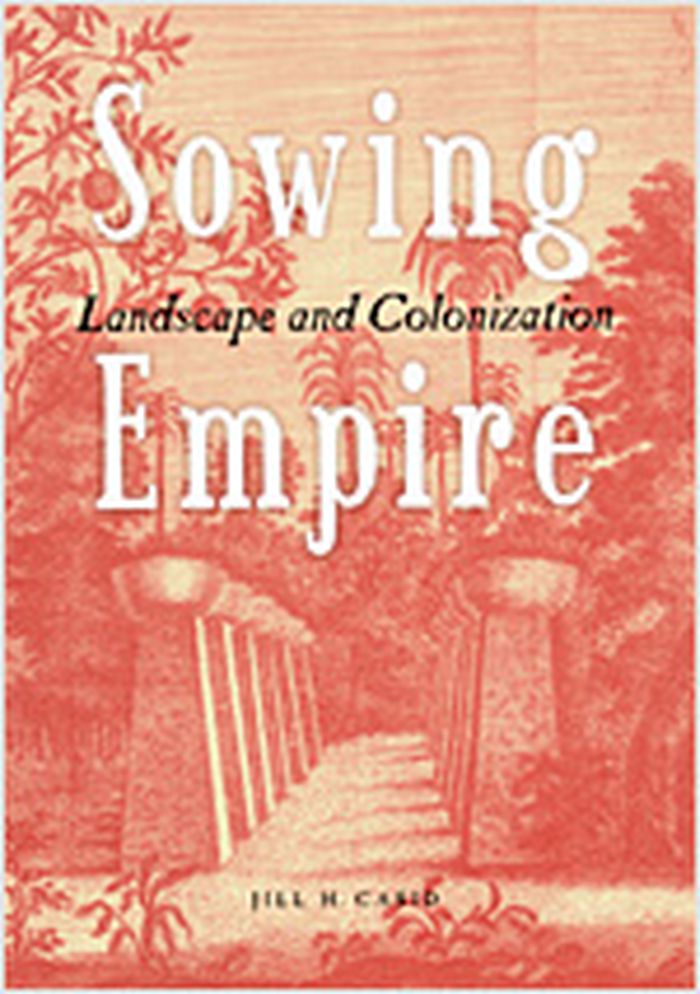
"Sowing Empire" identifies the cultivation and landscaping of colonies as one of the primary ways imperial nations justified their empires. Planting and transplanting, seeding and reshaping - the landscaping practices that emerged in the eighteenth century - are inextricable from the contested terrain of empire within which they operated. From the plantations of the “nabobs” to the island gardens of narrative fiction, from William Beckford’s estate at Fonthill to Marie Antoinette’s ornamented farm, "Sowing Empire" considers imperial relandscaping - its patriarchal organization, heterosexual reproduction, and slavery - and how it contributed to the construction of imperial power. At the same time, the book shows how these picturesque landscapes and sugar plantations contained within them the seeds of resistance - how, for instance, slave gardens and the Afro-Caribbean practice of Vodou threatened authority and created new possibilities for once again transforming the landscape. In an ambitious work of wide-ranging literary, visual, and historical allusion, Jill H. Casid examines how landscaping functioned in an imperial mode that defined and remade the “heartlands” of nations as well as the contact zones and colonial peripheries in the West and East Indies. Revealing the colonial landscape as far more than an agricultural system - as a means of regulating national, sexual, and gender identities - Casid also traces how the circulation of plants and hybridity influenced agriculture and landscaping on European soil and how colonial contacts materially shaped what we take as “European.” Utilizing a wide range of both visual and written sources - maps, literature, and travel writing - this book is interdisciplinary in its methodology and in its scope. Sowing Empire explores how postcolonial and queer studies can alter art history and visual studies and, in turn, what close attention to the visual may offer to both postcolonial theorizing and historically and materially based colonial cultural studies.
Sowing empire : landscape and colonization
Actions:
Price:
$31.25
(available to order)
Summary:
"Sowing Empire" identifies the cultivation and landscaping of colonies as one of the primary ways imperial nations justified their empires. Planting and transplanting, seeding and reshaping - the landscaping practices that emerged in the eighteenth century - are inextricable from the contested terrain of empire within which they operated. From the plantations of the “nabobs” to the island gardens of narrative fiction, from William Beckford’s estate at Fonthill to Marie Antoinette’s ornamented farm, "Sowing Empire" considers imperial relandscaping - its patriarchal organization, heterosexual reproduction, and slavery - and how it contributed to the construction of imperial power. At the same time, the book shows how these picturesque landscapes and sugar plantations contained within them the seeds of resistance - how, for instance, slave gardens and the Afro-Caribbean practice of Vodou threatened authority and created new possibilities for once again transforming the landscape. In an ambitious work of wide-ranging literary, visual, and historical allusion, Jill H. Casid examines how landscaping functioned in an imperial mode that defined and remade the “heartlands” of nations as well as the contact zones and colonial peripheries in the West and East Indies. Revealing the colonial landscape as far more than an agricultural system - as a means of regulating national, sexual, and gender identities - Casid also traces how the circulation of plants and hybridity influenced agriculture and landscaping on European soil and how colonial contacts materially shaped what we take as “European.” Utilizing a wide range of both visual and written sources - maps, literature, and travel writing - this book is interdisciplinary in its methodology and in its scope. Sowing Empire explores how postcolonial and queer studies can alter art history and visual studies and, in turn, what close attention to the visual may offer to both postcolonial theorizing and historically and materially based colonial cultural studies.
Form:
books
books
Publication:
January 2005, Minneapolis
January 2005, Minneapolis
Subject:
Landscape Theory
Landscape Theory
Form:
books
books
Actions:
Price:
$30.00
(available to order)
Summary:
The Japanese dry landscape garden has long attracted--and long baffled--viewers from the West. While museums across the United States are replicating these "Zen rock gardens" in their courtyards and miniature versions of the gardens are now office decorations, they remain enigmatic, their(...)
$30.00
(available to order)
Summary:
The Japanese dry landscape garden has long attracted--and long baffled--viewers from the West. While museums across the United States are replicating these "Zen rock gardens" in their courtyards and miniature versions of the gardens are now office decorations, they remain enigmatic, their(...)
Title:
Reading zen in the rocks : the Japanese dry landscape garden
Actions:
Price:
$30.00
(available to order)
Summary:
The Japanese dry landscape garden has long attracted--and long baffled--viewers from the West. While museums across the United States are replicating these "Zen rock gardens" in their courtyards and miniature versions of the gardens are now office decorations, they remain enigmatic, their philosophical and aesthetic significance obscured. Reading Zen in the Rocks, the classic essay on the karesansui garden by French art historian François Berthier, has now been translated by Graham Parkes, giving English-speaking readers a concise, thorough, and beautifully illustrated history of these gardens. Berthier's guided tour of the famous garden of Ryoanji (Temple) in Kyoto leads him into an exposition of the genre, focusing on its Chinese antecedents and affiliations with Taoist ideas and Chinese landscape painting. He traces the roles of Shinto and Zen Buddhism in the evolution of the garden and also considers how manual laborers from the lowest classes in Japan had a hand in creating some of its highest examples. Parkes contributes an equally original and substantive essay which delves into the philosophical importance of rocks and their "language of stone," delineating the difference between Chinese and Japanese rock gardens and their relationship to Buddhism. Together, the two essays compose one of the most comprehensive and elegantly written studies of this haunting garden form.
Reading zen in the rocks : the Japanese dry landscape garden
Actions:
Price:
$30.00
(available to order)
Summary:
The Japanese dry landscape garden has long attracted--and long baffled--viewers from the West. While museums across the United States are replicating these "Zen rock gardens" in their courtyards and miniature versions of the gardens are now office decorations, they remain enigmatic, their philosophical and aesthetic significance obscured. Reading Zen in the Rocks, the classic essay on the karesansui garden by French art historian François Berthier, has now been translated by Graham Parkes, giving English-speaking readers a concise, thorough, and beautifully illustrated history of these gardens. Berthier's guided tour of the famous garden of Ryoanji (Temple) in Kyoto leads him into an exposition of the genre, focusing on its Chinese antecedents and affiliations with Taoist ideas and Chinese landscape painting. He traces the roles of Shinto and Zen Buddhism in the evolution of the garden and also considers how manual laborers from the lowest classes in Japan had a hand in creating some of its highest examples. Parkes contributes an equally original and substantive essay which delves into the philosophical importance of rocks and their "language of stone," delineating the difference between Chinese and Japanese rock gardens and their relationship to Buddhism. Together, the two essays compose one of the most comprehensive and elegantly written studies of this haunting garden form.
Form:
books
books
Publication:
May 2000, Chicago
May 2000, Chicago
Subject:
Landscape Theory
Landscape Theory
Form:
books
books
Actions:
Price:
$33.50
(available to order)
Summary:
Au sommaire : retour sur une consultation de concepteurs (Frédéric Pousin); la marge et le plein: un lieu de vie pour les tsiganes (Marie-Hèlène Giraud); Du champs de bataille au paysage de guerre (Martin Warne); Des talisman de pierre : les sources ésotériques de l'architecture militaire (Assia Houhou)...
$33.50
(available to order)
Summary:
Au sommaire : retour sur une consultation de concepteurs (Frédéric Pousin); la marge et le plein: un lieu de vie pour les tsiganes (Marie-Hèlène Giraud); Du champs de bataille au paysage de guerre (Martin Warne); Des talisman de pierre : les sources ésotériques de l'architecture militaire (Assia Houhou)...
Title:
Les carnets du paysage no 5 : printemps/été 2000
Actions:
Price:
$33.50
(available to order)
Summary:
Au sommaire : retour sur une consultation de concepteurs (Frédéric Pousin); la marge et le plein: un lieu de vie pour les tsiganes (Marie-Hèlène Giraud); Du champs de bataille au paysage de guerre (Martin Warne); Des talisman de pierre : les sources ésotériques de l'architecture militaire (Assia Houhou)...
Les carnets du paysage no 5 : printemps/été 2000
Actions:
Price:
$33.50
(available to order)
Summary:
Au sommaire : retour sur une consultation de concepteurs (Frédéric Pousin); la marge et le plein: un lieu de vie pour les tsiganes (Marie-Hèlène Giraud); Du champs de bataille au paysage de guerre (Martin Warne); Des talisman de pierre : les sources ésotériques de l'architecture militaire (Assia Houhou)...
Form:
books
books
Publication:
June 2000, Versailles
June 2000, Versailles
Subject:
Landscape Theory
Landscape Theory
Form:
books
books
Actions:
Price:
$51.95
(available to order)
Summary:
Ce numéro double des "Carnets du paysage" traite du jardinage en soi, de son histoire récente, de ses mots et de sa pratique en relation avec le paysage. Il s' intéresse ici au processus plus qu'au résultat, à la manière dont le jardinage joue avec notre imaginaire, la littérature, l'organisation sociale et aussi au fait qu'il ouvre des perspectives dans le travail de paysagiste.
$51.95
(available to order)
Summary:
Ce numéro double des "Carnets du paysage" traite du jardinage en soi, de son histoire récente, de ses mots et de sa pratique en relation avec le paysage. Il s' intéresse ici au processus plus qu'au résultat, à la manière dont le jardinage joue avec notre imaginaire, la littérature, l'organisation sociale et aussi au fait qu'il ouvre des perspectives dans le travail de paysagiste.
Title:
Les carnets du paysage no 9 & 10 : jardiner
Actions:
Price:
$51.95
(available to order)
Summary:
Ce numéro double des "Carnets du paysage" traite du jardinage en soi, de son histoire récente, de ses mots et de sa pratique en relation avec le paysage. Il s' intéresse ici au processus plus qu'au résultat, à la manière dont le jardinage joue avec notre imaginaire, la littérature, l'organisation sociale et aussi au fait qu'il ouvre des perspectives dans le travail de paysagiste.
Les carnets du paysage no 9 & 10 : jardiner
Actions:
Price:
$51.95
(available to order)
Summary:
Ce numéro double des "Carnets du paysage" traite du jardinage en soi, de son histoire récente, de ses mots et de sa pratique en relation avec le paysage. Il s' intéresse ici au processus plus qu'au résultat, à la manière dont le jardinage joue avec notre imaginaire, la littérature, l'organisation sociale et aussi au fait qu'il ouvre des perspectives dans le travail de paysagiste.
Form:
books
books
Publication:
June 2003, Arles
June 2003, Arles
Subject:
Landscape Theory
Landscape Theory
Form:
books
books
Actions:
Price:
$55.00
(available to order)
Summary:
Although modern wastewater treatment plants are able to treat such pollution their techniques are not applicable to small municipalities, and especially not to private houses. Through precise analysis of thirty examples of wastewater treatment plants located in different European countries and in the USA, the authors demonstrate the benefits of using water plants in the(...)
$55.00
(available to order)
Summary:
Although modern wastewater treatment plants are able to treat such pollution their techniques are not applicable to small municipalities, and especially not to private houses. Through precise analysis of thirty examples of wastewater treatment plants located in different European countries and in the USA, the authors demonstrate the benefits of using water plants in the(...)
Subject:
Landscape Theory
Landscape Theory
Publication:
January 1900, Barcelona
January 1900, Barcelona
Title:
Waterscapes: using plant systems to treat water
Actions:
Price:
$55.00
(available to order)
Summary:
Although modern wastewater treatment plants are able to treat such pollution their techniques are not applicable to small municipalities, and especially not to private houses. Through precise analysis of thirty examples of wastewater treatment plants located in different European countries and in the USA, the authors demonstrate the benefits of using water plants in the treatment of wastewater for all kinds of typologies and communities. The different examples are analysed from a functional angle and as an important element of consideration when planning landscape.
Waterscapes: using plant systems to treat water
Actions:
Price:
$55.00
(available to order)
Summary:
Although modern wastewater treatment plants are able to treat such pollution their techniques are not applicable to small municipalities, and especially not to private houses. Through precise analysis of thirty examples of wastewater treatment plants located in different European countries and in the USA, the authors demonstrate the benefits of using water plants in the treatment of wastewater for all kinds of typologies and communities. The different examples are analysed from a functional angle and as an important element of consideration when planning landscape.
Form:
books
books
Publication:
January 1900, Barcelona
January 1900, Barcelona
Subject:
Landscape Theory
Landscape Theory


