


496 Results
Form:
books
books
Actions:
Price:
$27.99
(available to order)
Summary:
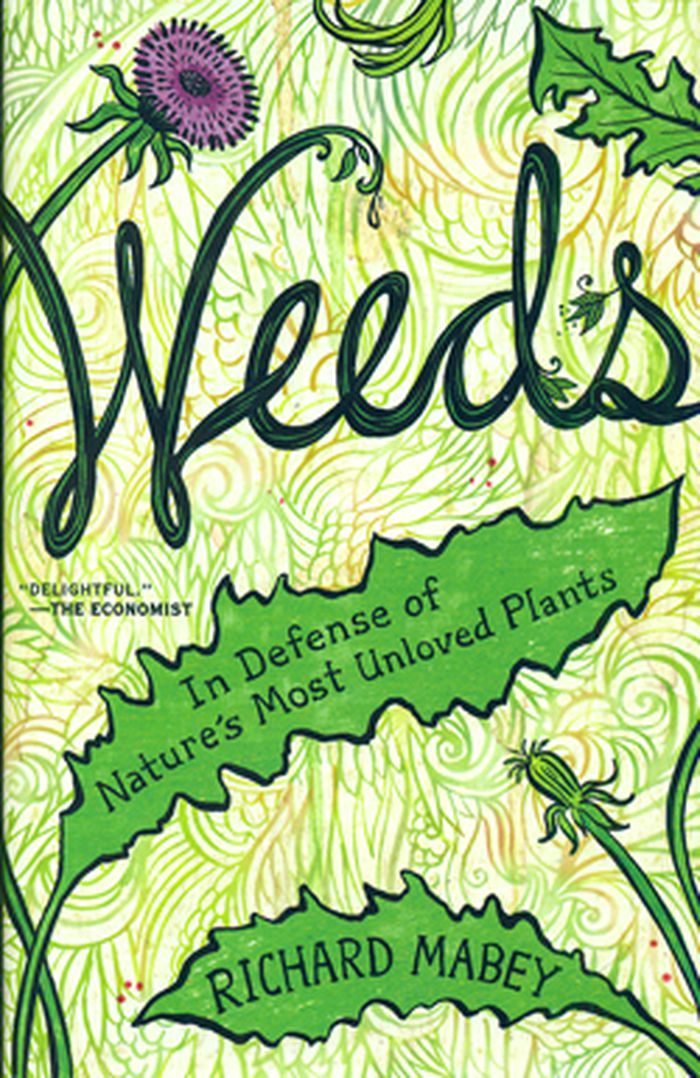
In Weeds, writer Richard Mabey embarks on a journey with the historical breadth of Michael Pollan. Weaving together the insights of botanists, gardeners, artists, and writers with his own travels and lifelong fascination, Mabey shows how these plants can destroy ecosystems but also can restore war zones and derelict cities.
$27.99
(available to order)
Summary:
In Weeds, writer Richard Mabey embarks on a journey with the historical breadth of Michael Pollan. Weaving together the insights of botanists, gardeners, artists, and writers with his own travels and lifelong fascination, Mabey shows how these plants can destroy ecosystems but also can restore war zones and derelict cities.
Title:
Weeds: In defense of nature's most unloved plants
Actions:
Price:
$27.99
(available to order)
Summary:
In Weeds, writer Richard Mabey embarks on a journey with the historical breadth of Michael Pollan. Weaving together the insights of botanists, gardeners, artists, and writers with his own travels and lifelong fascination, Mabey shows how these plants can destroy ecosystems but also can restore war zones and derelict cities.
Weeds: In defense of nature's most unloved plants
Actions:
Price:
$27.99
(available to order)
Summary:
In Weeds, writer Richard Mabey embarks on a journey with the historical breadth of Michael Pollan. Weaving together the insights of botanists, gardeners, artists, and writers with his own travels and lifelong fascination, Mabey shows how these plants can destroy ecosystems but also can restore war zones and derelict cities.
Form:
books
books
Publication:
July 2011
July 2011
Subject:
Landscape Theory
Landscape Theory
Form:
books
books
Actions:
Price:
$49.95
(available to order)
Summary:
Today the human impact on our planet can hardly be underestimated. Climate change, population explosion, genetic manipulation, digital networks, plastic islands floating in the oceans. This book explores our changing notion of nature. How nature has become one of the most successful products of our time, much of what we perceive as nature is merely a simulation(...)
$49.95
(available to order)
Summary:
Today the human impact on our planet can hardly be underestimated. Climate change, population explosion, genetic manipulation, digital networks, plastic islands floating in the oceans. This book explores our changing notion of nature. How nature has become one of the most successful products of our time, much of what we perceive as nature is merely a simulation(...)
Title:
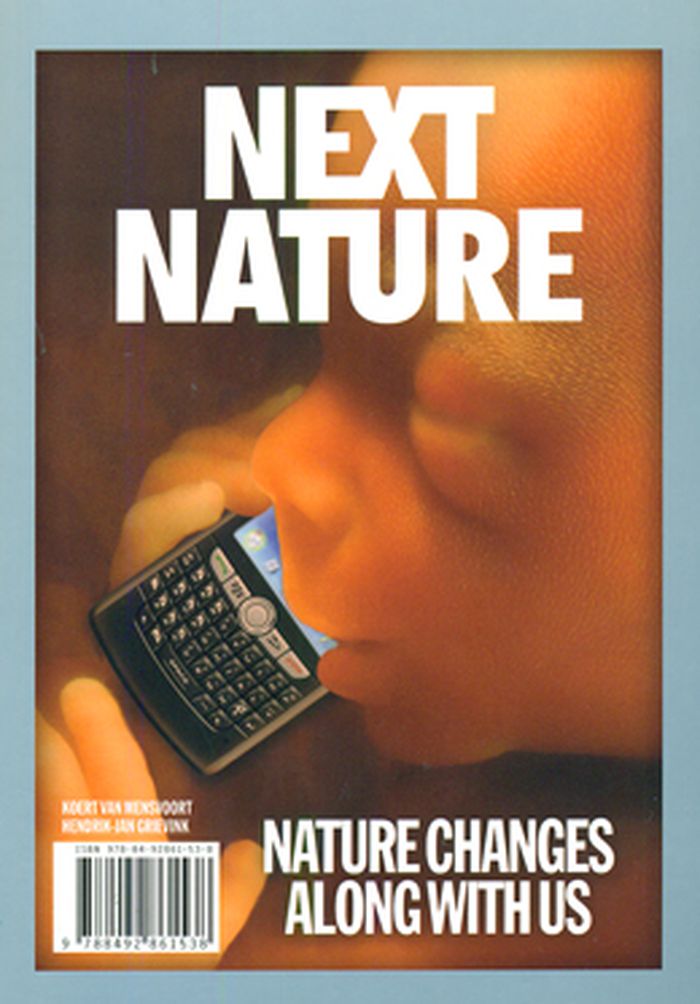
Next nature: nature changes along with us
Actions:
Price:
$49.95
(available to order)
Summary:
Today the human impact on our planet can hardly be underestimated. Climate change, population explosion, genetic manipulation, digital networks, plastic islands floating in the oceans. This book explores our changing notion of nature. How nature has become one of the most successful products of our time, much of what we perceive as nature is merely a simulation although a romanticized idea of a balanced, harmonic, inherently good and threatened entity. How evolution continues nonetheless. How technology - traditionally created to protect us from the forces of nature - gives rise to a next nature, that is just as wild, cruel, unpredictable and threatening as ever. How we are playing with fire again and again. How we should be careful in doing so, yet how this is also what makes us human.
Next nature: nature changes along with us
Actions:
Price:
$49.95
(available to order)
Summary:
Today the human impact on our planet can hardly be underestimated. Climate change, population explosion, genetic manipulation, digital networks, plastic islands floating in the oceans. This book explores our changing notion of nature. How nature has become one of the most successful products of our time, much of what we perceive as nature is merely a simulation although a romanticized idea of a balanced, harmonic, inherently good and threatened entity. How evolution continues nonetheless. How technology - traditionally created to protect us from the forces of nature - gives rise to a next nature, that is just as wild, cruel, unpredictable and threatening as ever. How we are playing with fire again and again. How we should be careful in doing so, yet how this is also what makes us human.
Form:
books
books
Publication:
May 2011
May 2011
Subject:
Landscape Theory
Landscape Theory
Form:
books
books
Actions:
Price:
$35.95
(available to order)
Summary:
Curieuse idée : un jardin construit selon des formules mathématiques, où la métaphysique est dissimulée par la perspective, l'épistémologie circonscrite par la géométrie, et la rhétorique accordée à la mobilité de nos corps. Le jardin à la française est une étude sur la perspective et une incitation au mouvement. Géométrisation d'une pensée, figuration du désir, il(...)
$35.95
(available to order)
Summary:
Curieuse idée : un jardin construit selon des formules mathématiques, où la métaphysique est dissimulée par la perspective, l'épistémologie circonscrite par la géométrie, et la rhétorique accordée à la mobilité de nos corps. Le jardin à la française est une étude sur la perspective et une incitation au mouvement. Géométrisation d'une pensée, figuration du désir, il(...)
Title:
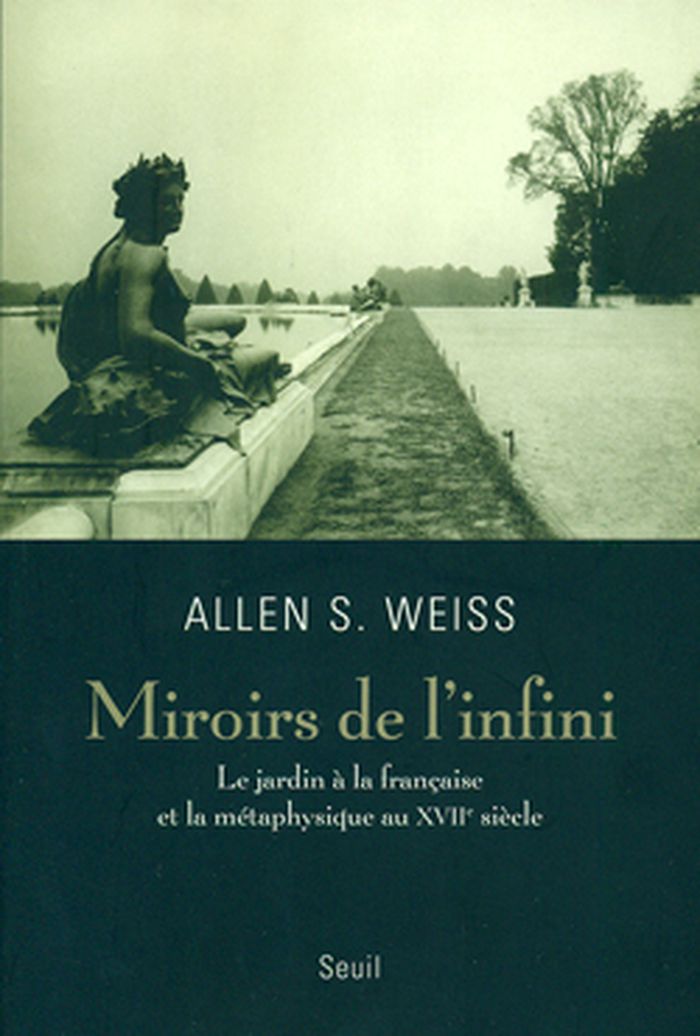
Miroirs de l'infini : le jardin à la française et la métaphysique au XVIIe siècle
Actions:
Price:
$35.95
(available to order)
Summary:
Curieuse idée : un jardin construit selon des formules mathématiques, où la métaphysique est dissimulée par la perspective, l'épistémologie circonscrite par la géométrie, et la rhétorique accordée à la mobilité de nos corps. Le jardin à la française est une étude sur la perspective et une incitation au mouvement. Géométrisation d'une pensée, figuration du désir, il correspond, sous Louis XIV, à une théâtralisation du pouvoir absolu. Ce livre se veut, à sa manière, un "guide philosophique" des jardins à la française : Vaux-le-Vicomte, Versailles, Chantilly. Il est une invite à parcourir les jardins autrement, dans une optique philosophique qui rendrait encore plus vif le plaisir, sensuel, de leur découverte.
Miroirs de l'infini : le jardin à la française et la métaphysique au XVIIe siècle
Actions:
Price:
$35.95
(available to order)
Summary:
Curieuse idée : un jardin construit selon des formules mathématiques, où la métaphysique est dissimulée par la perspective, l'épistémologie circonscrite par la géométrie, et la rhétorique accordée à la mobilité de nos corps. Le jardin à la française est une étude sur la perspective et une incitation au mouvement. Géométrisation d'une pensée, figuration du désir, il correspond, sous Louis XIV, à une théâtralisation du pouvoir absolu. Ce livre se veut, à sa manière, un "guide philosophique" des jardins à la française : Vaux-le-Vicomte, Versailles, Chantilly. Il est une invite à parcourir les jardins autrement, dans une optique philosophique qui rendrait encore plus vif le plaisir, sensuel, de leur découverte.
Form:
books
books
Publication:
March 2011
March 2011
Subject:
Landscape Theory
Landscape Theory
Form:
books
books
Actions:
Price:
$49.95
(available to order)
Summary:
In Weeds, Zachary J. S. Falck presents a comprehensive history of “happenstance plants” in American urban environments. Beginning in the late nineteenth century and continuing to the present, he examines the proliferation, perception, and treatment of weeds in metropolitan centers from Boston to Los Angeles.
$49.95
(available to order)
Summary:
In Weeds, Zachary J. S. Falck presents a comprehensive history of “happenstance plants” in American urban environments. Beginning in the late nineteenth century and continuing to the present, he examines the proliferation, perception, and treatment of weeds in metropolitan centers from Boston to Los Angeles.
Title:
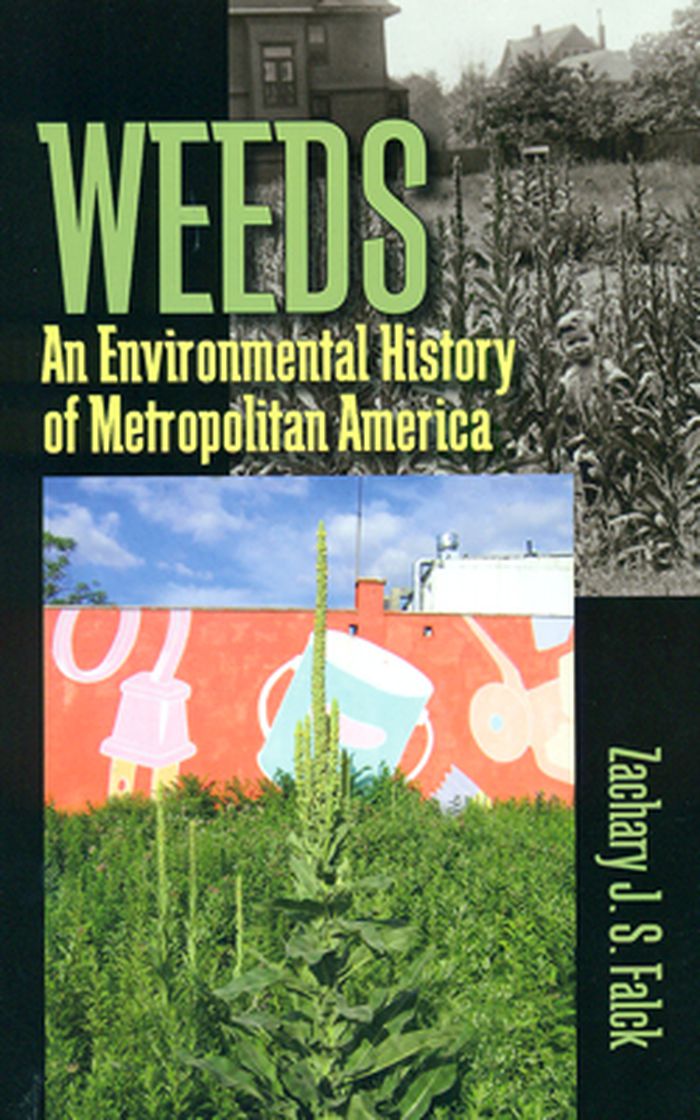
Weeds: An environmental history of metropolitan America
Actions:
Price:
$49.95
(available to order)
Summary:
In Weeds, Zachary J. S. Falck presents a comprehensive history of “happenstance plants” in American urban environments. Beginning in the late nineteenth century and continuing to the present, he examines the proliferation, perception, and treatment of weeds in metropolitan centers from Boston to Los Angeles.
Weeds: An environmental history of metropolitan America
Actions:
Price:
$49.95
(available to order)
Summary:
In Weeds, Zachary J. S. Falck presents a comprehensive history of “happenstance plants” in American urban environments. Beginning in the late nineteenth century and continuing to the present, he examines the proliferation, perception, and treatment of weeds in metropolitan centers from Boston to Los Angeles.
Form:
books
books
Publication:
June 2011
June 2011
Subject:
Landscape Theory
Landscape Theory
Form:
books
books
Actions:
Price:
$48.95
(available to order)
Summary:
Our landscapes have never failed to entice and capture the imagination of writers, painters and philosophers – and in turn their work has influenced our landscapes for centuries. This carefully selected collection of readings and commentary expertly guides you through the aesthetic, social, cultural and environmental foundations of our thinking about landscape, and(...)
$48.95
(available to order)
Summary:
Our landscapes have never failed to entice and capture the imagination of writers, painters and philosophers – and in turn their work has influenced our landscapes for centuries. This carefully selected collection of readings and commentary expertly guides you through the aesthetic, social, cultural and environmental foundations of our thinking about landscape, and(...)
Title:
Rethinking landscape : a critical reader
Actions:
Price:
$48.95
(available to order)
Summary:
Our landscapes have never failed to entice and capture the imagination of writers, painters and philosophers – and in turn their work has influenced our landscapes for centuries. This carefully selected collection of readings and commentary expertly guides you through the aesthetic, social, cultural and environmental foundations of our thinking about landscape, and explores the key writings which shaped the field in its emergence and maturity. Provoking thought and discussion, this book does not provide answers, and will not conclude with an infallible theory of landscape. But with a range of readings from Vitruvius to Jellicoe, from Burke to Berlin to Berleant, from the Picturesque to Phenomenology, every reader will find something here to set them thinking.
Rethinking landscape : a critical reader
Actions:
Price:
$48.95
(available to order)
Summary:
Our landscapes have never failed to entice and capture the imagination of writers, painters and philosophers – and in turn their work has influenced our landscapes for centuries. This carefully selected collection of readings and commentary expertly guides you through the aesthetic, social, cultural and environmental foundations of our thinking about landscape, and explores the key writings which shaped the field in its emergence and maturity. Provoking thought and discussion, this book does not provide answers, and will not conclude with an infallible theory of landscape. But with a range of readings from Vitruvius to Jellicoe, from Burke to Berlin to Berleant, from the Picturesque to Phenomenology, every reader will find something here to set them thinking.
Form:
books
books
Publication:
June 2009
June 2009
Subject:
Landscape Theory
Landscape Theory
Form:
books
books
Title:
Planning landscape
Planning landscape
Actions:
Price:
$90.00
(available to order)
Summary:
When turning a design concept into a realizable plan, landscape architects are constantly switching back and forth between two levels: on the one hand, the general planning standards and parameters for different types of open space, and on the other, the particular use-related requirements of the specific planning task. The publication Planning Landscape offers the(...)
$90.00
(available to order)
Summary:
When turning a design concept into a realizable plan, landscape architects are constantly switching back and forth between two levels: on the one hand, the general planning standards and parameters for different types of open space, and on the other, the particular use-related requirements of the specific planning task. The publication Planning Landscape offers the(...)
Title:
Planning landscape
Actions:
Price:
$90.00
(available to order)
Summary:
When turning a design concept into a realizable plan, landscape architects are constantly switching back and forth between two levels: on the one hand, the general planning standards and parameters for different types of open space, and on the other, the particular use-related requirements of the specific planning task. The publication Planning Landscape offers the planner a practical guide to achieving this balancing act. It compiles and summarizes dimensions, measurements and threshold values that are crucial to the decision-making process in designing a space.
Planning landscape
Actions:
Price:
$90.00
(available to order)
Summary:
When turning a design concept into a realizable plan, landscape architects are constantly switching back and forth between two levels: on the one hand, the general planning standards and parameters for different types of open space, and on the other, the particular use-related requirements of the specific planning task. The publication Planning Landscape offers the planner a practical guide to achieving this balancing act. It compiles and summarizes dimensions, measurements and threshold values that are crucial to the decision-making process in designing a space.
Form:
books
books
Publication:
March 2015
March 2015
Subject:
Landscape Theory
Landscape Theory
Form:
books
books
Actions:
Price:
$37.95
(available to order)
Summary:
Cet essai de Gilles Tiberghien redessine, à partir d'une cinquantaine d'œuvres d'art contemporain, les limites du monde réel pour l'ouvrir sur les territoires de l'imaginaire. Il regroupe, outre les reproductions des œuvres, un choix de textes de poètes contemporains (Olivier Cadiot, Pierre Alféri, Yannick Liron, Emmanuel Hocquard, etc.), plusieurs textes de Tiberghien(...)
$37.95
(available to order)
Summary:
Cet essai de Gilles Tiberghien redessine, à partir d'une cinquantaine d'œuvres d'art contemporain, les limites du monde réel pour l'ouvrir sur les territoires de l'imaginaire. Il regroupe, outre les reproductions des œuvres, un choix de textes de poètes contemporains (Olivier Cadiot, Pierre Alféri, Yannick Liron, Emmanuel Hocquard, etc.), plusieurs textes de Tiberghien(...)
Title:
Pour une république des rêves
Actions:
Price:
$37.95
(available to order)
Summary:
Cet essai de Gilles Tiberghien redessine, à partir d'une cinquantaine d'œuvres d'art contemporain, les limites du monde réel pour l'ouvrir sur les territoires de l'imaginaire. Il regroupe, outre les reproductions des œuvres, un choix de textes de poètes contemporains (Olivier Cadiot, Pierre Alféri, Yannick Liron, Emmanuel Hocquard, etc.), plusieurs textes de Tiberghien ainsi que des extraits de ses carnets de voyages. Publié à l'occasion de l'exposition éponyme conçue par Gilles A. Tiberghien, présentée au CRAC Alsace de juin à octobre 2011, Pour une république des rêves constitue le troisième volet d'une poétique de l'imaginaire en mouvement dont Le Principe de l'axolotl & Suppléments (Actes Sud, 1998) et Finis terrae, imaginaires et imaginations cartographiques (Bayard, 2007) sont les deux premiers moments. Œuvres de Glen Baxter, Balthasar Burkhard, Jimmie Durham, Robert Filliou, Gloria Friedmann, Cyprien Gaillard, Richard Long, Philippe Mayaux, Marylène Negro, Eric Poitevin, Hugues Reip, Evariste Richer, Roman Signer, David Tremlett, Su-Mei Tse, Catharina Van Eetvelde, Xavier Veilhan, Raphaël Zarka...
Pour une république des rêves
Actions:
Price:
$37.95
(available to order)
Summary:
Cet essai de Gilles Tiberghien redessine, à partir d'une cinquantaine d'œuvres d'art contemporain, les limites du monde réel pour l'ouvrir sur les territoires de l'imaginaire. Il regroupe, outre les reproductions des œuvres, un choix de textes de poètes contemporains (Olivier Cadiot, Pierre Alféri, Yannick Liron, Emmanuel Hocquard, etc.), plusieurs textes de Tiberghien ainsi que des extraits de ses carnets de voyages. Publié à l'occasion de l'exposition éponyme conçue par Gilles A. Tiberghien, présentée au CRAC Alsace de juin à octobre 2011, Pour une république des rêves constitue le troisième volet d'une poétique de l'imaginaire en mouvement dont Le Principe de l'axolotl & Suppléments (Actes Sud, 1998) et Finis terrae, imaginaires et imaginations cartographiques (Bayard, 2007) sont les deux premiers moments. Œuvres de Glen Baxter, Balthasar Burkhard, Jimmie Durham, Robert Filliou, Gloria Friedmann, Cyprien Gaillard, Richard Long, Philippe Mayaux, Marylène Negro, Eric Poitevin, Hugues Reip, Evariste Richer, Roman Signer, David Tremlett, Su-Mei Tse, Catharina Van Eetvelde, Xavier Veilhan, Raphaël Zarka...
Form:
books
books
Publication:
January 2012
January 2012
Subject:
Landscape Theory
Landscape Theory
Form:
books
books
Actions:
Price:
$53.50
(available to order)
Summary:
The enclosed garden, or hortus conclusus, is a place where architecture, architectural elements, and landscape, come together. It has a long history, ranging from the paradise garden and cloister, the botanic garden and the giardini segreto, the kitchen garden and the stage for social display, to its many modern forms; the city retreat, the redemptive garden, and the(...)
$53.50
(available to order)
Summary:
The enclosed garden, or hortus conclusus, is a place where architecture, architectural elements, and landscape, come together. It has a long history, ranging from the paradise garden and cloister, the botanic garden and the giardini segreto, the kitchen garden and the stage for social display, to its many modern forms; the city retreat, the redemptive garden, and the(...)
Title:
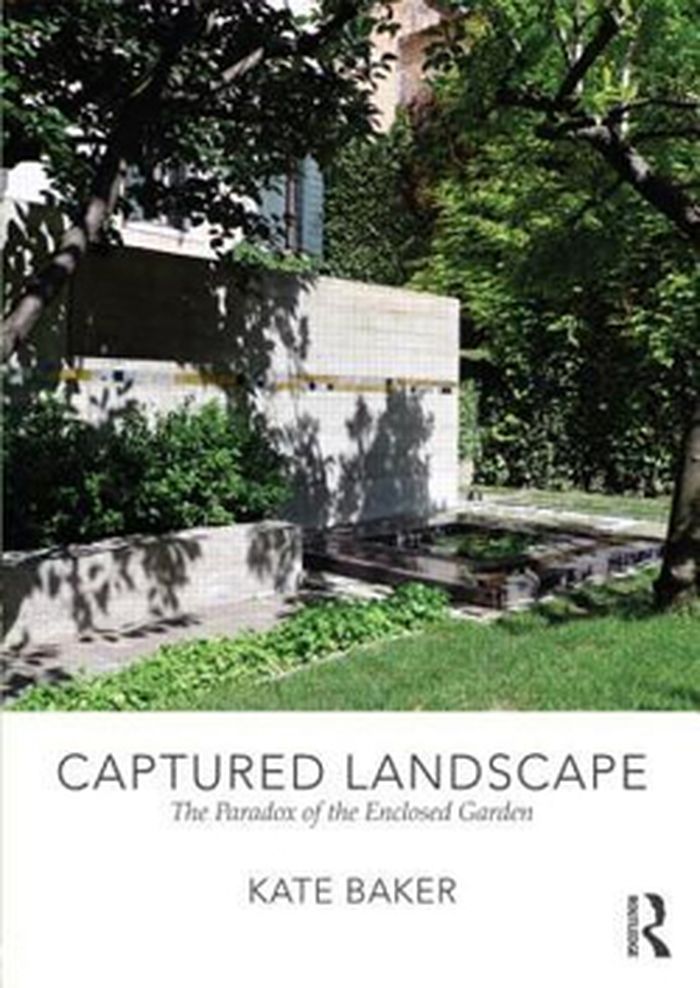
Captured landscape : the paradox of the enclosed garden
Actions:
Price:
$53.50
(available to order)
Summary:
The enclosed garden, or hortus conclusus, is a place where architecture, architectural elements, and landscape, come together. It has a long history, ranging from the paradise garden and cloister, the botanic garden and the giardini segreto, the kitchen garden and the stage for social display, to its many modern forms; the city retreat, the redemptive garden, and the deconstructed building. By its nature it is ambiguous. Is it an outdoor room, or captured landscape; is it garden or architecture?
Captured landscape : the paradox of the enclosed garden
Actions:
Price:
$53.50
(available to order)
Summary:
The enclosed garden, or hortus conclusus, is a place where architecture, architectural elements, and landscape, come together. It has a long history, ranging from the paradise garden and cloister, the botanic garden and the giardini segreto, the kitchen garden and the stage for social display, to its many modern forms; the city retreat, the redemptive garden, and the deconstructed building. By its nature it is ambiguous. Is it an outdoor room, or captured landscape; is it garden or architecture?
Form:
books
books
Publication:
February 2012
February 2012
Subject:
Landscape Theory
Landscape Theory
Form:
books
books
Title:
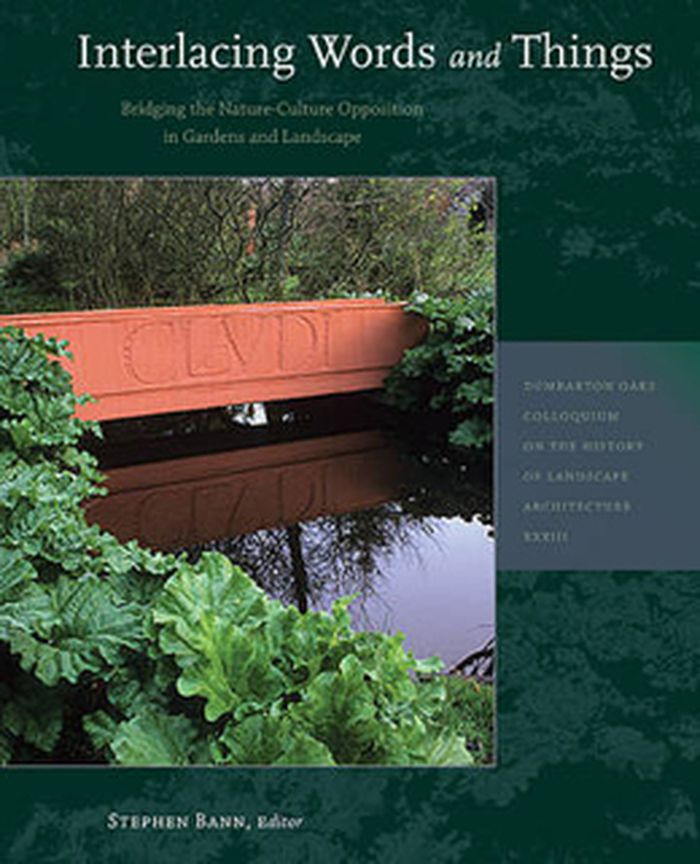
Interlacing words and things : bridging the nature-culture opposition in garden and landscape
Interlacing words and things : bridging the nature-culture opposition in garden and landscape
Actions:
Price:
$46.95
(available to order)
Summary:
This illustrated volume examines how the natural world is transformed through the creative use of language. Its contributors do not assume that there is an opposition between nature and culture, but rather emphasize that forms of language are embedded in our understanding and appreciation of the natural environment across cultures and time periods.
$46.95
(available to order)
Summary:
This illustrated volume examines how the natural world is transformed through the creative use of language. Its contributors do not assume that there is an opposition between nature and culture, but rather emphasize that forms of language are embedded in our understanding and appreciation of the natural environment across cultures and time periods.
Title:
Interlacing words and things : bridging the nature-culture opposition in garden and landscape
Actions:
Price:
$46.95
(available to order)
Summary:
This illustrated volume examines how the natural world is transformed through the creative use of language. Its contributors do not assume that there is an opposition between nature and culture, but rather emphasize that forms of language are embedded in our understanding and appreciation of the natural environment across cultures and time periods.
Interlacing words and things : bridging the nature-culture opposition in garden and landscape
Actions:
Price:
$46.95
(available to order)
Summary:
This illustrated volume examines how the natural world is transformed through the creative use of language. Its contributors do not assume that there is an opposition between nature and culture, but rather emphasize that forms of language are embedded in our understanding and appreciation of the natural environment across cultures and time periods.
Form:
books
books
Publication:
April 2012
April 2012
Subject:
Landscape Theory
Landscape Theory
Form:
books
books
Actions:
Price:
$29.95
(available to order)
Summary:
National parks are the places that present ideas of nature to Americans: Zion, Yosemite, Grand Canyon, Yellowstone bring to mind quintessential and awe-inspiring wilderness. By examining how rhetoric - particularly visual rhetoric - has worked to shape our views of nature and the "natural" place of humans, "Observation Points" offers insights into questions of(...)
$29.95
(available to order)
Summary:
National parks are the places that present ideas of nature to Americans: Zion, Yosemite, Grand Canyon, Yellowstone bring to mind quintessential and awe-inspiring wilderness. By examining how rhetoric - particularly visual rhetoric - has worked to shape our views of nature and the "natural" place of humans, "Observation Points" offers insights into questions of(...)
Title:
Observation points : the visual poetics of national parks
Actions:
Price:
$29.95
(available to order)
Summary:
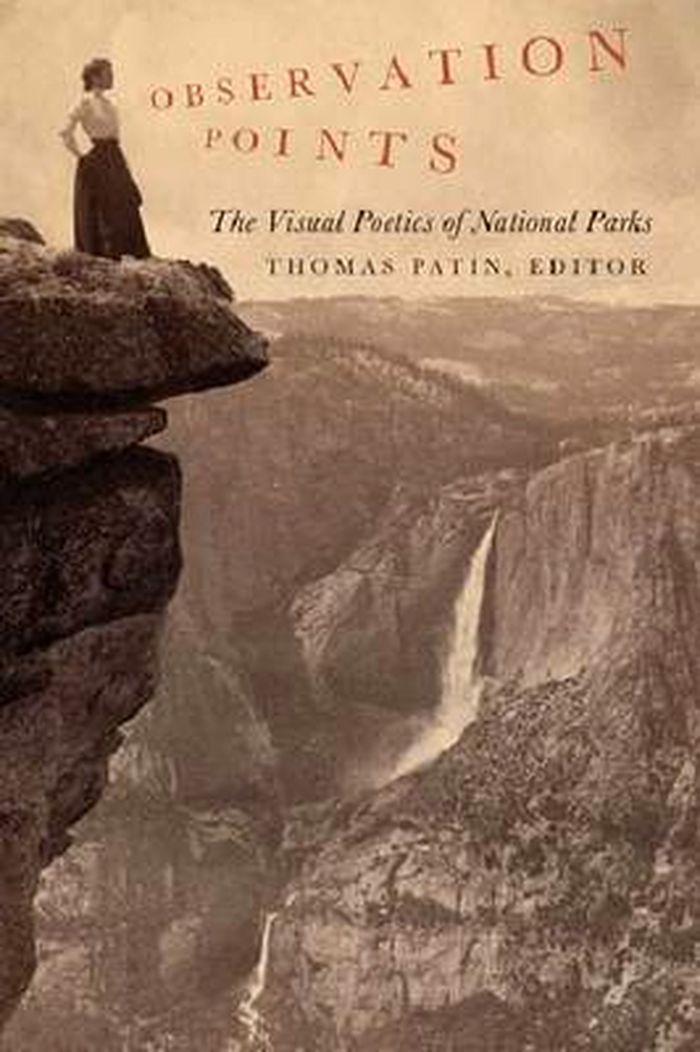
National parks are the places that present ideas of nature to Americans: Zion, Yosemite, Grand Canyon, Yellowstone bring to mind quintessential and awe-inspiring wilderness. By examining how rhetoric - particularly visual rhetoric - has worked to shape our views of nature and the "natural" place of humans, "Observation Points" offers insights into questions of representation, including the formation of national identity.
Observation points : the visual poetics of national parks
Actions:
Price:
$29.95
(available to order)
Summary:
National parks are the places that present ideas of nature to Americans: Zion, Yosemite, Grand Canyon, Yellowstone bring to mind quintessential and awe-inspiring wilderness. By examining how rhetoric - particularly visual rhetoric - has worked to shape our views of nature and the "natural" place of humans, "Observation Points" offers insights into questions of representation, including the formation of national identity.
Form:
books
books
Publication:
May 2012
May 2012
Subject:
Landscape Theory
Landscape Theory


