


223 Results
Form:
books
books
Actions:
Price:
$97.50
(available to order)
Summary:
In 1919 the Social Democrat city council of Vienna initiated a radical program of reforms designed to reshape the city's infrastructure along socialist lines. The centrepiece and most enduring achievement of "Red" Vienna was the construction of the Wiener (...)
$97.50
(available to order)
Summary:
In 1919 the Social Democrat city council of Vienna initiated a radical program of reforms designed to reshape the city's infrastructure along socialist lines. The centrepiece and most enduring achievement of "Red" Vienna was the construction of the Wiener (...)
Title:
The architecture of red Vienna 1919-1934
Actions:
Price:
$97.50
(available to order)
Summary:
In 1919 the Social Democrat city council of Vienna initiated a radical program of reforms designed to reshape the city's infrastructure along socialist lines. The centrepiece and most enduring achievement of "Red" Vienna was the construction of the Wiener Gemeindebauten, 400 communal housing blocks, distributed throughout the city, in which workers' dwellings were incorporated with kindergartens, libraries, medical clinics, theaters, cooperative stores, and other public facilities. The 64,000 units housed one tenth of the city's population. Throughout this socialist building campaign, however, Austria was ruled by a conservative, clerical, and antisocialist political majority. Thus the architecture of Red Vienna took shape in the midst of highly charged, and often violent, political conflict between left and right. In this book, Eve Blau looks at how that ideological conflict shaped the buildings of Red Vienna--in terms of their programme, spatial conception, language, and use--as well as how political meaning itself is manifested in architecture. She shows how the architecture of Red Vienna constructed meaning in relation to the ideological conflicts that defined Austrian politics in the interwar period--how it was shaped by the conditions of its making, and how it engaged its own codes, practices, and history to stake out a political position in relation to those conditions. Her investigation sheds light both on the complex relationship among political program, architectural practice, and urban history in interwar Vienna, and on the process by which architecture can generate a collective discourse that includes all members of society.
The architecture of red Vienna 1919-1934
Actions:
Price:
$97.50
(available to order)
Summary:
In 1919 the Social Democrat city council of Vienna initiated a radical program of reforms designed to reshape the city's infrastructure along socialist lines. The centrepiece and most enduring achievement of "Red" Vienna was the construction of the Wiener Gemeindebauten, 400 communal housing blocks, distributed throughout the city, in which workers' dwellings were incorporated with kindergartens, libraries, medical clinics, theaters, cooperative stores, and other public facilities. The 64,000 units housed one tenth of the city's population. Throughout this socialist building campaign, however, Austria was ruled by a conservative, clerical, and antisocialist political majority. Thus the architecture of Red Vienna took shape in the midst of highly charged, and often violent, political conflict between left and right. In this book, Eve Blau looks at how that ideological conflict shaped the buildings of Red Vienna--in terms of their programme, spatial conception, language, and use--as well as how political meaning itself is manifested in architecture. She shows how the architecture of Red Vienna constructed meaning in relation to the ideological conflicts that defined Austrian politics in the interwar period--how it was shaped by the conditions of its making, and how it engaged its own codes, practices, and history to stake out a political position in relation to those conditions. Her investigation sheds light both on the complex relationship among political program, architectural practice, and urban history in interwar Vienna, and on the process by which architecture can generate a collective discourse that includes all members of society.
Form:
books
books
Publication:
December 1998, Cambridge, Mass.
December 1998, Cambridge, Mass.
Subject:
Modernism
Modernism
Form:
books
books
Actions:
Price:
$98.00
(available to order)
Summary:
This special issue of a+u includes the following residential buildings: Hvitträsk, 1903 /Saarinen, Lindgren, Gesellius Robie House, 1910 /Frank Lloyd Wright Scheu House, 1912 /Adolf Loos (...)
$98.00
(available to order)
Summary:
This special issue of a+u includes the following residential buildings: Hvitträsk, 1903 /Saarinen, Lindgren, Gesellius Robie House, 1910 /Frank Lloyd Wright Scheu House, 1912 /Adolf Loos (...)
Publication:
May 2000, Tokyo
May 2000, Tokyo
Title:
Visions of the real : modern houses in the 20th century : volume 1, 1900-1949
Actions:
Price:
$98.00
(available to order)
Summary:
This special issue of a+u includes the following residential buildings: Hvitträsk, 1903 /Saarinen, Lindgren, Gesellius Robie House, 1910 /Frank Lloyd Wright Scheu House, 1912 /Adolf Loos Une Petite Maison, 1923 /Le Corbusier Rietveld-Schröder House, 1924 /Gerrit Thomas Rietveld How House, 1925 /Rudolph Schindler Melnikov House, 1929 /Konstantin Melnikov Tugendhat House, 1930 /Ludwig Mies van der Rohe Maison de Verre, 1931 /Pierre Chareau Dammann House, 1932 /Arne Korsmo Schminke House, 1933 /Hans Scharoun Summer House, 1937 /Gunnar Asplund Gropius House, 1937 /Walter Gropius House over the Brook, 1945 /Amancio Williams Kaufmann Desert House, 1946 /Richard Neutra Maison Curutchet, 1949 /Le Corbusier
Visions of the real : modern houses in the 20th century : volume 1, 1900-1949
Actions:
Price:
$98.00
(available to order)
Summary:
This special issue of a+u includes the following residential buildings: Hvitträsk, 1903 /Saarinen, Lindgren, Gesellius Robie House, 1910 /Frank Lloyd Wright Scheu House, 1912 /Adolf Loos Une Petite Maison, 1923 /Le Corbusier Rietveld-Schröder House, 1924 /Gerrit Thomas Rietveld How House, 1925 /Rudolph Schindler Melnikov House, 1929 /Konstantin Melnikov Tugendhat House, 1930 /Ludwig Mies van der Rohe Maison de Verre, 1931 /Pierre Chareau Dammann House, 1932 /Arne Korsmo Schminke House, 1933 /Hans Scharoun Summer House, 1937 /Gunnar Asplund Gropius House, 1937 /Walter Gropius House over the Brook, 1945 /Amancio Williams Kaufmann Desert House, 1946 /Richard Neutra Maison Curutchet, 1949 /Le Corbusier
Form:
books
books
Publication:
May 2000, Tokyo
May 2000, Tokyo
Form:
books
books
Actions:
Price:
$97.50
(available in store)
Summary:
The writings of graphic designer, prolific critic, and avant-garde partisan Karel Teige (1900-1951) represent one of the great forgotten legacies of modern artistic theory. Together with Jaromír Krejcar and Josef Chocol, he founded the radical Devetsil group in 1920, an(...)
$97.50
(available in store)
Summary:
The writings of graphic designer, prolific critic, and avant-garde partisan Karel Teige (1900-1951) represent one of the great forgotten legacies of modern artistic theory. Together with Jaromír Krejcar and Josef Chocol, he founded the radical Devetsil group in 1920, an(...)
Title:
Modern architecture in Czechoslovakia and other writings
Actions:
Price:
$97.50
(available in store)
Summary:
The writings of graphic designer, prolific critic, and avant-garde partisan Karel Teige (1900-1951) represent one of the great forgotten legacies of modern artistic theory. Together with Jaromír Krejcar and Josef Chocol, he founded the radical Devetsil group in 1920, an organization committed to promoting international modernism through manifestos and polemics. After meeting Le Corbusier in Paris in 1922, Teige increasingly turned his attention to architecture. Over the next decade he crystallized his ideas on functionalist and constructivist practice through relationships with ideological allies including Adolf Behne, Theo van Doesburg, Hannes Meyer, and El Lissitzky. In "Modern Architecture in Czechoslovakia" (published in 1930), Teige both publicized the modernist efforts of his native country, and aligned them with the avant-garde efforts of the East and West. Now in English for the first time, this work is supplemented by a selection of Teige's other writings on art and architecture. An introduction by Jean-Louis Cohen traces the diverse pursuits of this multifaceted figure.
Modern architecture in Czechoslovakia and other writings
Actions:
Price:
$97.50
(available in store)
Summary:
The writings of graphic designer, prolific critic, and avant-garde partisan Karel Teige (1900-1951) represent one of the great forgotten legacies of modern artistic theory. Together with Jaromír Krejcar and Josef Chocol, he founded the radical Devetsil group in 1920, an organization committed to promoting international modernism through manifestos and polemics. After meeting Le Corbusier in Paris in 1922, Teige increasingly turned his attention to architecture. Over the next decade he crystallized his ideas on functionalist and constructivist practice through relationships with ideological allies including Adolf Behne, Theo van Doesburg, Hannes Meyer, and El Lissitzky. In "Modern Architecture in Czechoslovakia" (published in 1930), Teige both publicized the modernist efforts of his native country, and aligned them with the avant-garde efforts of the East and West. Now in English for the first time, this work is supplemented by a selection of Teige's other writings on art and architecture. An introduction by Jean-Louis Cohen traces the diverse pursuits of this multifaceted figure.
Form:
books
books
Publication:
January 2001, Los Angeles
January 2001, Los Angeles
Subject:
Modernism
Modernism
Form:
books
books
Actions:
Price:
$67.95
(available to order)
Summary:
"Impossible histories" is the first critical survey of the extraordinary experiments in the arts that took place in the former Yugoslavia from the country's founding in 1918 to its breakup in 1991. The combination of Austro-Hungarian, French, German, Italian, and Turkish influences gave Yugoslavia's avant-gardes a distinct character unlike those of other Eastern and(...)
$67.95
(available to order)
Summary:
"Impossible histories" is the first critical survey of the extraordinary experiments in the arts that took place in the former Yugoslavia from the country's founding in 1918 to its breakup in 1991. The combination of Austro-Hungarian, French, German, Italian, and Turkish influences gave Yugoslavia's avant-gardes a distinct character unlike those of other Eastern and(...)
Subject:
Modernism
Modernism
Publication:
July 2003, Cambridge / London
July 2003, Cambridge / London
Title:
Impossible histories : historical avant-gardes, neo-avant-gardes, and post-avant-gardes in Yugoslavia, 1918-1991
Actions:
Price:
$67.95
(available to order)
Summary:
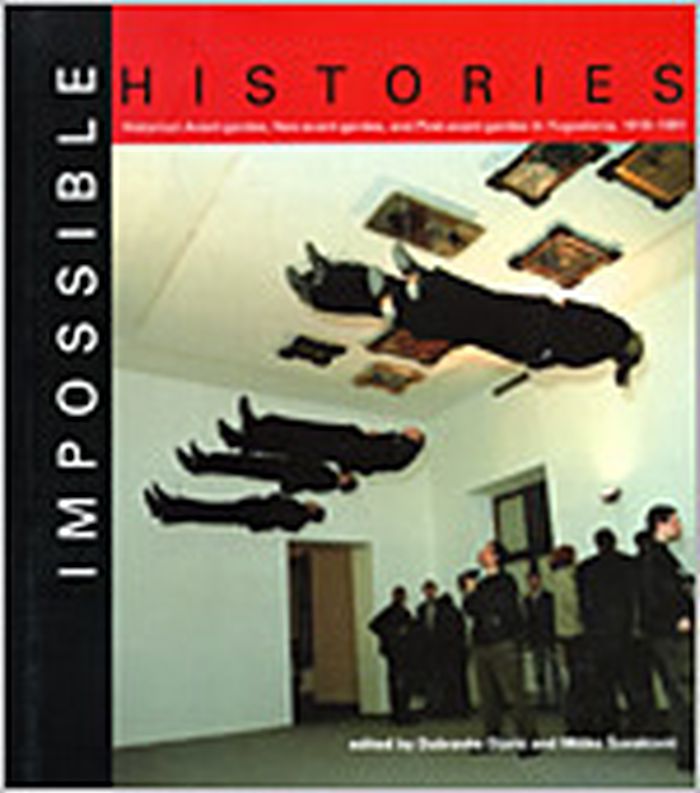
"Impossible histories" is the first critical survey of the extraordinary experiments in the arts that took place in the former Yugoslavia from the country's founding in 1918 to its breakup in 1991. The combination of Austro-Hungarian, French, German, Italian, and Turkish influences gave Yugoslavia's avant-gardes a distinct character unlike those of other Eastern and Central European avant-gardes. Censorship and suppression kept much of the work far from the eyes and ears of the Yugoslav people, while language barriers and the inaccessibility of archives caused it to remain largely unknown to Western scholars. Even at this late stage in the scholarly investigation of the avant-garde, few Westerners have heard of the movements Belgrade surrealism, signalism, Yugo-Dada, and zenitism; the groups Alfa, Exat 51, Gorgona, OHO, and Scipion Nasice Sisters Theater; or the magazines Danas, Red Pilot, Tank, Vecnost, and Zvrk. The pieces in this collection offer comparative and interpretive accounts of the avant-gardes in the former Yugoslavian countries of Croatia, Serbia, and Slovenia. The book is divided into four sections : art and politics; literature; visual art and architecture; and art in motion (covering theater, dance, music, film, and video). All of the contributors live in the region and many of them participated in the movements discussed. The book also reprints a selection of the most important manifestos generated by all phases of Yugoslav avant-garde activity.
Impossible histories : historical avant-gardes, neo-avant-gardes, and post-avant-gardes in Yugoslavia, 1918-1991
Actions:
Price:
$67.95
(available to order)
Summary:
"Impossible histories" is the first critical survey of the extraordinary experiments in the arts that took place in the former Yugoslavia from the country's founding in 1918 to its breakup in 1991. The combination of Austro-Hungarian, French, German, Italian, and Turkish influences gave Yugoslavia's avant-gardes a distinct character unlike those of other Eastern and Central European avant-gardes. Censorship and suppression kept much of the work far from the eyes and ears of the Yugoslav people, while language barriers and the inaccessibility of archives caused it to remain largely unknown to Western scholars. Even at this late stage in the scholarly investigation of the avant-garde, few Westerners have heard of the movements Belgrade surrealism, signalism, Yugo-Dada, and zenitism; the groups Alfa, Exat 51, Gorgona, OHO, and Scipion Nasice Sisters Theater; or the magazines Danas, Red Pilot, Tank, Vecnost, and Zvrk. The pieces in this collection offer comparative and interpretive accounts of the avant-gardes in the former Yugoslavian countries of Croatia, Serbia, and Slovenia. The book is divided into four sections : art and politics; literature; visual art and architecture; and art in motion (covering theater, dance, music, film, and video). All of the contributors live in the region and many of them participated in the movements discussed. The book also reprints a selection of the most important manifestos generated by all phases of Yugoslav avant-garde activity.
Form:
books
books
Publication:
July 2003, Cambridge / London
July 2003, Cambridge / London
Subject:
Modernism
Modernism
Form:
books
books
Actions:
Price:
$99.99
(available to order)
Summary:
This second volume of "The Details of Modern Architecture" continues the study of the relationships of the ideals of design and the realities of construction in modern architecture, beginning in the late 1920s and extending to the present day. It contains a wealth of new (...)
$99.99
(available to order)
Summary:
This second volume of "The Details of Modern Architecture" continues the study of the relationships of the ideals of design and the realities of construction in modern architecture, beginning in the late 1920s and extending to the present day. It contains a wealth of new (...)
Publication:
June 1996, Cambridge, Mass.
June 1996, Cambridge, Mass.
Title:
Details of modern architecture - volume 2 : 1928-1988
Actions:
Price:
$99.99
(available to order)
Summary:
This second volume of "The Details of Modern Architecture" continues the study of the relationships of the ideals of design and the realities of construction in modern architecture, beginning in the late 1920s and extending to the present day. It contains a wealth of new information on the construction of modern architecture at a variety of scales from minute details to general principles. There are over 500 illustrations, including 130 original photographs and 230 original axonometric drawings, arranged to explain the technical, aesthetic, and historical aspects of the building form. Individual chapters treat the work of Eliel and Eero Saarinen, Eric Gunnar Asplund, Richard Neutra, Alvar Aalto, Le Corbusier, and Louis Kahn, as well as the Case Study, High Tech, Postmodern, and Deconstructivist architects. Among the individual buildings documented are Eliel Saarinen's Cranbrook School, Asplund's Woodland Cemetery, Fuller's Dymaxion house, the Venturi house, the Eames and other Case Study houses, the concrete buildings of Le Corbusier, Aalto's Säynätsalo Town Hall, and Kahn's Exeter Library and Salk Institute -- with many details published for the first time.
Details of modern architecture - volume 2 : 1928-1988
Actions:
Price:
$99.99
(available to order)
Summary:
This second volume of "The Details of Modern Architecture" continues the study of the relationships of the ideals of design and the realities of construction in modern architecture, beginning in the late 1920s and extending to the present day. It contains a wealth of new information on the construction of modern architecture at a variety of scales from minute details to general principles. There are over 500 illustrations, including 130 original photographs and 230 original axonometric drawings, arranged to explain the technical, aesthetic, and historical aspects of the building form. Individual chapters treat the work of Eliel and Eero Saarinen, Eric Gunnar Asplund, Richard Neutra, Alvar Aalto, Le Corbusier, and Louis Kahn, as well as the Case Study, High Tech, Postmodern, and Deconstructivist architects. Among the individual buildings documented are Eliel Saarinen's Cranbrook School, Asplund's Woodland Cemetery, Fuller's Dymaxion house, the Venturi house, the Eames and other Case Study houses, the concrete buildings of Le Corbusier, Aalto's Säynätsalo Town Hall, and Kahn's Exeter Library and Salk Institute -- with many details published for the first time.
Form:
books
books
Publication:
June 1996, Cambridge, Mass.
June 1996, Cambridge, Mass.
Form:
books
books
Price:
$62.50
(available to order)
Summary:
The avant-garde movements of Central Europe were an integral part of modernism’s evolution as it reached its peak throughout the continent during the 1920s. Written documents--manifestoes, artists’ statements, and reviews--were the lifeblood of these movements and, during the periods when political events conspired to isolate them, one of their few means of communication(...)
$62.50
(available to order)
Summary:
The avant-garde movements of Central Europe were an integral part of modernism’s evolution as it reached its peak throughout the continent during the 1920s. Written documents--manifestoes, artists’ statements, and reviews--were the lifeblood of these movements and, during the periods when political events conspired to isolate them, one of their few means of communication(...)
Subject:
Modernism
Modernism
Publication:
September 2002, Cambridge, Mass.
September 2002, Cambridge, Mass.
Title:
Between worlds : a sourcebook of Central European avant-garde, 1910-1930
Actions:
Price:
$62.50
(available to order)
Summary:
The avant-garde movements of Central Europe were an integral part of modernism’s evolution as it reached its peak throughout the continent during the 1920s. Written documents--manifestoes, artists’ statements, and reviews--were the lifeblood of these movements and, during the periods when political events conspired to isolate them, one of their few means of communication and exchange. Much of this crucial evidence has become lost to us, and the artistic avant-gardes of Central Europe have been a blind spot of modernist studies. Until their narratives have been recovered, the story of modernism will remain incomplete. In this book an international team of scholars has selected an essential compendium of documents that take an important step toward regaining this lost perspective. "Between worlds" contains primary documents of the avant-gardes in Austria, the Czech lands, Germany, Hungary, Poland, Romania, and Yugoslavia from 1910 to 1930. The manifestoes and magazines of Western European radical art circles are well known to Western scholars, but few have researched the pages of magazines such as Zenit, Integral, Punct, 75 HP, Tank, and Ma. We know about Italian Futurism but not about Polish Futurism. Few Westerners are aware that French surrealist magazines drew much of their inspiration from Czech publications. The hundreds of documents in the book, almost all of them translated into English for the first time, bring back into circulation landmark texts by the major writers, editors, artists, magazines, and movements of Central Europe. With this publication they are restored to their rightful place in the pantheon of modernism.
Between worlds : a sourcebook of Central European avant-garde, 1910-1930
Actions:
Price:
$62.50
(available to order)
Summary:
The avant-garde movements of Central Europe were an integral part of modernism’s evolution as it reached its peak throughout the continent during the 1920s. Written documents--manifestoes, artists’ statements, and reviews--were the lifeblood of these movements and, during the periods when political events conspired to isolate them, one of their few means of communication and exchange. Much of this crucial evidence has become lost to us, and the artistic avant-gardes of Central Europe have been a blind spot of modernist studies. Until their narratives have been recovered, the story of modernism will remain incomplete. In this book an international team of scholars has selected an essential compendium of documents that take an important step toward regaining this lost perspective. "Between worlds" contains primary documents of the avant-gardes in Austria, the Czech lands, Germany, Hungary, Poland, Romania, and Yugoslavia from 1910 to 1930. The manifestoes and magazines of Western European radical art circles are well known to Western scholars, but few have researched the pages of magazines such as Zenit, Integral, Punct, 75 HP, Tank, and Ma. We know about Italian Futurism but not about Polish Futurism. Few Westerners are aware that French surrealist magazines drew much of their inspiration from Czech publications. The hundreds of documents in the book, almost all of them translated into English for the first time, bring back into circulation landmark texts by the major writers, editors, artists, magazines, and movements of Central Europe. With this publication they are restored to their rightful place in the pantheon of modernism.
Form:
books
books
Publication:
September 2002, Cambridge, Mass.
September 2002, Cambridge, Mass.
Subject:
Modernism
Modernism
Form:
books
books

Actions:
Price:
$85.00
(available to order)
Summary:
This book is the result of long and thorough research on the development of the Modern Movement in Africa over a period of time of great relevance.
$85.00
(available to order)
Summary:
This book is the result of long and thorough research on the development of the Modern Movement in Africa over a period of time of great relevance.
Title:
Modern architecture in Africa: Angola and Mozambique
Actions:
Price:
$85.00
(available to order)
Summary:
This book is the result of long and thorough research on the development of the Modern Movement in Africa over a period of time of great relevance.
Modern architecture in Africa: Angola and Mozambique
Actions:
Price:
$85.00
(available to order)
Summary:
This book is the result of long and thorough research on the development of the Modern Movement in Africa over a period of time of great relevance.
Form:
books
books
Publication:
November 2015
November 2015
Subject:
Modernism
Modernism
Form:
books
books
Actions:
Price:
$72.95
(available to order)
Summary:
Minnesota Modern examines the style that penetrated the social, political, and cultural fabric of the United States at midcentury. Midcentury modernism expressed new ways of thinking about how to live, work, and play in the communities that formed in post-war America. American author Larry Millett describes the style’s sources in the work of European masters like Ludwig(...)
$72.95
(available to order)
Summary:
Minnesota Modern examines the style that penetrated the social, political, and cultural fabric of the United States at midcentury. Midcentury modernism expressed new ways of thinking about how to live, work, and play in the communities that formed in post-war America. American author Larry Millett describes the style’s sources in the work of European masters like Ludwig(...)
Title:
Minnesota Modern: architecture and life at midcentury
Actions:
Price:
$72.95
(available to order)
Summary:
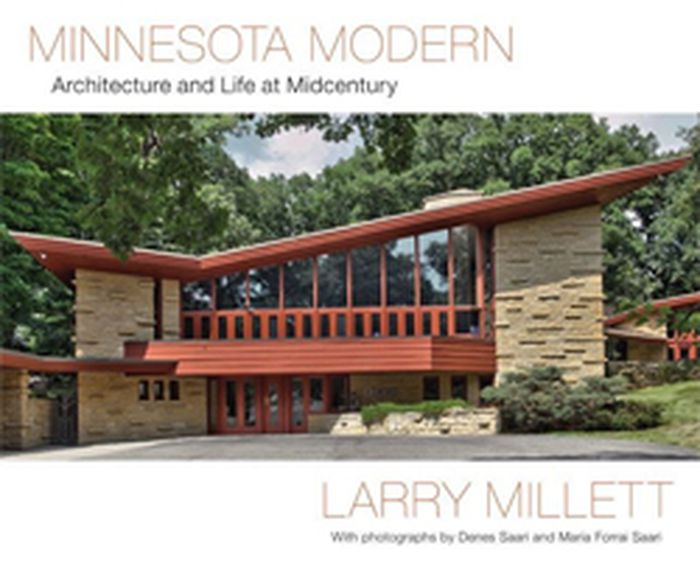
Minnesota Modern examines the style that penetrated the social, political, and cultural fabric of the United States at midcentury. Midcentury modernism expressed new ways of thinking about how to live, work, and play in the communities that formed in post-war America. American author Larry Millett describes the style’s sources in the work of European masters like Ludwig Mies van der Rohe and Walter Gropius, as well as the midwestern innovations of Frank Lloyd Wright, and its refinement at the University of Minnesota under the guidance of Ralph Rapson and other modernists.
Minnesota Modern: architecture and life at midcentury
Actions:
Price:
$72.95
(available to order)
Summary:
Minnesota Modern examines the style that penetrated the social, political, and cultural fabric of the United States at midcentury. Midcentury modernism expressed new ways of thinking about how to live, work, and play in the communities that formed in post-war America. American author Larry Millett describes the style’s sources in the work of European masters like Ludwig Mies van der Rohe and Walter Gropius, as well as the midwestern innovations of Frank Lloyd Wright, and its refinement at the University of Minnesota under the guidance of Ralph Rapson and other modernists.
Form:
books
books
Publication:
December 2015
December 2015
Subject:
Modernism
Modernism
Form:
books
books
Title:
Walter Gropius et le Bauhaus
Walter Gropius et le Bauhaus
Actions:
Price:
$34.95
(available to order)
Summary:
Fondateur et premier directeur de l’école du Bauhaus de 1919 à 1928, Walter Gropius fut un théoricien en même temps qu’un des meilleurs architectes modernes. Argan analyse l’oeuvre et, plus largement, la pensée de Gropius. Pour lui, la spécificité du Bauhaus tient à ce qu’il reflète la crise de la société allemande de l’entre-deux-guerres (et de toute la culture moderne)(...)
$34.95
(available to order)
Summary:
Fondateur et premier directeur de l’école du Bauhaus de 1919 à 1928, Walter Gropius fut un théoricien en même temps qu’un des meilleurs architectes modernes. Argan analyse l’oeuvre et, plus largement, la pensée de Gropius. Pour lui, la spécificité du Bauhaus tient à ce qu’il reflète la crise de la société allemande de l’entre-deux-guerres (et de toute la culture moderne)(...)
Title:
Walter Gropius et le Bauhaus
Actions:
Price:
$34.95
(available to order)
Summary:
Fondateur et premier directeur de l’école du Bauhaus de 1919 à 1928, Walter Gropius fut un théoricien en même temps qu’un des meilleurs architectes modernes. Argan analyse l’oeuvre et, plus largement, la pensée de Gropius. Pour lui, la spécificité du Bauhaus tient à ce qu’il reflète la crise de la société allemande de l’entre-deux-guerres (et de toute la culture moderne) tout en se proposant comme un instrument de réforme artistique visant à créer un modèle social différent. Le caractère emblématique que la personnalité et l’oeuvre de Gropius prennent à travers les mots enthousiasmants de Argan naît de ce que design industriel, architecture et urbanisme sont unis et traversés par une même valeur civique. Plus d’un siècle après sa parution, cette puissante idée raisonne encore.
Walter Gropius et le Bauhaus
Actions:
Price:
$34.95
(available to order)
Summary:
Fondateur et premier directeur de l’école du Bauhaus de 1919 à 1928, Walter Gropius fut un théoricien en même temps qu’un des meilleurs architectes modernes. Argan analyse l’oeuvre et, plus largement, la pensée de Gropius. Pour lui, la spécificité du Bauhaus tient à ce qu’il reflète la crise de la société allemande de l’entre-deux-guerres (et de toute la culture moderne) tout en se proposant comme un instrument de réforme artistique visant à créer un modèle social différent. Le caractère emblématique que la personnalité et l’oeuvre de Gropius prennent à travers les mots enthousiasmants de Argan naît de ce que design industriel, architecture et urbanisme sont unis et traversés par une même valeur civique. Plus d’un siècle après sa parution, cette puissante idée raisonne encore.
Form:
books
books
Publication:
December 2015
December 2015
Subject:
Modernism
Modernism
Form:
books
books
Price:
$88.00
(available to order)
Summary:
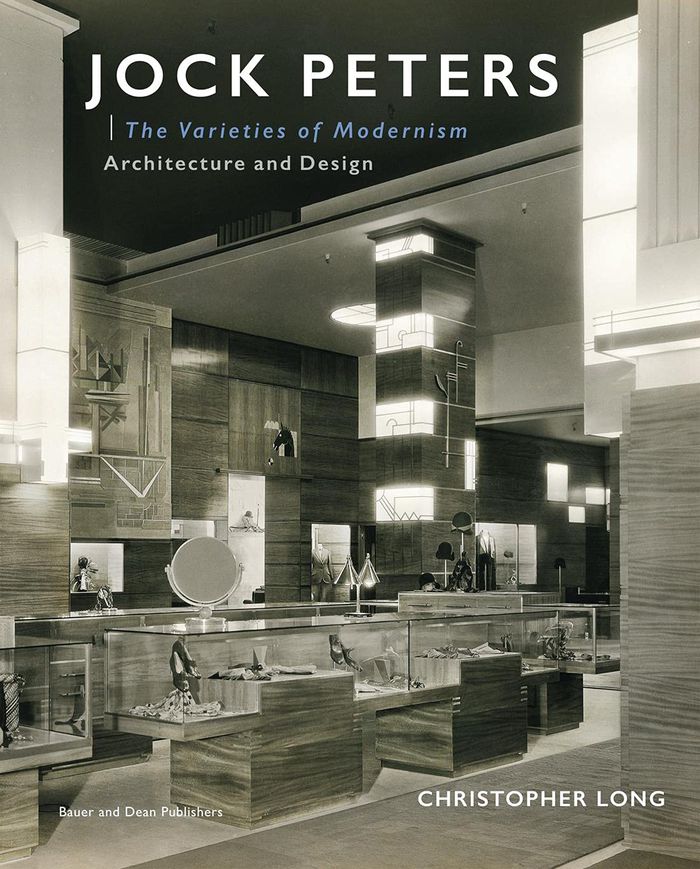
Scholar and historian Christopher Long turns his attention to the little-known German-born architect and designer Jock Peters (1889–1934). Long's engaging study introduces us to the modernist's architectural work in Hamburg, Germany, before World War I, and also to Peters's work created after he immigrated to America in 1922. Most notable are his interiors for the(...)
$88.00
(available to order)
Summary:
Scholar and historian Christopher Long turns his attention to the little-known German-born architect and designer Jock Peters (1889–1934). Long's engaging study introduces us to the modernist's architectural work in Hamburg, Germany, before World War I, and also to Peters's work created after he immigrated to America in 1922. Most notable are his interiors for the(...)
Title:
Jock Peters: Architecture and design. The varieties of Modernism
Actions:
Price:
$88.00
(available to order)
Summary:
Scholar and historian Christopher Long turns his attention to the little-known German-born architect and designer Jock Peters (1889–1934). Long's engaging study introduces us to the modernist's architectural work in Hamburg, Germany, before World War I, and also to Peters's work created after he immigrated to America in 1922. Most notable are his interiors for the once-famous Hollander department store in New York City and for Bullock's Wilshire in Los Angeles (the building was recently restored by Southwestern Law School). Both projects brought him international recognition. Peters also designed a dynamic sales office building for the short-lived Maddux Air Lines, as well as stores and houses for the developer William Lingenbrink, a major supporter of the burgeoning modernism in Southern California. Aside from his architectural work, Peters designed film sets for Famous Players-Lasky (later Paramount Pictures), working in the famed art department of Hans Dreier. Despite his early death, Peters managed to leave his mark on the modernist landscape in Southern California at a time when the new style was just emerging.
Jock Peters: Architecture and design. The varieties of Modernism
Actions:
Price:
$88.00
(available to order)
Summary:
Scholar and historian Christopher Long turns his attention to the little-known German-born architect and designer Jock Peters (1889–1934). Long's engaging study introduces us to the modernist's architectural work in Hamburg, Germany, before World War I, and also to Peters's work created after he immigrated to America in 1922. Most notable are his interiors for the once-famous Hollander department store in New York City and for Bullock's Wilshire in Los Angeles (the building was recently restored by Southwestern Law School). Both projects brought him international recognition. Peters also designed a dynamic sales office building for the short-lived Maddux Air Lines, as well as stores and houses for the developer William Lingenbrink, a major supporter of the burgeoning modernism in Southern California. Aside from his architectural work, Peters designed film sets for Famous Players-Lasky (later Paramount Pictures), working in the famed art department of Hans Dreier. Despite his early death, Peters managed to leave his mark on the modernist landscape in Southern California at a time when the new style was just emerging.
Form:
books
books
Publication:
October 2021
October 2021
Subject:
Modernism
Modernism


