


225 Results
Form:
books
books
Actions:
Price:
$46.00
(available to order)
Summary:
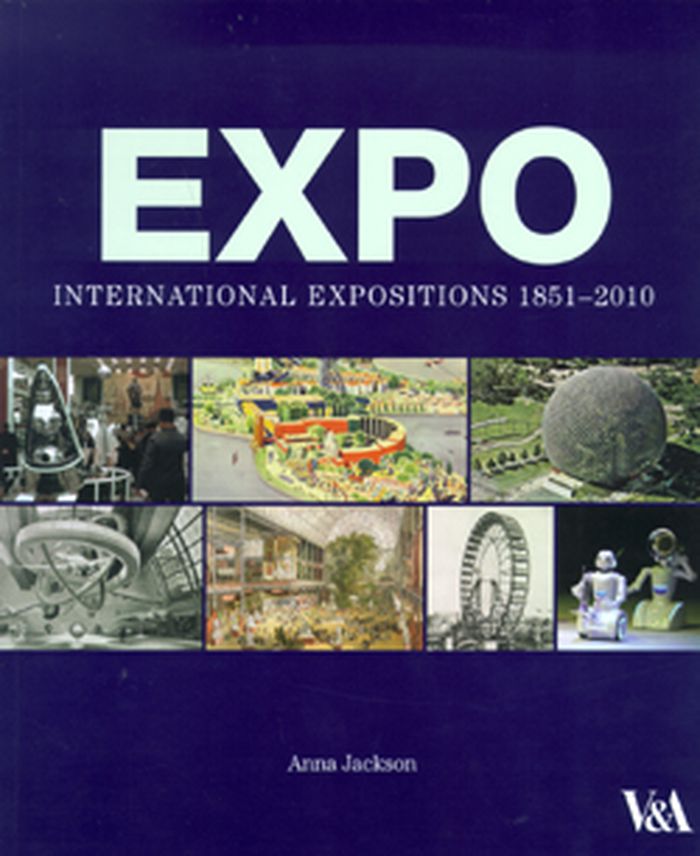
This book traces the history and significance of expositions and is fully illustrated with posters, ephemera, photographs, books and catalogue plates.
$46.00
(available to order)
Summary:
This book traces the history and significance of expositions and is fully illustrated with posters, ephemera, photographs, books and catalogue plates.
Title:
Expo : international expositions, 1851-2010
Actions:
Price:
$46.00
(available to order)
Summary:
This book traces the history and significance of expositions and is fully illustrated with posters, ephemera, photographs, books and catalogue plates.
Expo : international expositions, 1851-2010
Actions:
Price:
$46.00
(available to order)
Summary:
This book traces the history and significance of expositions and is fully illustrated with posters, ephemera, photographs, books and catalogue plates.
Form:
books
books
Publication:
August 2008, London
August 2008, London
Subject:
Museums and Universal Exhibitions
Museums and Universal Exhibitions
Form:
books
books
Title:
Ghostscape
Ghostscape
Actions:
Price:
$19.95
(available to order)
Summary:
Cet ouvrage est le catalogue de l’exposition Villa Savoyehantée qui a lieu du 20 novembre au 22 décembre 2004 à la Villa Savoye. Pendant l’hiver 2003, durant un mois, l’architecte Philippe Rahm et seize étudiants de l’atelier de Jean-Luc Vilmouth, artiste et enseignant à l’École nationale supérieure des beaux-arts, vont « hanter la modernité de la Villa Savoye de Le(...)
$19.95
(available to order)
Summary:
Cet ouvrage est le catalogue de l’exposition Villa Savoyehantée qui a lieu du 20 novembre au 22 décembre 2004 à la Villa Savoye. Pendant l’hiver 2003, durant un mois, l’architecte Philippe Rahm et seize étudiants de l’atelier de Jean-Luc Vilmouth, artiste et enseignant à l’École nationale supérieure des beaux-arts, vont « hanter la modernité de la Villa Savoye de Le(...)
Title:
Ghostscape
Actions:
Price:
$19.95
(available to order)
Summary:
Cet ouvrage est le catalogue de l’exposition Villa Savoyehantée qui a lieu du 20 novembre au 22 décembre 2004 à la Villa Savoye. Pendant l’hiver 2003, durant un mois, l’architecte Philippe Rahm et seize étudiants de l’atelier de Jean-Luc Vilmouth, artiste et enseignant à l’École nationale supérieure des beaux-arts, vont « hanter la modernité de la Villa Savoye de Le Corbusier, en visiter les dimensions cachées, les zones d’ombres, sa part invisible.Chercher des fantômes dans la transparence du verre, révéler l’occulte dans les surfaces lisses et légères, l’ineffable dans l’architecture blanche et lumineuse d’un siècle moderne déjà passé. Il existe une contemporanéité des fantômes. » Ce catalogue présente les travaux des étudiants, en « dialogue » avec le récit de cette expérience commune. Il raconte également l’histoire de la Villa Savoye de Le Corbusier, manifeste de la modernité architecturale et classée monument historique en 1965, et propose un regard différent sur cette « pure création de l’esprit», comme l’appelait Le Corbusier lui-même.
Ghostscape
Actions:
Price:
$19.95
(available to order)
Summary:
Cet ouvrage est le catalogue de l’exposition Villa Savoyehantée qui a lieu du 20 novembre au 22 décembre 2004 à la Villa Savoye. Pendant l’hiver 2003, durant un mois, l’architecte Philippe Rahm et seize étudiants de l’atelier de Jean-Luc Vilmouth, artiste et enseignant à l’École nationale supérieure des beaux-arts, vont « hanter la modernité de la Villa Savoye de Le Corbusier, en visiter les dimensions cachées, les zones d’ombres, sa part invisible.Chercher des fantômes dans la transparence du verre, révéler l’occulte dans les surfaces lisses et légères, l’ineffable dans l’architecture blanche et lumineuse d’un siècle moderne déjà passé. Il existe une contemporanéité des fantômes. » Ce catalogue présente les travaux des étudiants, en « dialogue » avec le récit de cette expérience commune. Il raconte également l’histoire de la Villa Savoye de Le Corbusier, manifeste de la modernité architecturale et classée monument historique en 1965, et propose un regard différent sur cette « pure création de l’esprit», comme l’appelait Le Corbusier lui-même.
Form:
books
books
Publication:
August 2005, Paris
August 2005, Paris
Subject:
Museums and Universal Exhibitions
Museums and Universal Exhibitions
Form:
books
books
Actions:
Price:
$82.50
(available to order)
Summary:
In this examination of installation design as an aesthetic medium and cultural practice, Staniszewski offers the first history of exhibitions at the most powerful and influential modern art museum--The Museum of Modern Art in New York. (...)
$82.50
(available to order)
Summary:
In this examination of installation design as an aesthetic medium and cultural practice, Staniszewski offers the first history of exhibitions at the most powerful and influential modern art museum--The Museum of Modern Art in New York. (...)
Subject:
Museums and Universal Exhibitions
Museums and Universal Exhibitions
Publication:
December 1998, Cambridge, Mass.
December 1998, Cambridge, Mass.
Title:
Power of display : a history of the exhibition installations at the museum of modern art
Actions:
Price:
$82.50
(available to order)
Summary:
In this examination of installation design as an aesthetic medium and cultural practice, Staniszewski offers the first history of exhibitions at the most powerful and influential modern art museum--The Museum of Modern Art in New York. Focusing on over two hundred photographs of the visually rich but overlooked history of exhibitions, Staniszewski documents and deciphers an essential chapter of twentieth-century art and culture and provides a historical and theoretical framework for a primary area of contemporary aesthetic practice--installation-based art. Among the artists, designers, architects, and curators whose installations the author features are Dennis Adams, Alfred H. Barr, Jr., Herbert Bayer, René d'Harnoncourt, Ray and Charles Eames, Hans Haacke, David Hammons, Philip Johnson, Frederick Kiesler, Barbara Kruger, Louise Lawler, El Lissitzky, Adrian Piper, Lilly Reich, William Rubin, Paul Rudolph, Edward Steichen, Giuseppe Terragni, and Kirk Varnedoe.
Power of display : a history of the exhibition installations at the museum of modern art
Actions:
Price:
$82.50
(available to order)
Summary:
In this examination of installation design as an aesthetic medium and cultural practice, Staniszewski offers the first history of exhibitions at the most powerful and influential modern art museum--The Museum of Modern Art in New York. Focusing on over two hundred photographs of the visually rich but overlooked history of exhibitions, Staniszewski documents and deciphers an essential chapter of twentieth-century art and culture and provides a historical and theoretical framework for a primary area of contemporary aesthetic practice--installation-based art. Among the artists, designers, architects, and curators whose installations the author features are Dennis Adams, Alfred H. Barr, Jr., Herbert Bayer, René d'Harnoncourt, Ray and Charles Eames, Hans Haacke, David Hammons, Philip Johnson, Frederick Kiesler, Barbara Kruger, Louise Lawler, El Lissitzky, Adrian Piper, Lilly Reich, William Rubin, Paul Rudolph, Edward Steichen, Giuseppe Terragni, and Kirk Varnedoe.
Form:
books
books
Publication:
December 1998, Cambridge, Mass.
December 1998, Cambridge, Mass.
Subject:
Museums and Universal Exhibitions
Museums and Universal Exhibitions
Form:
books
books
Actions:
Price:
$77.00
(available to order)
Summary:
This book illuminates the history of a century of the artists' association known as the Vienna Secession and traces the evolution of a temple of art into a major exhibition centre.
$77.00
(available to order)
Summary:
This book illuminates the history of a century of the artists' association known as the Vienna Secession and traces the evolution of a temple of art into a major exhibition centre.
Subject:
Museums and Universal Exhibitions
Museums and Universal Exhibitions
Publication:
April 1998, Stuttgart
April 1998, Stuttgart
Title:
The Vienna Secession : from temple of art to exhibition hall
Actions:
Price:
$77.00
(available to order)
Summary:
This book illuminates the history of a century of the artists' association known as the Vienna Secession and traces the evolution of a temple of art into a major exhibition centre.
The Vienna Secession : from temple of art to exhibition hall
Actions:
Price:
$77.00
(available to order)
Summary:
This book illuminates the history of a century of the artists' association known as the Vienna Secession and traces the evolution of a temple of art into a major exhibition centre.
Form:
books
books
Publication:
April 1998, Stuttgart
April 1998, Stuttgart
Subject:
Museums and Universal Exhibitions
Museums and Universal Exhibitions
Form:
books
books
Actions:
Price:
$25.50
(available in store)
Summary:
In 1993, the artist Vito Acconci and the architect Steven Holl were invited to redesign the then existing façade of the Storefront Gallery in New York. As a response to its urban context and its function as an art space - the gallery is situated on the ground floor(...)
$25.50
(available in store)
Summary:
In 1993, the artist Vito Acconci and the architect Steven Holl were invited to redesign the then existing façade of the Storefront Gallery in New York. As a response to its urban context and its function as an art space - the gallery is situated on the ground floor(...)
Title:
Acconci, Holl : storefront for art and architecture
Actions:
Price:
$25.50
(available in store)
Summary:
In 1993, the artist Vito Acconci and the architect Steven Holl were invited to redesign the then existing façade of the Storefront Gallery in New York. As a response to its urban context and its function as an art space - the gallery is situated on the ground floor of a low building on the outskirts of Soho - Acconci and Holl created a versatile façade which may be opened up in different ways according to the season or function as an optical screen separating the inner space from the street. The different functions, answering to the needs of inner and outer space and creating links and transparencies or establishing borders, serve to provide visitors with ever-changing local and spatial relations.
Acconci, Holl : storefront for art and architecture
Actions:
Price:
$25.50
(available in store)
Summary:
In 1993, the artist Vito Acconci and the architect Steven Holl were invited to redesign the then existing façade of the Storefront Gallery in New York. As a response to its urban context and its function as an art space - the gallery is situated on the ground floor of a low building on the outskirts of Soho - Acconci and Holl created a versatile façade which may be opened up in different ways according to the season or function as an optical screen separating the inner space from the street. The different functions, answering to the needs of inner and outer space and creating links and transparencies or establishing borders, serve to provide visitors with ever-changing local and spatial relations.
Form:
books
books
Publication:
January 2001, Bregenz
January 2001, Bregenz
Subject:
Museums and Universal Exhibitions
Museums and Universal Exhibitions
Form:
books
books
Title:
Architecture et musée
Architecture et musée
Actions:
Price:
$42.50
(available to order)
Summary:
Actes du colloque organisé au Musée royal de Mariemont.
$42.50
(available to order)
Summary:
Actes du colloque organisé au Musée royal de Mariemont.
Subject:
Museums and Universal Exhibitions
Museums and Universal Exhibitions
Publication:
March 2001, Tournai
March 2001, Tournai
Title:
Architecture et musée
Actions:
Price:
$42.50
(available to order)
Summary:
Actes du colloque organisé au Musée royal de Mariemont.
Architecture et musée
Actions:
Price:
$42.50
(available to order)
Summary:
Actes du colloque organisé au Musée royal de Mariemont.
Form:
books
books
Publication:
March 2001, Tournai
March 2001, Tournai
Subject:
Museums and Universal Exhibitions
Museums and Universal Exhibitions
Form:
books
books
Actions:
Price:
$75.00
(available to order)
Summary:
The grand exhibitions of the Victorian and Edwardian eras are the lens through which Peter Hoffenberg examines the economic, cultural, and social forces that helped define Britain and the British Empire. He focuses on major exhibitions in England, Australia, and India between the Great Exhibition of 1851 and the Festival of Empire sixty years later, taking special(...)
$75.00
(available to order)
Summary:
The grand exhibitions of the Victorian and Edwardian eras are the lens through which Peter Hoffenberg examines the economic, cultural, and social forces that helped define Britain and the British Empire. He focuses on major exhibitions in England, Australia, and India between the Great Exhibition of 1851 and the Festival of Empire sixty years later, taking special(...)
Subject:
Museums and Universal Exhibitions
Museums and Universal Exhibitions
Publication:
January 1900, Berkeley
January 1900, Berkeley
Title:
An empire on display : English, Indian, and Australian exhibitions from the Crystal Palace to the Great War
Actions:
Price:
$75.00
(available to order)
Summary:
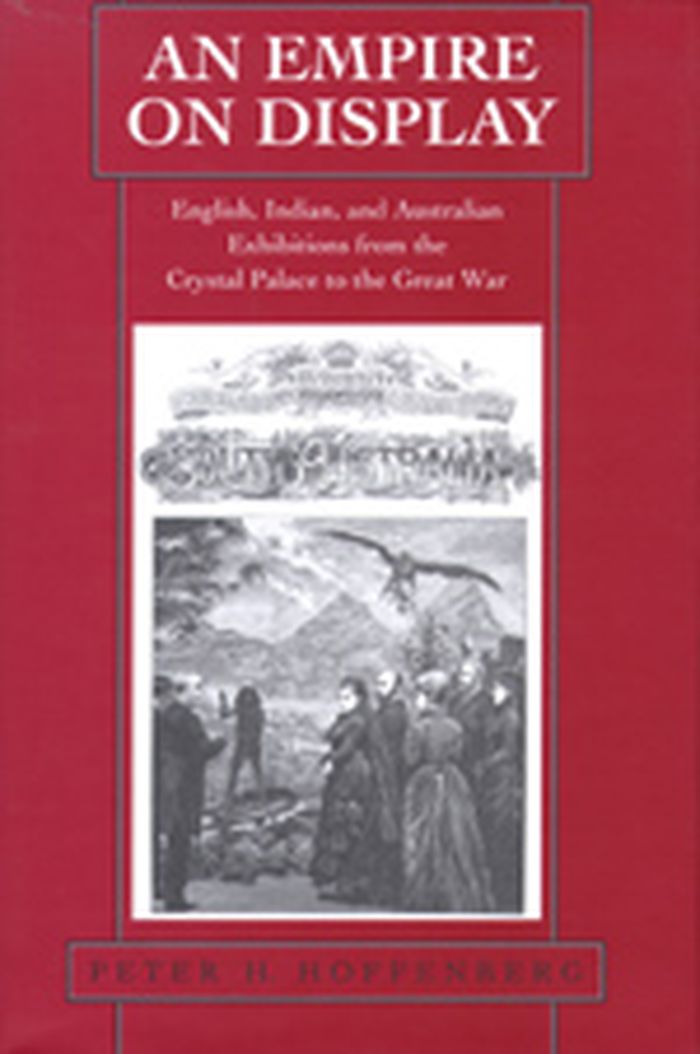
The grand exhibitions of the Victorian and Edwardian eras are the lens through which Peter Hoffenberg examines the economic, cultural, and social forces that helped define Britain and the British Empire. He focuses on major exhibitions in England, Australia, and India between the Great Exhibition of 1851 and the Festival of Empire sixty years later, taking special interest in the interactive nature of the exhibition experience, the long-term consequences for the participants and host societies, and the ways in which such popular gatherings revealed dissent as well as celebration. Hoffenberg shows how exhibitions shaped culture and society within and across borders in the transnational working of the British Empire. The exhibitions were central to establishing and developing a participatory imperial world, and each polity in that world provided distinctive information, visitors, and exhibits. Among the displays were commercial goods, working machines, and ethnographic scenes. Exhibits were intended to promote external commonwealth and internal nationalism. The imperial overlay did not erase significant differences but explained and used them in economic and cultural terms. The exhibitions in cities such as London, Sydney, and Calcutta were living and active public inventories of the Empire and its national political communities. The process of building and consuming such inventories persists today in the cultural bureaucracies, museums, and festivals of modern nation-states, the appeal to tradition and social order, and the actions of transnational bodies.
An empire on display : English, Indian, and Australian exhibitions from the Crystal Palace to the Great War
Actions:
Price:
$75.00
(available to order)
Summary:
The grand exhibitions of the Victorian and Edwardian eras are the lens through which Peter Hoffenberg examines the economic, cultural, and social forces that helped define Britain and the British Empire. He focuses on major exhibitions in England, Australia, and India between the Great Exhibition of 1851 and the Festival of Empire sixty years later, taking special interest in the interactive nature of the exhibition experience, the long-term consequences for the participants and host societies, and the ways in which such popular gatherings revealed dissent as well as celebration. Hoffenberg shows how exhibitions shaped culture and society within and across borders in the transnational working of the British Empire. The exhibitions were central to establishing and developing a participatory imperial world, and each polity in that world provided distinctive information, visitors, and exhibits. Among the displays were commercial goods, working machines, and ethnographic scenes. Exhibits were intended to promote external commonwealth and internal nationalism. The imperial overlay did not erase significant differences but explained and used them in economic and cultural terms. The exhibitions in cities such as London, Sydney, and Calcutta were living and active public inventories of the Empire and its national political communities. The process of building and consuming such inventories persists today in the cultural bureaucracies, museums, and festivals of modern nation-states, the appeal to tradition and social order, and the actions of transnational bodies.
Form:
books
books
Publication:
January 1900, Berkeley
January 1900, Berkeley
Subject:
Museums and Universal Exhibitions
Museums and Universal Exhibitions
Form:
books
books
Price:
$74.95
(available to order)
Summary:
Focusing on the Oxford University Museum, the Edinburgh Museum of Science and Art, and the Natural History Museum of London, Yanni explores how such institutions reflected varying, often contradictory concepts of nature -- from the handiwork of God to a resource to be exploited. She(...)
$74.95
(available to order)
Summary:
Focusing on the Oxford University Museum, the Edinburgh Museum of Science and Art, and the Natural History Museum of London, Yanni explores how such institutions reflected varying, often contradictory concepts of nature -- from the handiwork of God to a resource to be exploited. She(...)
Title:
Nature's museums : Victorian science & the architecture of display
Actions:
Price:
$74.95
(available to order)
Summary:
Focusing on the Oxford University Museum, the Edinburgh Museum of Science and Art, and the Natural History Museum of London, Yanni explores how such institutions reflected varying, often contradictory concepts of nature -- from the handiwork of God to a resource to be exploited. She explains how the rise of museums accompanied and influenced the transformation of science from a "gentleman's hobby" to a paying profession. And she shows how the buildings themselves remain invaluable guides to the Victorians' ambiguous perception of the natural world. Through careful social and historical accounts of the buildings, their displays, and their reception, Yanni's work deepens our understanding of the emerging power of museums in Darwin's century.
Nature's museums : Victorian science & the architecture of display
Actions:
Price:
$74.95
(available to order)
Summary:
Focusing on the Oxford University Museum, the Edinburgh Museum of Science and Art, and the Natural History Museum of London, Yanni explores how such institutions reflected varying, often contradictory concepts of nature -- from the handiwork of God to a resource to be exploited. She explains how the rise of museums accompanied and influenced the transformation of science from a "gentleman's hobby" to a paying profession. And she shows how the buildings themselves remain invaluable guides to the Victorians' ambiguous perception of the natural world. Through careful social and historical accounts of the buildings, their displays, and their reception, Yanni's work deepens our understanding of the emerging power of museums in Darwin's century.
Form:
books
books
Publication:
March 2000, Baltimore
March 2000, Baltimore
Subject:
Museums and Universal Exhibitions
Museums and Universal Exhibitions
Form:
books
books
Actions:
Price:
$60.00
(available to order)
Summary:
The 1931 international colonial exposition in Paris was a demonstration of French colonial policy, colonial architecture and urban planning, and the scientific and philosophical theories that justified colonialism. The exposition displayed the people, material(...)
$60.00
(available to order)
Summary:
The 1931 international colonial exposition in Paris was a demonstration of French colonial policy, colonial architecture and urban planning, and the scientific and philosophical theories that justified colonialism. The exposition displayed the people, material(...)
Subject:
Museums and Universal Exhibitions
Museums and Universal Exhibitions
Publication:
April 2000, Cambridge
April 2000, Cambridge
Title:
Hybrid modernities : architecture and representation at the 1931 colonial exposition, Paris
Actions:
Price:
$60.00
(available to order)
Summary:
The 1931 international colonial exposition in Paris was a demonstration of French colonial policy, colonial architecture and urban planning, and the scientific and philosophical theories that justified colonialism. The exposition displayed the people, material culture, raw materials, manufactured goods, and arts of the global colonial empires. Yet the event gave a contradictory message of the colonies as the "Orient"--the site of rampant sensuality, decadence, and irrationality--and as the laboratory of Western rationality. In "Hybrid modernities", Patricia Morton shows how the exposition failed to keep colonialism's two spheres separate, instead creating hybrids of French and native culture. At the exposition, French pavilions demonstrated Europe's sophistication in art deco style, while the colonial pavilions were "authentic" native environments for displaying indigenous peoples and artifacts from the colonies. The authenticity of these pavilions' exteriors was contradicted by vaguely exotic interiors filled with didactic exhibition stands and dioramas. Intended to maintain a segregation of colonized and colonizer, the colonial pavilions instead were mixtures of European and native architecture. Anticolonial resistance erupted around the Exposition in the form of protests, anticolonial tracts, and a countercolonial exposition produced by the Surrealists. Thus the Exposition occupied a "middle region" of experience where the norms, rules, and systems of French colonialism both emerged and broke down, unsustainable because of their internal contradictions. As Morton shows, the effort to segregate France and her colonies failed, both at the colonial exposition and in greater France, because it was constantly undermined by the hybrids that modern colonialism itself produced.
Hybrid modernities : architecture and representation at the 1931 colonial exposition, Paris
Actions:
Price:
$60.00
(available to order)
Summary:
The 1931 international colonial exposition in Paris was a demonstration of French colonial policy, colonial architecture and urban planning, and the scientific and philosophical theories that justified colonialism. The exposition displayed the people, material culture, raw materials, manufactured goods, and arts of the global colonial empires. Yet the event gave a contradictory message of the colonies as the "Orient"--the site of rampant sensuality, decadence, and irrationality--and as the laboratory of Western rationality. In "Hybrid modernities", Patricia Morton shows how the exposition failed to keep colonialism's two spheres separate, instead creating hybrids of French and native culture. At the exposition, French pavilions demonstrated Europe's sophistication in art deco style, while the colonial pavilions were "authentic" native environments for displaying indigenous peoples and artifacts from the colonies. The authenticity of these pavilions' exteriors was contradicted by vaguely exotic interiors filled with didactic exhibition stands and dioramas. Intended to maintain a segregation of colonized and colonizer, the colonial pavilions instead were mixtures of European and native architecture. Anticolonial resistance erupted around the Exposition in the form of protests, anticolonial tracts, and a countercolonial exposition produced by the Surrealists. Thus the Exposition occupied a "middle region" of experience where the norms, rules, and systems of French colonialism both emerged and broke down, unsustainable because of their internal contradictions. As Morton shows, the effort to segregate France and her colonies failed, both at the colonial exposition and in greater France, because it was constantly undermined by the hybrids that modern colonialism itself produced.
Form:
books
books
Publication:
April 2000, Cambridge
April 2000, Cambridge
Subject:
Museums and Universal Exhibitions
Museums and Universal Exhibitions
Form:
books
books
Title:
L'entrepôt : Musée Bordeaux
L'entrepôt : Musée Bordeaux
Actions:
Price:
$11.25
(available to order)
Summary:
Construit au début du XIXe siècle, au moment où le port de Bordeaux cherche une seconde vie, l'entrepôt Lainé a abrité les épices et les marchandises précieuses ramenées des colonies pendant plus d'un siècle. Désaffecté, menacé de destruction, il est heureusement racheté par la ville de Bordeaux en 1973 pour devenir un lieu à vocation culturelle. Une nouvelle(...)
$11.25
(available to order)
Summary:
Construit au début du XIXe siècle, au moment où le port de Bordeaux cherche une seconde vie, l'entrepôt Lainé a abrité les épices et les marchandises précieuses ramenées des colonies pendant plus d'un siècle. Désaffecté, menacé de destruction, il est heureusement racheté par la ville de Bordeaux en 1973 pour devenir un lieu à vocation culturelle. Une nouvelle(...)
Title:
L'entrepôt : Musée Bordeaux
Actions:
Price:
$11.25
(available to order)
Summary:
Construit au début du XIXe siècle, au moment où le port de Bordeaux cherche une seconde vie, l'entrepôt Lainé a abrité les épices et les marchandises précieuses ramenées des colonies pendant plus d'un siècle. Désaffecté, menacé de destruction, il est heureusement racheté par la ville de Bordeaux en 1973 pour devenir un lieu à vocation culturelle. Une nouvelle page de son histoire commence alors. Réaménagé par les architectes Pistre & Valode et Andrée Putman qui lui rendent son aspect d'origine, l'entrepôt devient musée d'art contemporain, offrant aux artistes une architecture épurée.
L'entrepôt : Musée Bordeaux
Actions:
Price:
$11.25
(available to order)
Summary:
Construit au début du XIXe siècle, au moment où le port de Bordeaux cherche une seconde vie, l'entrepôt Lainé a abrité les épices et les marchandises précieuses ramenées des colonies pendant plus d'un siècle. Désaffecté, menacé de destruction, il est heureusement racheté par la ville de Bordeaux en 1973 pour devenir un lieu à vocation culturelle. Une nouvelle page de son histoire commence alors. Réaménagé par les architectes Pistre & Valode et Andrée Putman qui lui rendent son aspect d'origine, l'entrepôt devient musée d'art contemporain, offrant aux artistes une architecture épurée.
Form:
books
books
Publication:
April 2000, Paris
April 2000, Paris
Subject:
Museums and Universal Exhibitions
Museums and Universal Exhibitions


