


265 Results
Form:
books
books
Actions:
Price:
$35.00
(available to order)
Summary:
On Curating 2, Carolee Thea's new volume of interviews with 14 of today’s leading curators, explores the lively system of art biennials that is thriving around the world—particularly outside Europe and America. Spawned by their more formal Western predecessors and motivated by the forces of history and politics, the newer incarnations of the biennial often occur in the(...)
$35.00
(available to order)
Summary:
On Curating 2, Carolee Thea's new volume of interviews with 14 of today’s leading curators, explores the lively system of art biennials that is thriving around the world—particularly outside Europe and America. Spawned by their more formal Western predecessors and motivated by the forces of history and politics, the newer incarnations of the biennial often occur in the(...)
Title:
On curating 2: paradigm shifts
Actions:
Price:
$35.00
(available to order)
Summary:
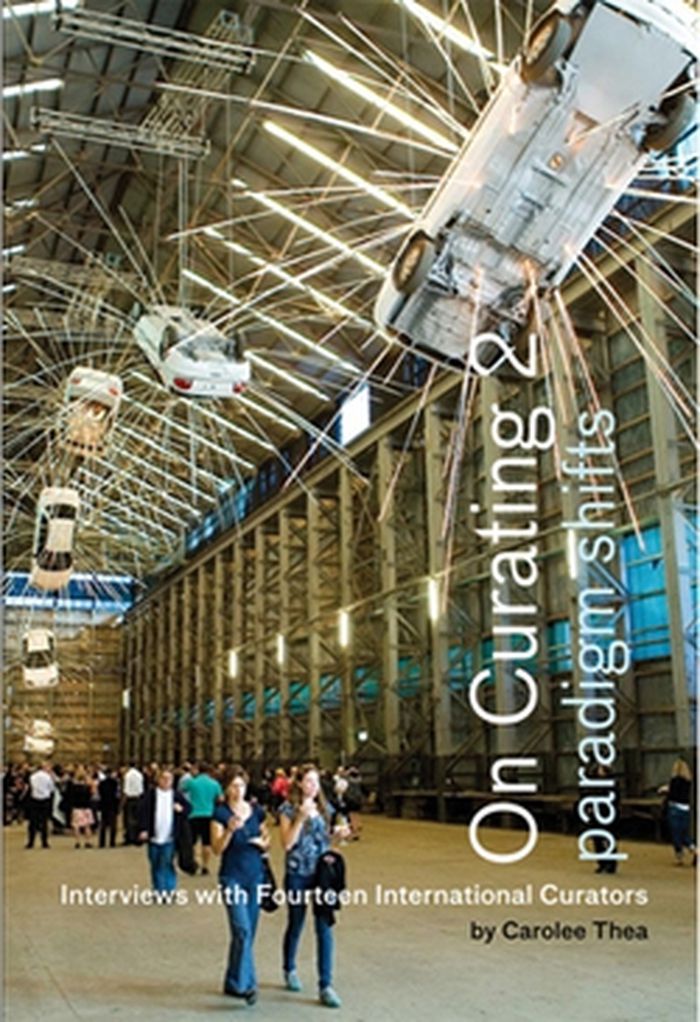
On Curating 2, Carolee Thea's new volume of interviews with 14 of today’s leading curators, explores the lively system of art biennials that is thriving around the world—particularly outside Europe and America. Spawned by their more formal Western predecessors and motivated by the forces of history and politics, the newer incarnations of the biennial often occur in the cities of the postcolonial world and the Global South, as well as in former socialist countries. The new generation of curators who are organizing provocative and experimental exhibitions hail from cities as diverse as Bogotá, Dakar, Havana, Jakarta, Jerusalem, Lagos, Mumbai, Seoul and Zagreb, and they are the subjects of the interviews collected in this book. Thea’s interviewees are Nancy Adajania, Wassan Al-Khudhairi, David Elliott, Mami Kataoka, Sunjung Kim, Koyo Kouoh, Gerardo Mosquera, Ugochukwu-Smooth Nzewi, Jack Persekian, José Roca, Bisi Silva, Carol Yinghua Lu, Alia Swastika and WHW.
On curating 2: paradigm shifts
Actions:
Price:
$35.00
(available to order)
Summary:
On Curating 2, Carolee Thea's new volume of interviews with 14 of today’s leading curators, explores the lively system of art biennials that is thriving around the world—particularly outside Europe and America. Spawned by their more formal Western predecessors and motivated by the forces of history and politics, the newer incarnations of the biennial often occur in the cities of the postcolonial world and the Global South, as well as in former socialist countries. The new generation of curators who are organizing provocative and experimental exhibitions hail from cities as diverse as Bogotá, Dakar, Havana, Jakarta, Jerusalem, Lagos, Mumbai, Seoul and Zagreb, and they are the subjects of the interviews collected in this book. Thea’s interviewees are Nancy Adajania, Wassan Al-Khudhairi, David Elliott, Mami Kataoka, Sunjung Kim, Koyo Kouoh, Gerardo Mosquera, Ugochukwu-Smooth Nzewi, Jack Persekian, José Roca, Bisi Silva, Carol Yinghua Lu, Alia Swastika and WHW.
Form:
books
books
Publication:
March 2016
March 2016
Subject:
Museology
Museology
Form:
books
books
Title:
Notes on my dunce cap
Notes on my dunce cap
Actions:
Price:
$26.00
(available to order)
Summary:
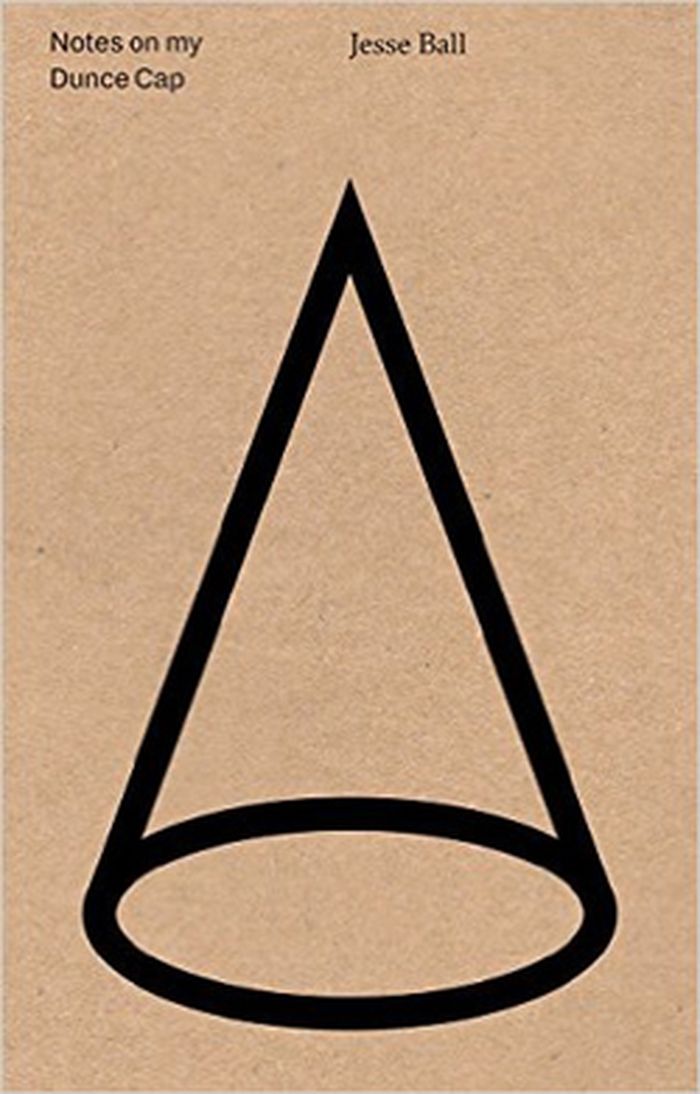
A text for those curious about education as a context for creativity and collaboration, and for teachers who want to reconsider hierarchy in their classrooms, Jesse Ball's Notes on My Dunce Cap includes advisory material regarding the creation of syllabi and the manner in which groups may evaluate the work of an individual without harm.
$26.00
(available to order)
Summary:
A text for those curious about education as a context for creativity and collaboration, and for teachers who want to reconsider hierarchy in their classrooms, Jesse Ball's Notes on My Dunce Cap includes advisory material regarding the creation of syllabi and the manner in which groups may evaluate the work of an individual without harm.
Title:
Notes on my dunce cap
Actions:
Price:
$26.00
(available to order)
Summary:
A text for those curious about education as a context for creativity and collaboration, and for teachers who want to reconsider hierarchy in their classrooms, Jesse Ball's Notes on My Dunce Cap includes advisory material regarding the creation of syllabi and the manner in which groups may evaluate the work of an individual without harm.
Notes on my dunce cap
Actions:
Price:
$26.00
(available to order)
Summary:
A text for those curious about education as a context for creativity and collaboration, and for teachers who want to reconsider hierarchy in their classrooms, Jesse Ball's Notes on My Dunce Cap includes advisory material regarding the creation of syllabi and the manner in which groups may evaluate the work of an individual without harm.
Form:
books
books
Publication:
February 2016
February 2016
Subject:
Museology
Museology
Form:
books
books
Actions:
Price:
$44.00
(available to order)
Summary:
'The Curatorial Conundrum' looks at the burgeoning field of curatorship and tries to imagine its future. Indeed, practitioners and theorists consider a variety of futures: the future of curatorial education; the future of curatorial research; the future of curatorial and artistic practice; and the institutions that will make these other futures possible. Contributors(...)
$44.00
(available to order)
Summary:
'The Curatorial Conundrum' looks at the burgeoning field of curatorship and tries to imagine its future. Indeed, practitioners and theorists consider a variety of futures: the future of curatorial education; the future of curatorial research; the future of curatorial and artistic practice; and the institutions that will make these other futures possible. Contributors(...)
Title:
The Curatorial Conundrum: What to Study? What to Research? What to Practice?
Actions:
Price:
$44.00
(available to order)
Summary:
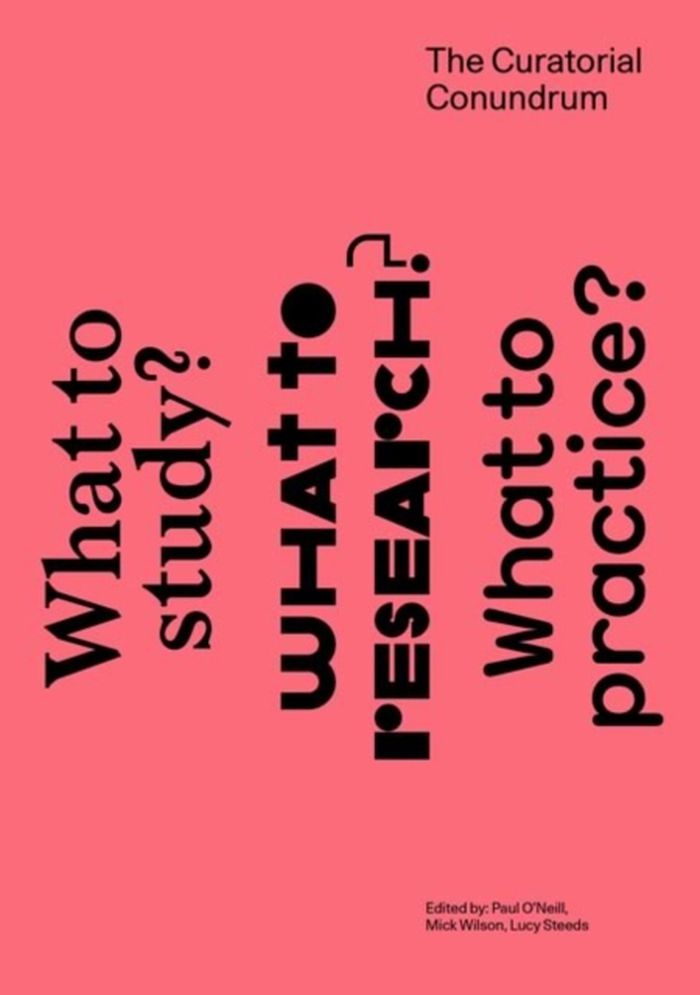
'The Curatorial Conundrum' looks at the burgeoning field of curatorship and tries to imagine its future. Indeed, practitioners and theorists consider a variety of futures: the future of curatorial education; the future of curatorial research; the future of curatorial and artistic practice; and the institutions that will make these other futures possible. Contributors examine the proliferation of graduate programs in curatorial studies over the last twenty years, and consider what can be taught without giving up what is precisely curatorial, within the ever-expanding parameters of curatorial practice in recent times.
The Curatorial Conundrum: What to Study? What to Research? What to Practice?
Actions:
Price:
$44.00
(available to order)
Summary:
'The Curatorial Conundrum' looks at the burgeoning field of curatorship and tries to imagine its future. Indeed, practitioners and theorists consider a variety of futures: the future of curatorial education; the future of curatorial research; the future of curatorial and artistic practice; and the institutions that will make these other futures possible. Contributors examine the proliferation of graduate programs in curatorial studies over the last twenty years, and consider what can be taught without giving up what is precisely curatorial, within the ever-expanding parameters of curatorial practice in recent times.
Form:
books
books
Publication:
June 2016
June 2016
Subject:
Museology
Museology
Form:
books
books
Title:
Curating & Politics
Curating & Politics
Actions:
Price:
$45.00
(available to order)
Summary:
Ever since the nineteen-nineties, curatorial discourse has revolved around the figure of the professional curator. Consequently, curatorial politics is usually considered the direct result of a curator's deliberate acts and intentions. Now, however, new institutional models and modes of exhibition practice together with key shifts in funding and collecting strategies have(...)
$45.00
(available to order)
Summary:
Ever since the nineteen-nineties, curatorial discourse has revolved around the figure of the professional curator. Consequently, curatorial politics is usually considered the direct result of a curator's deliberate acts and intentions. Now, however, new institutional models and modes of exhibition practice together with key shifts in funding and collecting strategies have(...)
Title:
Curating & Politics
Actions:
Price:
$45.00
(available to order)
Summary:
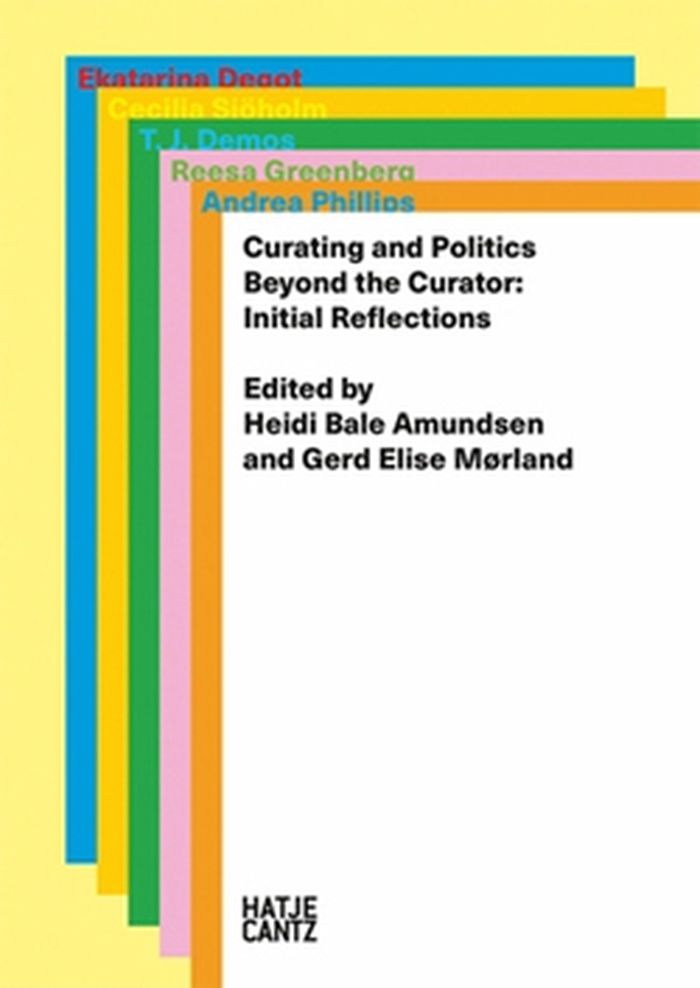
Ever since the nineteen-nineties, curatorial discourse has revolved around the figure of the professional curator. Consequently, curatorial politics is usually considered the direct result of a curator's deliberate acts and intentions. Now, however, new institutional models and modes of exhibition practice together with key shifts in funding and collecting strategies have revealed aspects of curatorial politics over which the exhibition-maker has little or no control. The present volume presents a series of essays by noted art theorists and cultural scientists that go beyond the perspective of the individual curator to reveal these previously unexplored levels of curatorial politics.
Curating & Politics
Actions:
Price:
$45.00
(available to order)
Summary:
Ever since the nineteen-nineties, curatorial discourse has revolved around the figure of the professional curator. Consequently, curatorial politics is usually considered the direct result of a curator's deliberate acts and intentions. Now, however, new institutional models and modes of exhibition practice together with key shifts in funding and collecting strategies have revealed aspects of curatorial politics over which the exhibition-maker has little or no control. The present volume presents a series of essays by noted art theorists and cultural scientists that go beyond the perspective of the individual curator to reveal these previously unexplored levels of curatorial politics.
Form:
books
books
Publication:
February 2016
February 2016
Subject:
Museology
Museology
Form:
books
books
Price:
$29.95
(available in store)
Summary:
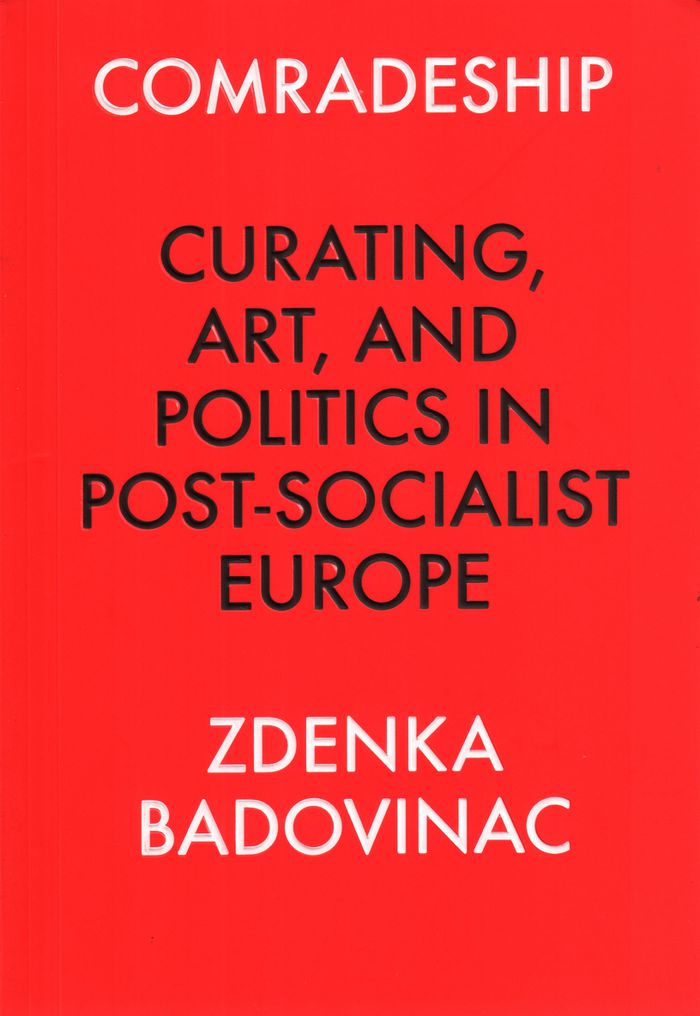
''Comradeship'' collects 16 essays by the forward-thinking Slovenian curator, museum director and scholar Zdenka Badovinac (born 1958). Appointed director of Ljubljana's Museum of Modern Art in 1993 in the wake of Slovenian independence, Badovinac has become an influential voice in international conversations rethinking the geopolitics of art after the fall of communism.(...)
$29.95
(available in store)
Summary:
''Comradeship'' collects 16 essays by the forward-thinking Slovenian curator, museum director and scholar Zdenka Badovinac (born 1958). Appointed director of Ljubljana's Museum of Modern Art in 1993 in the wake of Slovenian independence, Badovinac has become an influential voice in international conversations rethinking the geopolitics of art after the fall of communism.(...)
Title:
Comradeship: curating, art, and politics in post-socialist Europe
Actions:
Price:
$29.95
(available in store)
Summary:
''Comradeship'' collects 16 essays by the forward-thinking Slovenian curator, museum director and scholar Zdenka Badovinac (born 1958). Appointed director of Ljubljana's Museum of Modern Art in 1993 in the wake of Slovenian independence, Badovinac has become an influential voice in international conversations rethinking the geopolitics of art after the fall of communism. She is a ferocious critic of unequal negotiations between East and West and a leading historian of the avant-garde art that emerged in socialist and post-socialist countries at the end of the last century. One of the longest-serving and most prominent museum directors in the region, Badovinac has pioneered radical institutional forms to create a museum responsive to the complexities of the past, and commensurate with the demands of the present.
Comradeship: curating, art, and politics in post-socialist Europe
Actions:
Price:
$29.95
(available in store)
Summary:
''Comradeship'' collects 16 essays by the forward-thinking Slovenian curator, museum director and scholar Zdenka Badovinac (born 1958). Appointed director of Ljubljana's Museum of Modern Art in 1993 in the wake of Slovenian independence, Badovinac has become an influential voice in international conversations rethinking the geopolitics of art after the fall of communism. She is a ferocious critic of unequal negotiations between East and West and a leading historian of the avant-garde art that emerged in socialist and post-socialist countries at the end of the last century. One of the longest-serving and most prominent museum directors in the region, Badovinac has pioneered radical institutional forms to create a museum responsive to the complexities of the past, and commensurate with the demands of the present.
Form:
books
books
Publication:
April 2019
April 2019
Subject:
Museology
Museology
Form:
books
books
Actions:
Price:
$45.00
(available to order)
Summary:
This publication focuses on the curatorial practice of exhibiting conceptual art. The fact that conceptual works are not object-based, creates challenges in exhibiting or re-exhibiting them. This book offers various perspectives on how to handle conceptual art in the context of the museum, based on three detailed case studies and an extensive introduction in which the(...)
$45.00
(available to order)
Summary:
This publication focuses on the curatorial practice of exhibiting conceptual art. The fact that conceptual works are not object-based, creates challenges in exhibiting or re-exhibiting them. This book offers various perspectives on how to handle conceptual art in the context of the museum, based on three detailed case studies and an extensive introduction in which the(...)
Title:
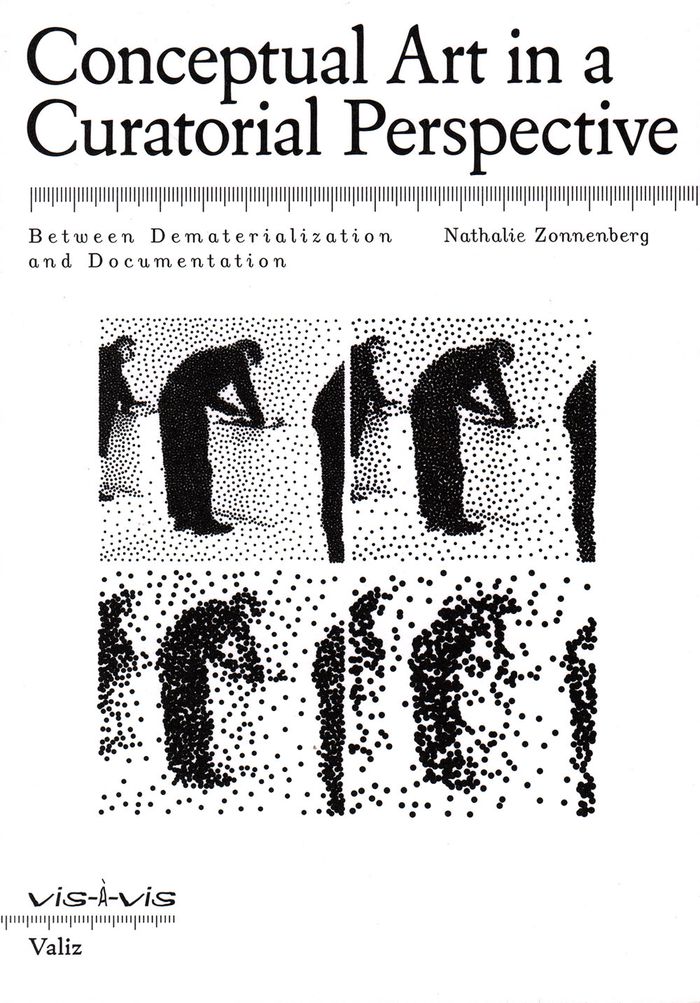
Conceptual art in a curatorial perspective: between dematerialization and documentation
Actions:
Price:
$45.00
(available to order)
Summary:
This publication focuses on the curatorial practice of exhibiting conceptual art. The fact that conceptual works are not object-based, creates challenges in exhibiting or re-exhibiting them. This book offers various perspectives on how to handle conceptual art in the context of the museum, based on three detailed case studies and an extensive introduction in which the paradox of conceptual art is analyzed.
Conceptual art in a curatorial perspective: between dematerialization and documentation
Actions:
Price:
$45.00
(available to order)
Summary:
This publication focuses on the curatorial practice of exhibiting conceptual art. The fact that conceptual works are not object-based, creates challenges in exhibiting or re-exhibiting them. This book offers various perspectives on how to handle conceptual art in the context of the museum, based on three detailed case studies and an extensive introduction in which the paradox of conceptual art is analyzed.
Form:
books
books
Publication:
March 2019
March 2019
Subject:
Museology
Museology
Form:
books
books
Actions:
Price:
$34.95
(available to order)
Summary:
Why do design? What is design for? In a world of dwindling natural resources, exhausted social and political systems, and an overload of information there are many urgent reasons to reimagine the design discipline, and there is a growing need to look at design education. Learning and unlearning should become part of an ongoing educational practice. We need new proposals(...)
$34.95
(available to order)
Summary:
Why do design? What is design for? In a world of dwindling natural resources, exhausted social and political systems, and an overload of information there are many urgent reasons to reimagine the design discipline, and there is a growing need to look at design education. Learning and unlearning should become part of an ongoing educational practice. We need new proposals(...)
Title:
Design as learning: a school of schools reader
Actions:
Price:
$34.95
(available to order)
Summary:
Why do design? What is design for? In a world of dwindling natural resources, exhausted social and political systems, and an overload of information there are many urgent reasons to reimagine the design discipline, and there is a growing need to look at design education. Learning and unlearning should become part of an ongoing educational practice. We need new proposals for how to organize society, how to structure our governments, how to live with, not against, the planet, how to sift fact from fiction, how to relate to each other, and frankly, how to simply survive.
Design as learning: a school of schools reader
Actions:
Price:
$34.95
(available to order)
Summary:
Why do design? What is design for? In a world of dwindling natural resources, exhausted social and political systems, and an overload of information there are many urgent reasons to reimagine the design discipline, and there is a growing need to look at design education. Learning and unlearning should become part of an ongoing educational practice. We need new proposals for how to organize society, how to structure our governments, how to live with, not against, the planet, how to sift fact from fiction, how to relate to each other, and frankly, how to simply survive.
Form:
books
books
Publication:
February 2019
February 2019
Subject:
Museology
Museology
Form:
books
books
Actions:
Price:
$39.95
(available to order)
Summary:
Artists and cultural practitioners from Indigenous communities around the world are increasingly in the international spotlight. As museums and curators race to consider the planetary reach of their art collections and exhibitions, this publication draws upon the challenges faced today by cultural workers, Indigenous and non-Indigenous, to engage meaningfully and(...)
$39.95
(available to order)
Summary:
Artists and cultural practitioners from Indigenous communities around the world are increasingly in the international spotlight. As museums and curators race to consider the planetary reach of their art collections and exhibitions, this publication draws upon the challenges faced today by cultural workers, Indigenous and non-Indigenous, to engage meaningfully and(...)
Title:
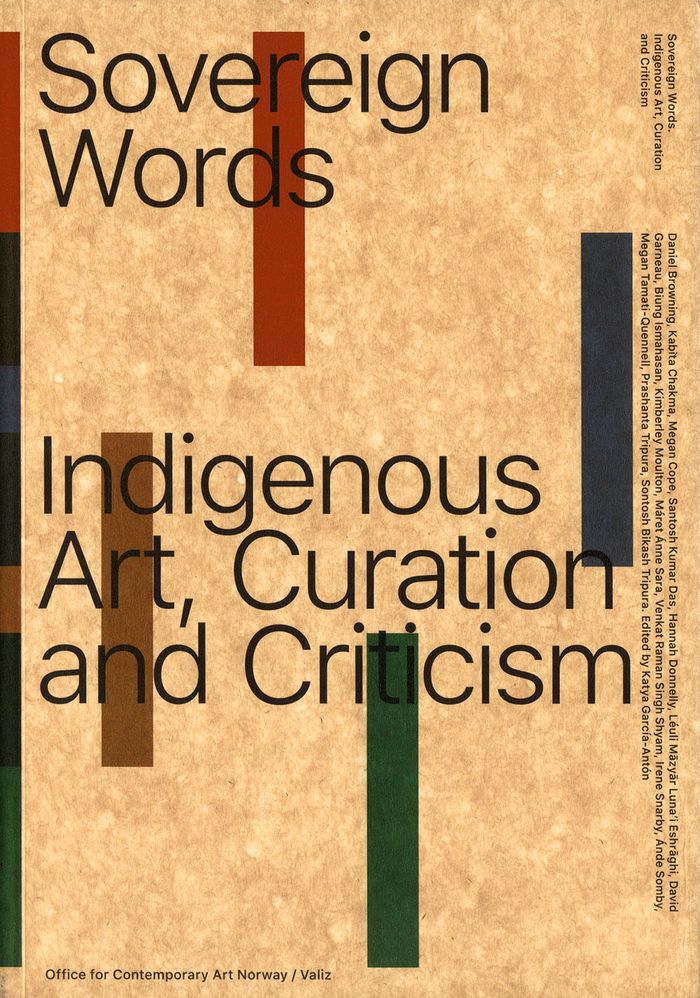
Sovereign words: indigenous art, curation and criticism
Actions:
Price:
$39.95
(available to order)
Summary:
Artists and cultural practitioners from Indigenous communities around the world are increasingly in the international spotlight. As museums and curators race to consider the planetary reach of their art collections and exhibitions, this publication draws upon the challenges faced today by cultural workers, Indigenous and non-Indigenous, to engage meaningfully and ethically with the histories, presents and futures of Indigenous cultural practices and world-views.
Sovereign words: indigenous art, curation and criticism
Actions:
Price:
$39.95
(available to order)
Summary:
Artists and cultural practitioners from Indigenous communities around the world are increasingly in the international spotlight. As museums and curators race to consider the planetary reach of their art collections and exhibitions, this publication draws upon the challenges faced today by cultural workers, Indigenous and non-Indigenous, to engage meaningfully and ethically with the histories, presents and futures of Indigenous cultural practices and world-views.
Form:
books
books
Publication:
May 2019
May 2019
Subject:
Museology
Museology
Form:
books
books
Actions:
Price:
$36.95
(available to order)
Summary:
Depuis 40 ans, la France connaît un boom des musées et des expositions blockbusters qui va de pair avec un accroissement continu de la fréquentation des publics. Les défis et les enjeux sont grands pour les musées aujourd'hui, dans un contexte où les logiques marchandes sont toujours plus poussées. Or, les musées restent avant tout des lieux de diffusion de la(...)
$36.95
(available to order)
Summary:
Depuis 40 ans, la France connaît un boom des musées et des expositions blockbusters qui va de pair avec un accroissement continu de la fréquentation des publics. Les défis et les enjeux sont grands pour les musées aujourd'hui, dans un contexte où les logiques marchandes sont toujours plus poussées. Or, les musées restent avant tout des lieux de diffusion de la(...)
Title:
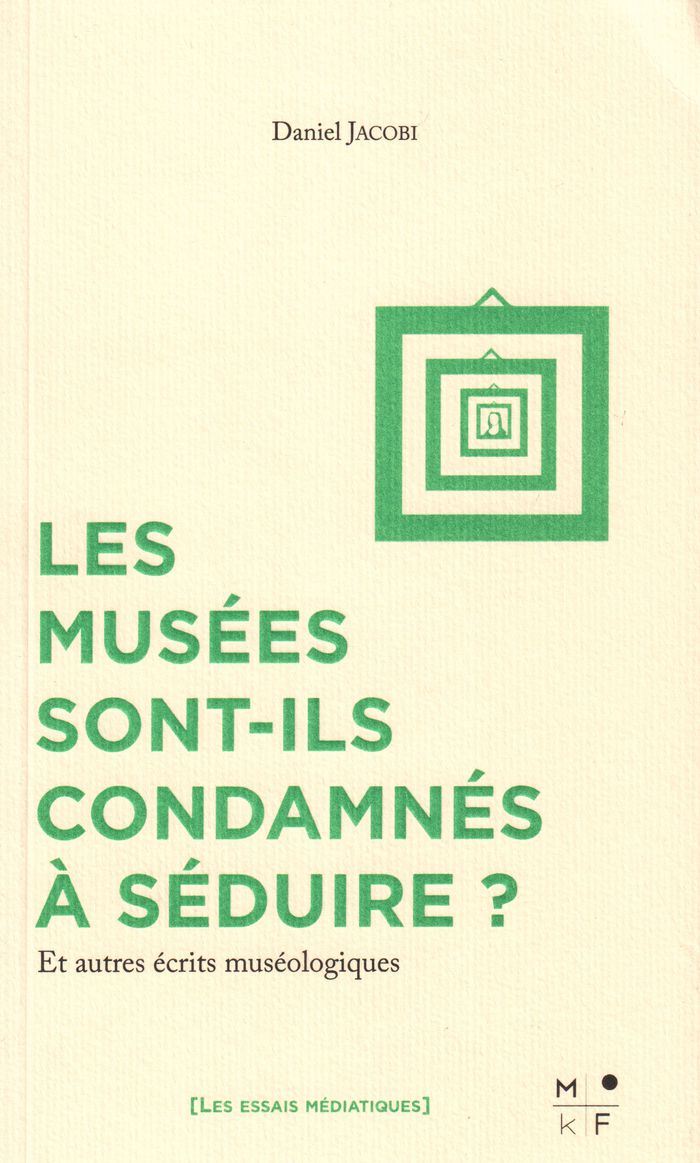
Les musées sont-ils condamnés à séduire ?
Actions:
Price:
$36.95
(available to order)
Summary:
Depuis 40 ans, la France connaît un boom des musées et des expositions blockbusters qui va de pair avec un accroissement continu de la fréquentation des publics. Les défis et les enjeux sont grands pour les musées aujourd'hui, dans un contexte où les logiques marchandes sont toujours plus poussées. Or, les musées restent avant tout des lieux de diffusion de la connaissance qui réinventent continuellement leurs formes et leurs supports de médiation. Multimédias, cartels, audioguides ou fascicules d'aide à la visite peuplent l'espace muséal et façonnent le discours muséographique, qui n'est au fond que l'expression d'un point de vue sur une question (d'art, de société, scientifique) et une manière d'accompagner les visiteurs dans leur exploration des collections. « Les musées sont-ils condamnés à séduire ? Et autres écrits muséologiques » est un recueil de textes de Daniel Jacobi faisant l'inventaire de 40 ans de recherche.
Les musées sont-ils condamnés à séduire ?
Actions:
Price:
$36.95
(available to order)
Summary:
Depuis 40 ans, la France connaît un boom des musées et des expositions blockbusters qui va de pair avec un accroissement continu de la fréquentation des publics. Les défis et les enjeux sont grands pour les musées aujourd'hui, dans un contexte où les logiques marchandes sont toujours plus poussées. Or, les musées restent avant tout des lieux de diffusion de la connaissance qui réinventent continuellement leurs formes et leurs supports de médiation. Multimédias, cartels, audioguides ou fascicules d'aide à la visite peuplent l'espace muséal et façonnent le discours muséographique, qui n'est au fond que l'expression d'un point de vue sur une question (d'art, de société, scientifique) et une manière d'accompagner les visiteurs dans leur exploration des collections. « Les musées sont-ils condamnés à séduire ? Et autres écrits muséologiques » est un recueil de textes de Daniel Jacobi faisant l'inventaire de 40 ans de recherche.
Form:
books
books
Publication:
March 2017
March 2017
Subject:
Museology
Museology
Form:
books
books
Title:
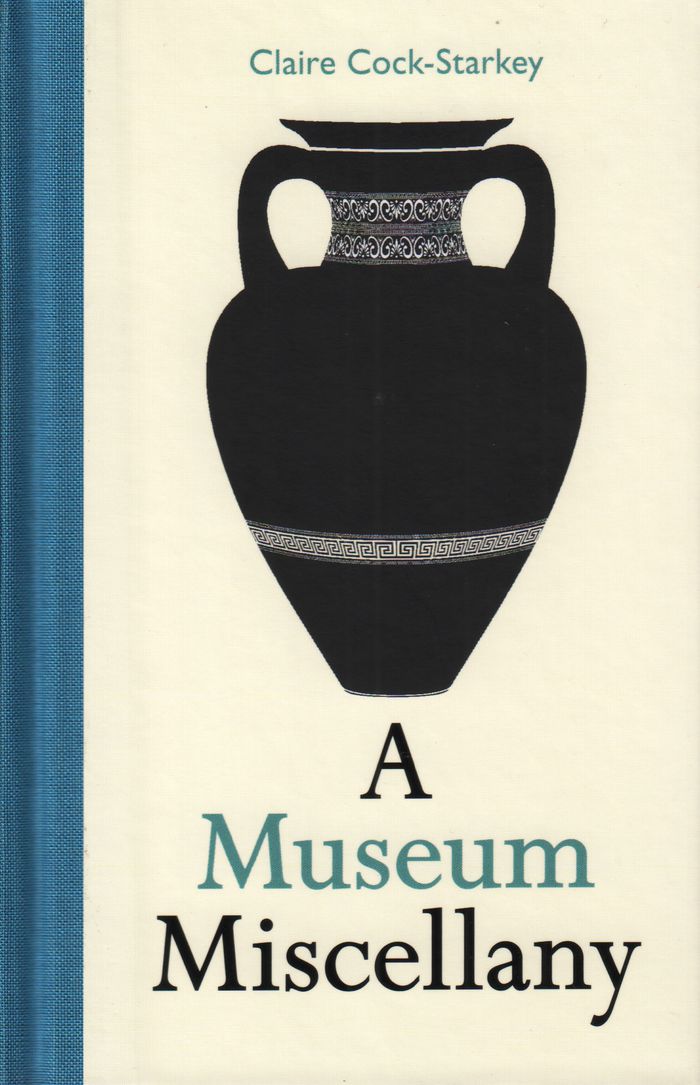
A museum miscellany
A museum miscellany
Actions:
Price:
$26.95
(available to order)
Summary:
'A Museum Miscellany' celebrates the intriguing world of galleries and museums, from national institutions such as the Louvre, the British Museum, and the Metropolitan Museum of Art to niche collections such as the Lawnmower Museum and the Museum of Barbed Wire. Here you will find a cornucopia of museum-related facts, statistics, and lists, covering everything from museum(...)
$26.95
(available to order)
Summary:
'A Museum Miscellany' celebrates the intriguing world of galleries and museums, from national institutions such as the Louvre, the British Museum, and the Metropolitan Museum of Art to niche collections such as the Lawnmower Museum and the Museum of Barbed Wire. Here you will find a cornucopia of museum-related facts, statistics, and lists, covering everything from museum(...)
Title:
A museum miscellany
Actions:
Price:
$26.95
(available to order)
Summary:
'A Museum Miscellany' celebrates the intriguing world of galleries and museums, from national institutions such as the Louvre, the British Museum, and the Metropolitan Museum of Art to niche collections such as the Lawnmower Museum and the Museum of Barbed Wire. Here you will find a cornucopia of museum-related facts, statistics, and lists, covering everything from museum ghosts, dangerous museum objects, and conservation beetles to treasure troves, museum heists and the Museum of London’s fatberg.
A museum miscellany
Actions:
Price:
$26.95
(available to order)
Summary:
'A Museum Miscellany' celebrates the intriguing world of galleries and museums, from national institutions such as the Louvre, the British Museum, and the Metropolitan Museum of Art to niche collections such as the Lawnmower Museum and the Museum of Barbed Wire. Here you will find a cornucopia of museum-related facts, statistics, and lists, covering everything from museum ghosts, dangerous museum objects, and conservation beetles to treasure troves, museum heists and the Museum of London’s fatberg.
Form:
books
books
Publication:
November 2019
November 2019
Subject:
Museology
Museology


