


263 Results
Form:
books
books
Price:
$24.95
(available to order)
Summary:
What begins as a meditation on "the museum" becomes, in this book, a far-reaching critical examination of how art history and museums have guided and controlled not only the way we look at art but the ways in which we understand modernity itself. Originally delivered as the 2001 Slade Lectures in the Fine Arts at Oxford University, the book makes its deeply complex(...)
$24.95
(available to order)
Summary:
What begins as a meditation on "the museum" becomes, in this book, a far-reaching critical examination of how art history and museums have guided and controlled not only the way we look at art but the ways in which we understand modernity itself. Originally delivered as the 2001 Slade Lectures in the Fine Arts at Oxford University, the book makes its deeply complex(...)
Title:
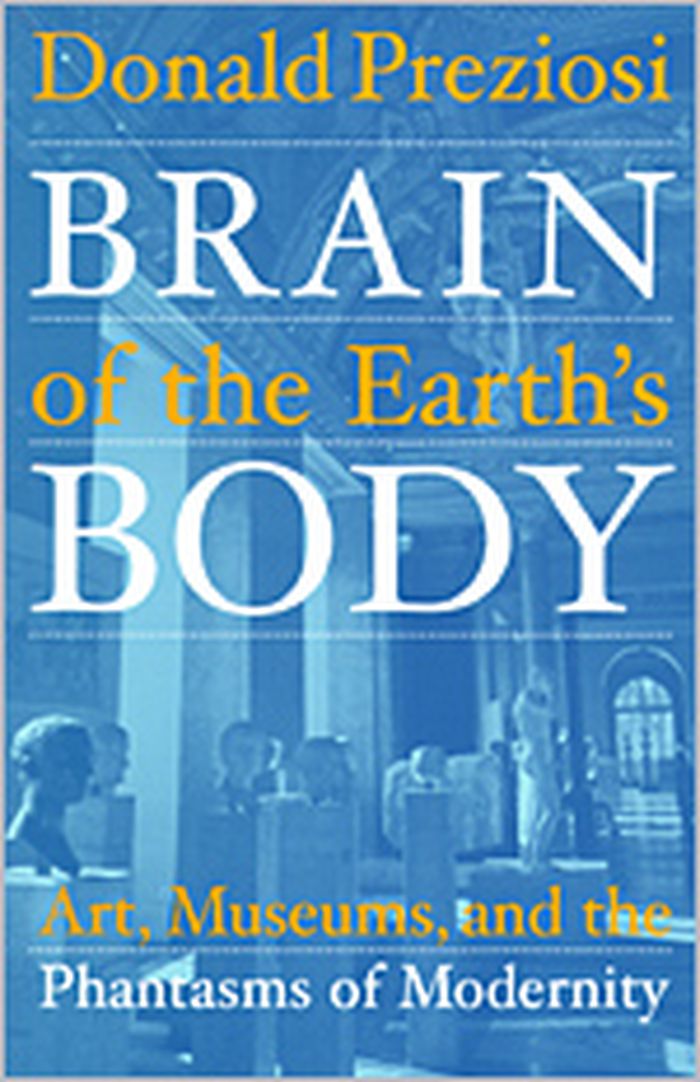
Brain of the earth's body : art, museums and the phantasms of modernity
Actions:
Price:
$24.95
(available to order)
Summary:
What begins as a meditation on "the museum" becomes, in this book, a far-reaching critical examination of how art history and museums have guided and controlled not only the way we look at art but the ways in which we understand modernity itself. Originally delivered as the 2001 Slade Lectures in the Fine Arts at Oxford University, the book makes its deeply complex argument remarkably accessible and powerfully clear. Concentrating on a period from the beginning of the nineteenth century to the beginning of the twentieth, Donald Preziosi presents case studies of major institutions that, he argues, have defined--and are still defining--the possible limits of museological and art historical theory and practice. These include Sir John Soane's Museum in London, preserved in its 1837 state; the Crystal Palace Exhibition of 1851; and four museums founded by Europeans in Egypt in the late nineteenth century, which divided up that country's history into "ethnically marked" aesthetic hierarchies and genealogies that accorded with Europe's construction of itself as the present of the world's past, and the "brain of the earth's body." Through this epistemological and institutional archaeology, Preziosi unearths the outlines of the more radical Enlightenment project that academic art history, professional museology, and art criticism have rendered marginal or invisible. Finally, he sketches a new theory about art, artifice, and visual signification in the cracks and around the margins of the "secular theologisms" of the globalized imperial capital called modernity.
Brain of the earth's body : art, museums and the phantasms of modernity
Actions:
Price:
$24.95
(available to order)
Summary:
What begins as a meditation on "the museum" becomes, in this book, a far-reaching critical examination of how art history and museums have guided and controlled not only the way we look at art but the ways in which we understand modernity itself. Originally delivered as the 2001 Slade Lectures in the Fine Arts at Oxford University, the book makes its deeply complex argument remarkably accessible and powerfully clear. Concentrating on a period from the beginning of the nineteenth century to the beginning of the twentieth, Donald Preziosi presents case studies of major institutions that, he argues, have defined--and are still defining--the possible limits of museological and art historical theory and practice. These include Sir John Soane's Museum in London, preserved in its 1837 state; the Crystal Palace Exhibition of 1851; and four museums founded by Europeans in Egypt in the late nineteenth century, which divided up that country's history into "ethnically marked" aesthetic hierarchies and genealogies that accorded with Europe's construction of itself as the present of the world's past, and the "brain of the earth's body." Through this epistemological and institutional archaeology, Preziosi unearths the outlines of the more radical Enlightenment project that academic art history, professional museology, and art criticism have rendered marginal or invisible. Finally, he sketches a new theory about art, artifice, and visual signification in the cracks and around the margins of the "secular theologisms" of the globalized imperial capital called modernity.
Form:
books
books
Publication:
July 2003, Minneapolis
July 2003, Minneapolis
Subject:
Museology
Museology
Form:
books
books
Actions:
Price:
$30.00
(available to order)
Summary:
We owe our idea of the contemporary exhibition to Harald Szeemann--the first of the jet-setting international curators. From 1961 to 1969, he was Curator of the Kunsthalle Bern, where in 1968 he had the foresight to give Christo and Jeanne-Claude the opportunity to wrap the entire museum building. Szeemann's groundbreaking 1969 exhibition When Attitudes Become Form, also(...)
$30.00
(available to order)
Summary:
We owe our idea of the contemporary exhibition to Harald Szeemann--the first of the jet-setting international curators. From 1961 to 1969, he was Curator of the Kunsthalle Bern, where in 1968 he had the foresight to give Christo and Jeanne-Claude the opportunity to wrap the entire museum building. Szeemann's groundbreaking 1969 exhibition When Attitudes Become Form, also(...)
Subject:
Museology
Museology
Publication:
March 2008, Berlin, Dijon, New York, Manchester
March 2008, Berlin, Dijon, New York, Manchester
Title:
Harald Szeemann Individual Methodology
Actions:
Price:
$30.00
(available to order)
Summary:
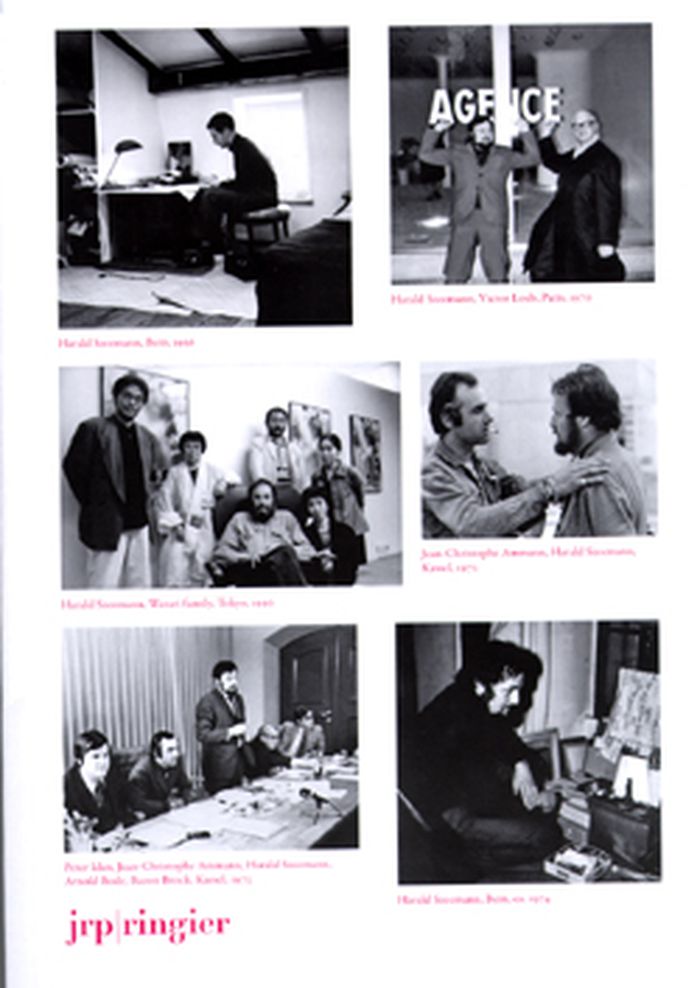
We owe our idea of the contemporary exhibition to Harald Szeemann--the first of the jet-setting international curators. From 1961 to 1969, he was Curator of the Kunsthalle Bern, where in 1968 he had the foresight to give Christo and Jeanne-Claude the opportunity to wrap the entire museum building. Szeemann's groundbreaking 1969 exhibition When Attitudes Become Form, also at the Kunsthalle, introduced European audiences to artists like Joseph Beuys, Eva Hesse, Richard Serra and Lawrence Weiner. It also introduced the now-commonplace practice of curating an exhibition around a theme. Since Szeemann's death in 2005, there has been research underway at his archive in Tessin, Switzerland. An invaluable resource, this volume provides access to previously unpublished plans, documents and photographs from the archive, along with important essays by Hal Foster and Jean-Marc Poinsot. There is also an informative interview with Tobia Bezzola--curator at the Kunsthauz Zurich and Szeemann's collaborator for many years. Two of Szeemann's most ambitious exhibitions are presented as case studies: Documenta V (1972) and L'Autre, the 4th Lyon Biennial (1997). A biography, an illustrated chronology of Szeemann's exhibitions and a selection of his writings complete this exhaustive survey.
Harald Szeemann Individual Methodology
Actions:
Price:
$30.00
(available to order)
Summary:
We owe our idea of the contemporary exhibition to Harald Szeemann--the first of the jet-setting international curators. From 1961 to 1969, he was Curator of the Kunsthalle Bern, where in 1968 he had the foresight to give Christo and Jeanne-Claude the opportunity to wrap the entire museum building. Szeemann's groundbreaking 1969 exhibition When Attitudes Become Form, also at the Kunsthalle, introduced European audiences to artists like Joseph Beuys, Eva Hesse, Richard Serra and Lawrence Weiner. It also introduced the now-commonplace practice of curating an exhibition around a theme. Since Szeemann's death in 2005, there has been research underway at his archive in Tessin, Switzerland. An invaluable resource, this volume provides access to previously unpublished plans, documents and photographs from the archive, along with important essays by Hal Foster and Jean-Marc Poinsot. There is also an informative interview with Tobia Bezzola--curator at the Kunsthauz Zurich and Szeemann's collaborator for many years. Two of Szeemann's most ambitious exhibitions are presented as case studies: Documenta V (1972) and L'Autre, the 4th Lyon Biennial (1997). A biography, an illustrated chronology of Szeemann's exhibitions and a selection of his writings complete this exhaustive survey.
Form:
books
books
Publication:
March 2008, Berlin, Dijon, New York, Manchester
March 2008, Berlin, Dijon, New York, Manchester
Subject:
Museology
Museology
Form:
books
books
Title:
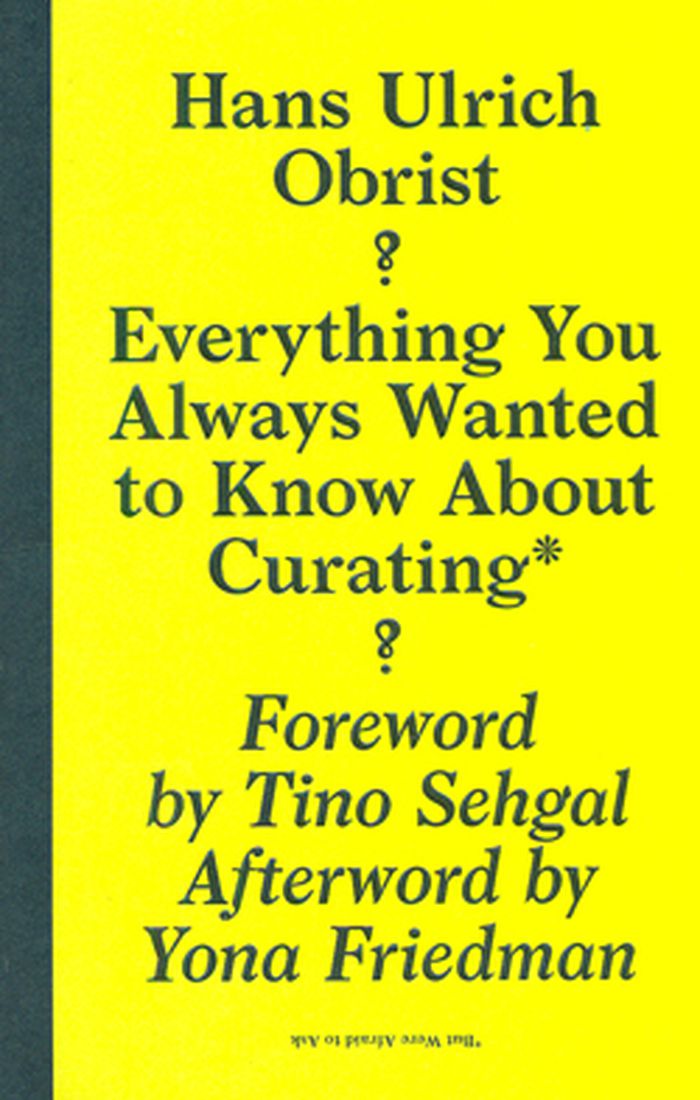
Hans Ulrich Obrist : Everything you always wanted to know about curating (but were afraid to ask)
Hans Ulrich Obrist : Everything you always wanted to know about curating (but were afraid to ask)
Actions:
Price:
$27.00
(available to order)
Summary:
Everything you ever wanted to know about Hans Ulrich Obrist butwere afraid to ask has now been asked, revealing the truth from the beginning of his career as a young curator in his Zurich kitchen to his recent position as co-director of the Serpentine in London. This book is a "production of reality conversations", otherwise known as interviews. It undertakes the(...)
$27.00
(available to order)
Summary:
Everything you ever wanted to know about Hans Ulrich Obrist butwere afraid to ask has now been asked, revealing the truth from the beginning of his career as a young curator in his Zurich kitchen to his recent position as co-director of the Serpentine in London. This book is a "production of reality conversations", otherwise known as interviews. It undertakes the(...)
Title:
Hans Ulrich Obrist : Everything you always wanted to know about curating (but were afraid to ask)
Actions:
Price:
$27.00
(available to order)
Summary:
Everything you ever wanted to know about Hans Ulrich Obrist butwere afraid to ask has now been asked, revealing the truth from the beginning of his career as a young curator in his Zurich kitchen to his recent position as co-director of the Serpentine in London. This book is a "production of reality conversations", otherwise known as interviews. It undertakes the impossible: pinning down this peripatetic curator, and affirming the wisdom of an artist who told Obrist "don't go" when he contemplated leaving the art world for other fields. Interviews by Jean Max Colard, Robert Fleck, Jefferson Hack, Nav Haq, Sophia Krzys Acord, Brendan McGetrick, Ingo Niermann, Paul O'Neill,Philippe Parreno & Alex Poots, Juri Steiner, Gavin Wade, et al. Foreword by Tino Sehgal, afterword by Yona Friedman.
Hans Ulrich Obrist : Everything you always wanted to know about curating (but were afraid to ask)
Actions:
Price:
$27.00
(available to order)
Summary:
Everything you ever wanted to know about Hans Ulrich Obrist butwere afraid to ask has now been asked, revealing the truth from the beginning of his career as a young curator in his Zurich kitchen to his recent position as co-director of the Serpentine in London. This book is a "production of reality conversations", otherwise known as interviews. It undertakes the impossible: pinning down this peripatetic curator, and affirming the wisdom of an artist who told Obrist "don't go" when he contemplated leaving the art world for other fields. Interviews by Jean Max Colard, Robert Fleck, Jefferson Hack, Nav Haq, Sophia Krzys Acord, Brendan McGetrick, Ingo Niermann, Paul O'Neill,Philippe Parreno & Alex Poots, Juri Steiner, Gavin Wade, et al. Foreword by Tino Sehgal, afterword by Yona Friedman.
Form:
books
books
Publication:
March 2011
March 2011
Subject:
Museology
Museology
Form:
books
books
Title:
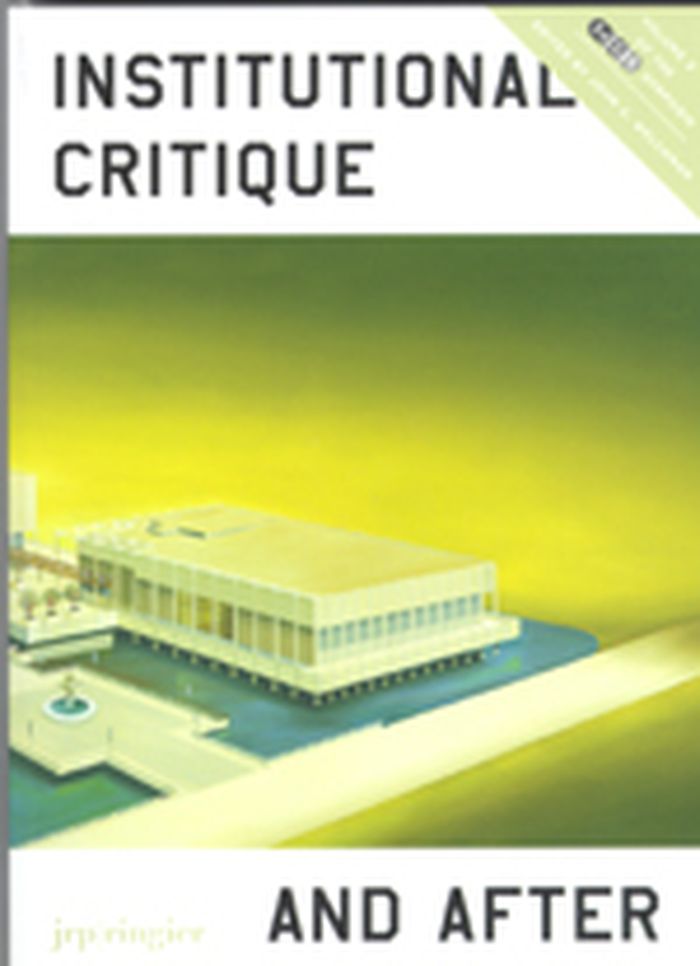
Institutional critique
Institutional critique
Actions:
Price:
$29.00
(available to order)
Summary:
This contemporary reassessment of the Institutional Critique movement, launched in the late 1960s by artists including Michael Asher and Hans Haacke, grew out of a symposium held at the Los Angeles County Museum of Art. It looks at Institutional Critique's central aim, the exposure and ironization of the structures and logic of museums and art galleries, and recent(...)
$29.00
(available to order)
Summary:
This contemporary reassessment of the Institutional Critique movement, launched in the late 1960s by artists including Michael Asher and Hans Haacke, grew out of a symposium held at the Los Angeles County Museum of Art. It looks at Institutional Critique's central aim, the exposure and ironization of the structures and logic of museums and art galleries, and recent(...)
Title:
Institutional critique
Actions:
Price:
$29.00
(available to order)
Summary:
This contemporary reassessment of the Institutional Critique movement, launched in the late 1960s by artists including Michael Asher and Hans Haacke, grew out of a symposium held at the Los Angeles County Museum of Art. It looks at Institutional Critique's central aim, the exposure and ironization of the structures and logic of museums and art galleries, and recent developments that engage with and echo it. IC has been raised again by Andrea Fraser, Renee Green and Fred Wilson, among others, and has been vigorously reoriented in recent years to address issues such as globalization. Contributors include Alexander Alberro, Mike Kelley, Hans Haacke, Lauri Firstenberg, Andrea Fraser, Renee Green and others.
Institutional critique
Actions:
Price:
$29.00
(available to order)
Summary:
This contemporary reassessment of the Institutional Critique movement, launched in the late 1960s by artists including Michael Asher and Hans Haacke, grew out of a symposium held at the Los Angeles County Museum of Art. It looks at Institutional Critique's central aim, the exposure and ironization of the structures and logic of museums and art galleries, and recent developments that engage with and echo it. IC has been raised again by Andrea Fraser, Renee Green and Fred Wilson, among others, and has been vigorously reoriented in recent years to address issues such as globalization. Contributors include Alexander Alberro, Mike Kelley, Hans Haacke, Lauri Firstenberg, Andrea Fraser, Renee Green and others.
Form:
books
books
Publication:
October 2007, Zurich
October 2007, Zurich
Subject:
Museology
Museology
Form:
books
books
Title:
Curating Subjects
Curating Subjects
Actions:
Price:
$36.00
(available to order)
Summary:
This book is a welcome addition to he growing literature about exhibition making. Moving away from autobiographical, first person narratives, Curating Subjects instead invites its broad range of contributors to comment upon the curatorial endeavours of others. Conflating and colliding the past and the present with possible futures this book unfolds as an idiosyncratic(...)
$36.00
(available to order)
Summary:
This book is a welcome addition to he growing literature about exhibition making. Moving away from autobiographical, first person narratives, Curating Subjects instead invites its broad range of contributors to comment upon the curatorial endeavours of others. Conflating and colliding the past and the present with possible futures this book unfolds as an idiosyncratic(...)
Title:
Curating Subjects
Actions:
Price:
$36.00
(available to order)
Summary:
This book is a welcome addition to he growing literature about exhibition making. Moving away from autobiographical, first person narratives, Curating Subjects instead invites its broad range of contributors to comment upon the curatorial endeavours of others. Conflating and colliding the past and the present with possible futures this book unfolds as an idiosyncratic conversation that is at once informative, entertaining, and often revealing.
Curating Subjects
Actions:
Price:
$36.00
(available to order)
Summary:
This book is a welcome addition to he growing literature about exhibition making. Moving away from autobiographical, first person narratives, Curating Subjects instead invites its broad range of contributors to comment upon the curatorial endeavours of others. Conflating and colliding the past and the present with possible futures this book unfolds as an idiosyncratic conversation that is at once informative, entertaining, and often revealing.
Form:
books
books
Publication:
October 2011, London
October 2011, London
Subject:
Museology
Museology
Form:
books
books
Price:
$39.95
(available to order)
Summary:
With this richly illustrated history of industrial design reform in nineteenth-century Britain, Lara Kriegel demonstrates that preoccupations with trade, labor, and manufacture lay at the heart of Victorian-era debates about cultural institutions. Through aesthetic reform, Victorians sought to redress the inferiority of British crafts in comparison to those made on the(...)
$39.95
(available to order)
Summary:
With this richly illustrated history of industrial design reform in nineteenth-century Britain, Lara Kriegel demonstrates that preoccupations with trade, labor, and manufacture lay at the heart of Victorian-era debates about cultural institutions. Through aesthetic reform, Victorians sought to redress the inferiority of British crafts in comparison to those made on the(...)
Title:
Grand Designs: Labor, empire and the museum in Victorian culture
Actions:
Price:
$39.95
(available to order)
Summary:
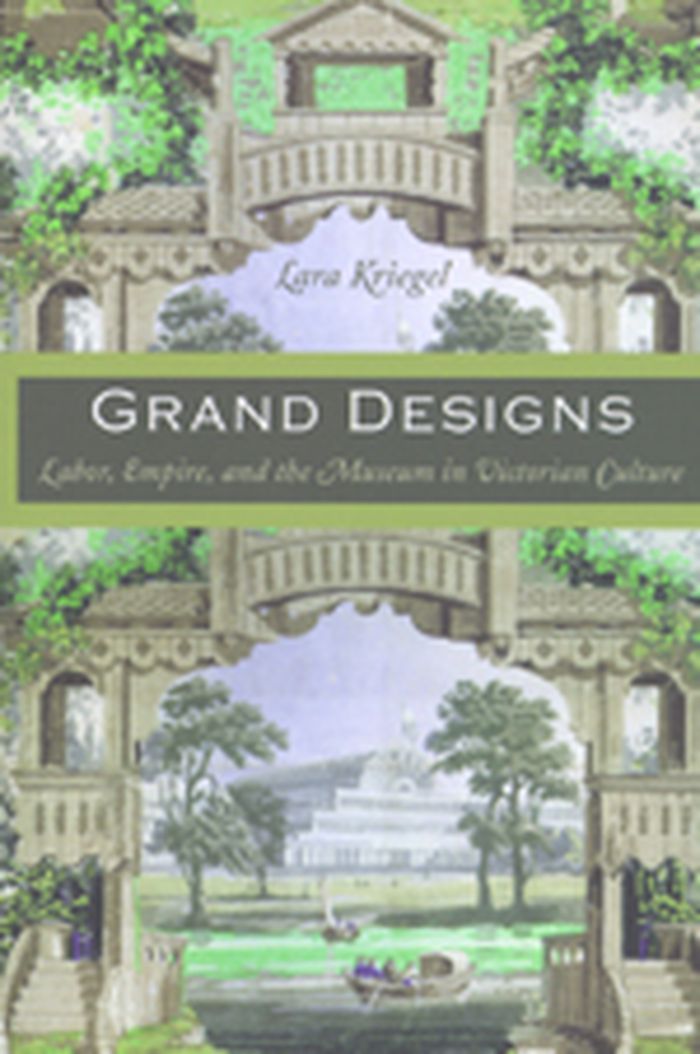
With this richly illustrated history of industrial design reform in nineteenth-century Britain, Lara Kriegel demonstrates that preoccupations with trade, labor, and manufacture lay at the heart of Victorian-era debates about cultural institutions. Through aesthetic reform, Victorians sought to redress the inferiority of British crafts in comparison to those made on the continent and in the colonies. Declaring a crisis of design and workmanship among the British laboring classes, reformers pioneered schools of design, copyright protections, and spectacular displays of industrial and imperial wares, most notably the Great Exhibition of 1851. Their efforts culminated with the establishment of the South Kensington Museum, predecessor to the Victoria and Albert Museum, which stands today as home to the world’s foremost collection of the decorative and applied arts. Kriegel’s identification of the significant links between markets and museums, and between economics and aesthetics, amounts to a rethinking of Victorian cultural formation. Drawing on a wide range of sources, including museum guidebooks, design manuals, illustrated newspapers, pattern books, and government reports, Kriegel brings to life the many Victorians who claimed a stake in aesthetic reform during the middle years of the nineteenth century. The aspiring artists who attended the Government School of Design, the embattled provincial printers who sought a strengthened industrial copyright, the Exhibition-going millions who visited the Crystal Palace, the lower-middle-class consumers who learned new principles of taste in metropolitan museums, and the working men of London who critiqued the city’s art and design collections are all cast by Kriegel as leading cultural actors of their day. Grand Designs shows how these Victorians vied to upend aesthetic hierarchies in an imperial age and, in the process, to refashion London’s public culture.
Grand Designs: Labor, empire and the museum in Victorian culture
Actions:
Price:
$39.95
(available to order)
Summary:
With this richly illustrated history of industrial design reform in nineteenth-century Britain, Lara Kriegel demonstrates that preoccupations with trade, labor, and manufacture lay at the heart of Victorian-era debates about cultural institutions. Through aesthetic reform, Victorians sought to redress the inferiority of British crafts in comparison to those made on the continent and in the colonies. Declaring a crisis of design and workmanship among the British laboring classes, reformers pioneered schools of design, copyright protections, and spectacular displays of industrial and imperial wares, most notably the Great Exhibition of 1851. Their efforts culminated with the establishment of the South Kensington Museum, predecessor to the Victoria and Albert Museum, which stands today as home to the world’s foremost collection of the decorative and applied arts. Kriegel’s identification of the significant links between markets and museums, and between economics and aesthetics, amounts to a rethinking of Victorian cultural formation. Drawing on a wide range of sources, including museum guidebooks, design manuals, illustrated newspapers, pattern books, and government reports, Kriegel brings to life the many Victorians who claimed a stake in aesthetic reform during the middle years of the nineteenth century. The aspiring artists who attended the Government School of Design, the embattled provincial printers who sought a strengthened industrial copyright, the Exhibition-going millions who visited the Crystal Palace, the lower-middle-class consumers who learned new principles of taste in metropolitan museums, and the working men of London who critiqued the city’s art and design collections are all cast by Kriegel as leading cultural actors of their day. Grand Designs shows how these Victorians vied to upend aesthetic hierarchies in an imperial age and, in the process, to refashion London’s public culture.
Form:
books
books
Publication:
November 2007
November 2007
Subject:
Museology
Museology
Form:
books
books
Price:
$79.50
(available in store)
Summary:
Au sein de l'histoire de l'architecture du XXe siècle, ce livre explore l'histoire des relations internationales et de la profession d'architecte après la Seconde Guerre mondiale, en particulier au travers des grands concours d'architecture et d'urbanisme. Pris ici comme une métaphore architecturale des tensions diplomatiques de la période, les compétitions(...)
$79.50
(available in store)
Summary:
Au sein de l'histoire de l'architecture du XXe siècle, ce livre explore l'histoire des relations internationales et de la profession d'architecte après la Seconde Guerre mondiale, en particulier au travers des grands concours d'architecture et d'urbanisme. Pris ici comme une métaphore architecturale des tensions diplomatiques de la période, les compétitions(...)
Title:
L'apogée des concours d'architecture : L'action de l'uia 1948-1975
Actions:
Price:
$79.50
(available in store)
Summary:
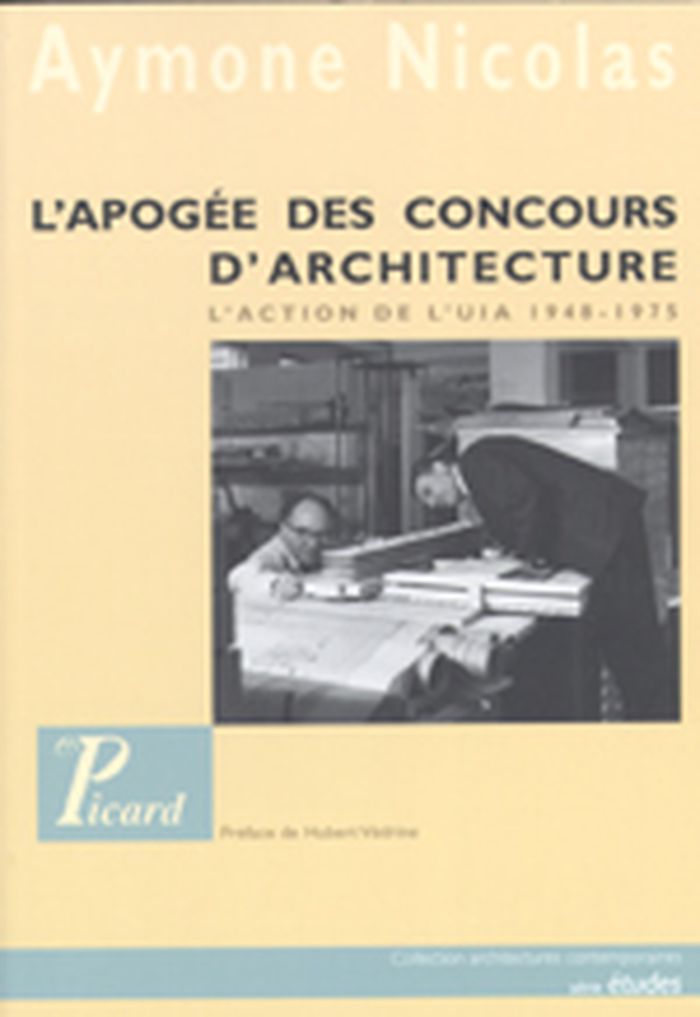
Au sein de l'histoire de l'architecture du XXe siècle, ce livre explore l'histoire des relations internationales et de la profession d'architecte après la Seconde Guerre mondiale, en particulier au travers des grands concours d'architecture et d'urbanisme. Pris ici comme une métaphore architecturale des tensions diplomatiques de la période, les compétitions internationales connaissent un regain d'intérêts après 1945, notamment grâce à l'action de l'Union internationale des architectes (UTA).
L'apogée des concours d'architecture : L'action de l'uia 1948-1975
Actions:
Price:
$79.50
(available in store)
Summary:
Au sein de l'histoire de l'architecture du XXe siècle, ce livre explore l'histoire des relations internationales et de la profession d'architecte après la Seconde Guerre mondiale, en particulier au travers des grands concours d'architecture et d'urbanisme. Pris ici comme une métaphore architecturale des tensions diplomatiques de la période, les compétitions internationales connaissent un regain d'intérêts après 1945, notamment grâce à l'action de l'Union internationale des architectes (UTA).
Form:
books
books
Publication:
June 2007, Paris
June 2007, Paris
Subject:
Museology
Museology
Form:
books
books
Actions:
Price:
$21.95
(available to order)
Summary:
In 1990 Jacques Chirac, the future president of France and a passionate fan of non-European art, met Jacques Kerchache, a maverick art collector with the lifelong ambition of displaying African sculpture in the holy temple of French culture, the Louvre. Together they began laying plans, and ten years later African fetishes were on view under the same roof as the Mona(...)
$21.95
(available to order)
Summary:
In 1990 Jacques Chirac, the future president of France and a passionate fan of non-European art, met Jacques Kerchache, a maverick art collector with the lifelong ambition of displaying African sculpture in the holy temple of French culture, the Louvre. Together they began laying plans, and ten years later African fetishes were on view under the same roof as the Mona(...)
Title:
Paris primitive : Jacques Chirac's museum on the quai branly
Actions:
Price:
$21.95
(available to order)
Summary:
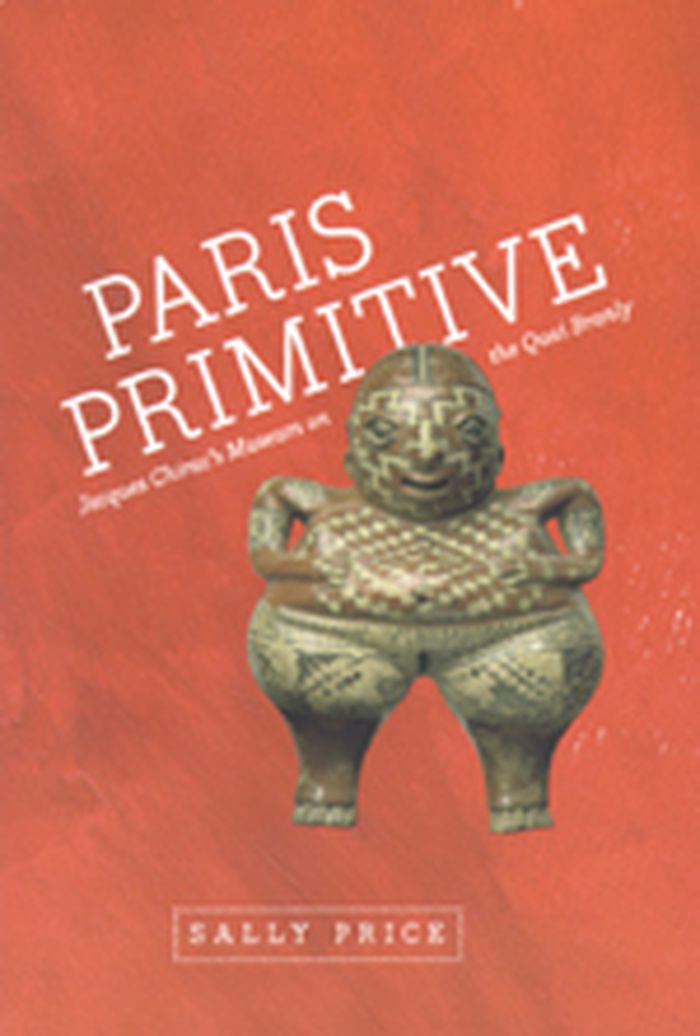
In 1990 Jacques Chirac, the future president of France and a passionate fan of non-European art, met Jacques Kerchache, a maverick art collector with the lifelong ambition of displaying African sculpture in the holy temple of French culture, the Louvre. Together they began laying plans, and ten years later African fetishes were on view under the same roof as the Mona Lisa. Then, in 2006, amidst a maelstrom of controversy and hype, Chirac presided over the opening of a new museum dedicated to primitive art in the shadow of the Eiffel Tower: the Musée du Quai Branly. Paris Primitive recounts the massive reconfiguration of Paris’s museum world that resulted from Chirac’s dream, set against a backdrop of personal and national politics, intellectual life, and the role of culture in French society. Along with exposing the machinations that led to the MQB’s creation, Sally Price addresses the thorny questions it raises about the legacy of colonialism, the balance between aesthetic judgments and ethnographic context, and the role of institutions of art and culture in an increasingly diverse France. Anyone with a stake in the myriad political, cultural, and anthropological issues raised by the MQB will find Price’s account fascinating.
Paris primitive : Jacques Chirac's museum on the quai branly
Actions:
Price:
$21.95
(available to order)
Summary:
In 1990 Jacques Chirac, the future president of France and a passionate fan of non-European art, met Jacques Kerchache, a maverick art collector with the lifelong ambition of displaying African sculpture in the holy temple of French culture, the Louvre. Together they began laying plans, and ten years later African fetishes were on view under the same roof as the Mona Lisa. Then, in 2006, amidst a maelstrom of controversy and hype, Chirac presided over the opening of a new museum dedicated to primitive art in the shadow of the Eiffel Tower: the Musée du Quai Branly. Paris Primitive recounts the massive reconfiguration of Paris’s museum world that resulted from Chirac’s dream, set against a backdrop of personal and national politics, intellectual life, and the role of culture in French society. Along with exposing the machinations that led to the MQB’s creation, Sally Price addresses the thorny questions it raises about the legacy of colonialism, the balance between aesthetic judgments and ethnographic context, and the role of institutions of art and culture in an increasingly diverse France. Anyone with a stake in the myriad political, cultural, and anthropological issues raised by the MQB will find Price’s account fascinating.
Form:
books
books
Publication:
September 2007, Chicago London
September 2007, Chicago London
Subject:
Museology
Museology
Form:
books
books
Actions:
Price:
$44.95
(available to order)
Summary:
Essays, plans and projects by various artists,including Max Bill, Heinrich Dunst, Helmut Federle, Per Kirkeby, Katarina Fritsch, Erwin Heerich, Gerhard Merz, Gottfried Honegger, Walther Pichler, Ulrich Rückriem, Bernar Venet, Daniel Buren, Christoph Haerle, Peter Wigglesworth, Donald Judd, Markus Lüpertz, Arnulf Rainer, Richard Serra among others showing their ideas for(...)
$44.95
(available to order)
Summary:
Essays, plans and projects by various artists,including Max Bill, Heinrich Dunst, Helmut Federle, Per Kirkeby, Katarina Fritsch, Erwin Heerich, Gerhard Merz, Gottfried Honegger, Walther Pichler, Ulrich Rückriem, Bernar Venet, Daniel Buren, Christoph Haerle, Peter Wigglesworth, Donald Judd, Markus Lüpertz, Arnulf Rainer, Richard Serra among others showing their ideas for(...)
Title:
Museum architecture : texts and projects by artists
Actions:
Price:
$44.95
(available to order)
Summary:
Essays, plans and projects by various artists,including Max Bill, Heinrich Dunst, Helmut Federle, Per Kirkeby, Katarina Fritsch, Erwin Heerich, Gerhard Merz, Gottfried Honegger, Walther Pichler, Ulrich Rückriem, Bernar Venet, Daniel Buren, Christoph Haerle, Peter Wigglesworth, Donald Judd, Markus Lüpertz, Arnulf Rainer, Richard Serra among others showing their ideas for how museums should be constructed. When discussing the increasing number of museums and exhibition spaces for modern art which have come into being in recent years, the deep-seated differences of opinion between architects and artists keep coming to the fore. The discussion seems to be almost exclusively dominated by the point of view of the architect and defined by his/her interests. The needs of the art itself are being widely neglected and the voice of the artist is simply not being heard. Donald Judd, the American sculptor and minimalist artist, once noted that museums are so rarely built on functional lines these days, the trend being more towards the creation of a showpiece for the architect. Why are painters and sculptors not asked for their input? The very obvious question was addressed by the Espace de l’art concret when in 1997, it asked a number of well-known artists to come up with ideas and projects for a museum for concrete art. They were invited to submit their ideal utopian suggestions as well as very concrete and architectural proposals and written statements. These are documented in this publication, supplemented with the material for the collection owned by the Kunsthaus in Bregenz and expanded with an extensive anthology of texts by artists on this subject. The résumé of the contributions presents a searing criticism of contemporary museum architecture by its most important users. Their voice will at last find an ear in the current architectural discussion about the new cathedrals of the post-industrial society.
Museum architecture : texts and projects by artists
Actions:
Price:
$44.95
(available to order)
Summary:
Essays, plans and projects by various artists,including Max Bill, Heinrich Dunst, Helmut Federle, Per Kirkeby, Katarina Fritsch, Erwin Heerich, Gerhard Merz, Gottfried Honegger, Walther Pichler, Ulrich Rückriem, Bernar Venet, Daniel Buren, Christoph Haerle, Peter Wigglesworth, Donald Judd, Markus Lüpertz, Arnulf Rainer, Richard Serra among others showing their ideas for how museums should be constructed. When discussing the increasing number of museums and exhibition spaces for modern art which have come into being in recent years, the deep-seated differences of opinion between architects and artists keep coming to the fore. The discussion seems to be almost exclusively dominated by the point of view of the architect and defined by his/her interests. The needs of the art itself are being widely neglected and the voice of the artist is simply not being heard. Donald Judd, the American sculptor and minimalist artist, once noted that museums are so rarely built on functional lines these days, the trend being more towards the creation of a showpiece for the architect. Why are painters and sculptors not asked for their input? The very obvious question was addressed by the Espace de l’art concret when in 1997, it asked a number of well-known artists to come up with ideas and projects for a museum for concrete art. They were invited to submit their ideal utopian suggestions as well as very concrete and architectural proposals and written statements. These are documented in this publication, supplemented with the material for the collection owned by the Kunsthaus in Bregenz and expanded with an extensive anthology of texts by artists on this subject. The résumé of the contributions presents a searing criticism of contemporary museum architecture by its most important users. Their voice will at last find an ear in the current architectural discussion about the new cathedrals of the post-industrial society.
Form:
books
books
Publication:
January 1900, Cologne
January 1900, Cologne
Subject:
Museology
Museology
Form:
books
books
Price:
$39.95
(available to order)
Summary:
"Art and its institutions" is a reader on current institutional conditions and the role of institutions within artistic processes. With essays by authors and academics such as Beatrice von Bismarck, Andrea Fraser, Simon Sheikh and Jan Verwoert, this book examines the interests of the various institutions involved in the creation of art, and explore the impact these(...)
$39.95
(available to order)
Summary:
"Art and its institutions" is a reader on current institutional conditions and the role of institutions within artistic processes. With essays by authors and academics such as Beatrice von Bismarck, Andrea Fraser, Simon Sheikh and Jan Verwoert, this book examines the interests of the various institutions involved in the creation of art, and explore the impact these(...)
Title:
Art and its institutions : current conflicts, critique and collaborations
Actions:
Price:
$39.95
(available to order)
Summary:
"Art and its institutions" is a reader on current institutional conditions and the role of institutions within artistic processes. With essays by authors and academics such as Beatrice von Bismarck, Andrea Fraser, Simon Sheikh and Jan Verwoert, this book examines the interests of the various institutions involved in the creation of art, and explore the impact these institutions have on the contemporary art world. It covers topics including the impact of the decline of the welfare state on art institutions; the social and physical architecture of art institutions in Nordic states and Eastern Europe; a critical re-evaluation of the institutional critique of the 70s and 90s and the introduction of new models of critique in current artistic practice. The book also documents and discusses two exhibition projects, and examine their relationship to the conflicts and desires provoked by institutions.
Art and its institutions : current conflicts, critique and collaborations
Actions:
Price:
$39.95
(available to order)
Summary:
"Art and its institutions" is a reader on current institutional conditions and the role of institutions within artistic processes. With essays by authors and academics such as Beatrice von Bismarck, Andrea Fraser, Simon Sheikh and Jan Verwoert, this book examines the interests of the various institutions involved in the creation of art, and explore the impact these institutions have on the contemporary art world. It covers topics including the impact of the decline of the welfare state on art institutions; the social and physical architecture of art institutions in Nordic states and Eastern Europe; a critical re-evaluation of the institutional critique of the 70s and 90s and the introduction of new models of critique in current artistic practice. The book also documents and discusses two exhibition projects, and examine their relationship to the conflicts and desires provoked by institutions.
Form:
books
books
Publication:
February 2006, London
February 2006, London
Subject:
Museology
Museology


