


31 Results
Form:
books
books
Actions:
Price:
$25.95
(available to order)
Summary:
This volume from BAK, basis voor actuele kunst, combines handbook, dictionary, and anthology to investigate artistic practice aimed at achieving social change. With text and visual essays, definitions, exercises, interviews, and images, the contributors envision a praxis that is committed to experimenting with aesthetics and politics in ways that go beyond the conventions(...)
$25.95
(available to order)
Summary:
This volume from BAK, basis voor actuele kunst, combines handbook, dictionary, and anthology to investigate artistic practice aimed at achieving social change. With text and visual essays, definitions, exercises, interviews, and images, the contributors envision a praxis that is committed to experimenting with aesthetics and politics in ways that go beyond the conventions(...)
Publication:
November 2021
November 2021
Title:
Toward the not yet: art as public practice
Actions:
Price:
$25.95
(available to order)
Summary:
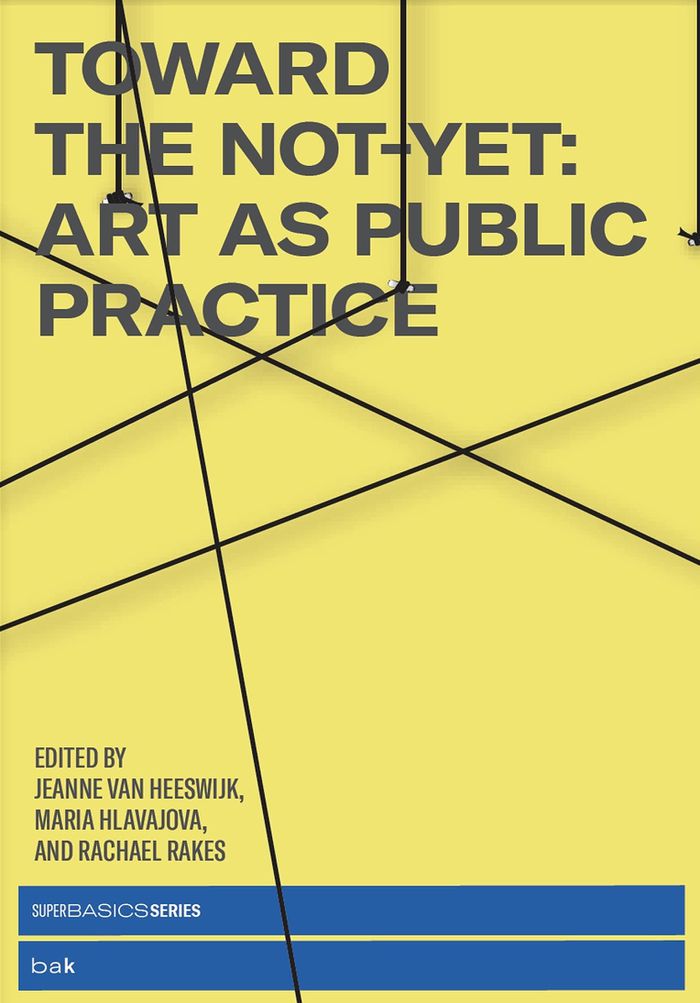
This volume from BAK, basis voor actuele kunst, combines handbook, dictionary, and anthology to investigate artistic practice aimed at achieving social change. With text and visual essays, definitions, exercises, interviews, and images, the contributors envision a praxis that is committed to experimenting with aesthetics and politics in ways that go beyond the conventions of Western modernity. These are practices that are interdisciplinary, theoretically informed, and politically driven, offering ways of "being together otherwise." Catalyzed by the work of artist Jeanne van Heeswijk, which focuses on radicalizing civic processes, ''Toward the not-yet' imagines and enacts alternative ways of conceiving the present and future. Contributors, among them notable artists, scholars, activists, and writers consider ways of participating in civic life, including "dreamscaping" and "radical listening"; the creation of safer spaces for humans and nonhumans; ways of radically shifting laws and policies; and tactics and methods of collective sanctuary. ''Toward the not-yet'' is part of BAK's series of BASICS readers, debuting a SUPERBASICS variation that is larger, with more visual content.
Toward the not yet: art as public practice
Actions:
Price:
$25.95
(available to order)
Summary:
This volume from BAK, basis voor actuele kunst, combines handbook, dictionary, and anthology to investigate artistic practice aimed at achieving social change. With text and visual essays, definitions, exercises, interviews, and images, the contributors envision a praxis that is committed to experimenting with aesthetics and politics in ways that go beyond the conventions of Western modernity. These are practices that are interdisciplinary, theoretically informed, and politically driven, offering ways of "being together otherwise." Catalyzed by the work of artist Jeanne van Heeswijk, which focuses on radicalizing civic processes, ''Toward the not-yet' imagines and enacts alternative ways of conceiving the present and future. Contributors, among them notable artists, scholars, activists, and writers consider ways of participating in civic life, including "dreamscaping" and "radical listening"; the creation of safer spaces for humans and nonhumans; ways of radically shifting laws and policies; and tactics and methods of collective sanctuary. ''Toward the not-yet'' is part of BAK's series of BASICS readers, debuting a SUPERBASICS variation that is larger, with more visual content.
Form:
books
books
Publication:
November 2021
November 2021
Form:
books
books
Actions:
Price:
$39.95
(available in store)
Summary:
Things We Do Together. The Post-Reader is a collection of essays and honest conversations with practitioners. It is based on experiences and observations of long-term processes taking place at the intersection of art, education, and activism. Collaboration is more than simply a mechanism for the collective management of resources. It can be a way of disrupting existing(...)
$39.95
(available in store)
Summary:
Things We Do Together. The Post-Reader is a collection of essays and honest conversations with practitioners. It is based on experiences and observations of long-term processes taking place at the intersection of art, education, and activism. Collaboration is more than simply a mechanism for the collective management of resources. It can be a way of disrupting existing(...)
Publication:
August 2021
August 2021
Title:
Things we do together: The post-reader
Actions:
Price:
$39.95
(available in store)
Summary:
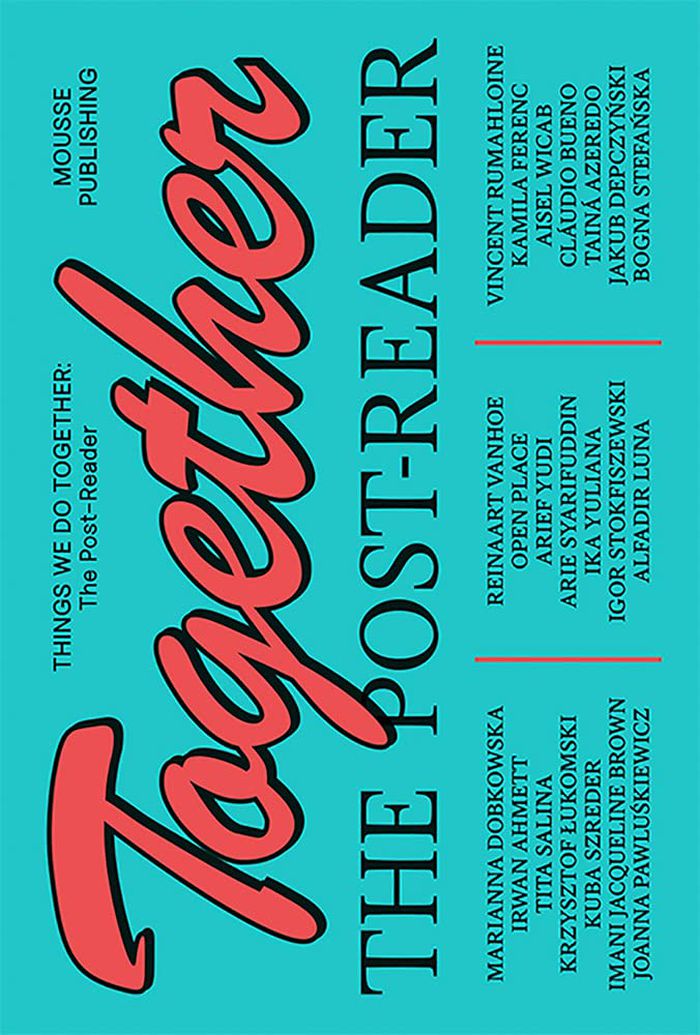
Things We Do Together. The Post-Reader is a collection of essays and honest conversations with practitioners. It is based on experiences and observations of long-term processes taking place at the intersection of art, education, and activism. Collaboration is more than simply a mechanism for the collective management of resources. It can be a way of disrupting existing systems both in the art world and in everyday life, where capitalism and extreme individualism lead to the collapse of communities and the deepening of social inequalities. The publication’s starting point was the exhibition-meeting "Gotong Royong Things We Do Together" at Ujazdowski Castle Centre for Contemporary Art, Warsaw, at the end of 2017.
Things we do together: The post-reader
Actions:
Price:
$39.95
(available in store)
Summary:
Things We Do Together. The Post-Reader is a collection of essays and honest conversations with practitioners. It is based on experiences and observations of long-term processes taking place at the intersection of art, education, and activism. Collaboration is more than simply a mechanism for the collective management of resources. It can be a way of disrupting existing systems both in the art world and in everyday life, where capitalism and extreme individualism lead to the collapse of communities and the deepening of social inequalities. The publication’s starting point was the exhibition-meeting "Gotong Royong Things We Do Together" at Ujazdowski Castle Centre for Contemporary Art, Warsaw, at the end of 2017.
Form:
books
books
Publication:
August 2021
August 2021
Form:
books
books
Actions:
Price:
$61.00
(available to order)
Summary:
This publication offers an introduction to the complex world of urban development, identity and participation. It explains how the self-understanding of cities is mirrored in their approach to urban development. The basis of the book is formed by portraits of six European cities: Berlin, Hamburg, Paris, Lyon, Amsterdam and Groningen. The book fills a gap as it provides(...)
$61.00
(available to order)
Summary:
This publication offers an introduction to the complex world of urban development, identity and participation. It explains how the self-understanding of cities is mirrored in their approach to urban development. The basis of the book is formed by portraits of six European cities: Berlin, Hamburg, Paris, Lyon, Amsterdam and Groningen. The book fills a gap as it provides(...)
Publication:
September 2021
September 2021
Title:
Participate! Portraits of cities and citizens in action
Actions:
Price:
$61.00
(available to order)
Summary:
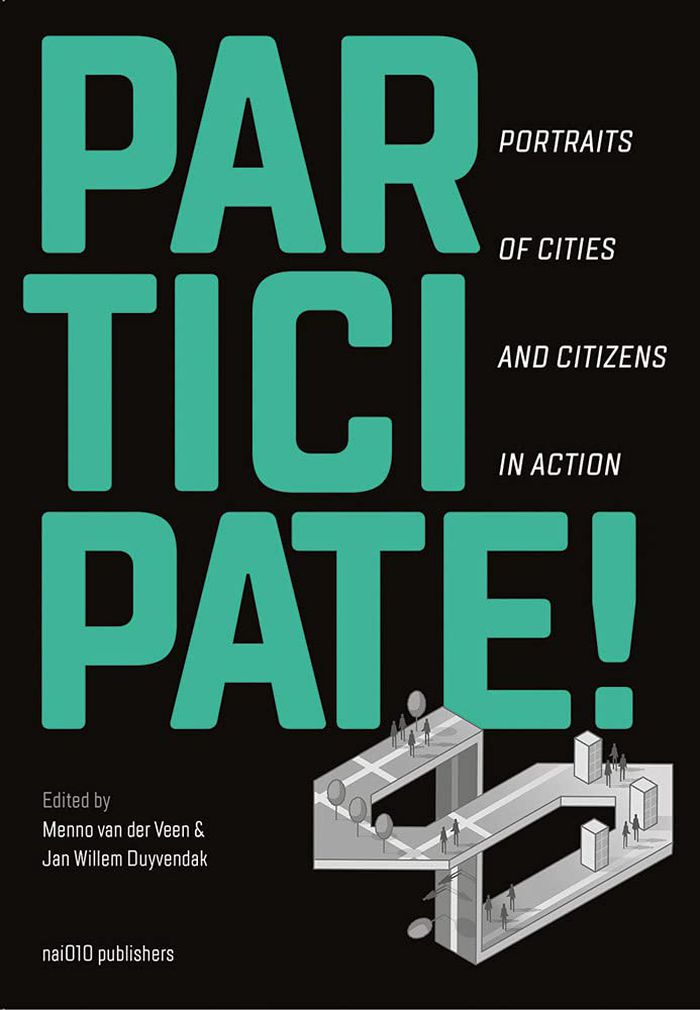
This publication offers an introduction to the complex world of urban development, identity and participation. It explains how the self-understanding of cities is mirrored in their approach to urban development. The basis of the book is formed by portraits of six European cities: Berlin, Hamburg, Paris, Lyon, Amsterdam and Groningen. The book fills a gap as it provides general introductions to cities, a brief outline of the city’s planning system, a short historic introduction to the city’s planning culture. With telling and outstanding examples of citizen participation this book offers important insights in both the intrinsic logic of the cities and the mechanisms – sometimes more inclusive, sometimes more exclusive- of participation.
Participate! Portraits of cities and citizens in action
Actions:
Price:
$61.00
(available to order)
Summary:
This publication offers an introduction to the complex world of urban development, identity and participation. It explains how the self-understanding of cities is mirrored in their approach to urban development. The basis of the book is formed by portraits of six European cities: Berlin, Hamburg, Paris, Lyon, Amsterdam and Groningen. The book fills a gap as it provides general introductions to cities, a brief outline of the city’s planning system, a short historic introduction to the city’s planning culture. With telling and outstanding examples of citizen participation this book offers important insights in both the intrinsic logic of the cities and the mechanisms – sometimes more inclusive, sometimes more exclusive- of participation.
Form:
books
books
Publication:
September 2021
September 2021
Form:
books
books
Title:
Meeting grounds
Meeting grounds
Actions:
Price:
$24.50
(available in store)
Summary:
The Meeting Grounds programme of online, participatory events that took place from March to June 2020, at the height of the first wave of the pandemic, sought to examine this limited access, whilst simultaneously exploring the new spaces of community we have produced in response. This resulting publication features the work of 35 selected artists, researchers, designers(...)
$24.50
(available in store)
Summary:
The Meeting Grounds programme of online, participatory events that took place from March to June 2020, at the height of the first wave of the pandemic, sought to examine this limited access, whilst simultaneously exploring the new spaces of community we have produced in response. This resulting publication features the work of 35 selected artists, researchers, designers(...)
Publication:
November 2021
November 2021
Title:
Meeting grounds
Actions:
Price:
$24.50
(available in store)
Summary:
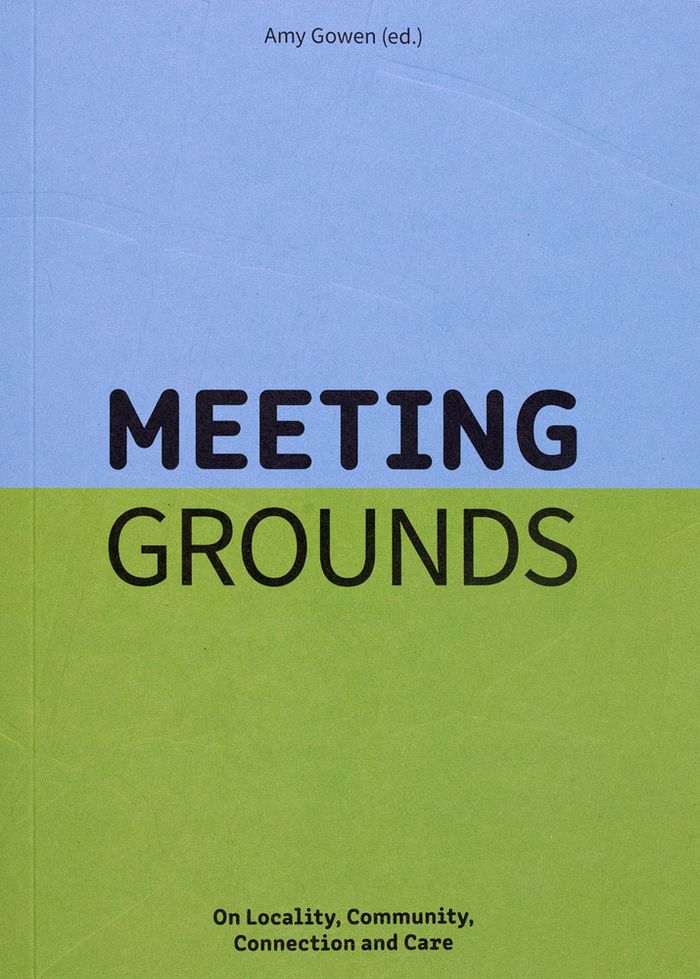
The Meeting Grounds programme of online, participatory events that took place from March to June 2020, at the height of the first wave of the pandemic, sought to examine this limited access, whilst simultaneously exploring the new spaces of community we have produced in response. This resulting publication features the work of 35 selected artists, researchers, designers and writers who took part in the programme. The Meeting Grounds publication therefore acts as a continuation of the ideas and conversations exchanged during this time period as well as an exploration into the social, political and cultural changes that have occurred since the beginning of 2020. In doing so, it hopes to unravel our evolving relationships with space and place, the effects these changes have had on our bodily behaviours, habitual practices and movements and the ways in which we recognise, form and maintain locality, community, connection and care.
Meeting grounds
Actions:
Price:
$24.50
(available in store)
Summary:
The Meeting Grounds programme of online, participatory events that took place from March to June 2020, at the height of the first wave of the pandemic, sought to examine this limited access, whilst simultaneously exploring the new spaces of community we have produced in response. This resulting publication features the work of 35 selected artists, researchers, designers and writers who took part in the programme. The Meeting Grounds publication therefore acts as a continuation of the ideas and conversations exchanged during this time period as well as an exploration into the social, political and cultural changes that have occurred since the beginning of 2020. In doing so, it hopes to unravel our evolving relationships with space and place, the effects these changes have had on our bodily behaviours, habitual practices and movements and the ways in which we recognise, form and maintain locality, community, connection and care.
Form:
books
books
Publication:
November 2021
November 2021
Form:
books
books
Actions:
Price:
$61.00
(available to order)
Summary:
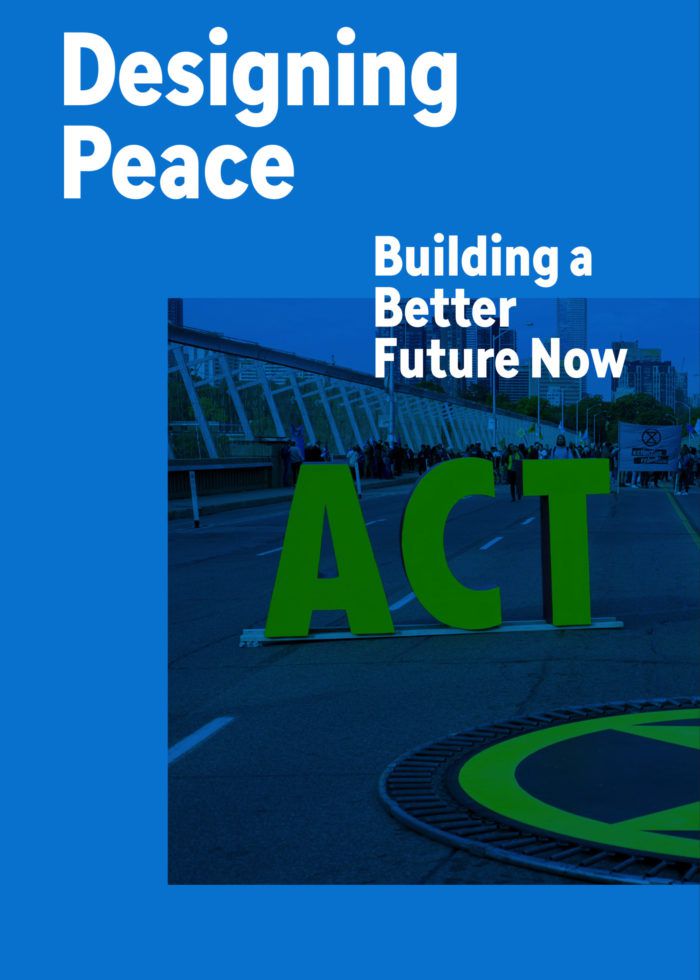
Offering perspectives on peace through essays, interviews, critical maps, project profiles, data visualizations, and art, this book conveys the momentum that design can gain in effecting a peace-filled future. From activists, scholars, and architects to policymakers and graphic, game, and landscape designers, the publication flips the conversation: peace is not simply a(...)
$61.00
(available to order)
Summary:
Offering perspectives on peace through essays, interviews, critical maps, project profiles, data visualizations, and art, this book conveys the momentum that design can gain in effecting a peace-filled future. From activists, scholars, and architects to policymakers and graphic, game, and landscape designers, the publication flips the conversation: peace is not simply a(...)
Title:
Designing peace: Building a better future now
Actions:
Price:
$61.00
(available to order)
Summary:
Offering perspectives on peace through essays, interviews, critical maps, project profiles, data visualizations, and art, this book conveys the momentum that design can gain in effecting a peace-filled future. From activists, scholars, and architects to policymakers and graphic, game, and landscape designers, the publication flips the conversation: peace is not simply a passive state signifying the absence of war, it is a dynamic concept that requires effort, expertise, and multidimensional solutions to address its complexity. This publication aims to expand the discourse on what is possible if society were to design for peace. It accompanies the exhibition Designing Peace, presented at Cooper Hewitt.
Designing peace: Building a better future now
Actions:
Price:
$61.00
(available to order)
Summary:
Offering perspectives on peace through essays, interviews, critical maps, project profiles, data visualizations, and art, this book conveys the momentum that design can gain in effecting a peace-filled future. From activists, scholars, and architects to policymakers and graphic, game, and landscape designers, the publication flips the conversation: peace is not simply a passive state signifying the absence of war, it is a dynamic concept that requires effort, expertise, and multidimensional solutions to address its complexity. This publication aims to expand the discourse on what is possible if society were to design for peace. It accompanies the exhibition Designing Peace, presented at Cooper Hewitt.
Form:
books
books
Publication:
June 2022
June 2022
Form:
books
books
Actions:
Price:
$30.95
(available to order)
Summary:
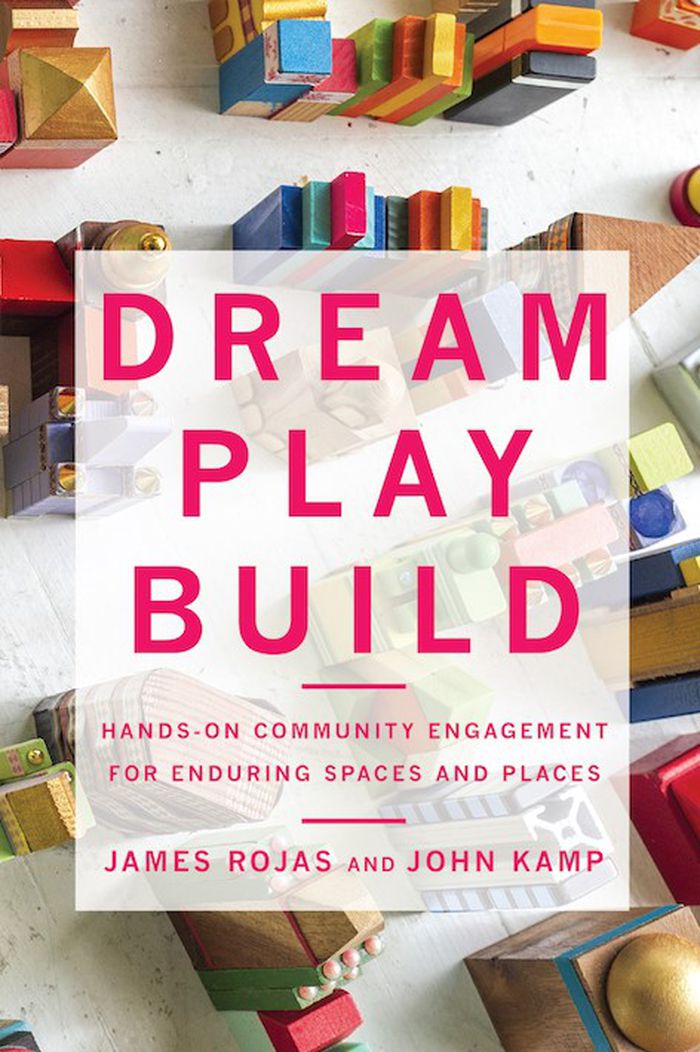
For twenty years, James Rojas and John Kamp have been looking to art, creative expression, and storytelling to shake up the classic community meeting. In this book, they share their insights into building common ground and inviting active participation among diverse groups. Their approach, “Place It!,” draws on three methods: the interactive model-building workshop, the(...)
$30.95
(available to order)
Summary:
For twenty years, James Rojas and John Kamp have been looking to art, creative expression, and storytelling to shake up the classic community meeting. In this book, they share their insights into building common ground and inviting active participation among diverse groups. Their approach, “Place It!,” draws on three methods: the interactive model-building workshop, the(...)
Publication:
February 2022
February 2022
Title:
Dream, play, build: Hands-on community engagement for enduring spaces and places
Actions:
Price:
$30.95
(available to order)
Summary:
For twenty years, James Rojas and John Kamp have been looking to art, creative expression, and storytelling to shake up the classic community meeting. In this book, they share their insights into building common ground and inviting active participation among diverse groups. Their approach, “Place It!,” draws on three methods: the interactive model-building workshop, the pop-up, and site exploration using our senses. Using our hands to build and create is central to what makes us human, helping spark ideas without relying on words to communicate. Deceptively playful, this method is remarkably effective at teasing out community dreams and desires from hands-on activities. The book offers wisdom distilled from workshops held around the world, and a deep dive into the transformational approach and results from the South Colton community in southern California.
Dream, play, build: Hands-on community engagement for enduring spaces and places
Actions:
Price:
$30.95
(available to order)
Summary:
For twenty years, James Rojas and John Kamp have been looking to art, creative expression, and storytelling to shake up the classic community meeting. In this book, they share their insights into building common ground and inviting active participation among diverse groups. Their approach, “Place It!,” draws on three methods: the interactive model-building workshop, the pop-up, and site exploration using our senses. Using our hands to build and create is central to what makes us human, helping spark ideas without relying on words to communicate. Deceptively playful, this method is remarkably effective at teasing out community dreams and desires from hands-on activities. The book offers wisdom distilled from workshops held around the world, and a deep dive into the transformational approach and results from the South Colton community in southern California.
Form:
books
books
Publication:
February 2022
February 2022
Form:
books
books
Actions:
Price:
$35.00
(available to order)
Summary:
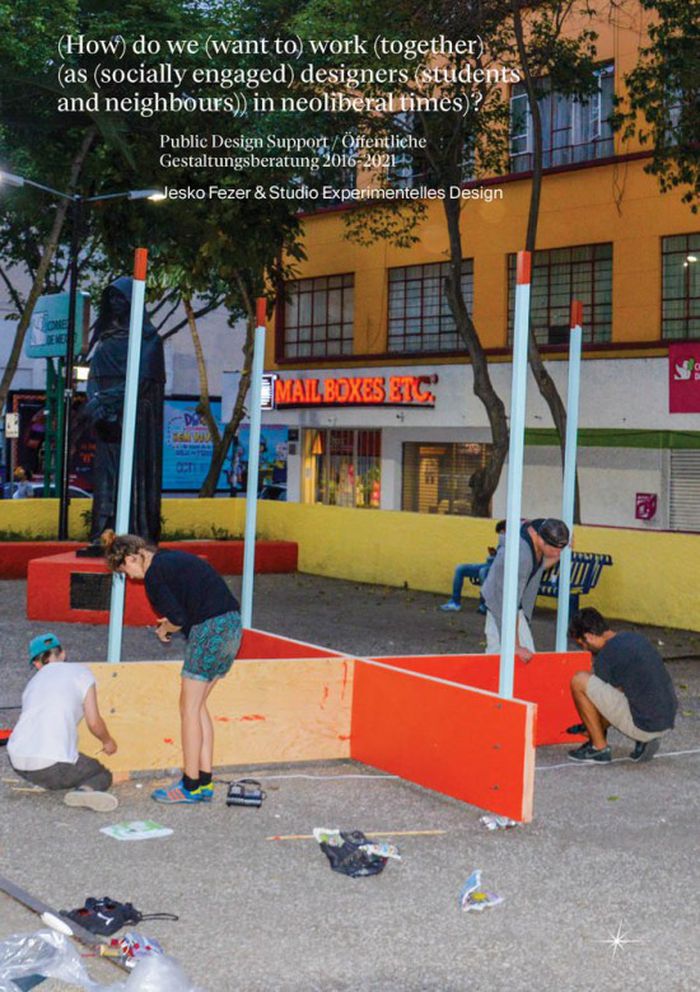
Since 2011, the Studio Experimentelles Design at the University of Fine Arts in Hamburg has experimented with local design support as a contemporary practice. The student-led program advocates a community-based, cooperative approach to design. In the summer of 2020, the Kunstgewerbemuseum Berlin Design Lab #6 hosted Studio Experimentelles Design's eponymous online(...)
$35.00
(available to order)
Summary:
Since 2011, the Studio Experimentelles Design at the University of Fine Arts in Hamburg has experimented with local design support as a contemporary practice. The student-led program advocates a community-based, cooperative approach to design. In the summer of 2020, the Kunstgewerbemuseum Berlin Design Lab #6 hosted Studio Experimentelles Design's eponymous online(...)
Publication:
March 2022
March 2022
Title:
(How) do we (want to) work (together) (as (socially engaged) designers (students and neighbours)) (in neoliberal times)?
Actions:
Price:
$35.00
(available to order)
Summary:
Since 2011, the Studio Experimentelles Design at the University of Fine Arts in Hamburg has experimented with local design support as a contemporary practice. The student-led program advocates a community-based, cooperative approach to design. In the summer of 2020, the Kunstgewerbemuseum Berlin Design Lab #6 hosted Studio Experimentelles Design's eponymous online research festival.” Divided into two parts, this compendium chronicles the studio’s politically and socially committed approach through lectures, research, conversations, and project documentation from the online festival and five years of studio work. Both the festival's debate about working conditions and the studio's practice critically examine the imperative of committed designers today to radically reorient their approach, the content of their work, and their relationship with the actors for whom they design.
(How) do we (want to) work (together) (as (socially engaged) designers (students and neighbours)) (in neoliberal times)?
Actions:
Price:
$35.00
(available to order)
Summary:
Since 2011, the Studio Experimentelles Design at the University of Fine Arts in Hamburg has experimented with local design support as a contemporary practice. The student-led program advocates a community-based, cooperative approach to design. In the summer of 2020, the Kunstgewerbemuseum Berlin Design Lab #6 hosted Studio Experimentelles Design's eponymous online research festival.” Divided into two parts, this compendium chronicles the studio’s politically and socially committed approach through lectures, research, conversations, and project documentation from the online festival and five years of studio work. Both the festival's debate about working conditions and the studio's practice critically examine the imperative of committed designers today to radically reorient their approach, the content of their work, and their relationship with the actors for whom they design.
Form:
books
books
Publication:
March 2022
March 2022
Form:
books
books
Price:
$58.95
(available to order)
Summary:
What does a collective process in architecture entail and how does it influence the planning of our built environment? Although the hierarchically organized office with its claim to individual authorship is still the dominant form of architecture firm, more and more horizontally organized collectives with alternative approaches to architectural planning are emerging. In(...)
$58.95
(available to order)
Summary:
What does a collective process in architecture entail and how does it influence the planning of our built environment? Although the hierarchically organized office with its claim to individual authorship is still the dominant form of architecture firm, more and more horizontally organized collectives with alternative approaches to architectural planning are emerging. In(...)
Publication:
December 2021
December 2021
Title:
Collective processes: counterpractices in european architecture
Actions:
Price:
$58.95
(available to order)
Summary:
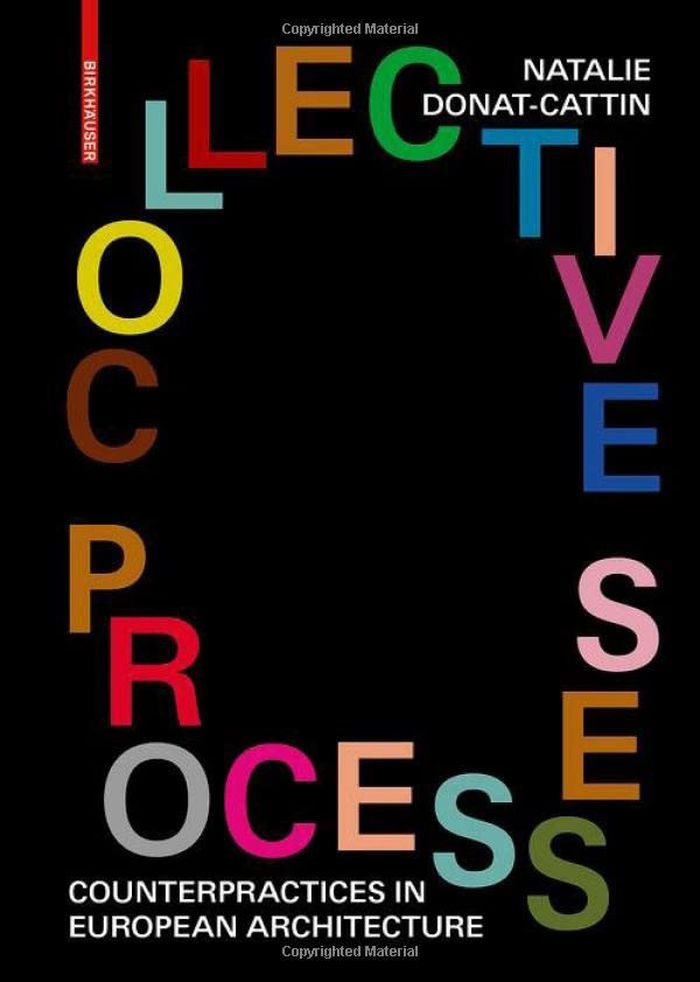
What does a collective process in architecture entail and how does it influence the planning of our built environment? Although the hierarchically organized office with its claim to individual authorship is still the dominant form of architecture firm, more and more horizontally organized collectives with alternative approaches to architectural planning are emerging. In this insightful survey of renowned European collectives, Natalie Donat-Cattin offers an overview of their working methods, organizational forms, goals, and projects. The book includes statements and projects by: A-A Collective, (ab)Normal, Assemble, baukuh, CNCRT, Colectivo Warehouse, Collectif Etc, constructLab, false mirror office, Fosbury Architecture, la–clique, Lacol, n’UNDO, orizzontale, raumlabor, X=(T=E=N), and Zuloark.
Collective processes: counterpractices in european architecture
Actions:
Price:
$58.95
(available to order)
Summary:
What does a collective process in architecture entail and how does it influence the planning of our built environment? Although the hierarchically organized office with its claim to individual authorship is still the dominant form of architecture firm, more and more horizontally organized collectives with alternative approaches to architectural planning are emerging. In this insightful survey of renowned European collectives, Natalie Donat-Cattin offers an overview of their working methods, organizational forms, goals, and projects. The book includes statements and projects by: A-A Collective, (ab)Normal, Assemble, baukuh, CNCRT, Colectivo Warehouse, Collectif Etc, constructLab, false mirror office, Fosbury Architecture, la–clique, Lacol, n’UNDO, orizzontale, raumlabor, X=(T=E=N), and Zuloark.
Form:
books
books
Publication:
December 2021
December 2021
Form:
books
books
Title:
Terrain critique
Terrain critique
Actions:
Price:
$41.95
(available to order)
Summary:
L’enquête qui fait l’objet de cet ouvrage dresse le récit d’une intégration progressive de l’action culturelle et artistique en urbanisme. Face à un contexte de défiance à son égard, elle décrit un urbanisme qui s’ouvre à des compétences en matière de médiation, d’animation et de communication. Et dépeint, à l’inverse, un monde de l’art impatient d’investir cette nouvelle(...)
$41.95
(available to order)
Summary:
L’enquête qui fait l’objet de cet ouvrage dresse le récit d’une intégration progressive de l’action culturelle et artistique en urbanisme. Face à un contexte de défiance à son égard, elle décrit un urbanisme qui s’ouvre à des compétences en matière de médiation, d’animation et de communication. Et dépeint, à l’inverse, un monde de l’art impatient d’investir cette nouvelle(...)
Publication:
June 2022
June 2022
Title:
Terrain critique
Actions:
Price:
$41.95
(available to order)
Summary:
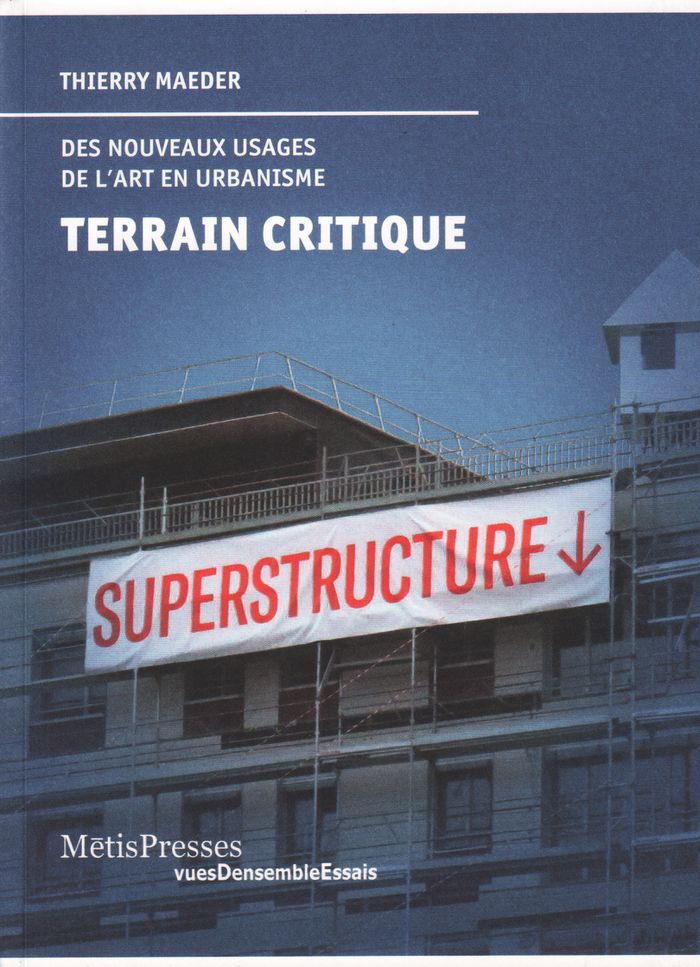
L’enquête qui fait l’objet de cet ouvrage dresse le récit d’une intégration progressive de l’action culturelle et artistique en urbanisme. Face à un contexte de défiance à son égard, elle décrit un urbanisme qui s’ouvre à des compétences en matière de médiation, d’animation et de communication. Et dépeint, à l’inverse, un monde de l’art impatient d’investir cette nouvelle niche de la commande publique urbaine. L’intrigue qui s’y joue laisse percevoir l’émergence d’un nouvel esprit de l’urbanisme.
Terrain critique
Actions:
Price:
$41.95
(available to order)
Summary:
L’enquête qui fait l’objet de cet ouvrage dresse le récit d’une intégration progressive de l’action culturelle et artistique en urbanisme. Face à un contexte de défiance à son égard, elle décrit un urbanisme qui s’ouvre à des compétences en matière de médiation, d’animation et de communication. Et dépeint, à l’inverse, un monde de l’art impatient d’investir cette nouvelle niche de la commande publique urbaine. L’intrigue qui s’y joue laisse percevoir l’émergence d’un nouvel esprit de l’urbanisme.
Form:
books
books
Publication:
June 2022
June 2022
Form:
books
books
Actions:
Price:
$55.95
(available in store)
Summary:
If participation has been an ideal in politics since ancient democracy, in art it became central only with the avant-gardes emerging from WWI and the Russian Revolution. Politics and aesthetics are still catching up with each other. In the 21st century, since the revolutionary unrest of the 1960s, participation in art and architecture has lost its utopian glow and become(...)
$55.95
(available in store)
Summary:
If participation has been an ideal in politics since ancient democracy, in art it became central only with the avant-gardes emerging from WWI and the Russian Revolution. Politics and aesthetics are still catching up with each other. In the 21st century, since the revolutionary unrest of the 1960s, participation in art and architecture has lost its utopian glow and become(...)
Title:
Participation in art and architecture: Spaces of interaction and occupation
Actions:
Price:
$55.95
(available in store)
Summary:
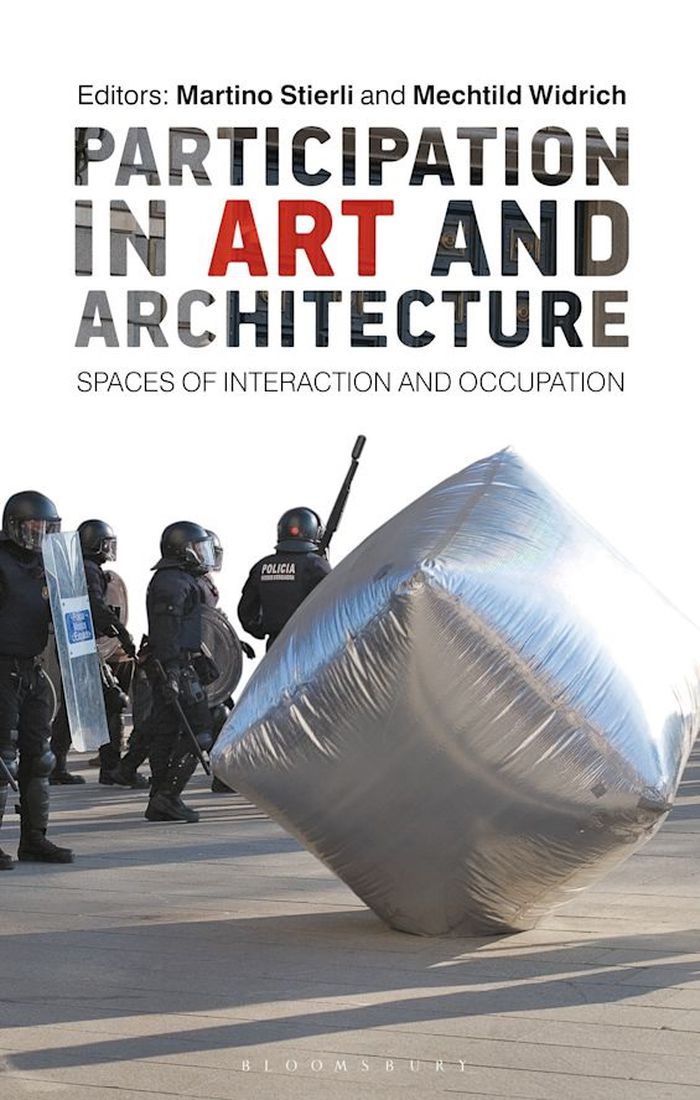
If participation has been an ideal in politics since ancient democracy, in art it became central only with the avant-gardes emerging from WWI and the Russian Revolution. Politics and aesthetics are still catching up with each other. In the 21st century, since the revolutionary unrest of the 1960s, participation in art and architecture has lost its utopian glow and become the focus of a fierce debate: does 'participatory' art and architecture shape social reality, or is it shaped by it? Contemporary critics see in participation only technocratic control, while others embrace it as a viable politics in an era of global capitalism. This innovative book breaks the impasse by looking at how participants themselves exert power, rather than being victimized or liberated from it. From artists hijacking Google Earth to protesters setting up a museum of the revolution in Cairo, art, architecture and daily life are explored in their participatory dimension.
Participation in art and architecture: Spaces of interaction and occupation
Actions:
Price:
$55.95
(available in store)
Summary:
If participation has been an ideal in politics since ancient democracy, in art it became central only with the avant-gardes emerging from WWI and the Russian Revolution. Politics and aesthetics are still catching up with each other. In the 21st century, since the revolutionary unrest of the 1960s, participation in art and architecture has lost its utopian glow and become the focus of a fierce debate: does 'participatory' art and architecture shape social reality, or is it shaped by it? Contemporary critics see in participation only technocratic control, while others embrace it as a viable politics in an era of global capitalism. This innovative book breaks the impasse by looking at how participants themselves exert power, rather than being victimized or liberated from it. From artists hijacking Google Earth to protesters setting up a museum of the revolution in Cairo, art, architecture and daily life are explored in their participatory dimension.
Form:
books
books
Publication:
July 2022
July 2022


