


166 Results
Form:
books
books
Actions:
Price:
$50.00
(available in store)
Summary:
Contrairement à ce que suggèrent la plupart des histoires, la Seconde Guerre mondiale à été un moment fondamental dans la modernisation tant théorique que pratique de l'architecture. Architecture en uniforme ouvre de nouvelles perspectives sur l'histoire architecturale de la guerre, rendant compte des épisodes qui se sont succédé entre le bombardement de Guernica en(...)
$50.00
(available in store)
Summary:
Contrairement à ce que suggèrent la plupart des histoires, la Seconde Guerre mondiale à été un moment fondamental dans la modernisation tant théorique que pratique de l'architecture. Architecture en uniforme ouvre de nouvelles perspectives sur l'histoire architecturale de la guerre, rendant compte des épisodes qui se sont succédé entre le bombardement de Guernica en(...)
Title:
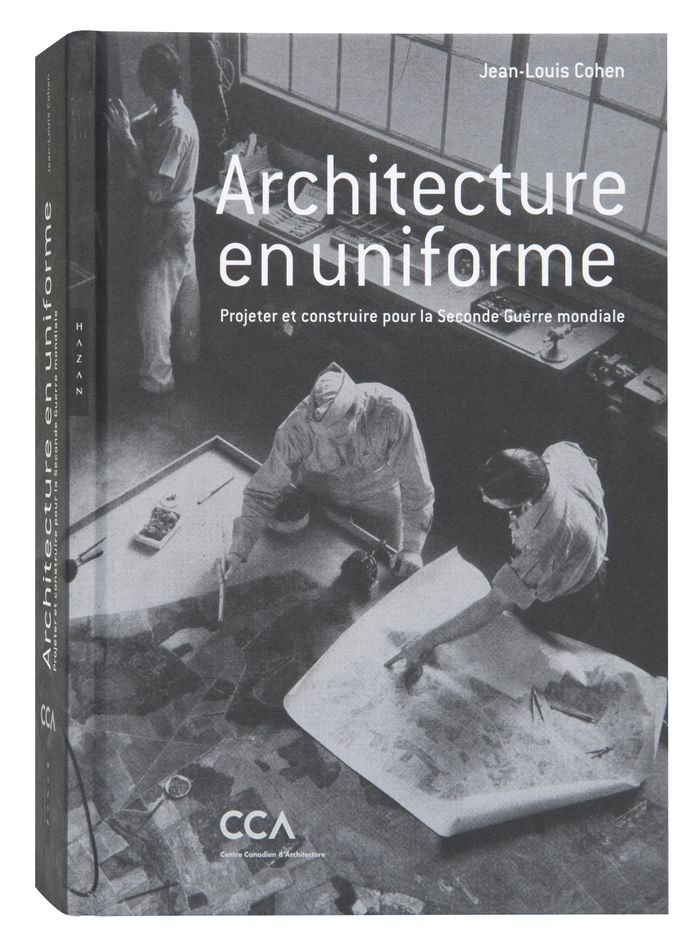
Architecture en uniforme : projeter et construire pour la Seconde Guerre mondiale
Actions:
Price:
$50.00
(available in store)
Summary:
Contrairement à ce que suggèrent la plupart des histoires, la Seconde Guerre mondiale à été un moment fondamental dans la modernisation tant théorique que pratique de l'architecture. Architecture en uniforme ouvre de nouvelles perspectives sur l'histoire architecturale de la guerre, rendant compte des épisodes qui se sont succédé entre le bombardement de Guernica en 1937 et celui d'Hiroshima en 1945, et qui ont conduit à la suprématie définitive des langages modernes. Les thèmes parcourus, comme le rôle des villes dans la guerre aérienne, les nouveaux bâtiments des usines, la participation directe de l'architecture à la guerre, les mégaprojets et les développements dans la vie civile après la guerre, révèlent l'ampleur de la contribution des architectes à tous les aspects de la mobilisation totale de ces années douloureuses.
Architecture en uniforme : projeter et construire pour la Seconde Guerre mondiale
Actions:
Price:
$50.00
(available in store)
Summary:
Contrairement à ce que suggèrent la plupart des histoires, la Seconde Guerre mondiale à été un moment fondamental dans la modernisation tant théorique que pratique de l'architecture. Architecture en uniforme ouvre de nouvelles perspectives sur l'histoire architecturale de la guerre, rendant compte des épisodes qui se sont succédé entre le bombardement de Guernica en 1937 et celui d'Hiroshima en 1945, et qui ont conduit à la suprématie définitive des langages modernes. Les thèmes parcourus, comme le rôle des villes dans la guerre aérienne, les nouveaux bâtiments des usines, la participation directe de l'architecture à la guerre, les mégaprojets et les développements dans la vie civile après la guerre, révèlent l'ampleur de la contribution des architectes à tous les aspects de la mobilisation totale de ces années douloureuses.
Form:
books
books
Publication:
April 2011
April 2011
Subject:
CCA Publications
CCA Publications
Form:
books
books
Price:
$50.00
(available in store)
Summary:
Contrary to what is suggested by most historical accounts, the Second World War was a key moment in the modernisation of architectural theory and practice. Architecture in Uniform offers a new perspective on the architectural history of the war, documenting a series of episodes that took place between the bombings of Guernica in 1937 and Hiroshima in 1945, leading to(...)
$50.00
(available in store)
Summary:
Contrary to what is suggested by most historical accounts, the Second World War was a key moment in the modernisation of architectural theory and practice. Architecture in Uniform offers a new perspective on the architectural history of the war, documenting a series of episodes that took place between the bombings of Guernica in 1937 and Hiroshima in 1945, leading to(...)
Title:
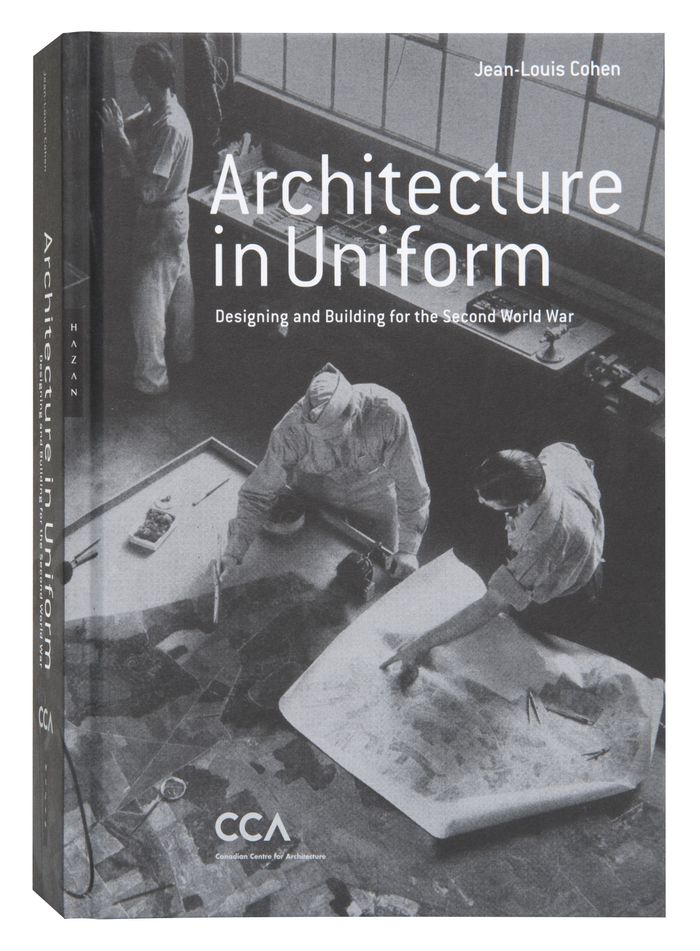
Architecture in uniform: designing and building for the Second World War
Actions:
Price:
$50.00
(available in store)
Summary:
Contrary to what is suggested by most historical accounts, the Second World War was a key moment in the modernisation of architectural theory and practice. Architecture in Uniform offers a new perspective on the architectural history of the war, documenting a series of episodes that took place between the bombings of Guernica in 1937 and Hiroshima in 1945, leading to the definitive supremacy of modernism in architecture. It discusses topics such as the role of cities in the air war, the new buildings erected for industrial production, architecture's participation in actual warfare, and wartime mega-projects and post-war developments in the civilian sphere, revealing the extent of the contribution made by architects to all aspects of the mobilisation that characterised the war years.
Architecture in uniform: designing and building for the Second World War
Actions:
Price:
$50.00
(available in store)
Summary:
Contrary to what is suggested by most historical accounts, the Second World War was a key moment in the modernisation of architectural theory and practice. Architecture in Uniform offers a new perspective on the architectural history of the war, documenting a series of episodes that took place between the bombings of Guernica in 1937 and Hiroshima in 1945, leading to the definitive supremacy of modernism in architecture. It discusses topics such as the role of cities in the air war, the new buildings erected for industrial production, architecture's participation in actual warfare, and wartime mega-projects and post-war developments in the civilian sphere, revealing the extent of the contribution made by architects to all aspects of the mobilisation that characterised the war years.
Form:
books
books
Publication:
April 2011
April 2011
Subject:
CCA Publications
CCA Publications
Form:
books
books
Title:
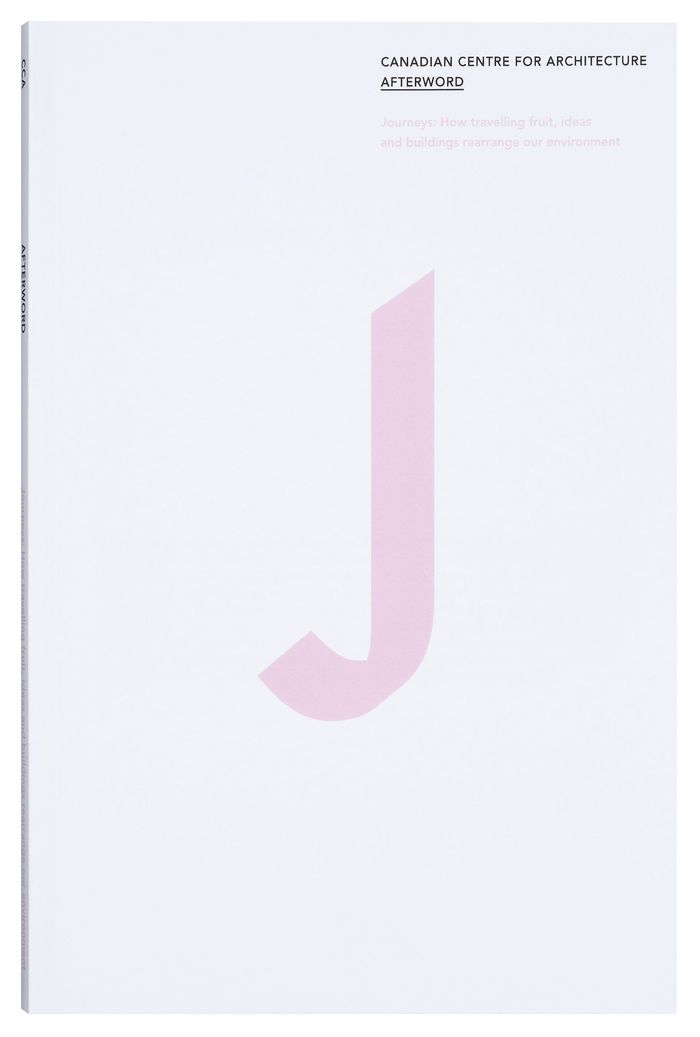
Afterword: J
Afterword: J
Actions:
Price:
$20.00
(available to order)
Summary:
Afterword is a series of CCA publications that document and reflect on the realisation of projects. Each Afterword looks back on a selected CCA project after a pause to critically assess its context and process, to consider newly-disclosed aspects of the project and those whose relevance emerged only after time. Each volume is identified by a letter to create an(...)
$20.00
(available to order)
Summary:
Afterword is a series of CCA publications that document and reflect on the realisation of projects. Each Afterword looks back on a selected CCA project after a pause to critically assess its context and process, to consider newly-disclosed aspects of the project and those whose relevance emerged only after time. Each volume is identified by a letter to create an(...)
Title:
Afterword: J
Actions:
Price:
$20.00
(available to order)
Summary:
Afterword is a series of CCA publications that document and reflect on the realisation of projects. Each Afterword looks back on a selected CCA project after a pause to critically assess its context and process, to consider newly-disclosed aspects of the project and those whose relevance emerged only after time. Each volume is identified by a letter to create an independent alphabet for ideas; this first volume J looks at the exhibition component of the project entitled Journeys: How travelling fruit, ideas and buildings rearrange our environment , its content and presentation within the CCA gallery spaces.
Afterword: J
Actions:
Price:
$20.00
(available to order)
Summary:
Afterword is a series of CCA publications that document and reflect on the realisation of projects. Each Afterword looks back on a selected CCA project after a pause to critically assess its context and process, to consider newly-disclosed aspects of the project and those whose relevance emerged only after time. Each volume is identified by a letter to create an independent alphabet for ideas; this first volume J looks at the exhibition component of the project entitled Journeys: How travelling fruit, ideas and buildings rearrange our environment , its content and presentation within the CCA gallery spaces.
Form:
books
books
Publication:
June 2011
June 2011
Subject:
CCA Publications
CCA Publications
Form:
books
books
Actions:
Price:
$60.00
(available in store)
Summary:
Imperfect Health takes a critical look at how architects and planners are responding to growing urban health concerns and points to sometimes unforeseen consequences of their built interventions. Available in English and French editions, the book tackles this contemporary issue from a historical and critical perspective, focusing on different themes: epidemics and urban(...)
$60.00
(available in store)
Summary:
Imperfect Health takes a critical look at how architects and planners are responding to growing urban health concerns and points to sometimes unforeseen consequences of their built interventions. Available in English and French editions, the book tackles this contemporary issue from a historical and critical perspective, focusing on different themes: epidemics and urban(...)
Title:
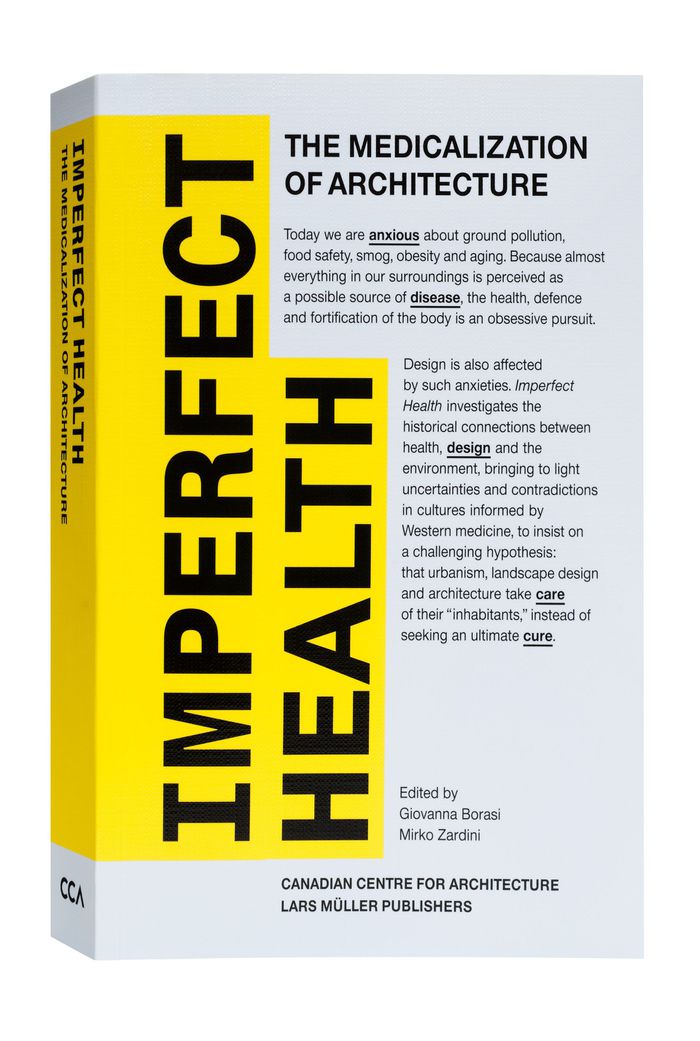
Imperfect health: the medicalization of architecture
Actions:
Price:
$60.00
(available in store)
Summary:
Imperfect Health takes a critical look at how architects and planners are responding to growing urban health concerns and points to sometimes unforeseen consequences of their built interventions. Available in English and French editions, the book tackles this contemporary issue from a historical and critical perspective, focusing on different themes: epidemics and urban defence systems; architecture combating pollution; environmental and urban challenges, obesity and design strategies; Modernism and tuberculosis; sunbathing and suburbia; aging today and indoor life and toxic materials. The publication is richly conveyed through a diverse range of materials including architectural drawings, photographs, books and artefacts.
Imperfect health: the medicalization of architecture
Actions:
Price:
$60.00
(available in store)
Summary:
Imperfect Health takes a critical look at how architects and planners are responding to growing urban health concerns and points to sometimes unforeseen consequences of their built interventions. Available in English and French editions, the book tackles this contemporary issue from a historical and critical perspective, focusing on different themes: epidemics and urban defence systems; architecture combating pollution; environmental and urban challenges, obesity and design strategies; Modernism and tuberculosis; sunbathing and suburbia; aging today and indoor life and toxic materials. The publication is richly conveyed through a diverse range of materials including architectural drawings, photographs, books and artefacts.
Form:
books
books
Publication:
February 2012
February 2012
Subject:
CCA Publications
CCA Publications
Form:
books
books
Actions:
Price:
$60.00
(available in store)
Summary:
Alors que les débats politiques contemporains abordent de plus en plus la question de la santé, les urbanistes et les architectes tentent eux aussi de répondre à ces préoccupations sociétales. En imparfaite santé : la médicalisation de l’architecture étudie la complexité, la corrélation et l’émergence de ces problèmes sanitaires contemporains au travers des réponses(...)
$60.00
(available in store)
Summary:
Alors que les débats politiques contemporains abordent de plus en plus la question de la santé, les urbanistes et les architectes tentent eux aussi de répondre à ces préoccupations sociétales. En imparfaite santé : la médicalisation de l’architecture étudie la complexité, la corrélation et l’émergence de ces problèmes sanitaires contemporains au travers des réponses(...)
Title:
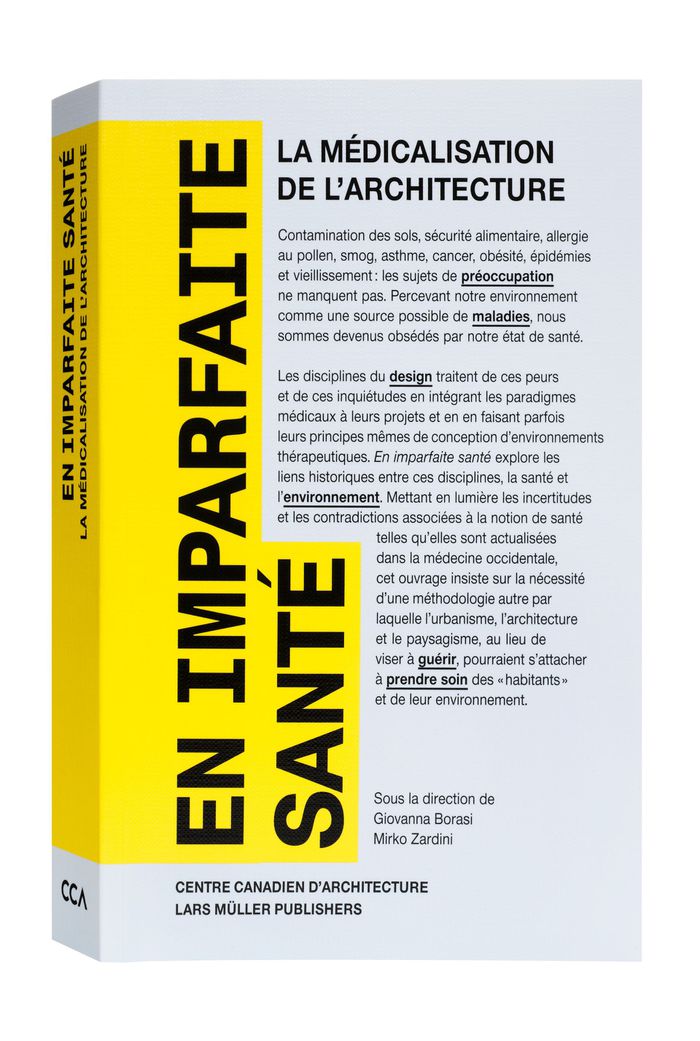
En imparfaite santé : la médicalisation de l'architecture
Actions:
Price:
$60.00
(available in store)
Summary:
Alors que les débats politiques contemporains abordent de plus en plus la question de la santé, les urbanistes et les architectes tentent eux aussi de répondre à ces préoccupations sociétales. En imparfaite santé : la médicalisation de l’architecture étudie la complexité, la corrélation et l’émergence de ces problèmes sanitaires contemporains au travers des réponses architecturales et urbaines proposées. Les disciplines du design traitent de ces peurs et de ces inquiétudes en intégrant les paradigmes médicaux à leurs projets et en faisant parfois leurs principes mêmes de conception d'environnements thérapeutiques. En imparfaite santé explore les liens historiques entre ces disciplines, la santé et l'environnement. Mettant en lumière les incertitudes et les contradictions associées à la notion de santé telles qu,elles sont actualisée dans la médecine occidentale, cet ouvrage insiste sur la nécessité d'une méthodologie autre par laquelle l'urbanisme, l'architecture et le paysagisme, au lieu de guérir, pourraient s'attacher à prendre soin des habitants et de leur environnement.
En imparfaite santé : la médicalisation de l'architecture
Actions:
Price:
$60.00
(available in store)
Summary:
Alors que les débats politiques contemporains abordent de plus en plus la question de la santé, les urbanistes et les architectes tentent eux aussi de répondre à ces préoccupations sociétales. En imparfaite santé : la médicalisation de l’architecture étudie la complexité, la corrélation et l’émergence de ces problèmes sanitaires contemporains au travers des réponses architecturales et urbaines proposées. Les disciplines du design traitent de ces peurs et de ces inquiétudes en intégrant les paradigmes médicaux à leurs projets et en faisant parfois leurs principes mêmes de conception d'environnements thérapeutiques. En imparfaite santé explore les liens historiques entre ces disciplines, la santé et l'environnement. Mettant en lumière les incertitudes et les contradictions associées à la notion de santé telles qu,elles sont actualisée dans la médecine occidentale, cet ouvrage insiste sur la nécessité d'une méthodologie autre par laquelle l'urbanisme, l'architecture et le paysagisme, au lieu de guérir, pourraient s'attacher à prendre soin des habitants et de leur environnement.
Form:
books
books
Publication:
February 2012
February 2012
Subject:
CCA Publications
CCA Publications
Form:
books
books
Title:
Archaeology of the digital
Archaeology of the digital
Actions:
Price:
$42.00
(available in store)
Summary:
Archaeology of the Digital delves into the genesis and establishment of digital tools for design conceptualization, visualization, and production at the end of the 1980s. How was the transition from analog practices to new digital tools managed, and the dialogue between them exploited? What was the cultural and technological landscape of that moment? These questions are(...)
$42.00
(available in store)
Summary:
Archaeology of the Digital delves into the genesis and establishment of digital tools for design conceptualization, visualization, and production at the end of the 1980s. How was the transition from analog practices to new digital tools managed, and the dialogue between them exploited? What was the cultural and technological landscape of that moment? These questions are(...)
Title:
Archaeology of the digital
Actions:
Price:
$42.00
(available in store)
Summary:
Archaeology of the Digital delves into the genesis and establishment of digital tools for design conceptualization, visualization, and production at the end of the 1980s. How was the transition from analog practices to new digital tools managed, and the dialogue between them exploited? What was the cultural and technological landscape of that moment? These questions are at the foundation of this publication and its accompanying exhibition that unfold around four projects selected as seminal moments in the early development stages of digital architecture: Frank Gehry’s Lewis Residence (1989 –1995), Peter Eisenman’s Frankfurt Biozentrum (1987), Shoei Yoh’s design of the roof structure of Odawara Municipal Sports Complex and of Galaxy Toyama Gymnasium (1990 –1992) and Chuck Hoberman’s Expanding Sphere (1991) and Iris Dome (1994). Each project established a significant direction for architectural research by experimenting with the possibilities offered by novel digital tools. The dialogue between computer sciences, architecture and engineering is at the core of these experiments, which can be considered precursors of approaches still operative today.
Archaeology of the digital
Actions:
Price:
$42.00
(available in store)
Summary:
Archaeology of the Digital delves into the genesis and establishment of digital tools for design conceptualization, visualization, and production at the end of the 1980s. How was the transition from analog practices to new digital tools managed, and the dialogue between them exploited? What was the cultural and technological landscape of that moment? These questions are at the foundation of this publication and its accompanying exhibition that unfold around four projects selected as seminal moments in the early development stages of digital architecture: Frank Gehry’s Lewis Residence (1989 –1995), Peter Eisenman’s Frankfurt Biozentrum (1987), Shoei Yoh’s design of the roof structure of Odawara Municipal Sports Complex and of Galaxy Toyama Gymnasium (1990 –1992) and Chuck Hoberman’s Expanding Sphere (1991) and Iris Dome (1994). Each project established a significant direction for architectural research by experimenting with the possibilities offered by novel digital tools. The dialogue between computer sciences, architecture and engineering is at the core of these experiments, which can be considered precursors of approaches still operative today.
Form:
books
books
Publication:
May 2013
May 2013
Subject:
CCA Publications
CCA Publications
Form:
books
books
Title:
Archéologie du numérique
Archéologie du numérique
Actions:
Price:
$42.00
(available in store)
Summary:
L’archéologie du numérique creuse en profondeur un aspect des plus essentiels : la genèse et la mise en oeuvre, à la fin des années 1980, d’outils numériques servant à la conceptualisation, la visualisation et la fabrication dans le domaine du design. Quels ont été les défis soulevés par ces technologies novatrices et les nouveaux champs de recherche qu’elles ont ouverts(...)
$42.00
(available in store)
Summary:
L’archéologie du numérique creuse en profondeur un aspect des plus essentiels : la genèse et la mise en oeuvre, à la fin des années 1980, d’outils numériques servant à la conceptualisation, la visualisation et la fabrication dans le domaine du design. Quels ont été les défis soulevés par ces technologies novatrices et les nouveaux champs de recherche qu’elles ont ouverts(...)
Title:
Archéologie du numérique
Actions:
Price:
$42.00
(available in store)
Summary:
L’archéologie du numérique creuse en profondeur un aspect des plus essentiels : la genèse et la mise en oeuvre, à la fin des années 1980, d’outils numériques servant à la conceptualisation, la visualisation et la fabrication dans le domaine du design. Quels ont été les défis soulevés par ces technologies novatrices et les nouveaux champs de recherche qu’elles ont ouverts aux concepteurs ? Comment s’est faite la transition entre pratiques analogiques et outils numériques, et comment le dialogue entre eux a-t-il été exploité ? Ces questions sont au coeur de la présente publication et de l’exposition qu’elle accompagne, qui se déploient autour de quatre projets choisis comme étant des moments charnières des premières étapes du développement de l’architecture numérique : la résidence Lewis (1989–1995), de Frank Gehry, le Biozentrum de Francfort (1987), de Peter Eisenman, la conception de la toiture du complexe sportif municipal d’Odawara et celle du gymnase Galaxy de Toyama (1990 –1992), de Shoei Yoh, ainsi que la sphère déployable (1991) et le dôme Iris (1994) de Chuck Hoberman. Chacun des projets a imprimé une orientation certaine à la recherche architecturale en permettant d’expérimenter les possibilités qu’offraient les nouveaux outils numériques. Le dialogue entre informatique, architecture et génie est au coeur de ces expériences, qui peuvent être considérées comme les précurseurs de méthodes encore opérationnelles aujourd’hui.
Archéologie du numérique
Actions:
Price:
$42.00
(available in store)
Summary:
L’archéologie du numérique creuse en profondeur un aspect des plus essentiels : la genèse et la mise en oeuvre, à la fin des années 1980, d’outils numériques servant à la conceptualisation, la visualisation et la fabrication dans le domaine du design. Quels ont été les défis soulevés par ces technologies novatrices et les nouveaux champs de recherche qu’elles ont ouverts aux concepteurs ? Comment s’est faite la transition entre pratiques analogiques et outils numériques, et comment le dialogue entre eux a-t-il été exploité ? Ces questions sont au coeur de la présente publication et de l’exposition qu’elle accompagne, qui se déploient autour de quatre projets choisis comme étant des moments charnières des premières étapes du développement de l’architecture numérique : la résidence Lewis (1989–1995), de Frank Gehry, le Biozentrum de Francfort (1987), de Peter Eisenman, la conception de la toiture du complexe sportif municipal d’Odawara et celle du gymnase Galaxy de Toyama (1990 –1992), de Shoei Yoh, ainsi que la sphère déployable (1991) et le dôme Iris (1994) de Chuck Hoberman. Chacun des projets a imprimé une orientation certaine à la recherche architecturale en permettant d’expérimenter les possibilités qu’offraient les nouveaux outils numériques. Le dialogue entre informatique, architecture et génie est au coeur de ces expériences, qui peuvent être considérées comme les précurseurs de méthodes encore opérationnelles aujourd’hui.
Form:
books
books
Publication:
May 2013
May 2013
Subject:
CCA Publications
CCA Publications
Form:
books
books
Actions:
Price:
$45.00
(available in store)
Summary:
This book documents two complementary urban realities that have played a fundamental role in the imagination, definition and redefinition of the twentieth-century modern city. Shifting away from an understanding of architecture as the construction of monumental masterpieces, the texts collected here assemble the narratives behind the public spaces, housing and social(...)
$45.00
(available in store)
Summary:
This book documents two complementary urban realities that have played a fundamental role in the imagination, definition and redefinition of the twentieth-century modern city. Shifting away from an understanding of architecture as the construction of monumental masterpieces, the texts collected here assemble the narratives behind the public spaces, housing and social(...)
Title:
Casablanca Chandigarh: a report on modernization
Actions:
Price:
$45.00
(available in store)
Summary:
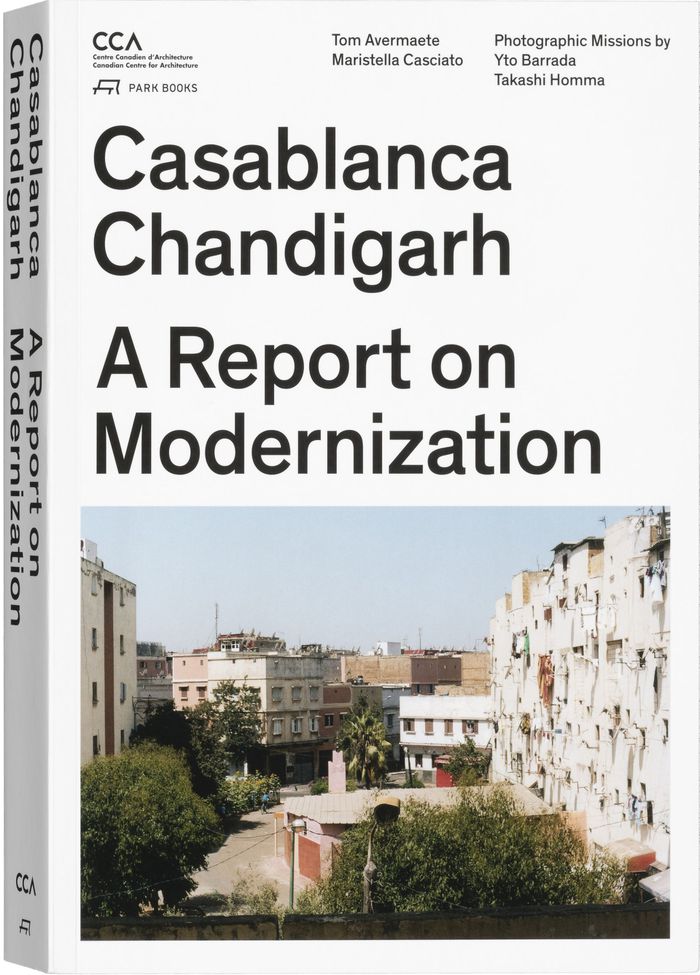
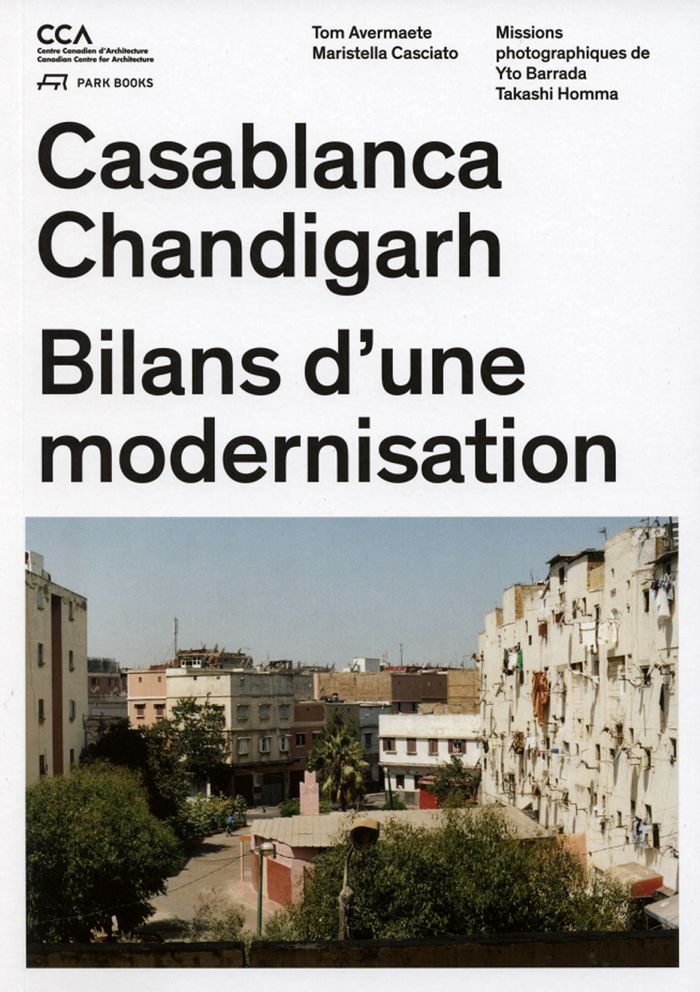
This book documents two complementary urban realities that have played a fundamental role in the imagination, definition and redefinition of the twentieth-century modern city. Shifting away from an understanding of architecture as the construction of monumental masterpieces, the texts collected here assemble the narratives behind the public spaces, housing and social facilities in these two cities, where modern plans have proven unexpectedly resilient and adaptable over time. This perspective is reinforced through visual contributions by Yto Barrada and Takashi Homma—two photographers especially invested in capturing everyday urban life. In a world marked by decolonization and Cold War politics, Casablanca and Chandigarh appear simultaneously as exponents of and countercurrents to modernization and its development perspectives. The book’s three chapters set the context for reading Casablanca and Chandigarh as the results of nuanced, dynamic processes of international exchange driven by the engagement and expertise of a new class of design professionals. As a dossier of actors, alignments and agendas, the book contributes to an alternative historiography of post-war urbanism and to recent reflections on the impact of transnational practice.
Casablanca Chandigarh: a report on modernization
Actions:
Price:
$45.00
(available in store)
Summary:
This book documents two complementary urban realities that have played a fundamental role in the imagination, definition and redefinition of the twentieth-century modern city. Shifting away from an understanding of architecture as the construction of monumental masterpieces, the texts collected here assemble the narratives behind the public spaces, housing and social facilities in these two cities, where modern plans have proven unexpectedly resilient and adaptable over time. This perspective is reinforced through visual contributions by Yto Barrada and Takashi Homma—two photographers especially invested in capturing everyday urban life. In a world marked by decolonization and Cold War politics, Casablanca and Chandigarh appear simultaneously as exponents of and countercurrents to modernization and its development perspectives. The book’s three chapters set the context for reading Casablanca and Chandigarh as the results of nuanced, dynamic processes of international exchange driven by the engagement and expertise of a new class of design professionals. As a dossier of actors, alignments and agendas, the book contributes to an alternative historiography of post-war urbanism and to recent reflections on the impact of transnational practice.
Form:
books
books
Publication:
January 2014
January 2014
Subject:
CCA Publications
CCA Publications
Form:
books
books
Actions:
Price:
$45.00
(available in store)
Summary:
Le présent ouvrage documente deux réalités urbaines complémentaires qui ont joué un rôle fondamental dans l’imaginaire de la ville moderne du vingtième siècle, ainsi que dans sa définition et ses multiples redéfinitions. Se démarquant de l’idée que l’architecture qui fait l’Histoire est celle des chefs-d’œuvre monumentaux, les textes recueillis ici s’attachent plutôt à(...)
$45.00
(available in store)
Summary:
Le présent ouvrage documente deux réalités urbaines complémentaires qui ont joué un rôle fondamental dans l’imaginaire de la ville moderne du vingtième siècle, ainsi que dans sa définition et ses multiples redéfinitions. Se démarquant de l’idée que l’architecture qui fait l’Histoire est celle des chefs-d’œuvre monumentaux, les textes recueillis ici s’attachent plutôt à(...)
Title:
Casablanca Chandigarh : bilans d’une modernisation
Actions:
Price:
$45.00
(available in store)
Summary:
Le présent ouvrage documente deux réalités urbaines complémentaires qui ont joué un rôle fondamental dans l’imaginaire de la ville moderne du vingtième siècle, ainsi que dans sa définition et ses multiples redéfinitions. Se démarquant de l’idée que l’architecture qui fait l’Histoire est celle des chefs-d’œuvre monumentaux, les textes recueillis ici s’attachent plutôt à l’histoire des espaces publics, des structures d’habitation et des installations communautaires de ces deux villes, dont les plans modernes se sont révélés étonnamment adaptables sur la durée. Cette perspective est illustrée par les photographies de Yto Barrada et de Takashi Homma, deux artistes qui se sont efforcés d’y capturer l’essence de la vie urbaine au quotidien. Dans un monde marqué par la décolonisation et les complexités politiques de la guerre froide, Casablanca et Chandigarh figurent à la fois comme une illustration et un contre-exemple des processus de modernisation et de développement. Les trois chapitres de cet ouvrage établissent le contexte qui permet d’interpréter la réalité urbaine de Casablanca et de Chandigarh comme le résultat de processus dynamiques et nuancés d’échanges internationaux stimulés par l’engagement et l’expertise d’une nouvelle classe de professionnels de l’urbanisme. Grâce à son étude des acteurs, des idéologies et des objectifs qui sous-tendent ces deux réalisations urbanistiques, le présent ouvrage vise à contribuer à une historiographie divergente de l’urbanisme d’après-guerre et aux réflexions actuelles sur l’effet des pratiques transnationales en matière d’urbanisme.
Casablanca Chandigarh : bilans d’une modernisation
Actions:
Price:
$45.00
(available in store)
Summary:
Le présent ouvrage documente deux réalités urbaines complémentaires qui ont joué un rôle fondamental dans l’imaginaire de la ville moderne du vingtième siècle, ainsi que dans sa définition et ses multiples redéfinitions. Se démarquant de l’idée que l’architecture qui fait l’Histoire est celle des chefs-d’œuvre monumentaux, les textes recueillis ici s’attachent plutôt à l’histoire des espaces publics, des structures d’habitation et des installations communautaires de ces deux villes, dont les plans modernes se sont révélés étonnamment adaptables sur la durée. Cette perspective est illustrée par les photographies de Yto Barrada et de Takashi Homma, deux artistes qui se sont efforcés d’y capturer l’essence de la vie urbaine au quotidien. Dans un monde marqué par la décolonisation et les complexités politiques de la guerre froide, Casablanca et Chandigarh figurent à la fois comme une illustration et un contre-exemple des processus de modernisation et de développement. Les trois chapitres de cet ouvrage établissent le contexte qui permet d’interpréter la réalité urbaine de Casablanca et de Chandigarh comme le résultat de processus dynamiques et nuancés d’échanges internationaux stimulés par l’engagement et l’expertise d’une nouvelle classe de professionnels de l’urbanisme. Grâce à son étude des acteurs, des idéologies et des objectifs qui sous-tendent ces deux réalisations urbanistiques, le présent ouvrage vise à contribuer à une historiographie divergente de l’urbanisme d’après-guerre et aux réflexions actuelles sur l’effet des pratiques transnationales en matière d’urbanisme.
Form:
books
books
Publication:
January 2014
January 2014
Subject:
CCA Publications
CCA Publications
Form:
books
books
Price:
$395.00
(available to order)
Summary:
Cedric Price Works 1952-2003: A Forward-Minded Retrospective by Samantha Hardingham is a two-volume anthology, co-published by the Architectural Association (AA) and the Canadian Centre for Architecture (CCA), and is supported by the Graham Foundation and the Cedric Price Estate. The books bring together for the first time all of the projects, articles and talks of(...)
$395.00
(available to order)
Summary:
Cedric Price Works 1952-2003: A Forward-Minded Retrospective by Samantha Hardingham is a two-volume anthology, co-published by the Architectural Association (AA) and the Canadian Centre for Architecture (CCA), and is supported by the Graham Foundation and the Cedric Price Estate. The books bring together for the first time all of the projects, articles and talks of(...)
Publication:
January 2017
January 2017
Title:
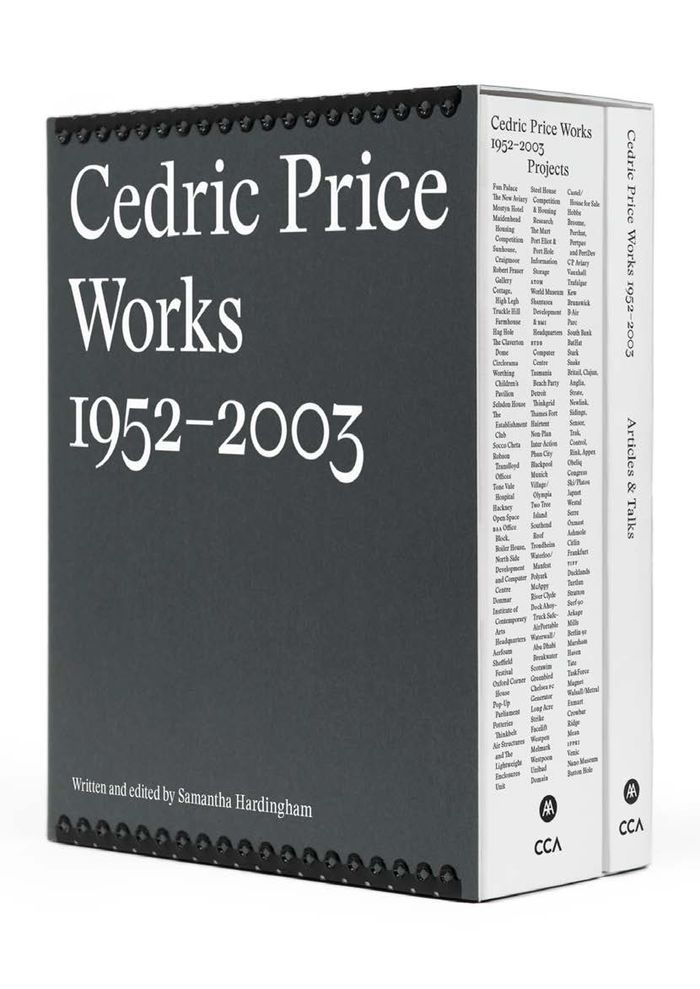
Cedric Price Works, 1952-2003: A forward-minded retrospective
Actions:
Price:
$395.00
(available to order)
Summary:
Cedric Price Works 1952-2003: A Forward-Minded Retrospective by Samantha Hardingham is a two-volume anthology, co-published by the Architectural Association (AA) and the Canadian Centre for Architecture (CCA), and is supported by the Graham Foundation and the Cedric Price Estate. The books bring together for the first time all of the projects, articles and talks of British architect Cedric Price, aiming to present his munificence as thinker, philosopher and designer. A student at the AA in the 1950s, Price established his office in London in 1960 and went on to produce some of architecture's most intensely imaginative and experimental projects of the latter half of the 20th century. His work is central in defining architectural discourse around the emerging postwar themes of mobility and indeterminacy in design. 2 Volumes in a custom-made slipcase, 912 pages and 512 pages respectively. 1,255 colour and b illustrations.
Cedric Price Works, 1952-2003: A forward-minded retrospective
Actions:
Price:
$395.00
(available to order)
Summary:
Cedric Price Works 1952-2003: A Forward-Minded Retrospective by Samantha Hardingham is a two-volume anthology, co-published by the Architectural Association (AA) and the Canadian Centre for Architecture (CCA), and is supported by the Graham Foundation and the Cedric Price Estate. The books bring together for the first time all of the projects, articles and talks of British architect Cedric Price, aiming to present his munificence as thinker, philosopher and designer. A student at the AA in the 1950s, Price established his office in London in 1960 and went on to produce some of architecture's most intensely imaginative and experimental projects of the latter half of the 20th century. His work is central in defining architectural discourse around the emerging postwar themes of mobility and indeterminacy in design. 2 Volumes in a custom-made slipcase, 912 pages and 512 pages respectively. 1,255 colour and b illustrations.
Form:
books
books
Publication:
January 2017
January 2017


