


310 Results
Form:
books
books
Title:
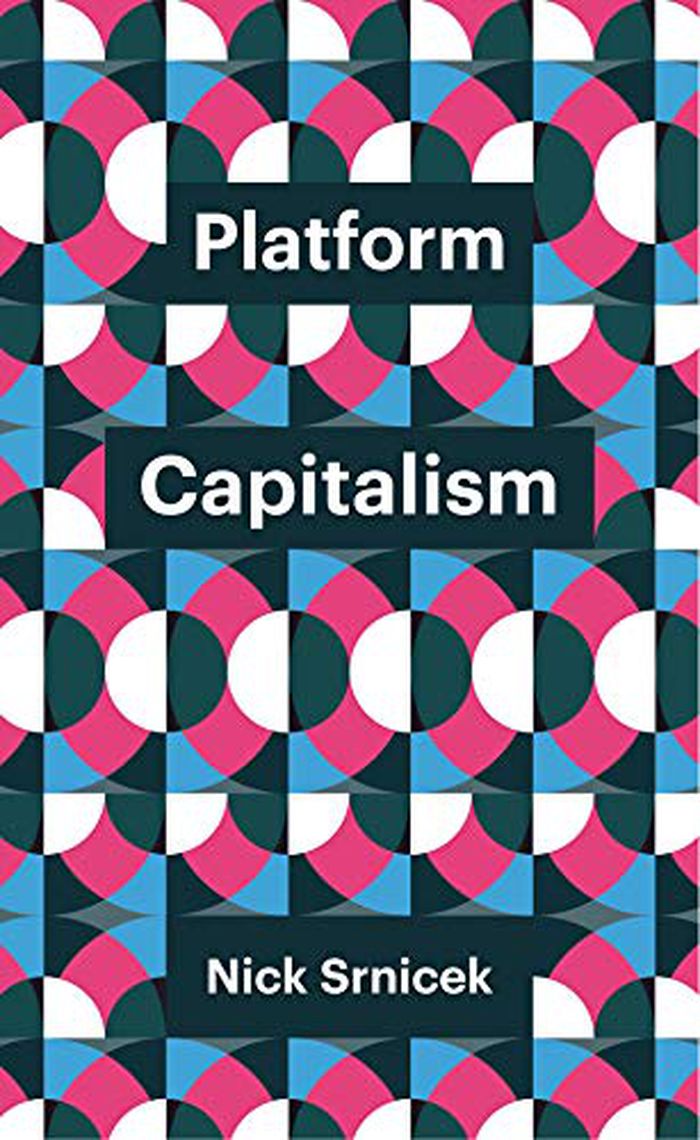
Platform capitalism
Platform capitalism
Actions:
Price:
$15.95
(available in store)
Summary:
What unites Google and Facebook, Apple and Microsoft, Siemens and GE, Uber and Airbnb? Across a wide range of sectors, these firms are transforming themselves into platforms: businesses that provide the hardware and software foundation for others to operate on. This transformation signals a major shift in how capitalist firms operate and how they interact with the rest of(...)
$15.95
(available in store)
Summary:
What unites Google and Facebook, Apple and Microsoft, Siemens and GE, Uber and Airbnb? Across a wide range of sectors, these firms are transforming themselves into platforms: businesses that provide the hardware and software foundation for others to operate on. This transformation signals a major shift in how capitalist firms operate and how they interact with the rest of(...)
Title:
Platform capitalism
Actions:
Price:
$15.95
(available in store)
Summary:
What unites Google and Facebook, Apple and Microsoft, Siemens and GE, Uber and Airbnb? Across a wide range of sectors, these firms are transforming themselves into platforms: businesses that provide the hardware and software foundation for others to operate on. This transformation signals a major shift in how capitalist firms operate and how they interact with the rest of the economy: the emergence of ‘platform capitalism’. This book critically examines these new business forms, tracing their genesis from the long downturn of the 1970s to the boom and bust of the 1990s and the aftershocks of the 2008 crisis. It shows how the fundamental foundations of the economy are rapidly being carved up among a small number of monopolistic platforms, and how the platform introduces new tendencies within capitalism that pose significant challenges to any vision of a post-capitalist future.
Platform capitalism
Actions:
Price:
$15.95
(available in store)
Summary:
What unites Google and Facebook, Apple and Microsoft, Siemens and GE, Uber and Airbnb? Across a wide range of sectors, these firms are transforming themselves into platforms: businesses that provide the hardware and software foundation for others to operate on. This transformation signals a major shift in how capitalist firms operate and how they interact with the rest of the economy: the emergence of ‘platform capitalism’. This book critically examines these new business forms, tracing their genesis from the long downturn of the 1970s to the boom and bust of the 1990s and the aftershocks of the 2008 crisis. It shows how the fundamental foundations of the economy are rapidly being carved up among a small number of monopolistic platforms, and how the platform introduces new tendencies within capitalism that pose significant challenges to any vision of a post-capitalist future.
Form:
books
books
Publication:
December 2016
December 2016
Subject:
Social
Social
Form:
books
books
Actions:
Price:
$25.95
(available to order)
Summary:
Every one of us will need care at some point in life: social care, healthcare, childcare, eldercare. In the shadow of COVID-19, care has become the most urgent topic of our times. But our care systems are in crisis. Concern for the most vulnerable has been overtaken by an obsession with profits and productivity. How did we end up here? In this book, Emma Dowling charts(...)
$25.95
(available to order)
Summary:
Every one of us will need care at some point in life: social care, healthcare, childcare, eldercare. In the shadow of COVID-19, care has become the most urgent topic of our times. But our care systems are in crisis. Concern for the most vulnerable has been overtaken by an obsession with profits and productivity. How did we end up here? In this book, Emma Dowling charts(...)
Title:
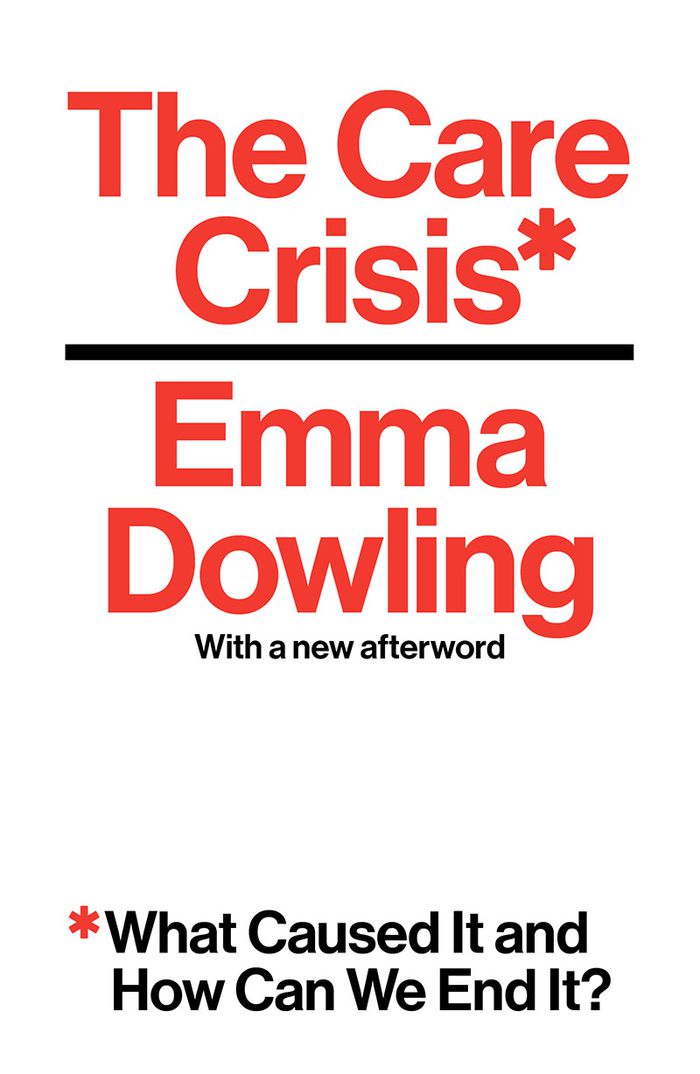
The care crisis: What caused it and how can we end it?
Actions:
Price:
$25.95
(available to order)
Summary:
Every one of us will need care at some point in life: social care, healthcare, childcare, eldercare. In the shadow of COVID-19, care has become the most urgent topic of our times. But our care systems are in crisis. Concern for the most vulnerable has been overtaken by an obsession with profits and productivity. How did we end up here? In this book, Emma Dowling charts the multifaceted nature of care in the modern world, from the mantras of self-care and what they tell us about our anxieties to the state of the social care system. The volume examines the ways that profitability and care are played off against each other, exposing the impacts of financialisation and austerity. Dowling charts the current experiments in short-term solutions now taking place.
The care crisis: What caused it and how can we end it?
Actions:
Price:
$25.95
(available to order)
Summary:
Every one of us will need care at some point in life: social care, healthcare, childcare, eldercare. In the shadow of COVID-19, care has become the most urgent topic of our times. But our care systems are in crisis. Concern for the most vulnerable has been overtaken by an obsession with profits and productivity. How did we end up here? In this book, Emma Dowling charts the multifaceted nature of care in the modern world, from the mantras of self-care and what they tell us about our anxieties to the state of the social care system. The volume examines the ways that profitability and care are played off against each other, exposing the impacts of financialisation and austerity. Dowling charts the current experiments in short-term solutions now taking place.
Form:
books
books
Publication:
April 2022
April 2022
Subject:
Social
Social
Form:
books
books

Actions:
Price:
$35.95
(available to order)
Summary:
Does it ever feel like you have no free time? You come home after work and instead of finding a space of rest and relaxation, you’re confronted by a pile of new tasks to complete – cooking, cleaning, looking after the kids, and so on. In this book, Helen Hester and Nick Srnicek lay out how unpaid work in our homes has come to take up an ever-increasing portion of our(...)
$35.95
(available to order)
Summary:
Does it ever feel like you have no free time? You come home after work and instead of finding a space of rest and relaxation, you’re confronted by a pile of new tasks to complete – cooking, cleaning, looking after the kids, and so on. In this book, Helen Hester and Nick Srnicek lay out how unpaid work in our homes has come to take up an ever-increasing portion of our(...)
Title:
After work: The fight for free time
Actions:
Price:
$35.95
(available to order)
Summary:
Does it ever feel like you have no free time? You come home after work and instead of finding a space of rest and relaxation, you’re confronted by a pile of new tasks to complete – cooking, cleaning, looking after the kids, and so on. In this book, Helen Hester and Nick Srnicek lay out how unpaid work in our homes has come to take up an ever-increasing portion of our lives – how the vacuum of free time has been taken up by vacuuming. Examining the history of the home over the past century – from running water to white goods to smart homes – they show how repeated efforts to reduce the burden of this work have faced a variety of barriers, challenges, and reversals. Charting the trajectory of our domestic spaces over the past century, Hester and Srnicek consider new possibilities for the future, uncovering the abandoned ideas of anti-housework visionaries and sketching out a path towards real free time for all, where everyone is at liberty to pursue their passions, or do nothing at all. It will require rethinking our living arrangements, our expectations and our cities.
After work: The fight for free time
Actions:
Price:
$35.95
(available to order)
Summary:
Does it ever feel like you have no free time? You come home after work and instead of finding a space of rest and relaxation, you’re confronted by a pile of new tasks to complete – cooking, cleaning, looking after the kids, and so on. In this book, Helen Hester and Nick Srnicek lay out how unpaid work in our homes has come to take up an ever-increasing portion of our lives – how the vacuum of free time has been taken up by vacuuming. Examining the history of the home over the past century – from running water to white goods to smart homes – they show how repeated efforts to reduce the burden of this work have faced a variety of barriers, challenges, and reversals. Charting the trajectory of our domestic spaces over the past century, Hester and Srnicek consider new possibilities for the future, uncovering the abandoned ideas of anti-housework visionaries and sketching out a path towards real free time for all, where everyone is at liberty to pursue their passions, or do nothing at all. It will require rethinking our living arrangements, our expectations and our cities.
Form:
books
books
Publication:
July 2023
July 2023
Subject:
Social
Social
Form:
books
books

Actions:
Price:
$25.95
(available to order)
Summary:
The question of ownership is the critical fault line of our times, and during the pandemic this issue has only become more divisive. In the face of crisis, the authors warn that mere redistribution within current forms of ownership is not enough; our goal must be to go beyond the limits of the current system, dominated by private enclosure and unequal ownership. Only by(...)
$25.95
(available to order)
Summary:
The question of ownership is the critical fault line of our times, and during the pandemic this issue has only become more divisive. In the face of crisis, the authors warn that mere redistribution within current forms of ownership is not enough; our goal must be to go beyond the limits of the current system, dominated by private enclosure and unequal ownership. Only by(...)
Title:
Owning the future: Power and property in an age of crisis
Actions:
Price:
$25.95
(available to order)
Summary:
The question of ownership is the critical fault line of our times, and during the pandemic this issue has only become more divisive. In the face of crisis, the authors warn that mere redistribution within current forms of ownership is not enough; our goal must be to go beyond the limits of the current system, dominated by private enclosure and unequal ownership. Only by reimagining how our economy is owned and by whom can we address the crises of our time—from the fallout of the pandemic to ecological collapse—at their roots. The authors argue that the systemic change we need hinges on a new era of democratic ownership: a reinvention of the firm as a vehicle for collective endeavour and meeting social needs; against the oligarchy of the platform giants, a digital commons that uses our data for collective good, not private profit; in place of environmental devastation, a new agenda of decommodification—of both nature and needs—with a Green New Deal and collective stewardship of the planet’s natural wealth. Together, these proposals offer a road map to owning the future and building a better world.
Owning the future: Power and property in an age of crisis
Actions:
Price:
$25.95
(available to order)
Summary:
The question of ownership is the critical fault line of our times, and during the pandemic this issue has only become more divisive. In the face of crisis, the authors warn that mere redistribution within current forms of ownership is not enough; our goal must be to go beyond the limits of the current system, dominated by private enclosure and unequal ownership. Only by reimagining how our economy is owned and by whom can we address the crises of our time—from the fallout of the pandemic to ecological collapse—at their roots. The authors argue that the systemic change we need hinges on a new era of democratic ownership: a reinvention of the firm as a vehicle for collective endeavour and meeting social needs; against the oligarchy of the platform giants, a digital commons that uses our data for collective good, not private profit; in place of environmental devastation, a new agenda of decommodification—of both nature and needs—with a Green New Deal and collective stewardship of the planet’s natural wealth. Together, these proposals offer a road map to owning the future and building a better world.
Form:
books
books
Publication:
June 2022
June 2022
Subject:
Social
Social
Form:
books
books

Actions:
Price:
$48.95
(available in store)
Summary:
Cet ouvrage propose une thèse novatrice. Le commun n’est pas un simple tiers intrus entre public et privé, ni un pur principe politique. Il doit être pensé comme un véritable « mode de production » susceptible de constituer une alternative à l’hégémonie de la logique de l’État comme à celle de l’économie capitaliste de marché. En mobilisant l’économie politique, le droit,(...)
$48.95
(available in store)
Summary:
Cet ouvrage propose une thèse novatrice. Le commun n’est pas un simple tiers intrus entre public et privé, ni un pur principe politique. Il doit être pensé comme un véritable « mode de production » susceptible de constituer une alternative à l’hégémonie de la logique de l’État comme à celle de l’économie capitaliste de marché. En mobilisant l’économie politique, le droit,(...)
Title:
Le commun comme mode de production
Actions:
Price:
$48.95
(available in store)
Summary:
Cet ouvrage propose une thèse novatrice. Le commun n’est pas un simple tiers intrus entre public et privé, ni un pur principe politique. Il doit être pensé comme un véritable « mode de production » susceptible de constituer une alternative à l’hégémonie de la logique de l’État comme à celle de l’économie capitaliste de marché. En mobilisant l’économie politique, le droit, l’histoire, la sociologie, la philosophie, les sciences de l’information et de la communication, les auteurs montrent que le commun contient ces potentialités, sans manquer d’analyser les faiblesses et les contradictions auxquelles se heurte son développement, jusque dans la nouvelle économie du net où, face au pouvoir des plateformes, s’amorce la possibilité d’un renversement de perspective.
Le commun comme mode de production
Actions:
Price:
$48.95
(available in store)
Summary:
Cet ouvrage propose une thèse novatrice. Le commun n’est pas un simple tiers intrus entre public et privé, ni un pur principe politique. Il doit être pensé comme un véritable « mode de production » susceptible de constituer une alternative à l’hégémonie de la logique de l’État comme à celle de l’économie capitaliste de marché. En mobilisant l’économie politique, le droit, l’histoire, la sociologie, la philosophie, les sciences de l’information et de la communication, les auteurs montrent que le commun contient ces potentialités, sans manquer d’analyser les faiblesses et les contradictions auxquelles se heurte son développement, jusque dans la nouvelle économie du net où, face au pouvoir des plateformes, s’amorce la possibilité d’un renversement de perspective.
Form:
books
books
Publication:
January 2022
January 2022
Subject:
Social
Social
Form:
books
books

Actions:
Price:
$29.95
(available to order)
Summary:
Retail apocalypse. Cette expression désigne la vague de fermetures d'un grand nombre de magasins aux États-Unis depuis une dizaine d'années. En France, le mouvement n'a pas la même ampleur mais l'essor du e-commerce concurrence les ventes « physiques » et contribue à faire progresser la vacance commerciale en centre-ville et dans certaines galeries marchandes. Pour(...)
$29.95
(available to order)
Summary:
Retail apocalypse. Cette expression désigne la vague de fermetures d'un grand nombre de magasins aux États-Unis depuis une dizaine d'années. En France, le mouvement n'a pas la même ampleur mais l'essor du e-commerce concurrence les ventes « physiques » et contribue à faire progresser la vacance commerciale en centre-ville et dans certaines galeries marchandes. Pour(...)
Publication:
February 2020
February 2020
Title:
Éloge du magasin : contre l'amazonisation
Actions:
Price:
$29.95
(available to order)
Summary:
Retail apocalypse. Cette expression désigne la vague de fermetures d'un grand nombre de magasins aux États-Unis depuis une dizaine d'années. En France, le mouvement n'a pas la même ampleur mais l'essor du e-commerce concurrence les ventes « physiques » et contribue à faire progresser la vacance commerciale en centre-ville et dans certaines galeries marchandes. Pour autant, l'avenir des marchés, des boutiques, des centres commerciaux, des friperies, des brocantes, des grands magasins ou des librairies n'est pas scellé. Á travers une vingtaine de chapitres exposant les résultats d'enquêtes sociologiques, cet ouvrage propose une contribution originale au débat en mettant en évidence les fonctions symboliques et l'utilité sociale du magasin.
Éloge du magasin : contre l'amazonisation
Actions:
Price:
$29.95
(available to order)
Summary:
Retail apocalypse. Cette expression désigne la vague de fermetures d'un grand nombre de magasins aux États-Unis depuis une dizaine d'années. En France, le mouvement n'a pas la même ampleur mais l'essor du e-commerce concurrence les ventes « physiques » et contribue à faire progresser la vacance commerciale en centre-ville et dans certaines galeries marchandes. Pour autant, l'avenir des marchés, des boutiques, des centres commerciaux, des friperies, des brocantes, des grands magasins ou des librairies n'est pas scellé. Á travers une vingtaine de chapitres exposant les résultats d'enquêtes sociologiques, cet ouvrage propose une contribution originale au débat en mettant en évidence les fonctions symboliques et l'utilité sociale du magasin.
Form:
books
books
Publication:
February 2020
February 2020
Form:
books
books

Price:
$14.00
(available to order)
Summary:
From the IKEA Foundation’s Better Shelter to Airbnb’s Open Homes program, the consumer economy has engaged the global refugee crisis with seemingly new tactics that normalize an institutionally sanctioned politics of evasion. Exploring “the global shelter imaginary,” this book charts the ways shelter functions as a form of rightless relief that expels recognition of the(...)
$14.00
(available to order)
Summary:
From the IKEA Foundation’s Better Shelter to Airbnb’s Open Homes program, the consumer economy has engaged the global refugee crisis with seemingly new tactics that normalize an institutionally sanctioned politics of evasion. Exploring “the global shelter imaginary,” this book charts the ways shelter functions as a form of rightless relief that expels recognition of the(...)
Title:
The global shelter imaginary: Ikea humanitarianism and rightless relief
Actions:
Price:
$14.00
(available to order)
Summary:
From the IKEA Foundation’s Better Shelter to Airbnb’s Open Homes program, the consumer economy has engaged the global refugee crisis with seemingly new tactics that normalize an institutionally sanctioned politics of evasion. Exploring “the global shelter imaginary,” this book charts the ways shelter functions as a form of rightless relief that expels recognition of the rights of the displaced and advances political paradoxes of displacement itself.
The global shelter imaginary: Ikea humanitarianism and rightless relief
Actions:
Price:
$14.00
(available to order)
Summary:
From the IKEA Foundation’s Better Shelter to Airbnb’s Open Homes program, the consumer economy has engaged the global refugee crisis with seemingly new tactics that normalize an institutionally sanctioned politics of evasion. Exploring “the global shelter imaginary,” this book charts the ways shelter functions as a form of rightless relief that expels recognition of the rights of the displaced and advances political paradoxes of displacement itself.
Form:
books
books
Publication:
July 2021
July 2021
Subject:
Social
Social
Form:
books
books

Title:
Safety orange
Safety orange
Actions:
Price:
$13.99
(available to order)
Summary:
Safety Orange emerged in the 1950s as a bureaucratic color standard in technical manuals and federal regulations. Anna Watkins Fisher uses Safety Orange as an interpretive key for theorizing the uneven distribution of safety and care in twenty-first-century U.S. public life and for pondering what the color reveals about neoliberalism’s intensifying impact often hiding in(...)
$13.99
(available to order)
Summary:
Safety Orange emerged in the 1950s as a bureaucratic color standard in technical manuals and federal regulations. Anna Watkins Fisher uses Safety Orange as an interpretive key for theorizing the uneven distribution of safety and care in twenty-first-century U.S. public life and for pondering what the color reveals about neoliberalism’s intensifying impact often hiding in(...)
Title:
Safety orange
Actions:
Price:
$13.99
(available to order)
Summary:
Safety Orange emerged in the 1950s as a bureaucratic color standard in technical manuals and federal regulations. Anna Watkins Fisher uses Safety Orange as an interpretive key for theorizing the uneven distribution of safety and care in twenty-first-century U.S. public life and for pondering what the color reveals about neoliberalism’s intensifying impact often hiding in plain sight in commonplace phenomena.
Safety orange
Actions:
Price:
$13.99
(available to order)
Summary:
Safety Orange emerged in the 1950s as a bureaucratic color standard in technical manuals and federal regulations. Anna Watkins Fisher uses Safety Orange as an interpretive key for theorizing the uneven distribution of safety and care in twenty-first-century U.S. public life and for pondering what the color reveals about neoliberalism’s intensifying impact often hiding in plain sight in commonplace phenomena.
Form:
books
books
Publication:
January 2022
January 2022
Subject:
Social
Social
Form:
books
books

Actions:
Price:
$39.95
(available to order)
Summary:
In this book, historian Lorraine Daston traces the development of rules in the Western tradition and shows how they have evolved from ancient to modern times. Drawing on a rich trove of examples, including legal treatises, cookbooks, military manuals, traffic regulations, and game handbooks, Daston demonstrates that while the content of rules is dazzlingly diverse, the(...)
$39.95
(available to order)
Summary:
In this book, historian Lorraine Daston traces the development of rules in the Western tradition and shows how they have evolved from ancient to modern times. Drawing on a rich trove of examples, including legal treatises, cookbooks, military manuals, traffic regulations, and game handbooks, Daston demonstrates that while the content of rules is dazzlingly diverse, the(...)
Title:
Rules: A short history of what we live by
Actions:
Price:
$39.95
(available to order)
Summary:
In this book, historian Lorraine Daston traces the development of rules in the Western tradition and shows how they have evolved from ancient to modern times. Drawing on a rich trove of examples, including legal treatises, cookbooks, military manuals, traffic regulations, and game handbooks, Daston demonstrates that while the content of rules is dazzlingly diverse, the forms that they take are surprisingly few and long-lived. Rules have been devised for almost every imaginable activity and range from meticulous regulations to the laws of nature. Daston probes beneath this variety to investigate when rules work and when they don’t, and why some philosophical problems about rules are as ancient as philosophy itself while others are as modern as calculating machines.
Rules: A short history of what we live by
Actions:
Price:
$39.95
(available to order)
Summary:
In this book, historian Lorraine Daston traces the development of rules in the Western tradition and shows how they have evolved from ancient to modern times. Drawing on a rich trove of examples, including legal treatises, cookbooks, military manuals, traffic regulations, and game handbooks, Daston demonstrates that while the content of rules is dazzlingly diverse, the forms that they take are surprisingly few and long-lived. Rules have been devised for almost every imaginable activity and range from meticulous regulations to the laws of nature. Daston probes beneath this variety to investigate when rules work and when they don’t, and why some philosophical problems about rules are as ancient as philosophy itself while others are as modern as calculating machines.
Form:
books
books
Publication:
July 2022
July 2022
Subject:
Social
Social
Form:
books
books

Actions:
Price:
$39.95
(available to order)
Summary:
This book tells a new story about the cultural imagination of the West wherein cheerfulness — a momentary uptick in emotional energy, a temporary lightening of spirit — functions as a crucial theme in literary, philosophical, and artistic creations from early modern to contemporary times. In dazzling interpretations of Shakespeare and Montaigne, Hume, Austen and Emerson,(...)
$39.95
(available to order)
Summary:
This book tells a new story about the cultural imagination of the West wherein cheerfulness — a momentary uptick in emotional energy, a temporary lightening of spirit — functions as a crucial theme in literary, philosophical, and artistic creations from early modern to contemporary times. In dazzling interpretations of Shakespeare and Montaigne, Hume, Austen and Emerson,(...)
Title:
Cheerfulness: a literary and cultural history
Actions:
Price:
$39.95
(available to order)
Summary:
This book tells a new story about the cultural imagination of the West wherein cheerfulness — a momentary uptick in emotional energy, a temporary lightening of spirit — functions as a crucial theme in literary, philosophical, and artistic creations from early modern to contemporary times. In dazzling interpretations of Shakespeare and Montaigne, Hume, Austen and Emerson, Dickens, Nietzsche, and Louis Armstrong, Hampton explores the philosophical construal of cheerfulness — as a theme in Protestant theology, a focus of medical writing, a topic in Enlightenment psychology, and a category of modern aesthetics. In a conclusion on cheerfulness in pandemic days, Hampton stresses the importance of lightness of mind under the pressure of catastrophe.
Cheerfulness: a literary and cultural history
Actions:
Price:
$39.95
(available to order)
Summary:
This book tells a new story about the cultural imagination of the West wherein cheerfulness — a momentary uptick in emotional energy, a temporary lightening of spirit — functions as a crucial theme in literary, philosophical, and artistic creations from early modern to contemporary times. In dazzling interpretations of Shakespeare and Montaigne, Hume, Austen and Emerson, Dickens, Nietzsche, and Louis Armstrong, Hampton explores the philosophical construal of cheerfulness — as a theme in Protestant theology, a focus of medical writing, a topic in Enlightenment psychology, and a category of modern aesthetics. In a conclusion on cheerfulness in pandemic days, Hampton stresses the importance of lightness of mind under the pressure of catastrophe.
Form:
books
books
Publication:
June 2022
June 2022
Subject:
Social
Social


