


310 Results
Form:
books
books
Actions:
Price:
$40.99
(available to order)
Summary:
This book takes an in-depth look at the social lives of five objects commonly found in the public spaces of New York City and its suburbs, revealing how our interactions with such material things are our primary point of contact with the social, political, and economic forces that shape city life. Drawing on groundbreaking fieldwork and a wealth of original interviews,(...)
$40.99
(available to order)
Summary:
This book takes an in-depth look at the social lives of five objects commonly found in the public spaces of New York City and its suburbs, revealing how our interactions with such material things are our primary point of contact with the social, political, and economic forces that shape city life. Drawing on groundbreaking fieldwork and a wealth of original interviews,(...)
Title:
In the midst of things: The social lives of objects in the public spaces of New York City
Actions:
Price:
$40.99
(available to order)
Summary:
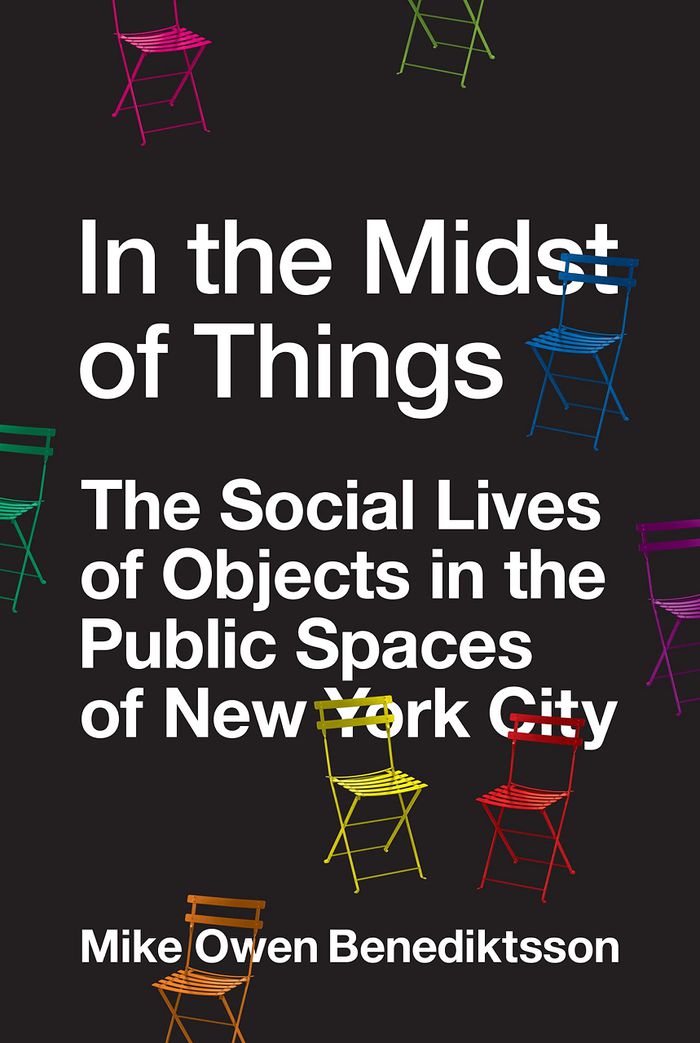
This book takes an in-depth look at the social lives of five objects commonly found in the public spaces of New York City and its suburbs, revealing how our interactions with such material things are our primary point of contact with the social, political, and economic forces that shape city life. Drawing on groundbreaking fieldwork and a wealth of original interviews, Mike Owen Benediktsson shows how we are in the midst of things whose profound social role often goes overlooked. This publication demonstrates how the material realm is one of immediacy, control, inequality, and unpredictability, and how these factors frustrate the ability of designers, planners, and regulators to shape human behavior.
In the midst of things: The social lives of objects in the public spaces of New York City
Actions:
Price:
$40.99
(available to order)
Summary:
This book takes an in-depth look at the social lives of five objects commonly found in the public spaces of New York City and its suburbs, revealing how our interactions with such material things are our primary point of contact with the social, political, and economic forces that shape city life. Drawing on groundbreaking fieldwork and a wealth of original interviews, Mike Owen Benediktsson shows how we are in the midst of things whose profound social role often goes overlooked. This publication demonstrates how the material realm is one of immediacy, control, inequality, and unpredictability, and how these factors frustrate the ability of designers, planners, and regulators to shape human behavior.
Form:
books
books
Publication:
June 2022
June 2022
Subject:
Social
Social
Form:
books
books
Title:
The lonely city
The lonely city
Actions:
Price:
$28.00
(available to order)
Summary:
When Olivia Laing moved to New York City in her midthirties, she found herself inhabiting loneliness on a daily basis. Increasingly fascinated by the most shameful of experiences, she began to explore the lonely city by way of art. Moving from Edward Hopper’s Nighthawks to Andy Warhol’s Time Capsules, from Henry Darger’s hoarding to David Wojnarowicz’s AIDS activism,(...)
$28.00
(available to order)
Summary:
When Olivia Laing moved to New York City in her midthirties, she found herself inhabiting loneliness on a daily basis. Increasingly fascinated by the most shameful of experiences, she began to explore the lonely city by way of art. Moving from Edward Hopper’s Nighthawks to Andy Warhol’s Time Capsules, from Henry Darger’s hoarding to David Wojnarowicz’s AIDS activism,(...)
Title:
The lonely city
Actions:
Price:
$28.00
(available to order)
Summary:
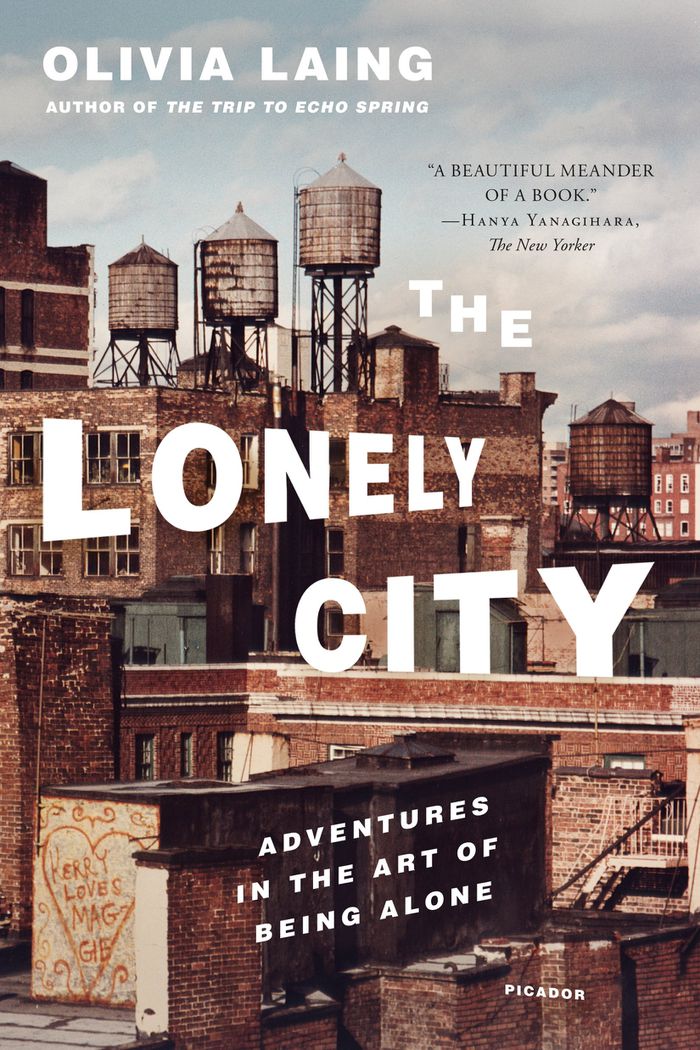
When Olivia Laing moved to New York City in her midthirties, she found herself inhabiting loneliness on a daily basis. Increasingly fascinated by the most shameful of experiences, she began to explore the lonely city by way of art. Moving from Edward Hopper’s Nighthawks to Andy Warhol’s Time Capsules, from Henry Darger’s hoarding to David Wojnarowicz’s AIDS activism, Laing conducts an electric, dazzling investigation into what it means to be alone, illuminating not only the causes of loneliness but also how it might be resisted and redeemed.
The lonely city
Actions:
Price:
$28.00
(available to order)
Summary:
When Olivia Laing moved to New York City in her midthirties, she found herself inhabiting loneliness on a daily basis. Increasingly fascinated by the most shameful of experiences, she began to explore the lonely city by way of art. Moving from Edward Hopper’s Nighthawks to Andy Warhol’s Time Capsules, from Henry Darger’s hoarding to David Wojnarowicz’s AIDS activism, Laing conducts an electric, dazzling investigation into what it means to be alone, illuminating not only the causes of loneliness but also how it might be resisted and redeemed.
Form:
books
books
Publication:
June 2017
June 2017
Subject:
Social
Social
Form:
books
books
Actions:
Price:
$16.00
(available to order)
Summary:
The diaristic form of this publication is an attempt to feel and investigate the quality of time, making reference to Jonathan Crary, Bernard Stiegler, Yves Citton, Paul B. Preciado, Charles Baudelaire, and above all Walter Benjamin. Written in a style that borrows not from classical forms of theory or prose, but operates in between fiction and nonfiction to investigate(...)
$16.00
(available to order)
Summary:
The diaristic form of this publication is an attempt to feel and investigate the quality of time, making reference to Jonathan Crary, Bernard Stiegler, Yves Citton, Paul B. Preciado, Charles Baudelaire, and above all Walter Benjamin. Written in a style that borrows not from classical forms of theory or prose, but operates in between fiction and nonfiction to investigate(...)
Title:
I can't sleep: the contemporary condition
Actions:
Price:
$16.00
(available to order)
Summary:
The diaristic form of this publication is an attempt to feel and investigate the quality of time, making reference to Jonathan Crary, Bernard Stiegler, Yves Citton, Paul B. Preciado, Charles Baudelaire, and above all Walter Benjamin. Written in a style that borrows not from classical forms of theory or prose, but operates in between fiction and nonfiction to investigate the very concept of the contemporary, this book uses a quite old but often renewed method—in this sense a very contemporary one—consisting of starting from one’s own personal situation.
I can't sleep: the contemporary condition
Actions:
Price:
$16.00
(available to order)
Summary:
The diaristic form of this publication is an attempt to feel and investigate the quality of time, making reference to Jonathan Crary, Bernard Stiegler, Yves Citton, Paul B. Preciado, Charles Baudelaire, and above all Walter Benjamin. Written in a style that borrows not from classical forms of theory or prose, but operates in between fiction and nonfiction to investigate the very concept of the contemporary, this book uses a quite old but often renewed method—in this sense a very contemporary one—consisting of starting from one’s own personal situation.
Form:
books
books
Publication:
February 2022
February 2022
Subject:
Social
Social
Form:
books
books
Price:
$39.95
(available in store)
Summary:
The success of "social distancing" as a strategy against the COVID-19 pandemic resonates acutely with neoliberalism’s destruction of the very notion of society itself. This was most famously expressed by Margaret Thatcher’s dictum "there is no society," which supplies the title of this anthology—with a question mark added. How can we deal with the paradoxical mix of(...)
$39.95
(available in store)
Summary:
The success of "social distancing" as a strategy against the COVID-19 pandemic resonates acutely with neoliberalism’s destruction of the very notion of society itself. This was most famously expressed by Margaret Thatcher’s dictum "there is no society," which supplies the title of this anthology—with a question mark added. How can we deal with the paradoxical mix of(...)
Title:
There is no society? Individuals and community in pandemic times
Actions:
Price:
$39.95
(available in store)
Summary:
The success of "social distancing" as a strategy against the COVID-19 pandemic resonates acutely with neoliberalism’s destruction of the very notion of society itself. This was most famously expressed by Margaret Thatcher’s dictum "there is no society," which supplies the title of this anthology—with a question mark added. How can we deal with the paradoxical mix of solitude and common experience that the pandemic entails? How can culture and critical discourse even continue when public space has been shut down upon the advice of epidemiologists? Such are the questions tackled by the authors of this anthology—some of today’s leading theorists of capitalist affect and experience.
There is no society? Individuals and community in pandemic times
Actions:
Price:
$39.95
(available in store)
Summary:
The success of "social distancing" as a strategy against the COVID-19 pandemic resonates acutely with neoliberalism’s destruction of the very notion of society itself. This was most famously expressed by Margaret Thatcher’s dictum "there is no society," which supplies the title of this anthology—with a question mark added. How can we deal with the paradoxical mix of solitude and common experience that the pandemic entails? How can culture and critical discourse even continue when public space has been shut down upon the advice of epidemiologists? Such are the questions tackled by the authors of this anthology—some of today’s leading theorists of capitalist affect and experience.
Form:
books
books
Publication:
February 2022
February 2022
Subject:
Social
Social
Form:
books
books
Actions:
Price:
$35.00
(available to order)
Summary:
Cette publication est une série d'essais publiée en 2013 par deux amis, Stefano Harney et Fred Moten. Au fil de ces textes, les auteurs proposent une critique du capitalisme racial et de ses outils (gouvernance, crédit, université) ainsi que des modes d'expérimentation sociale en forme de résistance au colonial. La recherche passe par l'étude et se déroule bien au-delà de(...)
$35.00
(available to order)
Summary:
Cette publication est une série d'essais publiée en 2013 par deux amis, Stefano Harney et Fred Moten. Au fil de ces textes, les auteurs proposent une critique du capitalisme racial et de ses outils (gouvernance, crédit, université) ainsi que des modes d'expérimentation sociale en forme de résistance au colonial. La recherche passe par l'étude et se déroule bien au-delà de(...)
Title:
Les sous-communs : Planification fugitive et étude noire
Actions:
Price:
$35.00
(available to order)
Summary:
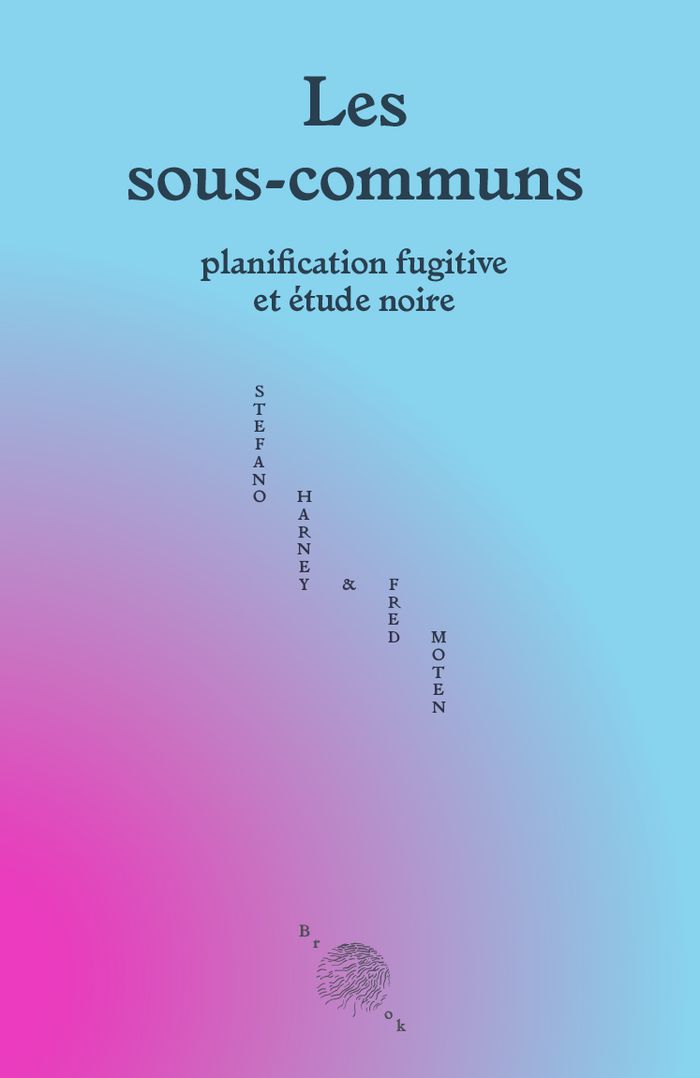
Cette publication est une série d'essais publiée en 2013 par deux amis, Stefano Harney et Fred Moten. Au fil de ces textes, les auteurs proposent une critique du capitalisme racial et de ses outils (gouvernance, crédit, université) ainsi que des modes d'expérimentation sociale en forme de résistance au colonial. La recherche passe par l'étude et se déroule bien au-delà de l'université, au travail, lors d'une pause cigarette, en famille, autour d'un repas, à la lisière de la lutte et de la fuite, à l'intérieur d'un mouvement de tremblement des fondations impérialistes, d'un mouvement de refus des termes du combat tel qu'il est imposé par le système dominant, vers la construction d'un espace social et politique en perpétuel déplacement. Le lieu et l'être sous-communs relèvent de l'incertitude de la création collective, de l'habitation par l'échange, de l'improvisation comme critique.
Les sous-communs : Planification fugitive et étude noire
Actions:
Price:
$35.00
(available to order)
Summary:
Cette publication est une série d'essais publiée en 2013 par deux amis, Stefano Harney et Fred Moten. Au fil de ces textes, les auteurs proposent une critique du capitalisme racial et de ses outils (gouvernance, crédit, université) ainsi que des modes d'expérimentation sociale en forme de résistance au colonial. La recherche passe par l'étude et se déroule bien au-delà de l'université, au travail, lors d'une pause cigarette, en famille, autour d'un repas, à la lisière de la lutte et de la fuite, à l'intérieur d'un mouvement de tremblement des fondations impérialistes, d'un mouvement de refus des termes du combat tel qu'il est imposé par le système dominant, vers la construction d'un espace social et politique en perpétuel déplacement. Le lieu et l'être sous-communs relèvent de l'incertitude de la création collective, de l'habitation par l'échange, de l'improvisation comme critique.
Form:
books
books
Publication:
February 2022
February 2022
Subject:
Social
Social
Form:
books
books

Actions:
Price:
$39.00
(available to order)
Summary:
Au-delà des approches usuelles, surspécialisées et cloisonnées, Nancy Fraser offre l'occasion de réfléchir en profondeur sur l'actuelle crise multidimensionnelle (sociale, économique, politique, écologique et sanitaire) et sur les éventuelles voies de sortie, tout en inscrivant son ouvre dans la Théorie critique dont la mission consiste à dévoiler les formes de(...)
$39.00
(available to order)
Summary:
Au-delà des approches usuelles, surspécialisées et cloisonnées, Nancy Fraser offre l'occasion de réfléchir en profondeur sur l'actuelle crise multidimensionnelle (sociale, économique, politique, écologique et sanitaire) et sur les éventuelles voies de sortie, tout en inscrivant son ouvre dans la Théorie critique dont la mission consiste à dévoiler les formes de(...)
Title:
Innovations sociales et justice sociale au regard de la Théorie critique de Nancy Fraser
Actions:
Price:
$39.00
(available to order)
Summary:
Au-delà des approches usuelles, surspécialisées et cloisonnées, Nancy Fraser offre l'occasion de réfléchir en profondeur sur l'actuelle crise multidimensionnelle (sociale, économique, politique, écologique et sanitaire) et sur les éventuelles voies de sortie, tout en inscrivant son ouvre dans la Théorie critique dont la mission consiste à dévoiler les formes de domination et à contribuer à l'émancipation. Renouvelant les apports de Marx et de Polanyi, tout en se démarquant d'Axel Honneth, la philosophe américaine, spécialiste des mouvements féministes, se livre à une analyse éclairante de la société contemporaine, divisée par les luttes identitaires. Membres du Centre de recherche sur les innovations sociales (CRISES), les auteurs convoquent la théorie de la justice sociale de Nancy Fraser pour mieux comprendre les études de cas qu'ils présentent dans cet ouvrage. Celles-ci portent tant sur les conditions de vie des femmes immigrées monoparentales et des personnes marginalisées et itinérantes que sur les conditions de travail des professionnels de recherche dans les universités canadiennes et des travailleurs étrangers temporaires dans la filière avicole québécoise. Elles concernent également des organisations collectives précises, comme l'habitat-santé le Mimosa du Quartier, les Maisons familiales rurales en France ou les coopératives de travail dans le taxi en Europe et dans le ramassage des déchets au Brésil. Ce livre s'adresse aux universitaires, aux étudiants et au public préoccupés par les injustices sociales et les solutions pour y remédier.
Innovations sociales et justice sociale au regard de la Théorie critique de Nancy Fraser
Actions:
Price:
$39.00
(available to order)
Summary:
Au-delà des approches usuelles, surspécialisées et cloisonnées, Nancy Fraser offre l'occasion de réfléchir en profondeur sur l'actuelle crise multidimensionnelle (sociale, économique, politique, écologique et sanitaire) et sur les éventuelles voies de sortie, tout en inscrivant son ouvre dans la Théorie critique dont la mission consiste à dévoiler les formes de domination et à contribuer à l'émancipation. Renouvelant les apports de Marx et de Polanyi, tout en se démarquant d'Axel Honneth, la philosophe américaine, spécialiste des mouvements féministes, se livre à une analyse éclairante de la société contemporaine, divisée par les luttes identitaires. Membres du Centre de recherche sur les innovations sociales (CRISES), les auteurs convoquent la théorie de la justice sociale de Nancy Fraser pour mieux comprendre les études de cas qu'ils présentent dans cet ouvrage. Celles-ci portent tant sur les conditions de vie des femmes immigrées monoparentales et des personnes marginalisées et itinérantes que sur les conditions de travail des professionnels de recherche dans les universités canadiennes et des travailleurs étrangers temporaires dans la filière avicole québécoise. Elles concernent également des organisations collectives précises, comme l'habitat-santé le Mimosa du Quartier, les Maisons familiales rurales en France ou les coopératives de travail dans le taxi en Europe et dans le ramassage des déchets au Brésil. Ce livre s'adresse aux universitaires, aux étudiants et au public préoccupés par les injustices sociales et les solutions pour y remédier.
Form:
books
books
Publication:
March 2022
March 2022
Subject:
Social
Social
Form:
books
books
Actions:
Price:
$13.99
(available to order)
Summary:
This publication unearths cases in which cities push homeless people out of public spaces through a combination of policy and strategic design. Robert Rosenberger brings together ideas from the philosophy of technology, social theory, and feminist epistemology to spotlight the widespread anti-homeless ideology built into our communities and enacted in law.
$13.99
(available to order)
Summary:
This publication unearths cases in which cities push homeless people out of public spaces through a combination of policy and strategic design. Robert Rosenberger brings together ideas from the philosophy of technology, social theory, and feminist epistemology to spotlight the widespread anti-homeless ideology built into our communities and enacted in law.
Title:
Callous objects: Designs against the homeless
Actions:
Price:
$13.99
(available to order)
Summary:
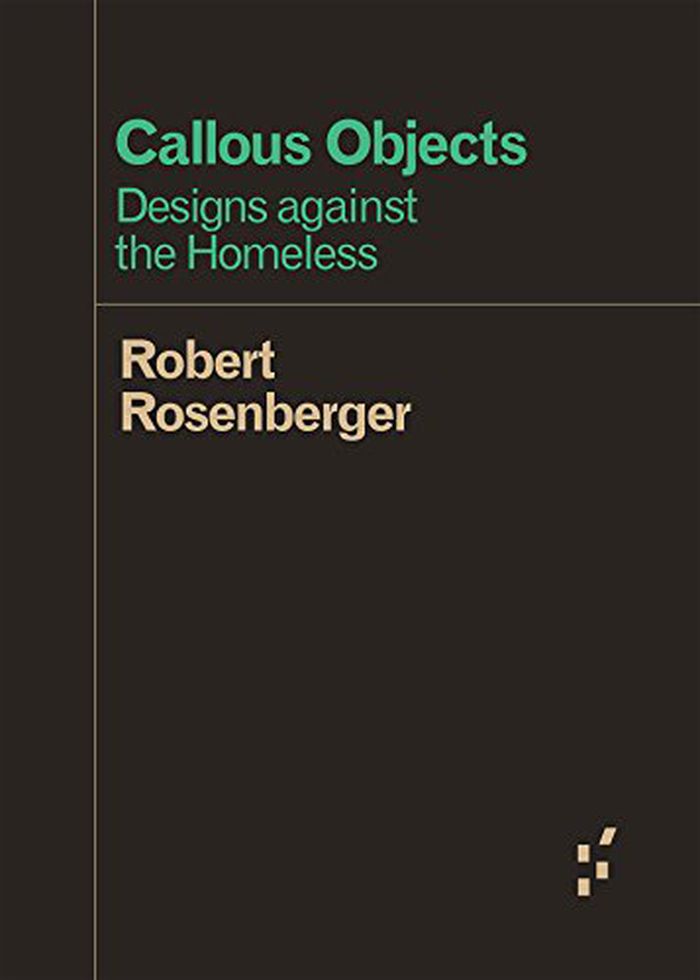
This publication unearths cases in which cities push homeless people out of public spaces through a combination of policy and strategic design. Robert Rosenberger brings together ideas from the philosophy of technology, social theory, and feminist epistemology to spotlight the widespread anti-homeless ideology built into our communities and enacted in law.
Callous objects: Designs against the homeless
Actions:
Price:
$13.99
(available to order)
Summary:
This publication unearths cases in which cities push homeless people out of public spaces through a combination of policy and strategic design. Robert Rosenberger brings together ideas from the philosophy of technology, social theory, and feminist epistemology to spotlight the widespread anti-homeless ideology built into our communities and enacted in law.
Form:
books
books
Publication:
January 2018
January 2018
Subject:
Social
Social
Form:
books
books

Actions:
Price:
$40.95
(available to order)
Summary:
The word Wasáse is the Kanienkeha (Mohawk) word for the ancient war dance ceremony of unity, strength, and commitment to action. The author notes, "This book traces the journey of those Indigenous people who have found a way to transcend the colonial identities which are the legacy of our history and live as Onkwehonwe, original people. It is dialogue and reflection on(...)
$40.95
(available to order)
Summary:
The word Wasáse is the Kanienkeha (Mohawk) word for the ancient war dance ceremony of unity, strength, and commitment to action. The author notes, "This book traces the journey of those Indigenous people who have found a way to transcend the colonial identities which are the legacy of our history and live as Onkwehonwe, original people. It is dialogue and reflection on(...)
Title:
Wasàse: indigenous pathways of action and freedom
Actions:
Price:
$40.95
(available to order)
Summary:
The word Wasáse is the Kanienkeha (Mohawk) word for the ancient war dance ceremony of unity, strength, and commitment to action. The author notes, "This book traces the journey of those Indigenous people who have found a way to transcend the colonial identities which are the legacy of our history and live as Onkwehonwe, original people. It is dialogue and reflection on the process of transcending colonialism in a personal and collective sense: making meaningful change in our lives and transforming society by recreating our personalities, regenerating our cultures, and surging against forces that keep us bound to our colonial past."
Wasàse: indigenous pathways of action and freedom
Actions:
Price:
$40.95
(available to order)
Summary:
The word Wasáse is the Kanienkeha (Mohawk) word for the ancient war dance ceremony of unity, strength, and commitment to action. The author notes, "This book traces the journey of those Indigenous people who have found a way to transcend the colonial identities which are the legacy of our history and live as Onkwehonwe, original people. It is dialogue and reflection on the process of transcending colonialism in a personal and collective sense: making meaningful change in our lives and transforming society by recreating our personalities, regenerating our cultures, and surging against forces that keep us bound to our colonial past."
Form:
books
books
Publication:
November 2005
November 2005
Subject:
Social
Social
Form:
books
books
Price:
$32.00
(available to order)
Summary:
It is often said that we no longer have an addressee for our political demands. But that’s not true. We have each other. What we can no longer get from the state, the party, the union, the boss, we ask for from one another. And we provide. Lacan famously defined love as giving something you don’t have to someone who doesn’t want it. But love is more than a YouTube link or(...)
$32.00
(available to order)
Summary:
It is often said that we no longer have an addressee for our political demands. But that’s not true. We have each other. What we can no longer get from the state, the party, the union, the boss, we ask for from one another. And we provide. Lacan famously defined love as giving something you don’t have to someone who doesn’t want it. But love is more than a YouTube link or(...)
Title:
What's love (or care, intimacy, warmth, affection) got to do with it?
Actions:
Price:
$32.00
(available to order)
Summary:
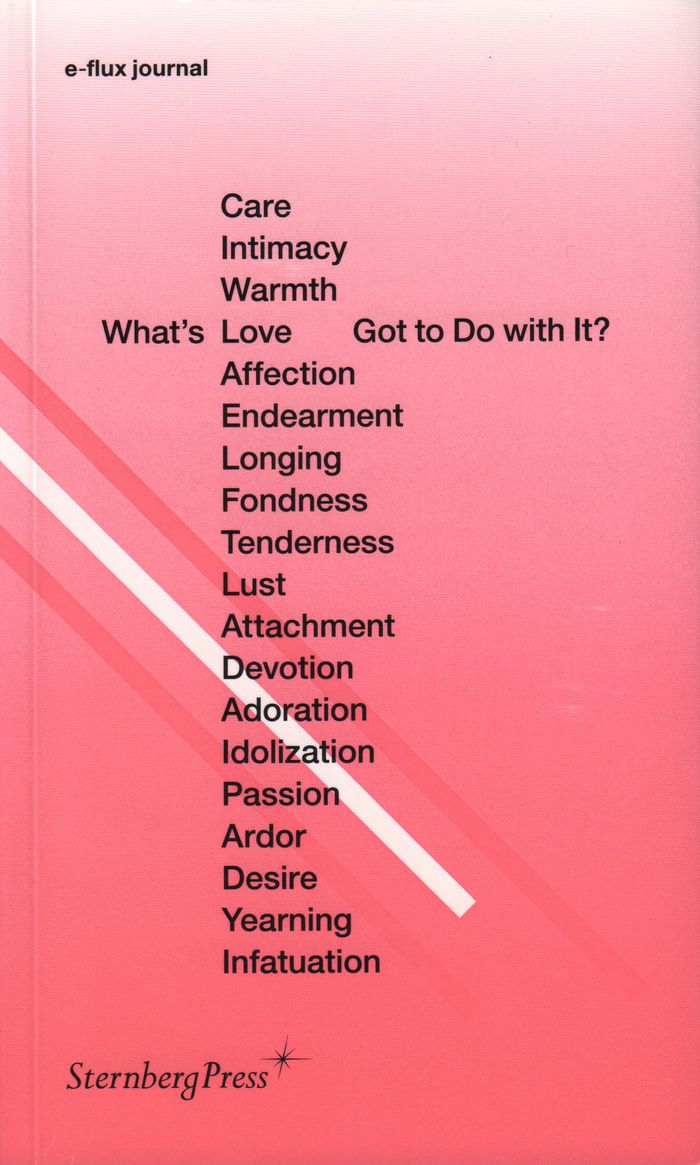
It is often said that we no longer have an addressee for our political demands. But that’s not true. We have each other. What we can no longer get from the state, the party, the union, the boss, we ask for from one another. And we provide. Lacan famously defined love as giving something you don’t have to someone who doesn’t want it. But love is more than a YouTube link or a URL. Love’s joy is not to be found in fulfillment, it is to be found in recognition: even though I can never return what was taken away from you, I may be the only person alive who knows what it is. In our present times—post-human, post-reality, or maybe pre-internet, post-it, pre-collapse, pre-fabricated by algorithms—what does love have to do with it? Since 2009, need and care and desire and admiration have been cross-examined, called as witness, put on parole, and made the subject of caring inquiry by e-flux journal authors. These writings have now been collected to form this comprehensive volume.
What's love (or care, intimacy, warmth, affection) got to do with it?
Actions:
Price:
$32.00
(available to order)
Summary:
It is often said that we no longer have an addressee for our political demands. But that’s not true. We have each other. What we can no longer get from the state, the party, the union, the boss, we ask for from one another. And we provide. Lacan famously defined love as giving something you don’t have to someone who doesn’t want it. But love is more than a YouTube link or a URL. Love’s joy is not to be found in fulfillment, it is to be found in recognition: even though I can never return what was taken away from you, I may be the only person alive who knows what it is. In our present times—post-human, post-reality, or maybe pre-internet, post-it, pre-collapse, pre-fabricated by algorithms—what does love have to do with it? Since 2009, need and care and desire and admiration have been cross-examined, called as witness, put on parole, and made the subject of caring inquiry by e-flux journal authors. These writings have now been collected to form this comprehensive volume.
Form:
books
books
Publication:
October 2017
October 2017
Subject:
Social
Social
Form:
books
books

Actions:
Price:
$25.95
(available to order)
Summary:
24/7: Late Capitalism and the Ends of Sleep explores some of the ruinous consequences of the expanding non-stop processes of twenty-first-century capitalism. The marketplace now operates through every hour of the clock, pushing us into constant activity and eroding forms of community and political expression, damaging the fabric of everyday life.
$25.95
(available to order)
Summary:
24/7: Late Capitalism and the Ends of Sleep explores some of the ruinous consequences of the expanding non-stop processes of twenty-first-century capitalism. The marketplace now operates through every hour of the clock, pushing us into constant activity and eroding forms of community and political expression, damaging the fabric of everyday life.
Title:
24/7: late capitalism and the ends of sleep
Actions:
Price:
$25.95
(available to order)
Summary:
24/7: Late Capitalism and the Ends of Sleep explores some of the ruinous consequences of the expanding non-stop processes of twenty-first-century capitalism. The marketplace now operates through every hour of the clock, pushing us into constant activity and eroding forms of community and political expression, damaging the fabric of everyday life.
24/7: late capitalism and the ends of sleep
Actions:
Price:
$25.95
(available to order)
Summary:
24/7: Late Capitalism and the Ends of Sleep explores some of the ruinous consequences of the expanding non-stop processes of twenty-first-century capitalism. The marketplace now operates through every hour of the clock, pushing us into constant activity and eroding forms of community and political expression, damaging the fabric of everyday life.
Form:
books
books
Publication:
June 2014
June 2014
Subject:
Social
Social


