


232 Results
Form:
books
books

Actions:
Price:
$37.95
(available to order)
Summary:
Biographie.
$37.95
(available to order)
Summary:
Biographie.
Title:
Gustave Eiffel : un illustre inconnu
Actions:
Price:
$37.95
(available to order)
Summary:
Biographie.
Gustave Eiffel : un illustre inconnu
Actions:
Price:
$37.95
(available to order)
Summary:
Biographie.
Form:
books
books
Publication:
January 2003, Paris
January 2003, Paris
Subject:
Engineering Structures
Engineering Structures
Form:
books
books
Title:
Van Nelle factory in stereo
Van Nelle factory in stereo
Actions:
Price:
$39.95
(available to order)
Summary:
The design of the Van Nelle factory is in many ways revolutionary. While acknowledging the inventiveness of the young Van der Vlugt, this innovation is equally attributable to the dedication of the client, C.H. van der Leeuw. Besides optimum functioning of the concern, great emphasis was placed on providing improved working conditions for the employees. The factory(...)
$39.95
(available to order)
Summary:
The design of the Van Nelle factory is in many ways revolutionary. While acknowledging the inventiveness of the young Van der Vlugt, this innovation is equally attributable to the dedication of the client, C.H. van der Leeuw. Besides optimum functioning of the concern, great emphasis was placed on providing improved working conditions for the employees. The factory(...)
Subject:
Engineering Structures
Engineering Structures
Publication:
December 2002, Rotterdam
December 2002, Rotterdam
Title:
Van Nelle factory in stereo
Actions:
Price:
$39.95
(available to order)
Summary:
The design of the Van Nelle factory is in many ways revolutionary. While acknowledging the inventiveness of the young Van der Vlugt, this innovation is equally attributable to the dedication of the client, C.H. van der Leeuw. Besides optimum functioning of the concern, great emphasis was placed on providing improved working conditions for the employees. The factory proper is in three volumes of decreasing height, one of eight levels for tobacco, a coffee section of five levels with a double-height entresol, and a three-level tea department. All three zones adjoin a main service route and are further connected by bridges (almost the hallmark of this factory) to a row along the water of dispatch and storage spaces, a bicycle shed, a boiler house and workshops. The combination of an objective functionalism and a humane view of architecture resulted in one of the absolute pinnacles of the Dutch Modern Movement. The Dutch photographer Martin van den Oever has made a fascinating stereoscopic (3-D) series of photographs on the architecture of Brinkman and Van der Vlugt's world famous Van Nelle Factory. This book contains twenty of his best photographs which together clearly demonstrate the delicate transparency of this functionalist masterpiece and confront the viewer with its spatiality. As an extra the dust wrapper of this book is a one-to-one reprint of an original drawing by Brinkman and Van der Vlugt (62cm x 145cm) which can also be used as a poster. Introduction by Joris Molenaar. With 20 anaglyph stereoscopic (3D) photographs and special stereo glasses.
Van Nelle factory in stereo
Actions:
Price:
$39.95
(available to order)
Summary:
The design of the Van Nelle factory is in many ways revolutionary. While acknowledging the inventiveness of the young Van der Vlugt, this innovation is equally attributable to the dedication of the client, C.H. van der Leeuw. Besides optimum functioning of the concern, great emphasis was placed on providing improved working conditions for the employees. The factory proper is in three volumes of decreasing height, one of eight levels for tobacco, a coffee section of five levels with a double-height entresol, and a three-level tea department. All three zones adjoin a main service route and are further connected by bridges (almost the hallmark of this factory) to a row along the water of dispatch and storage spaces, a bicycle shed, a boiler house and workshops. The combination of an objective functionalism and a humane view of architecture resulted in one of the absolute pinnacles of the Dutch Modern Movement. The Dutch photographer Martin van den Oever has made a fascinating stereoscopic (3-D) series of photographs on the architecture of Brinkman and Van der Vlugt's world famous Van Nelle Factory. This book contains twenty of his best photographs which together clearly demonstrate the delicate transparency of this functionalist masterpiece and confront the viewer with its spatiality. As an extra the dust wrapper of this book is a one-to-one reprint of an original drawing by Brinkman and Van der Vlugt (62cm x 145cm) which can also be used as a poster. Introduction by Joris Molenaar. With 20 anaglyph stereoscopic (3D) photographs and special stereo glasses.
Form:
books
books
Publication:
December 2002, Rotterdam
December 2002, Rotterdam
Subject:
Engineering Structures
Engineering Structures
Form:
books
books
Title:
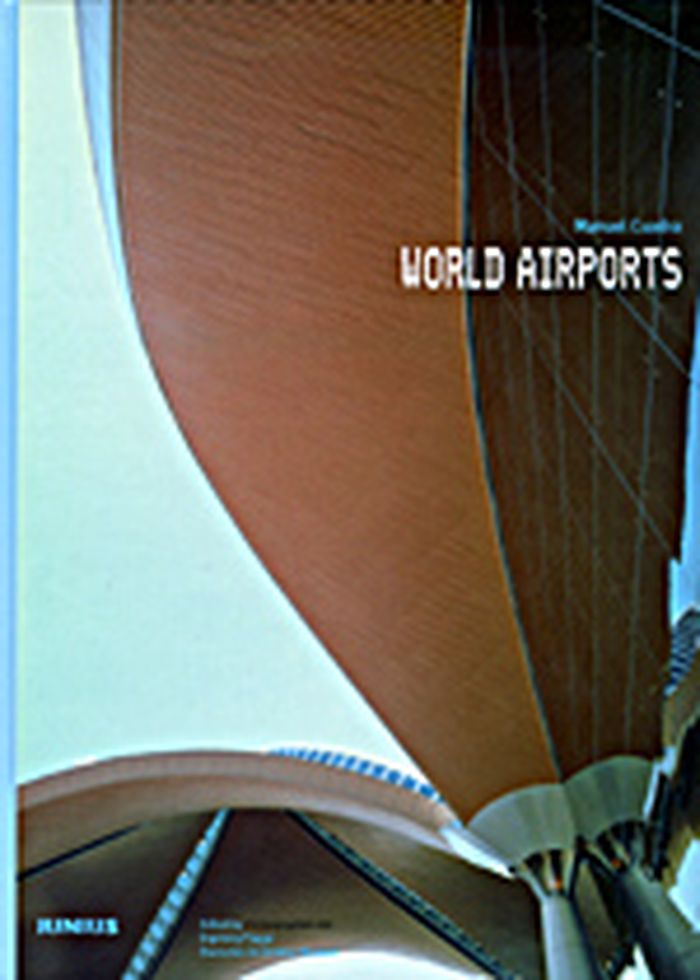
World airports
World airports
Actions:
Price:
$68.00
(available to order)
Summary:
This catalogue accompanies the German Architectural Museum's 2002 exhibition of the world's airports.
$68.00
(available to order)
Summary:
This catalogue accompanies the German Architectural Museum's 2002 exhibition of the world's airports.
Title:
World airports
Actions:
Price:
$68.00
(available to order)
Summary:
This catalogue accompanies the German Architectural Museum's 2002 exhibition of the world's airports.
World airports
Actions:
Price:
$68.00
(available to order)
Summary:
This catalogue accompanies the German Architectural Museum's 2002 exhibition of the world's airports.
Form:
books
books
Publication:
January 1900, Hamburg
January 1900, Hamburg
Subject:
Engineering Structures
Engineering Structures
Form:
books
books
Price:
$50.95
(available to order)
Summary:
Entre recherche archivistique, enquête de terrain et travail de mémoire, l'ouvrage de Marina Gasnier aborde le paysage industriel de l'Ille-et-Vilaine à travers son histoire, son patrimoine bâti, mais aussi ses équipements technologiques et ses concepteurs. Quel point commun existe-t-il entre le moulin à marée de Beauchet, l'usine de construction automobile Citroën, la(...)
$50.95
(available to order)
Summary:
Entre recherche archivistique, enquête de terrain et travail de mémoire, l'ouvrage de Marina Gasnier aborde le paysage industriel de l'Ille-et-Vilaine à travers son histoire, son patrimoine bâti, mais aussi ses équipements technologiques et ses concepteurs. Quel point commun existe-t-il entre le moulin à marée de Beauchet, l'usine de construction automobile Citroën, la(...)
Title:
Le paysage de l'industrie en Ille-et-Vilaine : XIXe - XXe siècles
Actions:
Price:
$50.95
(available to order)
Summary:
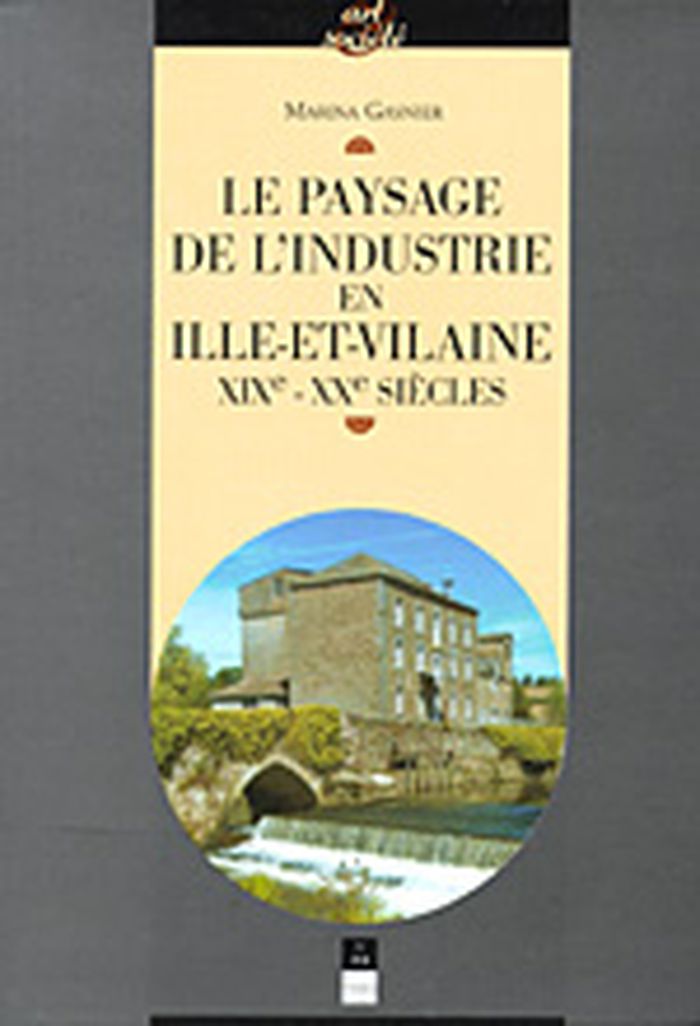
Entre recherche archivistique, enquête de terrain et travail de mémoire, l'ouvrage de Marina Gasnier aborde le paysage industriel de l'Ille-et-Vilaine à travers son histoire, son patrimoine bâti, mais aussi ses équipements technologiques et ses concepteurs. Quel point commun existe-t-il entre le moulin à marée de Beauchet, l'usine de construction automobile Citroën, la mine d'or de Martigné-Ferchaud, la brasserie Kronenbourg, l'usine marémotrice de la Rance ou encore une usine de chaussures fougeraise ? Aucun, hormis le fait que chacun de ces ensembles appartient au patrimoine industriel du département de l'Ille-et-Vilaine. L'heure étant à la préoccupation de la gestion de ce type de patrimoine, cet ouvrage donne un panorama général de l'héritage qui a été conservé, des activités industrielles qui jalonnaient autrefois ce territoire. Aussi nombreuses que variées, ces activités relevaient aussi bien du labeur souterrain des mineurs dont l'existence sur terre était signalée par la présence d'un chevalement, que des sites de forges au cœur desquels la fonte, rougie, coulait des hauts fourneaux ; aussi bien de la mouture du blé impulsée par le mouvement de roues hydrauliques que du travail des paysans qui, pour subvenir aux besoins de leur famille, exerçaient une seconde activité telle que l'extraction au fond d'une ardoisière ou d'une carrière, ou encore le filage et le tissage des toiles à voiles. La plupart de ces activités transparaît encore au travers de notre paysage, aussi bien en territoire rural, urbain, que maritime. Dotée de ses propres spécificités liées à son appartenance sectorielle et à son terrain d'élection, chacune d'entre elles présente une lecture distincte tout à fait perceptible, mais qui ne se conçoit que dans son rapport avec son environnement géographique, socio-économique et architectural.
Le paysage de l'industrie en Ille-et-Vilaine : XIXe - XXe siècles
Actions:
Price:
$50.95
(available to order)
Summary:
Entre recherche archivistique, enquête de terrain et travail de mémoire, l'ouvrage de Marina Gasnier aborde le paysage industriel de l'Ille-et-Vilaine à travers son histoire, son patrimoine bâti, mais aussi ses équipements technologiques et ses concepteurs. Quel point commun existe-t-il entre le moulin à marée de Beauchet, l'usine de construction automobile Citroën, la mine d'or de Martigné-Ferchaud, la brasserie Kronenbourg, l'usine marémotrice de la Rance ou encore une usine de chaussures fougeraise ? Aucun, hormis le fait que chacun de ces ensembles appartient au patrimoine industriel du département de l'Ille-et-Vilaine. L'heure étant à la préoccupation de la gestion de ce type de patrimoine, cet ouvrage donne un panorama général de l'héritage qui a été conservé, des activités industrielles qui jalonnaient autrefois ce territoire. Aussi nombreuses que variées, ces activités relevaient aussi bien du labeur souterrain des mineurs dont l'existence sur terre était signalée par la présence d'un chevalement, que des sites de forges au cœur desquels la fonte, rougie, coulait des hauts fourneaux ; aussi bien de la mouture du blé impulsée par le mouvement de roues hydrauliques que du travail des paysans qui, pour subvenir aux besoins de leur famille, exerçaient une seconde activité telle que l'extraction au fond d'une ardoisière ou d'une carrière, ou encore le filage et le tissage des toiles à voiles. La plupart de ces activités transparaît encore au travers de notre paysage, aussi bien en territoire rural, urbain, que maritime. Dotée de ses propres spécificités liées à son appartenance sectorielle et à son terrain d'élection, chacune d'entre elles présente une lecture distincte tout à fait perceptible, mais qui ne se conçoit que dans son rapport avec son environnement géographique, socio-économique et architectural.
Form:
books
books
Publication:
September 2003, Rennes
September 2003, Rennes
Subject:
Engineering Structures
Engineering Structures
Form:
books
books
Actions:
Price:
$53.99
(available to order)
Summary:
This book applauds the union of architecture and engineering both today and throughout the history of building and construction. The relationship between the two fields is multifaceted. Some architects may have had an engineering background, and some engineers have experience of architecture. Some unacknowledged engineers have stood modestly behind great architects,(...)
$53.99
(available to order)
Summary:
This book applauds the union of architecture and engineering both today and throughout the history of building and construction. The relationship between the two fields is multifaceted. Some architects may have had an engineering background, and some engineers have experience of architecture. Some unacknowledged engineers have stood modestly behind great architects,(...)
Title:
Architects + engineers = structures
Actions:
Price:
$53.99
(available to order)
Summary:
This book applauds the union of architecture and engineering both today and throughout the history of building and construction. The relationship between the two fields is multifaceted. Some architects may have had an engineering background, and some engineers have experience of architecture. Some unacknowledged engineers have stood modestly behind great architects, and a number of architects have been encouraged and supported by their engineer-collaborators in designing structures that appear to defy gravity. "Architects + engineers = structures" focuses on the ideal: on a cohesive building design team where the members contribute equally, resulting in unique and exceptional designs. These are architects and engineers who entice beauty into buildings not just with lines on paper and calculations but with intuition, innovation and feeling for the needs of people, materials, strength, proportion, lightness and elegance.
Architects + engineers = structures
Actions:
Price:
$53.99
(available to order)
Summary:
This book applauds the union of architecture and engineering both today and throughout the history of building and construction. The relationship between the two fields is multifaceted. Some architects may have had an engineering background, and some engineers have experience of architecture. Some unacknowledged engineers have stood modestly behind great architects, and a number of architects have been encouraged and supported by their engineer-collaborators in designing structures that appear to defy gravity. "Architects + engineers = structures" focuses on the ideal: on a cohesive building design team where the members contribute equally, resulting in unique and exceptional designs. These are architects and engineers who entice beauty into buildings not just with lines on paper and calculations but with intuition, innovation and feeling for the needs of people, materials, strength, proportion, lightness and elegance.
Form:
books
books
Publication:
May 2002, Chichester
May 2002, Chichester
Subject:
Engineering Structures
Engineering Structures
Form:
books
books

Actions:
Price:
$55.95
(available to order)
Summary:
More than fifty bridges and their histories are described in this book alongside plans, photographs, and drawings.
$55.95
(available to order)
Summary:
More than fifty bridges and their histories are described in this book alongside plans, photographs, and drawings.
Subject:
Engineering Structures
Engineering Structures
Publication:
October 2002, Munich / Berlin / London / New York
October 2002, Munich / Berlin / London / New York
Title:
Bridges that changed the world
Actions:
Price:
$55.95
(available to order)
Summary:
More than fifty bridges and their histories are described in this book alongside plans, photographs, and drawings.
Bridges that changed the world
Actions:
Price:
$55.95
(available to order)
Summary:
More than fifty bridges and their histories are described in this book alongside plans, photographs, and drawings.
Form:
books
books
Publication:
October 2002, Munich / Berlin / London / New York
October 2002, Munich / Berlin / London / New York
Subject:
Engineering Structures
Engineering Structures
Form:
books
books
Title:
La tour Eiffel
La tour Eiffel
Actions:
Price:
$47.95
(available to order)
Summary:
Symbole de Paris pour le monde entier, associée à certains événements majeurs de l'histoire de la capitale -Expositions universelles de 1889 et 1900, passage à l'an 2000 -, la Tour Eiffel s'impose par l'élégance de ses dentelles de fer, autant que par la prouesse technique qu'elle représente - pl;us de 320 mètres de haut, plus de 10 000 tonnes, une charpente de fer(...)
$47.95
(available to order)
Summary:
Symbole de Paris pour le monde entier, associée à certains événements majeurs de l'histoire de la capitale -Expositions universelles de 1889 et 1900, passage à l'an 2000 -, la Tour Eiffel s'impose par l'élégance de ses dentelles de fer, autant que par la prouesse technique qu'elle représente - pl;us de 320 mètres de haut, plus de 10 000 tonnes, une charpente de fer(...)
Title:
La tour Eiffel
Actions:
Price:
$47.95
(available to order)
Summary:
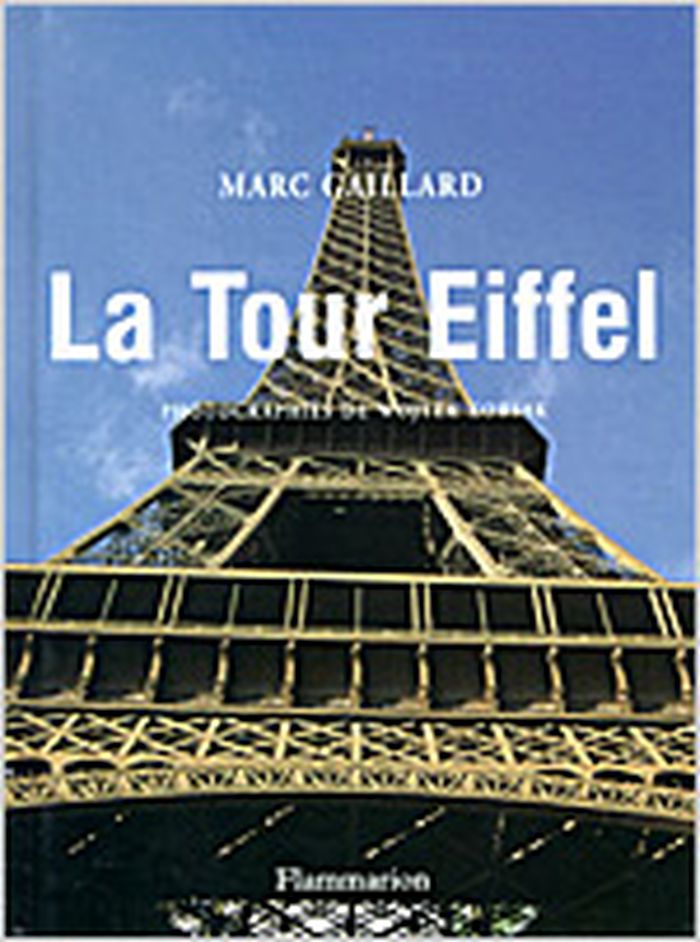
Symbole de Paris pour le monde entier, associée à certains événements majeurs de l'histoire de la capitale -Expositions universelles de 1889 et 1900, passage à l'an 2000 -, la Tour Eiffel s'impose par l'élégance de ses dentelles de fer, autant que par la prouesse technique qu'elle représente - pl;us de 320 mètres de haut, plus de 10 000 tonnes, une charpente de fer puddlé montée grâce à 2 500 000 rivets... Cet ouvrage, illustré de photographies inédites et de documents d'époque, révèle la Tour sous ses aspects les plus insolites, et permet de découvrir l'histoire mouvementée de celle qui suscita scandales et polémiques avant de jouer un rôle scientifique important et de gagner l'enthousiasme de tous.
La tour Eiffel
Actions:
Price:
$47.95
(available to order)
Summary:
Symbole de Paris pour le monde entier, associée à certains événements majeurs de l'histoire de la capitale -Expositions universelles de 1889 et 1900, passage à l'an 2000 -, la Tour Eiffel s'impose par l'élégance de ses dentelles de fer, autant que par la prouesse technique qu'elle représente - pl;us de 320 mètres de haut, plus de 10 000 tonnes, une charpente de fer puddlé montée grâce à 2 500 000 rivets... Cet ouvrage, illustré de photographies inédites et de documents d'époque, révèle la Tour sous ses aspects les plus insolites, et permet de découvrir l'histoire mouvementée de celle qui suscita scandales et polémiques avant de jouer un rôle scientifique important et de gagner l'enthousiasme de tous.
Form:
books
books
Publication:
May 2002, Paris
May 2002, Paris
Subject:
Engineering Structures
Engineering Structures
Form:
books
books
Price:
$36.95
(available to order)
Summary:
In 1997, author Christopher Payne was introduced to the substations by an official of the New York City Transit Authority's Power Department. He then rushed to photograph, draw, and write the history of these buildings and their machines before they are completely gone. He has developed an intimate knowledge of the buildings that most people don't recognize in their own(...)
$36.95
(available to order)
Summary:
In 1997, author Christopher Payne was introduced to the substations by an official of the New York City Transit Authority's Power Department. He then rushed to photograph, draw, and write the history of these buildings and their machines before they are completely gone. He has developed an intimate knowledge of the buildings that most people don't recognize in their own(...)
Title:
New York's forgotten substations : the power behind the subway
Actions:
Price:
$36.95
(available to order)
Summary:
In 1997, author Christopher Payne was introduced to the substations by an official of the New York City Transit Authority's Power Department. He then rushed to photograph, draw, and write the history of these buildings and their machines before they are completely gone. He has developed an intimate knowledge of the buildings that most people don't recognize in their own neighborhood.
New York's forgotten substations : the power behind the subway
Actions:
Price:
$36.95
(available to order)
Summary:
In 1997, author Christopher Payne was introduced to the substations by an official of the New York City Transit Authority's Power Department. He then rushed to photograph, draw, and write the history of these buildings and their machines before they are completely gone. He has developed an intimate knowledge of the buildings that most people don't recognize in their own neighborhood.
Form:
books
books
Publication:
October 2002, New York
October 2002, New York
Subject:
Engineering Structures
Engineering Structures
Form:
books
books
Actions:
Price:
$110.00
(available to order)
Summary:
Robust architecture is designed to meet needs; its structures are sufficient, resilient and suited to the location. It embraces the potential of simplicity, traditional building methods and alternative ways of building sustainable architecture, with an emphasis on local building materials, solid craftsmanship, proven construction methods and user participation. Its design(...)
$110.00
(available to order)
Summary:
Robust architecture is designed to meet needs; its structures are sufficient, resilient and suited to the location. It embraces the potential of simplicity, traditional building methods and alternative ways of building sustainable architecture, with an emphasis on local building materials, solid craftsmanship, proven construction methods and user participation. Its design(...)
Title:
Robust architecture: Low tech design
Actions:
Price:
$110.00
(available to order)
Summary:
Robust architecture is designed to meet needs; its structures are sufficient, resilient and suited to the location. It embraces the potential of simplicity, traditional building methods and alternative ways of building sustainable architecture, with an emphasis on local building materials, solid craftsmanship, proven construction methods and user participation. Its design strategies, combined with state-of-the-art planning tools and research findings, look ahead to a climate-positive future. The book gives detailed information on the concepts behind Robust Architecture and Low-Tech Design. It illuminates various strategies and demonstrates how they can be easily implemented. Examples of realised projects with very different demands and requirement profiles show how straightforward robust building can be.
Robust architecture: Low tech design
Actions:
Price:
$110.00
(available to order)
Summary:
Robust architecture is designed to meet needs; its structures are sufficient, resilient and suited to the location. It embraces the potential of simplicity, traditional building methods and alternative ways of building sustainable architecture, with an emphasis on local building materials, solid craftsmanship, proven construction methods and user participation. Its design strategies, combined with state-of-the-art planning tools and research findings, look ahead to a climate-positive future. The book gives detailed information on the concepts behind Robust Architecture and Low-Tech Design. It illuminates various strategies and demonstrates how they can be easily implemented. Examples of realised projects with very different demands and requirement profiles show how straightforward robust building can be.
Form:
books
books
Publication:
September 2023
September 2023
Subject:
Engineering Structures
Engineering Structures
Form:
books
books
Price:
$52.00
(available to order)
Summary:
As architectural projects have grown larger and more complex, as materials have become more specialized and advanced, as the world's cities have developed in size and density, the collaborative partnership of architects and structural engineers has gained prominence. Many of the major works of the early twenty-first century would have been difficult to build or even(...)
$52.00
(available to order)
Summary:
As architectural projects have grown larger and more complex, as materials have become more specialized and advanced, as the world's cities have developed in size and density, the collaborative partnership of architects and structural engineers has gained prominence. Many of the major works of the early twenty-first century would have been difficult to build or even(...)
Title:
Support and Resist : Structural engineers and design innovation
Actions:
Price:
$52.00
(available to order)
Summary:
As architectural projects have grown larger and more complex, as materials have become more specialized and advanced, as the world's cities have developed in size and density, the collaborative partnership of architects and structural engineers has gained prominence. Many of the major works of the early twenty-first century would have been difficult to build or even conceive without the contribution of firms like Ove Arup and Partners, Buro Happold, and Mutsuro Sasaki and Partners, to name just a few. Support and Resist is the first book to focus on the revolution in engineering culture in which structure shares the stage with design.
Support and Resist : Structural engineers and design innovation
Actions:
Price:
$52.00
(available to order)
Summary:
As architectural projects have grown larger and more complex, as materials have become more specialized and advanced, as the world's cities have developed in size and density, the collaborative partnership of architects and structural engineers has gained prominence. Many of the major works of the early twenty-first century would have been difficult to build or even conceive without the contribution of firms like Ove Arup and Partners, Buro Happold, and Mutsuro Sasaki and Partners, to name just a few. Support and Resist is the first book to focus on the revolution in engineering culture in which structure shares the stage with design.
Form:
books
books
Publication:
November 2007, New York
November 2007, New York
Subject:
Engineering Structures
Engineering Structures


