


884 Results
Form:
books
books
Price:
$28.00
(available in store)
Summary:
Lamentation practices can empower the potentiality to defy patriarchal orders ruling everyday life. Always a collective process, lamentation inscribes loss and vulnerability by tending bridges towards the world of the dead and the more-than-human. Gestures such as singing or breathing, gathering, and performances that exceed rationality can inspire a renewed approach to(...)
$28.00
(available in store)
Summary:
Lamentation practices can empower the potentiality to defy patriarchal orders ruling everyday life. Always a collective process, lamentation inscribes loss and vulnerability by tending bridges towards the world of the dead and the more-than-human. Gestures such as singing or breathing, gathering, and performances that exceed rationality can inspire a renewed approach to(...)
Subject:
Critical Theory
Critical Theory
Publication:
October 2023
October 2023
Title:
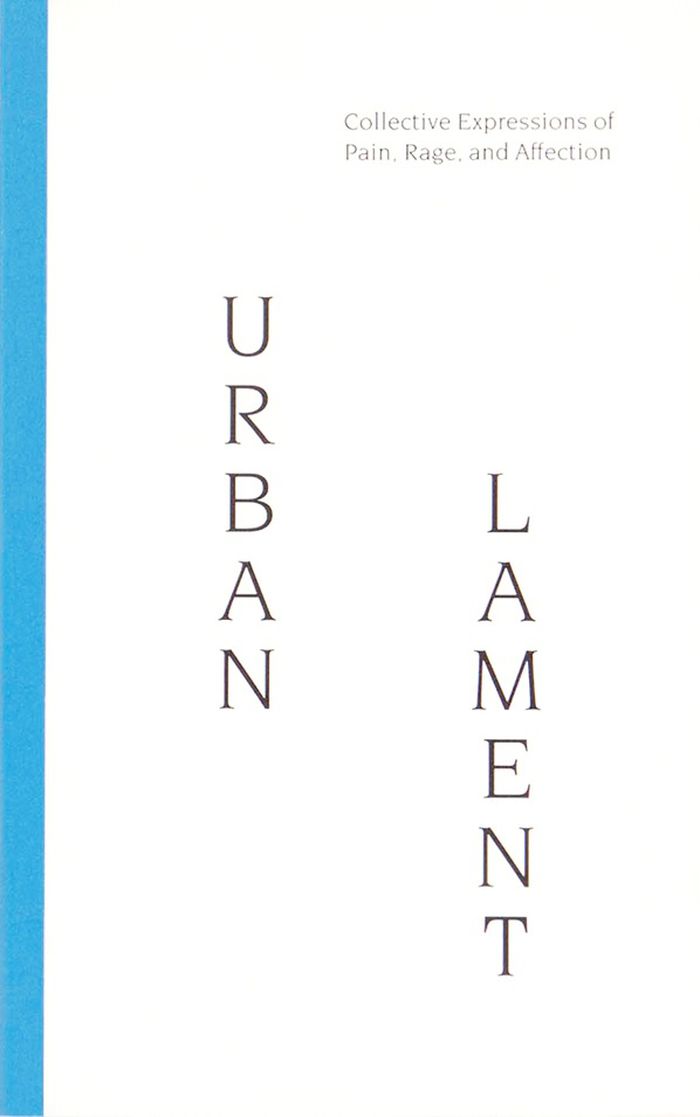
Urban lament: Collective expressions of pain, rage and affection
Actions:
Price:
$28.00
(available in store)
Summary:
Lamentation practices can empower the potentiality to defy patriarchal orders ruling everyday life. Always a collective process, lamentation inscribes loss and vulnerability by tending bridges towards the world of the dead and the more-than-human. Gestures such as singing or breathing, gathering, and performances that exceed rationality can inspire a renewed approach to life and death, rural and urban. After all, amidst ongoing processes of extinction, how to mourn a queer activist, a Roma father, a burnt forest, an exiled body, and a ship sunken in the Mediterranean? How to experience loss not as something individual, but within an expanded continuum of pain? How to explore emotions beyond the private sphere? Through case studies and narrations, in different times and geographies surrounding the Aegean Sea, this book amplifies the echoes of collective tears to invigorate contemporary mourning practices that claim public space by grief, rage, and affect.
Urban lament: Collective expressions of pain, rage and affection
Actions:
Price:
$28.00
(available in store)
Summary:
Lamentation practices can empower the potentiality to defy patriarchal orders ruling everyday life. Always a collective process, lamentation inscribes loss and vulnerability by tending bridges towards the world of the dead and the more-than-human. Gestures such as singing or breathing, gathering, and performances that exceed rationality can inspire a renewed approach to life and death, rural and urban. After all, amidst ongoing processes of extinction, how to mourn a queer activist, a Roma father, a burnt forest, an exiled body, and a ship sunken in the Mediterranean? How to experience loss not as something individual, but within an expanded continuum of pain? How to explore emotions beyond the private sphere? Through case studies and narrations, in different times and geographies surrounding the Aegean Sea, this book amplifies the echoes of collective tears to invigorate contemporary mourning practices that claim public space by grief, rage, and affect.
Form:
books
books
Publication:
October 2023
October 2023
Subject:
Critical Theory
Critical Theory
Form:
books
books

Actions:
Price:
$33.99
(available to order)
Summary:
Since Hamas’s attack on Israel last October 7, the term "settler colonialism" has become central to public debate in the United States. A concept new to most Americans, but already established and influential in academic circles, settler colonialism is shaping the way many people think about the history of the United States, Israel and Palestine, and a host of political(...)
$33.99
(available to order)
Summary:
Since Hamas’s attack on Israel last October 7, the term "settler colonialism" has become central to public debate in the United States. A concept new to most Americans, but already established and influential in academic circles, settler colonialism is shaping the way many people think about the history of the United States, Israel and Palestine, and a host of political(...)
Title:
On settler colonialism: Ideology, violence, and justice
Actions:
Price:
$33.99
(available to order)
Summary:
Since Hamas’s attack on Israel last October 7, the term "settler colonialism" has become central to public debate in the United States. A concept new to most Americans, but already established and influential in academic circles, settler colonialism is shaping the way many people think about the history of the United States, Israel and Palestine, and a host of political issues. This short book is the first to examine settler colonialism critically for a general readership. By critiquing the most important writers, texts, and ideas in the field, Adam Kirsch shows how the concept emerged in the context of North American and Australian history and how it is being applied to Israel. He examines the sources of its appeal, which, he argues, are spiritual as much as political; how it works to delegitimize nations; and why it has the potential to turn indignation at past injustices into a source of new injustices today. A compact and accessible introduction, rich with historical detail, the book will speak to readers interested in the Middle East, American history, and today’s most urgent cultural-political debates
On settler colonialism: Ideology, violence, and justice
Actions:
Price:
$33.99
(available to order)
Summary:
Since Hamas’s attack on Israel last October 7, the term "settler colonialism" has become central to public debate in the United States. A concept new to most Americans, but already established and influential in academic circles, settler colonialism is shaping the way many people think about the history of the United States, Israel and Palestine, and a host of political issues. This short book is the first to examine settler colonialism critically for a general readership. By critiquing the most important writers, texts, and ideas in the field, Adam Kirsch shows how the concept emerged in the context of North American and Australian history and how it is being applied to Israel. He examines the sources of its appeal, which, he argues, are spiritual as much as political; how it works to delegitimize nations; and why it has the potential to turn indignation at past injustices into a source of new injustices today. A compact and accessible introduction, rich with historical detail, the book will speak to readers interested in the Middle East, American history, and today’s most urgent cultural-political debates
Form:
books
books
Publication:
August 2024
August 2024
Subject:
Critical Theory
Critical Theory
Form:
books
books
Actions:
Price:
$33.95
(available to order)
Summary:
Philosophy was born out of discussion, out of the rivalry between world views. From the philosophical ferment of the Enlightenment arose the idea of emancipation, a conflictual perspective which Marina Garcés would have us rethink. "New radical Enlightenment" lays out the need for critical dissent as a new beginning for the humanities in apocalyptic times. The productive(...)
$33.95
(available to order)
Summary:
Philosophy was born out of discussion, out of the rivalry between world views. From the philosophical ferment of the Enlightenment arose the idea of emancipation, a conflictual perspective which Marina Garcés would have us rethink. "New radical Enlightenment" lays out the need for critical dissent as a new beginning for the humanities in apocalyptic times. The productive(...)
Title:
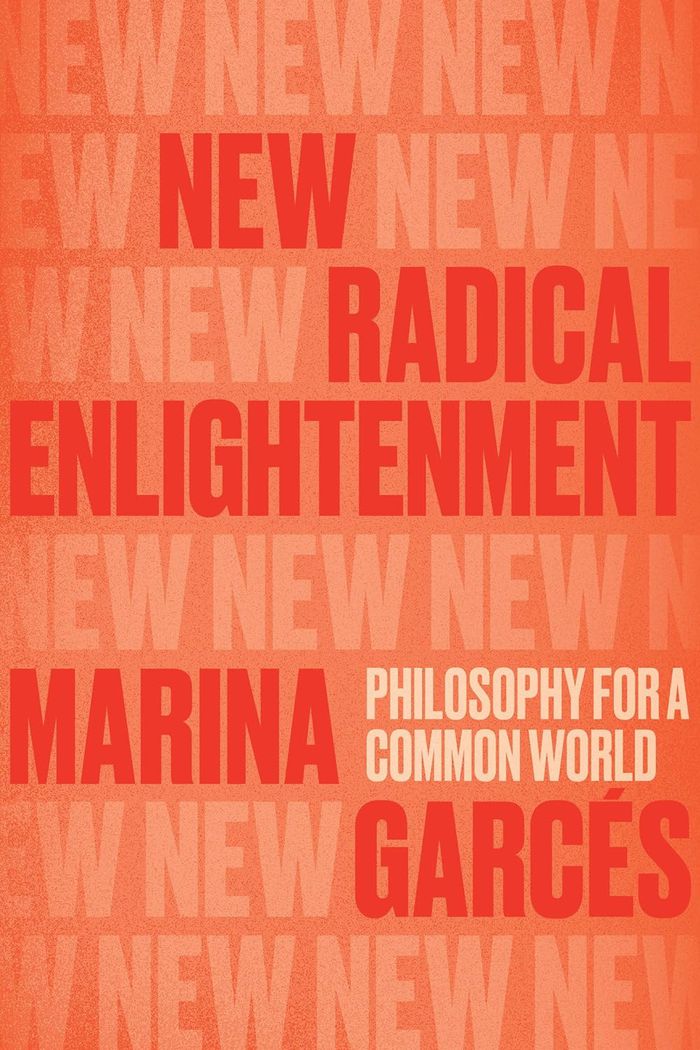
New radical enlightenment: Philosophy for a common world
Actions:
Price:
$33.95
(available to order)
Summary:
Philosophy was born out of discussion, out of the rivalry between world views. From the philosophical ferment of the Enlightenment arose the idea of emancipation, a conflictual perspective which Marina Garcés would have us rethink. "New radical Enlightenment" lays out the need for critical dissent as a new beginning for the humanities in apocalyptic times. The productive dissent she envisions is established on the inclusion of multiple perspectives attending to common problems.
New radical enlightenment: Philosophy for a common world
Actions:
Price:
$33.95
(available to order)
Summary:
Philosophy was born out of discussion, out of the rivalry between world views. From the philosophical ferment of the Enlightenment arose the idea of emancipation, a conflictual perspective which Marina Garcés would have us rethink. "New radical Enlightenment" lays out the need for critical dissent as a new beginning for the humanities in apocalyptic times. The productive dissent she envisions is established on the inclusion of multiple perspectives attending to common problems.
Form:
books
books
Publication:
June 2024
June 2024
Subject:
Critical Theory
Critical Theory
Form:
books
books

Actions:
Price:
$39.95
(available to order)
Summary:
The Situationist International, which leaped to the fore during the Paris tumult of 1968, has extended its revolutionary influence right up to the present day. In "Leaving the Twentieth Century", the movement is captured for the first time in its full range and diversity. McKenzie Wark traces the group’s development from the bohemian Paris of the ’50s to the explosive(...)
$39.95
(available to order)
Summary:
The Situationist International, which leaped to the fore during the Paris tumult of 1968, has extended its revolutionary influence right up to the present day. In "Leaving the Twentieth Century", the movement is captured for the first time in its full range and diversity. McKenzie Wark traces the group’s development from the bohemian Paris of the ’50s to the explosive(...)
Title:
Leaving the Twentieth Century: Situationist revolutions
Actions:
Price:
$39.95
(available to order)
Summary:
The Situationist International, which leaped to the fore during the Paris tumult of 1968, has extended its revolutionary influence right up to the present day. In "Leaving the Twentieth Century", the movement is captured for the first time in its full range and diversity. McKenzie Wark traces the group’s development from the bohemian Paris of the ’50s to the explosive days of May ’68. She introduces the group as an ensemble, revealing the work and activities of thinkers previously obscured by the reputation of founding member Guy Debord. Roaming through Europe and exploring the vital lives its members—including Constant, Asger Jorn, Michèle Bernstein, Alexander Trocchi, and Jacqueline de Jong—Wark uncovers a group riven with conflicting passions. She follows the narrative beyond 1968, to the Situationists International’s disintegration and beyond: the ideas of T. J. Clark, the Fourierist utopia of Raoul Vaneigem, René Vienet’s earthy situationist cinema, Gianfranco Sanguinetti’s pranking of the Italian ruling class, Alice Becker-Ho’s account of the anonymous language of the Romany, and Debord’s late films and his surprising work as a game designer.
Leaving the Twentieth Century: Situationist revolutions
Actions:
Price:
$39.95
(available to order)
Summary:
The Situationist International, which leaped to the fore during the Paris tumult of 1968, has extended its revolutionary influence right up to the present day. In "Leaving the Twentieth Century", the movement is captured for the first time in its full range and diversity. McKenzie Wark traces the group’s development from the bohemian Paris of the ’50s to the explosive days of May ’68. She introduces the group as an ensemble, revealing the work and activities of thinkers previously obscured by the reputation of founding member Guy Debord. Roaming through Europe and exploring the vital lives its members—including Constant, Asger Jorn, Michèle Bernstein, Alexander Trocchi, and Jacqueline de Jong—Wark uncovers a group riven with conflicting passions. She follows the narrative beyond 1968, to the Situationists International’s disintegration and beyond: the ideas of T. J. Clark, the Fourierist utopia of Raoul Vaneigem, René Vienet’s earthy situationist cinema, Gianfranco Sanguinetti’s pranking of the Italian ruling class, Alice Becker-Ho’s account of the anonymous language of the Romany, and Debord’s late films and his surprising work as a game designer.
Form:
books
books
Publication:
August 2024
August 2024
Subject:
Critical Theory
Critical Theory
Form:
books
books
Title:
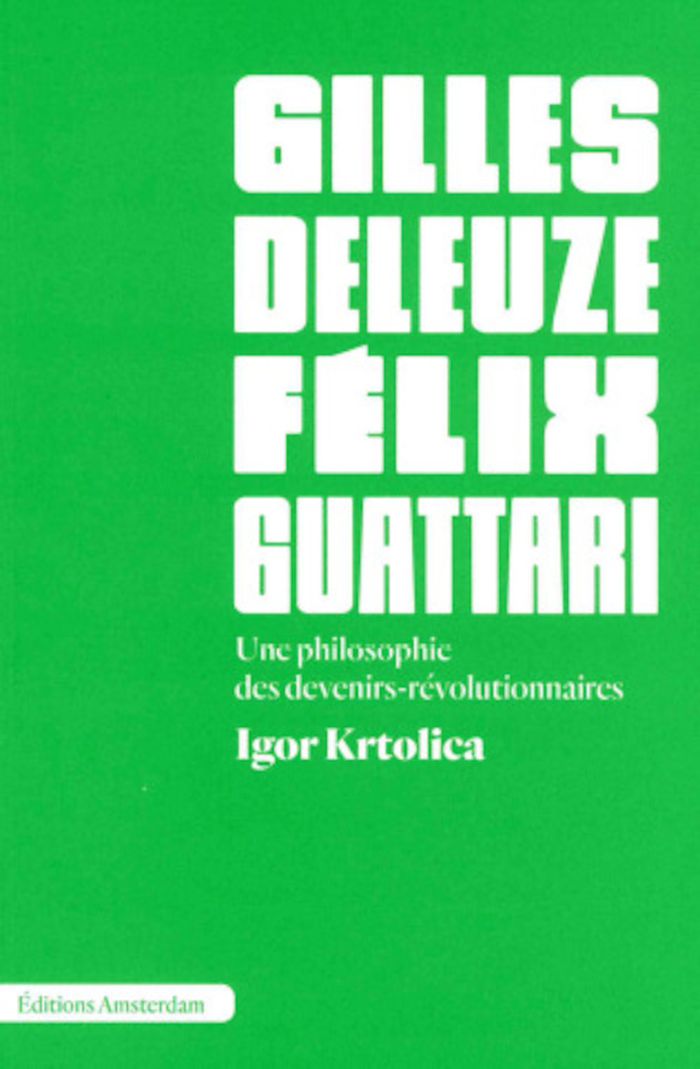
Deleuze et Guattari
Deleuze et Guattari
Actions:
Price:
$24.95
(available to order)
Summary:
Dans cet ouvrage, Igor Krtolica propose une analyse claire de l’ensemble des œuvres de De;euze et Guattari pour montrer deux choses : qu’elle est en prise étroite sur la conjoncture politique, car elle analyse les nouvelles subjectivités qui émergent après-guerre et cristallisent dans les mouvements révolutionnaires de la fin des années 1960, comme les réactions(...)
$24.95
(available to order)
Summary:
Dans cet ouvrage, Igor Krtolica propose une analyse claire de l’ensemble des œuvres de De;euze et Guattari pour montrer deux choses : qu’elle est en prise étroite sur la conjoncture politique, car elle analyse les nouvelles subjectivités qui émergent après-guerre et cristallisent dans les mouvements révolutionnaires de la fin des années 1960, comme les réactions(...)
Title:
Deleuze et Guattari
Actions:
Price:
$24.95
(available to order)
Summary:
Dans cet ouvrage, Igor Krtolica propose une analyse claire de l’ensemble des œuvres de De;euze et Guattari pour montrer deux choses : qu’elle est en prise étroite sur la conjoncture politique, car elle analyse les nouvelles subjectivités qui émergent après-guerre et cristallisent dans les mouvements révolutionnaires de la fin des années 1960, comme les réactions contre-révolutionnaires qui les répriment et font craindre l’instauration d’un nouveau type de fascisme; mais aussi que cette œuvre a une prétention universelle, car les nombreux concepts qu’inventent Deleuze et Guattari remplissent une fonction intempestive, celle de saisir dans chaque présent historique ce qui recèle une puissance d’avenir et de devenir, formant ainsi une clinique des devenirs ou une médecine de la civilisation — avec une vigilance particulière pour ces moments critiques où se lèvent les devenirs-révolutionnaires, comme pour ceux où les choses risquent de mal tourner.
Deleuze et Guattari
Actions:
Price:
$24.95
(available to order)
Summary:
Dans cet ouvrage, Igor Krtolica propose une analyse claire de l’ensemble des œuvres de De;euze et Guattari pour montrer deux choses : qu’elle est en prise étroite sur la conjoncture politique, car elle analyse les nouvelles subjectivités qui émergent après-guerre et cristallisent dans les mouvements révolutionnaires de la fin des années 1960, comme les réactions contre-révolutionnaires qui les répriment et font craindre l’instauration d’un nouveau type de fascisme; mais aussi que cette œuvre a une prétention universelle, car les nombreux concepts qu’inventent Deleuze et Guattari remplissent une fonction intempestive, celle de saisir dans chaque présent historique ce qui recèle une puissance d’avenir et de devenir, formant ainsi une clinique des devenirs ou une médecine de la civilisation — avec une vigilance particulière pour ces moments critiques où se lèvent les devenirs-révolutionnaires, comme pour ceux où les choses risquent de mal tourner.
Form:
books
books
Publication:
April 2024
April 2024
Subject:
Critical Theory
Critical Theory
Form:
books
books

Actions:
Price:
$20.00
(available to order)
Summary:
This book gathers all the questions that appear in the following books by Angela Davis: Angela Davis: An Autobiography, (1974); Women, Race and Class (1981); Women, Culture & Politics, Vintage (1990), Blues Legacies and Black Feminism: Gertrude "Ma" Rainey, Bessie Smith, and Billie Holiday, Vintage Books (1999); Are Prisons Obsolete? (2003); Abolition Democracy: Beyond(...)
$20.00
(available to order)
Summary:
This book gathers all the questions that appear in the following books by Angela Davis: Angela Davis: An Autobiography, (1974); Women, Race and Class (1981); Women, Culture & Politics, Vintage (1990), Blues Legacies and Black Feminism: Gertrude "Ma" Rainey, Bessie Smith, and Billie Holiday, Vintage Books (1999); Are Prisons Obsolete? (2003); Abolition Democracy: Beyond(...)
Title:
The collected questions of Angela Davis
Actions:
Price:
$20.00
(available to order)
Summary:
This book gathers all the questions that appear in the following books by Angela Davis: Angela Davis: An Autobiography, (1974); Women, Race and Class (1981); Women, Culture & Politics, Vintage (1990), Blues Legacies and Black Feminism: Gertrude "Ma" Rainey, Bessie Smith, and Billie Holiday, Vintage Books (1999); Are Prisons Obsolete? (2003); Abolition Democracy: Beyond Prisons, Torture, and Empire, Seven Stories Press (2005); The Meaning of Freedom: And Other Difficult Dialogues (2012); Freedom Is a Constant Struggle: Ferguson, Palestine, and the Foundations of a Movement (2015). This a non-profit project. The money obtained by Gato Negro from the sale of this book finances the printing of other copies that are distributed free of charge in antiracist and prison abolition spaces and organisations among Latin America.
The collected questions of Angela Davis
Actions:
Price:
$20.00
(available to order)
Summary:
This book gathers all the questions that appear in the following books by Angela Davis: Angela Davis: An Autobiography, (1974); Women, Race and Class (1981); Women, Culture & Politics, Vintage (1990), Blues Legacies and Black Feminism: Gertrude "Ma" Rainey, Bessie Smith, and Billie Holiday, Vintage Books (1999); Are Prisons Obsolete? (2003); Abolition Democracy: Beyond Prisons, Torture, and Empire, Seven Stories Press (2005); The Meaning of Freedom: And Other Difficult Dialogues (2012); Freedom Is a Constant Struggle: Ferguson, Palestine, and the Foundations of a Movement (2015). This a non-profit project. The money obtained by Gato Negro from the sale of this book finances the printing of other copies that are distributed free of charge in antiracist and prison abolition spaces and organisations among Latin America.
Form:
books
books
Publication:
May 2024
May 2024
Subject:
Critical Theory
Critical Theory
Form:
books
books
Actions:
Price:
$28.95
(available to order)
Summary:
Le terme post-croissance désigne l’entrée dans une ère que nous ne savons pas encore nommer. Les symptômes qui signent la fin d’une époque sont clairs et sans appel : la poursuite de la croissance économique ne constitue plus un projet de société crédible. Toutefois, y renoncer pose aux économistes des défis majeurs qui exigent de reprendre à leur racine les questions(...)
$28.95
(available to order)
Summary:
Le terme post-croissance désigne l’entrée dans une ère que nous ne savons pas encore nommer. Les symptômes qui signent la fin d’une époque sont clairs et sans appel : la poursuite de la croissance économique ne constitue plus un projet de société crédible. Toutefois, y renoncer pose aux économistes des défis majeurs qui exigent de reprendre à leur racine les questions(...)
Subject:
Critical Theory
Critical Theory
Publication:
May 2024
May 2024
Title:
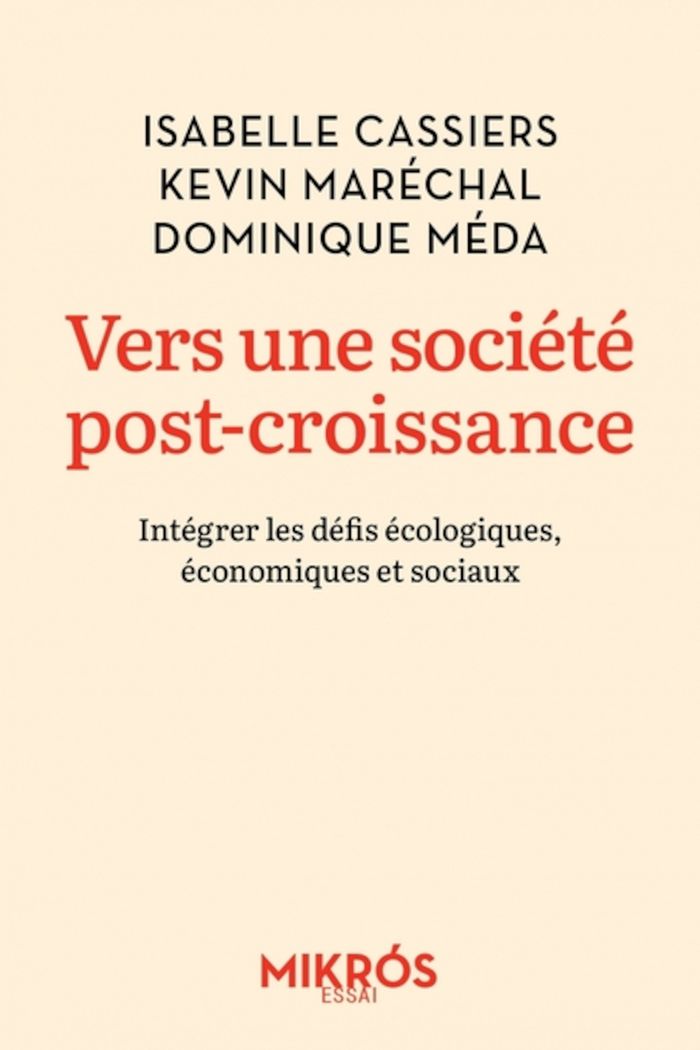
Vers une société post-croissance
Actions:
Price:
$28.95
(available to order)
Summary:
Le terme post-croissance désigne l’entrée dans une ère que nous ne savons pas encore nommer. Les symptômes qui signent la fin d’une époque sont clairs et sans appel : la poursuite de la croissance économique ne constitue plus un projet de société crédible. Toutefois, y renoncer pose aux économistes des défis majeurs qui exigent de reprendre à leur racine les questions dont ils traitent couramment. Ensemble, les neuf chercheurs réunis dans cet ouvrage s’interrogent : quels sont les problèmes majeurs qui surgissent à l’esprit dès lors que l’on abandonne un objectif de croissance continue? Par où passe la transition vers un autre horizon? Quels sont les courants de pensée et les modes de gouvernance susceptibles d’articuler un projet cohérent? Ce livre accessible, instructif et salutaire, nous invite à prendre avec intelligence le tournant économique qui arrive droit devant nous.
Vers une société post-croissance
Actions:
Price:
$28.95
(available to order)
Summary:
Le terme post-croissance désigne l’entrée dans une ère que nous ne savons pas encore nommer. Les symptômes qui signent la fin d’une époque sont clairs et sans appel : la poursuite de la croissance économique ne constitue plus un projet de société crédible. Toutefois, y renoncer pose aux économistes des défis majeurs qui exigent de reprendre à leur racine les questions dont ils traitent couramment. Ensemble, les neuf chercheurs réunis dans cet ouvrage s’interrogent : quels sont les problèmes majeurs qui surgissent à l’esprit dès lors que l’on abandonne un objectif de croissance continue? Par où passe la transition vers un autre horizon? Quels sont les courants de pensée et les modes de gouvernance susceptibles d’articuler un projet cohérent? Ce livre accessible, instructif et salutaire, nous invite à prendre avec intelligence le tournant économique qui arrive droit devant nous.
Form:
books
books
Publication:
May 2024
May 2024
Subject:
Critical Theory
Critical Theory
Form:
books
books

Actions:
Price:
$22.99
(available in store)
Summary:
A bedroom, a kitchen, a bathroom - are these rooms all that make a home? Not at all, argues Emanuele Coccia. The buildings we inhabit are of immense psychological and cultural significance. They play a decisive role in human flourishing and, for hundreds of years, their walls and walkways, windows and doorways have guided our relationships with others and with ourselves.(...)
$22.99
(available in store)
Summary:
A bedroom, a kitchen, a bathroom - are these rooms all that make a home? Not at all, argues Emanuele Coccia. The buildings we inhabit are of immense psychological and cultural significance. They play a decisive role in human flourishing and, for hundreds of years, their walls and walkways, windows and doorways have guided our relationships with others and with ourselves.(...)
Title:
Philosophy of the home: Domestic space and happiness
Actions:
Price:
$22.99
(available in store)
Summary:
A bedroom, a kitchen, a bathroom - are these rooms all that make a home? Not at all, argues Emanuele Coccia. The buildings we inhabit are of immense psychological and cultural significance. They play a decisive role in human flourishing and, for hundreds of years, their walls and walkways, windows and doorways have guided our relationships with others and with ourselves. They reflect and reinforce social inequalities; they allow us to celebrate and cherish those we love. They are the places of return that allow us to venture out into the world. In this intimate, elegantly argued account, Coccia shows how the architecture of home has shaped, and continues to shape, our psyches and our societies, before then masterfully leading us towards a more creative, ecological way of dwelling in the world.
Philosophy of the home: Domestic space and happiness
Actions:
Price:
$22.99
(available in store)
Summary:
A bedroom, a kitchen, a bathroom - are these rooms all that make a home? Not at all, argues Emanuele Coccia. The buildings we inhabit are of immense psychological and cultural significance. They play a decisive role in human flourishing and, for hundreds of years, their walls and walkways, windows and doorways have guided our relationships with others and with ourselves. They reflect and reinforce social inequalities; they allow us to celebrate and cherish those we love. They are the places of return that allow us to venture out into the world. In this intimate, elegantly argued account, Coccia shows how the architecture of home has shaped, and continues to shape, our psyches and our societies, before then masterfully leading us towards a more creative, ecological way of dwelling in the world.
Form:
books
books
Publication:
June 2024
June 2024
Subject:
Critical Theory
Critical Theory
Form:
books
books

Price:
$22.95
(available to order)
Summary:
Économie, écologie, territoires : Pierre Veltz poursuit et actualise dans cet essai son exploration de notre monde turbulent, mariant une approche fine des univers techniques et une vision socioéconomique de grande ampleur. Le sujet qui va dominer les décennies à venir est celui de la crise écologique, mais les récits du futur sont extrêmement divergents. Partant de ce(...)
$22.95
(available to order)
Summary:
Économie, écologie, territoires : Pierre Veltz poursuit et actualise dans cet essai son exploration de notre monde turbulent, mariant une approche fine des univers techniques et une vision socioéconomique de grande ampleur. Le sujet qui va dominer les décennies à venir est celui de la crise écologique, mais les récits du futur sont extrêmement divergents. Partant de ce(...)
Title:
Bifurcations: Réinventer la société industrielle par l'écologie ?
Actions:
Price:
$22.95
(available to order)
Summary:
Économie, écologie, territoires : Pierre Veltz poursuit et actualise dans cet essai son exploration de notre monde turbulent, mariant une approche fine des univers techniques et une vision socioéconomique de grande ampleur. Le sujet qui va dominer les décennies à venir est celui de la crise écologique, mais les récits du futur sont extrêmement divergents. Partant de ce constat, l’ouvrage esquisse nos avenirs possibles, autour d’une question centrale qui est celle du devenir de l’industrie. Entre ceux qui prônent le microlocalisme et ceux qui pensent géopolitique, entre ceux qui rêvent de permaculture généralisée et ceux qui ne voient le salut que dans la high-tech, les lignes de fracture sont profondes. Où allons-nous, où voulons-nous aller ensemble?
Bifurcations: Réinventer la société industrielle par l'écologie ?
Actions:
Price:
$22.95
(available to order)
Summary:
Économie, écologie, territoires : Pierre Veltz poursuit et actualise dans cet essai son exploration de notre monde turbulent, mariant une approche fine des univers techniques et une vision socioéconomique de grande ampleur. Le sujet qui va dominer les décennies à venir est celui de la crise écologique, mais les récits du futur sont extrêmement divergents. Partant de ce constat, l’ouvrage esquisse nos avenirs possibles, autour d’une question centrale qui est celle du devenir de l’industrie. Entre ceux qui prônent le microlocalisme et ceux qui pensent géopolitique, entre ceux qui rêvent de permaculture généralisée et ceux qui ne voient le salut que dans la high-tech, les lignes de fracture sont profondes. Où allons-nous, où voulons-nous aller ensemble?
Form:
books
books
Publication:
July 2024
July 2024
Subject:
Critical Theory
Critical Theory
Form:
books
books
Price:
$16.95
(available to order)
Summary:
Plus la crise écologique s'aggrave, plus l'écologie devient une idéologie dominante. Elle nous promet un monde « décarboné » grâce au tout-électrique, au tout-numérique et au « nucléaire vert ». Mais capitalisme et écologie sont incompatibles. Le capitalisme repose sur l'exploitation de prolétaires dans des entreprises forcées par la concurrence d'accumuler plus de valeur(...)
$16.95
(available to order)
Summary:
Plus la crise écologique s'aggrave, plus l'écologie devient une idéologie dominante. Elle nous promet un monde « décarboné » grâce au tout-électrique, au tout-numérique et au « nucléaire vert ». Mais capitalisme et écologie sont incompatibles. Le capitalisme repose sur l'exploitation de prolétaires dans des entreprises forcées par la concurrence d'accumuler plus de valeur(...)
Title:
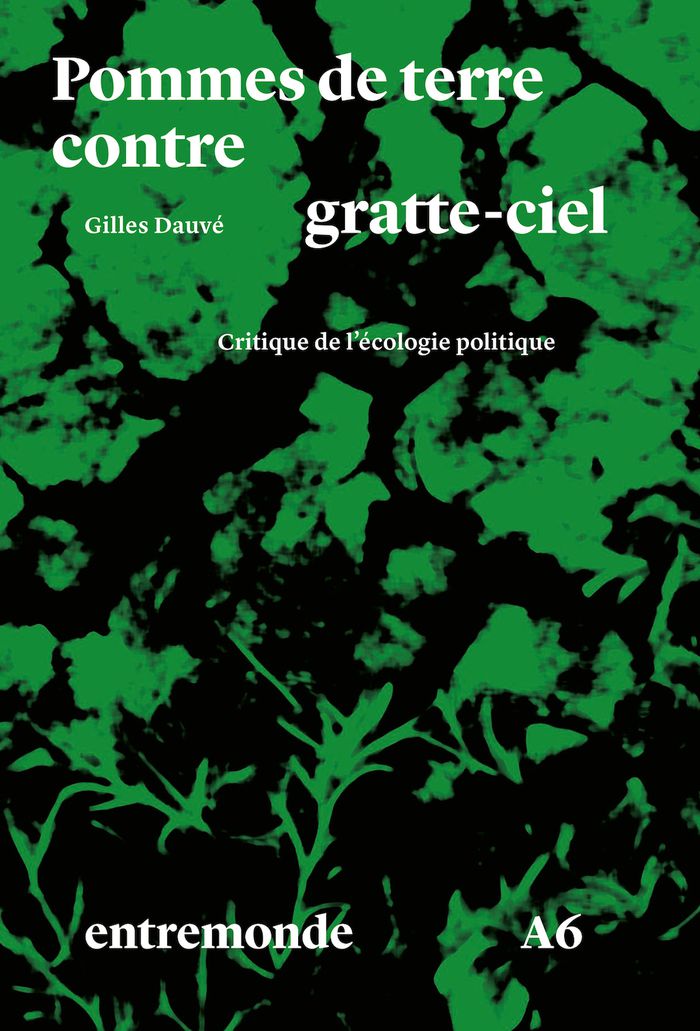
Pommes de terre contre gratte-ciel : Critique de l'écologie politique
Actions:
Price:
$16.95
(available to order)
Summary:
Plus la crise écologique s'aggrave, plus l'écologie devient une idéologie dominante. Elle nous promet un monde « décarboné » grâce au tout-électrique, au tout-numérique et au « nucléaire vert ». Mais capitalisme et écologie sont incompatibles. Le capitalisme repose sur l'exploitation de prolétaires dans des entreprises forcées par la concurrence d'accumuler plus de valeur que leurs rivales. La quête incessante de productivité entraîne surproduction, surconsommation... aux effets destructeurs pour les prolétaires, pour l'humanité et pour la planète. Il n'y aura pas de « révolution écologique » sans révolution sociale qui rompt avec les rapports de classe.
Pommes de terre contre gratte-ciel : Critique de l'écologie politique
Actions:
Price:
$16.95
(available to order)
Summary:
Plus la crise écologique s'aggrave, plus l'écologie devient une idéologie dominante. Elle nous promet un monde « décarboné » grâce au tout-électrique, au tout-numérique et au « nucléaire vert ». Mais capitalisme et écologie sont incompatibles. Le capitalisme repose sur l'exploitation de prolétaires dans des entreprises forcées par la concurrence d'accumuler plus de valeur que leurs rivales. La quête incessante de productivité entraîne surproduction, surconsommation... aux effets destructeurs pour les prolétaires, pour l'humanité et pour la planète. Il n'y aura pas de « révolution écologique » sans révolution sociale qui rompt avec les rapports de classe.
Form:
books
books
Publication:
July 2024
July 2024
Subject:
Critical Theory
Critical Theory


