


884 Results
Form:
books
books
Actions:
Price:
$27.95
(available to order)
Summary:
Art as far as the eye can see puts art back where it matters, at the center of politics. Art used to be an engagement between artist and materials. But, in our new media world, art has changed; its very materials have changed and have become technologized. This change reflects a broader social shift. Speed and politics, what Virilio defined as the key characteristics(...)
$27.95
(available to order)
Summary:
Art as far as the eye can see puts art back where it matters, at the center of politics. Art used to be an engagement between artist and materials. But, in our new media world, art has changed; its very materials have changed and have become technologized. This change reflects a broader social shift. Speed and politics, what Virilio defined as the key characteristics(...)
Title:
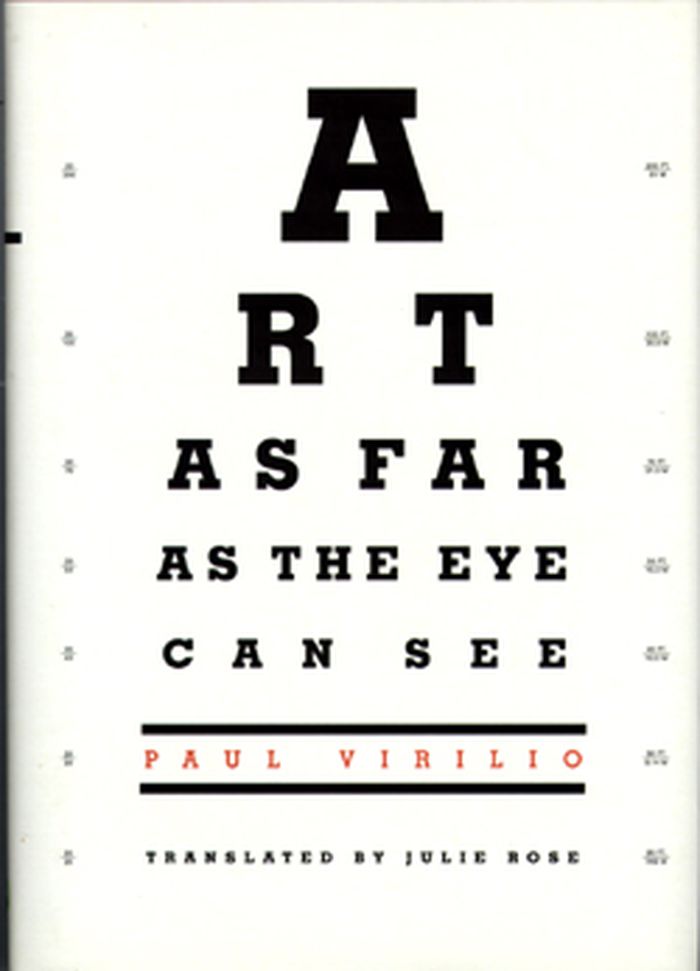
Art as far as the eye can see
Actions:
Price:
$27.95
(available to order)
Summary:
Art as far as the eye can see puts art back where it matters, at the center of politics. Art used to be an engagement between artist and materials. But, in our new media world, art has changed; its very materials have changed and have become technologized. This change reflects a broader social shift. Speed and politics, what Virilio defined as the key characteristics of the twentieth century, have been and mass culture. And the defining characteristics of mass culture today is panic.
Art as far as the eye can see
Actions:
Price:
$27.95
(available to order)
Summary:
Art as far as the eye can see puts art back where it matters, at the center of politics. Art used to be an engagement between artist and materials. But, in our new media world, art has changed; its very materials have changed and have become technologized. This change reflects a broader social shift. Speed and politics, what Virilio defined as the key characteristics of the twentieth century, have been and mass culture. And the defining characteristics of mass culture today is panic.
Form:
books
books
Publication:
November 2007, Oxford, New York
November 2007, Oxford, New York
Subject:
Critical Theory
Critical Theory
Form:
books
books
Actions:
Price:
$24.50
(available to order)
Summary:
In The Conspiracy of Art, Baudrillard questions the privilege attached to art by its practitioners. Art has lost all desire for illusion: feeding back endlessly into itself, it has turned its own vanishment into an art unto itself. Far from lamenting the "end of art," Baudrillard celebrates art's new function within the process of insider-trading. Spiraling from aesthetic(...)
$24.50
(available to order)
Summary:
In The Conspiracy of Art, Baudrillard questions the privilege attached to art by its practitioners. Art has lost all desire for illusion: feeding back endlessly into itself, it has turned its own vanishment into an art unto itself. Far from lamenting the "end of art," Baudrillard celebrates art's new function within the process of insider-trading. Spiraling from aesthetic(...)
Publication:
October 2005, Cambridge, London
October 2005, Cambridge, London
Title:
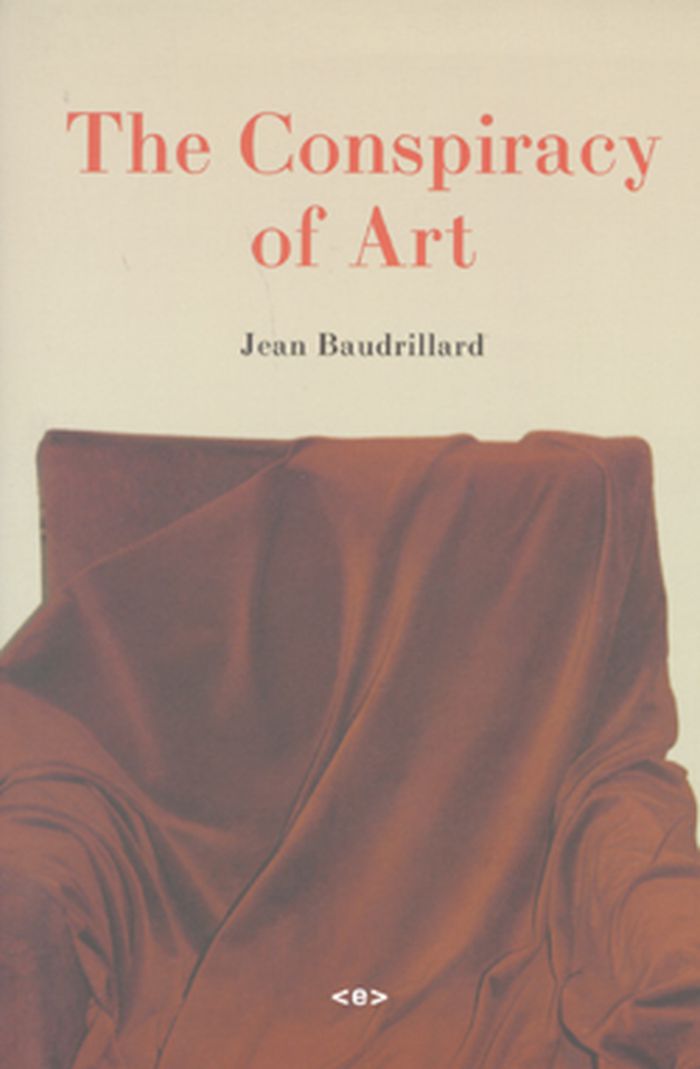
The conspiracy of art: manifestos, interviews, essays
Actions:
Price:
$24.50
(available to order)
Summary:
In The Conspiracy of Art, Baudrillard questions the privilege attached to art by its practitioners. Art has lost all desire for illusion: feeding back endlessly into itself, it has turned its own vanishment into an art unto itself. Far from lamenting the "end of art," Baudrillard celebrates art's new function within the process of insider-trading. Spiraling from aesthetic nullity to commercial frenzy, art has become transaesthetic, like society as a whole. Conceived and edited by life-long Baudrillard collaborator Sylvère Lotringer, The Conspiracy of Art presents Baudrillard's writings on art in a complicitous dance with politics, economics, and media. Culminating with "War Porn," a scathing analysis of the spectacular images from Abu Ghraib prison as a new genre of reality TV, the book folds back on itself to question the very nature of radical thought.
The conspiracy of art: manifestos, interviews, essays
Actions:
Price:
$24.50
(available to order)
Summary:
In The Conspiracy of Art, Baudrillard questions the privilege attached to art by its practitioners. Art has lost all desire for illusion: feeding back endlessly into itself, it has turned its own vanishment into an art unto itself. Far from lamenting the "end of art," Baudrillard celebrates art's new function within the process of insider-trading. Spiraling from aesthetic nullity to commercial frenzy, art has become transaesthetic, like society as a whole. Conceived and edited by life-long Baudrillard collaborator Sylvère Lotringer, The Conspiracy of Art presents Baudrillard's writings on art in a complicitous dance with politics, economics, and media. Culminating with "War Porn," a scathing analysis of the spectacular images from Abu Ghraib prison as a new genre of reality TV, the book folds back on itself to question the very nature of radical thought.
Form:
books
books
Publication:
October 2005, Cambridge, London
October 2005, Cambridge, London
Form:
books
books
Title:
Le moment du vivant
Le moment du vivant
Actions:
Price:
$63.95
(available to order)
Summary:
Le problème du vivant n’est plus un problème « local », il traverse et bouscule tous les domaines, depuis les fondements de l’esprit (dans le cerveau) jusqu’à la préservation de la vie (dans l’univers), en passant par le rapport de l’homme et de l’animal, le soin et le pouvoir, la littérature et l’art. Le but de ce livre est d’explorer ce domaine, c’est-à-dire non(...)
$63.95
(available to order)
Summary:
Le problème du vivant n’est plus un problème « local », il traverse et bouscule tous les domaines, depuis les fondements de l’esprit (dans le cerveau) jusqu’à la préservation de la vie (dans l’univers), en passant par le rapport de l’homme et de l’animal, le soin et le pouvoir, la littérature et l’art. Le but de ce livre est d’explorer ce domaine, c’est-à-dire non(...)
Title:
Le moment du vivant
Actions:
Price:
$63.95
(available to order)
Summary:
Le problème du vivant n’est plus un problème « local », il traverse et bouscule tous les domaines, depuis les fondements de l’esprit (dans le cerveau) jusqu’à la préservation de la vie (dans l’univers), en passant par le rapport de l’homme et de l’animal, le soin et le pouvoir, la littérature et l’art. Le but de ce livre est d’explorer ce domaine, c’est-à-dire non seulement d’en donner une carte, mais de le parcourir en acte, de la métaphysique à l’esthétique en passant par la biologie, l’anthropologie, l’éthique et la politique. Ce ne sont pas des études « sur » le vivant, comme objet extérieur, mais des interventions engagées et constituant ce moment par leurs relations elles-mêmes.
Le moment du vivant
Actions:
Price:
$63.95
(available to order)
Summary:
Le problème du vivant n’est plus un problème « local », il traverse et bouscule tous les domaines, depuis les fondements de l’esprit (dans le cerveau) jusqu’à la préservation de la vie (dans l’univers), en passant par le rapport de l’homme et de l’animal, le soin et le pouvoir, la littérature et l’art. Le but de ce livre est d’explorer ce domaine, c’est-à-dire non seulement d’en donner une carte, mais de le parcourir en acte, de la métaphysique à l’esthétique en passant par la biologie, l’anthropologie, l’éthique et la politique. Ce ne sont pas des études « sur » le vivant, comme objet extérieur, mais des interventions engagées et constituant ce moment par leurs relations elles-mêmes.
Form:
books
books
Publication:
March 2016
March 2016
Subject:
Critical Theory
Critical Theory
Form:
books
books
Title:
Le droit du travail
Le droit du travail
Actions:
Price:
$16.95
(available to order)
Summary:
Présente les concepts clés du droit du travail : contrat de travail, liberté professionnelle, subordination, représentation, négociation et action collective, temps de travail, salaire, sécurité physique et de l'emploi. Proposé également une perspective historique et internationale.
$16.95
(available to order)
Summary:
Présente les concepts clés du droit du travail : contrat de travail, liberté professionnelle, subordination, représentation, négociation et action collective, temps de travail, salaire, sécurité physique et de l'emploi. Proposé également une perspective historique et internationale.
Title:
Le droit du travail
Actions:
Price:
$16.95
(available to order)
Summary:
Présente les concepts clés du droit du travail : contrat de travail, liberté professionnelle, subordination, représentation, négociation et action collective, temps de travail, salaire, sécurité physique et de l'emploi. Proposé également une perspective historique et internationale.
Le droit du travail
Actions:
Price:
$16.95
(available to order)
Summary:
Présente les concepts clés du droit du travail : contrat de travail, liberté professionnelle, subordination, représentation, négociation et action collective, temps de travail, salaire, sécurité physique et de l'emploi. Proposé également une perspective historique et internationale.
Form:
books
books
Publication:
March 2016
March 2016
Subject:
Critical Theory
Critical Theory
Form:
books
books
Price:
$27.95
(available to order)
Summary:
Mêlant histoire des oeuvres, des artistes et des courants, cet ouvrage analyse la production et la réception des oeuvres de la modernité en relation avec l'atmosphère théorique dans laquelle elles se déploient, et étudie notamment l'importance du romantisme allemand, de la philosophie de Hegel et de celle de Schopenhauer sur le devenir de l'art.
$27.95
(available to order)
Summary:
Mêlant histoire des oeuvres, des artistes et des courants, cet ouvrage analyse la production et la réception des oeuvres de la modernité en relation avec l'atmosphère théorique dans laquelle elles se déploient, et étudie notamment l'importance du romantisme allemand, de la philosophie de Hegel et de celle de Schopenhauer sur le devenir de l'art.
Title:
Modernité
Actions:
Price:
$27.95
(available to order)
Summary:
Mêlant histoire des oeuvres, des artistes et des courants, cet ouvrage analyse la production et la réception des oeuvres de la modernité en relation avec l'atmosphère théorique dans laquelle elles se déploient, et étudie notamment l'importance du romantisme allemand, de la philosophie de Hegel et de celle de Schopenhauer sur le devenir de l'art.
Modernité
Actions:
Price:
$27.95
(available to order)
Summary:
Mêlant histoire des oeuvres, des artistes et des courants, cet ouvrage analyse la production et la réception des oeuvres de la modernité en relation avec l'atmosphère théorique dans laquelle elles se déploient, et étudie notamment l'importance du romantisme allemand, de la philosophie de Hegel et de celle de Schopenhauer sur le devenir de l'art.
Form:
books
books
Publication:
March 2016
March 2016
Subject:
Critical Theory
Critical Theory
Form:
books
books
Actions:
Price:
$31.95
(available to order)
Summary:
Networkologies is the first text to develop an entire new philosophy based upon networks. While many contemporary texts on networks have presented critiques or analyses of network formations in our world, this book is the first to develop an entirely new worldview based on the structure of networks themselves. From global capitalism to artificial minds, evolutionary(...)
$31.95
(available to order)
Summary:
Networkologies is the first text to develop an entire new philosophy based upon networks. While many contemporary texts on networks have presented critiques or analyses of network formations in our world, this book is the first to develop an entirely new worldview based on the structure of networks themselves. From global capitalism to artificial minds, evolutionary(...)
Title:
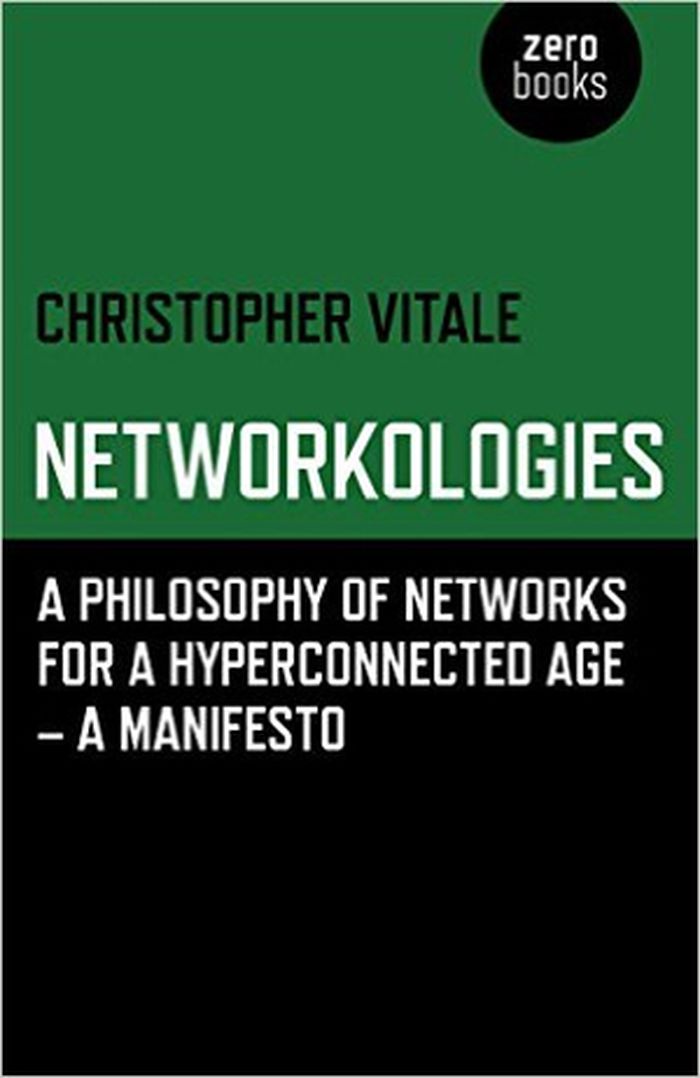
Networkologies: a philosophy of networks for a hyperconnected age, a manifesto
Actions:
Price:
$31.95
(available to order)
Summary:
Networkologies is the first text to develop an entire new philosophy based upon networks. While many contemporary texts on networks have presented critiques or analyses of network formations in our world, this book is the first to develop an entirely new worldview based on the structure of networks themselves. From global capitalism to artificial minds, evolutionary biology to quantum physics, networks are our future. Networkologies presents us with a new image of thought for our hyperconnected age.
Networkologies: a philosophy of networks for a hyperconnected age, a manifesto
Actions:
Price:
$31.95
(available to order)
Summary:
Networkologies is the first text to develop an entire new philosophy based upon networks. While many contemporary texts on networks have presented critiques or analyses of network formations in our world, this book is the first to develop an entirely new worldview based on the structure of networks themselves. From global capitalism to artificial minds, evolutionary biology to quantum physics, networks are our future. Networkologies presents us with a new image of thought for our hyperconnected age.
Form:
books
books
Publication:
January 2015
January 2015
Subject:
Critical Theory
Critical Theory
Form:
books
books
Price:
$39.95
(available to order)
Summary:
The five physical senses of seeing, hearing, smelling, tasting and touching have been held to underpin the complexity of human experience ever since Aristotle first theorised about how they worked. Classical and scholastic philosophy up to the time of the European Enlightenment relegated their operations to its margins, viewing them as at best a distraction from higher(...)
$39.95
(available to order)
Summary:
The five physical senses of seeing, hearing, smelling, tasting and touching have been held to underpin the complexity of human experience ever since Aristotle first theorised about how they worked. Classical and scholastic philosophy up to the time of the European Enlightenment relegated their operations to its margins, viewing them as at best a distraction from higher(...)
Title:
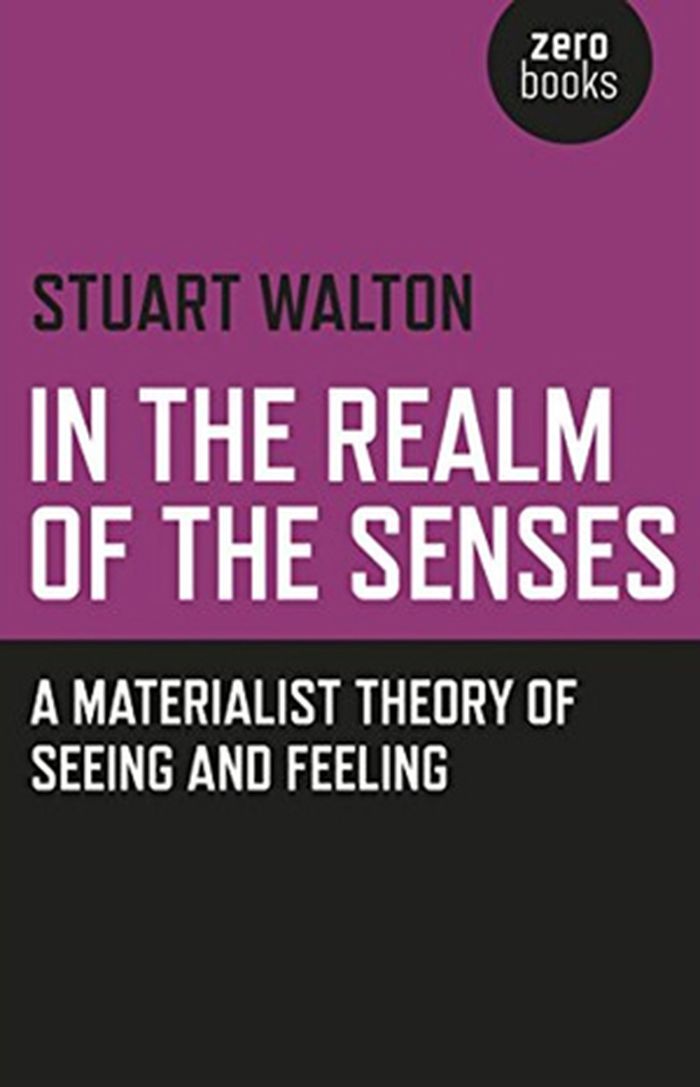
In the realm of the senses: a materialist theory of seeing and feeling
Actions:
Price:
$39.95
(available to order)
Summary:
The five physical senses of seeing, hearing, smelling, tasting and touching have been held to underpin the complexity of human experience ever since Aristotle first theorised about how they worked. Classical and scholastic philosophy up to the time of the European Enlightenment relegated their operations to its margins, viewing them as at best a distraction from higher thinking, and at worst a positive deception. Paradoxically, what one could not objectively know, the products of the mind, were accorded precedence over the concrete. From the Romantic era onwards, the senses moved to the centre of speculative thought, and the various dialectical currents of philosophy after Hegel made them interdependent with the intellectual function, which was held to derive most or all of its authority from them. This tendency has continued down to the sensualist, hedonist and anti-intellectual currents of our own day. In this theoretical consideration of what has been done to the senses in modern experience, Stuart Walton subjects the life of the senses to a further materialist turn, one that refuses a spiritualisation of the material realm, to which contemporary discourses of the body have often fallen prey, while at the same time preserving sensuality from being delivered once again to a sterile idealism.
In the realm of the senses: a materialist theory of seeing and feeling
Actions:
Price:
$39.95
(available to order)
Summary:
The five physical senses of seeing, hearing, smelling, tasting and touching have been held to underpin the complexity of human experience ever since Aristotle first theorised about how they worked. Classical and scholastic philosophy up to the time of the European Enlightenment relegated their operations to its margins, viewing them as at best a distraction from higher thinking, and at worst a positive deception. Paradoxically, what one could not objectively know, the products of the mind, were accorded precedence over the concrete. From the Romantic era onwards, the senses moved to the centre of speculative thought, and the various dialectical currents of philosophy after Hegel made them interdependent with the intellectual function, which was held to derive most or all of its authority from them. This tendency has continued down to the sensualist, hedonist and anti-intellectual currents of our own day. In this theoretical consideration of what has been done to the senses in modern experience, Stuart Walton subjects the life of the senses to a further materialist turn, one that refuses a spiritualisation of the material realm, to which contemporary discourses of the body have often fallen prey, while at the same time preserving sensuality from being delivered once again to a sterile idealism.
Form:
books
books
Publication:
March 2016
March 2016
Subject:
Critical Theory
Critical Theory
Form:
books
books
Actions:
Price:
$37.95
(available to order)
Summary:
Dans les années 1950 et jusqu’à la fin des années 1960, la science-fiction a joué, pour nombre d’artistes et de théoriciens anglais et américains, tant au plan iconographique qu’au plan méthodologique, un rôle stratégique : celui d’un véritable objet régulateur utilisé pour déplacer l’activité artistique loin de ses coordonnées conventionnelles. Dans cette entreprise,(...)
$37.95
(available to order)
Summary:
Dans les années 1950 et jusqu’à la fin des années 1960, la science-fiction a joué, pour nombre d’artistes et de théoriciens anglais et américains, tant au plan iconographique qu’au plan méthodologique, un rôle stratégique : celui d’un véritable objet régulateur utilisé pour déplacer l’activité artistique loin de ses coordonnées conventionnelles. Dans cette entreprise,(...)
Title:
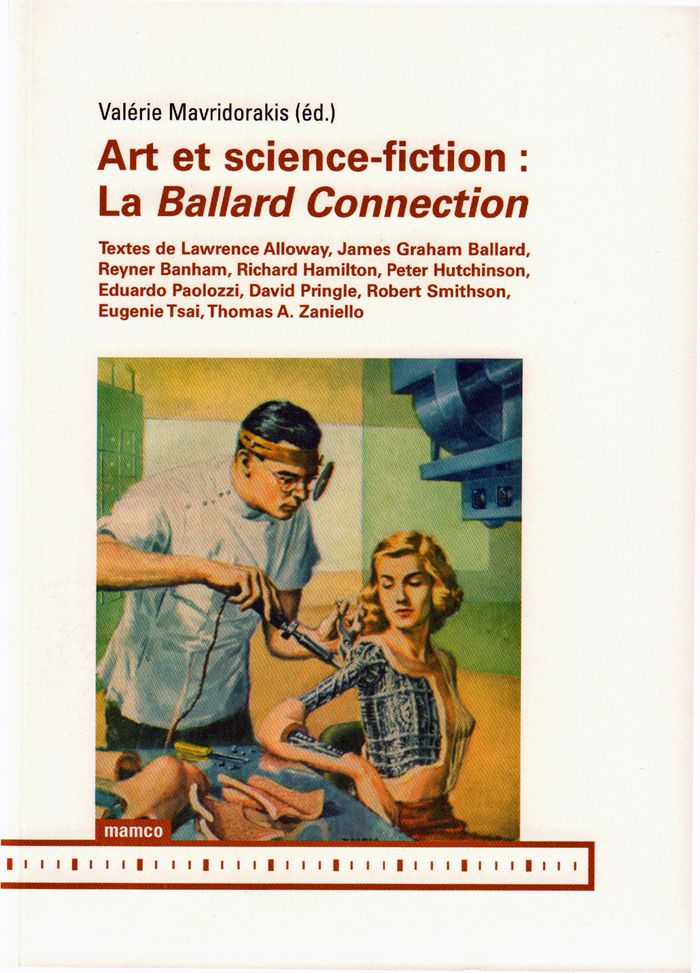
Art et science-fiction: la ballard connection
Actions:
Price:
$37.95
(available to order)
Summary:
Dans les années 1950 et jusqu’à la fin des années 1960, la science-fiction a joué, pour nombre d’artistes et de théoriciens anglais et américains, tant au plan iconographique qu’au plan méthodologique, un rôle stratégique : celui d’un véritable objet régulateur utilisé pour déplacer l’activité artistique loin de ses coordonnées conventionnelles. Dans cette entreprise, Eduardo Paolozzi côtoie Reyner Banham, Robert Smithson ou James Graham Ballard, Peter Hutchinson voisine avec Lawrence Alloway pour explorer ce que ce dernier a appelé « le front élargi de la culture » qui devient ici un ensemble d’images et d’idées rétrocédant en deçà du pop art, là où la subculture se fait relais d’invention. Passer l’art novateur au filtre de la SF, c’est par conséquent, pour les créateurs et les penseurs de l’époque mettant en œuvre cette opération théorique et plastique, ébranler radicalement les cadres d’une esthétique dominante — le formalisme — dont ils auront été les critiques en acte. Il en résulte notamment une révision des notions de passé, de présent et de futur dont Ballard, cet « anticipateur qui ne croit pas en l’avenir » comme il est dit dans l’ouvrage, est le fer de lance. Ce livre propose les pièces de ce dossier crucial pour la compréhension de l’art actuel.
Art et science-fiction: la ballard connection
Actions:
Price:
$37.95
(available to order)
Summary:
Dans les années 1950 et jusqu’à la fin des années 1960, la science-fiction a joué, pour nombre d’artistes et de théoriciens anglais et américains, tant au plan iconographique qu’au plan méthodologique, un rôle stratégique : celui d’un véritable objet régulateur utilisé pour déplacer l’activité artistique loin de ses coordonnées conventionnelles. Dans cette entreprise, Eduardo Paolozzi côtoie Reyner Banham, Robert Smithson ou James Graham Ballard, Peter Hutchinson voisine avec Lawrence Alloway pour explorer ce que ce dernier a appelé « le front élargi de la culture » qui devient ici un ensemble d’images et d’idées rétrocédant en deçà du pop art, là où la subculture se fait relais d’invention. Passer l’art novateur au filtre de la SF, c’est par conséquent, pour les créateurs et les penseurs de l’époque mettant en œuvre cette opération théorique et plastique, ébranler radicalement les cadres d’une esthétique dominante — le formalisme — dont ils auront été les critiques en acte. Il en résulte notamment une révision des notions de passé, de présent et de futur dont Ballard, cet « anticipateur qui ne croit pas en l’avenir » comme il est dit dans l’ouvrage, est le fer de lance. Ce livre propose les pièces de ce dossier crucial pour la compréhension de l’art actuel.
Form:
books
books
Publication:
April 2011
April 2011
Subject:
Critical Theory
Critical Theory
Form:
books
books
Title:
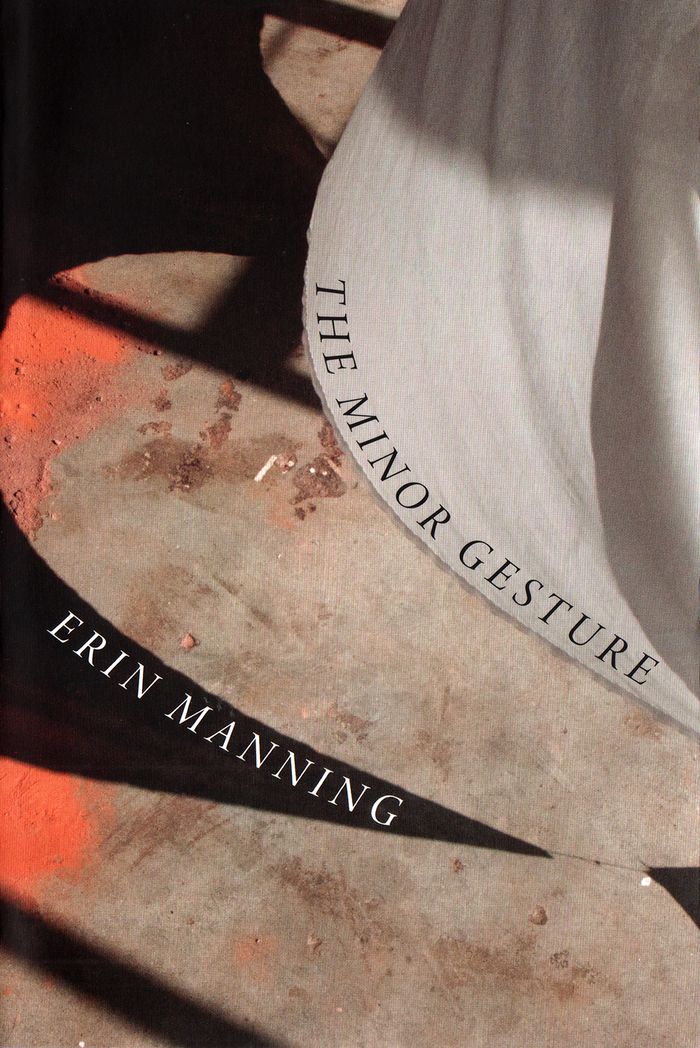
The minor gesture
The minor gesture
Actions:
Price:
$34.95
(available to order)
Summary:
Erin Manning extends her previous inquiries into the politics of movement to the concept of the minor gesture. The minor gesture, although it may pass almost unperceived, transforms the field of relations. More than a chance variation, less than a volition, it requires rethinking common assumptions about human agency and political action. To embrace the minor gesture's(...)
$34.95
(available to order)
Summary:
Erin Manning extends her previous inquiries into the politics of movement to the concept of the minor gesture. The minor gesture, although it may pass almost unperceived, transforms the field of relations. More than a chance variation, less than a volition, it requires rethinking common assumptions about human agency and political action. To embrace the minor gesture's(...)
Title:
The minor gesture
Actions:
Price:
$34.95
(available to order)
Summary:
Erin Manning extends her previous inquiries into the politics of movement to the concept of the minor gesture. The minor gesture, although it may pass almost unperceived, transforms the field of relations. More than a chance variation, less than a volition, it requires rethinking common assumptions about human agency and political action. To embrace the minor gesture's power to fashion relations, its capacity to open new modes of experience and manners of expression, is to challenge the ways in which the neurotypical image of the human devalues alternative ways of being moved by and moving through the world in particular what Manning terms "autistic perception." Drawing on Deleuze and Guattari's schizoanalysis and Whitehead's speculative pragmatism, Manning's far-reaching analyses range from fashion to depression to the writings of autistics, in each case affirming the neurodiversity of the minor and the alternative politics it gestures toward."
The minor gesture
Actions:
Price:
$34.95
(available to order)
Summary:
Erin Manning extends her previous inquiries into the politics of movement to the concept of the minor gesture. The minor gesture, although it may pass almost unperceived, transforms the field of relations. More than a chance variation, less than a volition, it requires rethinking common assumptions about human agency and political action. To embrace the minor gesture's power to fashion relations, its capacity to open new modes of experience and manners of expression, is to challenge the ways in which the neurotypical image of the human devalues alternative ways of being moved by and moving through the world in particular what Manning terms "autistic perception." Drawing on Deleuze and Guattari's schizoanalysis and Whitehead's speculative pragmatism, Manning's far-reaching analyses range from fashion to depression to the writings of autistics, in each case affirming the neurodiversity of the minor and the alternative politics it gestures toward."
Form:
books
books
Publication:
June 2016
June 2016
Subject:
Critical Theory
Critical Theory
Form:
books
books
Actions:
Price:
$18.95
(available to order)
Summary:
Introduction à la philosophie occidentale à travers la présentation de la pensée de 31 philosophes et en particulier de l'une de leurs oeuvres : La république de Platon, Le prince de Machiavel, Ainsi parlait Zarathoustra de Nietzsche, etc.
$18.95
(available to order)
Summary:
Introduction à la philosophie occidentale à travers la présentation de la pensée de 31 philosophes et en particulier de l'une de leurs oeuvres : La république de Platon, Le prince de Machiavel, Ainsi parlait Zarathoustra de Nietzsche, etc.
Title:
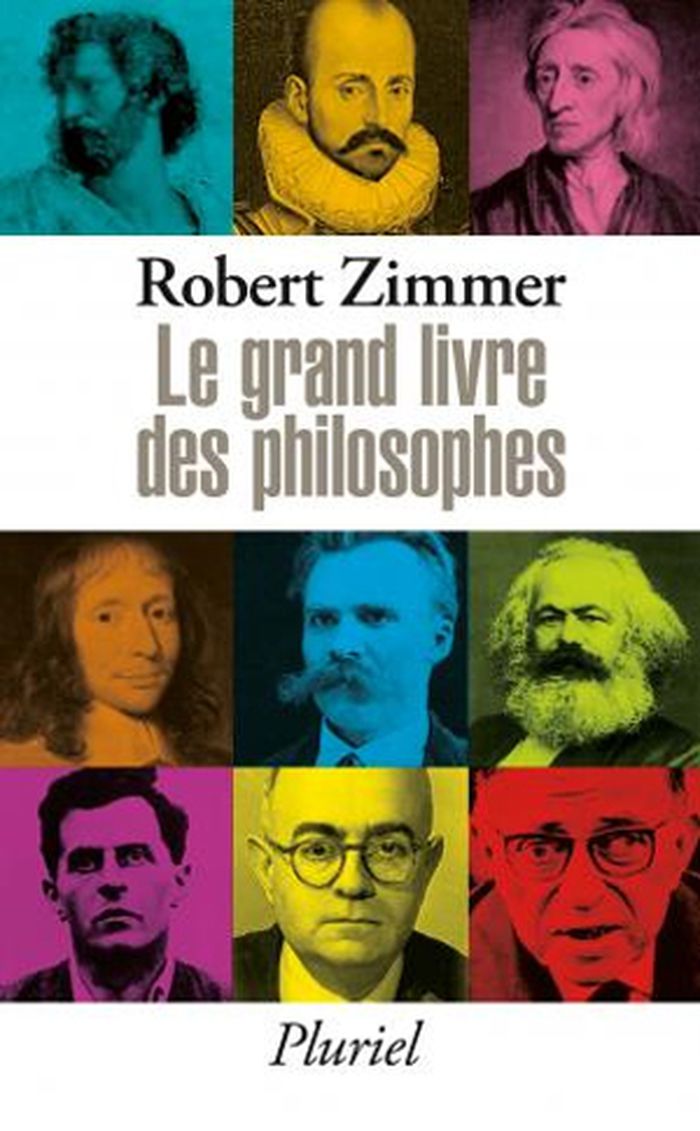
Le grand livre des philosophes
Actions:
Price:
$18.95
(available to order)
Summary:
Introduction à la philosophie occidentale à travers la présentation de la pensée de 31 philosophes et en particulier de l'une de leurs oeuvres : La république de Platon, Le prince de Machiavel, Ainsi parlait Zarathoustra de Nietzsche, etc.
Le grand livre des philosophes
Actions:
Price:
$18.95
(available to order)
Summary:
Introduction à la philosophie occidentale à travers la présentation de la pensée de 31 philosophes et en particulier de l'une de leurs oeuvres : La république de Platon, Le prince de Machiavel, Ainsi parlait Zarathoustra de Nietzsche, etc.
Form:
books
books
Publication:
April 2016
April 2016
Subject:
Critical Theory
Critical Theory


