


884 Results
Form:
books
books
Title:
The exform
The exform
Actions:
Price:
$19.95
(available to order)
Summary:
Theorist and art curator Nicolas Bourriaud tackles the excluded, the disposable and the nature of waste by looking to the future of art—the exform. He argues that the great theoretical battles to come will be fought in the realms of ideology, psychoanalysis and art. A “realist” theory and practice must begin by uncovering the mechanisms that create the distinctions(...)
$19.95
(available to order)
Summary:
Theorist and art curator Nicolas Bourriaud tackles the excluded, the disposable and the nature of waste by looking to the future of art—the exform. He argues that the great theoretical battles to come will be fought in the realms of ideology, psychoanalysis and art. A “realist” theory and practice must begin by uncovering the mechanisms that create the distinctions(...)
Title:
The exform
Actions:
Price:
$19.95
(available to order)
Summary:
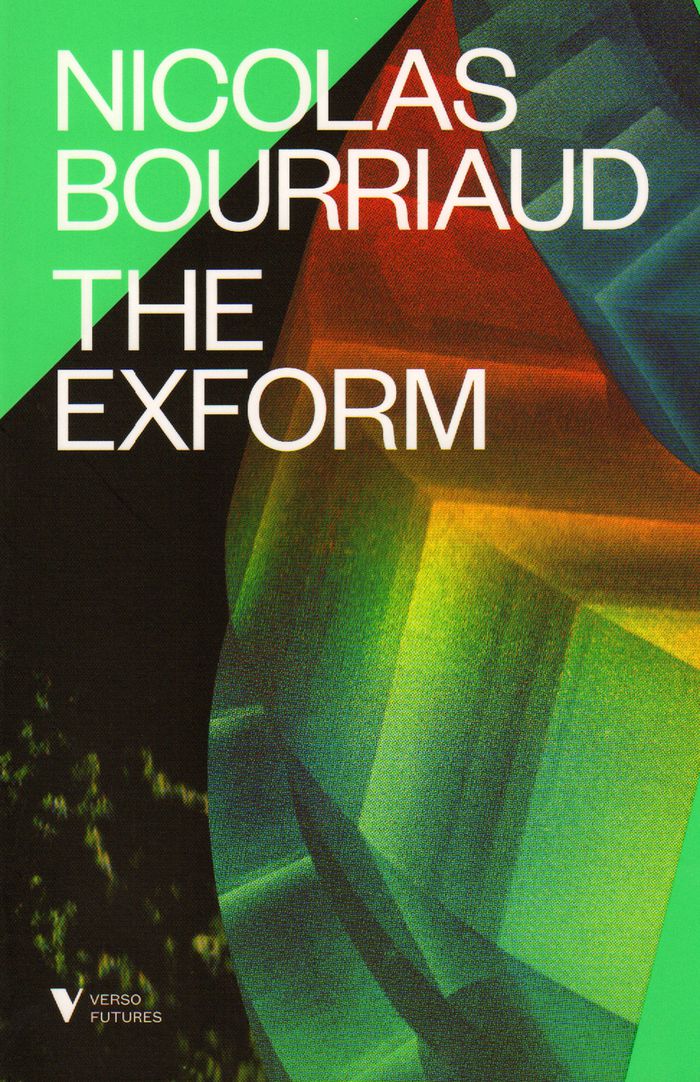
Theorist and art curator Nicolas Bourriaud tackles the excluded, the disposable and the nature of waste by looking to the future of art—the exform. He argues that the great theoretical battles to come will be fought in the realms of ideology, psychoanalysis and art. A “realist” theory and practice must begin by uncovering the mechanisms that create the distinctions between the productive and unproductive, product and waste, and the included and excluded.
The exform
Actions:
Price:
$19.95
(available to order)
Summary:
Theorist and art curator Nicolas Bourriaud tackles the excluded, the disposable and the nature of waste by looking to the future of art—the exform. He argues that the great theoretical battles to come will be fought in the realms of ideology, psychoanalysis and art. A “realist” theory and practice must begin by uncovering the mechanisms that create the distinctions between the productive and unproductive, product and waste, and the included and excluded.
Form:
books
books
Publication:
September 2016
September 2016
Subject:
Critical Theory
Critical Theory
Form:
books
books
Title:
Dépossession
Dépossession
Actions:
Price:
$32.95
(available to order)
Summary:
Dialogue entre Judith Butler et Athena Athanasiou : le débat tourne autour de ceux qui ont perdu leur pays, leur nationalité, leurs biens, tous ceux qui ont été expropriés de leur appartenance au monde. Que signifie cette précarité, cette perte fondamentale, dans une société capitaliste dominée par la logique de la possession ? Est-ce que cette conscience d’expropriation(...)
$32.95
(available to order)
Summary:
Dialogue entre Judith Butler et Athena Athanasiou : le débat tourne autour de ceux qui ont perdu leur pays, leur nationalité, leurs biens, tous ceux qui ont été expropriés de leur appartenance au monde. Que signifie cette précarité, cette perte fondamentale, dans une société capitaliste dominée par la logique de la possession ? Est-ce que cette conscience d’expropriation(...)
Title:
Dépossession
Actions:
Price:
$32.95
(available to order)
Summary:
Dialogue entre Judith Butler et Athena Athanasiou : le débat tourne autour de ceux qui ont perdu leur pays, leur nationalité, leurs biens, tous ceux qui ont été expropriés de leur appartenance au monde. Que signifie cette précarité, cette perte fondamentale, dans une société capitaliste dominée par la logique de la possession ? Est-ce que cette conscience d’expropriation peut amener à une nouvelle forme de résistance, apporter une réponse politique à ceux qui ont été déchus de leurs droits, de leurs biens, en un mot, des conditions de base de la vie elle-même ? Les soulèvements révolutionnaires au Moyen-Orient et au Maghreb, comme les manifestations sur la place Puerta del Sol, la place Syntagma et le parc Zucotti établissent une nouvelle économie politique et affective du corps dans l’espace public. La rue est l’endroit par excellence des expropriés — de ceux qui défient les forces de police et qui se regroupent spontanément dans des collectifs pour lever la voix, pour être vus et entendus. Le livre offre une introduction à la complexité des nouvelles formes de privation de droits, de dépossession et de contestation politique. Une réflexion sur la puissance du perfomatif ainsi que sur la perte de pouvoir du sujet souverain et moral classique.
Dépossession
Actions:
Price:
$32.95
(available to order)
Summary:
Dialogue entre Judith Butler et Athena Athanasiou : le débat tourne autour de ceux qui ont perdu leur pays, leur nationalité, leurs biens, tous ceux qui ont été expropriés de leur appartenance au monde. Que signifie cette précarité, cette perte fondamentale, dans une société capitaliste dominée par la logique de la possession ? Est-ce que cette conscience d’expropriation peut amener à une nouvelle forme de résistance, apporter une réponse politique à ceux qui ont été déchus de leurs droits, de leurs biens, en un mot, des conditions de base de la vie elle-même ? Les soulèvements révolutionnaires au Moyen-Orient et au Maghreb, comme les manifestations sur la place Puerta del Sol, la place Syntagma et le parc Zucotti établissent une nouvelle économie politique et affective du corps dans l’espace public. La rue est l’endroit par excellence des expropriés — de ceux qui défient les forces de police et qui se regroupent spontanément dans des collectifs pour lever la voix, pour être vus et entendus. Le livre offre une introduction à la complexité des nouvelles formes de privation de droits, de dépossession et de contestation politique. Une réflexion sur la puissance du perfomatif ainsi que sur la perte de pouvoir du sujet souverain et moral classique.
Form:
books
books
Publication:
June 2016
June 2016
Subject:
Critical Theory
Critical Theory
Form:
books
books
Actions:
Price:
$37.95
(available to order)
Summary:
Accelerationism is the name of a contemporary political heresy: the insistence that the only radical political response to capitalism is not to protest, disrupt, critique, or détourne it, but to accelerate and exacerbate its uprooting, alienating, decoding, abstractive tendencies. "#Accelerate" presents a genealogy of accelerationism, tracking the impulse through 90s UK(...)
$37.95
(available to order)
Summary:
Accelerationism is the name of a contemporary political heresy: the insistence that the only radical political response to capitalism is not to protest, disrupt, critique, or détourne it, but to accelerate and exacerbate its uprooting, alienating, decoding, abstractive tendencies. "#Accelerate" presents a genealogy of accelerationism, tracking the impulse through 90s UK(...)
Title:
#Accelerate: the accelerationist reader
Actions:
Price:
$37.95
(available to order)
Summary:
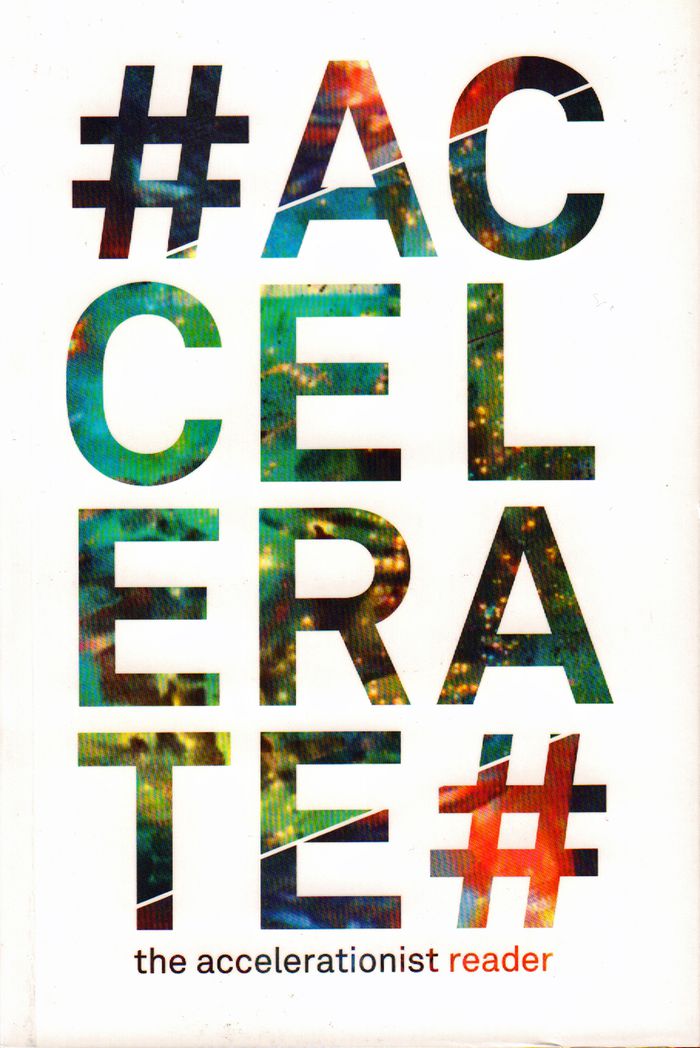
Accelerationism is the name of a contemporary political heresy: the insistence that the only radical political response to capitalism is not to protest, disrupt, critique, or détourne it, but to accelerate and exacerbate its uprooting, alienating, decoding, abstractive tendencies. "#Accelerate" presents a genealogy of accelerationism, tracking the impulse through 90s UK darkside cyberculture and the theory-fictions of Nick Land, Sadie Plant, Iain Grant, and CCRU, across the cultural underground of the 80s (rave, acid house, SF cinema) and back to its sources in delirious post-68 ferment, in texts whose searing nihilistic jouissance would later be disavowed by their authors and the marxist and academic establishment alike. On either side of this central sequence, the book includes texts by Marx that call attention to his own ‘Prometheanism’, and key works from recent years document the recent extraordinary emergence of new accelerationisms steeled against the onslaughts of neoliberal capitalist realism, and retooled for the twenty-first century. At the forefront of the energetic contemporary debate around this disputed, problematic term, "#Accelerate" activates a historical conversation about futurality, technology, politics, enjoyment and capital. This is a legacy shot through with contradictions, yet urgently galvanized today by the poverty of ‘reasonable’ contemporary political alternatives.
#Accelerate: the accelerationist reader
Actions:
Price:
$37.95
(available to order)
Summary:
Accelerationism is the name of a contemporary political heresy: the insistence that the only radical political response to capitalism is not to protest, disrupt, critique, or détourne it, but to accelerate and exacerbate its uprooting, alienating, decoding, abstractive tendencies. "#Accelerate" presents a genealogy of accelerationism, tracking the impulse through 90s UK darkside cyberculture and the theory-fictions of Nick Land, Sadie Plant, Iain Grant, and CCRU, across the cultural underground of the 80s (rave, acid house, SF cinema) and back to its sources in delirious post-68 ferment, in texts whose searing nihilistic jouissance would later be disavowed by their authors and the marxist and academic establishment alike. On either side of this central sequence, the book includes texts by Marx that call attention to his own ‘Prometheanism’, and key works from recent years document the recent extraordinary emergence of new accelerationisms steeled against the onslaughts of neoliberal capitalist realism, and retooled for the twenty-first century. At the forefront of the energetic contemporary debate around this disputed, problematic term, "#Accelerate" activates a historical conversation about futurality, technology, politics, enjoyment and capital. This is a legacy shot through with contradictions, yet urgently galvanized today by the poverty of ‘reasonable’ contemporary political alternatives.
Form:
books
books
Publication:
May 2014
May 2014
Subject:
Critical Theory
Critical Theory
Form:
books
books
Title:
Why the world does not exist
Why the world does not exist
Actions:
Price:
$28.00
(available to order)
Summary:
Where do we come from? Are we merely a cluster of elementary particles in a gigantic world receptacle? And what does it all mean? In this new book, the philosopher Markus Gabriel challenges our notion of what exists and what it means to exist. He questions the idea that there is a world that encompasses everything like a container life, the universe, and everything else.(...)
$28.00
(available to order)
Summary:
Where do we come from? Are we merely a cluster of elementary particles in a gigantic world receptacle? And what does it all mean? In this new book, the philosopher Markus Gabriel challenges our notion of what exists and what it means to exist. He questions the idea that there is a world that encompasses everything like a container life, the universe, and everything else.(...)
Title:
Why the world does not exist
Actions:
Price:
$28.00
(available to order)
Summary:
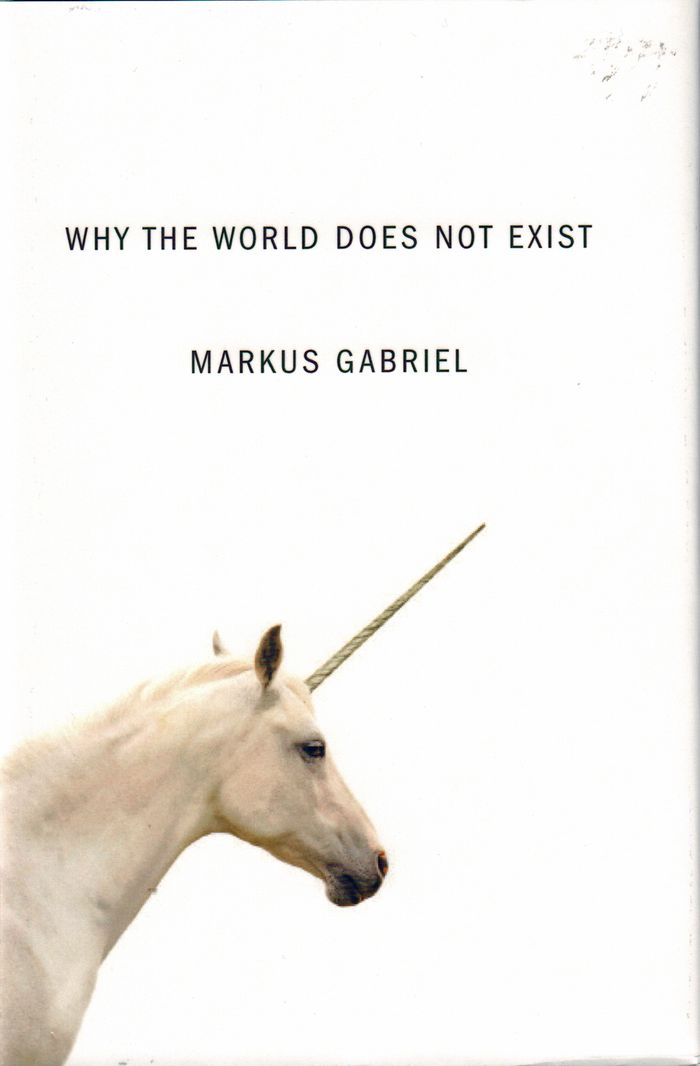
Where do we come from? Are we merely a cluster of elementary particles in a gigantic world receptacle? And what does it all mean? In this new book, the philosopher Markus Gabriel challenges our notion of what exists and what it means to exist. He questions the idea that there is a world that encompasses everything like a container life, the universe, and everything else. This all-inclusive being does not exist and cannot exist. For the world itself is not found in the world. And even when we think about the world, the world about which we think is obviously not identical with the world in which we think. For, as we are thinking about the world, this is only a very small event in the world. Besides this, there are still innumerable other objects and events: rain showers, toothaches and the World Cup. Drawing on the recent history of philosophy, Gabriel asserts that the world cannot exist at all, because it is not found in the world. Yet with the exception of the world, everything else exists; even unicorns on the far side of the moon wearing police uniforms.
Why the world does not exist
Actions:
Price:
$28.00
(available to order)
Summary:
Where do we come from? Are we merely a cluster of elementary particles in a gigantic world receptacle? And what does it all mean? In this new book, the philosopher Markus Gabriel challenges our notion of what exists and what it means to exist. He questions the idea that there is a world that encompasses everything like a container life, the universe, and everything else. This all-inclusive being does not exist and cannot exist. For the world itself is not found in the world. And even when we think about the world, the world about which we think is obviously not identical with the world in which we think. For, as we are thinking about the world, this is only a very small event in the world. Besides this, there are still innumerable other objects and events: rain showers, toothaches and the World Cup. Drawing on the recent history of philosophy, Gabriel asserts that the world cannot exist at all, because it is not found in the world. Yet with the exception of the world, everything else exists; even unicorns on the far side of the moon wearing police uniforms.
Form:
books
books
Publication:
June 2015
June 2015
Subject:
Critical Theory
Critical Theory
Form:
books
books
Title:
Waste (object lessons)
Waste (object lessons)
Actions:
Price:
$21.95
(available to order)
Summary:
Though we try to imagine otherwise, waste is every object, plus time. Whatever else an object is, it's also waste-or was, or will be. All that is needed is time or a change of sentiment or circumstance. Waste is not merely the field of discarded objects, but the name we give to our troubled relationship with the decaying world outside ourselves. Waste focuses on those(...)
$21.95
(available to order)
Summary:
Though we try to imagine otherwise, waste is every object, plus time. Whatever else an object is, it's also waste-or was, or will be. All that is needed is time or a change of sentiment or circumstance. Waste is not merely the field of discarded objects, but the name we give to our troubled relationship with the decaying world outside ourselves. Waste focuses on those(...)
Title:
Waste (object lessons)
Actions:
Price:
$21.95
(available to order)
Summary:
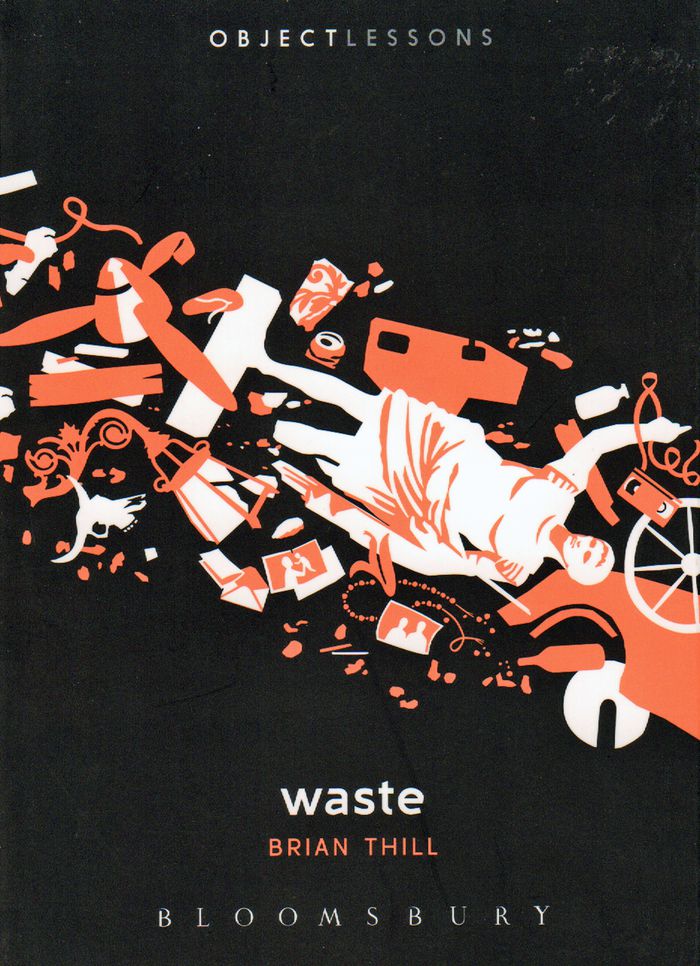
Though we try to imagine otherwise, waste is every object, plus time. Whatever else an object is, it's also waste-or was, or will be. All that is needed is time or a change of sentiment or circumstance. Waste is not merely the field of discarded objects, but the name we give to our troubled relationship with the decaying world outside ourselves. Waste focuses on those waste objects that most fundamentally shape our lives and also attempts to understand our complicated emotional and intellectual relationships to our own refuse: nuclear waste, climate debris, pop-culture rubbish, digital detritus, and more.
Waste (object lessons)
Actions:
Price:
$21.95
(available to order)
Summary:
Though we try to imagine otherwise, waste is every object, plus time. Whatever else an object is, it's also waste-or was, or will be. All that is needed is time or a change of sentiment or circumstance. Waste is not merely the field of discarded objects, but the name we give to our troubled relationship with the decaying world outside ourselves. Waste focuses on those waste objects that most fundamentally shape our lives and also attempts to understand our complicated emotional and intellectual relationships to our own refuse: nuclear waste, climate debris, pop-culture rubbish, digital detritus, and more.
Form:
books
books
Publication:
September 2015
September 2015
Form:
books
books
Title:
Dust (object lessons)
Dust (object lessons)
Actions:
Price:
$21.95
(available in store)
Summary:
No matter how much you fight against it, dust pervades everything. It gathers in even layers, adapting to the contours of things and marking the passage of time. In itself, it is also a gathering place, a random community of what has been and what is yet to be, a catalog of traces and a set of promises: dead skin cells and plant pollen, hair and paper fibers, not to(...)
$21.95
(available in store)
Summary:
No matter how much you fight against it, dust pervades everything. It gathers in even layers, adapting to the contours of things and marking the passage of time. In itself, it is also a gathering place, a random community of what has been and what is yet to be, a catalog of traces and a set of promises: dead skin cells and plant pollen, hair and paper fibers, not to(...)
Title:
Dust (object lessons)
Actions:
Price:
$21.95
(available in store)
Summary:
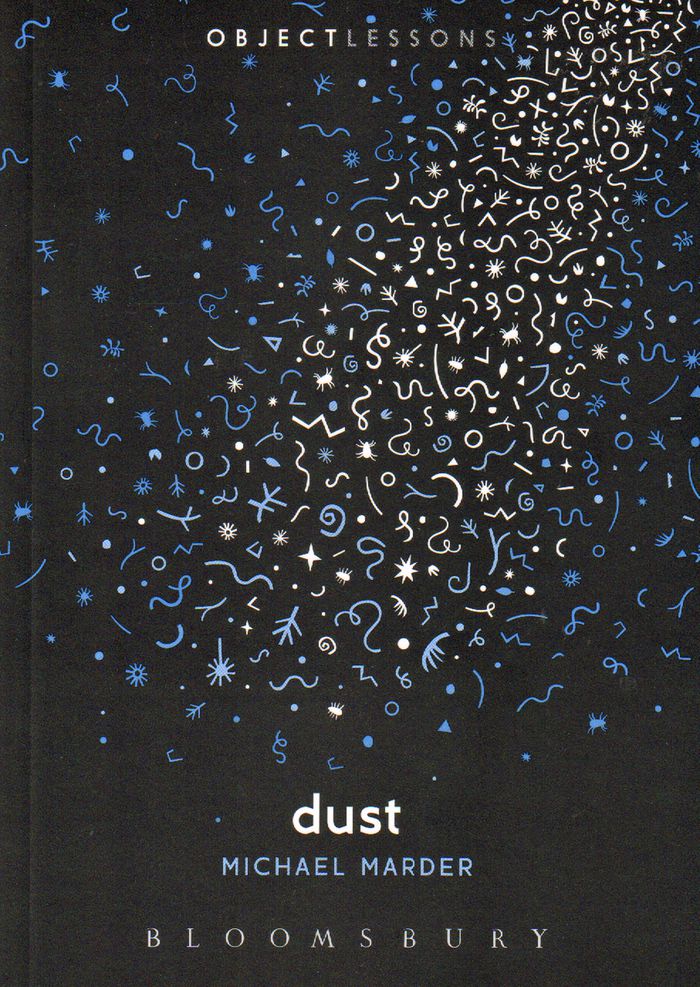
No matter how much you fight against it, dust pervades everything. It gathers in even layers, adapting to the contours of things and marking the passage of time. In itself, it is also a gathering place, a random community of what has been and what is yet to be, a catalog of traces and a set of promises: dead skin cells and plant pollen, hair and paper fibers, not to mention dust mites who make it their home. And so, dust blurs the boundaries between the living and the dead, plant and animal matter, the inside and the outside, you and the world (“for dust thou art, and unto dust shalt thou return”). This book treats one of the most mundane and familiar phenomena, showing how it can provide a key to thinking about existence, community, and justice today. - See more at: http://www.bloomsbury.com/us/dust-9781628925586/#sthash.ghw4gFcC.dpuf
Dust (object lessons)
Actions:
Price:
$21.95
(available in store)
Summary:
No matter how much you fight against it, dust pervades everything. It gathers in even layers, adapting to the contours of things and marking the passage of time. In itself, it is also a gathering place, a random community of what has been and what is yet to be, a catalog of traces and a set of promises: dead skin cells and plant pollen, hair and paper fibers, not to mention dust mites who make it their home. And so, dust blurs the boundaries between the living and the dead, plant and animal matter, the inside and the outside, you and the world (“for dust thou art, and unto dust shalt thou return”). This book treats one of the most mundane and familiar phenomena, showing how it can provide a key to thinking about existence, community, and justice today. - See more at: http://www.bloomsbury.com/us/dust-9781628925586/#sthash.ghw4gFcC.dpuf
Form:
books
books
Publication:
January 2016
January 2016
Subject:
Critical Theory
Critical Theory
Form:
books
books
Title:
Après le capitalisme
Après le capitalisme
Actions:
Price:
$17.00
(available to order)
Summary:
Dans ce livre, Pierre Madelin se livre à l’examen des possibilités « révolutionnaires » pour rompre avec « l’imaginaire de domination rationnelle du monde » qui nous a menés au bord du gouffre. Cet imaginaire est lié à l’avènement de la science et de la philosophie modernes. Or, comme le dit l’auteur : « Nous étions persuadés de mener une guerre contre le monde pour notre(...)
$17.00
(available to order)
Summary:
Dans ce livre, Pierre Madelin se livre à l’examen des possibilités « révolutionnaires » pour rompre avec « l’imaginaire de domination rationnelle du monde » qui nous a menés au bord du gouffre. Cet imaginaire est lié à l’avènement de la science et de la philosophie modernes. Or, comme le dit l’auteur : « Nous étions persuadés de mener une guerre contre le monde pour notre(...)
Title:
Après le capitalisme
Actions:
Price:
$17.00
(available to order)
Summary:
Dans ce livre, Pierre Madelin se livre à l’examen des possibilités « révolutionnaires » pour rompre avec « l’imaginaire de domination rationnelle du monde » qui nous a menés au bord du gouffre. Cet imaginaire est lié à l’avènement de la science et de la philosophie modernes. Or, comme le dit l’auteur : « Nous étions persuadés de mener une guerre contre le monde pour notre propre bien, et nous découvrons que c’est à notre propre humanité que nous n’avons cessé de livrer bataille. » L'auteur estime que cette transformation majeure de nos imaginaires demeurera ineffective si elle ne s’accompagne pas d’une révolution sociale et politique. Et, d’un point de vue politique, c’est le capitalisme qui doit être désigné comme l’ennemi à abattre parce qu’il est devenu le seul dispositif techno-économique encore porteur de cet imaginaire de domination rationnelle du monde.
Après le capitalisme
Actions:
Price:
$17.00
(available to order)
Summary:
Dans ce livre, Pierre Madelin se livre à l’examen des possibilités « révolutionnaires » pour rompre avec « l’imaginaire de domination rationnelle du monde » qui nous a menés au bord du gouffre. Cet imaginaire est lié à l’avènement de la science et de la philosophie modernes. Or, comme le dit l’auteur : « Nous étions persuadés de mener une guerre contre le monde pour notre propre bien, et nous découvrons que c’est à notre propre humanité que nous n’avons cessé de livrer bataille. » L'auteur estime que cette transformation majeure de nos imaginaires demeurera ineffective si elle ne s’accompagne pas d’une révolution sociale et politique. Et, d’un point de vue politique, c’est le capitalisme qui doit être désigné comme l’ennemi à abattre parce qu’il est devenu le seul dispositif techno-économique encore porteur de cet imaginaire de domination rationnelle du monde.
Form:
books
books
Publication:
January 2017
January 2017
Subject:
Critical Theory
Critical Theory
Form:
books
books

Actions:
Price:
$15.00
(available to order)
Summary:
À l'issue de la consultation « Réinventer Paris », lancée par la Mairie de Paris fin 2014, le site « Pershing », situé à cheval sur le Boulevard Périphérique entre Neuilly et le Palais des Congrès de Paris, a été remporté début 2016 par les agences associées Oxo et Sou Fujimoto. Sur près de 55.000 m2, ce grand cône inversé en verre sérigraphié rassemble une gare routière(...)
$15.00
(available to order)
Summary:
À l'issue de la consultation « Réinventer Paris », lancée par la Mairie de Paris fin 2014, le site « Pershing », situé à cheval sur le Boulevard Périphérique entre Neuilly et le Palais des Congrès de Paris, a été remporté début 2016 par les agences associées Oxo et Sou Fujimoto. Sur près de 55.000 m2, ce grand cône inversé en verre sérigraphié rassemble une gare routière(...)
Title:
Sou Fujimoto & Oxo : mille arbres
Actions:
Price:
$15.00
(available to order)
Summary:
À l'issue de la consultation « Réinventer Paris », lancée par la Mairie de Paris fin 2014, le site « Pershing », situé à cheval sur le Boulevard Périphérique entre Neuilly et le Palais des Congrès de Paris, a été remporté début 2016 par les agences associées Oxo et Sou Fujimoto. Sur près de 55.000 m2, ce grand cône inversé en verre sérigraphié rassemble une gare routière souterraine, un socle de pôles enfance et restauration, un anneau de bureaux en site « forestier » et, au sommet, une couronne de logements arborés. Pour ce complexe programmatique surprenant, Mille Arbres invente un nouveau mode de copropriété et de conciergerie afin de répondre aux besoins des usagers et, ainsi, offrir un « nouvel art d’habiter, de travailler et de vivre »...
Sou Fujimoto & Oxo : mille arbres
Actions:
Price:
$15.00
(available to order)
Summary:
À l'issue de la consultation « Réinventer Paris », lancée par la Mairie de Paris fin 2014, le site « Pershing », situé à cheval sur le Boulevard Périphérique entre Neuilly et le Palais des Congrès de Paris, a été remporté début 2016 par les agences associées Oxo et Sou Fujimoto. Sur près de 55.000 m2, ce grand cône inversé en verre sérigraphié rassemble une gare routière souterraine, un socle de pôles enfance et restauration, un anneau de bureaux en site « forestier » et, au sommet, une couronne de logements arborés. Pour ce complexe programmatique surprenant, Mille Arbres invente un nouveau mode de copropriété et de conciergerie afin de répondre aux besoins des usagers et, ainsi, offrir un « nouvel art d’habiter, de travailler et de vivre »...
Form:
books
books
Publication:
October 2016
October 2016
Subject:
Critical Theory
Critical Theory
Form:
books
books
Actions:
Price:
$34.95
(available to order)
Summary:
his book focuses on six brilliant women who are often seen as particularly tough-minded: Simone Weil, Hannah Arendt, Mary McCarthy, Susan Sontag, Diane Arbus, and Joan Didion. Aligned with no single tradition, they escape straightforward categories. Yet their work evinces an affinity of style and philosophical viewpoint that derives from a shared attitude toward(...)
$34.95
(available to order)
Summary:
his book focuses on six brilliant women who are often seen as particularly tough-minded: Simone Weil, Hannah Arendt, Mary McCarthy, Susan Sontag, Diane Arbus, and Joan Didion. Aligned with no single tradition, they escape straightforward categories. Yet their work evinces an affinity of style and philosophical viewpoint that derives from a shared attitude toward(...)
Title:
Tough enough: Arbus, Arendt, Didion, McCarthy, Sontag, Weil
Actions:
Price:
$34.95
(available to order)
Summary:
his book focuses on six brilliant women who are often seen as particularly tough-minded: Simone Weil, Hannah Arendt, Mary McCarthy, Susan Sontag, Diane Arbus, and Joan Didion. Aligned with no single tradition, they escape straightforward categories. Yet their work evinces an affinity of style and philosophical viewpoint that derives from a shared attitude toward suffering. What Mary McCarthy called a “cold eye” was not merely a personal aversion to displays of emotion: it was an unsentimental mode of attention that dictated both ethical positions and aesthetic approaches. Tough Enough traces the careers of these women and their challenges to the pre-eminence of empathy as the ethical posture from which to examine pain. Their writing and art reveal an adamant belief that the hurts of the world must be treated concretely, directly, and realistically, without recourse to either melodrama or callousness. As Deborah Nelson shows, this stance offers an important counter-tradition to the familiar postwar poles of emotional expressivity on the one hand and cool irony on the other. Ultimately, in its insistence on facing reality without consolation or compensation, this austere “school of the unsentimental” offers new ways to approach suffering in both its spectacular forms and all of its ordinariness.
Tough enough: Arbus, Arendt, Didion, McCarthy, Sontag, Weil
Actions:
Price:
$34.95
(available to order)
Summary:
his book focuses on six brilliant women who are often seen as particularly tough-minded: Simone Weil, Hannah Arendt, Mary McCarthy, Susan Sontag, Diane Arbus, and Joan Didion. Aligned with no single tradition, they escape straightforward categories. Yet their work evinces an affinity of style and philosophical viewpoint that derives from a shared attitude toward suffering. What Mary McCarthy called a “cold eye” was not merely a personal aversion to displays of emotion: it was an unsentimental mode of attention that dictated both ethical positions and aesthetic approaches. Tough Enough traces the careers of these women and their challenges to the pre-eminence of empathy as the ethical posture from which to examine pain. Their writing and art reveal an adamant belief that the hurts of the world must be treated concretely, directly, and realistically, without recourse to either melodrama or callousness. As Deborah Nelson shows, this stance offers an important counter-tradition to the familiar postwar poles of emotional expressivity on the one hand and cool irony on the other. Ultimately, in its insistence on facing reality without consolation or compensation, this austere “school of the unsentimental” offers new ways to approach suffering in both its spectacular forms and all of its ordinariness.
Form:
books
books
Publication:
April 2017
April 2017
Subject:
Critical Theory
Critical Theory
Form:
books
books
Title:
Situational diagram
Situational diagram
Actions:
Price:
$32.50
(available to order)
Summary:
Situational Diagram is a collection of essays and creative propositions by cultural theorists, philosophers, artists and activists. Contributors include Sabu Kohso, Aliza Shvarts, Jaleh Mansoor, Jean-Luc Nancy, Simon O’Sullivan, Anne Querrien, Abrahão de Oliveira Santos, Valentin Schaepelynck, Karin Schneider and Tirdad Zolghadr.
$32.50
(available to order)
Summary:
Situational Diagram is a collection of essays and creative propositions by cultural theorists, philosophers, artists and activists. Contributors include Sabu Kohso, Aliza Shvarts, Jaleh Mansoor, Jean-Luc Nancy, Simon O’Sullivan, Anne Querrien, Abrahão de Oliveira Santos, Valentin Schaepelynck, Karin Schneider and Tirdad Zolghadr.
Title:
Situational diagram
Actions:
Price:
$32.50
(available to order)
Summary:
Situational Diagram is a collection of essays and creative propositions by cultural theorists, philosophers, artists and activists. Contributors include Sabu Kohso, Aliza Shvarts, Jaleh Mansoor, Jean-Luc Nancy, Simon O’Sullivan, Anne Querrien, Abrahão de Oliveira Santos, Valentin Schaepelynck, Karin Schneider and Tirdad Zolghadr.
Situational diagram
Actions:
Price:
$32.50
(available to order)
Summary:
Situational Diagram is a collection of essays and creative propositions by cultural theorists, philosophers, artists and activists. Contributors include Sabu Kohso, Aliza Shvarts, Jaleh Mansoor, Jean-Luc Nancy, Simon O’Sullivan, Anne Querrien, Abrahão de Oliveira Santos, Valentin Schaepelynck, Karin Schneider and Tirdad Zolghadr.
Form:
books
books
Publication:
January 2017
January 2017
Subject:
Critical Theory
Critical Theory


