


884 Results
Form:
books
books
Title:
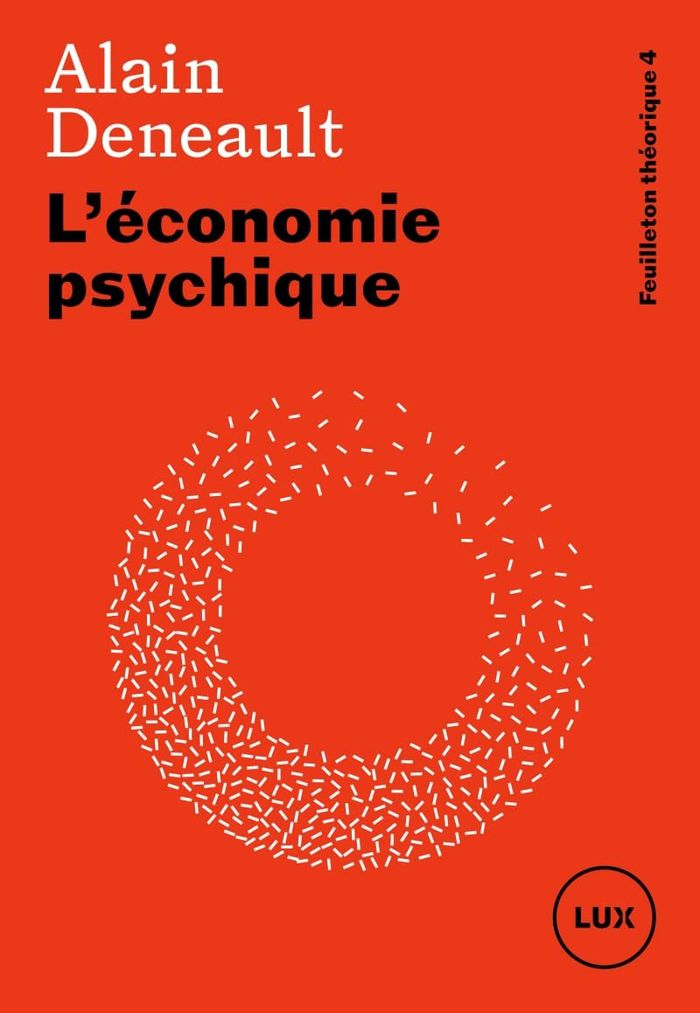
L'économie psychique
L'économie psychique
Actions:
Price:
$19.95
(available to order)
Summary:
Depuis la conception vitaliste de l’«économie animale» en biologie et le travail spécifiquement philosophique de Sigmund Freud, l’«économie psychique» désigne les tensions qui s’observent entre l’affirmation pulsionnelle et les impératifs sociaux, moraux et anthropologiques qui s’interposent pour la censurer. Or, les structures sociales qui, jusqu’à il y a peu, assuraient(...)
$19.95
(available to order)
Summary:
Depuis la conception vitaliste de l’«économie animale» en biologie et le travail spécifiquement philosophique de Sigmund Freud, l’«économie psychique» désigne les tensions qui s’observent entre l’affirmation pulsionnelle et les impératifs sociaux, moraux et anthropologiques qui s’interposent pour la censurer. Or, les structures sociales qui, jusqu’à il y a peu, assuraient(...)
Title:
L'économie psychique
Actions:
Price:
$19.95
(available to order)
Summary:
Depuis la conception vitaliste de l’«économie animale» en biologie et le travail spécifiquement philosophique de Sigmund Freud, l’«économie psychique» désigne les tensions qui s’observent entre l’affirmation pulsionnelle et les impératifs sociaux, moraux et anthropologiques qui s’interposent pour la censurer. Or, les structures sociales qui, jusqu’à il y a peu, assuraient encore l’organisation de la personne et le refoulement des pulsions ont disparu. Nous sommes désormais contraints de trouver en nous-mêmes d’autres modalités d’organisation, et l’ancienne personnalité qui se sentait perpétuellement en dette envers la société a cédé la place à un individu qui tend à croire que tout lui est dû. Alain Deneault décrit cette évolution de l’économie psychique qui, bien qu’étrangère aux sciences économiques, a été récupérée par ces dernières et par leurs domaines régionaux que sont le marketing et le management. Ce quatrième opuscule du feuilleton «Les économies» se termine par une «césure» dans laquelle l’auteur répond à quelques détracteurs vivant mal le sort que son travail fait subir aux «économistes» et à ceux qui les suivent.
L'économie psychique
Actions:
Price:
$19.95
(available to order)
Summary:
Depuis la conception vitaliste de l’«économie animale» en biologie et le travail spécifiquement philosophique de Sigmund Freud, l’«économie psychique» désigne les tensions qui s’observent entre l’affirmation pulsionnelle et les impératifs sociaux, moraux et anthropologiques qui s’interposent pour la censurer. Or, les structures sociales qui, jusqu’à il y a peu, assuraient encore l’organisation de la personne et le refoulement des pulsions ont disparu. Nous sommes désormais contraints de trouver en nous-mêmes d’autres modalités d’organisation, et l’ancienne personnalité qui se sentait perpétuellement en dette envers la société a cédé la place à un individu qui tend à croire que tout lui est dû. Alain Deneault décrit cette évolution de l’économie psychique qui, bien qu’étrangère aux sciences économiques, a été récupérée par ces dernières et par leurs domaines régionaux que sont le marketing et le management. Ce quatrième opuscule du feuilleton «Les économies» se termine par une «césure» dans laquelle l’auteur répond à quelques détracteurs vivant mal le sort que son travail fait subir aux «économistes» et à ceux qui les suivent.
Form:
books
books
Publication:
November 2021
November 2021
Subject:
Critical Theory
Critical Theory
Form:
books
books
Actions:
Price:
$53.95
(available to order)
Summary:
Water is the element that, more than any other, ties human beings in to the world around them – from the oceans that surround us to the water that makes up most of our bodies. Exploring the cultural and philosophical implications of this fact, this book develops an innovative new mode of posthuman feminist phenomenology that understands our bodies as being fundamentally(...)
$53.95
(available to order)
Summary:
Water is the element that, more than any other, ties human beings in to the world around them – from the oceans that surround us to the water that makes up most of our bodies. Exploring the cultural and philosophical implications of this fact, this book develops an innovative new mode of posthuman feminist phenomenology that understands our bodies as being fundamentally(...)
Title:
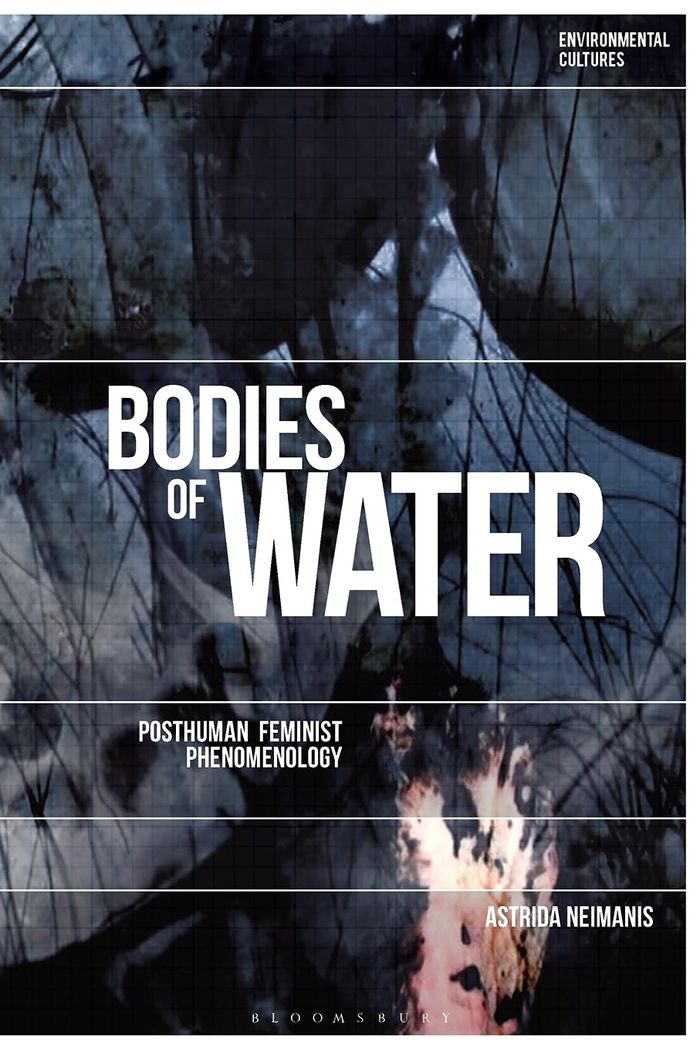
Bodies of water: posthuman feminist phenomenology
Actions:
Price:
$53.95
(available to order)
Summary:
Water is the element that, more than any other, ties human beings in to the world around them – from the oceans that surround us to the water that makes up most of our bodies. Exploring the cultural and philosophical implications of this fact, this book develops an innovative new mode of posthuman feminist phenomenology that understands our bodies as being fundamentally part of the natural world and not separate from or privileged to it.
Bodies of water: posthuman feminist phenomenology
Actions:
Price:
$53.95
(available to order)
Summary:
Water is the element that, more than any other, ties human beings in to the world around them – from the oceans that surround us to the water that makes up most of our bodies. Exploring the cultural and philosophical implications of this fact, this book develops an innovative new mode of posthuman feminist phenomenology that understands our bodies as being fundamentally part of the natural world and not separate from or privileged to it.
Form:
books
books
Publication:
May 2019
May 2019
Subject:
Critical Theory
Critical Theory
Form:
books
books
Actions:
Price:
$76.50
(available to order)
Summary:
Ludwig Wittgenstein’s way to the Tractatus Logico-Philosophicus, one of the ground-breaking works in the history of philosophy, can rightly be termed an Odyssey. Both in terms of his movements and his intellectual development in the course of writing it, the Tractatus incorporated an exciting, improbable journey. A compendium of scholars has come together at the 100th(...)
$76.50
(available to order)
Summary:
Ludwig Wittgenstein’s way to the Tractatus Logico-Philosophicus, one of the ground-breaking works in the history of philosophy, can rightly be termed an Odyssey. Both in terms of his movements and his intellectual development in the course of writing it, the Tractatus incorporated an exciting, improbable journey. A compendium of scholars has come together at the 100th(...)
Title:
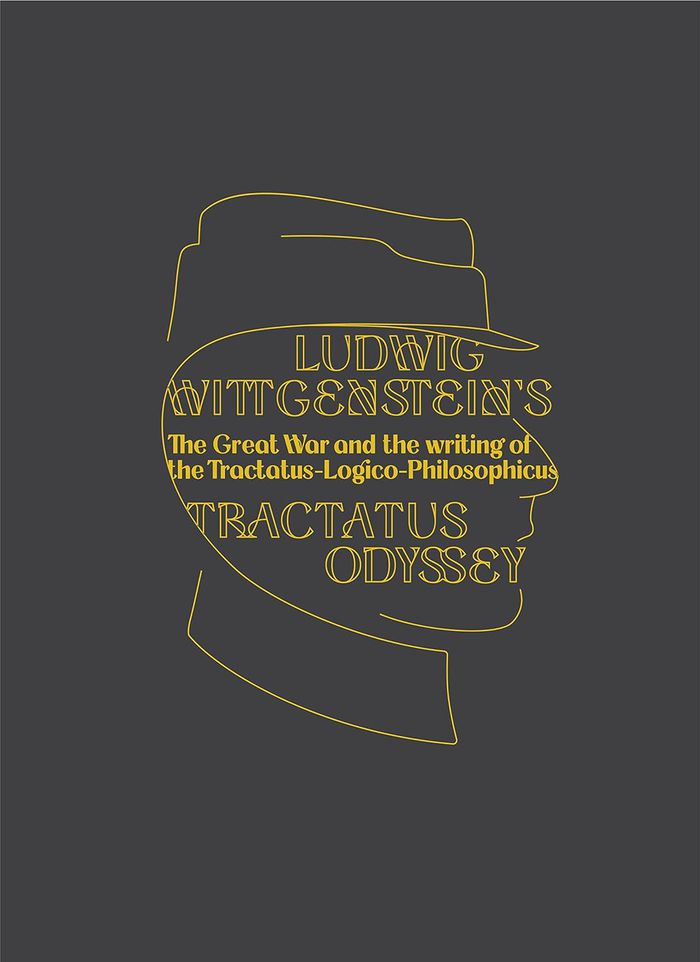
Ludwig Wittgenstein's Tractatus Odyssey
Actions:
Price:
$76.50
(available to order)
Summary:
Ludwig Wittgenstein’s way to the Tractatus Logico-Philosophicus, one of the ground-breaking works in the history of philosophy, can rightly be termed an Odyssey. Both in terms of his movements and his intellectual development in the course of writing it, the Tractatus incorporated an exciting, improbable journey. A compendium of scholars has come together at the 100th anniversary of the work’s first official publication in 1922 to detail the main stations in Wittgenstein’s life that would entirely transform philosophy. The years 1912 to 1922 are illuminated through photos, military maps, and letters against the backdrop of one of the most dramatic periods in world history. The complex theory of language developed by Wittgenstein In the Tractatus had an enormous influence not only on philosophy, but extended also to literature, music, film, painting, architecture, anthropology, and economics. Its uniqueness and rigor challenge our perceptions to this day.
Ludwig Wittgenstein's Tractatus Odyssey
Actions:
Price:
$76.50
(available to order)
Summary:
Ludwig Wittgenstein’s way to the Tractatus Logico-Philosophicus, one of the ground-breaking works in the history of philosophy, can rightly be termed an Odyssey. Both in terms of his movements and his intellectual development in the course of writing it, the Tractatus incorporated an exciting, improbable journey. A compendium of scholars has come together at the 100th anniversary of the work’s first official publication in 1922 to detail the main stations in Wittgenstein’s life that would entirely transform philosophy. The years 1912 to 1922 are illuminated through photos, military maps, and letters against the backdrop of one of the most dramatic periods in world history. The complex theory of language developed by Wittgenstein In the Tractatus had an enormous influence not only on philosophy, but extended also to literature, music, film, painting, architecture, anthropology, and economics. Its uniqueness and rigor challenge our perceptions to this day.
Form:
books
books
Publication:
November 2021
November 2021
Subject:
Critical Theory
Critical Theory
Form:
books
books
Title:
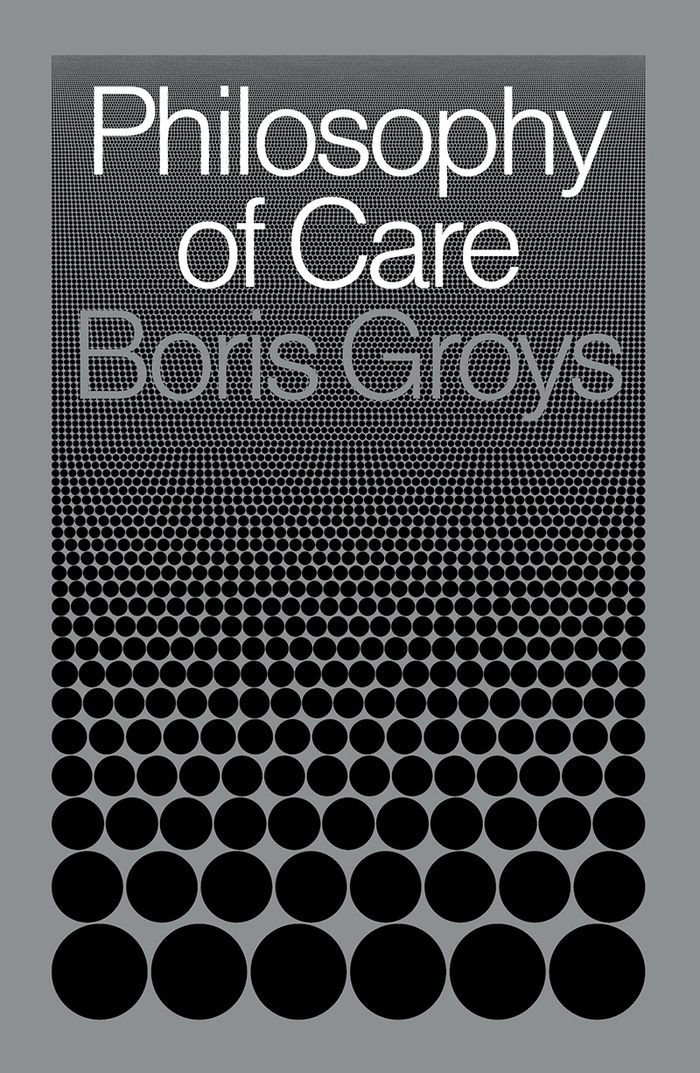
Philosophy of care
Philosophy of care
Actions:
Price:
$25.95
(available to order)
Summary:
The discussion of care has a long philosophical tradition. This book retraces some episodes in this tradition—beginning with Plato and ending with Alexander Bogdanov, having passed through Hegel, Heidegger, Bataille and many others. The central question is who the proper subject of care is? Should I care for myself or trust the others, the system, the institutions? Here,(...)
$25.95
(available to order)
Summary:
The discussion of care has a long philosophical tradition. This book retraces some episodes in this tradition—beginning with Plato and ending with Alexander Bogdanov, having passed through Hegel, Heidegger, Bataille and many others. The central question is who the proper subject of care is? Should I care for myself or trust the others, the system, the institutions? Here,(...)
Title:
Philosophy of care
Actions:
Price:
$25.95
(available to order)
Summary:
The discussion of care has a long philosophical tradition. This book retraces some episodes in this tradition—beginning with Plato and ending with Alexander Bogdanov, having passed through Hegel, Heidegger, Bataille and many others. The central question is who the proper subject of care is? Should I care for myself or trust the others, the system, the institutions? Here, the concept of the self-care becomes a revolutionary principle that confronts the individual with the dominating mechanisms of control.
Philosophy of care
Actions:
Price:
$25.95
(available to order)
Summary:
The discussion of care has a long philosophical tradition. This book retraces some episodes in this tradition—beginning with Plato and ending with Alexander Bogdanov, having passed through Hegel, Heidegger, Bataille and many others. The central question is who the proper subject of care is? Should I care for myself or trust the others, the system, the institutions? Here, the concept of the self-care becomes a revolutionary principle that confronts the individual with the dominating mechanisms of control.
Form:
books
books
Publication:
February 2022
February 2022
Subject:
Critical Theory
Critical Theory
Form:
books
books
Title:
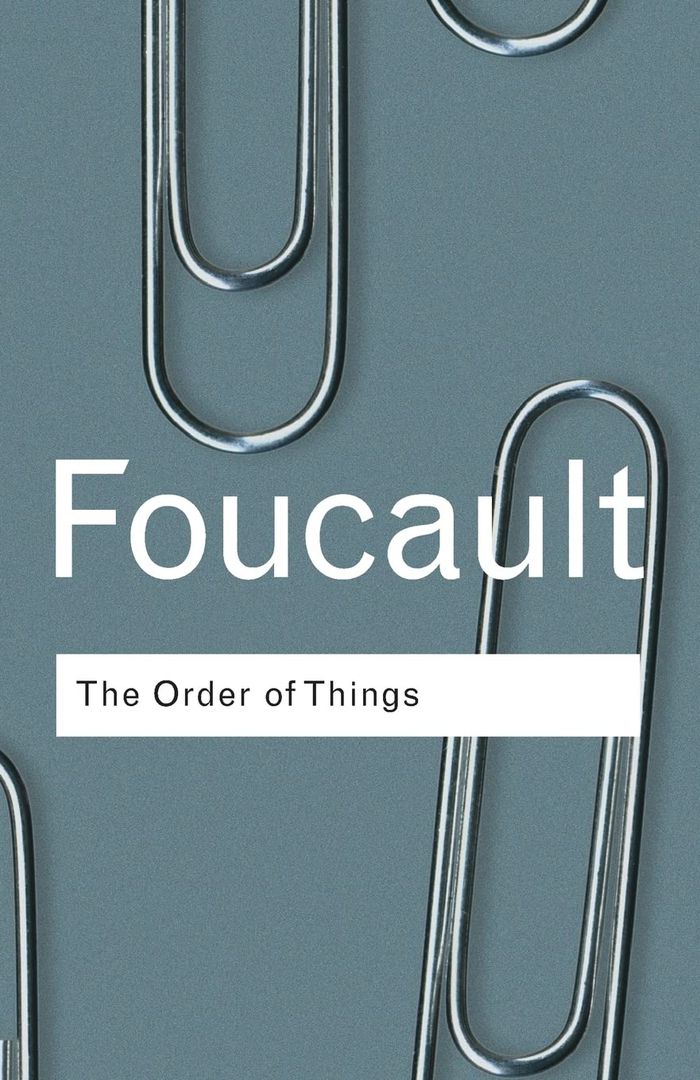
The order of things
The order of things
Actions:
Price:
$30.95
(available to order)
Summary:
When one defines "order" as a sorting of priorities, it becomes beautifully clear as to what Foucault is doing here. With virtuoso showmanship, he weaves an intensely complex history of thought. He dips into literature, art, economics and even biology in this book, possibly one of the most significant, yet most overlooked, works of the twentieth century. Eclipsed by his(...)
$30.95
(available to order)
Summary:
When one defines "order" as a sorting of priorities, it becomes beautifully clear as to what Foucault is doing here. With virtuoso showmanship, he weaves an intensely complex history of thought. He dips into literature, art, economics and even biology in this book, possibly one of the most significant, yet most overlooked, works of the twentieth century. Eclipsed by his(...)
Title:
The order of things
Actions:
Price:
$30.95
(available to order)
Summary:
When one defines "order" as a sorting of priorities, it becomes beautifully clear as to what Foucault is doing here. With virtuoso showmanship, he weaves an intensely complex history of thought. He dips into literature, art, economics and even biology in this book, possibly one of the most significant, yet most overlooked, works of the twentieth century. Eclipsed by his later work on power and discourse, nonetheless it was this volume that established Foucault's reputation as an intellectual giant. Pirouetting around the outer edge of language, Foucault unsettles the surface of literary writing. In describing the limitations of our usual taxonomies, he opens the door onto a whole new system of thought, one ripe with what he calls "exotic charm".
The order of things
Actions:
Price:
$30.95
(available to order)
Summary:
When one defines "order" as a sorting of priorities, it becomes beautifully clear as to what Foucault is doing here. With virtuoso showmanship, he weaves an intensely complex history of thought. He dips into literature, art, economics and even biology in this book, possibly one of the most significant, yet most overlooked, works of the twentieth century. Eclipsed by his later work on power and discourse, nonetheless it was this volume that established Foucault's reputation as an intellectual giant. Pirouetting around the outer edge of language, Foucault unsettles the surface of literary writing. In describing the limitations of our usual taxonomies, he opens the door onto a whole new system of thought, one ripe with what he calls "exotic charm".
Form:
books
books
Publication:
January 2001
January 2001
Subject:
Critical Theory
Critical Theory
Form:
books
books
Actions:
Price:
$42.00
(available in store)
Summary:
Nul ne peut prédire la fortune de ce mot, « anthrobscène » : s’il se biodégradera (on le lui souhaite) pour se disséminer dans la culture des média, pour y diffuser une conscience accrue des enjeux « écogéoarchéologiques » que Jussi Parikka tente si justement de placer au cœur d’une pensée médiologique digne de ce nom ; ou s’il continuera de surnager dans le flot des(...)
$42.00
(available in store)
Summary:
Nul ne peut prédire la fortune de ce mot, « anthrobscène » : s’il se biodégradera (on le lui souhaite) pour se disséminer dans la culture des média, pour y diffuser une conscience accrue des enjeux « écogéoarchéologiques » que Jussi Parikka tente si justement de placer au cœur d’une pensée médiologique digne de ce nom ; ou s’il continuera de surnager dans le flot des(...)
Subject:
Critical Theory
Critical Theory
Publication:
December 2021
December 2021
Title:
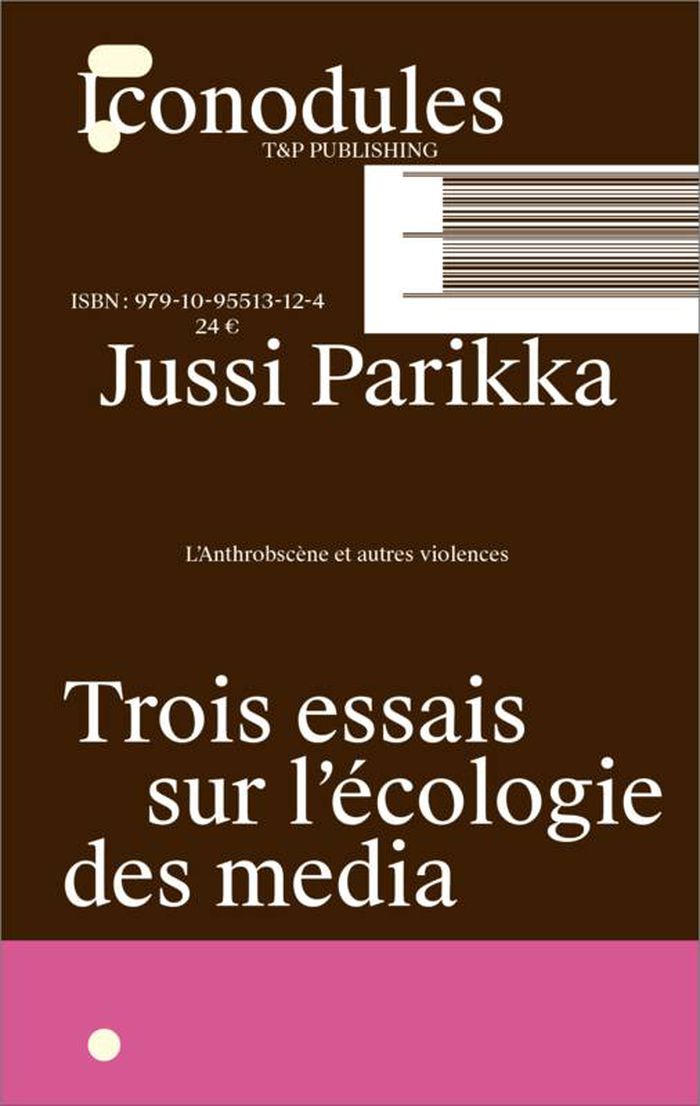
L'anthrobscène et autres violences : trois essais sur l'écologie des médias
Actions:
Price:
$42.00
(available in store)
Summary:
Nul ne peut prédire la fortune de ce mot, « anthrobscène » : s’il se biodégradera (on le lui souhaite) pour se disséminer dans la culture des média, pour y diffuser une conscience accrue des enjeux « écogéoarchéologiques » que Jussi Parikka tente si justement de placer au cœur d’une pensée médiologique digne de ce nom ; ou s’il continuera de surnager dans le flot des discours sans s’y dissoudre (on le lui souhaite aussi), pour garder vive l’inquiétude dont il est le produit ou le symptôme.
L'anthrobscène et autres violences : trois essais sur l'écologie des médias
Actions:
Price:
$42.00
(available in store)
Summary:
Nul ne peut prédire la fortune de ce mot, « anthrobscène » : s’il se biodégradera (on le lui souhaite) pour se disséminer dans la culture des média, pour y diffuser une conscience accrue des enjeux « écogéoarchéologiques » que Jussi Parikka tente si justement de placer au cœur d’une pensée médiologique digne de ce nom ; ou s’il continuera de surnager dans le flot des discours sans s’y dissoudre (on le lui souhaite aussi), pour garder vive l’inquiétude dont il est le produit ou le symptôme.
Form:
books
books
Publication:
December 2021
December 2021
Subject:
Critical Theory
Critical Theory
Form:
books
books
Actions:
Price:
$27.95
(available to order)
Summary:
Au début des années 2020, le consensus de la Silicon Valley se délite. Inégalités folles, stagnation de la productivité, instabilité endémique - la nouvelle économie n’est pas advenue. Les algorithmes sont omniprésents, mais ce n’est pas pour autant que le capitalisme s’est civilisé. Au contraire. La thèse de ce livre est qu’avec la digitalisation du monde se produit une(...)
$27.95
(available to order)
Summary:
Au début des années 2020, le consensus de la Silicon Valley se délite. Inégalités folles, stagnation de la productivité, instabilité endémique - la nouvelle économie n’est pas advenue. Les algorithmes sont omniprésents, mais ce n’est pas pour autant que le capitalisme s’est civilisé. Au contraire. La thèse de ce livre est qu’avec la digitalisation du monde se produit une(...)
Title:
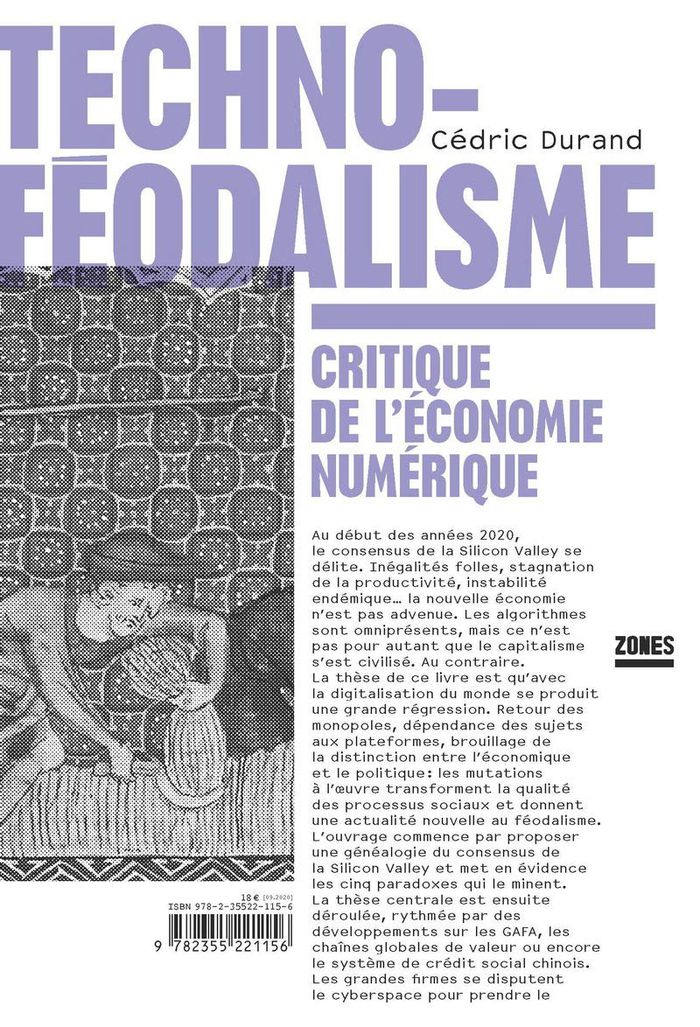
Techno-féodalisme : critique de l'économie numérique
Actions:
Price:
$27.95
(available to order)
Summary:
Au début des années 2020, le consensus de la Silicon Valley se délite. Inégalités folles, stagnation de la productivité, instabilité endémique - la nouvelle économie n’est pas advenue. Les algorithmes sont omniprésents, mais ce n’est pas pour autant que le capitalisme s’est civilisé. Au contraire. La thèse de ce livre est qu’avec la digitalisation du monde se produit une grande régression. Retour des monopoles, dépendance des sujets aux plateformes, brouillage de la distinction entre l’économique et le politique : les mutations à l’œuvre transforment la qualité des processus sociaux et donnent une actualité nouvelle au féodalisme. L’ouvrage commence par proposer une généalogie du consensus de la Silicon Valley et met en évidence les cinq paradoxes qui le minent. La thèse centrale est ensuite déroulée, rythmée par des développements sur les GAFA, les chaînes globales de valeur ou encore le système de crédit social chinois. Les grandes ?rmes se disputent le cyberspace pour prendre le contrôle sur des sources de données. Les sujets sont attachés à la glèbe numérique. Dans l’ordre économique qui émerge, les capitaux délaissent la production pour se concentrer sur la prédation.
Techno-féodalisme : critique de l'économie numérique
Actions:
Price:
$27.95
(available to order)
Summary:
Au début des années 2020, le consensus de la Silicon Valley se délite. Inégalités folles, stagnation de la productivité, instabilité endémique - la nouvelle économie n’est pas advenue. Les algorithmes sont omniprésents, mais ce n’est pas pour autant que le capitalisme s’est civilisé. Au contraire. La thèse de ce livre est qu’avec la digitalisation du monde se produit une grande régression. Retour des monopoles, dépendance des sujets aux plateformes, brouillage de la distinction entre l’économique et le politique : les mutations à l’œuvre transforment la qualité des processus sociaux et donnent une actualité nouvelle au féodalisme. L’ouvrage commence par proposer une généalogie du consensus de la Silicon Valley et met en évidence les cinq paradoxes qui le minent. La thèse centrale est ensuite déroulée, rythmée par des développements sur les GAFA, les chaînes globales de valeur ou encore le système de crédit social chinois. Les grandes ?rmes se disputent le cyberspace pour prendre le contrôle sur des sources de données. Les sujets sont attachés à la glèbe numérique. Dans l’ordre économique qui émerge, les capitaux délaissent la production pour se concentrer sur la prédation.
Form:
books
books
Publication:
September 2020
September 2020
Subject:
Critical Theory
Critical Theory
Form:
books
books
Title:
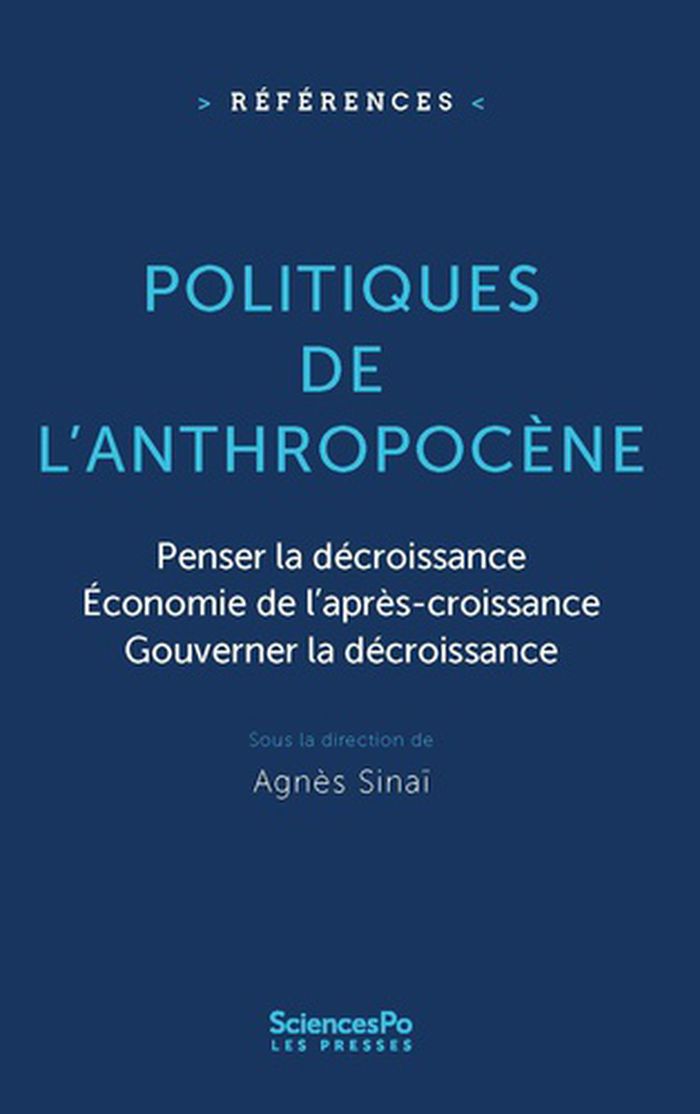
Politiques de l'anthropocène
Politiques de l'anthropocène
Actions:
Price:
$44.95
(available to order)
Summary:
Cette étude montre que le XXIe siècle marquera la fin de l'ère de l'anthropocène en raison du déclin des ressources énergétiques surexploitées par l'activité humaine (la déforestation, l'urbanisation, la pollution, etc). Elle examine les répercussions politiques, économiques et sociales de cette perte d'énergie et prône une gestion partagée des ressources pour sortir de la démesure.
$44.95
(available to order)
Summary:
Cette étude montre que le XXIe siècle marquera la fin de l'ère de l'anthropocène en raison du déclin des ressources énergétiques surexploitées par l'activité humaine (la déforestation, l'urbanisation, la pollution, etc). Elle examine les répercussions politiques, économiques et sociales de cette perte d'énergie et prône une gestion partagée des ressources pour sortir de la démesure.
Title:
Politiques de l'anthropocène
Actions:
Price:
$44.95
(available to order)
Summary:
Cette étude montre que le XXIe siècle marquera la fin de l'ère de l'anthropocène en raison du déclin des ressources énergétiques surexploitées par l'activité humaine (la déforestation, l'urbanisation, la pollution, etc). Elle examine les répercussions politiques, économiques et sociales de cette perte d'énergie et prône une gestion partagée des ressources pour sortir de la démesure.
Politiques de l'anthropocène
Actions:
Price:
$44.95
(available to order)
Summary:
Cette étude montre que le XXIe siècle marquera la fin de l'ère de l'anthropocène en raison du déclin des ressources énergétiques surexploitées par l'activité humaine (la déforestation, l'urbanisation, la pollution, etc). Elle examine les répercussions politiques, économiques et sociales de cette perte d'énergie et prône une gestion partagée des ressources pour sortir de la démesure.
Form:
books
books
Publication:
February 2022
February 2022
Subject:
Critical Theory
Critical Theory
Form:
books
books
Title:
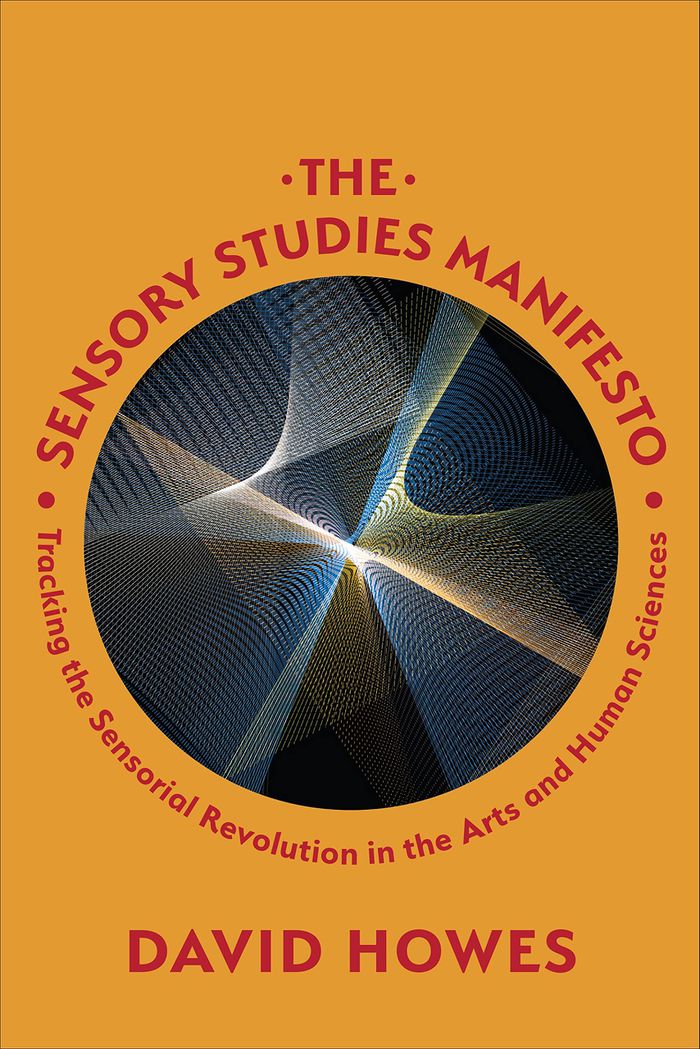
The sensory studies manifesto: tracking the sensorial revolution in the arts and human sciences
The sensory studies manifesto: tracking the sensorial revolution in the arts and human sciences
Actions:
Price:
$34.95
(available to order)
Summary:
The senses are made, not given. This revolutionary realization has come as of late to inform research across the social sciences and humanities, and is currently inspiring groundbreaking experimentation in the world of art and design, where the focus is now on mixing and manipulating the senses. This book tracks these transformations and opens multiple lines of(...)
$34.95
(available to order)
Summary:
The senses are made, not given. This revolutionary realization has come as of late to inform research across the social sciences and humanities, and is currently inspiring groundbreaking experimentation in the world of art and design, where the focus is now on mixing and manipulating the senses. This book tracks these transformations and opens multiple lines of(...)
Title:
The sensory studies manifesto: tracking the sensorial revolution in the arts and human sciences
Actions:
Price:
$34.95
(available to order)
Summary:
The senses are made, not given. This revolutionary realization has come as of late to inform research across the social sciences and humanities, and is currently inspiring groundbreaking experimentation in the world of art and design, where the focus is now on mixing and manipulating the senses. This book tracks these transformations and opens multiple lines of investigation into the diverse ways in which human beings sense and make sense of the world. It treats the human sensorium as a dynamic whole that is best approached from historical, anthropological, geographic, and sociological perspectives. In doing so, it has altered our understanding of sense perception by directing attention to the sociality of sensation and the cultural mediation of sense experience and expression. Howes challenges the assumptions of mainstream Western psychology by foregrounding the agency, interactivity, creativity, and wisdom of the senses as shaped by culture.
The sensory studies manifesto: tracking the sensorial revolution in the arts and human sciences
Actions:
Price:
$34.95
(available to order)
Summary:
The senses are made, not given. This revolutionary realization has come as of late to inform research across the social sciences and humanities, and is currently inspiring groundbreaking experimentation in the world of art and design, where the focus is now on mixing and manipulating the senses. This book tracks these transformations and opens multiple lines of investigation into the diverse ways in which human beings sense and make sense of the world. It treats the human sensorium as a dynamic whole that is best approached from historical, anthropological, geographic, and sociological perspectives. In doing so, it has altered our understanding of sense perception by directing attention to the sociality of sensation and the cultural mediation of sense experience and expression. Howes challenges the assumptions of mainstream Western psychology by foregrounding the agency, interactivity, creativity, and wisdom of the senses as shaped by culture.
Form:
books
books
Publication:
July 2022
July 2022
Subject:
Critical Theory
Critical Theory
Form:
books
books
Actions:
Price:
$41.99
(available to order)
Summary:
Stuart Elden and Adam David Morton present Lefebvre’s key works on rural questions, including the first half his book "Du rural à l’urbain" and supplementary texts. This volume reveals the production of the rural as a key site of capitalist development and as a space of struggle.
$41.99
(available to order)
Summary:
Stuart Elden and Adam David Morton present Lefebvre’s key works on rural questions, including the first half his book "Du rural à l’urbain" and supplementary texts. This volume reveals the production of the rural as a key site of capitalist development and as a space of struggle.
Title:
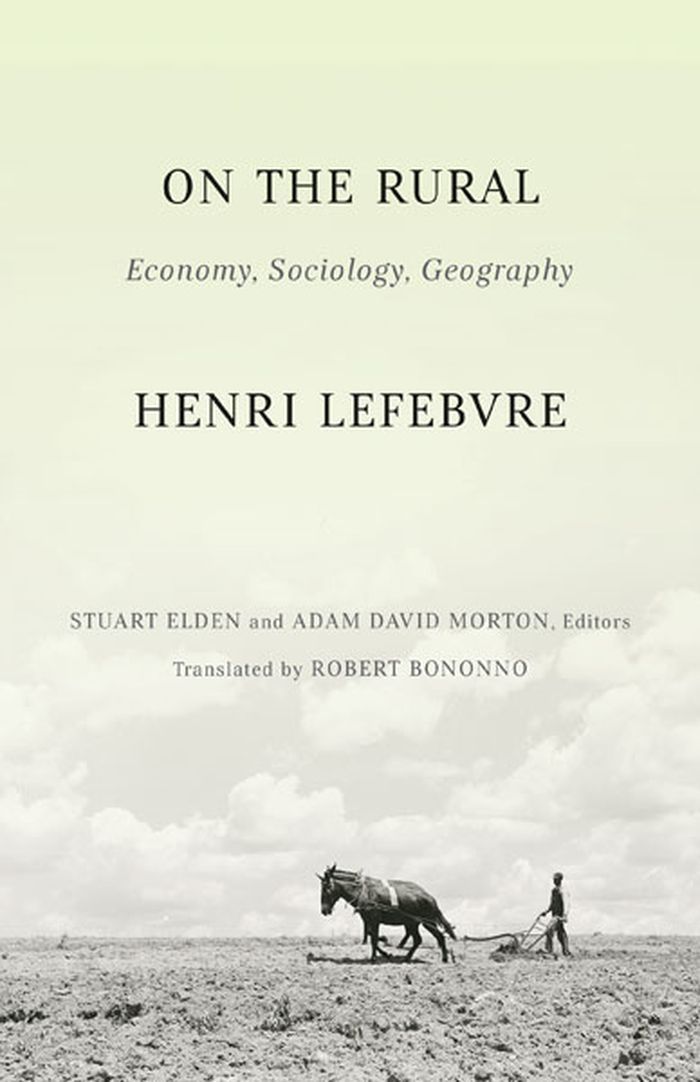
On the rural: Economy, sociology, geography
Actions:
Price:
$41.99
(available to order)
Summary:
Stuart Elden and Adam David Morton present Lefebvre’s key works on rural questions, including the first half his book "Du rural à l’urbain" and supplementary texts. This volume reveals the production of the rural as a key site of capitalist development and as a space of struggle.
On the rural: Economy, sociology, geography
Actions:
Price:
$41.99
(available to order)
Summary:
Stuart Elden and Adam David Morton present Lefebvre’s key works on rural questions, including the first half his book "Du rural à l’urbain" and supplementary texts. This volume reveals the production of the rural as a key site of capitalist development and as a space of struggle.
Form:
books
books
Publication:
March 2022
March 2022
Subject:
Critical Theory
Critical Theory


